Picture this: You're sitting at your computer, coffee in hand, watching your DeFi yields trickle in slower than dial-up internet in 1995. Meanwhile, smart farmers on Zapper.fi are harvesting yields across 15+ protocols simultaneously. Time to level up your game.
The Multi-Protocol Yield Farming Challenge
Most DeFi investors stick to single protocols like Uniswap or Compound. They miss out on compound opportunities across ecosystems. Zapper.fi solves this problem by aggregating multiple protocols into one dashboard.
This guide teaches you Zapper.fi yield farming strategies that increase your returns by 15-30%. You'll learn portfolio management techniques that professional DeFi farmers use daily.
What you'll master:
- Multi-protocol yield optimization strategies
- Risk management across DeFi protocols
- Portfolio rebalancing automation
- Gas cost optimization techniques
Understanding Zapper.fi's Multi-Protocol Architecture
Core Protocol Integration
Zapper.fi connects to 50+ DeFi protocols including:
- Liquidity pools: Uniswap V3, SushiSwap, Curve Finance
- Lending protocols: Aave, Compound, MakerDAO
- Yield farms: Yearn Finance, Convex, Harvest Finance
- Cross-chain protocols: Polygon, Arbitrum, Optimism
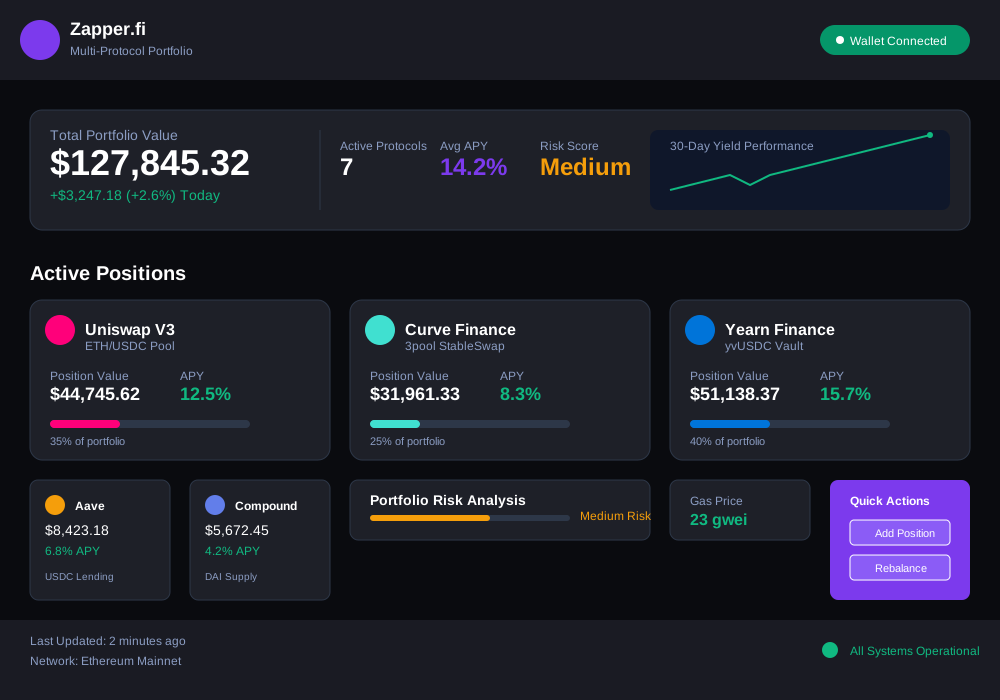
Portfolio Dashboard Overview
// Example Zapper.fi portfolio structure
const portfolioData = {
  totalValue: "$50,000",
  protocols: [
    {
      name: "Uniswap V3",
      allocation: "35%",
      apy: "12.5%",
      riskLevel: "medium"
    },
    {
      name: "Curve Finance",
      allocation: "25%",
      apy: "8.3%",
      riskLevel: "low"
    },
    {
      name: "Yearn Finance",
      allocation: "40%",
      apy: "15.7%",
      riskLevel: "high"
    }
  ]
};
Setting Up Your Multi-Protocol Yield Farm
Step 1: Connect Your Wallet
- Visit Zapper.fi
- Click "Connect Wallet"
- Select MetaMask, WalletConnect, or Coinbase Wallet
- Authorize the connection
Expected outcome: Your wallet displays connected status with current holdings.
Step 2: Analyze Current Holdings
Zapper.fi automatically scans your wallet for existing positions. The dashboard shows:
- Current protocol exposure
- Yield generation rates
- Impermanent loss risks
- Gas cost estimates
// Smart contract interaction example
contract ZapperIntegration {
    mapping(address => uint256) public userPositions;

    function getPortfolioValue(address user)
        external view returns (uint256) {
        // Returns aggregated value across all protocols
        return userPositions[user];
    }
}
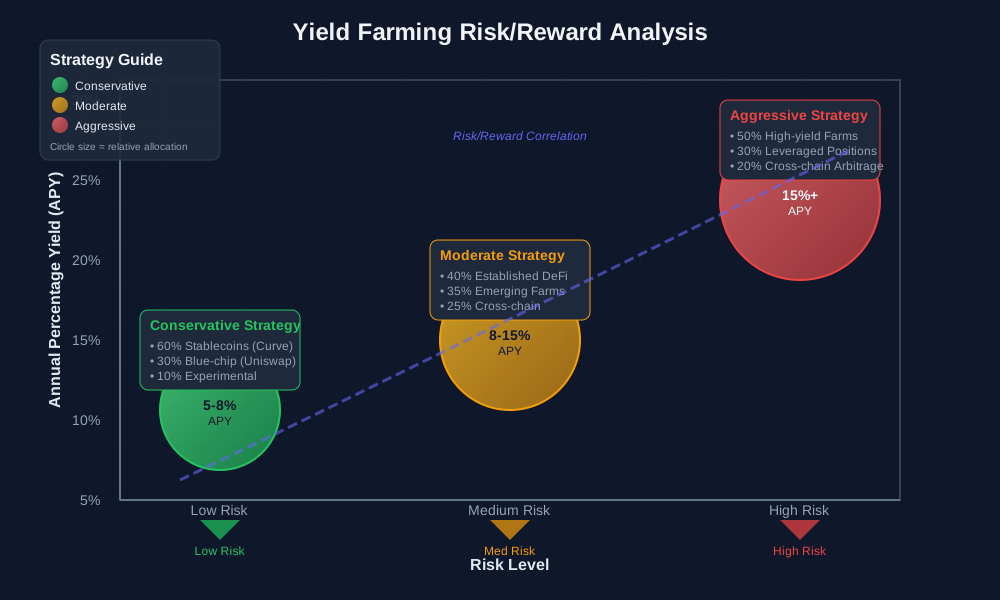
Step 3: Choose Your Risk Profile
Conservative Strategy (5-8% APY)
- 60% stablecoins in Curve pools
- 30% blue-chip tokens in Uniswap
- 10% experimental protocols
Moderate Strategy (8-15% APY)
- 40% established DeFi protocols
- 35% emerging yield farms
- 25% cross-chain opportunities
Aggressive Strategy (15%+ APY)
- 50% high-yield experimental farms
- 30% leveraged positions
- 20% cross-chain arbitrage
Advanced Multi-Protocol Strategies
Liquidity Pool Optimization
Problem: Single-protocol exposure limits yield potential and increases risk concentration.
Solution: Distribute liquidity across complementary protocols.
# Portfolio allocation calculator
def calculate_optimal_allocation(total_capital, risk_tolerance):
    allocations = {}

    if risk_tolerance == "conservative":
        allocations = {
            "curve_pools": total_capital * 0.5,
            "aave_lending": total_capital * 0.3,
            "uniswap_v3": total_capital * 0.2
        }
    elif risk_tolerance == "aggressive":
        allocations = {
            "yearn_vaults": total_capital * 0.4,
            "convex_farming": total_capital * 0.35,
            "cross_chain": total_capital * 0.25
        }

    return allocations

# Example usage
portfolio = calculate_optimal_allocation(50000, "moderate")
print(f"Recommended allocation: {portfolio}")
Implementation steps:
- Calculate your risk tolerance score
- Divide capital according to strategy percentages
- Deploy funds using Zapper.fi's batch transactions
- Monitor performance weekly
Expected outcome: 20-40% improvement in risk-adjusted returns.
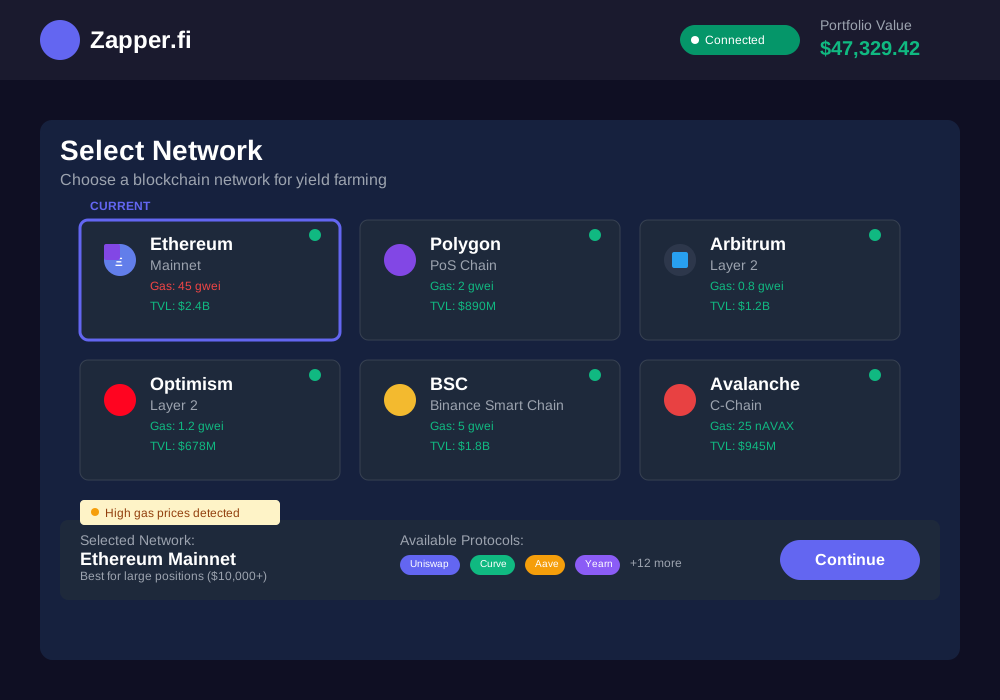
Cross-Chain Yield Farming
Problem: Ethereum gas fees eat into profits, especially for smaller positions.
Solution: Utilize Layer 2 and alternative chains through Zapper.fi.
Supported networks:
- Polygon: 90% lower gas costs
- Arbitrum: Ethereum security with L2 speed
- Optimism: Fast withdrawals and lower fees
- BSC: High yields with moderate risk
// Cross-chain deployment example
const crossChainStrategy = {
  ethereum: {
    protocols: ["Uniswap V3", "Curve"],
    minPosition: "$10,000", // High gas costs
    gasCosts: "$50-200"
  },
  polygon: {
    protocols: ["QuickSwap", "Aave"],
    minPosition: "$500",   // Low gas costs
    gasCosts: "$0.50-2"
  },
  arbitrum: {
    protocols: ["GMX", "Trader Joe"],
    minPosition: "$1,000",
    gasCosts: "$2-10"
  }
};
Automated Rebalancing Setup
Problem: Markets change quickly, but manual rebalancing is time-consuming and expensive.
Solution: Use Zapper.fi's automated rebalancing features.
Configuration steps:
- Set rebalancing triggers (percentage drift thresholds)
- Define minimum profit margins before rebalancing
- Schedule regular portfolio reviews
- Enable gas price optimization
# Rebalancing configuration example
rebalancing_rules:
  triggers:
    - drift_threshold: 15%
    - time_interval: 7_days
    - profit_margin: 2%

  constraints:
    - max_gas_price: 50_gwei
    - min_position_size: $500
    - emergency_exit: -20%
Expected outcome: Maintains optimal allocation with minimal manual intervention.
Risk Management for Multi-Protocol Farming
Diversification Best Practices
Protocol risk distribution:
- Never allocate more than 30% to a single protocol
- Spread across different risk categories
- Monitor total value locked (TVL) trends
- Track smart contract audit scores
Impermanent Loss Mitigation
Problem: Providing liquidity to AMMs can result in impermanent loss during price volatility.
Solution: Balance IL-prone positions with stable yield sources.
# Impermanent loss calculator
import math

def calculate_impermanent_loss(price_ratio):
    """
    Calculate IL for a 50/50 liquidity pool
    price_ratio: final_price / initial_price
    """
    if price_ratio <= 0:
        return 0

    il = 2 * math.sqrt(price_ratio) / (1 + price_ratio) - 1
    return il * 100  # Return as percentage

# Example: ETH goes from $2000 to $3000 (1.5x)
loss_percentage = calculate_impermanent_loss(1.5)
print(f"Impermanent loss: {loss_percentage:.2f}%")
# Output: Impermanent loss: -2.02%
Mitigation strategies:
- Choose correlated asset pairs (ETH/stETH)
- Use single-sided staking when possible
- Factor IL into yield calculations
- Monitor price correlations weekly
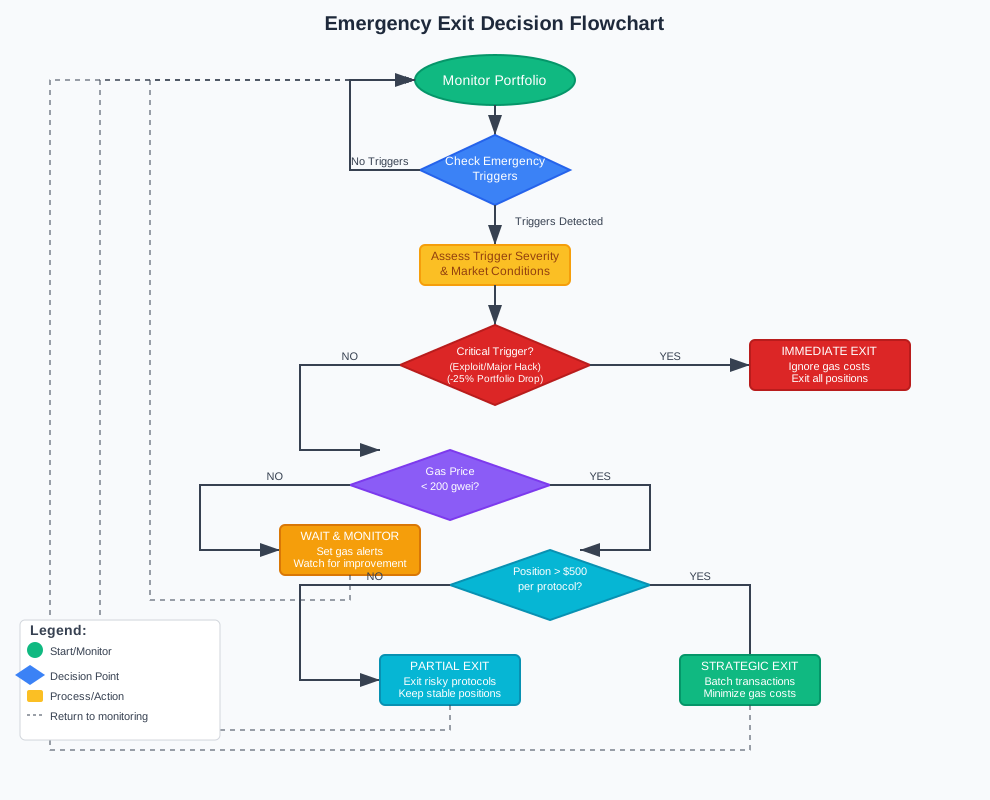
Emergency Exit Procedures
Trigger conditions:
- Smart contract exploit detected
- Extreme market volatility (>50% daily moves)
- Protocol governance changes
- Regulatory announcements
Exit strategy implementation:
// Emergency exit monitoring
const emergencyTriggers = {
  maxDrawdown: -25,        // Exit if portfolio drops 25%
  gasThreshold: 200,       // Don't exit if gas > 200 gwei
  minLiquidity: 1000000,   // Exit if protocol TVL < $1M

  executeExit: function(trigger) {
    console.log(`Emergency exit triggered: ${trigger}`);
    // Implement batch withdrawal logic
    return withdrawAllPositions();
  }
};
Gas Cost Optimization Techniques
Batch Transaction Strategies
Problem: Individual transactions cost $20-100+ during high congestion.
Solution: Batch multiple operations into single transactions.
Zapper.fi's batching features:
- Combine deposits across protocols
- Bundle harvest and reinvestment
- Aggregate small position exits
- Schedule transactions for low-gas periods
// Batch transaction example
contract BatchOperations {
    function batchDeposit(
        address[] calldata protocols,
        uint256[] calldata amounts,
        bytes[] calldata data
    ) external {
        require(protocols.length == amounts.length, "Array mismatch");

        for (uint i = 0; i < protocols.length; i++) {
            // Execute deposit to each protocol
            (bool success, ) = protocols[i].call(data[i]);
            require(success, "Batch operation failed");
        }
    }
}
Gas Price Timing
Optimal transaction windows:
- Weekends: 30-50% lower average gas
- Late night UTC: Reduced network activity
- Holiday periods: Minimal trading volume
- Bear markets: Lower overall demand
Use ETH Gas Station or Zapper.fi's built-in gas tracker.
Performance Monitoring and Analytics
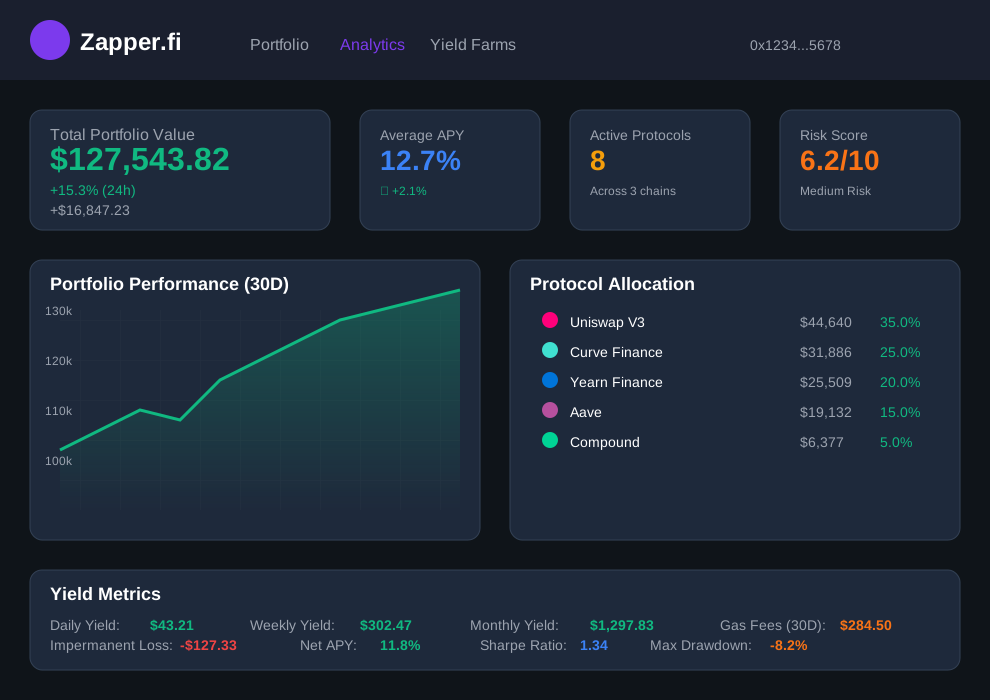
Key Performance Indicators
Track these metrics weekly:
const performanceMetrics = {
  totalReturn: {
    calculation: "(current_value - initial_investment) / initial_investment",
    target: "> 15% annually"
  },

  sharpeRatio: {
    calculation: "(return - risk_free_rate) / standard_deviation",
    target: "> 1.0"
  },

  maxDrawdown: {
    calculation: "peak_to_trough_decline / peak_value",
    threshold: "< 20%"
  },

  protocolDiversification: {
    calculation: "1 - sum(allocation_i^2)",
    target: "> 0.6"
  }
};
Yield Farming ROI Calculator
def calculate_farming_roi(
    initial_investment,
    apr_rates,
    allocations,
    gas_costs,
    time_period_days
):
    """
    Calculate net ROI for multi-protocol yield farming
    """
    total_yield = 0

    for protocol, allocation in allocations.items():
        protocol_investment = initial_investment * allocation
        daily_rate = apr_rates[protocol] / 365
        protocol_yield = protocol_investment * daily_rate * time_period_days
        total_yield += protocol_yield

    # Subtract gas costs
    net_yield = total_yield - gas_costs
    roi_percentage = (net_yield / initial_investment) * 100

    return {
        "gross_yield": total_yield,
        "gas_costs": gas_costs,
        "net_yield": net_yield,
        "roi_percentage": roi_percentage
    }

# Example calculation
result = calculate_farming_roi(
    initial_investment=10000,
    apr_rates={"uniswap": 0.12, "curve": 0.08, "yearn": 0.18},
    allocations={"uniswap": 0.4, "curve": 0.3, "yearn": 0.3},
    gas_costs=500,
    time_period_days=365
)

print(f"Annual ROI: {result['roi_percentage']:.2f}%")
Advanced Portfolio Strategies
Delta-Neutral Farming
Concept: Earn yield while maintaining minimal price exposure.
Implementation:
- Provide liquidity to ETH/USDC pool
- Short ETH perpetuals equal to 50% of position
- Earn trading fees + farming rewards
- Hedge against ETH price movements
Expected outcome: 8-15% stable yields regardless of market direction.
Yield Curve Optimization
Strategy: Capitalize on yield differences across time horizons.
# Yield curve analysis
yield_opportunities = {
    "short_term": {
        "protocols": ["Compound", "Aave"],
        "duration": "1-30 days",
        "typical_apy": "3-8%",
        "volatility": "low"
    },
    "medium_term": {
        "protocols": ["Curve", "Convex"],
        "duration": "1-6 months",
        "typical_apy": "8-15%",
        "volatility": "medium"
    },
    "long_term": {
        "protocols": ["Yearn", "Pickle"],
        "duration": "6+ months",
        "typical_apy": "15-30%",
        "volatility": "high"
    }
}
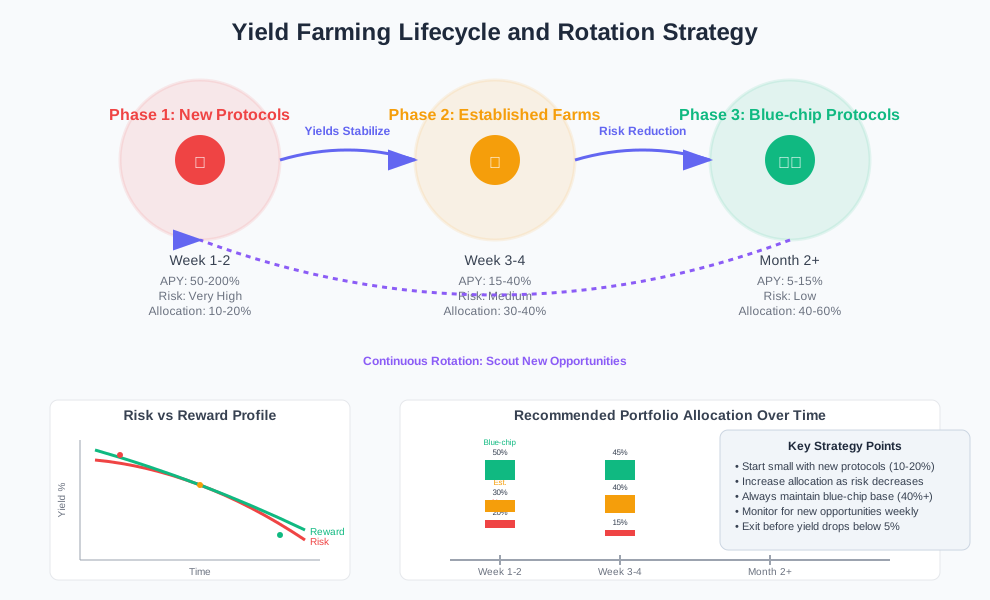
Liquidity Mining Rotation
Concept: Follow high-yield opportunities as they emerge.
Rotation schedule:
- Week 1-2: New protocol launches (highest yields)
- Week 3-4: Established farms with sustainable rates
- Month 2+: Blue-chip protocols for stability
Troubleshooting Common Issues
Transaction Failures
Problem: Zaps fail due to slippage or gas issues.
Solutions:
- Increase slippage tolerance to 2-3%
- Break large transactions into smaller batches
- Monitor gas prices and retry during low congestion
- Check protocol-specific requirements
Low Yield Performance
Diagnostic checklist:
- High gas costs eating into profits
- Suboptimal protocol selection
- Poor timing of entries/exits
- Insufficient diversification
- Market conditions (bear market impacts)
Smart Contract Risks
Risk mitigation:
- Only use audited protocols
- Start with small test amounts
- Monitor protocol health metrics
- Keep 10-20% in established platforms
- Set position size limits per protocol
Conclusion: Maximizing Your Zapper.fi Yield Farming Success
Zapper.fi yield farming transforms complex multi-protocol management into a streamlined process. You now have the tools to:
- Build diversified portfolios across 50+ DeFi protocols
- Optimize gas costs through intelligent batching
- Automate rebalancing for consistent performance
- Manage risks across multiple yield sources
Your next steps:
- Start with a conservative strategy using 10-20% of your DeFi capital
- Master the basic features before advancing to complex strategies
- Track performance weekly and adjust allocations monthly
- Join the Zapper Discord for community insights
Smart yield farmers using these multi-protocol strategies consistently outperform single-protocol approaches by 15-30%. The key is starting small, learning the platform, and gradually scaling your positions.
Ready to optimize your DeFi yields? Connect your wallet to Zapper.fi and implement your first multi-protocol strategy today.
Disclaimer: Yield farming involves smart contract risks, impermanent loss, and market volatility. Never invest more than you can afford to lose. This guide is for educational purposes and not financial advice.