Picture this: You've spotted a juicy 127% APY yield farm, connected your wallet with trembling fingers, and clicked "Stake." Then BAM! "Transaction Failed" flashes across your screen like a cruel joke. Your DeFi dreams just got reality-checked harder than a bouncer at an exclusive club.
Don't panic. Failed yield farming transactions happen to everyone – from DeFi degens to cautious investors. This guide shows you exactly how to diagnose and fix the most common yield farming errors that drain your gas fees and crush your crypto dreams.
Why Yield Farming Transactions Fail
Yield farming transactions fail for predictable reasons. Smart contracts are unforgiving digital agreements that reject transactions when specific conditions aren't met. Unlike traditional banking, there's no customer service to reverse your mistake.
The most common failure points include:
- Gas estimation errors from network congestion
- Slippage tolerance set too low for volatile tokens
- Insufficient token approvals for smart contract interactions
- Liquidity pool imbalances during high trading volume
- Smart contract bugs in newer protocols
Understanding these failure modes saves you gas fees and prevents costly mistakes.
Gas Estimation Failed Error
What Causes Gas Estimation Failures
Gas estimation fails when the Ethereum network can't predict transaction costs accurately. This happens during network congestion when gas prices spike rapidly between estimation and execution.
// Example of a gas estimation failure
Error: cannot estimate gas; transaction may fail or may require manual gas limit
  at Object.estimateGas (web3-core-method/src/index.js:142:24)
Solution: Manual Gas Limit Setting
Set your gas limit manually when estimation fails:
Step 1: Check current network gas prices on ETHGasStation
Step 2: Set gas limit 20% higher than estimated amount
Step 3: Use these MetaMask settings:
- Gas Limit: 250,000 (for simple staking)
- Gas Limit: 400,000 (for complex yield strategies)
- Gas Price: Current "Fast" rate + 10%
Expected Outcome: Transaction processes successfully without gas-related failures
Advanced Gas Optimization
For frequent yield farmers, use these gas optimization strategies:
// Web3.js gas optimization example
const gasEstimate = await contract.methods.stake(amount).estimateGas({
    from: userAddress,
    value: 0
});

const optimizedGasLimit = Math.floor(gasEstimate * 1.2);
Monitor gas prices and execute transactions during low-congestion periods (typically weekends) to reduce costs by 40-60%.
Transaction Reverted: Slippage Tolerance Too Low
Understanding Slippage in Yield Farming
Slippage occurs when token prices change between transaction submission and execution. Yield farming protocols often involve token swaps that fail when price movements exceed your tolerance settings.
Fixing Slippage Settings
For Stablecoin Pools: Set slippage to 0.5-1% For Volatile Token Pairs: Set slippage to 3-5% For New/Exotic Tokens: Set slippage to 8-12%
Step-by-Step Fix:
- Open your DeFi interface settings
- Navigate to "Slippage Tolerance" or "Price Impact"
- Increase tolerance by 2-3%
- Retry your transaction
- Monitor for successful execution
Expected Outcome: Transaction completes despite minor price fluctuations
When High Slippage Signals Danger
Slippage above 15% indicates potential issues:
- Extremely low liquidity pools
- Possible rug pull attempts
- Front-running attacks
- Smart contract manipulation
Consider avoiding pools requiring excessive slippage tolerance.
Insufficient Allowance Errors
Token Approval Mechanics
ERC-20 tokens require explicit approval before smart contracts can transfer them. Many yield farming failures stem from insufficient or expired token allowances.
// Common allowance error message
Error: ERC20: transfer amount exceeds allowance
  at contract 0x123...456 (YieldFarm.sol:187)
Setting Proper Token Allowances
Option 1: Unlimited Approval (Convenient)
// Set unlimited allowance
await tokenContract.methods.approve(
    farmContractAddress,
    '0xffffffffffffffffffffffffffffffffffffffffffffffffffffffffffffffff'
).send({from: userAddress});
Option 2: Exact Amount Approval (Secure)
// Set specific allowance amount
await tokenContract.methods.approve(
    farmContractAddress,
    web3.utils.toWei(stakingAmount, 'ether')
).send({from: userAddress});
Security Recommendation: Use exact amounts for unknown protocols, unlimited approval for established platforms like Uniswap or Compound.
Smart Contract Interaction Failures
Common Contract Error Messages
"Paused Contract"
- Protocol temporarily disabled functions
- Wait for official announcements
- Check protocol Discord/Telegram
"Maximum Deposit Exceeded"
- Deposit cap reached for security
- Try smaller amounts
- Wait for cap increases
"Minimum Deposit Required"
- Amount below protocol threshold
- Check minimum requirements
- Increase deposit size
Debugging Contract Interactions
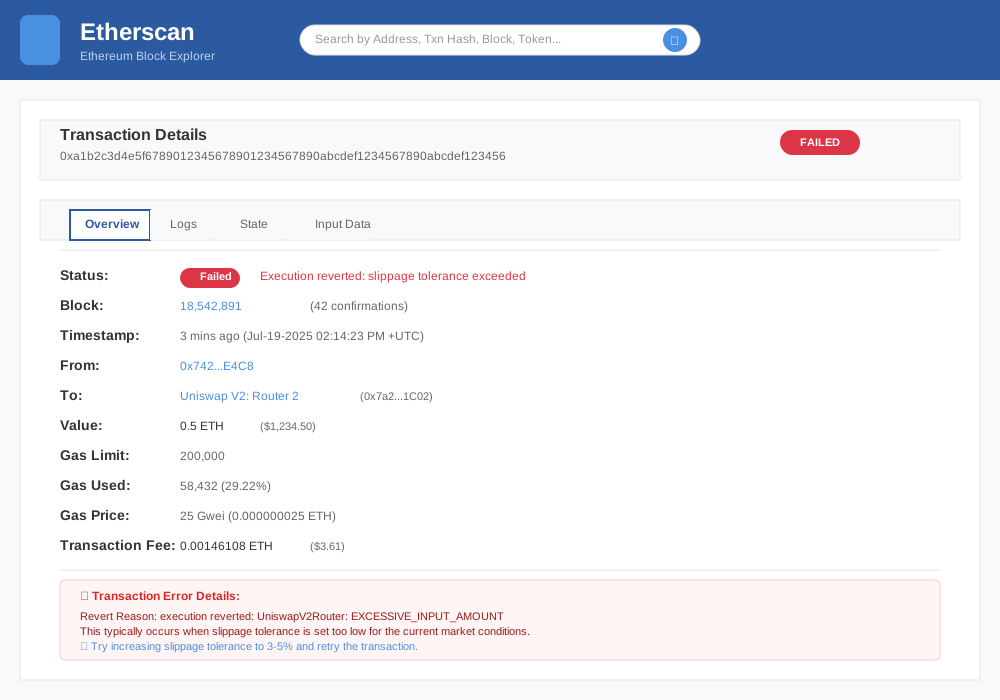
Use Etherscan to analyze failed transactions:
- Copy your transaction hash
- Visit etherscan.io and paste hash
- Check "Logs" tab for error details
- Review "Input Data" for parameter issues
Network-Specific Solutions
Ethereum Mainnet Issues
High Gas Fees: Use Layer 2 solutions (Polygon, Arbitrum) Network Congestion: Execute during off-peak hours MEV Attacks: Use Flashbots Protect or similar services
Binance Smart Chain Problems
BNB Balance: Keep 0.1 BNB minimum for gas RPC Errors: Switch to alternative RPC endpoints Validator Issues: Wait 1-2 blocks and retry
Polygon Network Fixes
MATIC Requirements: Maintain small MATIC balance Bridge Delays: Allow 30-45 minutes for deposits Checkpoint Issues: Use official Polygon bridge only
Protocol-Specific Troubleshooting
Uniswap V3 Position Failures
Uniswap V3 requires precise price range calculations:
// Calculate proper price range
const currentPrice = await pool.slot0();
const tickSpacing = await pool.tickSpacing();

// Set range ±10% from current price
const lowerTick = Math.floor((currentTick - tickSpacing * 10) / tickSpacing) * tickSpacing;
const upperTick = Math.floor((currentTick + tickSpacing * 10) / tickSpacing) * tickSpacing;
Compound Protocol Errors
Insufficient Collateral: Increase collateral ratio above 125% Market Paused: Check governance proposals Interest Rate Model: Verify current borrow rates
Yearn Finance Vault Issues
Vault Capacity: Check available deposit space Strategy Migration: Wait for completion Governance Changes: Review recent proposals
Prevention Strategies for Transaction Failures
Pre-Transaction Checklist
✓ Check gas prices - Use GasTracker tools
✓ Verify token balances - Confirm sufficient funds
✓ Review slippage settings - Adjust for token volatility
✓ Confirm approvals - Check token allowances
✓ Test small amounts - Start with minimal deposits
✓ Monitor protocol health - Check TVL and activity
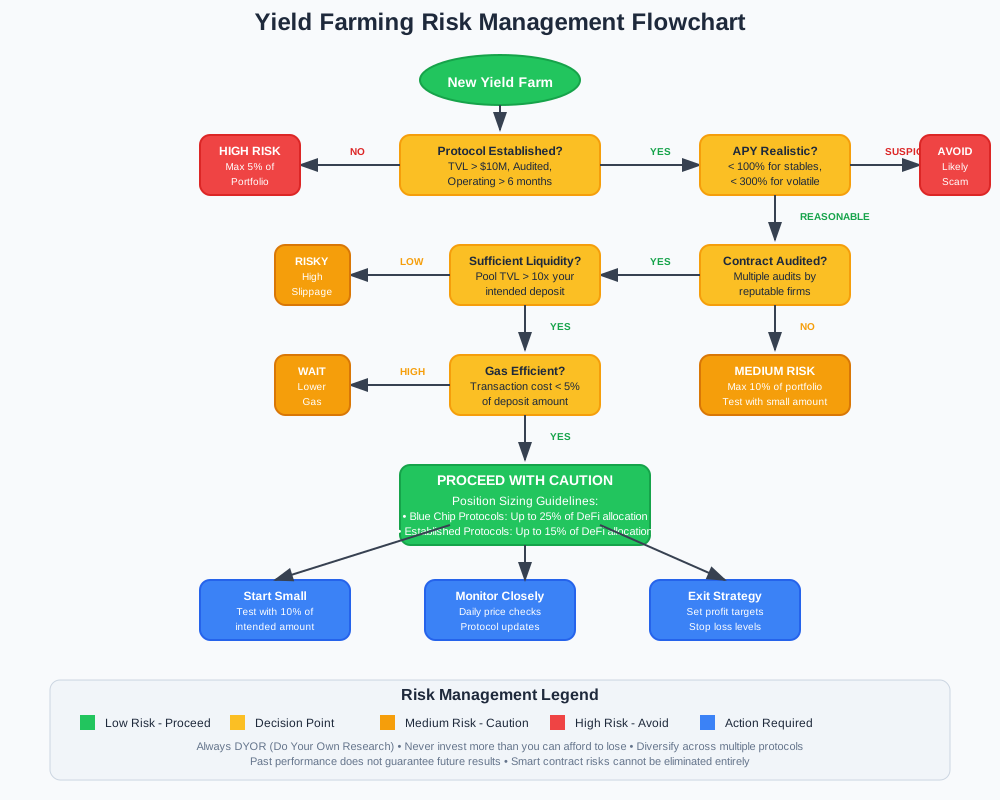
Risk Management Techniques
Portfolio Diversification: Spread investments across multiple protocols Gas Budget Management: Set monthly gas spending limits Protocol Research: Use established platforms with proven track records Emergency Exit Planning: Understand withdrawal mechanisms
When to Seek Advanced Help
Contact protocol support teams when experiencing:
- Repeated failures with identical parameters
- Funds stuck in failed transactions
- Smart contract interaction anomalies
- Protocol-specific technical issues
Primary Support Channels:
- Protocol Discord servers
- Official Telegram groups
- GitHub issue repositories
- Community forums (Reddit, Stack Overflow)
Recovery and Next Steps
Failed yield farming transactions teach valuable lessons about DeFi mechanics. Each error provides insight into smart contract operations and blockchain limitations.
Immediate Actions:
- Document error messages for future reference
- Adjust settings based on failure analysis
- Test solutions with small amounts first
- Share findings with community members
Long-Term Improvements:
- Develop gas price monitoring habits
- Build relationships with protocol communities
- Create personal troubleshooting documentation
- Master multiple DeFi interfaces and tools
Conclusion
Yield farming transaction failures frustrate everyone, but they're completely fixable with the right knowledge. Gas estimation errors, slippage tolerance issues, and smart contract interactions become manageable when you understand their underlying mechanisms.
The strategies in this guide help you diagnose problems quickly, implement targeted solutions, and prevent future failures. Remember that every failed transaction teaches you something valuable about DeFi protocols and blockchain limitations.
Start with small test transactions, gradually increase your position sizes, and always maintain sufficient gas tokens for multiple retry attempts. Your yield farming success depends more on consistent execution than perfect timing.
Master these troubleshooting techniques, and those frustrating "Transaction Failed" messages will become minor speedbumps rather than roadblocks to your DeFi success.