Remember when people thought the biggest risk in finance was your bank charging overdraft fees? Those were simpler times. Now we live in an era where you can lose your life savings to a smart contract written by someone called "DegenMaster420" who promises 10,000% APY on a token named after their pet hamster.
Welcome to yield farming security – where due diligence isn't just recommended, it's survival.
This comprehensive yield farming security checklist covers 25 essential safety measures that protect your DeFi investments from common threats like rug pulls, smart contract exploits, and protocol failures. You'll learn practical steps to evaluate protocols, secure your funds, and implement risk management strategies that experienced DeFi users follow.
Pre-Investment Protocol Analysis
1. Verify Smart Contract Audits
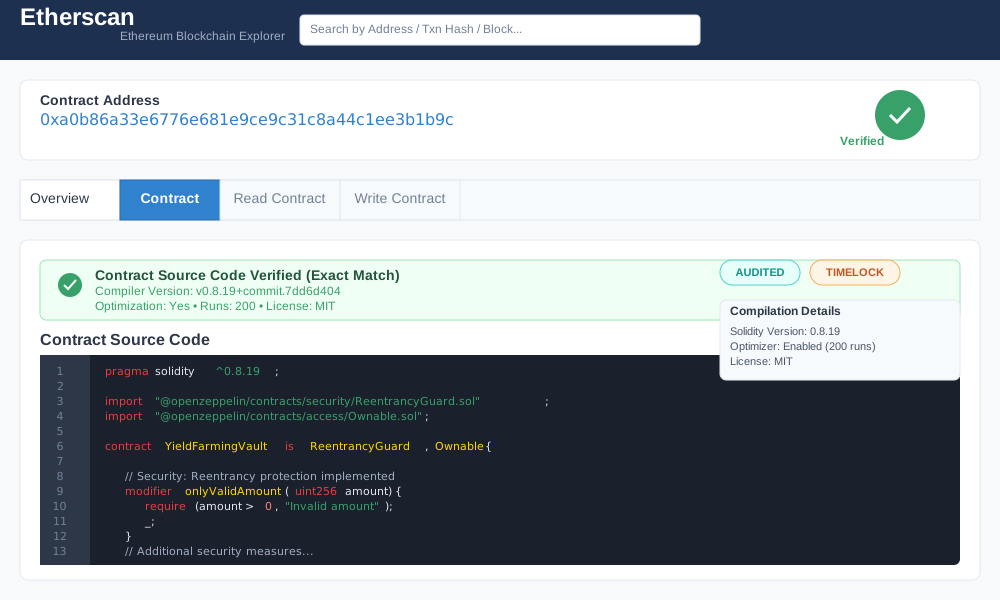
Smart contract audits act as your first line of defense against code vulnerabilities. Professional audit firms examine contract code for security flaws, logic errors, and potential exploit vectors.
How to check audit status:
// Example: Checking audit information on Etherscan
// 1. Navigate to the protocol's smart contract address
// 2. Look for "Contract" tab
// 3. Check for verified source code
// 4. Search for audit reports in documentation

const auditChecklist = {
  auditFirm: "CertiK, ConsenSys Diligence, or Trail of Bits",
  auditDate: "Within last 12 months",
  criticalIssues: "All resolved",
  sourceCodeVerified: true
};
Red flags to avoid:
- No audit reports available
- Audits older than 12 months
- Unresolved critical vulnerabilities
- Anonymous audit firms
2. Analyze Protocol Documentation Quality
Professional protocols maintain comprehensive documentation that explains their mechanisms, risks, and tokenomics. Poor documentation often signals rushed development or lack of transparency.
Documentation evaluation criteria:
- Technical specifications are detailed and clear
- Risk disclosures are prominently displayed
- Team members are publicly identified
- Roadmap includes realistic timelines
- Community governance processes are explained
3. Research Team Background and Transparency
Anonymous teams aren't automatically suspicious, but doxxed teams with proven track records offer additional security assurance.
Team verification steps:
- Check LinkedIn profiles of core team members
- Verify previous project involvement
- Look for academic papers or conference presentations
- Review GitHub commit history and activity
- Search for any regulatory issues or past controversies
# GitHub analysis commands
git log --author="teamMember" --oneline
git shortlog -sn
4. Evaluate Token Distribution and Vesting Schedules
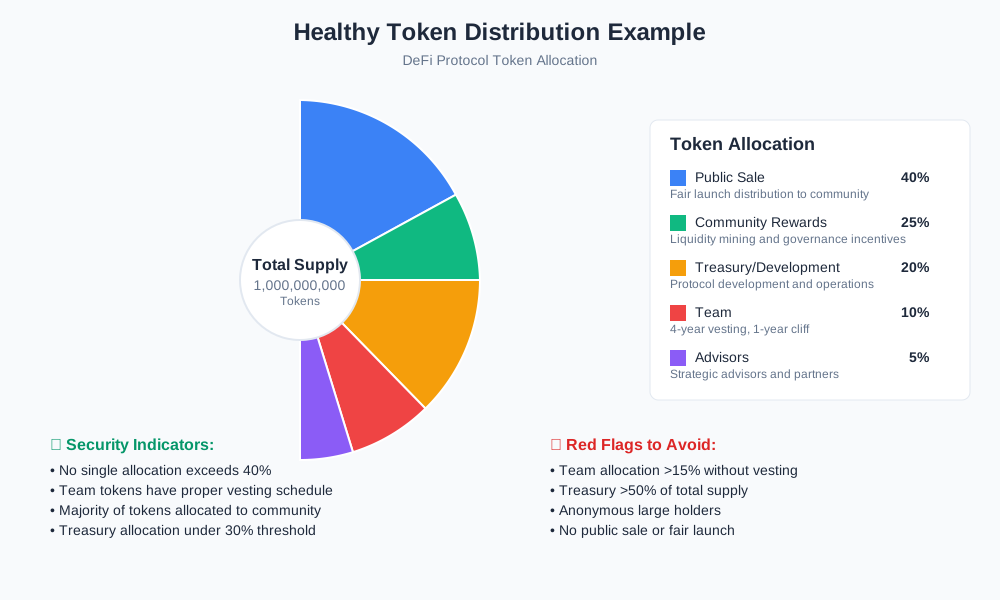
Unfair token distribution creates dump risks where large holders can crash token prices and destabilize the protocol.
Healthy distribution indicators:
- Team tokens locked for minimum 12 months
- Gradual vesting over 2-4 years
- No single wallet holds >10% of supply
- Fair launch or public sale occurred
- Treasury allocation is reasonable (<30%)
5. Assess Protocol TVL and Market Position
Total Value Locked (TVL) indicates user confidence and protocol maturity. However, artificially inflated TVL through incentives can be misleading.
TVL analysis framework:
# TVL evaluation metrics
tvl_metrics = {
    "absolute_tvl": "Minimum $10M for established protocols",
    "tvl_growth": "Steady increase over 3+ months",
    "tvl_vs_incentives": "Not entirely dependent on rewards",
    "cross_chain_tvl": "Distributed across multiple chains"
}
Smart Contract Security Measures
6. Verify Contract Immutability Status
Upgradeable contracts allow teams to fix bugs but also enable potential rug pulls through malicious upgrades.
Contract upgrade assessment:
- Check if contracts use proxy patterns
- Verify timelock duration for upgrades (minimum 24 hours)
- Ensure multi-signature requirements for changes
- Look for emergency pause mechanisms
// Example: Checking for timelock in contract code
contract TimelockController {
    uint256 public constant MINIMUM_DELAY = 86400; // 24 hours
    mapping(bytes32 => uint256) public timestamps;
}
7. Review Oracle Dependencies and Price Feeds
Price oracle manipulation is a common attack vector. Protocols should use multiple oracle sources and implement price deviation checks.
Oracle security checklist:
- Multiple oracle providers (Chainlink, Band Protocol, etc.)
- Price deviation limits (typically 5-10%)
- Time-weighted average pricing (TWAP)
- Circuit breakers for extreme price movements
8. Examine Flash Loan Protection Mechanisms
Flash loans enable instant borrowing without collateral, making them popular for complex DeFi attacks.
Flash loan protection measures:
// Example protection pattern
modifier noFlashLoan() {
    require(tx.origin == msg.sender, "Flash loan detected");
    _;
}
9. Check for Reentrancy Guards
Reentrancy attacks occur when external contracts call back into the original contract before state changes complete.
Reentrancy protection verification:
- Look for ReentrancyGuard inheritance
- Check that state changes occur before external calls
- Verify withdrawal patterns follow checks-effects-interactions
10. Analyze Access Controls and Admin Functions
Centralized admin functions create single points of failure and potential abuse vectors.
Admin function evaluation:
- Emergency functions are time-locked
- Critical functions require multi-signature approval
- Admin keys are distributed across team members
- Community governance controls major decisions
Wallet and Transaction Security
11. Use Hardware Wallets for Large Amounts
Hardware wallets provide offline private key storage, protecting against malware and phishing attacks.
Hardware wallet best practices:
- Store recovery phrase in multiple secure locations
- Verify device authenticity before first use
- Enable PIN protection and passphrase if available
- Use different wallets for different risk levels
12. Implement Multi-Signature Wallet Setup
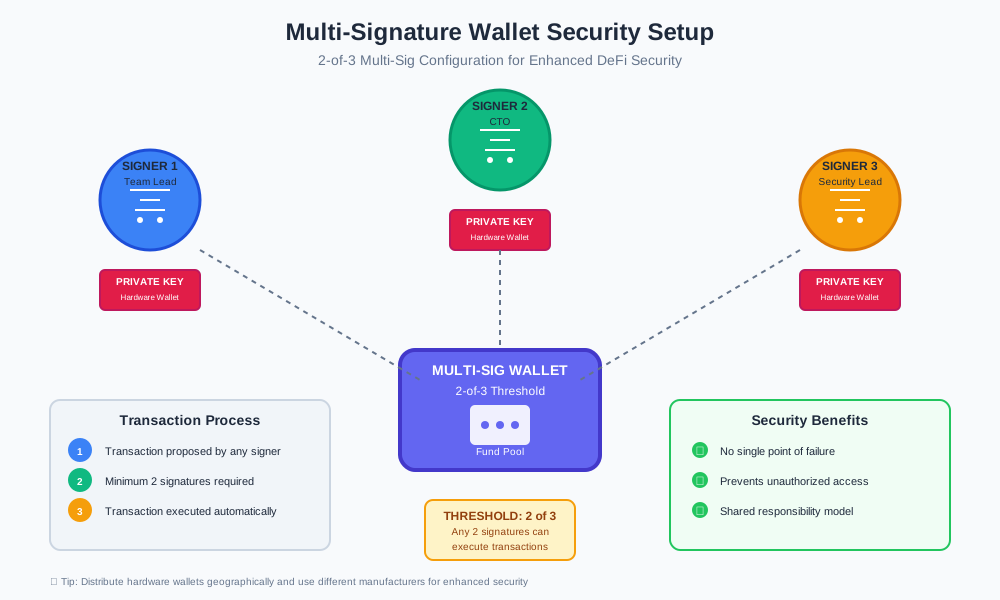
Multi-signature wallets require multiple approvals for transactions, reducing single-point-of-failure risks.
Multi-sig configuration recommendations:
// Example Gnosis Safe setup
const multisigConfig = {
    owners: ["0x123...", "0x456...", "0x789..."],
    threshold: 2, // 2 of 3 signatures required
    dailyLimit: "10 ETH",
    delayPeriod: "24 hours" // For large transactions
};
13. Enable Transaction Simulation Before Signing
Transaction simulation tools show expected outcomes before you commit real funds.
Simulation tools to use:
- Tenderly transaction simulator
- MetaMask transaction insights
- Blocknative mempool explorer
- Custom simulation scripts
# Example simulation check
def simulate_transaction(tx_data):
    simulation = tenderly.simulate(tx_data)
    if simulation.success:
        print(f"Expected token change: {simulation.token_changes}")
        return True
    else:
        print(f"Simulation failed: {simulation.error}")
        return False
14. Set Up Transaction Monitoring and Alerts
Real-time monitoring helps you detect unauthorized transactions or unusual protocol behavior.
Monitoring setup:
- Wallet address tracking on Etherscan
- Discord/Telegram bot notifications
- Portfolio tracking apps with alerts
- Custom monitoring scripts
15. Use Dedicated DeFi Wallets
Separate wallets for DeFi activities limit exposure if one wallet gets compromised.
Wallet segregation strategy:
- Hot wallet: Small amounts for daily trading
- Warm wallet: Medium amounts for yield farming
- Cold wallet: Long-term holdings storage
- Experimental wallet: Testing new protocols
Risk Management Strategies
16. Implement Position Size Limits
Position sizing prevents catastrophic losses from any single protocol failure.
Position sizing framework:
# Risk allocation model
portfolio_allocation = {
    "blue_chip_protocols": 0.60,  # Compound, Aave, Uniswap
    "established_protocols": 0.25,  # Curve, Yearn, Convex
    "emerging_protocols": 0.10,   # New but audited
    "experimental": 0.05          # High risk, high reward
}

max_single_protocol = 0.15  # Never more than 15% in one protocol
17. Diversify Across Multiple Protocols
Protocol diversification reduces correlation risk and limits exposure to any single failure.
Diversification strategy:
- Spread investments across 5-10 protocols minimum
- Use different underlying mechanisms (lending, DEX, derivatives)
- Include protocols on multiple blockchains
- Avoid protocols with shared dependencies
18. Set Stop-Loss and Take-Profit Levels
Automated exit strategies protect against both downside risk and emotional decision-making.
Exit strategy implementation:
- Set stop-loss at -20% for individual positions
- Take profits at predetermined APY thresholds
- Rebalance quarterly based on risk assessment
- Monitor impermanent loss on LP positions
19. Monitor Impermanent Loss in Liquidity Pools
Impermanent loss occurs when token prices diverge in liquidity pool pairs.
Impermanent loss calculation:
function calculateImpermanentLoss(priceRatio) {
    // Price ratio = currentPrice / initialPrice
    const impermanentLoss = (2 * Math.sqrt(priceRatio)) / (1 + priceRatio) - 1;
    return Math.abs(impermanentLoss) * 100; // Percentage
}

// Example: ETH price doubles relative to USDC
console.log(`IL: ${calculateImpermanentLoss(2).toFixed(2)}%`); // ~5.7%
20. Track Gas Fees and Optimization
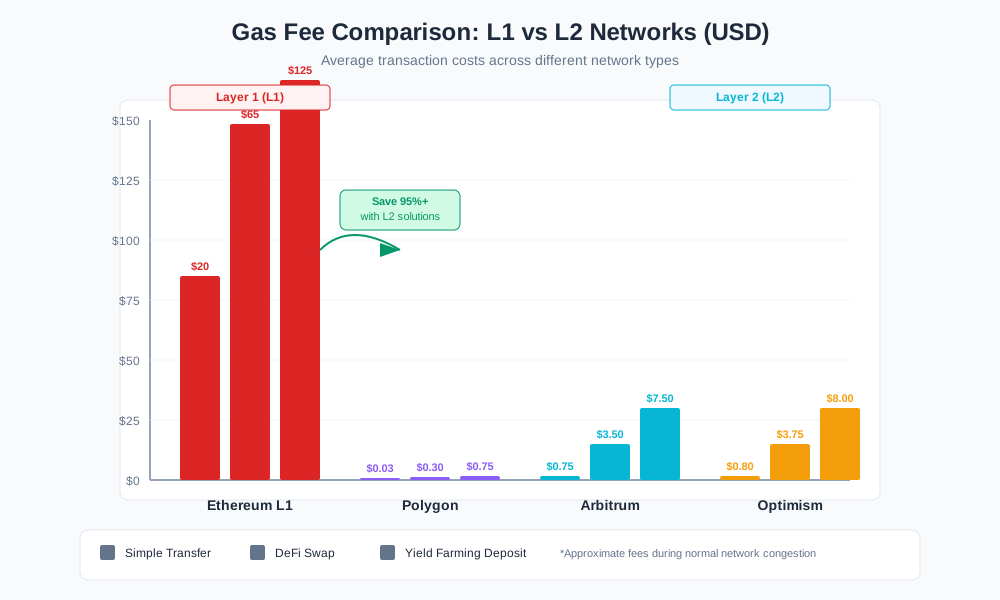
High gas fees can significantly reduce yield farming profitability, especially for smaller positions.
Gas optimization strategies:
- Use Layer 2 solutions (Polygon, Arbitrum, Optimism)
- Batch transactions when possible
- Time transactions for low gas periods
- Use gas fee tracking tools (GasNow, ETH Gas Station)
Ongoing Security Practices
21. Regular Security Audit Updates
Security landscapes evolve rapidly. Stay informed about new vulnerabilities and protocol updates.
Security monitoring routine:
- Subscribe to protocol security announcements
- Follow security researchers on Twitter
- Join protocol Discord/Telegram channels
- Review monthly security reports
22. Protocol Governance Participation
Active governance participation helps you stay informed about protocol changes and vote on security-related proposals.
Governance engagement:
- Read all governance proposals thoroughly
- Participate in community discussions
- Vote on security-related proposals
- Delegate votes if unable to participate actively
23. Emergency Exit Planning
Prepare exit strategies before you need them. Panic decisions during crises often amplify losses.
Emergency procedures:
// Emergency exit checklist
const emergencyPlan = {
    triggerConditions: [
        "Exploit reported in protocol",
        "Unusual trading volume/price action",
        "Team members selling large amounts",
        "Governance proposals changing tokenomics"
    ],
    exitProcedure: [
        "Stop new deposits immediately",
        "Withdraw from highest-risk positions first",
        "Monitor transaction fees before mass exit",
        "Move funds to cold storage temporarily"
    ]
};
24. Insurance Coverage Evaluation
DeFi insurance protocols provide coverage against smart contract risks, though coverage limitations apply.
Insurance options:
- Nexus Mutual: Smart contract coverage
- InsurAce: Protocol-specific policies
- Unslashed Finance: Yield farming protection
- Risk Harbor: Vault-specific coverage
Coverage evaluation factors:
- Premium costs vs potential losses
- Coverage exclusions and limitations
- Claims process complexity
- Insurance protocol security
25. Community and Security Research Integration
Leverage community intelligence and security research to identify risks early.
Community resources:
- DefiSafety protocol ratings
- Rugdoc.io security assessments
- DeFiPulse risk scores
- Security-focused Twitter accounts
- Protocol-specific research communities
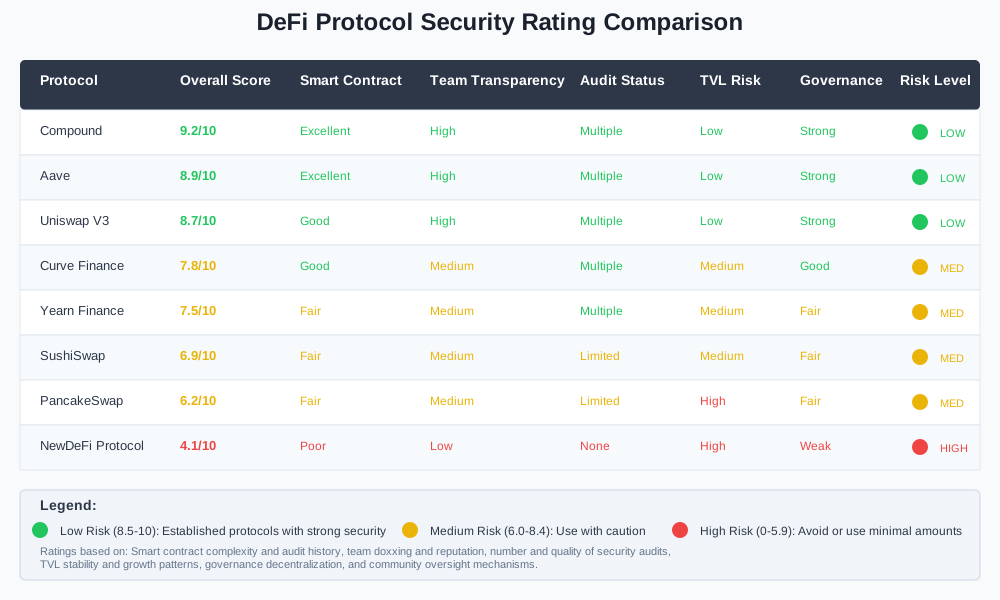
Advanced Security Considerations
Smart Contract Code Review Skills
Learning to read Solidity code helps you identify red flags independently:
// Red flag example: Hidden mint function
function specialFunction(address to, uint256 amount) external onlyOwner {
    _mint(to, amount); // Unlimited token printing capability
}

// Green flag example: Transparent time-locked function
function updateParameters(uint256 newFee) external onlyOwner {
    require(newFee <= MAX_FEE, "Fee too high");
    require(timelock.isReady(newFee), "Timelock not ready");
    fee = newFee;
}
Cross-Chain Bridge Security
Cross-chain yield farming introduces additional bridge-related risks:
- Bridge smart contract vulnerabilities
- Validator set centralization
- Token wrapping/unwrapping risks
- Chain reorganization impacts
MEV Protection Strategies
Maximal Extractable Value (MEV) attacks can reduce your yield farming returns:
- Use private mempools (Flashbots Protect)
- Time transactions during low MEV periods
- Understand sandwich attack patterns
- Consider MEV-resistant protocols
Conclusion
Yield farming security requires constant vigilance and systematic risk management. This 25-point yield farming security checklist provides a comprehensive framework for protecting your DeFi investments against common threats.
The key to successful yield farming isn't just finding high APY opportunities – it's implementing robust security measures that preserve your capital over time. Start with basic precautions like hardware wallets and protocol research, then gradually implement advanced strategies as you gain experience.
Remember: in DeFi, your security is your responsibility. No customer service department will restore funds lost to smart contract exploits or rug pulls. Use this checklist to build habits that protect your investments while you explore the exciting world of decentralized finance.
Ready to secure your yield farming strategy? Bookmark this checklist and review it before every new protocol investment. Your future self will thank you when the next DeFi exploit headlines hit the news – and your funds remain safe.
Disclaimer: This article provides educational information only. Yield farming involves significant risks including total loss of funds. Always conduct your own research and consider consulting with financial advisors before making investment decisions.