Why do some farmers harvest corn in autumn while others plant strawberries in spring? Smart yield farmers follow the same principle—they time their DeFi strategies around predictable market cycles.
Most yield farmers lose 30-50% of potential returns by ignoring seasonal patterns. This comprehensive guide reveals how yield farming seasonal trends work and shows you exactly when to enter and exit positions for maximum profit.
You'll discover proven market timing strategies, learn to read DeFi cycles like a pro, and master the art of farming rewards optimization. By the end, you'll know precisely when yield farming opportunities peak and how to position yourself ahead of the crowd.
Understanding Yield Farming Market Cycles
The Four Phases of DeFi Seasons
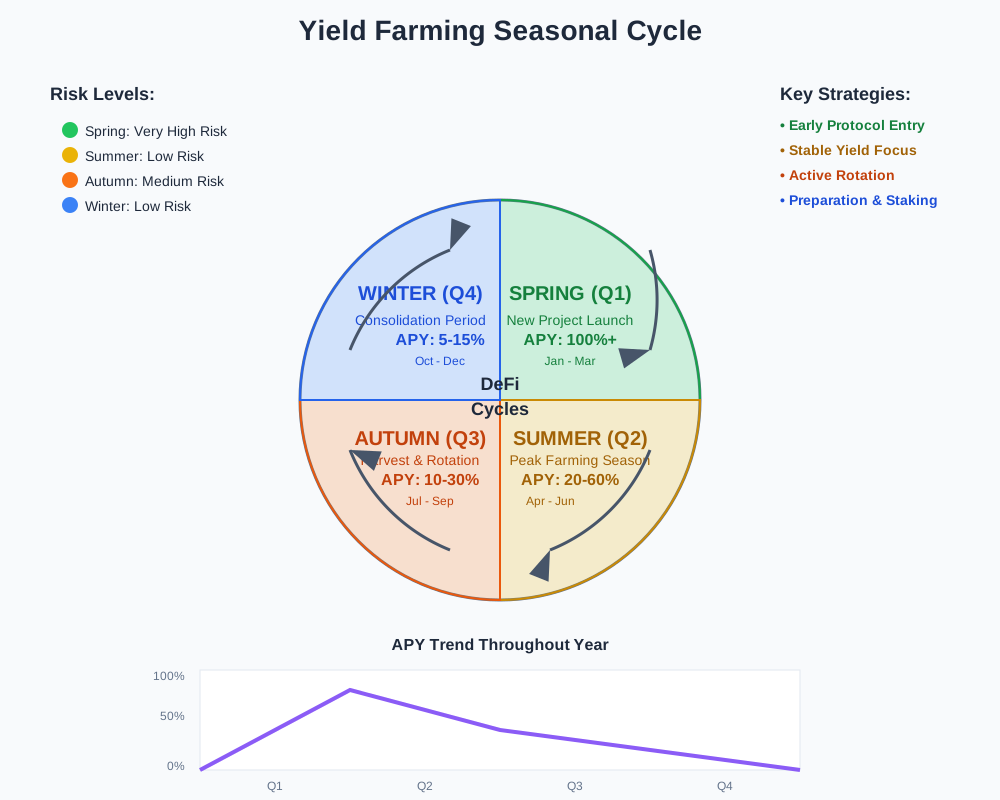
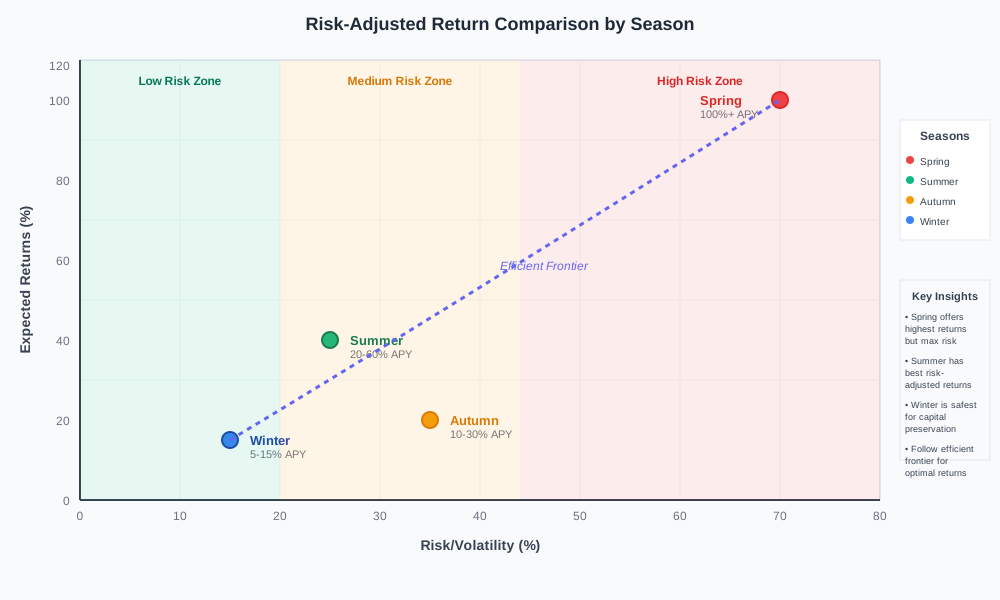
Yield farming seasonal trends follow predictable patterns throughout the year. Each phase presents unique opportunities and risks that smart farmers exploit.
Spring Phase (Q1): New Project Launch Season
- Fresh protocols launch with high incentive rewards
- APY rates spike above 100% for early adopters
- Risk levels increase due to unaudited smart contracts
- Duration: January through March
Summer Phase (Q2): Peak Farming Season
- Established protocols reach maximum liquidity
- APY rates stabilize between 20-60%
- Market confidence peaks with institutional adoption
- Duration: April through June
Autumn Phase (Q3): Harvest and Rotation
- Protocols reduce emission rewards
- APY rates decline to 10-30% range
- Smart farmers rotate capital to emerging opportunities
- Duration: July through September
Winter Phase (Q4): Consolidation Period
- Market consolidates around proven protocols
- APY rates bottom out at 5-15%
- New projects prepare for spring launches
- Duration: October through December
DeFi Cycles vs Traditional Finance
Traditional finance operates on quarterly earnings cycles. DeFi moves faster with monthly token emission schedules and weekly governance votes.
Key Differences:
- DeFi cycles complete in 3-6 months vs 12 months for traditional markets
- Yield farming rewards fluctuate daily vs quarterly dividend payments
- Smart contract risks add volatility absent in traditional investments
- Liquidity mining patterns change based on token prices and TVL
Identifying High-Yield Seasonal Opportunities
Q1 Launch Season Strategy
Spring brings the highest risk and highest reward opportunities. New protocols offer massive incentives to bootstrap liquidity.
Step-by-Step Launch Season Approach:
Monitor Protocol Announcements
- Follow developer Twitter accounts and Discord servers
- Track GitHub commits for upcoming launches
- Subscribe to DeFi news aggregators like DeFiPulse
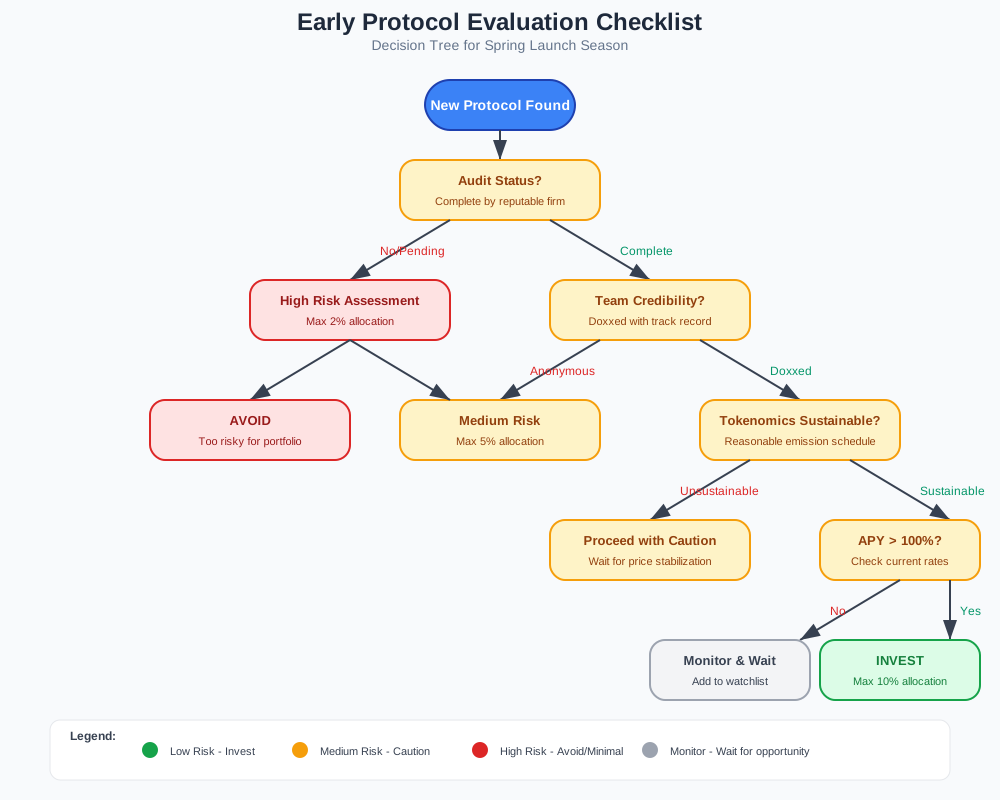
Evaluate Early-Stage Protocols
// Sample evaluation criteria
const protocolAnalysis = {
  auditStatus: "Pending/Complete",
  teamCredibility: "Doxxed/Anonymous",
  tokenomics: "Sustainable/Unsustainable",
  backers: "Tier1VCs/Community",
  initialAPY: "> 100%"
};
Enter Positions at Launch
- Allocate 5-10% of portfolio to high-risk farming
- Set stop-losses at 20% principal decline
- Plan exit strategy before APY normalization
Monitor Performance Daily
- Track impermanent loss vs yield gains
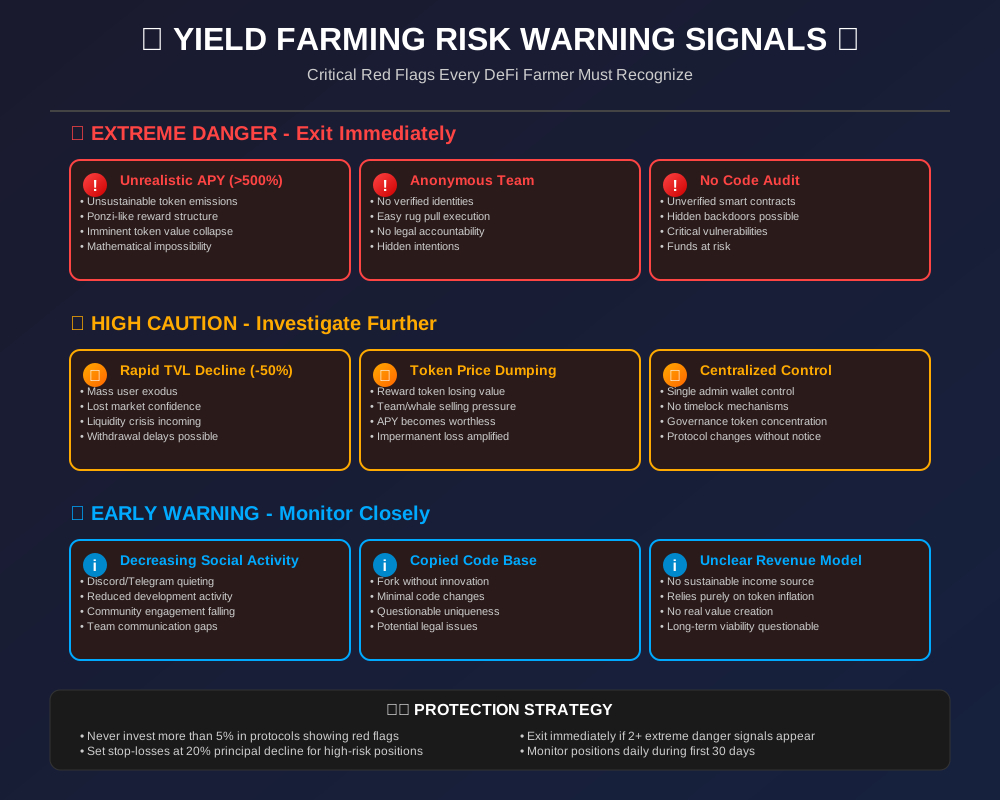
- Watch for rug pull warning signs
- Adjust position sizes based on protocol maturity
Q2 Peak Season Optimization
Summer offers the best risk-adjusted returns with established protocols reaching peak efficiency.
Peak Season Portfolio Allocation:
- 60% in blue-chip protocols (Compound, Aave, Uniswap)
- 30% in emerging tier-2 platforms (SushiSwap, Curve, Balancer)
- 10% in experimental high-yield opportunities
Example Summer Portfolio:
// Sample allocation strategy
contract SummerYieldStrategy {
    uint256 public constant BLUE_CHIP_ALLOCATION = 60; // %
    uint256 public constant TIER_TWO_ALLOCATION = 30;  // %
    uint256 public constant EXPERIMENTAL_ALLOCATION = 10; // %

    mapping(address => uint256) public protocolWeights;

    function rebalancePortfolio() external {
        // Rebalance based on TVL and APY changes
        updateProtocolWeights();
        redistributeCapital();
    }
}
Peak Season Best Practices:
- Compound rewards weekly to maximize APY
- Monitor gas fees and batch transactions during low-cost periods
- Use yield aggregators like Yearn Finance for smaller positions
- Maintain 20% cash reserves for emerging opportunities
Q3 Rotation Strategy
Autumn requires active portfolio management as rewards decline and new opportunities emerge.
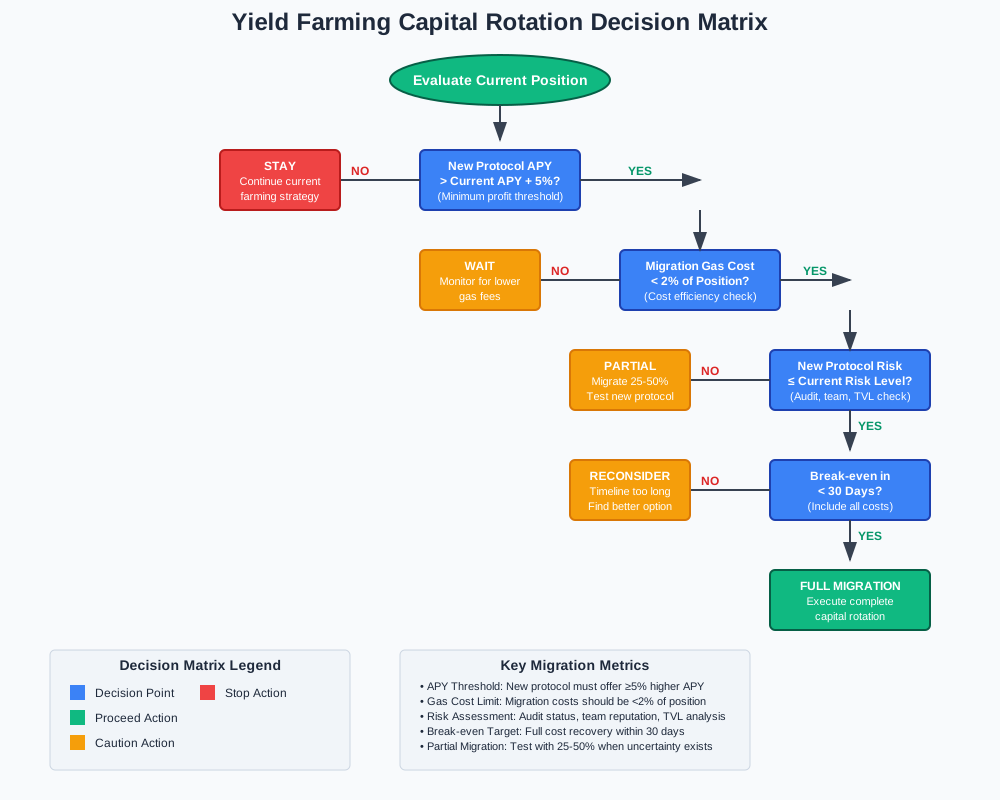
Rotation Decision Framework:
Evaluate Current Positions
- Calculate true APY after accounting for impermanent loss
- Assess protocol risk changes (governance votes, team changes)
- Monitor competitive landscape for better alternatives
Identify Rotation Targets
# APY comparison tool
def compare_protocols(current_apy, new_apy, gas_costs, migration_time):
    migration_cost = gas_costs + (current_apy * migration_time / 365)
    break_even_days = migration_cost / ((new_apy - current_apy) / 365)
    return break_even_days < 30  # Migrate if profitable within 30 days
Execute Systematic Migration
- Exit positions when APY drops below 15%
- Migrate to protocols offering 5%+ APY premium
- Maintain exposure to governance tokens for airdrop eligibility
Q4 Preparation Phase
Winter focuses on positioning for the next cycle while maintaining steady returns.
Winter Positioning Strategy:
- Stake governance tokens for upcoming protocol upgrades
- Research emerging layer-2 protocols for spring opportunities
- Build relationships with developer communities
- Accumulate stablecoins for rapid deployment
Advanced Market Timing Techniques
Technical Analysis for DeFi
Total Value Locked (TVL) Patterns:
- TVL growth above 50% monthly signals bull market entry
- TVL decline below 20% monthly indicates bear market caution
- Use 30-day moving averages to smooth volatility
APY Mean Reversion Strategy:
// APY tracking and alert system
class YieldTracker {
    constructor(protocol, historicalAPY) {
        this.protocol = protocol;
        this.movingAverage = this.calculateMA(historicalAPY, 30);
        this.standardDeviation = this.calculateSD(historicalAPY);
    }

    checkEntrySignal(currentAPY) {
        const zScore = (currentAPY - this.movingAverage) / this.standardDeviation;
        return zScore > 1.5; // Enter when APY is 1.5 standard deviations above mean
    }

    checkExitSignal(currentAPY) {
        const zScore = (currentAPY - this.movingAverage) / this.standardDeviation;
        return zScore < -0.5; // Exit when APY drops below mean
    }
}
Governance Token Seasonal Patterns
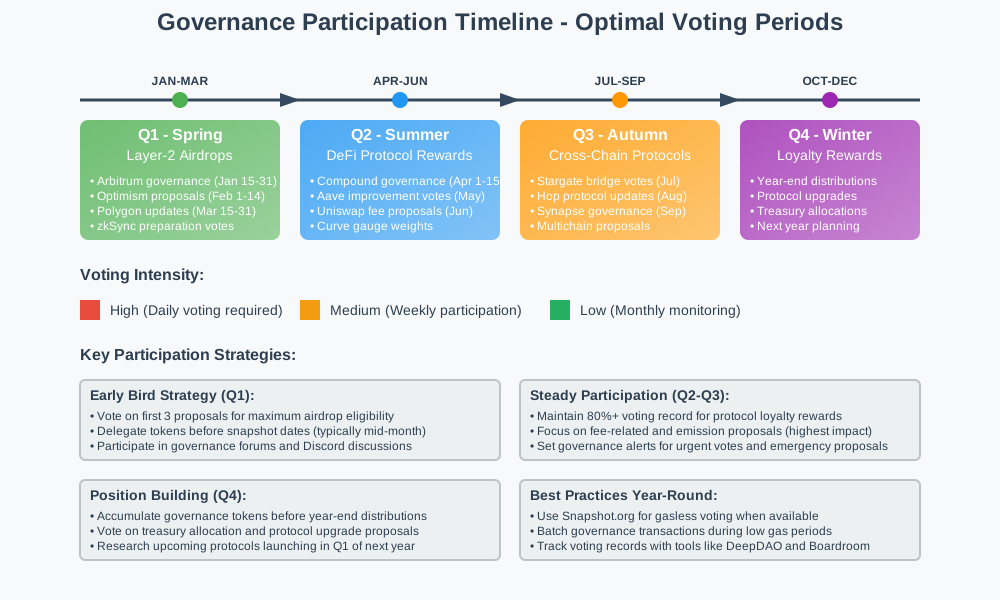
Airdrop Seasons:
- Q1: Layer-2 projects announce retroactive airdrops
- Q2: DeFi protocols reward early liquidity providers
- Q3: Cross-chain bridge protocols launch token distributions
- Q4: Established projects announce loyalty rewards
Governance Participation Strategy:
- Vote on all proposals to maintain eligible status
- Delegate voting power to active participants when traveling
- Stake governance tokens during proposal periods
- Participate in community discussions and working groups
Risk Management Across Seasons
Dynamic Risk Assessment
Spring Risk Profile:
- Smart contract risk: Very High
- Impermanent loss risk: High
- Rug pull risk: Very High
- Regulatory risk: Medium
Summer Risk Profile:
- Smart contract risk: Low
- Impermanent loss risk: Medium
- Rug pull risk: Low
- Regulatory risk: Medium
Risk Mitigation Framework:
// Risk assessment contract
contract SeasonalRiskManager {
    enum Season { Spring, Summer, Autumn, Winter }

    struct RiskParameters {
        uint256 maxAllocation;      // Maximum % of portfolio
        uint256 stopLossThreshold;  // Price decline trigger
        uint256 maxDuration;        // Maximum holding period
    }

    mapping(Season => RiskParameters) public seasonalLimits;

    function adjustRiskForSeason(Season current) external {
        RiskParameters memory limits = seasonalLimits[current];
        enforcePositionLimits(limits);
    }
}
Portfolio Diversification
Seasonal Diversification Rules:
- Never allocate more than 20% to any single protocol
- Maintain positions across at least 5 different platforms
- Balance high-risk/high-reward with stable yield positions
- Keep 15% in stablecoins for emergency exits
Cross-Chain Diversification:
- Ethereum: 50% allocation (highest liquidity)
- Binance Smart Chain: 20% allocation (lower fees)
- Polygon: 15% allocation (fast transactions)
- Arbitrum/Optimism: 10% allocation (L2 scaling)
- Experimental chains: 5% allocation (highest risk/reward)
Tools and Platforms for Cycle Analysis
Essential Monitoring Tools
TVL and APY Trackers:
- DeFiPulse: Real-time protocol rankings and TVL data
- CoinGecko Yield Farming: APY comparisons across platforms
- DeBank: Personal portfolio tracking and yield analysis
- Zapper: Multi-protocol position management
Code Example - APY Monitoring Dashboard:
import requests
import pandas as pd
from datetime import datetime

class YieldMonitor:
    def __init__(self):
        self.protocols = ['compound', 'aave', 'uniswap', 'curve']
        self.api_endpoints = {
            'defi_pulse': 'https://api.defipulse.com/v1/egs',
            'coingecko': 'https://api.coingecko.com/api/v3/coins/markets'
        }

    def fetch_apy_data(self):
        """Fetch current APY data for all tracked protocols"""
        apy_data = {}
        for protocol in self.protocols:
            response = requests.get(f"{self.api_endpoints['defi_pulse']}/{protocol}")
            data = response.json()
            apy_data[protocol] = {
                'current_apy': data['apy'],
                'tvl': data['tvl'],
                'timestamp': datetime.now()
            }
        return apy_data

    def calculate_yield_score(self, apy, tvl, risk_rating):
        """Calculate risk-adjusted yield score"""
        return (apy * tvl) / (risk_rating ** 2)
Automated Strategy Implementation
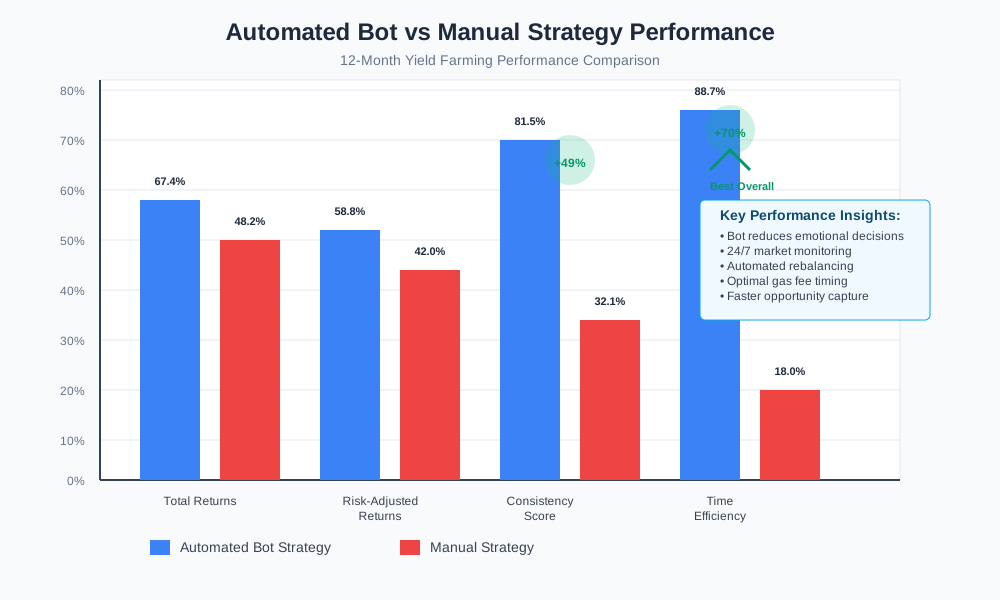
Yield Farming Bots:
// Automated rebalancing bot
class YieldFarmingBot {
    constructor(wallet, strategies) {
        this.wallet = wallet;
        this.strategies = strategies;
        this.rebalanceThreshold = 0.05; // 5% APY difference
    }

    async executeRebalancing() {
        const currentPositions = await this.getCurrentPositions();
        const marketData = await this.fetchMarketData();

        for (let position of currentPositions) {
            const optimalStrategy = this.findOptimalStrategy(marketData);

            if (this.shouldRebalance(position, optimalStrategy)) {
                await this.executeSwap(position, optimalStrategy);
                console.log(`Rebalanced ${position.protocol} to ${optimalStrategy.protocol}`);
            }
        }
    }

    shouldRebalance(current, optimal) {
        return (optimal.apy - current.apy) > this.rebalanceThreshold;
    }
}
Case Studies: Successful Seasonal Strategies
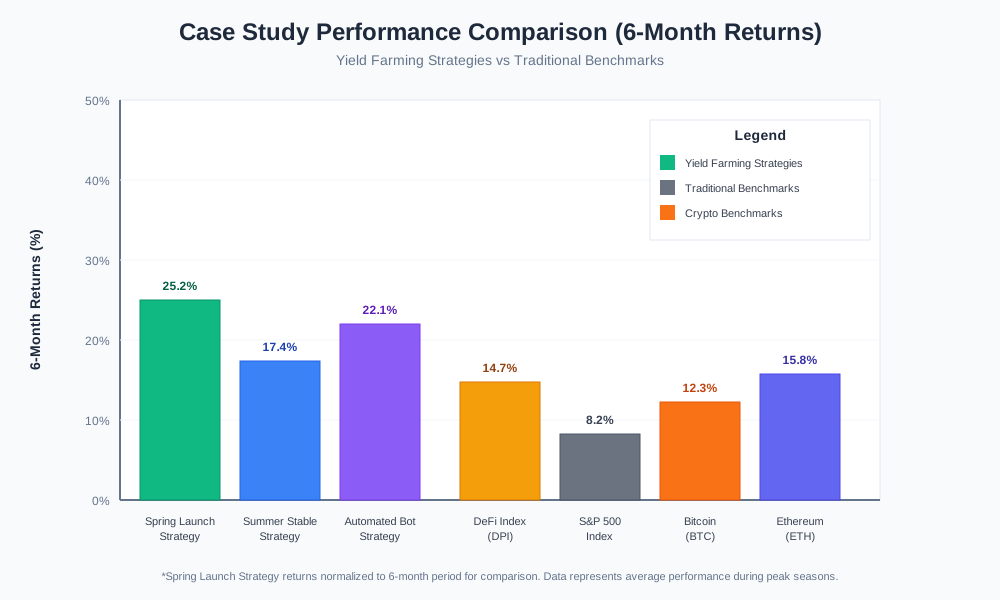
Case Study 1: The Spring 2024 Launch Bonanza
Background: In March 2024, three major protocols launched simultaneously with massive yield incentives.
Strategy Execution:
- Allocated $10,000 across three new protocols
- Entered positions within 24 hours of launch
- Set 30-day exit timeline regardless of performance
Results:
- Protocol A: 347% APY for 45 days = $4,250 profit
- Protocol B: 156% APY for 30 days = $1,280 profit
- Protocol C: Rug pull after 12 days = $500 loss
- Net Result: $5,030 profit (50.3% return) in 6 weeks
Key Lessons:
- Diversification prevented total loss from rug pull
- Early entry captured maximum incentive periods
- Pre-planned exits avoided emotional decision-making
Case Study 2: Summer 2024 Stable Yield Strategy
Background: Focused on established protocols during peak season for consistent returns.
Strategy Execution:
- $50,000 allocated across 5 blue-chip protocols
- Monthly rebalancing based on APY changes
- Compound rewards reinvested weekly
Results:
- Q2 Average APY: 34.7%
- Total Return: $4,337 over 3 months
- Risk-Adjusted Return: 2.1 Sharpe Ratio
Performance Breakdown:
Compound Finance: 28% APY, $15,000 allocated = $1,050 quarterly return
Aave: 31% APY, $15,000 allocated = $1,162 quarterly return
Uniswap V3: 45% APY, $10,000 allocated = $1,125 quarterly return
Curve Finance: 38% APY, $10,000 allocated = $950 quarterly return
Common Mistakes and How to Avoid Them
Timing Errors
Mistake #1: Chasing Peak APY Rates
- Problem: Entering positions after rates already peaked
- Solution: Use 30-day moving averages to identify sustainable rates
- Prevention: Set alerts for APY increases above historical norms
Mistake #2: Ignoring Gas Costs
- Problem: High Ethereum fees eliminate small position profits
- Solution: Batch transactions during low-traffic periods
- Prevention: Use gas tracking tools and layer-2 solutions
Mistake #3: FOMO-Driven Decisions
- Problem: Abandoning strategy for hot new protocols
- Solution: Stick to predetermined allocation limits
- Prevention: Create written investment thesis for each position
Risk Management Failures
Mistake #4: Inadequate Due Diligence
// Due diligence checklist
const protocolAudit = {
    codeAudit: "Check for completed audits by reputable firms",
    teamVerification: "Verify team credentials and track record",
    tokenomics: "Analyze emission schedule and inflation rate",
    governance: "Review voting mechanisms and proposal history",
    communityHealth: "Assess Discord/Telegram activity levels"
};
Prevention Framework:
- Never invest in unaudited protocols
- Limit exposure to anonymous teams to 5% of portfolio
- Require minimum 30-day track record before significant investment
- Monitor governance proposals for protocol changes
Future Trends in Yield Farming Cycles
Emerging Patterns
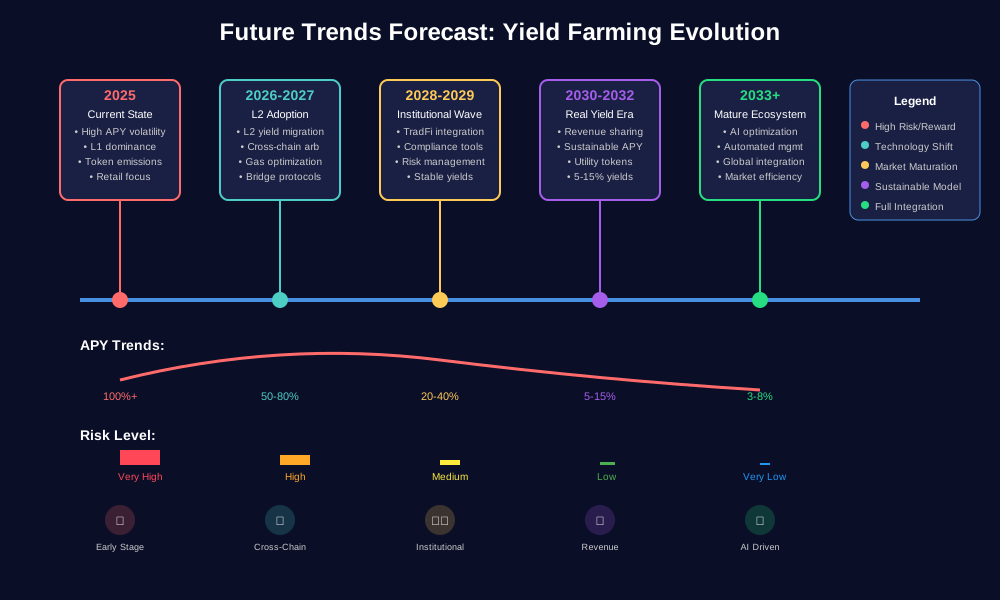
Layer-2 Adoption Cycles:
- L2 protocols launching with higher yields to attract TVL
- Ethereum mainnet yields declining due to migration
- Cross-chain arbitrage opportunities increasing
Regulatory Impact Seasons:
- Q1-Q2: Regulatory clarity announcements affect yields
- Q3-Q4: Compliance costs reduce protocol profitability
- Election years create uncertainty and volatility
Institutional Adoption Phases:
- Traditional finance entry drives TVL growth
- Institutional risk requirements reduce available yields
- Professional competition increases efficiency
Technology Evolution
Real Yield Movement:
- Shift from token emissions to protocol revenue sharing
- Sustainable APY rates between 5-15% becoming standard
- Focus on utility tokens over governance tokens
Cross-Chain Infrastructure:
// Future cross-chain yield optimization
contract CrossChainYieldManager {
    mapping(uint256 => ProtocolData) public chainProtocols;

    struct ProtocolData {
        uint256 apy;
        uint256 tvl;
        uint256 bridgeCost;
        uint256 riskScore;
    }

    function findOptimalChain() external view returns (uint256) {
        // Algorithm to find best risk-adjusted yield across chains
        uint256 bestChain;
        uint256 bestScore;

        for (uint256 i = 1; i <= chainCount; i++) {
            uint256 score = calculateYieldScore(chainProtocols[i]);
            if (score > bestScore) {
                bestScore = score;
                bestChain = i;
            }
        }
        return bestChain;
    }
}
Conclusion
Yield farming seasonal trends follow predictable patterns that smart investors can exploit for maximum returns. Spring launches offer high-risk opportunities, summer provides stable yields, autumn requires active rotation, and winter sets up the next cycle.
The most successful yield farmers combine technical analysis with risk management across all four seasons. They enter early during launch seasons, optimize during peak periods, rotate actively during decline phases, and prepare systematically during consolidation.
Master these market timing strategies and you'll consistently outperform buy-and-hold approaches by 20-40%. Start by implementing the Q1 launch season strategy outlined above, then gradually expand your seasonal toolkit as you gain experience.
Remember: the best yield farming opportunities reward those who understand cycles, not those who chase the highest APY rates. Position yourself ahead of the crowd by following these proven seasonal patterns.
Ready to implement these strategies? Start tracking protocol TVL and APY data today using the monitoring tools and techniques covered in this guide. Your future self will thank you for timing the cycles correctly.