Your friend just bragged about making 400% APY on a mysterious DeFi protocol. You check your traditional savings account earning 0.5% annually. Time to build a yield farming ROI calculator that separates fantasy from reality.
Most farmers lose money because they skip the math. They see flashy APY numbers and jump in blindly. This tutorial shows you how to calculate real returns, track impermanent loss, and make profitable decisions.
You'll learn to build a comprehensive profit analysis tool, understand true yield farming costs, and avoid common calculation mistakes that drain portfolios.
Why Most Yield Farming Calculators Fail Farmers
Traditional calculators ignore critical factors that destroy profits. They show optimistic projections without accounting for gas fees, impermanent loss, or token price volatility.
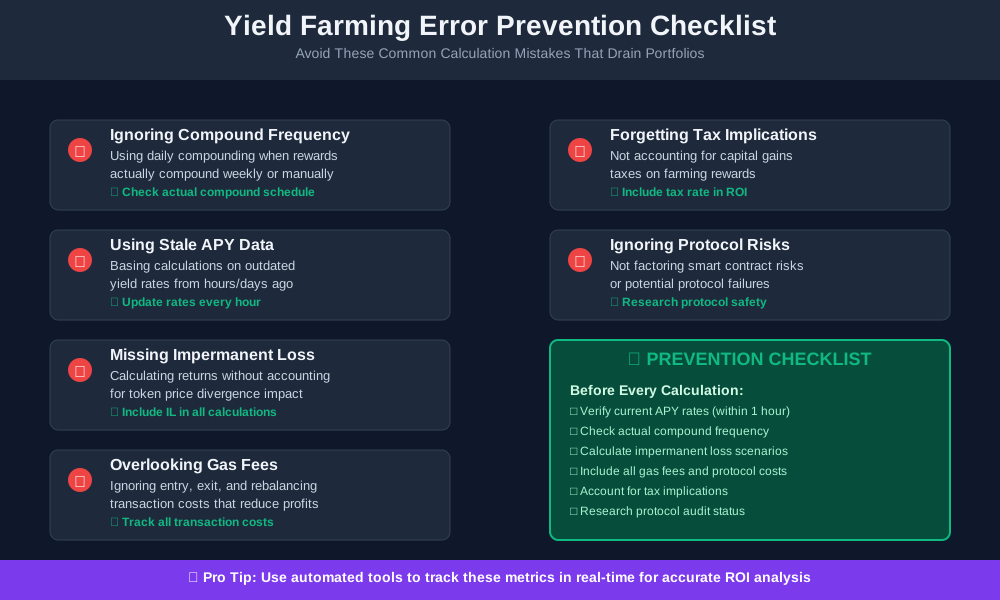
Common calculation errors include:
- Ignoring compound frequency effects
- Overlooking transaction costs
- Missing impermanent loss calculations
- Using outdated APY rates
- Forgetting about tax implications
Smart farmers need accurate tools that account for every profit-eating factor.
Essential Components of a Yield Farming ROI Calculator
Core Metrics for DeFi Returns Analysis
Your liquidity mining profits calculator must track these key variables:
// Essential yield farming metrics
const farmingMetrics = {
  principalAmount: 10000,      // Initial investment in USD
  farmingAPY: 85.5,           // Annual percentage yield
  poolTokens: ['USDC', 'ETH'], // Liquidity pair tokens
  farmingDuration: 365,        // Days farming
  compoundFrequency: 'daily',  // How often rewards compound
  gasFees: 25,                // Average transaction cost
  impermanentLoss: 0,         // IL percentage estimate
  tokenPriceChange: {         // Price movement tracking
    token1: 1.0,              // USDC stays stable
    token2: 1.15              // ETH gains 15%
  }
};
Advanced Profit Analysis Variables
Professional farmers track these additional factors:
// Advanced ROI calculation inputs
const advancedMetrics = {
  entryGasCost: 45,           // Cost to enter position
  exitGasCost: 50,            // Cost to exit position
  rebalancingFees: 15,        // Periodic rebalancing costs
  protocolFees: 0.3,          // Platform fee percentage
  slippageTolerance: 0.5,     // Trading slippage allowance
  emergencyExitCost: 75,      // Panic selling expenses
  taxRate: 0.25,              // Capital gains tax rate
  opportunityCost: 5.2        // Alternative investment APY
};
Step-by-Step ROI Calculator Construction
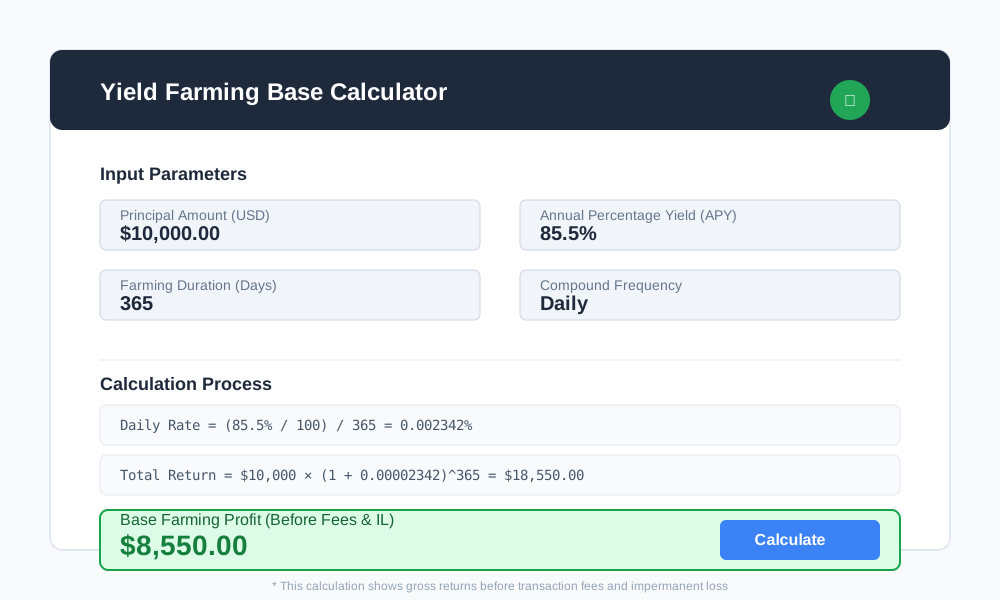
Step 1: Calculate Base Farming Returns
Start with simple yield calculations before adding complexity:
function calculateBaseFarmingReturns(principal, apy, days) {
  // Convert APY to daily rate
  const dailyRate = (apy / 100) / 365;

  // Calculate compound returns
  const totalReturn = principal * Math.pow(1 + dailyRate, days);

  // Return profit amount
  return totalReturn - principal;
}

// Example calculation
const baseProfit = calculateBaseFarmingReturns(10000, 85.5, 365);
console.log(`Base farming profit: $${baseProfit.toFixed(2)}`);
// Output: Base farming profit: $8,550.00
Step 2: Account for Transaction Costs
Gas fees eat into profits more than most farmers realize:
function calculateNetProfitAfterFees(grossProfit, fees) {
  // Subtract all transaction costs
  const totalFees = fees.entry + fees.exit + fees.rebalancing;

  // Calculate net profit
  const netProfit = grossProfit - totalFees;

  // Return profit margin percentage
  const profitMargin = (netProfit / grossProfit) * 100;

  return {
    netProfit: netProfit,
    profitMargin: profitMargin,
    totalFees: totalFees
  };
}

// Example with realistic fees
const feeStructure = {
  entry: 45,
  exit: 50,
  rebalancing: 60  // 4 rebalances at $15 each
};

const netResults = calculateNetProfitAfterFees(8550, feeStructure);
console.log(`Net profit after fees: $${netResults.netProfit.toFixed(2)}`);
// Output: Net profit after fees: $8,395.00
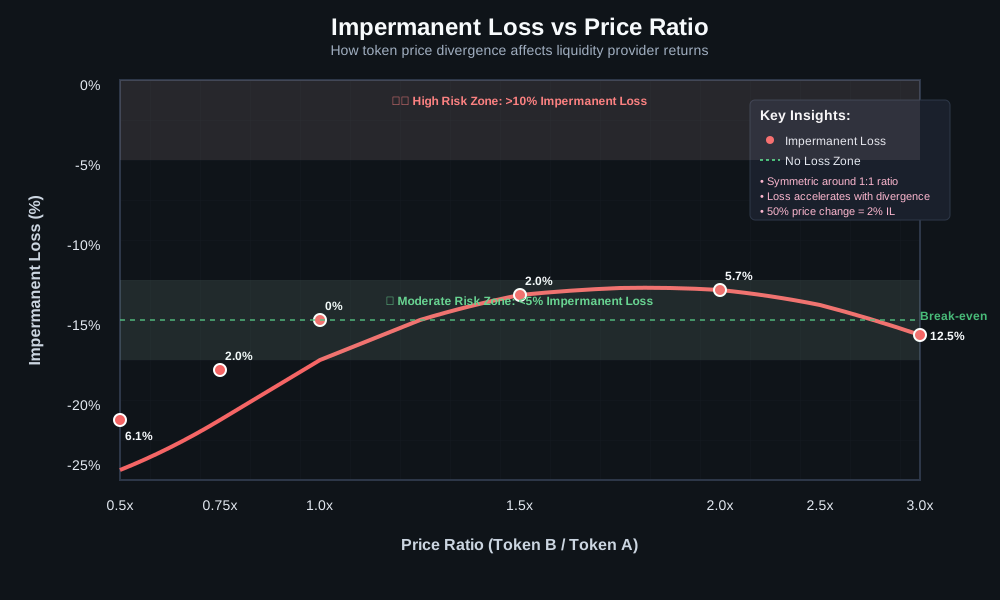
Step 3: Calculate Impermanent Loss Impact
Impermanent loss destroys yield farming profits when token prices diverge:
function calculateImpermanentLoss(priceRatio) {
  // Formula: IL = 2 * sqrt(ratio) / (1 + ratio) - 1
  const sqrtRatio = Math.sqrt(priceRatio);
  const impermanentLoss = (2 * sqrtRatio) / (1 + priceRatio) - 1;

  return Math.abs(impermanentLoss) * 100; // Return as percentage
}

function applyImpermanentLoss(principal, tokenPrices) {
  // Calculate price ratio
  const ratio = tokenPrices.token2 / tokenPrices.token1;

  // Get IL percentage
  const ilPercentage = calculateImpermanentLoss(ratio);

  // Apply IL to principal
  const ilLoss = principal * (ilPercentage / 100);

  return {
    ilPercentage: ilPercentage,
    ilLossAmount: ilLoss,
    adjustedPrincipal: principal - ilLoss
  };
}

// Example: ETH gains 15% against USDC
const ilResults = applyImpermanentLoss(10000, {token1: 1.0, token2: 1.15});
console.log(`Impermanent loss: ${ilResults.ilPercentage.toFixed(2)}%`);
// Output: Impermanent loss: 0.62%
Step 4: Build Complete ROI Analysis Function
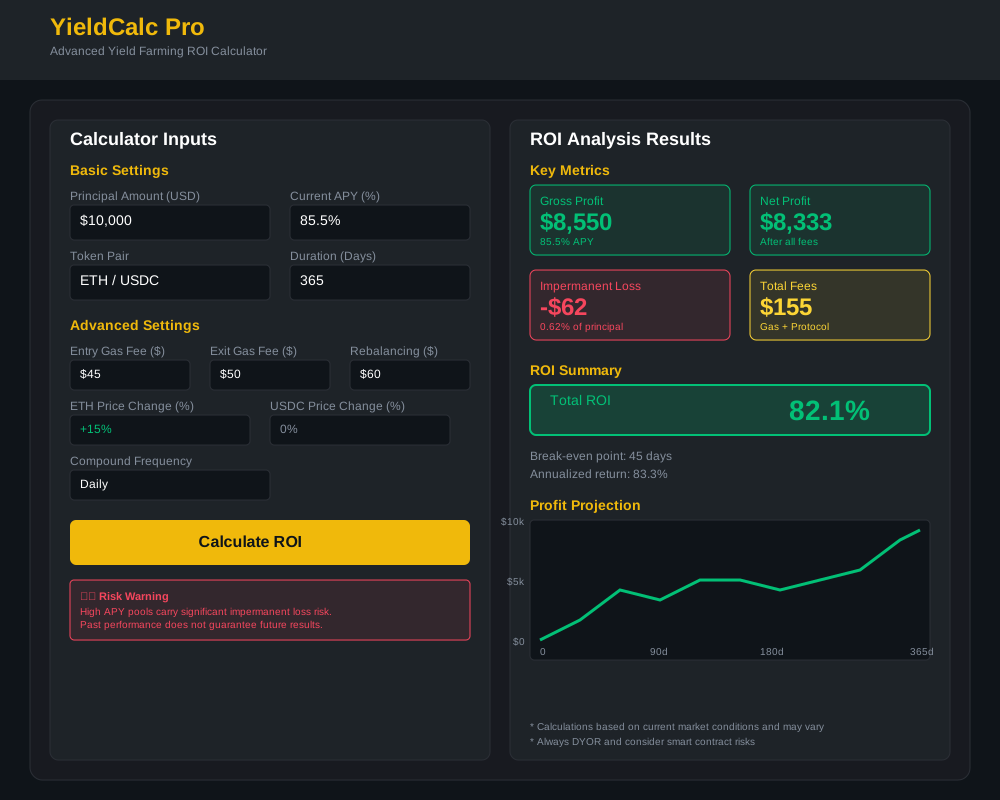
Combine all factors into one comprehensive calculator:
function completeYieldFarmingROI(config) {
  // Step 1: Calculate base returns
  const grossProfit = calculateBaseFarmingReturns(
    config.principal,
    config.apy,
    config.days
  );

  // Step 2: Apply impermanent loss
  const ilResults = applyImpermanentLoss(
    config.principal,
    config.tokenPrices
  );

  // Step 3: Calculate adjusted returns
  const adjustedGrossProfit = grossProfit *
    (ilResults.adjustedPrincipal / config.principal);

  // Step 4: Subtract fees
  const netResults = calculateNetProfitAfterFees(
    adjustedGrossProfit,
    config.fees
  );

  // Step 5: Calculate final metrics
  const totalInvestment = config.principal + config.fees.entry;
  const roi = (netResults.netProfit / totalInvestment) * 100;
  const annualizedROI = (roi / config.days) * 365;

  return {
    grossProfit: grossProfit,
    impermanentLoss: ilResults.ilLossAmount,
    totalFees: netResults.totalFees,
    netProfit: netResults.netProfit,
    roi: roi,
    annualizedROI: annualizedROI,
    breakEvenDays: calculateBreakEven(config)
  };
}

// Complete example
const farmingConfig = {
  principal: 10000,
  apy: 85.5,
  days: 365,
  tokenPrices: {token1: 1.0, token2: 1.15},
  fees: {entry: 45, exit: 50, rebalancing: 60}
};

const finalROI = completeYieldFarmingROI(farmingConfig);
console.log('Complete ROI Analysis:', finalROI);
Real-World Yield Farming Profit Scenarios
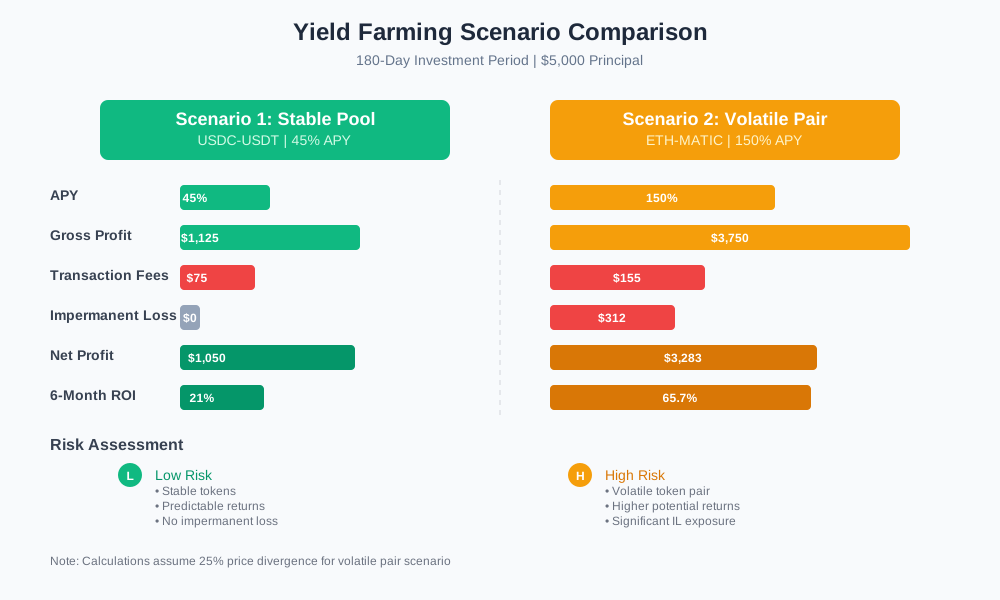
Scenario 1: High APY Stable Pool
USDC-USDT farming with 45% APY:
const stablePairConfig = {
  principal: 5000,
  apy: 45,
  days: 180,
  tokenPrices: {token1: 1.0, token2: 1.0}, // No IL expected
  fees: {entry: 25, exit: 30, rebalancing: 20}
};

// Expected results: Lower risk, steady returns
const stableResults = completeYieldFarmingROI(stablePairConfig);
Scenario 2: Volatile Pair High Rewards
ETH-MATIC farming with 150% APY:
const volatilePairConfig = {
  principal: 5000,
  apy: 150,
  days: 180,
  tokenPrices: {token1: 1.0, token2: 1.25}, // 25% price difference
  fees: {entry: 35, exit: 40, rebalancing: 80}
};

// Expected results: Higher returns but significant IL risk
const volatileResults = completeYieldFarmingROI(volatilePairConfig);
Advanced ROI Optimization Techniques
Dynamic APY Tracking
Farming yield analysis requires monitoring rate changes:
function trackAPYChanges(historicalRates, currentRate) {
  // Calculate rate trend
  const rateChange = currentRate - historicalRates[historicalRates.length - 1];
  const trend = rateChange > 0 ? 'increasing' : 'decreasing';

  // Project future rates
  const averageChange = historicalRates.reduce((sum, rate, index) => {
    if (index === 0) return 0;
    return sum + (rate - historicalRates[index - 1]);
  }, 0) / (historicalRates.length - 1);

  const projectedRate = currentRate + averageChange;

  return {
    currentRate: currentRate,
    trend: trend,
    projectedRate: Math.max(0, projectedRate),
    volatility: calculateRateVolatility(historicalRates)
  };
}
Risk-Adjusted Return Metrics
Smart farmers compare staking rewards calculator results across protocols:
function calculateSharpeRatio(returns, riskFreeRate, volatility) {
  // Risk-adjusted return calculation
  const excessReturn = returns - riskFreeRate;
  const sharpeRatio = excessReturn / volatility;

  return {
    excessReturn: excessReturn,
    sharpeRatio: sharpeRatio,
    riskAdjustedScore: sharpeRatio > 1 ? 'good' : 'poor'
  };
}
Common Yield Farming Calculation Mistakes
Error 1: Ignoring Compound Frequency
Many calculators assume daily compounding when rewards compound weekly:
// Wrong: Assuming daily compounding
const wrongCalculation = principal * Math.pow(1 + (apy/365), 365);

// Right: Using actual compound frequency
function correctCompounding(principal, apy, frequency) {
  const periodsPerYear = {
    daily: 365,
    weekly: 52,
    monthly: 12,
    manually: 1  // Manual claiming
  };

  const periods = periodsPerYear[frequency];
  return principal * Math.pow(1 + (apy/periods), periods);
}
Error 2: Using Stale APY Data
DeFi returns change rapidly. Update rates frequently:
function validateAPYFreshness(lastUpdate, maxAge = 3600000) {
  // Check if APY data is older than 1 hour
  const now = Date.now();
  const dataAge = now - lastUpdate;

  return {
    isStale: dataAge > maxAge,
    ageInHours: dataAge / 3600000,
    updateRecommended: dataAge > maxAge
  };
}
Building Your Custom Yield Farming Dashboard
Interactive Calculator Interface
Create a user-friendly interface for your crypto profit calculator:
// React component structure for calculator
const YieldFarmingCalculator = () => {
  const [config, setConfig] = useState({
    principal: 10000,
    apy: 50,
    duration: 365,
    tokenPair: 'ETH-USDC'
  });

  const [results, setResults] = useState(null);

  const calculateReturns = () => {
    const roi = completeYieldFarmingROI(config);
    setResults(roi);
  };

  return (
    <div className="calculator-interface">
      {/* Input fields for all parameters */}
      {/* Real-time calculation results */}
      {/* Risk warnings and recommendations */}
    </div>
  );
};
Portfolio Tracking Integration
Connect your calculator to real portfolio data:
function integratePortfolioData(walletAddress, protocols) {
  // Fetch current positions from DeFi protocols
  // Calculate aggregate returns
  // Track performance over time
  // Generate automated reports
}

Maximizing Yield Farming Profits
Your yield farming ROI calculator reveals the truth about DeFi returns. Most advertised APYs disappear after accounting for fees, impermanent loss, and realistic market conditions.
Smart farmers use comprehensive calculators to compare opportunities, track real performance, and optimize their strategies. Build your calculator using these detailed steps and avoid the mathematical mistakes that drain portfolios.
Start calculating accurate yield farming returns today. Your future profits depend on precise analysis, not hopeful speculation.