Picture this: You wake up to check your yield farming position, expecting sweet gains, only to discover your carefully balanced liquidity pool looks like a lopsided seesaw after a toddler's birthday party. Welcome to the wild world of yield farming pool imbalance and asymmetric withdrawals.
Pool imbalances happen when token ratios shift dramatically, leaving you with more of one asset than another. Smart farmers know how to navigate these choppy waters without drowning in losses.
This guide reveals proven strategies to handle asymmetric withdrawals, minimize impermanent loss, and keep your DeFi farming profitable. You'll learn to spot warning signs, execute strategic exits, and rebalance pools like a pro.
What Causes Yield Farming Pool Imbalance?
Market Volatility Creates Chaos
Price movements trigger automatic rebalancing in automated market makers (AMMs). When one token appreciates significantly, the pool algorithm sells the rising asset and buys the declining one.
This mechanism maintains the constant product formula but creates asymmetric exposure for liquidity providers.
Arbitrage Trading Amplifies Imbalances
Professional arbitrageurs exploit price differences between pools and external markets. Their trades further skew token ratios, especially during high volatility periods.
Large arbitrage transactions can shift pool composition dramatically within minutes.
Flash Loan Attacks and MEV Extraction
Sophisticated traders use flash loans to extract maximum value from pools. These operations often leave pools temporarily imbalanced, affecting smaller liquidity providers.
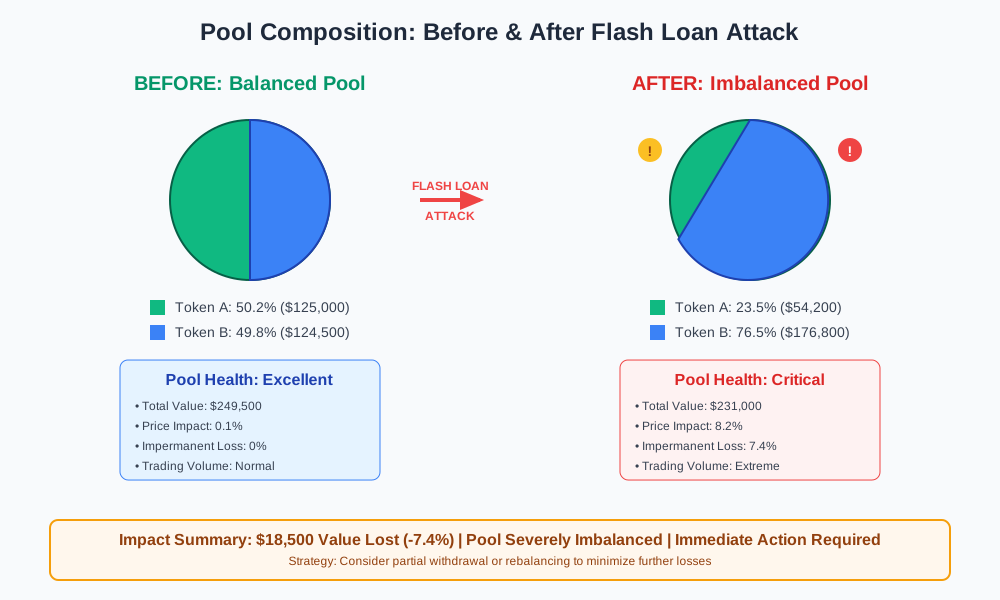
Recognizing Asymmetric Withdrawal Scenarios
Token Ratio Red Flags
Monitor these warning signals:
- Ratio drift beyond 10% from initial deposit proportions
- Single-sided dominance where one token exceeds 70% of position value
- Rapid composition changes over 24-48 hour periods
- Volume spikes indicating heavy arbitrage activity
Impermanent Loss Calculation
// Calculate impermanent loss percentage
function calculateImpermanentLoss(
    uint256 initialPriceRatio,
    uint256 currentPriceRatio
) public pure returns (uint256 loss) {
    // Formula: 2 * sqrt(priceRatio) / (1 + priceRatio) - 1
    uint256 sqrtRatio = sqrt(currentPriceRatio);
    uint256 numerator = 2 * sqrtRatio;
    uint256 denominator = 1 + currentPriceRatio;

    if (numerator < denominator) {
        loss = ((denominator - numerator) * 100) / denominator;
    }

    return loss;
}
This function helps you quantify current impermanent loss before making withdrawal decisions.
Pool Health Monitoring Tools
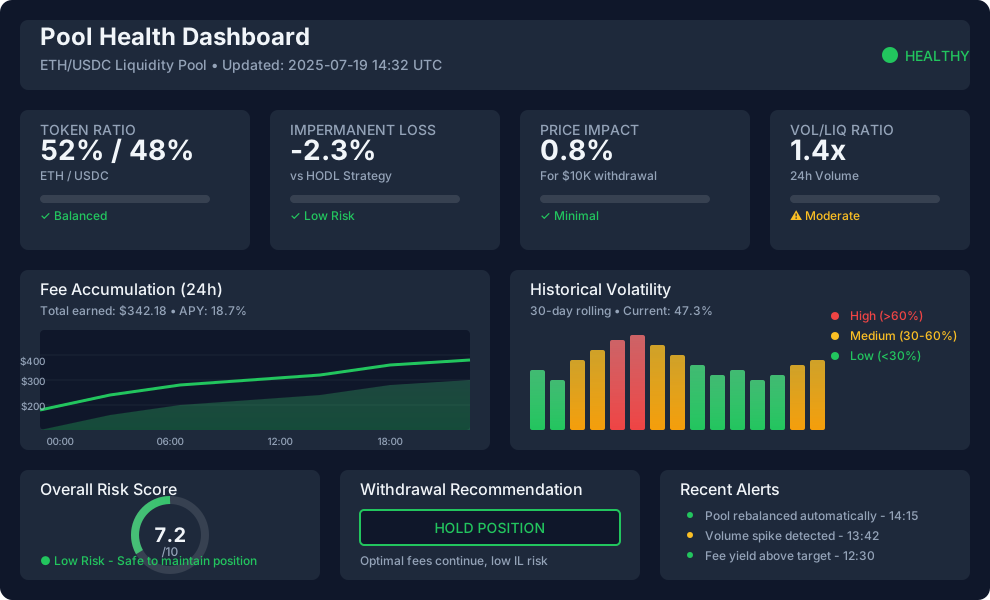
Use these metrics to assess pool condition:
- Price impact analysis - Check slippage for large trades
- Volume-to-liquidity ratio - High ratios indicate instability
- Fee accumulation rate - Declining fees suggest reduced activity
- Historical volatility - Recent price movement patterns
Strategic Approaches to Asymmetric Withdrawals
Partial Withdrawal Strategy
Execute gradual exits to minimize market impact:
// Implement staged withdrawal approach
const executePartialWithdrawal = async (poolContract, totalLiquidity) => {
    const withdrawalStages = [0.25, 0.35, 0.40]; // Percentages
    const delayBetweenStages = 3600; // 1 hour in seconds

    for (let i = 0; i < withdrawalStages.length; i++) {
        const amount = totalLiquidity * withdrawalStages[i];

        // Check pool state before withdrawal
        const poolBalance = await poolContract.getReserves();
        const priceImpact = calculatePriceImpact(amount, poolBalance);

        if (priceImpact < 0.05) { // 5% threshold
            await poolContract.removeLiquidity(amount);
            console.log(`Stage ${i+1} completed: ${amount} tokens withdrawn`);
        } else {
            console.log(`Stage ${i+1} delayed due to high price impact`);
            await delay(delayBetweenStages);
            i--; // Retry this stage
        }

        await delay(delayBetweenStages);
    }
};
Single-Asset Withdrawal Optimization
Some protocols allow withdrawing only the overrepresented token:
- Assess pool composition - Identify the dominant asset
- Calculate optimal withdrawal amount - Balance minimizes loss
- Execute single-sided exit - Withdraw excess tokens only
- Monitor remaining position - Track post-withdrawal performance
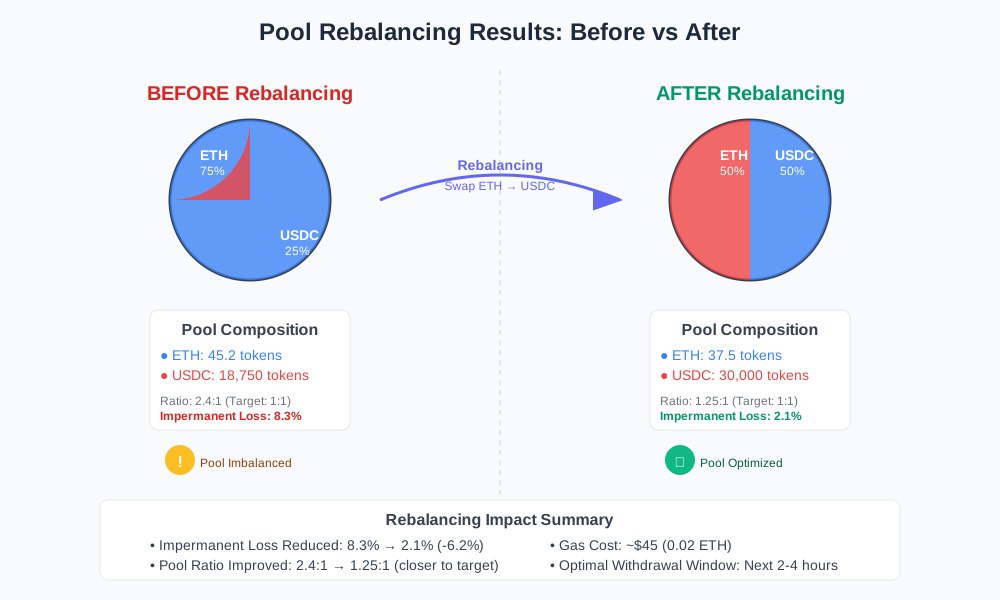
Rebalancing Before Exit
Smart farmers rebalance pools before withdrawing:
def rebalance_before_withdrawal(pool_address, target_ratio):
    """
    Rebalance pool composition before executing withdrawal
    """
    current_reserves = get_pool_reserves(pool_address)
    token_a_amount = current_reserves['token_a']
    token_b_amount = current_reserves['token_b']

    # Calculate current ratio
    current_ratio = token_a_amount / token_b_amount

    if current_ratio > target_ratio:
        # Too much token A, swap some for token B
        excess_a = (current_ratio - target_ratio) * token_b_amount
        swap_amount = excess_a / 2  # Conservative approach

        execute_swap(pool_address, 'token_a', 'token_b', swap_amount)

    elif current_ratio < target_ratio:
        # Too much token B, swap some for token A
        excess_b = (target_ratio - current_ratio) * token_a_amount
        swap_amount = excess_b / 2

        execute_swap(pool_address, 'token_b', 'token_a', swap_amount)

    return get_pool_reserves(pool_address)
Advanced Techniques for Pool Imbalance Management
Automated Monitoring Systems
Set up alerts for critical thresholds:
- Price deviation alerts at 15% ratio changes
- Impermanent loss warnings above 5% threshold
- Volume spike notifications for unusual activity
- Fee yield drops below expected returns
Hedging Strategies
Protect against adverse price movements:
- Delta-neutral hedging - Short positions offset pool exposure
- Options collars - Limit downside while capping upside
- Cross-pool arbitrage - Profit from price differences
- Stablecoin pairing - Reduce volatility exposure
Emergency Exit Protocols
Prepare for worst-case scenarios:
contract EmergencyExit {
    uint256 constant EMERGENCY_THRESHOLD = 20; // 20% impermanent loss

    function checkEmergencyConditions(address pool) external view returns (bool) {
        uint256 currentLoss = calculateCurrentLoss(pool);
        uint256 gasPrice = tx.gasprice;

        // Exit if loss exceeds threshold and gas is reasonable
        return (currentLoss > EMERGENCY_THRESHOLD && gasPrice < 100 gwei);
    }

    function executeEmergencyWithdrawal(address pool, uint256 liquidity) external {
        require(checkEmergencyConditions(pool), "Emergency conditions not met");

        // Withdraw all liquidity immediately
        IUniswapV2Pair(pool).transfer(pool, liquidity);
        IUniswapV2Pair(pool).burn(msg.sender);

        emit EmergencyWithdrawal(msg.sender, pool, liquidity, block.timestamp);
    }
}
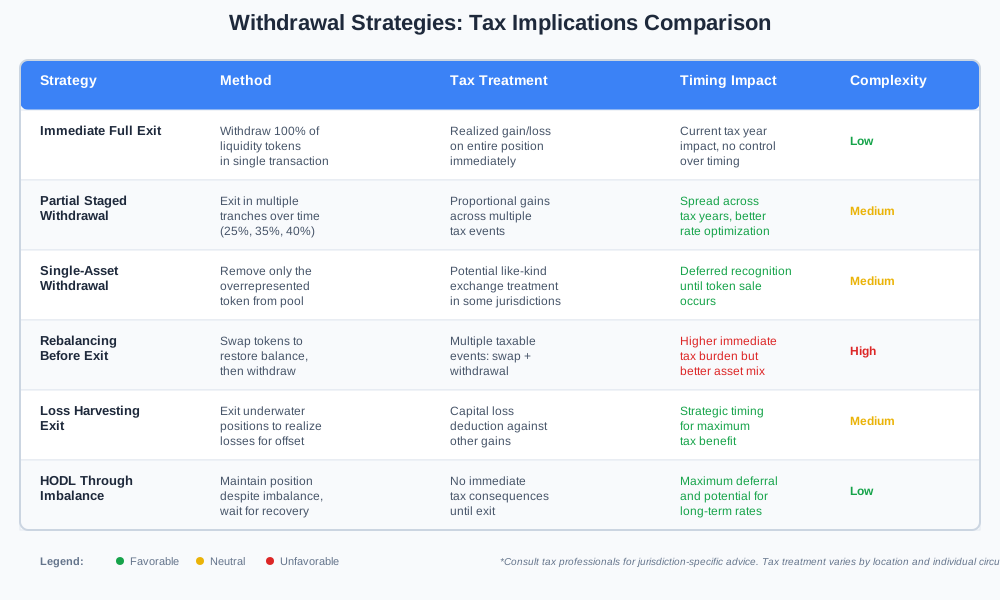
Tax Optimization Considerations
Structure withdrawals for tax efficiency:
- FIFO vs LIFO accounting - Choose beneficial method
- Harvest losses - Offset gains with realized losses
- Timing withdrawals - Align with tax calendar
- Pool token exchanges - Potential like-kind treatment
Tools and Platforms for Managing Asymmetric Withdrawals
Popular DeFi Management Platforms
Zapper offers comprehensive pool monitoring and one-click exits across multiple protocols. Users can track impermanent loss and execute complex withdrawal strategies.
DeBank provides detailed portfolio analytics with real-time pool composition updates and profit/loss calculations.
APY.vision specializes in liquidity pool analytics, showing historical performance and optimal exit timing.
On-Chain Analysis Tools
Dune Analytics dashboards reveal pool trends and whale movements affecting balance. Custom queries help identify optimal withdrawal windows.
Messari offers institutional-grade DeFi analytics with advanced pool metrics and risk assessments.
Smart Contract Interfaces
Most major DEXs provide withdrawal flexibility:
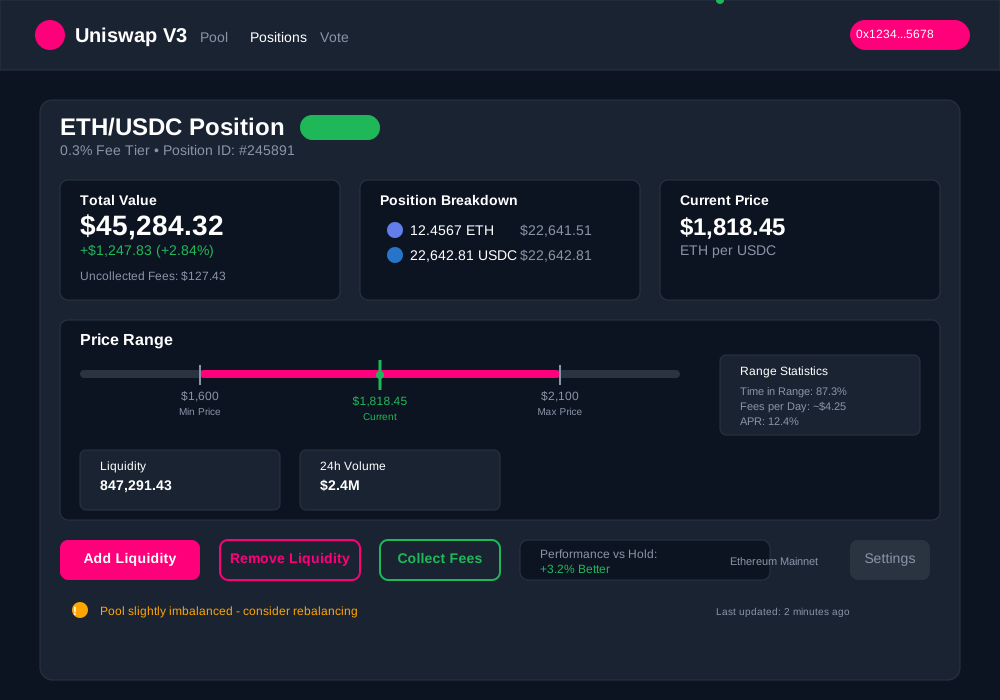
- Uniswap V3 - Concentrated liquidity with precise control
- Curve - Stablecoin-optimized with minimal slippage
- Balancer - Weighted pools with custom ratios
- SushiSwap - Traditional AMM with competitive fees
Best Practices for Future Pool Management
Risk Assessment Framework
Evaluate pools before depositing:
- Volatility correlation - Highly correlated pairs reduce impermanent loss
- Historical fee yields - Consistent revenue streams matter
- Protocol security - Audit reports and track record
- Community activity - Active development and support
Position Sizing Guidelines
Smart allocation reduces overall portfolio risk:
- Maximum 20% allocation to any single pool
- Diversify across protocols and token pairs
- Maintain emergency reserves for unexpected exits
- Regular profit taking prevents overexposure
Continuous Education and Adaptation
DeFi evolves rapidly. Stay informed through:
- Protocol governance participation - Understand upcoming changes
- Research reports - Follow institutional analysis
- Community discussions - Learn from experienced farmers
- Simulation tools - Practice strategies risk-free
Conclusion: Mastering Yield Farming Pool Imbalance
Yield farming pool imbalance doesn't have to destroy your DeFi dreams. Smart farmers use strategic planning, monitoring tools, and calculated withdrawal techniques to navigate market volatility successfully.
The key principles include gradual exits, continuous monitoring, and maintaining flexibility in your approach. Whether you choose partial withdrawals, single-asset exits, or complete rebalancing, having a clear strategy protects your capital.
Start implementing these asymmetric withdrawal strategies today. Your future self will thank you when the next market storm hits and you're prepared to weather it profitably.
Remember: successful yield farming requires patience, planning, and the wisdom to know when to exit. Master these skills, and pool imbalances become profit opportunities rather than portfolio destroyers.
Disclaimer: This content is for educational purposes only. DeFi involves significant risks including smart contract vulnerabilities and impermanent loss. Always conduct your own research and consider consulting with qualified financial advisors before making investment decisions.