Your digital farm just posted a "Going Out of Business" sign. Unlike real farms, you can't just walk away with the chickens.
When yield farming pools close unexpectedly, panic sets in. Your funds seem trapped in smart contracts. The farming rewards stop flowing. The pool's Discord goes silent.
Yield farming pool closure affects thousands of DeFi users annually. This guide provides proven exit strategies to recover your funds safely and maximize your remaining assets.
You'll learn how to identify closure warning signs, execute emergency withdrawals, and protect future investments from similar failures.
Understanding Yield Farming Pool Closures
Why Pools Close
Yield farming pools shut down for several reasons:
- Protocol exploits drain treasury funds
- Low liquidity makes operations unprofitable
- Regulatory pressure forces compliance shutdowns
- Team abandonment leaves projects unmaintained
- Economic attacks target governance tokens
Warning Signs Before Closure
Smart farmers monitor these red flags:
TVL Decline: Total Value Locked drops 50%+ in 30 days Team Communication: Official channels go quiet for weeks Reward Reduction: APY drops dramatically without explanation Smart Contract Issues: Multiple failed transactions appear Community Sentiment: Discord/Telegram shows mass exodus
// Example: Checking pool health on-chain
function checkPoolHealth(address poolAddress) external view returns (
    uint256 totalLiquidity,
    uint256 rewardRate,
    bool isActive
) {
    IYieldPool pool = IYieldPool(poolAddress);
    totalLiquidity = pool.getTotalLiquidity();
    rewardRate = pool.getCurrentAPY();
    isActive = pool.isPoolActive();
}
Emergency Exit Strategies
Strategy 1: Immediate Withdrawal
When closure announcements appear, act fast:
Step 1: Check Withdrawal Status
- Visit the pool's dApp interface
- Verify smart contract functions remain active
- Confirm gas fees for withdrawal transactions
Step 2: Execute Emergency Exit
// Web3 withdrawal example
const withdrawAmount = await stakingContract.methods.balanceOf(userAddress).call();
await stakingContract.methods.withdraw(withdrawAmount).send({
    from: userAddress,
    gas: 300000
});
Step 3: Convert to Stable Assets
- Swap volatile tokens immediately
- Use DEX aggregators for best rates
- Consider USDC/USDT for stability
Strategy 2: Partial Withdrawal Method
For pools with withdrawal limits:
Gradual Exit Approach:
- Withdraw maximum allowed amount daily
- Monitor remaining lock periods
- Set automated withdrawal schedules
- Track remaining token balances
# Python script for scheduled withdrawals
import schedule
import time
from web3 import Web3

def daily_withdrawal():
    max_withdraw = contract.functions.getMaxWithdrawAmount(user_address).call()
    if max_withdraw > 0:
        contract.functions.withdraw(max_withdraw).transact({'from': user_address})
        print(f"Withdrew {max_withdraw} tokens")

schedule.every().day.at("09:00").do(daily_withdrawal)
Strategy 3: Governance Token Recovery
Many users overlook governance tokens:
Recovery Steps:
- Check unclaimed governance rewards
- Delegate voting power to active addresses
- Participate in shutdown voting proposals
- Claim final token distributions
Fund Recovery Techniques
Direct Smart Contract Interaction
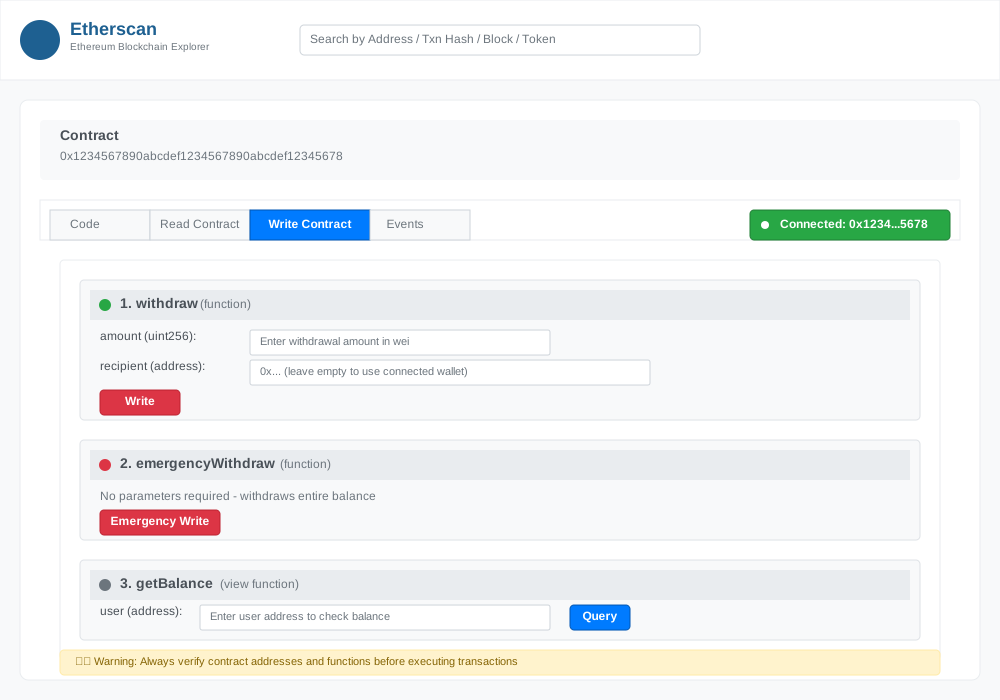
When dApp frontends fail, interact directly with contracts:
Using Etherscan/Block Explorer:
- Navigate to contract address
- Connect your wallet to "Write Contract" tab
- Find withdrawal functions (usually
withdraw,exit, orunstake) - Input your address and amounts
- Execute transaction with sufficient gas
Multi-Signature Wallet Recovery
For pools using multi-sig protocols:
Recovery Process:
- Identify current signers from contract
- Contact active signers through official channels
- Submit withdrawal proposals via Gnosis Safe or similar
- Wait for required signature threshold
- Execute approved transactions
Cross-Chain Bridge Recovery
For cross-chain yield farms:
Bridge Exit Strategy:
- Identify source and destination chains
- Check bridge contract health
- Initiate withdrawal to origin chain
- Monitor bridge completion times
- Claim tokens on destination network
// Cross-chain withdrawal example
function bridgeWithdraw(
    uint256 amount,
    uint256 destinationChainId,
    address recipient
) external {
    require(balances[msg.sender] >= amount, "Insufficient balance");
    balances[msg.sender] -= amount;

    // Emit bridge event for relayers
    emit BridgeWithdraw(msg.sender, amount, destinationChainId, recipient);
}
Protecting Future Investments
Due Diligence Framework
Smart Contract Audits: Verify third-party security reviews
Team Verification: Research founder backgrounds and experience
Treasury Transparency: Check on-chain fund management
Community Health: Active Discord/Telegram with responsive teams
Code Quality: Open source with recent GitHub commits
Risk Management Strategies
Portfolio Diversification:
- Limit single pool exposure to 5-10% of DeFi portfolio
- Spread investments across different protocols
- Use established platforms (Uniswap, Compound, Aave)
- Maintain emergency fund in stablecoins
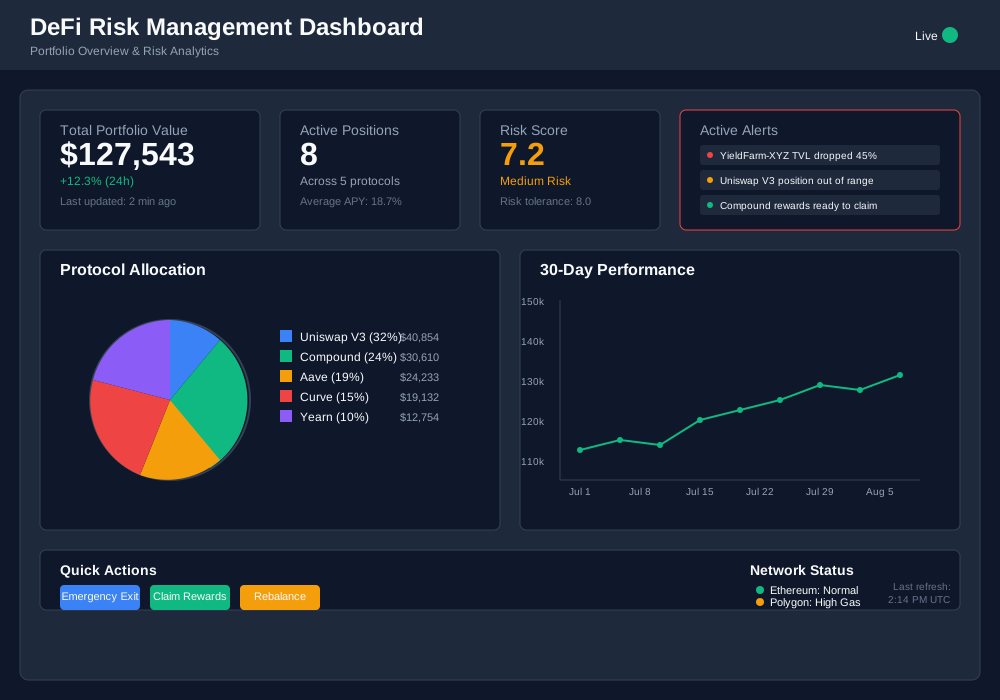
Monitoring Tools:
- DeFiPulse: Track TVL changes across protocols
- CoinGecko: Monitor token price movements
- Nansen: Analyze smart money flows
- DeBank: Portfolio tracking and alerts
Insurance and Protection
DeFi Insurance Options:
- Nexus Mutual: Smart contract cover
- Cover Protocol: Decentralized insurance marketplace
- Unslashed Finance: Cross-chain protection
- InsurAce: Multi-protocol coverage
Technical Recovery Solutions
Contract Migration Assistance
When pools migrate to new contracts:
Migration Checklist:
- Verify new contract addresses through official channels
- Check migration deadlines and requirements
- Approve token spending for new contracts
- Execute migration transactions during specified windows
- Confirm successful token transfers
Advanced Recovery Scripts
For technical users, automated recovery scripts help:
# Automated fund recovery script
import asyncio
from web3 import Web3
from eth_account import Account

class FundRecovery:
    def __init__(self, contract_address, private_key):
        self.w3 = Web3(Web3.HTTPProvider('https://mainnet.infura.io/v3/your_key'))
        self.contract = self.w3.eth.contract(address=contract_address, abi=contract_abi)
        self.account = Account.from_key(private_key)

    async def emergency_exit(self):
        # Check current balance
        balance = self.contract.functions.balanceOf(self.account.address).call()

        if balance > 0:
            # Prepare withdrawal transaction
            txn = self.contract.functions.emergencyWithdraw().buildTransaction({
                'from': self.account.address,
                'gas': 300000,
                'gasPrice': self.w3.eth.gas_price,
                'nonce': self.w3.eth.get_transaction_count(self.account.address)
            })

            # Sign and send
            signed_txn = self.w3.eth.account.sign_transaction(txn, self.account.privateKey)
            tx_hash = self.w3.eth.send_raw_transaction(signed_txn.rawTransaction)

            return tx_hash
Legal and Regulatory Considerations
Documentation for Tax Purposes
Required Records:
- Transaction hashes for all deposits/withdrawals
- Token prices at transaction times
- Gas fees paid for each transaction
- Loss calculations for tax reporting
- Communication records with pool operators
Regulatory Compliance
Know Your Rights:
- Consumer protection laws may apply
- Securities regulations vary by jurisdiction
- Report significant losses to relevant authorities
- Consult tax professionals for loss deductions
- Join class action suits when appropriate
Recovery Success Stories
Case Study: YAM Finance Recovery
When YAM Finance suffered critical bugs in August 2020:
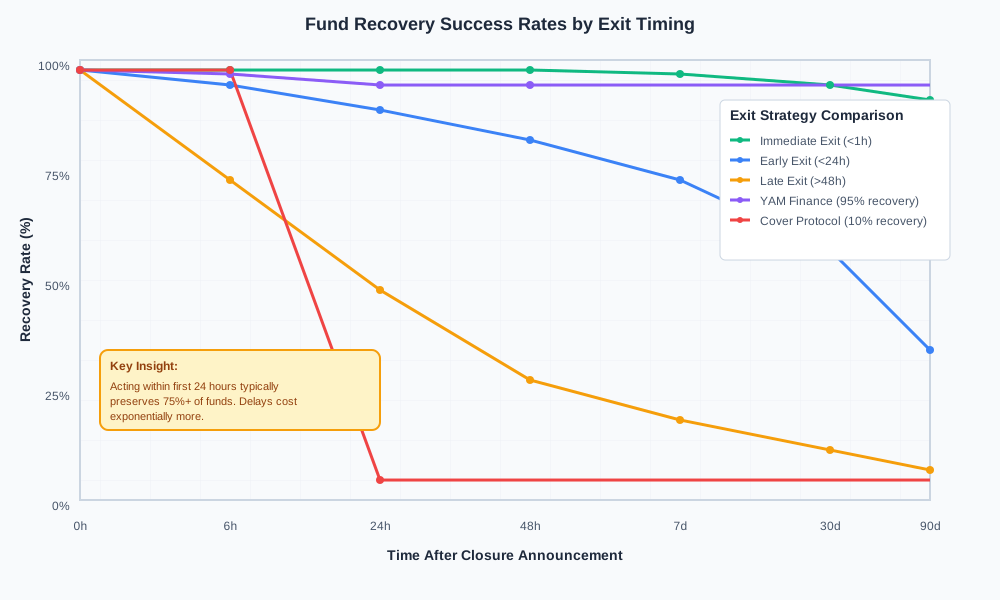
What Happened: Smart contract flaw prevented governance User Action: Community coordinated emergency withdrawal Recovery Rate: 95% of funds recovered within 48 hours Key Lesson: Fast community response enabled successful exit
Case Study: Cover Protocol Exploit
After the Cover Protocol exploit in December 2020:
What Happened: Infinite minting exploit crashed COVER token User Action: Liquidity providers exited before announcement Recovery Rate: Early exiters recovered 100%, late exiters lost 90% Key Lesson: Monitoring exploit detection services saves funds
Frequently Asked Questions
Q: How long do I have to withdraw after closure announcement? A: Most protocols provide 7-30 days. Emergency situations may allow only hours.
Q: Can I recover funds if the smart contract is paused?
A: Depends on contract design. Some include emergency withdrawal functions that work during pauses.
Q: What happens to unclaimed rewards after closure? A: Usually forfeited unless claimed before deadline. Check protocol documentation.
Q: Should I pay high gas fees for emergency withdrawals? A: Yes, if pool value exceeds gas costs. Speed prevents total loss.
Conclusion
Yield farming pool closure doesn't mean permanent fund loss. Quick action, proper tools, and systematic approaches recover most investments successfully.
Key takeaways for fund recovery:
- Monitor warning signs continuously
- Prepare emergency exit procedures
- Use direct smart contract interaction when needed
- Diversify across multiple protocols
- Maintain detailed transaction records
The DeFi space rewards prepared investors. Build your exit strategies before you need them. Your future self will thank you when the next pool closure hits.
Ready to protect your DeFi investments? Start implementing these exit strategies today before the next yield farming pool closure catches you unprepared.