Picture this: You wake up to find your yield farming protocol drained because an oracle reported that 1 ETH equals $0.01. Your users are either crying or celebrating (spoiler: they're probably crying). Oracle price errors don't just ruin morning coffee – they destroy entire protocols.
Yield farming oracle price errors cause millions in losses annually across DeFi protocols. This guide shows you exactly how to detect, prevent, and handle oracle feed failures before they devastate your smart contracts.
You'll learn proven strategies to validate price feeds, implement circuit breakers, and build robust oracle systems that protect your protocol from catastrophic price manipulation attacks.
What Are Yield Farming Oracle Price Errors?
Oracle price errors occur when external data feeds provide incorrect price information to your smart contracts. These errors manifest in several dangerous ways:
- Flash crash exploitation: Attackers manipulate oracle prices during brief market volatility
- Stale price feeds: Oracles fail to update prices during network congestion
- Oracle manipulation: Bad actors compromise oracle nodes or data sources
- Network failures: Infrastructure issues prevent price updates from reaching contracts
The Real Cost of Oracle Failures
DeFi protocols lose over $200 million annually to oracle-related exploits. Major incidents include:
- Compound protocol's $90 million liquidation cascade (November 2022)
- Mango Markets' $116 million oracle manipulation attack (October 2022)
- Venus Protocol's $11 million bad debt from price feed delays (May 2021)
Common Oracle Feed Failure Scenarios
Scenario 1: Stale Price Data
Oracles stop updating during network congestion. Your protocol continues using outdated prices, creating arbitrage opportunities for attackers.
// Vulnerable code - no freshness check
function getPrice() external view returns (uint256) {
    (, int256 price,,,) = priceFeed.latestRoundData();
    return uint256(price);
}
Scenario 2: Price Manipulation Attacks
Attackers manipulate DEX prices that feed into your oracle system. They execute large trades, trigger oracle updates, then exploit the temporary price distortion.
Scenario 3: Oracle Node Failures
Single oracle providers experience downtime. Protocols relying on one data source become vulnerable to extended outages.
How to Detect Oracle Price Errors
Implement Price Deviation Checks
Monitor price changes between updates. Flag unusual movements that exceed normal market volatility.
contract OraclePriceValidator {
    uint256 public constant MAX_PRICE_DEVIATION = 1000; // 10%
    uint256 private lastPrice;
    uint256 private lastUpdateTime;

    function validatePriceUpdate(uint256 newPrice) internal view returns (bool) {
        if (lastPrice == 0) return true; // First price update

        uint256 priceChange = newPrice > lastPrice
            ? ((newPrice - lastPrice) * 10000) / lastPrice
            : ((lastPrice - newPrice) * 10000) / lastPrice;

        return priceChange <= MAX_PRICE_DEVIATION;
    }

    function updatePrice() external {
        (, int256 price,, uint256 timeStamp,) = priceFeed.latestRoundData();
        uint256 newPrice = uint256(price);

        require(validatePriceUpdate(newPrice), "Price deviation too high");
        require(timeStamp > lastUpdateTime, "Stale price data");

        lastPrice = newPrice;
        lastUpdateTime = timeStamp;
    }
}
Check Data Freshness
Verify oracle timestamps to ensure price data remains current. Reject stale feeds that could enable exploitation.
function getPriceWithFreshnessCheck() external view returns (uint256) {
    (, int256 price,, uint256 timeStamp,) = priceFeed.latestRoundData();

    // Reject prices older than 1 hour
    require(block.timestamp - timeStamp <= 3600, "Price data too old");
    require(price > 0, "Invalid price");

    return uint256(price);
}
Monitor Oracle Heartbeat
Track oracle update frequency. Alert when update intervals exceed expected ranges.
contract OracleHeartbeatMonitor {
    mapping(address => uint256) public lastHeartbeat;
    uint256 public constant HEARTBEAT_THRESHOLD = 1800; // 30 minutes

    function checkOracleHealth(address oracle) external view returns (bool) {
        return block.timestamp - lastHeartbeat[oracle] <= HEARTBEAT_THRESHOLD;
    }

    function recordHeartbeat(address oracle) external {
        lastHeartbeat[oracle] = block.timestamp;
    }
}
Step-by-Step Oracle Error Prevention
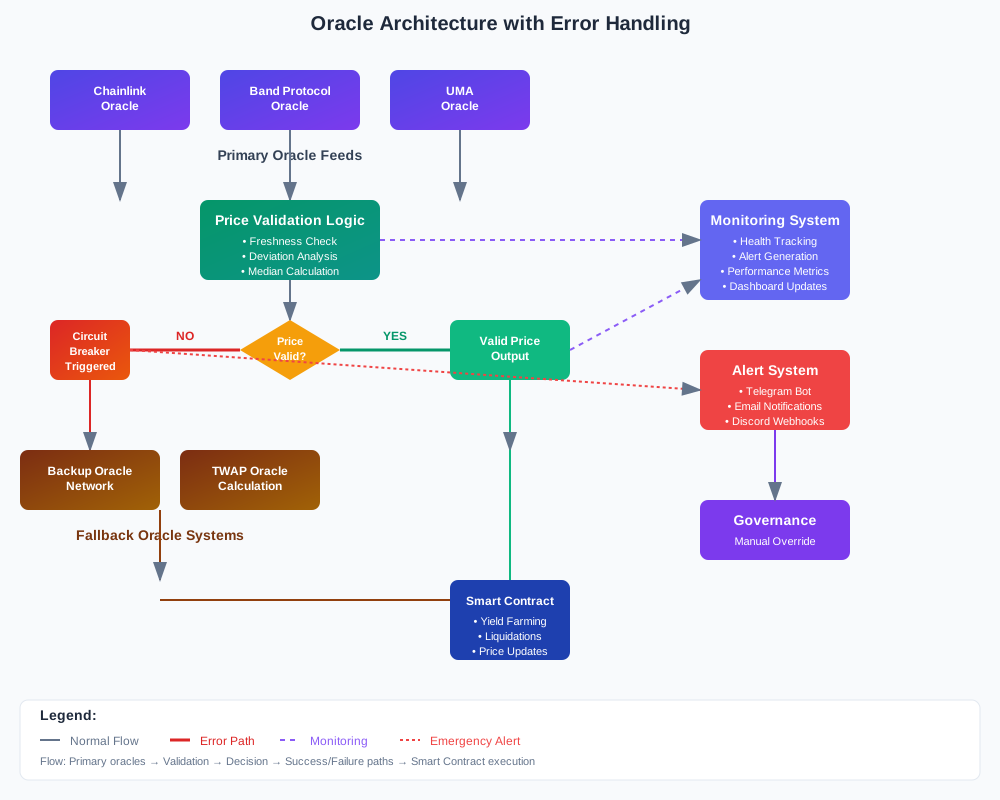
Step 1: Implement Multiple Oracle Sources
Diversify price feeds across multiple oracle providers. Compare prices to identify outliers.
contract MultiOracleAggregator {
    address[] public oracles;
    uint256 public constant MIN_ORACLES = 3;
    uint256 public constant MAX_DEVIATION = 500; // 5%

    function getAggregatedPrice() external view returns (uint256) {
        require(oracles.length >= MIN_ORACLES, "Insufficient oracles");

        uint256[] memory prices = new uint256[](oracles.length);
        uint256 validPrices = 0;

        // Collect prices from all oracles
        for (uint256 i = 0; i < oracles.length; i++) {
            try IOracle(oracles[i]).getPrice() returns (uint256 price) {
                if (price > 0) {
                    prices[validPrices] = price;
                    validPrices++;
                }
            } catch {
                // Oracle failed, skip
                continue;
            }
        }

        require(validPrices >= MIN_ORACLES, "Too many oracle failures");

        // Calculate median price
        return calculateMedian(prices, validPrices);
    }
}
Step 2: Build Circuit Breaker Systems
Pause protocol operations when oracle anomalies occur. Protect users from executing trades with bad price data.
contract OracleCircuitBreaker {
    bool public emergencyPaused;
    uint256 public pauseStartTime;
    uint256 public constant PAUSE_DURATION = 3600; // 1 hour

    modifier whenNotPaused() {
        require(!isSystemPaused(), "System paused due to oracle issues");
        _;
    }

    function isSystemPaused() public view returns (bool) {
        if (!emergencyPaused) return false;
        return block.timestamp < pauseStartTime + PAUSE_DURATION;
    }

    function triggerEmergencyPause() external onlyGovernance {
        emergencyPaused = true;
        pauseStartTime = block.timestamp;
        emit EmergencyPause(block.timestamp);
    }

    function resumeOperations() external onlyGovernance {
        emergencyPaused = false;
        emit OperationsResumed(block.timestamp);
    }
}
Step 3: Create Price Validation Logic
Implement comprehensive checks that catch manipulated or incorrect price data before execution.
contract PriceValidator {
    struct PriceData {
        uint256 price;
        uint256 timestamp;
        uint256 confidence;
    }

    mapping(address => PriceData) public priceHistory;

    function validatePrice(
        address asset,
        uint256 newPrice,
        uint256 confidence
    ) external returns (bool) {
        PriceData memory lastData = priceHistory[asset];

        // Check confidence threshold
        require(confidence >= 95, "Low confidence price data");

        // Validate price range
        if (lastData.price > 0) {
            uint256 deviation = calculateDeviation(lastData.price, newPrice);
            require(deviation <= 2000, "Price deviation exceeds 20%"); // 20%
        }

        // Check time progression
        require(block.timestamp > lastData.timestamp, "Price timestamp invalid");

        // Update price history
        priceHistory[asset] = PriceData({
            price: newPrice,
            timestamp: block.timestamp,
            confidence: confidence
        });

        return true;
    }

    function calculateDeviation(
        uint256 oldPrice,
        uint256 newPrice
    ) internal pure returns (uint256) {
        uint256 diff = oldPrice > newPrice
            ? oldPrice - newPrice
            : newPrice - oldPrice;
        return (diff * 10000) / oldPrice;
    }
}
Advanced Oracle Error Handling Strategies
Time-Weighted Average Prices (TWAP)
Smooth out price volatility using historical data. TWAP reduces manipulation attack windows.
contract TWAPOracle {
    struct Observation {
        uint256 timestamp;
        uint256 price;
        uint256 cumulativePrice;
    }

    Observation[] public observations;
    uint256 public constant TWAP_PERIOD = 1800; // 30 minutes

    function updatePrice(uint256 newPrice) external {
        uint256 timeElapsed = block.timestamp - observations[observations.length - 1].timestamp;
        uint256 newCumulative = observations[observations.length - 1].cumulativePrice +
                               (observations[observations.length - 1].price * timeElapsed);

        observations.push(Observation({
            timestamp: block.timestamp,
            price: newPrice,
            cumulativePrice: newCumulative
        }));

        // Keep only recent observations
        if (observations.length > 100) {
            for (uint256 i = 0; i < observations.length - 1; i++) {
                observations[i] = observations[i + 1];
            }
            observations.pop();
        }
    }

    function getTWAP() external view returns (uint256) {
        require(observations.length >= 2, "Insufficient data");

        uint256 oldestValidTime = block.timestamp - TWAP_PERIOD;
        uint256 oldestIndex = findOldestValidObservation(oldestValidTime);

        Observation memory current = observations[observations.length - 1];
        Observation memory oldest = observations[oldestIndex];

        uint256 timeWeightedPrice = (current.cumulativePrice - oldest.cumulativePrice) /
                                   (current.timestamp - oldest.timestamp);

        return timeWeightedPrice;
    }
}
Fallback Oracle Systems
Automatically switch to backup oracles during primary feed failures.
contract FallbackOracleSystem {
    address[] public primaryOracles;
    address[] public backupOracles;
    mapping(address => bool) public oracleActive;

    function getPriceWithFallback() external view returns (uint256) {
        // Try primary oracles first
        for (uint256 i = 0; i < primaryOracles.length; i++) {
            if (oracleActive[primaryOracles[i]]) {
                try IOracle(primaryOracles[i]).getPrice() returns (uint256 price) {
                    if (isValidPrice(price)) {
                        return price;
                    }
                } catch {
                    continue;
                }
            }
        }

        // Fall back to backup oracles
        for (uint256 i = 0; i < backupOracles.length; i++) {
            if (oracleActive[backupOracles[i]]) {
                try IOracle(backupOracles[i]).getPrice() returns (uint256 price) {
                    if (isValidPrice(price)) {
                        return price;
                    }
                } catch {
                    continue;
                }
            }
        }

        revert("All oracles failed");
    }

    function isValidPrice(uint256 price) internal pure returns (bool) {
        return price > 0 && price < type(uint128).max;
    }
}
Testing Oracle Error Scenarios
Simulate Oracle Failures
Create comprehensive test suites that cover all failure modes.
// Test contract for oracle failure simulation
contract OracleFailureSimulator {
    bool public shouldFail;
    bool public shouldReturnStaleData;
    uint256 public stalePriceTimestamp;
    uint256 public manipulatedPrice;

    function simulateOracleFailure() external {
        shouldFail = true;
    }

    function simulateStaleData() external {
        shouldReturnStaleData = true;
        stalePriceTimestamp = block.timestamp - 7200; // 2 hours old
    }

    function simulatePriceManipulation(uint256 fakePrice) external {
        manipulatedPrice = fakePrice;
    }

    function getPrice() external view returns (uint256) {
        require(!shouldFail, "Oracle failure simulated");

        if (shouldReturnStaleData) {
            return manipulatedPrice > 0 ? manipulatedPrice : 1000e18;
        }

        return manipulatedPrice > 0 ? manipulatedPrice : 2000e18;
    }

    function latestRoundData() external view returns (
        uint80 roundId,
        int256 answer,
        uint256 startedAt,
        uint256 updatedAt,
        uint80 answeredInRound
    ) {
        require(!shouldFail, "Oracle failure simulated");

        uint256 timestamp = shouldReturnStaleData ? stalePriceTimestamp : block.timestamp;
        uint256 price = manipulatedPrice > 0 ? manipulatedPrice : 2000e18;

        return (1, int256(price), timestamp, timestamp, 1);
    }
}
Monitor Oracle Health Metrics
Track oracle performance and reliability over time.
contract OracleHealthTracker {
    struct HealthMetrics {
        uint256 totalUpdates;
        uint256 failedUpdates;
        uint256 averageUpdateTime;
        uint256 maxDeviation;
        uint256 lastHealthCheck;
    }

    mapping(address => HealthMetrics) public oracleHealth;

    function recordOracleUpdate(
        address oracle,
        bool success,
        uint256 updateTime,
        uint256 priceDeviation
    ) external {
        HealthMetrics storage metrics = oracleHealth[oracle];

        metrics.totalUpdates++;
        if (!success) {
            metrics.failedUpdates++;
        }

        // Update average response time
        metrics.averageUpdateTime =
            (metrics.averageUpdateTime + updateTime) / 2;

        // Track maximum deviation
        if (priceDeviation > metrics.maxDeviation) {
            metrics.maxDeviation = priceDeviation;
        }

        metrics.lastHealthCheck = block.timestamp;
    }

    function getOracleReliability(address oracle) external view returns (uint256) {
        HealthMetrics memory metrics = oracleHealth[oracle];
        if (metrics.totalUpdates == 0) return 0;

        uint256 successRate = ((metrics.totalUpdates - metrics.failedUpdates) * 100) /
                             metrics.totalUpdates;
        return successRate;
    }
}
Deployment Checklist for Oracle Security
Pre-Launch Security Audit
- Test all oracle failure scenarios in staging environment
- Verify price deviation limits match market volatility
- Confirm circuit breaker triggers work correctly
- Validate fallback oracle switching mechanisms
- Check TWAP calculations for accuracy
Production Monitoring Setup
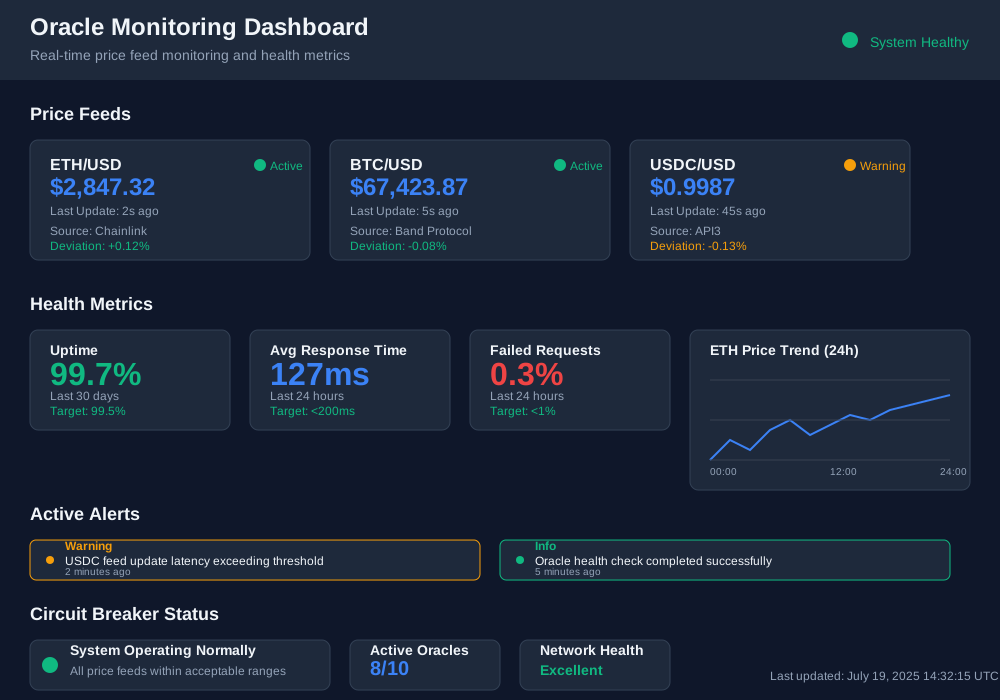
- Deploy oracle health monitoring dashboards
- Configure alerts for price anomalies
- Set up automated circuit breaker notifications
- Monitor oracle update frequency
- Track protocol pause/resume events
Post-Launch Validation
Run these commands to verify your oracle protection works:
# Check oracle health status
cast call $ORACLE_ADDRESS "getOracleReliability(address)" $PRIMARY_ORACLE

# Verify price freshness
cast call $PRICE_VALIDATOR "getPriceWithFreshnessCheck()"

# Test circuit breaker
cast call $CIRCUIT_BREAKER "isSystemPaused()"
Conclusion
Oracle price errors represent one of the biggest threats to yield farming protocols. The strategies covered here – multiple oracle sources, circuit breakers, price validation, and comprehensive monitoring – create multiple layers of protection against catastrophic failures.
Implementing these yield farming oracle price error prevention systems protects your protocol from the millions in losses that plague DeFi projects annually. Start with basic price validation, then gradually add more sophisticated protections as your protocol grows.
Remember: Oracle failures aren't a matter of if, but when. The protocols that survive are those that prepare for these failures before they happen.