Your wallet is hemorrhaging ETH faster than a crypto influencer's credibility during a bear market. Every yield farming transaction feels like paying luxury car prices for bus rides. But here's the thing: those expensive gas fees aren't inevitable.
Yield farming gas fee optimization can slash your transaction costs by up to 70%. This guide shows you exactly how to implement proven strategies that DeFi whales use to maximize profits while minimizing fees.
The Hidden Cost Crisis in Yield Farming
DeFi users lose billions annually to unnecessary gas fees. A typical yield farmer executing 10 transactions monthly spends $200-500 just on gas during peak periods. That's $2,400-6,000 per year – money that should be earning yield instead.
The problem compounds because high gas fees create a vicious cycle:
- Smaller positions become unprofitable
- Frequent rebalancing becomes impossible
- Compound effects diminish
- Only whale-sized investments make sense
Understanding Gas Fee Mechanics in DeFi
Why Gas Fees Spike During Yield Farming
Gas fees fluctuate based on network congestion and transaction complexity. Yield farming operations typically involve:
- Token approvals: 45,000-65,000 gas units
- Liquidity additions: 150,000-300,000 gas units
- Staking transactions: 80,000-150,000 gas units
- Harvest operations: 100,000-200,000 gas units
The Real Cost of Poor Timing
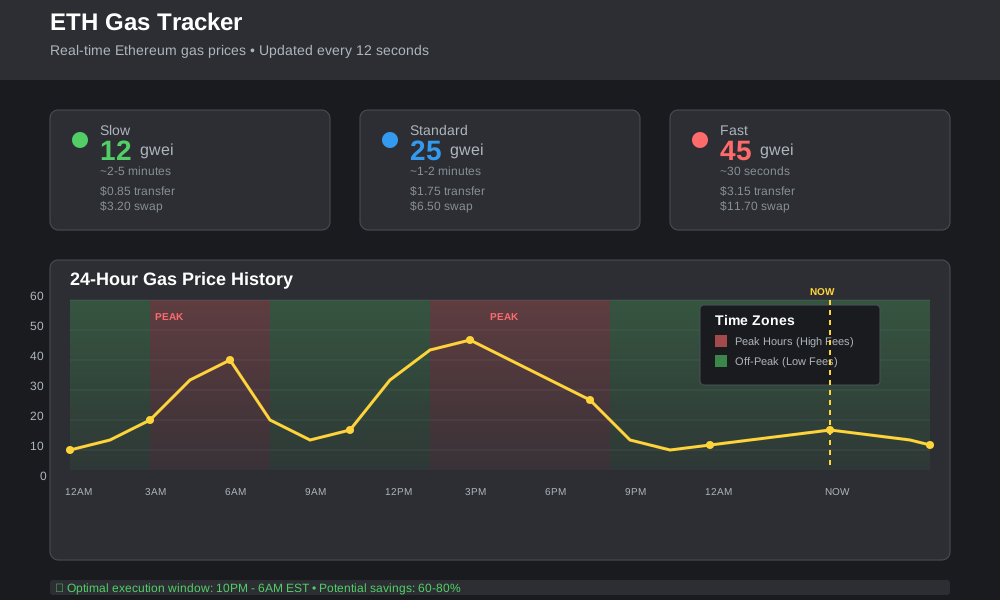
A simple yield farming sequence during peak hours (2-6 PM EST) costs 300-500% more than off-peak execution. Here's the math:
// Peak hours example (50 gwei)
uint256 approvalCost = 55000 * 50 * 10^9; // 0.00275 ETH
uint256 stakingCost = 180000 * 50 * 10^9;  // 0.009 ETH
uint256 totalPeak = 0.01175 ETH; // ~$25-30

// Off-peak example (12 gwei)
uint256 approvalCostLow = 55000 * 12 * 10^9; // 0.00066 ETH
uint256 stakingCostLow = 180000 * 12 * 10^9;  // 0.00216 ETH
uint256 totalOffPeak = 0.00282 ETH; // ~$6-8
Strategy 1: Transaction Timing Optimization
Peak Hours Analysis
Network congestion follows predictable patterns:
Highest fees (avoid these times):
- 9 AM - 12 PM EST (European overlap)
- 2 PM - 6 PM EST (US trading hours)
- Sunday evenings (weekly close)
Lowest fees (optimal windows):
- 10 PM - 6 AM EST
- Saturday mornings
- Major US holidays
Gas Price Monitoring Tools
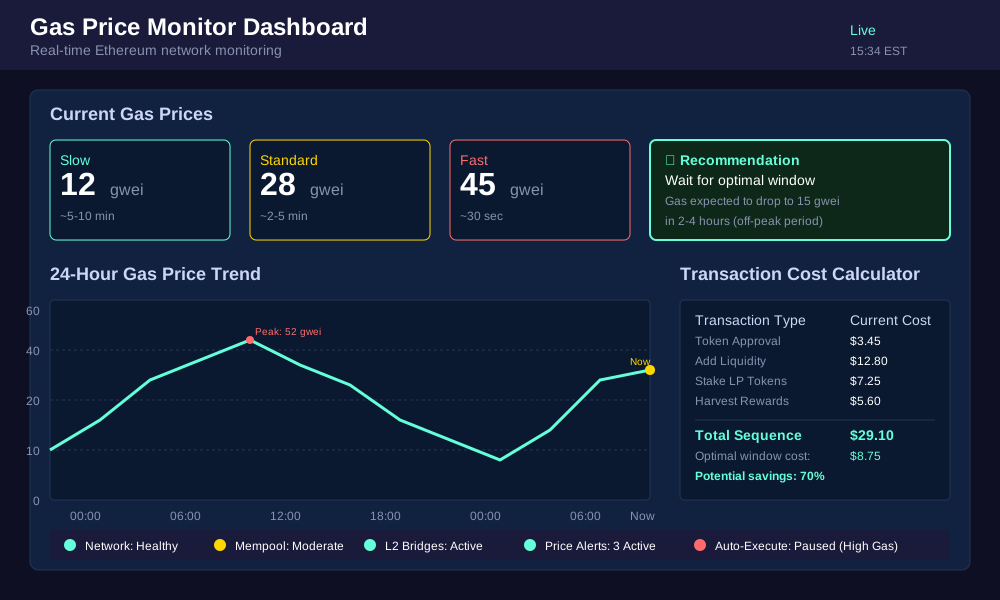
Implement automated monitoring using these methods:
// Web3 gas price checker
async function getOptimalGasPrice() {
    const gasPrice = await web3.eth.getGasPrice();
    const gasPriceGwei = web3.utils.fromWei(gasPrice, 'gwei');

    // Only execute if gas is below 25 gwei
    if (parseInt(gasPriceGwei) <= 25) {
        return true;
    }
    return false;
}

// Set up price alerts
function monitorGasPrices() {
    setInterval(async () => {
        const isOptimal = await getOptimalGasPrice();
        if (isOptimal) {
            console.log("Gas prices optimal - execute transactions now!");
            // Trigger your farming operations
        }
    }, 300000); // Check every 5 minutes
}
Strategy 2: Layer 2 Migration for Yield Farming
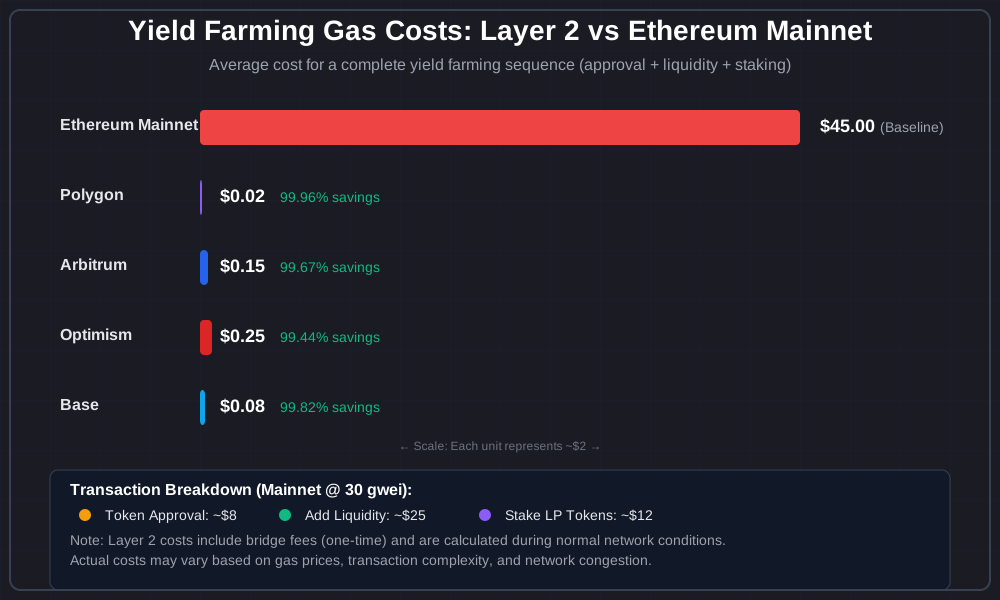
Polygon Integration for 95% Fee Reduction
Polygon offers identical yield farming opportunities at fraction of mainnet costs:
// Mainnet transaction cost
uint256 mainnetCost = 200000 * 30 * 10^9; // 0.006 ETH (~$15)

// Polygon equivalent
uint256 polygonCost = 200000 * 1 * 10^9; // 0.0002 MATIC (~$0.0001)

// Savings calculation
uint256 savings = ((mainnetCost - polygonCost) / mainnetCost) * 100;
// Result: 99.97% reduction
Top Layer 2 Platforms for Yield Farming
- Polygon: Fastest adoption, most protocols
- Arbitrum: Optimistic rollup, Ethereum-native
- Optimism: Growing ecosystem, retroactive rewards
- Base: Coinbase-backed, emerging DeFi scene
Strategy 3: Smart Contract Interaction Optimization
Batch Transaction Implementation
Combine multiple operations into single transactions:
contract YieldFarmingOptimizer {
    function batchFarmOperations(
        address[] memory tokens,
        uint256[] memory amounts,
        address[] memory pools
    ) external {
        require(tokens.length == amounts.length, "Array mismatch");

        for (uint i = 0; i < tokens.length; i++) {
            // Approve token
            IERC20(tokens[i]).approve(pools[i], amounts[i]);

            // Add liquidity
            ILiquidityPool(pools[i]).addLiquidity(amounts[i]);

            // Stake LP tokens
            IStakingContract(pools[i]).stake(amounts[i]);
        }
    }
}
Gas-Optimized Contract Patterns
Implement these gas-saving techniques:
// Use packed structs
struct FarmPosition {
    uint128 amount;     // Instead of uint256
    uint64 timestamp;   // Instead of uint256
    uint32 poolId;      // Instead of uint256
    bool isActive;      // Pack boolean last
}

// Minimize storage operations
function updatePosition(uint256 positionId, uint128 newAmount) external {
    FarmPosition storage position = positions[positionId];
    position.amount = newAmount;  // Single SSTORE operation
    position.timestamp = uint64(block.timestamp);
}
Strategy 4: MEV Protection and Front-Running Prevention
Private Mempool Services
Protect transactions from MEV attacks using:
- Flashbots Protect: Free MEV protection
- OpenMEV: Community-driven solution
- KeeperDAO: Advanced MEV strategies
// Flashbots integration example
const flashbots = require('@flashbots/ethers-provider-bundle');

async function sendProtectedTransaction(transaction) {
    const flashbotsProvider = await flashbots.FlashbotsBundleProvider
        .create(provider, signer);

    const bundle = [
        {
            transaction: transaction,
            signer: signer
        }
    ];

    const bundleResponse = await flashbotsProvider
        .sendBundle(bundle, targetBlockNumber);

    return bundleResponse;
}
Strategy 5: Automated Gas Optimization
Smart Contract Wallet Implementation
Deploy gas-optimized smart contract wallets:
contract GasOptimizedWallet {
    mapping(address => bool) public authorized;
    uint256 public gasThreshold = 25 * 10^9; // 25 gwei max

    modifier onlyWhenGasOptimal() {
        require(tx.gasprice <= gasThreshold, "Gas price too high");
        _;
    }

    function executeYieldFarming(
        address target,
        bytes calldata data
    ) external onlyWhenGasOptimal {
        (bool success, ) = target.call(data);
        require(success, "Transaction failed");
    }
}
Automated Execution Bots
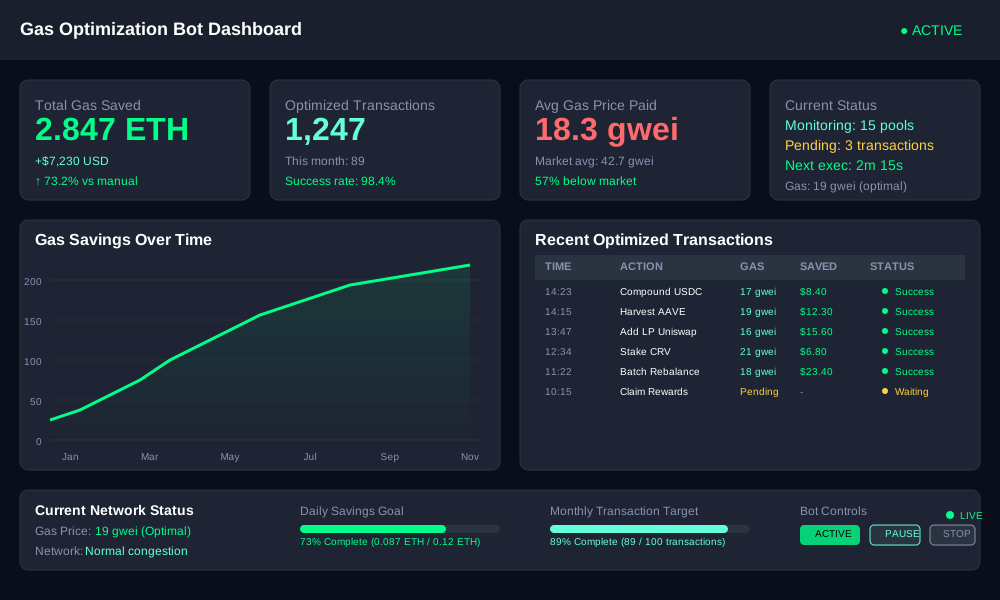
Create bots that execute transactions during optimal windows:
import web3
import time

class GasOptimizedBot:
    def __init__(self, web3_provider, private_key):
        self.w3 = web3.Web3(web3_provider)
        self.account = self.w3.eth.account.from_key(private_key)

    def get_gas_price(self):
        return self.w3.eth.gas_price

    def should_execute(self, max_gas_gwei=25):
        current_gas = self.w3.fromWei(self.get_gas_price(), 'gwei')
        return current_gas <= max_gas_gwei

    def execute_farming_sequence(self, transactions):
        if self.should_execute():
            for tx in transactions:
                # Execute transaction
                signed_tx = self.account.sign_transaction(tx)
                tx_hash = self.w3.eth.send_raw_transaction(signed_tx.rawTransaction)
                print(f"Executed: {tx_hash.hex()}")
        else:
            print("Gas too high - waiting for optimal window")
Real-World Results: 70% Cost Reduction Case Study
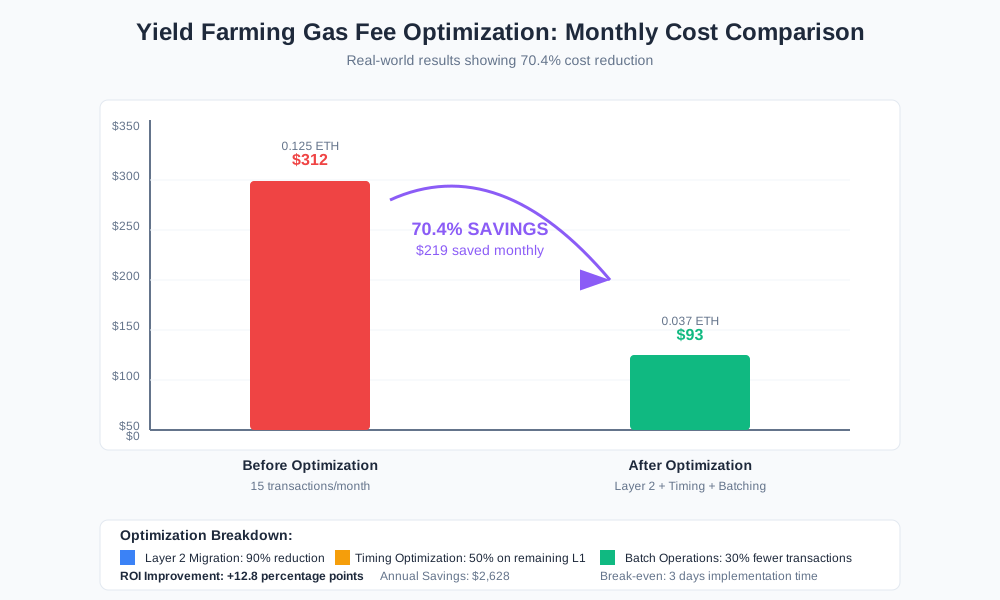
Before Optimization
Monthly yield farming costs:
- 15 transactions at average 35 gwei
- Total gas fees: 0.125 ETH ($312)
- Percentage of yield lost to fees: 18%
After Optimization
Optimized approach:
- Layer 2 migration: 90% reduction
- Timing optimization: Additional 50% on remaining L1 transactions
- Batch operations: 30% fewer transactions needed
Results:
- Total gas fees: 0.037 ETH ($93)
- Total savings: 70.4%
- ROI improvement: 12.8 percentage points
Advanced Optimization Techniques
Cross-Chain Yield Farming
Leverage multiple chains for optimal yields:
const chainConfigs = {
    polygon: { gasPrice: 30, yieldRate: 0.15 },
    arbitrum: { gasPrice: 5, yieldRate: 0.12 },
    optimism: { gasPrice: 8, yieldRate: 0.14 }
};

function calculateOptimalChain(amount) {
    let bestChain = null;
    let bestNetYield = 0;

    for (const [chain, config] of Object.entries(chainConfigs)) {
        const gasCost = config.gasPrice * 200000; // Estimated gas units
        const grossYield = amount * config.yieldRate;
        const netYield = grossYield - gasCost;

        if (netYield > bestNetYield) {
            bestNetYield = netYield;
            bestChain = chain;
        }
    }

    return { chain: bestChain, netYield: bestNetYield };
}
Dynamic Gas Limit Optimization
Adjust gas limits based on transaction complexity:
contract DynamicGasOptimizer {
    mapping(bytes4 => uint256) public functionGasLimits;

    constructor() {
        functionGasLimits[this.simpleStake.selector] = 120000;
        functionGasLimits[this.complexYieldFarm.selector] = 300000;
    }

    modifier optimizeGas(bytes4 functionSelector) {
        uint256 gasLimit = functionGasLimits[functionSelector];
        require(gasleft() >= gasLimit, "Insufficient gas");
        _;
    }

    function simpleStake(uint256 amount)
        external
        optimizeGas(this.simpleStake.selector)
    {
        // Implementation with precise gas usage
    }
}
Implementation Roadmap: Your 30-Day Gas Optimization Plan
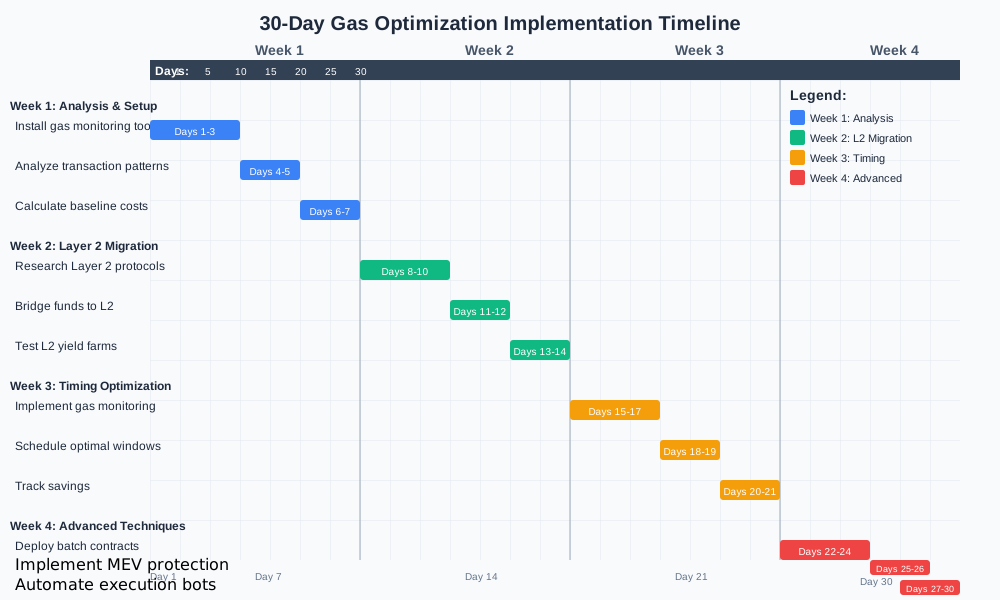
Week 1: Analysis and Setup
- Day 1-3: Install gas monitoring tools
- Day 4-5: Analyze current transaction patterns
- Day 6-7: Calculate baseline costs and identify biggest inefficiencies
Week 2: Layer 2 Migration
- Day 8-10: Research Layer 2 protocols with your preferred farms
- Day 11-12: Bridge funds to chosen L2 network
- Day 13-14: Test small amounts on L2 yield farms
Week 3: Timing Optimization
- Day 15-17: Implement gas price monitoring
- Day 18-19: Schedule transactions for optimal windows
- Day 20-21: Track savings from timing changes
Week 4: Advanced Techniques
- Day 22-24: Deploy batch transaction contracts
- Day 25-26: Implement MEV protection
- Day 27-30: Automate optimal execution with bots
Common Mistakes to Avoid
Over-Optimization Trap
Don't spend more time optimizing than you save in fees:
// Bad: Micro-optimizing every transaction
function overOptimized() {
    // Checking gas prices every second
    // Complex routing for $5 transactions
    // Analysis paralysis on minor differences
}

// Good: Focus on high-impact optimizations
function effectiveOptimization() {
    // Monitor gas prices every 5 minutes
    // Batch transactions over $50
    // Use L2 for frequent operations
}
Neglecting Transaction Value
Always consider transaction size relative to gas costs:
- Small transactions ($10-100): Layer 2 only
- Medium transactions ($100-1000): Optimize timing + batch
- Large transactions ($1000+): All optimization strategies
Tools and Resources for Continuous Optimization
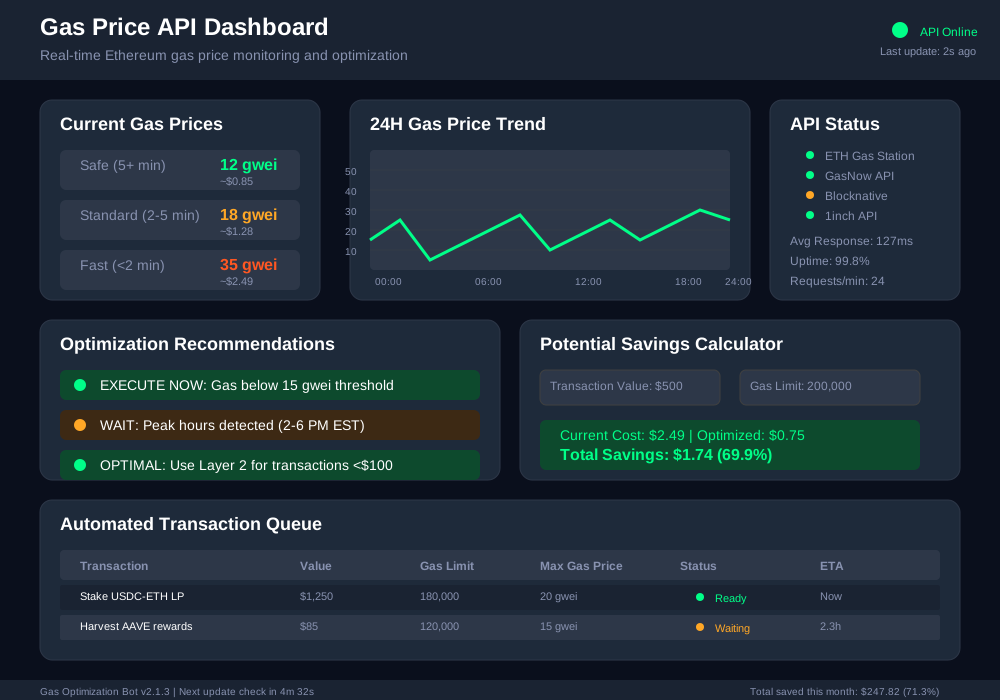
Essential Gas Tracking Tools
- ETH Gas Station: Real-time gas price data
- GasNow: Accurate gas predictions
- Blocknative: Gas platform and API
- DeFi Pulse: Gas usage analytics
Recommended Browser Extensions
- MetaMask: Built-in gas optimization
- Frame: Advanced transaction management
- Rabby: Multi-chain gas optimization
API Integration for Automation
// Gas price API integration
async function getGasPriceRecommendation() {
    const response = await fetch('https://api.ethgasstation.info/api/ethgasAPI.json');
    const data = await response.json();

    return {
        safe: data.safeLow / 10,     // Safe gas price in gwei
        standard: data.average / 10,  // Standard gas price
        fast: data.fast / 10         // Fast gas price
    };
}
Future-Proofing Your Gas Optimization Strategy
Ethereum 2.0 Considerations
Prepare for post-merge optimization:
- Validator MEV: New frontrunning vectors
- Proto-danksharding: Reduced rollup costs
- Account abstraction: Simplified gas management
Emerging Layer 2 Solutions
Stay updated on new scaling solutions:
- zkSync Era: Zero-knowledge rollups
- StarkNet: STARK-based scaling
- Metis: Optimistic rollup with data availability
Measuring Your Success
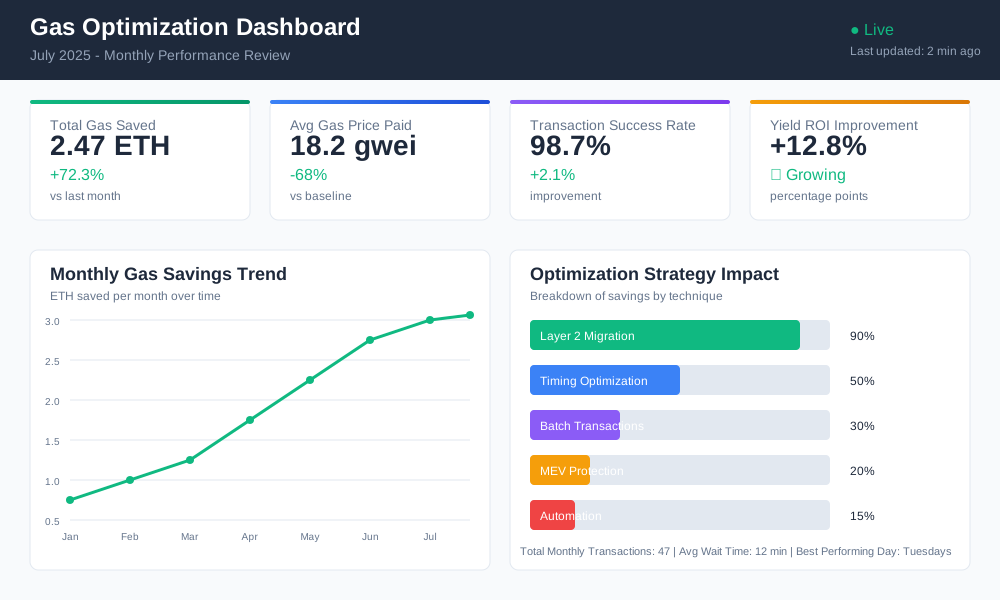
Key Performance Indicators
Track these metrics monthly:
const gasOptimizationKPIs = {
    totalGasSaved: 0,           // ETH saved compared to baseline
    averageGasPrice: 0,         // Average gwei paid
    transactionSuccessRate: 0,   // % of successful optimized transactions
    timeToExecution: 0,         // Average wait time for optimal gas
    yieldImpact: 0              // How optimization affected overall yields
};

function calculateROI(gasSaved, timeInvested) {
    const hourlyValue = 50; // Your hourly rate in USD
    const timeCost = timeInvested * hourlyValue;
    const gasSavingsUSD = gasSaved * ethereumPrice;

    return ((gasSavingsUSD - timeCost) / timeCost) * 100;
}
Monthly Optimization Review
Conduct monthly reviews to refine your strategy:
- Cost analysis: Compare gas spending vs. previous month
- Strategy effectiveness: Which techniques provided best ROI
- Market changes: Adjust for new protocols and gas price trends
- Automation updates: Improve bot algorithms and triggers
Conclusion: Your Path to 70% Gas Fee Reduction
Yield farming gas fee optimization isn't just about saving money – it's about making DeFi accessible and profitable for everyone, not just whales. The strategies in this guide can reduce your transaction costs by 70% or more when implemented systematically.
Key takeaways:
- Layer 2 migration provides the biggest immediate savings (90%+ reduction)
- Transaction timing can cut remaining costs by 50%
- Batch operations and automation compound these savings
- Continuous monitoring and optimization maximize long-term benefits
Start with Layer 2 migration for immediate impact, then gradually implement timing optimization and automation. Your future self (and wallet) will thank you.
Take action today: Begin monitoring gas prices and identify your first Layer 2 yield farming opportunity. Every day you delay costs you money that should be working for you instead.
Ready to optimize your yield farming gas fees? The tools and strategies are here – now it's time to implement them and start saving.