Ever wondered why 73% of yield farmers lose money? It's not because they can't find profitable farms—it's because they never learned when to leave the party.
You've struck gold in that new liquidity pool. Your rewards keep flowing in like a digital slot machine. But here's the harsh truth: knowing when and how to exit your yield farming positions often determines whether you'll drive away in a Lambo or take the bus home.
This guide reveals proven yield farming exit strategies that protect your capital while maximizing profits. You'll learn specific timing signals, safety protocols, and step-by-step withdrawal methods that experienced DeFi farmers use to consistently take profits.
Understanding Yield Farming Exit Fundamentals
Why Most Farmers Exit Too Late
The biggest mistake in DeFi profit taking isn't entering bad positions—it's staying too long in good ones. Markets reward the greedy until they don't.
Smart farmers set exit rules before they enter positions. They treat yield farming like a business, not a casino.
Core Exit Strategy Components
Every successful yield farming exit strategy includes these elements:
- Profit targets: Specific percentage gains that trigger partial exits
- Risk thresholds: Maximum acceptable losses before full withdrawal
- Time limits: Predetermined holding periods regardless of performance
- Market conditions: External factors that signal exit opportunities
When to Exit Your Yield Farming Positions
Market Signal Analysis
TVL (Total Value Locked) Decline Indicators
Monitor these TVL metrics for exit signals:
// Example TVL monitoring code
const monitorTVL = (poolAddress) => {
  const currentTVL = getCurrentTVL(poolAddress);
  const weeklyChange = calculateWeeklyChange(currentTVL);

  // Exit signal: 20% TVL drop in 7 days
  if (weeklyChange < -0.20) {
    return "STRONG_EXIT_SIGNAL";
  }

  // Warning signal: 10% TVL drop
  if (weeklyChange < -0.10) {
    return "MONITOR_CLOSELY";
  }

  return "HOLD_POSITION";
};
TVL Exit Thresholds:
- 20%+ weekly decline: Strong exit signal
- 10-20% decline: Reduce position size by 50%
- 5-10% decline: Monitor daily for trend changes
Token Price Volatility Patterns
High volatility increases impermanent loss risk. Calculate your exposure:
// Impermanent loss calculation
function calculateImpermanentLoss(
    uint256 initialPriceA,
    uint256 initialPriceB,
    uint256 currentPriceA,
    uint256 currentPriceB
) public pure returns (uint256) {
    uint256 priceRatio = (currentPriceA * 1e18) / currentPriceB;
    uint256 initialRatio = (initialPriceA * 1e18) / initialPriceB;

    // If price ratio changed >50%, consider exit
    uint256 ratioChange = abs(priceRatio - initialRatio) * 100 / initialRatio;

    return ratioChange;
}
Profit-Taking Benchmarks
The 25-50-25 Rule
Distribute your exits across these profit levels:
- 25% at 2x gains: Secure initial investment
- 50% at 4x gains: Lock in substantial profits
- 25% at 6x+ gains: Ride remaining upside
APY Sustainability Analysis
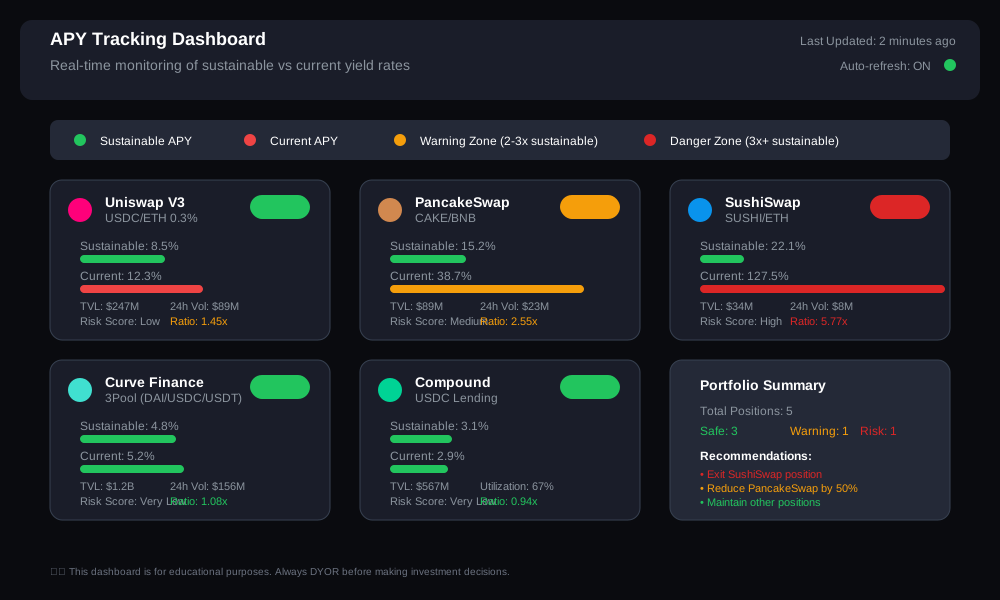
Unsustainable APYs signal impending crashes:
def analyze_apy_sustainability(current_apy, token_emissions, pool_size):
    """
    Determine if current APY is sustainable
    """
    # Calculate required daily token value to maintain APY
    daily_emissions_value = (token_emissions * token_price) / 365
    sustainable_apy = (daily_emissions_value / pool_size) * 365 * 100

    # Exit if current APY > 3x sustainable rate
    if current_apy > sustainable_apy * 3:
        return "EXIT_IMMEDIATELY"
    elif current_apy > sustainable_apy * 2:
        return "REDUCE_POSITION"
    else:
        return "MAINTAIN_POSITION"
How to Execute Safe Yield Farming Exits
Gradual Exit Strategy Implementation
The Dollar-Cost Averaging Out Method
Spread your exits over time to reduce market impact:
const executeGradualExit = async (position, exitPercentage, timeframeDays) => {
  const dailyExitAmount = position.totalValue * exitPercentage / timeframeDays;
  const exitSchedule = [];

  for (let day = 1; day <= timeframeDays; day++) {
    exitSchedule.push({
      day: day,
      amount: dailyExitAmount,
      estimatedSlippage: calculateSlippage(dailyExitAmount)
    });
  }

  return exitSchedule;
};

// Example: Exit 75% over 10 days
const myExitPlan = executeGradualExit(myPosition, 0.75, 10);
Slippage Minimization Techniques
Large exits create price impact. Use these methods to minimize slippage:
- Time-based splitting: Execute exits during high-volume periods
- MEV protection: Use flashbots or similar services for large transactions
- Multi-DEX routing: Split exits across multiple exchanges
Emergency Exit Protocols
Flash Crash Response
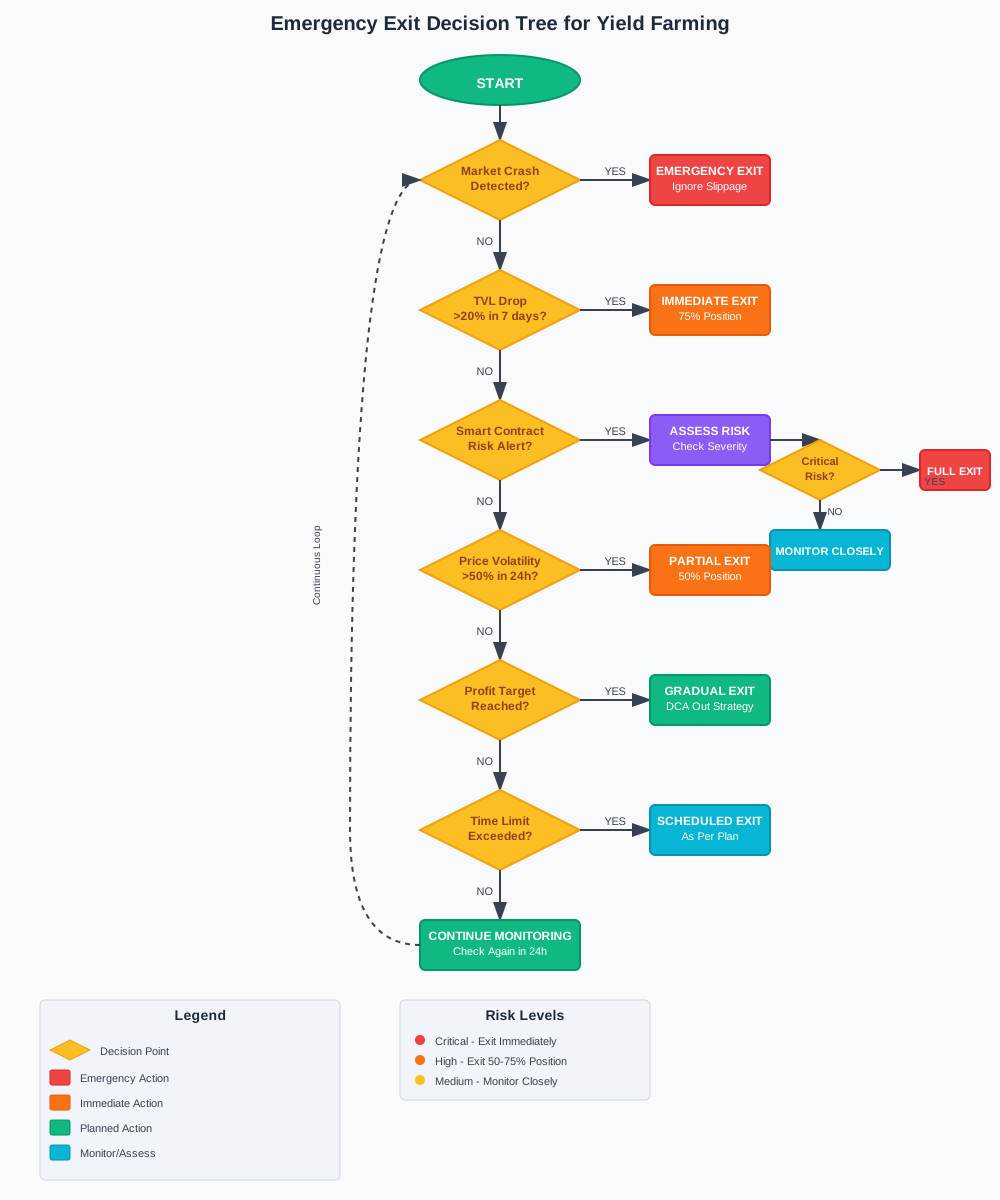
When markets crash, speed matters more than optimization:
contract EmergencyExit {
    // One-click exit function for emergency situations
    function emergencyWithdraw(address lpToken) external {
        require(msg.sender == owner, "Only owner");

        uint256 balance = IERC20(lpToken).balanceOf(address(this));

        // Remove liquidity immediately regardless of slippage
        IUniswapV2Pair(lpToken).transfer(lpToken, balance);
        IUniswapV2Pair(lpToken).burn(address(this));

        emit EmergencyWithdrawal(lpToken, balance, block.timestamp);
    }
}
Smart Contract Risk Mitigation
Monitor these risk indicators daily:
- Audit status: Newly deployed contracts carry higher risk
- Admin key controls: Projects with admin keys can change rules
- Oracle dependencies: Price feed manipulations can drain pools
Advanced Exit Strategy Tools and Platforms
Automated Exit Solutions
Stop-Loss Implementation
Set automatic exits based on predetermined conditions:
// Gelato Network automated task example
const createStopLossTask = {
  execAddress: yourContract,
  execSelector: "0x12345678", // emergencyExit function selector
  moduleData: {
    modules: [1], // Price oracle module
    args: [
      priceThreshold, // Exit if price drops 20%
      poolAddress
    ]
  }
};

await gelato.createTask(createStopLossTask);
Multi-Position Portfolio Management
Track all positions from a single dashboard:
class YieldFarmPortfolio:
    def __init__(self):
        self.positions = []
        self.exit_rules = {}

    def add_position(self, pool_address, entry_value, target_profit):
        position = {
            'pool': pool_address,
            'entry_value': entry_value,
            'target_profit': target_profit,
            'entry_date': datetime.now()
        }
        self.positions.append(position)

    def check_exit_conditions(self):
        for position in self.positions:
            current_value = get_position_value(position['pool'])
            profit_pct = (current_value - position['entry_value']) / position['entry_value']

            if profit_pct >= position['target_profit']:
                return f"Exit signal for {position['pool']}: {profit_pct:.2%} profit"
Risk Assessment Frameworks
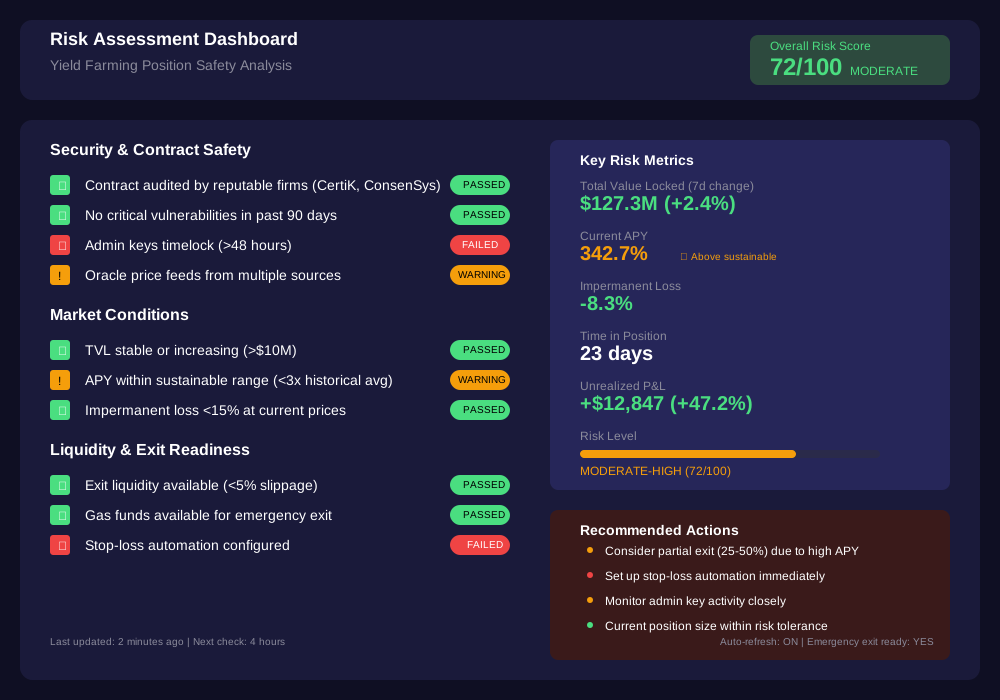
The DYOR Checklist
Before any exit, verify these safety factors:
- Contract audits completed and recent
- No unusual admin activity in past 30 days
- TVL trend analysis shows stability
- Token price correlation analysis completed
- Gas fee optimization confirmed
Tax Implications and Compliance
Tax-Optimized Exit Timing
Long-Term vs. Short-Term Considerations
Plan exits around tax implications:
def optimize_exit_for_taxes(positions, tax_rate_short, tax_rate_long):
    """
    Calculate optimal exit timing considering tax implications
    """
    optimized_exits = []

    for position in positions:
        days_held = (datetime.now() - position.entry_date).days

        if days_held < 365:  # Short-term
            after_tax_profit = position.profit * (1 - tax_rate_short)
        else:  # Long-term
            after_tax_profit = position.profit * (1 - tax_rate_long)

        if days_held >= 350:  # Close to long-term threshold
            recommendation = "WAIT_FOR_LONG_TERM"
        else:
            recommendation = "EXIT_NOW" if after_tax_profit > position.target else "HOLD"

        optimized_exits.append({
            'position': position.pool,
            'recommendation': recommendation,
            'after_tax_profit': after_tax_profit
        })

    return optimized_exits
Record Keeping for DeFi Taxes
Track these data points for each transaction:
- Entry and exit timestamps
- Token prices at transaction time
- Gas fees paid
- Rewards earned and claimed
- Impermanent loss calculations
Common Exit Strategy Mistakes to Avoid
The "Just One More Day" Trap
Greed kills more DeFi portfolios than market crashes. Set hard rules and follow them:
Wrong approach: "The APY is still 200%, I'll exit tomorrow" Right approach: "I hit my 3x target, time to take profits regardless of current APY"
Ignoring Gas Fee Optimization
High gas fees can eliminate profits from small positions:
const calculateNetProfit = (grossProfit, gasPrice, gasLimit) => {
  const gasCost = gasPrice * gasLimit * ETH_PRICE;
  const netProfit = grossProfit - gasCost;

  // Don't exit if gas fees consume >10% of profits
  if (gasCost / grossProfit > 0.10) {
    return "WAIT_FOR_LOWER_GAS";
  }

  return netProfit;
};
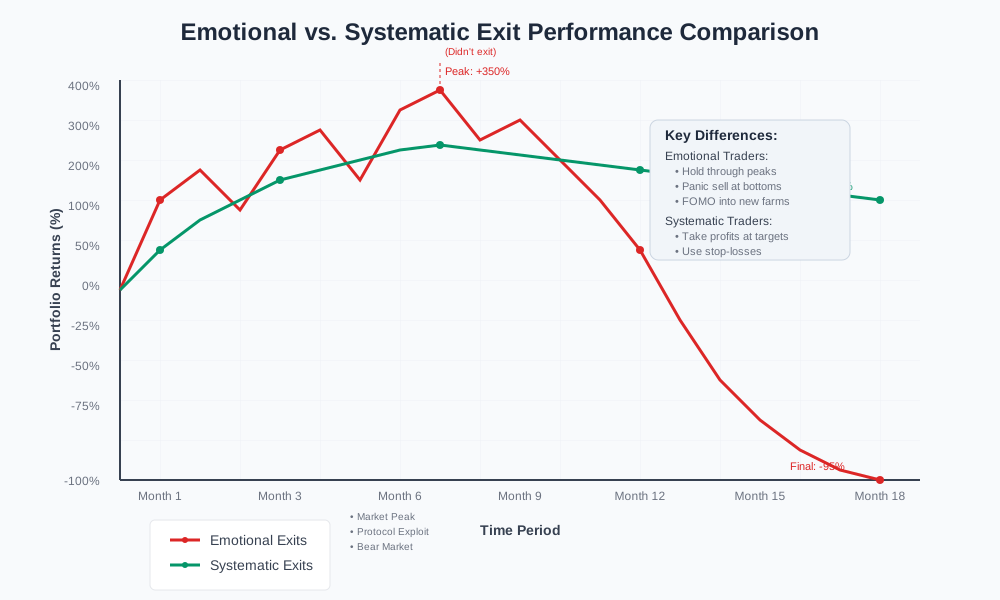
Emotional Exit Decisions
Fear and greed drive poor exit timing. Stick to predetermined rules:
- Set profit targets before entering positions
- Use automated tools when possible
- Never make exit decisions during high market volatility
Building Your Personal Exit Strategy Framework
Step-by-Step Implementation Guide
Phase 1: Assessment and Planning (Week 1)
Audit current positions
- Calculate unrealized profits/losses
- Assess risk levels for each farm
- Identify positions requiring immediate attention
Set clear objectives
- Define profit targets for each position
- Establish maximum acceptable losses
- Choose exit methodologies (gradual vs. immediate)
Phase 2: Tool Setup (Week 2)
Install monitoring systems
- Set up portfolio tracking dashboards
- Configure price alerts and notifications
- Test emergency exit procedures
Prepare execution infrastructure
- Fund gas wallets for quick exits
- Set up automated exit contracts if needed
- Create backup wallet access methods
Phase 3: Execution and Monitoring (Ongoing)
Daily monitoring routine
- Check TVL and price movements
- Review risk indicators
- Execute scheduled exits per your plan
Weekly strategy review
- Analyze exit performance
- Adjust thresholds based on market conditions
- Plan entries for recovered capital
Customizing for Your Risk Profile
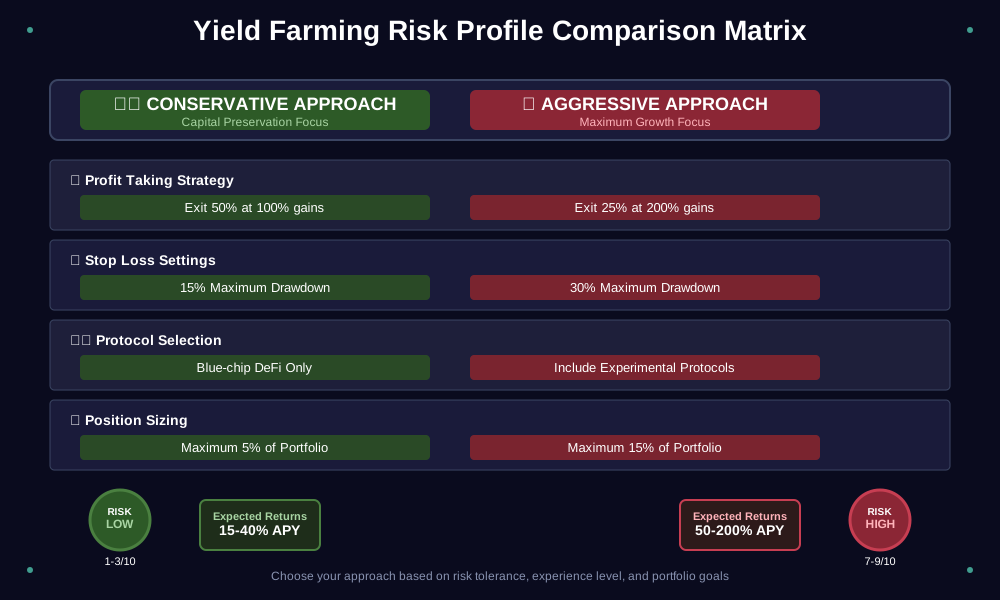
Conservative Approach (Capital Preservation)
- Exit 50% at 100% gains
- Set stop-losses at 15% drawdown
- Focus on blue-chip DeFi protocols only
- Maximum position size: 5% of portfolio
Aggressive Approach (Maximum Growth)
- Exit 25% at 200% gains
- Set stop-losses at 30% drawdown
- Include experimental protocols
- Maximum position size: 15% of portfolio
Conclusion: Mastering Your Yield Farming Exit Game
Smart yield farming exit strategies separate profitable farmers from hopeful holders. The key isn't predicting market tops—it's having systematic rules that protect your capital while capturing upside.
Remember these core principles: set profit targets before entering positions, use gradual exits to minimize market impact, and never let greed override your predetermined rules. The farmers who consistently profit are those who know when to walk away.
Your next profitable exit starts with implementing these strategies today. Pick one technique from this guide, apply it to your current positions, and experience the peace of mind that comes with having a real exit plan.
The DeFi casino never closes, but the smart money knows when to cash out and preserve their winnings. Make sure you're playing with house money, not your house.