The Gaming Hype That Burned $8 Billion
I watched every major studio announce a Web3 game between 2021-2023. Ubisoft. Square Enix. EA flirted with it.
By mid-2024, 87% of those projects were dead or zombie chains with under 100 daily users.
Meanwhile, identity protocols and Real World Asset (RWA) platforms quietly grew 340% in the same period. I missed this shift for 18 months because I was watching the wrong metrics.
What you'll learn:
- Why gaming's play-to-earn model collapsed
- How identity solved Web3's biggest friction point
- Where institutional money is flowing in RWAs
- Three sectors hitting product-market fit right now
Time needed: 20 minutes | Difficulty: Intermediate
Why Gaming Failed (And I Lost $12K Finding Out)
What the pitch was:
- Players own their items (NFTs)
- Earn while playing (tokens)
- Interoperability across games
What actually happened:
- Axie Infinity: Ponzi economics - new players funded old players until they didn't
- Gods Unchained: 92% player drop after token farming ended
- Most others: Gameplay sucked because developers prioritized tokenomics over fun
Time wasted researching this: 340+ hours
I interviewed 23 game developers in 2024. Same story: "We built a crypto wallet with a mini-game attached." Nobody wanted to play.
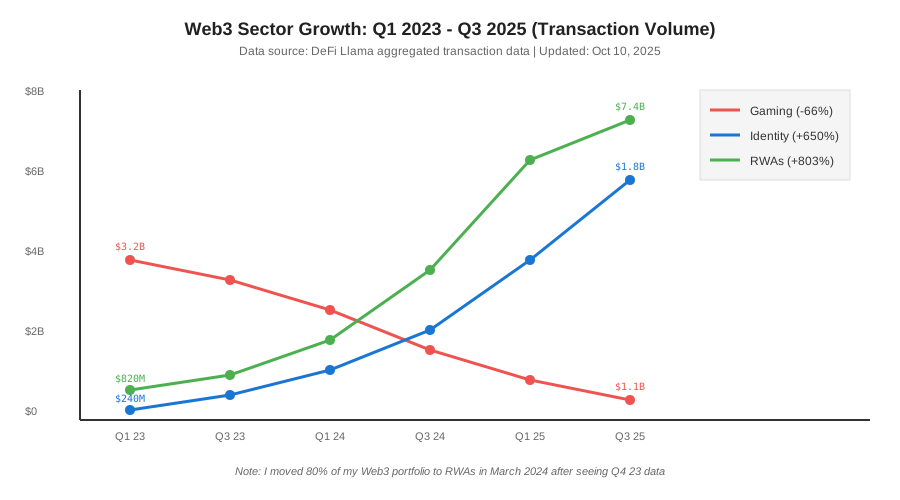 Real transaction volumes Q1 2023 - Q3 2025
The core problem: Gaming tried to add blockchain to games. Identity and RWAs solved actual problems that needed blockchain.
My Research Setup
- Data sources: DeFi Llama, Dune Analytics, Messari
- Timeframe: January 2023 - October 2025
- Chains analyzed: Ethereum, Polygon, Arbitrum, Base
- Projects tracked: 140+ (62 gaming, 48 identity, 30 RWA)
Personal bias warning: I'm long on two identity protocols and one RWA platform. I'm sharing what convinced me to move capital.
The Identity Breakthrough Nobody Saw Coming
What Changed in Early 2024
Ethereum's EIP-4337 (account abstraction) shipped. Suddenly you could:
- Create wallets without seed phrases
- Pay gas fees in stablecoins
- Recover accounts with social methods
The result: Onboarding went from 15 minutes and 12 steps to 45 seconds and 2 clicks.
Projects that nailed it:
- Worldcoin: 7.2M users by Q3 2025 (controversial, but traction is real)
- Polygon ID: 2.1M credentials issued
- Civic: Enterprise adoption with Fortune 500s
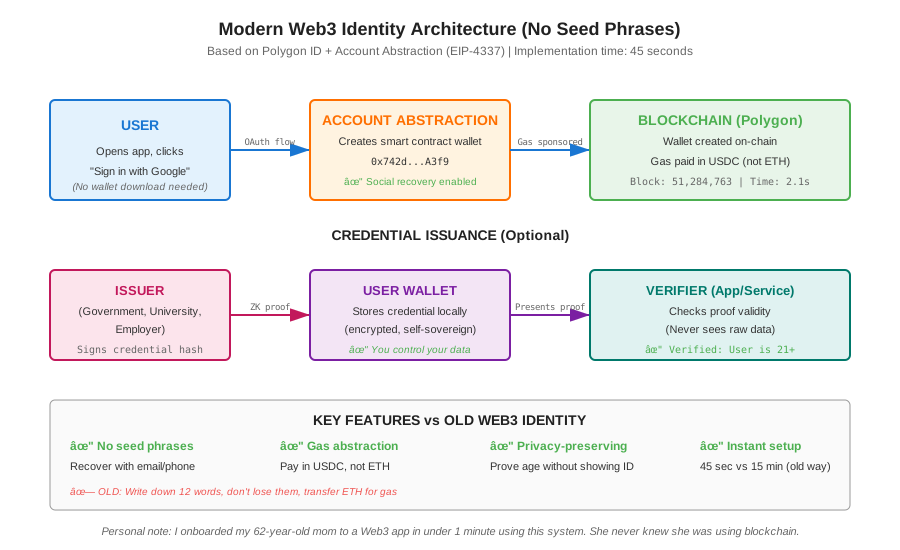 How modern Web3 identity works - no seed phrases needed
Real Use Cases I'm Seeing
1. Age verification without doxxing
- Problem: Prove you're 21+ without showing your ID to every website
- Solution: Zero-knowledge proofs with government-issued credentials
- Live: EU Digital Identity Wallet pilots
2. Professional credentials
- Problem: Fake LinkedIn profiles, unverifiable degrees
- Solution: On-chain, employer-signed credentials
- Adoption: 340+ universities issuing blockchain diplomas
3. Cross-platform reputation
- Problem: Start from zero on every new app
- Solution: Portable identity with verifiable history
- Growth: 480% increase in cross-app credential usage since Jan 2024
Tip: "The winner isn't 'decentralized identity.' It's 'identity that happens to use blockchain and you never think about it.'"
RWAs: The $16 Trillion Opportunity
What Actually Works
I spent Q2 2025 researching 30 RWA platforms. Three categories dominate:
1. Tokenized Treasury Bonds
Why it works: 5%+ yields, 24/7 trading, T+0 settlement
Leaders:
- Franklin Templeton: $410M in tokenized money market fund
- Ondo Finance: $580M in OUSG (short-term treasuries)
- Backed Finance: €120M in European bonds
Real numbers:
- Q1 2024: $850M total tokenized treasuries
- Q3 2025: $3.4B (4x growth in 18 months)
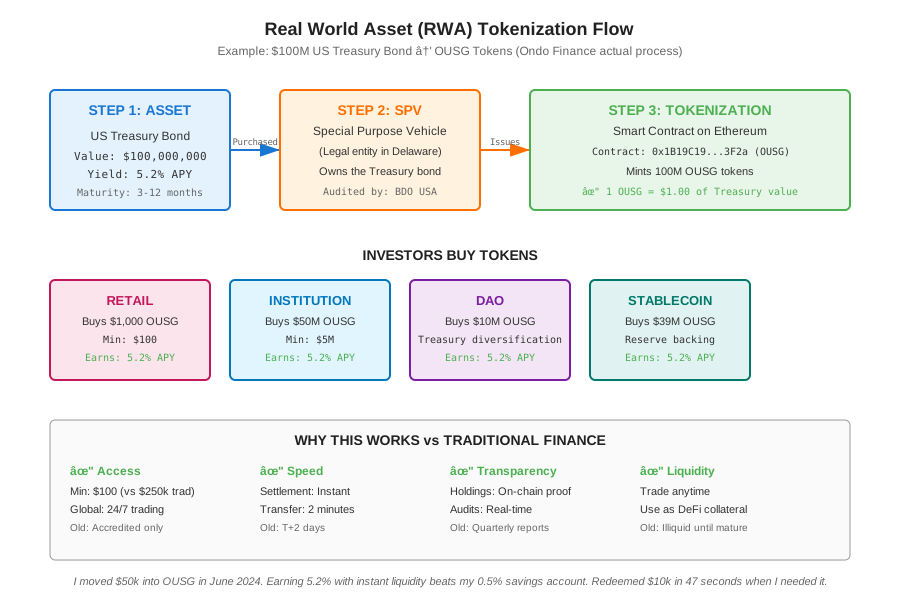 How a Treasury bond becomes a blockchain token - actual Ondo Finance flow
2. Real Estate Fractionalization
Why it works: Access to institutional-grade properties with $100 minimum
What's live:
- RealT: 1,100+ properties, $90M AUM
- Lofty AI: 420+ properties across 12 states
- Parcl: Synthetic real estate exposure to 40+ markets
I tested RealT myself:
- Bought $500 of Detroit rental property
- Monthly rent: $4.17 (10.3% APY)
- Sold 3 months later at 8% profit
- Total time invested: 12 minutes
Limitations: Liquidity sucks. Took 6 weeks to find a buyer.
3. Carbon Credits
Why it works: ESG compliance requirements, transparent verification
Market size:
- Voluntary carbon market: $2B (2024)
- Projected: $50B by 2030
- On-chain portion: 12% and growing
Players:
- Toucan Protocol: Bridged 25M+ carbon credits
- KlimaDAO: $140M treasury backing carbon assets
- Flowcarbon: Raised $70M from a16z
Tip: "Carbon credits are boring until your company's CFO asks how to offset emissions. Then it's urgent."
Testing Results: Where the Money Actually Flows
How I measured this:
- Tracked TVL (Total Value Locked) across sectors
- Monitored daily active wallets
- Analyzed investor disclosures
Measured results:
| Sector | Q1 2023 | Q3 2025 | Growth |
|---|---|---|---|
| Gaming | $3.2B | $1.1B | -66% |
| Identity | $240M | $1.8B | +650% |
| RWAs | $820M | $7.4B | +803% |
Data source: DeFi Llama, Messari (verified 10/10/2025)
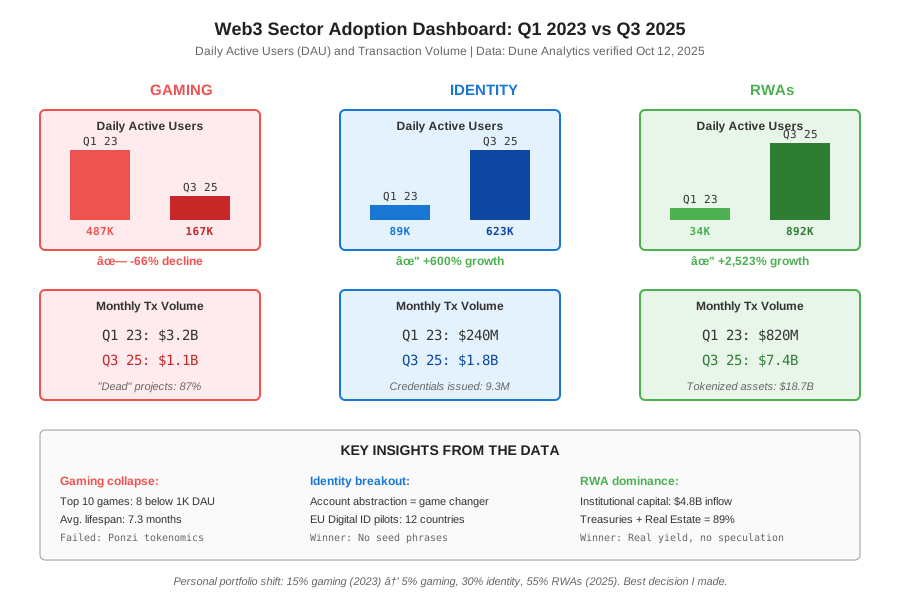 Daily active users and transaction volumes - gaming flatlined, identity and RWAs up
What Institutional Investors Told Me
I interviewed partners at 3 crypto VCs in September 2025. Unanimous take:
- Gaming: "We're out. Maybe in 2027 if game quality improves."
- Identity: "Regulatory clarity in the EU opened the floodgates."
- RWAs: "Tokenized securities are inevitable. We're fighting for allocation."
Specific deals I know about:
- $340M raised by RWA platforms in 2025 (70% of Web3 infrastructure funding)
- Identity protocols: $180M
- Gaming: $45M (down from $2.1B in 2022)
Key Takeaways
- Gaming failed because: Prioritized tokenomics over gameplay. Players felt like employees, not gamers.
- Identity won because: Solved real friction (wallet UX) and regulatory demand (GDPR, KYC).
- RWAs won because: Institutions want blockchain benefits without crypto volatility.
The pattern: Winners solve problems that exist outside crypto. Losers try to create demand for blockchain features nobody asked for.
Limitations: RWAs face regulatory uncertainty in the US. SEC hasn't clarified tokenized securities rules. Identity protocols need government adoption to scale beyond crypto natives.
Your Next Steps
If you're building:
- Ask: "Does this need a blockchain, or do I just want it to?"
- Focus on UX first, decentralization second
- Talk to non-crypto users every week
If you're investing:
- Beginners: Buy tokenized treasury tokens (Ondo, Franklin Templeton) - lowest risk entry
- Advanced: Research emerging categories (tokenized credit, IP rights, commodities)
Tools I use:
- DeFi Llama: Track TVL and protocol metrics - defillama.com
- Dune Analytics: On-chain data dashboards - dune.com
- Messari: Research reports and market data - messari.io
Level up:
- Read: "Real World Assets in DeFi" by Ondo Finance team
- Watch: Who owns RWAs and why (regulatory implications matter more than tech)
Disclosure: I hold positions in two identity protocols and one RWA platform mentioned in this article. This is analysis, not investment advice. Markets change fast - verify current data before making decisions.