Your crypto sits in a wallet earning nothing while inflation eats your purchasing power. Meanwhile, DeFi protocols offer double-digit returns that make traditional savings accounts look like pocket change. But which path leads to maximum profits: yield farming or staking?
Yield farming vs staking represents the classic risk-reward dilemma in decentralized finance. This comprehensive analysis reveals which strategy delivers superior returns in 2025, complete with real-world examples and actionable strategies.
What Is Yield Farming? The High-Risk, High-Reward Strategy
Yield farming involves lending your cryptocurrency to liquidity pools on decentralized exchanges (DEXs) to earn trading fees and token rewards. Think of it as becoming a market maker for automated trading systems.
How Yield Farming Works
Users deposit token pairs (like ETH/USDC) into liquidity pools. These pools enable traders to swap tokens instantly. In return, liquidity providers earn:
- Trading fees: 0.3% of each trade volume
- Token rewards: Native platform tokens (like UNI, CAKE, SUSHI)
- Bonus incentives: Additional rewards for new pools
// Example: Adding liquidity to Uniswap V3
contract LiquidityProvider {
    function addLiquidity(
        address tokenA,
        address tokenB,
        uint256 amountA,
        uint256 amountB
    ) external {
        // Calculate optimal token ratio
        // Deposit tokens to pool
        // Receive LP tokens representing share
        // Start earning fees immediately
    }
}
Yield Farming Returns in 2025
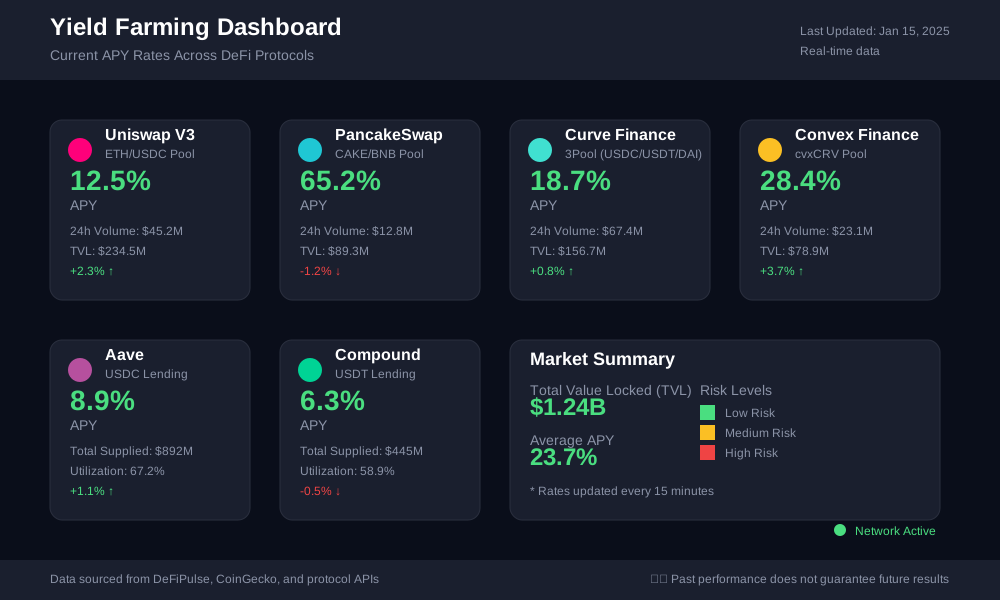
Current yield farming rates vary dramatically by protocol:
- Uniswap V3: 5-15% APY on major pairs
- PancakeSwap: 20-80% APY on newer pools
- Curve Finance: 8-25% APY on stablecoin pools
- Convex Finance: 15-40% APY with boosted rewards
What Is Staking? The Steady Income Approach
Staking involves locking your tokens to secure a blockchain network and earn rewards. Validators process transactions and maintain network security in exchange for newly minted tokens.
How Staking Works
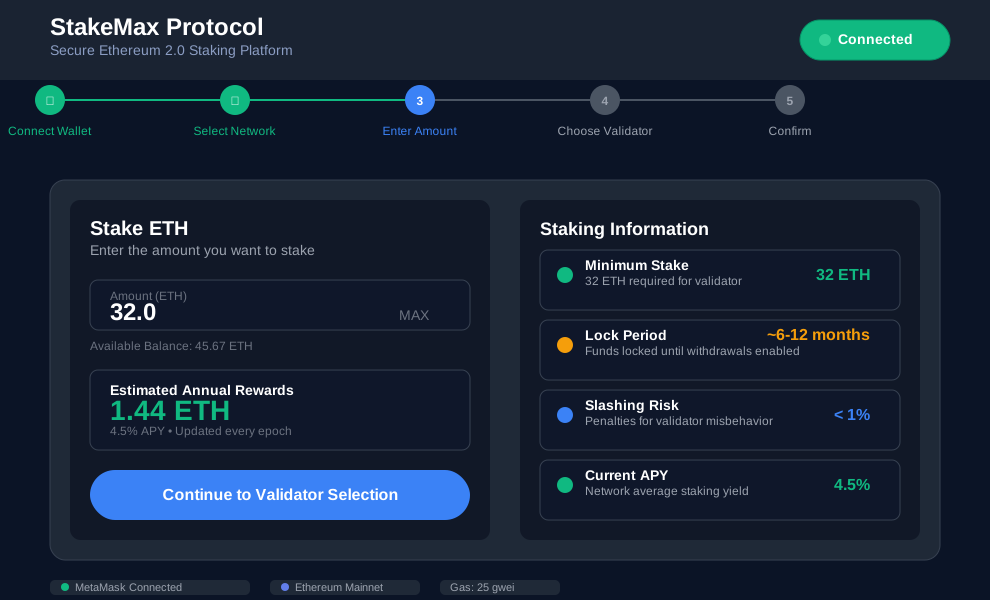
Proof-of-stake networks require validators to lock tokens as collateral. This process ensures honest behavior through economic incentives:
- Minimum stake: 32 ETH for Ethereum, 10,000 AVAX for Avalanche
- Lock periods: 21 days for Cosmos, instant for some protocols
- Slashing risk: Penalties for malicious behavior or downtime
# Example: Ethereum staking calculation
def calculate_staking_rewards(stake_amount, annual_rate, days):
    """
    Calculate staking rewards for given period
    stake_amount: ETH staked
    annual_rate: Current staking APY (%)
    days: Staking duration
    """
    daily_rate = annual_rate / 365
    total_rewards = stake_amount * (daily_rate / 100) * days
    return total_rewards

# 32 ETH staked at 4% APY for 1 year
rewards = calculate_staking_rewards(32, 4.0, 365)
print(f"Annual rewards: {rewards:.2f} ETH")
Staking Returns in 2025
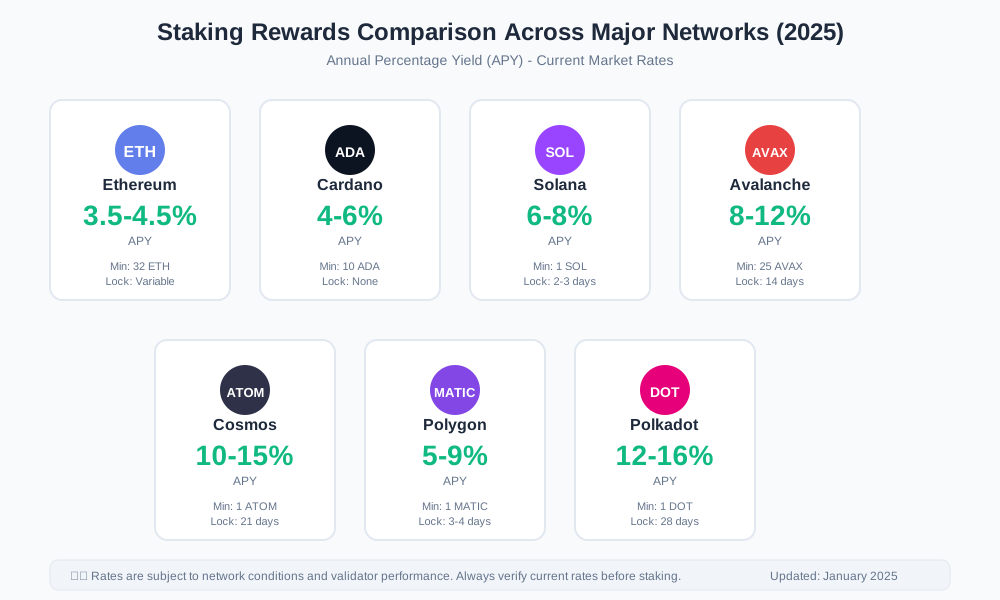
Staking rewards offer more predictable returns:
- Ethereum 2.0: 3.5-4.5% APY
- Cardano (ADA): 4-6% APY
- Solana (SOL): 6-8% APY
- Avalanche (AVAX): 8-12% APY
- Cosmos (ATOM): 10-15% APY
Yield Farming vs Staking: Direct Comparison
Risk Assessment
Yield farming risks:
- Impermanent loss: Token price divergence reduces returns
- Smart contract bugs: Code vulnerabilities threaten funds
- Rug pulls: Malicious projects drain liquidity
- High gas fees: Transaction costs eat profits
Staking risks:
- Slashing penalties: Validator misbehavior loses stake
- Lock-up periods: Funds remain inaccessible
- Inflation risk: Token supply increases reduce value
- Centralization concerns: Large validators dominate networks
Return Potential Analysis
| Strategy | Typical Returns | Risk Level | Complexity | Liquidity |
|---|---|---|---|---|
| Yield Farming | 15-100% APY | High | High | Variable |
| Staking | 3-15% APY | Medium | Low | Limited |
Capital Requirements
Yield farming entry barriers:
- Minimum: $100-500 for most pools
- Optimal: $10,000+ to offset gas fees
- Gas costs: $50-200 per transaction on Ethereum
Staking entry barriers:
- Ethereum: 32 ETH (~$80,000)
- Alternative networks: $500-5,000 minimum
- Liquid staking: No minimum through protocols like Lido
Which Strategy Wins in 2025?
Choose Yield Farming If:
You have high risk tolerance and active management time. Recent DeFi protocols show strong growth potential, with layer-2 solutions reducing gas costs significantly.
Best yield farming opportunities 2025:
- Arbitrum DEXs: Lower fees, higher volumes
- Polygon farming: Established ecosystem, reliable returns
- Optimism incentives: Protocol airdrops boost yields
Choose Staking If:
You prefer passive income with predictable returns. Liquid staking protocols now offer flexibility without lock-up periods.
Top staking strategies 2025:
- Ethereum liquid staking: 4% APY plus potential airdrops
- Multi-chain staking: Diversify across networks
- Validator services: Professional management reduces risk
Advanced Strategies: Combining Both Approaches
Liquid Staking + Yield Farming
Use staked tokens (like stETH) as collateral in yield farming protocols:
// Strategy: Stake ETH → Receive stETH → Farm with stETH
const hybridStrategy = {
    step1: "Stake ETH on Lido → Get stETH",
    step2: "Provide stETH/ETH liquidity on Curve",
    step3: "Stake LP tokens for additional CRV rewards",
    totalAPY: "6-12% (staking + farming + rewards)"
};
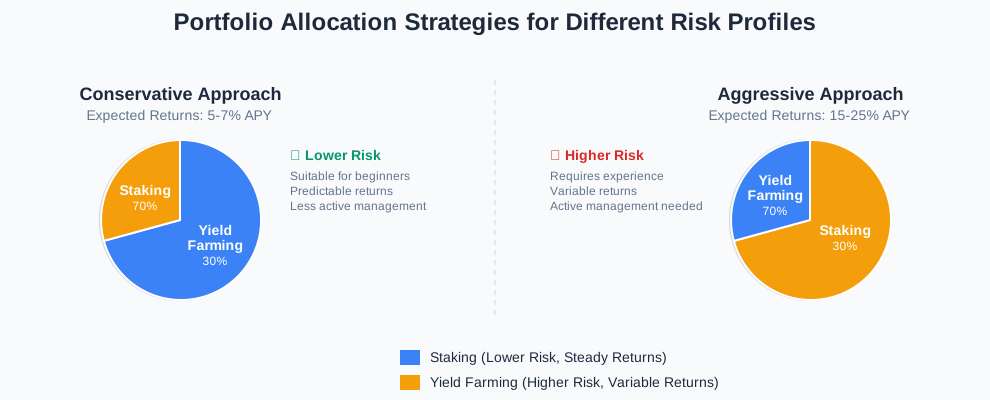
Portfolio Allocation Framework
Conservative approach (70% staking, 30% yield farming):
- Lower risk, steady 5-7% returns
- Suitable for long-term investors
Aggressive approach (30% staking, 70% yield farming):
- Higher risk, potential 15-25% returns
- Requires active management
Tax Implications and Practical Considerations
Tax Treatment Differences
Yield farming taxation:
- Trading fees: Capital gains on receipt
- Token rewards: Ordinary income at fair market value
- Impermanent loss: Potential tax loss harvesting
Staking taxation:
- Rewards: Ordinary income when received
- Unstaking: Capital gains/losses on original stake
- Holding period: Resets with each reward
Getting Started: Step-by-Step Guide
For Yield Farming:
- Choose a protocol: Start with established platforms like Uniswap
- Connect wallet: Use MetaMask or hardware wallet
- Add liquidity: Deposit equal values of token pairs
- Monitor positions: Track impermanent loss and rewards
- Harvest regularly: Compound rewards for maximum gains
For Staking:
- Select network: Consider rewards, lock periods, and risk
- Choose method: Direct staking vs liquid staking protocols
- Delegate stake: Pick reliable validators with good uptime
- Monitor performance: Track rewards and validator status
- Reinvest rewards: Compound for exponential growth
Future Outlook: 2025 Market Predictions
Emerging Trends
Yield farming evolution:
- Layer-2 adoption: Reduced costs increase accessibility
- Real-world assets: Tokenized bonds and commodities
- Cross-chain protocols: Seamless multi-network farming
Staking developments:
- Ethereum upgrades: Higher rewards post-merge
- Institutional adoption: Corporate staking services
- Regulatory clarity: Clear tax and compliance frameworks
Market Catalysts
Several factors will shape DeFi returns in 2025:
- Interest rate environment: Fed policy affects risk appetite
- Crypto adoption: Institutional investment flows
- Regulatory frameworks: Clear rules boost confidence
- Technology advances: Improved scalability and security
Conclusion: Your Optimal Strategy for 2025
Yield farming vs staking isn't an either-or decision. The optimal approach depends on your risk tolerance, time commitment, and capital size.
For maximum returns: Combine liquid staking with selective yield farming. This hybrid strategy provides steady base income while capturing high-yield opportunities.
Start small: Begin with established protocols and gradually expand to experimental strategies. The DeFi ecosystem rewards patient learners who understand both risks and rewards.
Ready to boost your crypto returns? Choose your strategy and start earning passive income today. The 2025 bull market won't wait for unprepared investors.
Remember: This analysis provides educational information only. Always research thoroughly and consider your financial situation before investing in any DeFi protocol.