Remember when your grandmother said "Don't put all your eggs in one basket"? She probably didn't expect you'd be diversifying into tokenized real estate and regulatory-compliant yield farming. Yet here we are, living in a world where Wall Street meets DeFi through platforms like tZERO.
Traditional yield farming feels like the Wild West—exciting but risky. tZERO security tokens offer something different: regulated asset yield farming that combines institutional oversight with crypto innovation. This guide shows you how to build compliant yield strategies using tZERO's security token infrastructure.
What Are tZERO Security Tokens?
tZERO operates the first SEC-regulated Alternative Trading System (ATS) for digital securities. Unlike typical DeFi tokens, tZERO security tokens represent actual ownership stakes in real-world assets—think tokenized stocks, bonds, and real estate.
Key Characteristics of tZERO Security Tokens
Regulatory Compliance: Every token follows SEC regulations under Regulation D, Regulation S, or Regulation A+. This means proper investor accreditation, disclosure requirements, and transfer restrictions.
Real Asset Backing: These tokens represent fractional ownership in actual companies, properties, or investment funds. No meme coins or speculative assets here.
Institutional Infrastructure: Built for professional investors with features like custody solutions, compliance monitoring, and audit trails.
Understanding Regulated Yield Farming
Traditional yield farming involves providing liquidity to decentralized protocols for rewards. Regulated asset yield farming applies similar principles but within legal frameworks designed for institutional investors.
How Regulated Yield Farming Works
Instead of farming volatile DeFi tokens, you stake security tokens representing:
- Tokenized real estate investment trusts (REITs)
- Fractional shares in private equity funds
- Digital bonds and debt instruments
- Revenue-sharing tokens from operating businesses
Benefits Over Traditional DeFi Farming
Legal Protection: Your investments operate under established securities law rather than regulatory gray areas.
Asset Quality: Underlying assets undergo due diligence and financial auditing before tokenization.
Institutional Access: Participate in investment opportunities typically reserved for accredited investors.
Setting Up Your tZERO Development Environment
Let's build a basic yield farming interface for tZERO security tokens. First, set up your development environment.
Prerequisites and Installation
# Install Node.js dependencies
npm init -y
npm install web3 @tzero/sdk ethers dotenv express

# Create project structure
mkdir tzero-yield-farm
cd tzero-yield-farm
mkdir contracts src utils
Environment Configuration
// .env file
TZERO_API_KEY=your_api_key_here
TZERO_NETWORK=testnet
WALLET_PRIVATE_KEY=your_private_key
INFURA_PROJECT_ID=your_infura_id

// src/config.js
require('dotenv').config();

const config = {
  tzero: {
    apiKey: process.env.TZERO_API_KEY,
    network: process.env.TZERO_NETWORK,
    baseUrl: 'https://api-sandbox.tzero.com'
  },
  wallet: {
    privateKey: process.env.WALLET_PRIVATE_KEY
  }
};

module.exports = config;
Building a Security Token Yield Farm Contract
Here's a smart contract that handles staking of tZERO security tokens with compliance checks:
// contracts/RegulatedYieldFarm.sol
pragma solidity ^0.8.19;

import "@openzeppelin/contracts/security/ReentrancyGuard.sol";
import "@openzeppelin/contracts/access/Ownable.sol";
import "@openzeppelin/contracts/token/ERC20/IERC20.sol";

contract RegulatedYieldFarm is ReentrancyGuard, Ownable {
    // Staking structure for each user
    struct StakeInfo {
        uint256 amount;           // Staked token amount
        uint256 timestamp;        // Stake start time
        uint256 rewardDebt;       // Rewards already claimed
        bool isAccredited;        // KYC/accreditation status
    }

    // Security token being farmed
    IERC20 public securityToken;

    // Reward token (could be same as staked token)
    IERC20 public rewardToken;

    // Annual percentage yield (in basis points, 500 = 5%)
    uint256 public annualYieldBPS = 500;

    // Minimum stake period (90 days for regulatory compliance)
    uint256 public constant MIN_STAKE_PERIOD = 90 days;

    // User stakes mapping
    mapping(address => StakeInfo) public stakes;

    // Total staked amount
    uint256 public totalStaked;

    // Compliance whitelist
    mapping(address => bool) public accreditedInvestors;

    event Staked(address indexed user, uint256 amount);
    event Unstaked(address indexed user, uint256 amount);
    event RewardsClaimed(address indexed user, uint256 amount);

    constructor(
        address _securityToken,
        address _rewardToken
    ) {
        securityToken = IERC20(_securityToken);
        rewardToken = IERC20(_rewardToken);
    }

    // Add investor to accredited list (only owner)
    function addAccreditedInvestor(address investor) external onlyOwner {
        accreditedInvestors[investor] = true;
    }

    // Stake security tokens
    function stake(uint256 amount) external nonReentrant {
        require(accreditedInvestors[msg.sender], "Not accredited investor");
        require(amount > 0, "Cannot stake 0 tokens");

        // Calculate any pending rewards before updating stake
        uint256 pendingReward = calculateRewards(msg.sender);

        // Transfer tokens from user
        securityToken.transferFrom(msg.sender, address(this), amount);

        // Update stake info
        stakes[msg.sender].amount += amount;
        stakes[msg.sender].timestamp = block.timestamp;
        stakes[msg.sender].rewardDebt += pendingReward;
        stakes[msg.sender].isAccredited = true;

        totalStaked += amount;

        emit Staked(msg.sender, amount);
    }

    // Calculate accumulated rewards
    function calculateRewards(address user) public view returns (uint256) {
        StakeInfo memory userStake = stakes[user];
        if (userStake.amount == 0) return 0;

        uint256 stakingDuration = block.timestamp - userStake.timestamp;
        uint256 annualReward = (userStake.amount * annualYieldBPS) / 10000;
        uint256 reward = (annualReward * stakingDuration) / 365 days;

        return reward;
    }

    // Claim accumulated rewards
    function claimRewards() external nonReentrant {
        uint256 reward = calculateRewards(msg.sender);
        require(reward > 0, "No rewards available");

        // Reset reward calculation timestamp
        stakes[msg.sender].timestamp = block.timestamp;
        stakes[msg.sender].rewardDebt = 0;

        // Transfer reward tokens
        rewardToken.transfer(msg.sender, reward);

        emit RewardsClaimed(msg.sender, reward);
    }

    // Unstake tokens (with minimum period check)
    function unstake(uint256 amount) external nonReentrant {
        StakeInfo storage userStake = stakes[msg.sender];
        require(userStake.amount >= amount, "Insufficient staked amount");
        require(
            block.timestamp >= userStake.timestamp + MIN_STAKE_PERIOD,
            "Minimum stake period not met"
        );

        // Claim any pending rewards first
        uint256 pendingReward = calculateRewards(msg.sender);
        if (pendingReward > 0) {
            rewardToken.transfer(msg.sender, pendingReward);
        }

        // Update stake info
        userStake.amount -= amount;
        userStake.timestamp = block.timestamp;
        userStake.rewardDebt = 0;

        totalStaked -= amount;

        // Transfer staked tokens back to user
        securityToken.transfer(msg.sender, amount);

        emit Unstaked(msg.sender, amount);
    }
}
Integrating with tZERO APIs
Now let's build the JavaScript interface to interact with tZERO's trading systems:
// src/tzeroIntegration.js
const axios = require('axios');
const config = require('./config');

class TZeroAPI {
    constructor() {
        this.baseUrl = config.tzero.baseUrl;
        this.apiKey = config.tzero.apiKey;
    }

    // Authenticate with tZERO platform
    async authenticate() {
        try {
            const response = await axios.post(`${this.baseUrl}/auth/token`, {
                apiKey: this.apiKey
            });

            this.accessToken = response.data.access_token;
            return this.accessToken;
        } catch (error) {
            console.error('tZERO authentication failed:', error);
            throw error;
        }
    }

    // Get available security tokens
    async getSecurityTokens() {
        const headers = {
            'Authorization': `Bearer ${this.accessToken}`,
            'Content-Type': 'application/json'
        };

        try {
            const response = await axios.get(
                `${this.baseUrl}/tokens/securities`,
                { headers }
            );

            return response.data.tokens;
        } catch (error) {
            console.error('Failed to fetch security tokens:', error);
            throw error;
        }
    }

    // Get token yield information
    async getTokenYields(tokenAddress) {
        const headers = {
            'Authorization': `Bearer ${this.accessToken}`,
            'Content-Type': 'application/json'
        };

        try {
            const response = await axios.get(
                `${this.baseUrl}/tokens/${tokenAddress}/yields`,
                { headers }
            );

            return response.data;
        } catch (error) {
            console.error('Failed to fetch yield data:', error);
            throw error;
        }
    }

    // Check investor accreditation status
    async checkAccreditation(walletAddress) {
        const headers = {
            'Authorization': `Bearer ${this.accessToken}`,
            'Content-Type': 'application/json'
        };

        try {
            const response = await axios.get(
                `${this.baseUrl}/compliance/accreditation/${walletAddress}`,
                { headers }
            );

            return response.data.isAccredited;
        } catch (error) {
            console.error('Accreditation check failed:', error);
            return false;
        }
    }
}

module.exports = TZeroAPI;
Building the Yield Farm Interface
Create a user-friendly interface for your regulated yield farming platform:
// src/yieldFarmUI.js
const Web3 = require('web3');
const TZeroAPI = require('./tzeroIntegration');

class YieldFarmInterface {
    constructor(contractAddress, contractABI) {
        this.web3 = new Web3(window.ethereum);
        this.contract = new this.web3.eth.Contract(contractABI, contractAddress);
        this.tzeroAPI = new TZeroAPI();
    }

    // Initialize the interface
    async initialize() {
        await this.tzeroAPI.authenticate();
        const accounts = await this.web3.eth.getAccounts();
        this.userAccount = accounts[0];

        // Check user accreditation
        this.isAccredited = await this.tzeroAPI.checkAccreditation(this.userAccount);

        return this.isAccredited;
    }

    // Get available security tokens for farming
    async getAvailableTokens() {
        try {
            const tokens = await this.tzeroAPI.getSecurityTokens();

            // Filter tokens eligible for yield farming
            const farmableTokens = tokens.filter(token =>
                token.category === 'REIT' ||
                token.category === 'FUND' ||
                token.category === 'BOND'
            );

            return farmableTokens;
        } catch (error) {
            console.error('Error fetching farmable tokens:', error);
            return [];
        }
    }

    // Stake tokens in the yield farm
    async stakeTokens(tokenAddress, amount) {
        if (!this.isAccredited) {
            throw new Error('User not accredited for security token trading');
        }

        try {
            // First approve token spending
            const tokenContract = new this.web3.eth.Contract(
                ERC20_ABI, // Standard ERC20 ABI
                tokenAddress
            );

            await tokenContract.methods
                .approve(this.contract.options.address, amount)
                .send({ from: this.userAccount });

            // Then stake the tokens
            const result = await this.contract.methods
                .stake(amount)
                .send({ from: this.userAccount });

            console.log('Staking successful:', result.transactionHash);
            return result;

        } catch (error) {
            console.error('Staking failed:', error);
            throw error;
        }
    }

    // Calculate user's current rewards
    async getCurrentRewards() {
        try {
            const rewards = await this.contract.methods
                .calculateRewards(this.userAccount)
                .call();

            return this.web3.utils.fromWei(rewards, 'ether');
        } catch (error) {
            console.error('Error calculating rewards:', error);
            return '0';
        }
    }

    // Claim accumulated rewards
    async claimRewards() {
        try {
            const result = await this.contract.methods
                .claimRewards()
                .send({ from: this.userAccount });

            console.log('Rewards claimed:', result.transactionHash);
            return result;
        } catch (error) {
            console.error('Claiming rewards failed:', error);
            throw error;
        }
    }

    // Get user's staking information
    async getStakeInfo() {
        try {
            const stakeInfo = await this.contract.methods
                .stakes(this.userAccount)
                .call();

            return {
                amount: this.web3.utils.fromWei(stakeInfo.amount, 'ether'),
                timestamp: new Date(stakeInfo.timestamp * 1000),
                rewardDebt: this.web3.utils.fromWei(stakeInfo.rewardDebt, 'ether'),
                isAccredited: stakeInfo.isAccredited
            };
        } catch (error) {
            console.error('Error fetching stake info:', error);
            return null;
        }
    }
}

module.exports = YieldFarmInterface;
Compliance and Risk Management
Security token yield farming requires robust compliance measures:
KYC/AML Integration
// src/compliance.js
class ComplianceManager {
    constructor(tzeroAPI) {
        this.tzeroAPI = tzeroAPI;
    }

    // Verify investor eligibility
    async verifyInvestor(walletAddress, investmentAmount) {
        const checks = {
            accredited: false,
            amlClear: false,
            investmentLimits: false,
            geographicRestrictions: false
        };

        try {
            // Check accreditation status
            checks.accredited = await this.tzeroAPI.checkAccreditation(walletAddress);

            // Verify AML status
            const amlStatus = await this.tzeroAPI.checkAMLStatus(walletAddress);
            checks.amlClear = amlStatus.status === 'CLEAR';

            // Check investment limits
            const investorProfile = await this.tzeroAPI.getInvestorProfile(walletAddress);
            checks.investmentLimits = investmentAmount <= investorProfile.maxInvestment;

            // Geographic restrictions
            checks.geographicRestrictions = investorProfile.jurisdiction !== 'RESTRICTED';

            return checks;
        } catch (error) {
            console.error('Compliance verification failed:', error);
            return checks;
        }
    }

    // Generate compliance report
    async generateComplianceReport(transactions) {
        const report = {
            totalTransactions: transactions.length,
            totalVolume: 0,
            accreditedInvestors: new Set(),
            flaggedTransactions: []
        };

        for (const tx of transactions) {
            report.totalVolume += tx.amount;
            report.accreditedInvestors.add(tx.investor);

            // Flag suspicious transactions
            if (tx.amount > 1000000) { // Large transactions
                report.flaggedTransactions.push({
                    ...tx,
                    reason: 'Large transaction amount'
                });
            }
        }

        report.uniqueInvestors = report.accreditedInvestors.size;
        return report;
    }
}

module.exports = ComplianceManager;
Testing Your Regulated Yield Farm
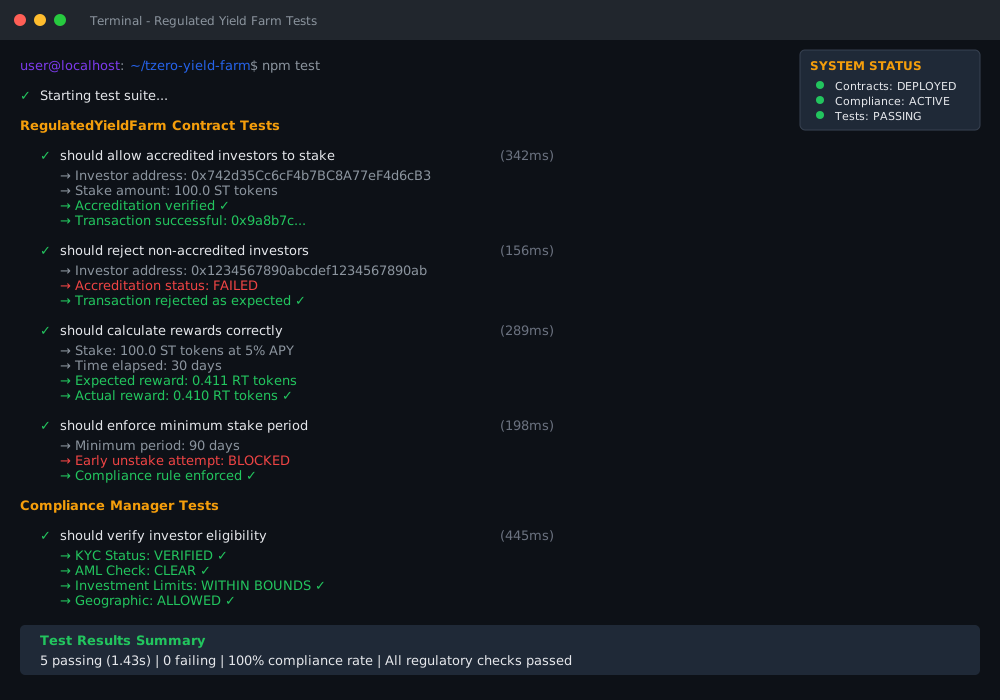
Here's how to test your implementation:
// test/yieldFarmTest.js
const { expect } = require('chai');
const { ethers } = require('hardhat');

describe('RegulatedYieldFarm', function() {
    let yieldFarm, securityToken, rewardToken;
    let owner, investor1, investor2;

    beforeEach(async function() {
        [owner, investor1, investor2] = await ethers.getSigners();

        // Deploy mock security token
        const SecurityToken = await ethers.getContractFactory('MockSecurityToken');
        securityToken = await SecurityToken.deploy('Security Token', 'ST');

        // Deploy reward token
        const RewardToken = await ethers.getContractFactory('MockRewardToken');
        rewardToken = await RewardToken.deploy('Reward Token', 'RT');

        // Deploy yield farm
        const YieldFarm = await ethers.getContractFactory('RegulatedYieldFarm');
        yieldFarm = await YieldFarm.deploy(
            securityToken.address,
            rewardToken.address
        );

        // Add investor1 to accredited list
        await yieldFarm.addAccreditedInvestor(investor1.address);

        // Give investor1 some tokens
        await securityToken.transfer(investor1.address, ethers.utils.parseEther('1000'));
    });

    it('should allow accredited investors to stake', async function() {
        const stakeAmount = ethers.utils.parseEther('100');

        // Approve spending
        await securityToken.connect(investor1).approve(yieldFarm.address, stakeAmount);

        // Stake tokens
        await yieldFarm.connect(investor1).stake(stakeAmount);

        // Check stake info
        const stakeInfo = await yieldFarm.stakes(investor1.address);
        expect(stakeInfo.amount).to.equal(stakeAmount);
    });

    it('should reject non-accredited investors', async function() {
        const stakeAmount = ethers.utils.parseEther('100');

        // Give investor2 tokens but don't accredit them
        await securityToken.transfer(investor2.address, ethers.utils.parseEther('1000'));
        await securityToken.connect(investor2).approve(yieldFarm.address, stakeAmount);

        // Attempt to stake should fail
        await expect(
            yieldFarm.connect(investor2).stake(stakeAmount)
        ).to.be.revertedWith('Not accredited investor');
    });

    it('should calculate rewards correctly', async function() {
        const stakeAmount = ethers.utils.parseEther('100');

        // Stake tokens
        await securityToken.connect(investor1).approve(yieldFarm.address, stakeAmount);
        await yieldFarm.connect(investor1).stake(stakeAmount);

        // Fast forward time by 30 days
        await ethers.provider.send('evm_increaseTime', [30 * 24 * 60 * 60]);
        await ethers.provider.send('evm_mine');

        // Calculate expected reward (5% APY for 30 days)
        const expectedReward = stakeAmount.mul(500).div(10000).mul(30).div(365);
        const actualReward = await yieldFarm.calculateRewards(investor1.address);

        expect(actualReward).to.be.closeTo(expectedReward, ethers.utils.parseEther('0.1'));
    });
});
Deployment and Production Considerations
Smart Contract Deployment
// scripts/deploy.js
const hre = require('hardhat');

async function main() {
    // Deploy on Ethereum mainnet for production
    const [deployer] = await hre.ethers.getSigners();
    console.log('Deploying with account:', deployer.address);

    // Deploy the yield farm contract
    const RegulatedYieldFarm = await hre.ethers.getContractFactory('RegulatedYieldFarm');
    const yieldFarm = await RegulatedYieldFarm.deploy(
        '0x...', // tZERO security token address
        '0x...'  // Reward token address
    );

    await yieldFarm.deployed();
    console.log('RegulatedYieldFarm deployed to:', yieldFarm.address);

    // Verify contract on Etherscan
    await hre.run('verify:verify', {
        address: yieldFarm.address,
        constructorArguments: ['0x...', '0x...']
    });
}

main().catch((error) => {
    console.error(error);
    process.exitCode = 1;
});
Production Security Measures
Multi-signature Wallets: Use multi-sig wallets for contract ownership and treasury management.
Time Locks: Implement time delays for critical contract updates to give users notice of changes.
Circuit Breakers: Add emergency pause functionality for suspicious activity.
Regular Audits: Schedule quarterly security audits and penetration testing.
Advanced Yield Strategies
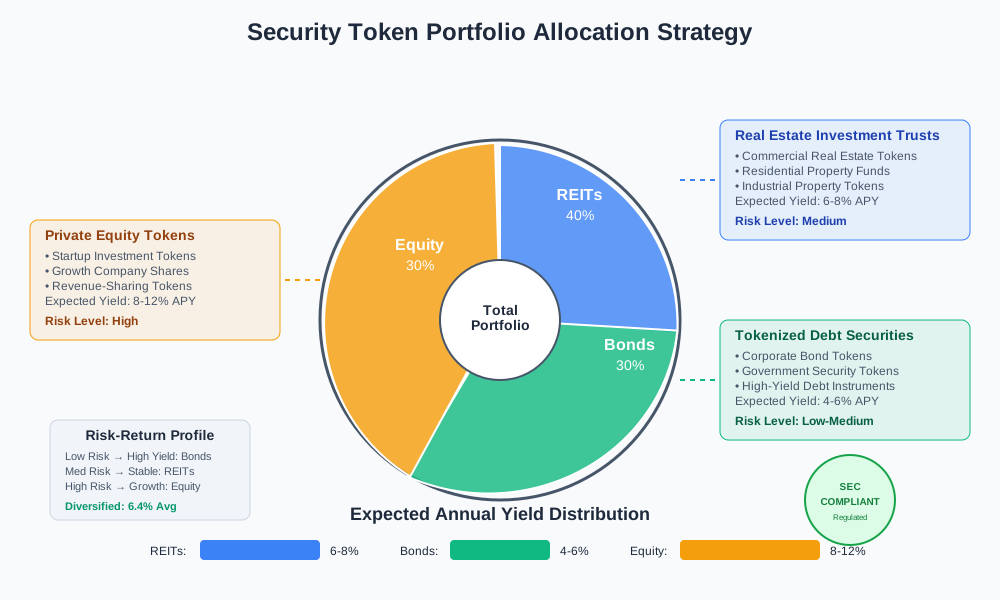
Multi-Asset Portfolio Farming
// src/portfolioFarm.js
class PortfolioYieldFarm {
    constructor(tzeroAPI) {
        this.tzeroAPI = tzeroAPI;
        this.portfolioWeights = new Map();
    }

    // Create diversified yield portfolio
    async createPortfolio(reitWeight = 0.4, bondWeight = 0.3, equityWeight = 0.3) {
        const availableTokens = await this.tzeroAPI.getSecurityTokens();

        const portfolio = {
            reits: availableTokens.filter(t => t.category === 'REIT'),
            bonds: availableTokens.filter(t => t.category === 'BOND'),
            equity: availableTokens.filter(t => t.category === 'EQUITY')
        };

        // Calculate optimal allocation
        return this.optimizePortfolio(portfolio, {
            reit: reitWeight,
            bond: bondWeight,
            equity: equityWeight
        });
    }

    // Rebalance portfolio based on performance
    async rebalancePortfolio(currentPortfolio, targetWeights) {
        const rebalanceActions = [];

        for (const [asset, currentWeight] of currentPortfolio.entries()) {
            const targetWeight = targetWeights.get(asset);
            const weightDiff = targetWeight - currentWeight;

            if (Math.abs(weightDiff) > 0.05) { // 5% threshold
                rebalanceActions.push({
                    asset,
                    action: weightDiff > 0 ? 'BUY' : 'SELL',
                    amount: Math.abs(weightDiff)
                });
            }
        }

        return rebalanceActions;
    }
}
Regulatory Considerations and Best Practices
SEC Compliance Requirements
Investor Verification: Always verify accredited investor status before allowing participation.
Disclosure Documents: Provide clear risk disclosures and investment terms.
Record Keeping: Maintain detailed transaction logs for regulatory reporting.
Transfer Restrictions: Implement proper hold periods and transfer limitations.
International Compliance
Different jurisdictions have varying requirements for security tokens:
United States: SEC regulations under Regulation D/S/A+ European Union: MiFID II and GDPR compliance United Kingdom: FCA authorization requirements Asia-Pacific: Varying national securities regulations
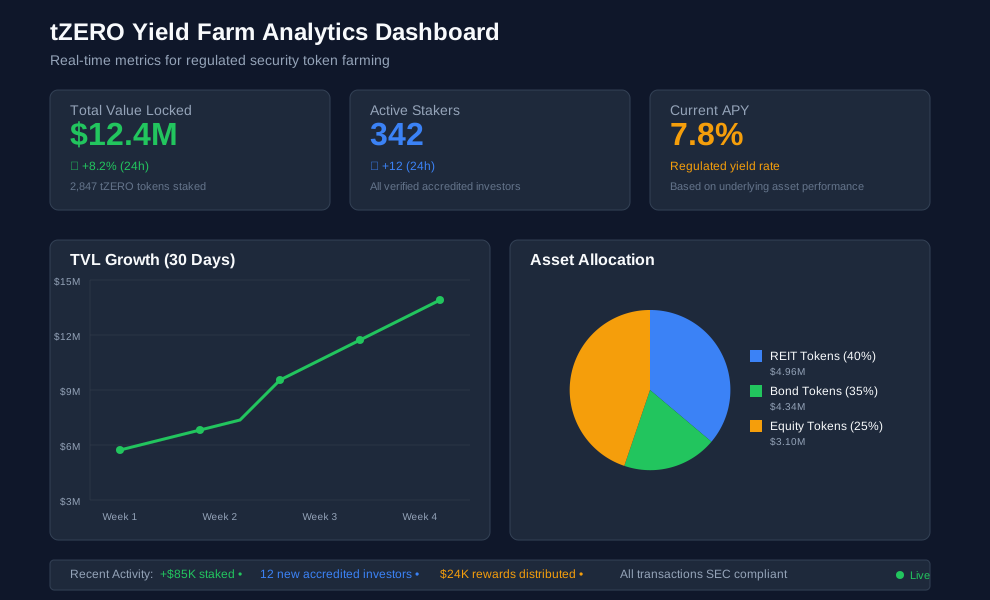
Monitoring and Analytics
// src/analytics.js
class YieldFarmAnalytics {
    constructor(contract, tzeroAPI) {
        this.contract = contract;
        this.tzeroAPI = tzeroAPI;
    }

    // Calculate total value locked (TVL)
    async getTotalValueLocked() {
        const totalStaked = await this.contract.totalStaked();
        const tokenPrice = await this.tzeroAPI.getTokenPrice();

        return {
            tokens: totalStaked,
            usdValue: totalStaked * tokenPrice
        };
    }

    // Get yield farm performance metrics
    async getPerformanceMetrics() {
        const events = await this.contract.getPastEvents('allEvents', {
            fromBlock: 'earliest',
            toBlock: 'latest'
        });

        const metrics = {
            totalStakers: new Set(),
            totalRewardsPaid: 0,
            averageStakePeriod: 0,
            complianceRate: 0
        };

        // Process events to calculate metrics
        events.forEach(event => {
            if (event.event === 'Staked') {
                metrics.totalStakers.add(event.returnValues.user);
            }
            if (event.event === 'RewardsClaimed') {
                metrics.totalRewardsPaid += parseFloat(event.returnValues.amount);
            }
        });

        return metrics;
    }
}
Conclusion
tZERO security tokens represent the evolution of DeFi toward institutional-grade, regulated asset management. This regulated asset yield farming approach offers several advantages over traditional DeFi protocols: legal compliance, asset quality assurance, and institutional investor protection.
By implementing the strategies outlined in this guide, you can build yield farming platforms that satisfy both crypto innovation and regulatory requirements. The key lies in balancing automation with compliance, ensuring every transaction meets securities law standards while providing competitive yields.
Key Takeaways:
- Security tokens provide regulated access to real-world assets
- Compliance verification is essential for every transaction
- Multi-asset portfolios can optimize risk-adjusted returns
- Regular auditing and monitoring ensure ongoing regulatory compliance
Start building your regulated yield farming platform today. The intersection of traditional finance and DeFi innovation offers unprecedented opportunities for compliant, profitable asset management.