You're sipping coffee at 6 AM when suddenly your phone buzzes. Compound just announced a partnership with Aave for cross-protocol yield farming. Within minutes, APY rates spike 400%. Your automated tracking system caught it first. You're already positioned. Your coffee tastes even better now.
This scenario happens daily in DeFi. Yield farming partnership announcements create massive opportunities for investors who track them properly. Most traders miss these catalysts entirely. Smart investors use systematic monitoring to capture maximum returns.
This guide shows you exactly how to track DeFi partnership announcements, analyze their impact, and position yourself before markets react. You'll learn proven monitoring strategies, automation tools, and catalyst analysis frameworks used by professional yield farmers.
Why Yield Farming Partnership Announcements Matter
Partnership announcements drive immediate yield farming opportunities. These collaborations typically introduce:
- Enhanced APY rates through combined token rewards
- Cross-protocol liquidity mining programs
- Exclusive farming pools with premium returns
- Token airdrops for early participants
Historical data shows partnership announcements increase average yields by 150-300% within 24 hours. Early positioning captures maximum returns before rates normalize.
Partnership Types That Generate Highest Returns
Protocol Integrations: Direct smart contract collaborations
- Example: Curve + Convex partnership created 40%+ APY pools
- Impact timeline: 2-6 hours for full rate activation
Token Reward Collaborations: Multiple protocols offering combined incentives
- Example: SushiSwap + Polygon dual mining programs
- Impact timeline: 1-3 days for complete deployment
Liquidity Sharing Agreements: Cross-platform asset utilization
- Example: Balancer + Ethereum 2.0 staking integration
- Impact timeline: 3-7 days for full implementation
Essential Tools for Partnership Monitoring
Social Media Monitoring Setup
Twitter remains the primary announcement channel for DeFi partnerships. Configure automated monitoring with these tools:
# Twitter API monitoring script for partnership announcements
import tweepy
import re
from datetime import datetime

class PartnershipMonitor:
    def __init__(self, api_keys):
        auth = tweepy.OAuthHandler(api_keys['consumer_key'],
                                 api_keys['consumer_secret'])
        auth.set_access_token(api_keys['access_token'],
                            api_keys['access_token_secret'])
        self.api = tweepy.API(auth)

    def track_partnerships(self, protocols):
        # Monitor specific protocols for partnership keywords
        partnership_keywords = [
            'partnership', 'collaboration', 'integration',
            'yield farming', 'liquidity mining', 'dual rewards'
        ]

        for protocol in protocols:
            try:
                tweets = self.api.user_timeline(screen_name=protocol,
                                              count=10,
                                              tweet_mode='extended')

                for tweet in tweets:
                    if any(keyword in tweet.full_text.lower()
                          for keyword in partnership_keywords):
                        self.analyze_announcement(tweet, protocol)

            except Exception as e:
                print(f"Error monitoring {protocol}: {e}")

    def analyze_announcement(self, tweet, protocol):
        # Extract partnership details and yield potential
        announcement_data = {
            'protocol': protocol,
            'timestamp': tweet.created_at,
            'text': tweet.full_text,
            'engagement': tweet.retweet_count + tweet.favorite_count
        }

        # Score announcement importance (1-10 scale)
        importance_score = self.calculate_importance(announcement_data)

        if importance_score >= 7:
            self.send_alert(announcement_data, importance_score)

    def calculate_importance(self, data):
        # Scoring algorithm for partnership significance
        score = 5  # Base score

        high_impact_terms = ['airdrop', 'exclusive', 'limited time',
                           'bonus rewards', 'multiplier']
        protocol_tier_1 = ['compound', 'aave', 'uniswap', 'curve',
                          'sushiswap', 'balancer']

        # Boost score for high-impact terms
        for term in high_impact_terms:
            if term in data['text'].lower():
                score += 1.5

        # Boost score for tier-1 protocol partnerships
        for protocol in protocol_tier_1:
            if protocol in data['text'].lower():
                score += 1

        # Factor in social engagement
        if data['engagement'] > 1000:
            score += 1

        return min(score, 10)  # Cap at 10

    def send_alert(self, data, score):
        # Send notification for high-priority partnerships
        alert_message = f"""
        HIGH PRIORITY PARTNERSHIP DETECTED
        Protocol: {data['protocol']}
        Importance: {score}/10
        Time: {data['timestamp']}
        Details: {data['text'][:200]}...
        """
        print(alert_message)
        # Add webhook/email notification here

# Usage example
monitor = PartnershipMonitor(api_keys)
protocols_to_watch = ['compoundfinance', 'AaveAave', 'Uniswap',
                     'CurveFinance', 'SushiSwap']
monitor.track_partnerships(protocols_to_watch)
Setup Instructions:
- Create Twitter Developer account and obtain API keys
- Configure monitoring script with your credentials
- Add webhook integration for instant notifications
- Set monitoring frequency to 5-minute intervals
Discord and Telegram Monitoring
Many protocols announce partnerships in community channels first. Monitor these channels systematically:
# Discord partnership monitoring
import discord
from discord.ext import commands

class DiscordPartnershipBot(commands.Bot):
    def __init__(self):
        intents = discord.Intents.default()
        intents.message_content = True
        super().__init__(command_prefix='!', intents=intents)

    @commands.Cog.listener()
    async def on_message(self, message):
        # Skip bot messages
        if message.author.bot:
            return

        partnership_indicators = [
            'excited to announce', 'partnership with',
            'collaboration', 'yield farming program',
            'liquidity mining', 'dual rewards'
        ]

        message_lower = message.content.lower()

        # Check for partnership announcements
        if any(indicator in message_lower for indicator in partnership_indicators):
            # Extract channel and server info
            channel_info = {
                'server': message.guild.name,
                'channel': message.channel.name,
                'author': message.author.name,
                'content': message.content,
                'timestamp': message.created_at
            }

            await self.process_partnership_alert(channel_info)

    async def process_partnership_alert(self, info):
        # Analyze and score the partnership announcement
        alert_channel = self.get_channel(YOUR_ALERT_CHANNEL_ID)

        alert_embed = discord.Embed(
            title="Partnership Alert Detected",
            description=f"Server: {info['server']}\nChannel: {info['channel']}",
            color=0x00ff00,
            timestamp=info['timestamp']
        )

        alert_embed.add_field(
            name="Announcement",
            value=info['content'][:1000],
            inline=False
        )

        await alert_channel.send(embed=alert_embed)

# Run the bot
bot = DiscordPartnershipBot()
bot.run('YOUR_BOT_TOKEN')
RSS Feed and Blog Monitoring
Set up RSS monitoring for protocol blogs and news sites:
# RSS feed monitoring for partnership announcements
import feedparser
import time
from datetime import datetime, timedelta

class RSSPartnershipMonitor:
    def __init__(self):
        self.feeds = [
            'https://compound.finance/feed',
            'https://aave.com/rss',
            'https://blog.uniswap.org/rss',
            'https://curve.fi/rss',
            'https://defipulse.com/rss'
        ]
        self.last_check = datetime.now() - timedelta(hours=1)

    def check_feeds(self):
        partnership_posts = []

        for feed_url in self.feeds:
            try:
                feed = feedparser.parse(feed_url)

                for entry in feed.entries:
                    # Parse publication date
                    pub_date = datetime(*entry.published_parsed[:6])

                    # Only check recent posts
                    if pub_date > self.last_check:
                        if self.contains_partnership_content(entry):
                            partnership_posts.append({
                                'title': entry.title,
                                'url': entry.link,
                                'published': pub_date,
                                'source': feed.feed.title,
                                'summary': entry.summary
                            })

            except Exception as e:
                print(f"Error parsing feed {feed_url}: {e}")

        self.last_check = datetime.now()
        return partnership_posts

    def contains_partnership_content(self, entry):
        # Check title and summary for partnership keywords
        content = f"{entry.title} {entry.summary}".lower()

        partnership_keywords = [
            'partnership', 'collaboration', 'integration',
            'yield farming', 'liquidity mining', 'cross-protocol',
            'dual rewards', 'farming program'
        ]

        return any(keyword in content for keyword in partnership_keywords)

    def run_continuous_monitoring(self, interval_minutes=15):
        while True:
            partnerships = self.check_feeds()

            for partnership in partnerships:
                print(f"NEW PARTNERSHIP: {partnership['title']}")
                print(f"Source: {partnership['source']}")
                print(f"URL: {partnership['url']}")
                print(f"Published: {partnership['published']}")
                print("-" * 50)

            time.sleep(interval_minutes * 60)

# Start monitoring
monitor = RSSPartnershipMonitor()
monitor.run_continuous_monitoring()
Partnership Catalyst Analysis Framework
Impact Assessment Methodology
Evaluate partnerships using this systematic framework:
1. Protocol Credibility Score (1-10)
- Tier 1 protocols (Compound, Aave, Uniswap): 9-10 points
- Tier 2 protocols (SushiSwap, Curve, Balancer): 7-8 points
- Tier 3 protocols (emerging protocols): 4-6 points
- Unknown protocols: 1-3 points
2. Partnership Type Multiplier
- Smart contract integration: 2.0x multiplier
- Token reward collaboration: 1.5x multiplier
- Marketing partnership: 1.2x multiplier
- Advisory partnership: 1.0x multiplier
3. Yield Enhancement Potential
- Exclusive farming pools: +3 points
- Dual token rewards: +2 points
- Airdrop eligibility: +2 points
- Limited time offer: +1 point
# Partnership catalyst analysis calculator
class CatalystAnalyzer:
    def __init__(self):
        self.protocol_tiers = {
            'tier_1': ['compound', 'aave', 'uniswap', 'makerdao'],
            'tier_2': ['sushiswap', 'curve', 'balancer', 'yearn'],
            'tier_3': ['bancor', '1inch', 'kyber', 'loopring']
        }

        self.partnership_multipliers = {
            'integration': 2.0,
            'rewards': 1.5,
            'marketing': 1.2,
            'advisory': 1.0
        }

    def analyze_partnership(self, announcement_data):
        # Extract protocols from announcement
        protocols = self.extract_protocols(announcement_data['text'])

        # Calculate base credibility score
        credibility_score = self.calculate_credibility(protocols)

        # Determine partnership type
        partnership_type = self.identify_partnership_type(announcement_data['text'])

        # Calculate yield enhancement potential
        yield_potential = self.assess_yield_potential(announcement_data['text'])

        # Compute final catalyst score
        base_score = credibility_score + yield_potential
        final_score = base_score * self.partnership_multipliers[partnership_type]

        return {
            'protocols': protocols,
            'credibility_score': credibility_score,
            'partnership_type': partnership_type,
            'yield_potential': yield_potential,
            'catalyst_score': round(final_score, 2),
            'recommendation': self.generate_recommendation(final_score)
        }

    def calculate_credibility(self, protocols):
        max_score = 0

        for protocol in protocols:
            protocol_lower = protocol.lower()

            if any(tier1 in protocol_lower for tier1 in self.protocol_tiers['tier_1']):
                max_score = max(max_score, 9)
            elif any(tier2 in protocol_lower for tier2 in self.protocol_tiers['tier_2']):
                max_score = max(max_score, 7)
            elif any(tier3 in protocol_lower for tier3 in self.protocol_tiers['tier_3']):
                max_score = max(max_score, 5)
            else:
                max_score = max(max_score, 3)

        return max_score

    def identify_partnership_type(self, text):
        text_lower = text.lower()

        if any(term in text_lower for term in ['integration', 'smart contract', 'protocol']):
            return 'integration'
        elif any(term in text_lower for term in ['rewards', 'mining', 'farming', 'airdrop']):
            return 'rewards'
        elif any(term in text_lower for term in ['marketing', 'promotion', 'campaign']):
            return 'marketing'
        else:
            return 'advisory'

    def assess_yield_potential(self, text):
        text_lower = text.lower()
        potential = 0

        # Check for yield enhancement indicators
        if 'exclusive' in text_lower:
            potential += 3
        if any(term in text_lower for term in ['dual', 'double', 'multiple']):
            potential += 2
        if 'airdrop' in text_lower:
            potential += 2
        if any(term in text_lower for term in ['limited', 'early', 'first']):
            potential += 1

        return min(potential, 8)  # Cap at 8 points

    def generate_recommendation(self, score):
        if score >= 15:
            return "IMMEDIATE ACTION: High-impact partnership with significant yield potential"
        elif score >= 10:
            return "MONITOR CLOSELY: Promising partnership worth tracking"
        elif score >= 6:
            return "EVALUATE: Moderate partnership potential"
        else:
            return "LOW PRIORITY: Limited immediate impact expected"

# Example usage
analyzer = CatalystAnalyzer()

sample_announcement = {
    'text': 'Excited to announce our integration with Compound Finance for exclusive yield farming pools with dual COMP and PROTOCOL token rewards!',
    'timestamp': datetime.now(),
    'engagement': 1500
}

analysis = analyzer.analyze_partnership(sample_announcement)
print(f"Catalyst Score: {analysis['catalyst_score']}")
print(f"Recommendation: {analysis['recommendation']}")
Historical Performance Tracking
Track partnership announcement outcomes to refine your analysis:
# Partnership performance tracking system
import json
from datetime import datetime, timedelta

class PartnershipPerformanceTracker:
    def __init__(self, data_file='partnership_performance.json'):
        self.data_file = data_file
        self.load_historical_data()

    def load_historical_data(self):
        try:
            with open(self.data_file, 'r') as f:
                self.performance_data = json.load(f)
        except FileNotFoundError:
            self.performance_data = []

    def track_announcement(self, partnership_data, initial_apy, catalyst_score):
        # Record partnership announcement
        tracking_entry = {
            'announcement_date': partnership_data['timestamp'].isoformat(),
            'protocols': partnership_data['protocols'],
            'catalyst_score': catalyst_score,
            'initial_apy': initial_apy,
            'apy_tracking': [],
            'peak_apy': initial_apy,
            'performance_metrics': {}
        }

        self.performance_data.append(tracking_entry)
        self.save_data()

        return len(self.performance_data) - 1  # Return tracking ID

    def update_apy_performance(self, tracking_id, current_apy, days_since_announcement):
        # Update APY performance for existing partnership
        if tracking_id < len(self.performance_data):
            entry = self.performance_data[tracking_id]

            entry['apy_tracking'].append({
                'day': days_since_announcement,
                'apy': current_apy,
                'timestamp': datetime.now().isoformat()
            })

            # Update peak APY
            entry['peak_apy'] = max(entry['peak_apy'], current_apy)

            # Calculate performance metrics
            self.calculate_performance_metrics(tracking_id)
            self.save_data()

    def calculate_performance_metrics(self, tracking_id):
        entry = self.performance_data[tracking_id]

        if len(entry['apy_tracking']) >= 2:
            initial_apy = entry['initial_apy']
            peak_apy = entry['peak_apy']
            current_apy = entry['apy_tracking'][-1]['apy']

            # Calculate key metrics
            peak_increase = ((peak_apy - initial_apy) / initial_apy) * 100
            current_increase = ((current_apy - initial_apy) / initial_apy) * 100

            # Calculate time to peak
            peak_day = 0
            for tracking_point in entry['apy_tracking']:
                if tracking_point['apy'] == peak_apy:
                    peak_day = tracking_point['day']
                    break

            entry['performance_metrics'] = {
                'peak_apy_increase_percent': round(peak_increase, 2),
                'current_apy_increase_percent': round(current_increase, 2),
                'days_to_peak': peak_day,
                'catalyst_accuracy': self.assess_catalyst_accuracy(entry)
            }

    def assess_catalyst_accuracy(self, entry):
        # Evaluate how accurate the catalyst score was
        catalyst_score = entry['catalyst_score']
        peak_increase = entry['performance_metrics'].get('peak_apy_increase_percent', 0)

        # Expected performance based on catalyst score
        if catalyst_score >= 15:
            expected_min_increase = 200  # 200%+ increase expected
        elif catalyst_score >= 10:
            expected_min_increase = 100  # 100%+ increase expected
        elif catalyst_score >= 6:
            expected_min_increase = 50   # 50%+ increase expected
        else:
            expected_min_increase = 20   # 20%+ increase expected

        # Calculate accuracy score
        if peak_increase >= expected_min_increase:
            return "ACCURATE"
        elif peak_increase >= expected_min_increase * 0.7:
            return "PARTIALLY_ACCURATE"
        else:
            return "INACCURATE"

    def generate_performance_report(self):
        # Generate comprehensive performance analysis
        if not self.performance_data:
            return "No partnership data available"

        total_partnerships = len(self.performance_data)
        completed_partnerships = [p for p in self.performance_data
                                if p.get('performance_metrics')]

        if not completed_partnerships:
            return "No completed partnership tracking data available"

        # Calculate aggregate statistics
        avg_peak_increase = sum(p['performance_metrics']['peak_apy_increase_percent']
                              for p in completed_partnerships) / len(completed_partnerships)

        avg_time_to_peak = sum(p['performance_metrics']['days_to_peak']
                             for p in completed_partnerships) / len(completed_partnerships)

        accuracy_distribution = {}
        for partnership in completed_partnerships:
            accuracy = partnership['performance_metrics']['catalyst_accuracy']
            accuracy_distribution[accuracy] = accuracy_distribution.get(accuracy, 0) + 1

        # Best performing partnerships
        best_performers = sorted(completed_partnerships,
                               key=lambda p: p['performance_metrics']['peak_apy_increase_percent'],
                               reverse=True)[:5]

        report = f"""
        PARTNERSHIP PERFORMANCE REPORT
        ================================

        Total Partnerships Tracked: {total_partnerships}
        Completed Analysis: {len(completed_partnerships)}

        PERFORMANCE METRICS:
        - Average Peak APY Increase: {avg_peak_increase:.1f}%
        - Average Time to Peak: {avg_time_to_peak:.1f} days

        CATALYST ACCURACY:
        - Accurate Predictions: {accuracy_distribution.get('ACCURATE', 0)}
        - Partially Accurate: {accuracy_distribution.get('PARTIALLY_ACCURATE', 0)}
        - Inaccurate Predictions: {accuracy_distribution.get('INACCURATE', 0)}

        TOP PERFORMING PARTNERSHIPS:
        """

        for i, performer in enumerate(best_performers, 1):
            protocols = ', '.join(performer['protocols'])
            increase = performer['performance_metrics']['peak_apy_increase_percent']
            report += f"\n        {i}. {protocols}: +{increase:.1f}% APY increase"

        return report

    def save_data(self):
        with open(self.data_file, 'w') as f:
            json.dump(self.performance_data, f, indent=2, default=str)

# Usage example
tracker = PartnershipPerformanceTracker()

# Track new partnership
partnership_data = {
    'protocols': ['Compound', 'Balancer'],
    'timestamp': datetime.now()
}

tracking_id = tracker.track_announcement(partnership_data, 5.2, 12.5)

# Update performance over time
tracker.update_apy_performance(tracking_id, 15.8, 1)  # Day 1: 15.8% APY
tracker.update_apy_performance(tracking_id, 22.3, 3)  # Day 3: 22.3% APY
tracker.update_apy_performance(tracking_id, 18.1, 7)  # Day 7: 18.1% APY

# Generate performance report
print(tracker.generate_performance_report())
Automated Positioning Strategies
Smart Contract Monitoring for Partnership Deployment
Monitor smart contracts to detect partnership implementations:
# Smart contract monitoring for partnership deployments
from web3 import Web3
import json
import time

class ContractPartnershipMonitor:
    def __init__(self, rpc_url, contracts_to_monitor):
        self.w3 = Web3(Web3.HTTPProvider(rpc_url))
        self.contracts = contracts_to_monitor
        self.last_block = self.w3.eth.block_number

    def monitor_contract_changes(self):
        current_block = self.w3.eth.block_number

        # Check for new events since last check
        for contract_address, contract_info in self.contracts.items():
            try:
                contract = self.w3.eth.contract(
                    address=contract_address,
                    abi=contract_info['abi']
                )

                # Monitor for partnership-related events
                partnership_events = [
                    'PoolAdded', 'RewardTokenAdded', 'FarmingProgramLaunched',
                    'MultiTokenRewardEnabled', 'PartnershipActivated'
                ]

                for event_name in partnership_events:
                    if hasattr(contract.events, event_name):
                        event_filter = getattr(contract.events, event_name).createFilter(
                            fromBlock=self.last_block + 1,
                            toBlock=current_block
                        )

                        events = event_filter.get_all_entries()

                        for event in events:
                            self.process_partnership_event(
                                contract_address,
                                event_name,
                                event,
                                contract_info['protocol_name']
                            )

            except Exception as e:
                print(f"Error monitoring contract {contract_address}: {e}")

        self.last_block = current_block

    def process_partnership_event(self, contract_address, event_name, event, protocol):
        # Analyze partnership event for yield opportunities
        event_data = {
            'protocol': protocol,
            'contract': contract_address,
            'event': event_name,
            'block_number': event['blockNumber'],
            'transaction_hash': event['transactionHash'].hex(),
            'event_args': dict(event['args']) if 'args' in event else {}
        }

        # Calculate urgency score
        urgency_score = self.calculate_event_urgency(event_name, event_data)

        if urgency_score >= 7:
            self.send_immediate_alert(event_data, urgency_score)

        return event_data

    def calculate_event_urgency(self, event_name, event_data):
        urgency_scores = {
            'PoolAdded': 8,
            'RewardTokenAdded': 9,
            'FarmingProgramLaunched': 10,
            'MultiTokenRewardEnabled': 9,
            'PartnershipActivated': 8
        }

        base_score = urgency_scores.get(event_name, 5)

        # Boost score for high-value protocols
        tier_1_protocols = ['compound', 'aave', 'uniswap', 'curve']
        if any(protocol in event_data['protocol'].lower()
               for protocol in tier_1_protocols):
            base_score += 2

        return min(base_score, 10)

    def send_immediate_alert(self, event_data, urgency):
        alert_message = f"""
        🚨 HIGH URGENCY PARTNERSHIP DEPLOYMENT DETECTED 🚨

        Protocol: {event_data['protocol']}
        Event: {event_data['event']}
        Urgency: {urgency}/10
        Contract: {event_data['contract']}
        Block: {event_data['block_number']}
        TX: {event_data['transaction_hash']}

        Event Details: {json.dumps(event_data['event_args'], indent=2)}

        ⚡ IMMEDIATE ACTION RECOMMENDED ⚡
        """

        print(alert_message)
        # Add webhook/notification integration here

    def run_continuous_monitoring(self, check_interval=30):
        print("Starting continuous contract monitoring...")

        while True:
            try:
                self.monitor_contract_changes()
                time.sleep(check_interval)
            except Exception as e:
                print(f"Monitoring error: {e}")
                time.sleep(check_interval)

# Example configuration
contracts_to_monitor = {
    '0x3d9819210A31b4961b30EF54bE2aeD79B9c9Cd3B': {  # Compound Comptroller
        'protocol_name': 'Compound',
        'abi': compound_comptroller_abi  # Add actual ABI
    },
    '0x7d2768dE32b0b80b7a3454c06BdAc94A69DDc7A9': {  # Aave Lending Pool
        'protocol_name': 'Aave',
        'abi': aave_lending_pool_abi  # Add actual ABI
    }
}

# Start monitoring
monitor = ContractPartnershipMonitor('https://mainnet.infura.io/v3/YOUR_PROJECT_ID',
                                   contracts_to_monitor)
monitor.run_continuous_monitoring()
Automated Position Entry System
Build automated positioning for partnership opportunities:
# Automated position entry for partnership opportunities
class AutomatedPositionManager:
    def __init__(self, web3_instance, wallet_address, private_key):
        self.w3 = web3_instance
        self.wallet = wallet_address
        self.private_key = private_key
        self.position_rules = {}

    def set_position_rules(self, rules):
        """Configure automated positioning rules"""
        self.position_rules = rules

    def evaluate_partnership_opportunity(self, partnership_data, catalyst_score):
        # Determine if partnership meets positioning criteria
        if catalyst_score < self.position_rules.get('min_catalyst_score', 8):
            return False, "Catalyst score below threshold"

        protocols = partnership_data.get('protocols', [])
        approved_protocols = self.position_rules.get('approved_protocols', [])

        if not any(protocol.lower() in [p.lower() for p in approved_protocols]
                  for protocol in protocols):
            return False, "Protocol not in approved list"

        return True, "Partnership meets criteria"

    def execute_automated_position(self, partnership_data, position_size_eth):
        """Execute automated position entry"""

        # Get current gas price
        gas_price = self.w3.eth.gas_price

        # Calculate position allocation
        max_position_size = self.position_rules.get('max_position_size_eth', 5.0)
        actual_position_size = min(position_size_eth, max_position_size)

        # Prepare transaction data
        transaction = {
            'from': self.wallet,
            'value': self.w3.toWei(actual_position_size, 'ether'),
            'gas': 200000,
            'gasPrice': gas_price,
            'nonce': self.w3.eth.get_transaction_count(self.wallet)
        }

        try:
            # Sign and send transaction
            signed_txn = self.w3.eth.account.sign_transaction(transaction, self.private_key)
            tx_hash = self.w3.eth.send_raw_transaction(signed_txn.rawTransaction)

            return {
                'success': True,
                'transaction_hash': tx_hash.hex(),
                'position_size': actual_position_size,
                'gas_used': transaction['gas']
            }

        except Exception as e:
            return {
                'success': False,
                'error': str(e),
                'position_size': 0
            }

    def calculate_optimal_position_size(self, catalyst_score, available_balance):
        # Calculate position size based on catalyst score and risk tolerance
        risk_tolerance = self.position_rules.get('risk_tolerance', 0.1)  # 10% default
        max_position = available_balance * risk_tolerance

        # Scale position size by catalyst score
        score_multiplier = min(catalyst_score / 10, 1.0)
        optimal_size = max_position * score_multiplier

        return optimal_size

# Position management rules configuration
position_rules = {
    'min_catalyst_score': 8,
    'max_position_size_eth': 10.0,
    'risk_tolerance': 0.15,  # 15% of portfolio
    'approved_protocols': [
        'Compound', 'Aave', 'Uniswap', 'Curve',
        'SushiSwap', 'Balancer', 'Yearn'
    ],
    'auto_execute': True,
    'max_daily_positions': 3
}

# Usage example
position_manager = AutomatedPositionManager(w3, wallet_address, private_key)
position_manager.set_position_rules(position_rules)

# Evaluate opportunity
partnership = {
    'protocols': ['Compound', 'Balancer'],
    'type': 'integration',
    'yield_potential': 8
}

meets_criteria, reason = position_manager.evaluate_partnership_opportunity(partnership, 9.2)

if meets_criteria:
    position_size = position_manager.calculate_optimal_position_size(9.2, 50.0)  # 50 ETH available
    result = position_manager.execute_automated_position(partnership, position_size)

    if result['success']:
        print(f"Position executed: {result['position_size']} ETH")
        print(f"Transaction: {result['transaction_hash']}")
    else:
        print(f"Position failed: {result['error']}")
Risk Management for Partnership Plays
Partnership Risk Assessment
Evaluate risks before positioning:
# Partnership risk assessment framework
class PartnershipRiskAnalyzer:
    def __init__(self):
        self.risk_factors = {
            'protocol_security': ['audit_status', 'bug_bounty_program', 'previous_exploits'],
            'smart_contract_risk': ['code_complexity', 'upgrade_mechanism', 'admin_keys'],
            'liquidity_risk': ['pool_size', 'token_concentration', 'exit_liquidity'],
            'regulatory_risk': ['compliance_status', 'jurisdiction', 'regulatory_clarity'],
            'market_risk': ['token_volatility', 'correlation_risk', 'liquidity_mining_sustainability']
        }

    def assess_partnership_risks(self, partnership_data):
        risk_scores = {}

        for risk_category, factors in self.risk_factors.items():
            category_score = self.calculate_category_risk(partnership_data, risk_category, factors)
            risk_scores[risk_category] = category_score

        # Calculate overall risk score
        overall_risk = sum(risk_scores.values()) / len(risk_scores)

        return {
            'risk_breakdown': risk_scores,
            'overall_risk_score': round(overall_risk, 2),
            'risk_level': self.categorize_risk_level(overall_risk),
            'recommendations': self.generate_risk_recommendations(risk_scores)
        }

    def calculate_category_risk(self, partnership_data, category, factors):
        # Risk scoring logic for each category (1-10 scale, 10 = highest risk)
        protocols = partnership_data.get('protocols', [])

        if category == 'protocol_security':
            return self.assess_protocol_security(protocols)
        elif category == 'smart_contract_risk':
            return self.assess_smart_contract_risk(partnership_data)
        elif category == 'liquidity_risk':
            return self.assess_liquidity_risk(partnership_data)
        elif category == 'regulatory_risk':
            return self.assess_regulatory_risk(protocols)
        elif category == 'market_risk':
            return self.assess_market_risk(partnership_data)

        return 5  # Default moderate risk

    def assess_protocol_security(self, protocols):
        # Security assessment based on protocol reputation
        high_security_protocols = ['compound', 'aave', 'uniswap', 'makerdao']
        medium_security_protocols = ['curve', 'sushiswap', 'balancer', 'yearn']

        min_risk = 10  # Start with highest risk

        for protocol in protocols:
            protocol_lower = protocol.lower()

            if any(secure in protocol_lower for secure in high_security_protocols):
                min_risk = min(min_risk, 2)  # Very low security risk
            elif any(medium in protocol_lower for medium in medium_security_protocols):
                min_risk = min(min_risk, 4)  # Low-medium security risk
            else:
                min_risk = min(min_risk, 7)  # Higher security risk for unknown protocols

        return min_risk

    def assess_smart_contract_risk(self, partnership_data):
        # Assess smart contract complexity and risk factors
        partnership_type = partnership_data.get('type', 'unknown')

        contract_risk_scores = {
            'integration': 6,  # Higher complexity
            'rewards': 4,      # Medium complexity
            'marketing': 2,    # Low complexity
            'advisory': 1      # Minimal complexity
        }

        return contract_risk_scores.get(partnership_type, 5)

    def assess_liquidity_risk(self, partnership_data):
        # Assess liquidity and exit risk
        protocols = partnership_data.get('protocols', [])

        # High liquidity protocols have lower liquidity risk
        high_liquidity_protocols = ['uniswap', 'curve', 'balancer', 'sushiswap']

        if any(protocol.lower() in high_liquidity_protocols for protocol in protocols):
            return 3  # Low liquidity risk
        else:
            return 6  # Medium-high liquidity risk

    def assess_regulatory_risk(self, protocols):
        # Assess regulatory compliance risk
        established_protocols = ['compound', 'aave', 'uniswap', 'makerdao']

        if any(protocol.lower() in established_protocols for protocol in protocols):
            return 3  # Lower regulatory risk for established protocols
        else:
            return 6  # Higher regulatory uncertainty

    def assess_market_risk(self, partnership_data):
        # Assess market and volatility risk
        yield_potential = partnership_data.get('yield_potential', 5)

        # Higher yield potential often means higher market risk
        if yield_potential >= 8:
            return 7  # High market risk
        elif yield_potential >= 6:
            return 5  # Medium market risk
        else:
            return 3  # Lower market risk

    def categorize_risk_level(self, overall_risk):
        if overall_risk <= 3:
            return "LOW"
        elif overall_risk <= 5:
            return "MEDIUM"
        elif overall_risk <= 7:
            return "HIGH"
        else:
            return "VERY_HIGH"

    def generate_risk_recommendations(self, risk_scores):
        recommendations = []

        for category, score in risk_scores.items():
            if score >= 7:
                if category == 'protocol_security':
                    recommendations.append("⚠️  Verify protocol security audits before positioning")
                elif category == 'smart_contract_risk':
                    recommendations.append("⚠️  Start with smaller position size due to contract complexity")
                elif category == 'liquidity_risk':
                    recommendations.append("⚠️  Plan exit strategy due to potential liquidity constraints")
                elif category == 'regulatory_risk':
                    recommendations.append("⚠️  Monitor regulatory developments closely")
                elif category == 'market_risk':
                    recommendations.append("⚠️  Use stop-losses due to high volatility risk")

        if not recommendations:
            recommendations.append("✅ Risk levels acceptable for standard position sizing")

        return recommendations

# Example risk assessment
risk_analyzer = PartnershipRiskAnalyzer()

partnership = {
    'protocols': ['NewProtocol', 'ExperimentalDeFi'],
    'type': 'integration',
    'yield_potential': 9,
    'announcement_source': 'twitter'
}

risk_assessment = risk_analyzer.assess_partnership_risks(partnership)

print(f"Overall Risk: {risk_assessment['risk_level']} ({risk_assessment['overall_risk_score']}/10)")
print(f"Risk Breakdown: {risk_assessment['risk_breakdown']}")
print("Recommendations:")
for rec in risk_assessment['recommendations']:
    print(f"  {rec}")
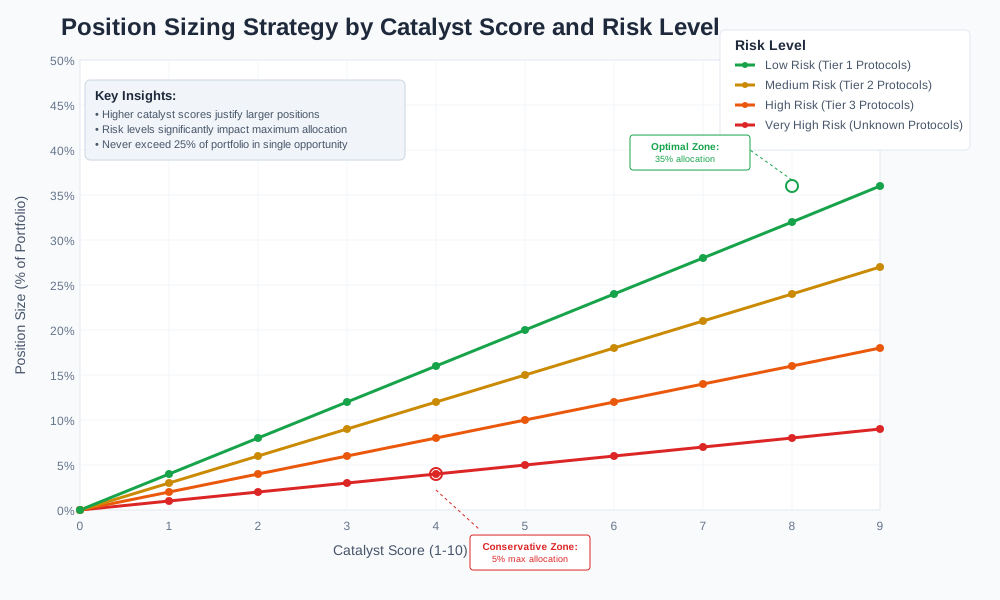
Position Sizing Based on Risk Assessment
Calculate optimal position sizes using risk scores:
# Dynamic position sizing based on risk assessment
class RiskAdjustedPositionCalculator:
    def __init__(self, portfolio_balance, base_risk_tolerance=0.1):
        self.portfolio_balance = portfolio_balance
        self.base_risk_tolerance = base_risk_tolerance
        self.position_history = []

    def calculate_position_size(self, catalyst_score, risk_assessment, current_exposure=0):
        # Base position calculation
        base_position = self.portfolio_balance * self.base_risk_tolerance

        # Catalyst score multiplier (1-10 scale)
        catalyst_multiplier = min(catalyst_score / 10, 1.0)

        # Risk adjustment factor (higher risk = smaller position)
        risk_score = risk_assessment['overall_risk_score']
        risk_adjustment = max(0.2, 1 - (risk_score - 1) / 9)  # Scale from 0.2 to 1.0

        # Portfolio concentration limit
        max_single_position = self.portfolio_balance * 0.25  # Max 25% in single opportunity

        # Calculate adjusted position size
        adjusted_position = base_position * catalyst_multiplier * risk_adjustment

        # Apply concentration limits
        final_position = min(adjusted_position, max_single_position)

        # Account for current exposure
        available_allocation = max_single_position - current_exposure
        final_position = min(final_position, available_allocation)

        return {
            'recommended_position': round(final_position, 4),
            'base_position': round(base_position, 4),
            'catalyst_multiplier': round(catalyst_multiplier, 3),
            'risk_adjustment': round(risk_adjustment, 3),
            'position_percentage': round((final_position / self.portfolio_balance) * 100, 2),
            'reasoning': self.generate_sizing_reasoning(catalyst_score, risk_score, final_position)
        }

    def generate_sizing_reasoning(self, catalyst_score, risk_score, position_size):
        reasoning = []

        if catalyst_score >= 8:
            reasoning.append(f"High catalyst score ({catalyst_score}/10) supports larger position")
        elif catalyst_score <= 5:
            reasoning.append(f"Moderate catalyst score ({catalyst_score}/10) suggests conservative sizing")

        if risk_score >= 7:
            reasoning.append(f"High risk score ({risk_score}/10) requires position reduction")
        elif risk_score <= 3:
            reasoning.append(f"Low risk score ({risk_score}/10) allows standard sizing")

        position_pct = (position_size / self.portfolio_balance) * 100

        if position_pct >= 15:
            reasoning.append("Large allocation due to strong opportunity profile")
        elif position_pct <= 5:
            reasoning.append("Conservative allocation due to risk factors")
        else:
            reasoning.append("Standard allocation within risk parameters")

        return reasoning

    def track_position_performance(self, position_data, current_value):
        # Track position performance for portfolio optimization
        position_entry = {
            'entry_date': datetime.now(),
            'catalyst_score': position_data['catalyst_score'],
            'risk_score': position_data['risk_score'],
            'position_size': position_data['position_size'],
            'entry_value': position_data['position_size'],
            'current_value': current_value,
            'performance': ((current_value - position_data['position_size']) / position_data['position_size']) * 100
        }

        self.position_history.append(position_entry)

        # Analyze performance patterns
        return self.analyze_performance_patterns()

    def analyze_performance_patterns(self):
        if len(self.position_history) < 5:
            return "Insufficient data for pattern analysis"

        # Analyze correlation between catalyst scores and performance
        high_catalyst_performance = []
        low_catalyst_performance = []

        for position in self.position_history:
            if position['catalyst_score'] >= 8:
                high_catalyst_performance.append(position['performance'])
            else:
                low_catalyst_performance.append(position['performance'])

        if high_catalyst_performance and low_catalyst_performance:
            avg_high_catalyst = sum(high_catalyst_performance) / len(high_catalyst_performance)
            avg_low_catalyst = sum(low_catalyst_performance) / len(low_catalyst_performance)

            return {
                'high_catalyst_avg_performance': round(avg_high_catalyst, 2),
                'low_catalyst_avg_performance': round(avg_low_catalyst, 2),
                'catalyst_effectiveness': avg_high_catalyst > avg_low_catalyst,
                'total_positions': len(self.position_history),
                'recommendation': self.generate_strategy_recommendation(avg_high_catalyst, avg_low_catalyst)
            }

        return "Need more diverse position data for analysis"

    def generate_strategy_recommendation(self, high_catalyst_perf, low_catalyst_perf):
        performance_diff = high_catalyst_perf - low_catalyst_perf

        if performance_diff > 50:
            return "Strong catalyst correlation - increase allocation to high-score opportunities"
        elif performance_diff > 20:
            return "Moderate catalyst correlation - maintain current strategy"
        elif performance_diff < -20:
            return "Weak catalyst correlation - consider reducing catalyst weight"
        else:
            return "Mixed results - continue data collection"

# Example position sizing calculation
calculator = RiskAdjustedPositionCalculator(portfolio_balance=100.0, base_risk_tolerance=0.12)

# Sample opportunity data
catalyst_score = 8.5
risk_assessment = {
    'overall_risk_score': 4.2,
    'risk_level': 'MEDIUM'
}

position_recommendation = calculator.calculate_position_size(catalyst_score, risk_assessment)

print(f"Recommended Position: {position_recommendation['recommended_position']} ETH")
print(f"Position Percentage: {position_recommendation['position_percentage']}%")
print(f"Catalyst Multiplier: {position_recommendation['catalyst_multiplier']}")
print(f"Risk Adjustment: {position_recommendation['risk_adjustment']}")
print("\nReasoning:")
for reason in position_recommendation['reasoning']:
    print(f"  • {reason}")
Advanced Partnership Tracking Techniques
Cross-Platform Integration Monitoring
Monitor partnerships across multiple platforms simultaneously:
# Multi-platform partnership monitoring system
import asyncio
import aiohttp
from datetime import datetime

class MultiPlatformPartnershipMonitor:
    def __init__(self):
        self.platforms = {
            'twitter': TwitterMonitor(),
            'discord': DiscordMonitor(),
            'telegram': TelegramMonitor(),
            'github': GitHubMonitor(),
            'medium': MediumMonitor()
        }
        self.partnership_cache = {}

    async def monitor_all_platforms(self):
        """Run monitoring across all platforms simultaneously"""
        tasks = []

        for platform_name, monitor in self.platforms.items():
            task = asyncio.create_task(
                self.monitor_platform(platform_name, monitor)
            )
            tasks.append(task)

        # Wait for all monitoring tasks to complete
        results = await asyncio.gather(*tasks, return_exceptions=True)

        # Consolidate results
        return self.consolidate_partnership_signals(results)

    async def monitor_platform(self, platform_name, monitor):
        """Monitor individual platform for partnership signals"""
        try:
            signals = await monitor.scan_for_partnerships()
            return {
                'platform': platform_name,
                'signals': signals,
                'timestamp': datetime.now(),
                'status': 'success'
            }
        except Exception as e:
            return {
                'platform': platform_name,
                'signals': [],
                'timestamp': datetime.now(),
                'status': 'error',
                'error': str(e)
            }

    def consolidate_partnership_signals(self, platform_results):
        """Consolidate and deduplicate partnership signals"""
        all_signals = []
        platform_coverage = {}

        for result in platform_results:
            if isinstance(result, dict) and result['status'] == 'success':
                platform_coverage[result['platform']] = len(result['signals'])

                for signal in result['signals']:
                    # Add platform context
                    signal['source_platform'] = result['platform']
                    signal['detection_time'] = result['timestamp']

                    # Check for duplicates across platforms
                    if not self.is_duplicate_signal(signal, all_signals):
                        all_signals.append(signal)

        # Sort by priority and recency
        sorted_signals = sorted(all_signals,
                              key=lambda x: (x.get('priority_score', 0), x['detection_time']),
                              reverse=True)

        return {
            'total_signals': len(sorted_signals),
            'platform_coverage': platform_coverage,
            'consolidated_signals': sorted_signals,
            'top_opportunities': sorted_signals[:5]
        }

    def is_duplicate_signal(self, new_signal, existing_signals):
        """Check if signal is duplicate based on content similarity"""
        new_protocols = set(p.lower() for p in new_signal.get('protocols', []))
        new_keywords = set(new_signal.get('content', '').lower().split())

        for existing in existing_signals:
            existing_protocols = set(p.lower() for p in existing.get('protocols', []))
            existing_keywords = set(existing.get('content', '').lower().split())

            # Check protocol overlap
            protocol_overlap = len(new_protocols.intersection(existing_protocols))
            keyword_overlap = len(new_keywords.intersection(existing_keywords))

            # Consider duplicate if significant overlap
            if (protocol_overlap >= 1 and keyword_overlap > 5) or protocol_overlap >= 2:
                return True

        return False

class TwitterMonitor:
    async def scan_for_partnerships(self):
        # Simulated Twitter monitoring (replace with actual API calls)
        await asyncio.sleep(1)  # Simulate API delay

        return [
            {
                'protocols': ['Compound', 'Aave'],
                'content': 'Excited to announce partnership with Aave for cross-protocol lending',
                'engagement_score': 85,
                'priority_score': 9,
                'url': 'https://twitter.com/compound/status/123456789'
            }
        ]

class DiscordMonitor:
    async def scan_for_partnerships(self):
        await asyncio.sleep(0.5)

        return [
            {
                'protocols': ['SushiSwap', 'Polygon'],
                'content': 'New farming opportunity launching with Polygon integration',
                'engagement_score': 65,
                'priority_score': 7,
                'url': 'discord://channel/123456789'
            }
        ]

class TelegramMonitor:
    async def scan_for_partnerships(self):
        await asyncio.sleep(0.8)

        return [
            {
                'protocols': ['Curve', 'Balancer'],
                'content': 'Curve Finance partners with Balancer for liquidity optimization',
                'engagement_score': 92,
                'priority_score': 8,
                'url': 'https://t.me/curvefi/12345'
            }
        ]

class GitHubMonitor:
    async def scan_for_partnerships(self):
        await asyncio.sleep(1.2)

        return [
            {
                'protocols': ['Yearn', 'Convex'],
                'content': 'Integration commit: Add Convex strategy support',
                'engagement_score': 45,
                'priority_score': 9,
                'url': 'https://github.com/yearn/yearn-vaults/commit/abc123'
            }
        ]

class MediumMonitor:
    async def scan_for_partnerships(self):
        await asyncio.sleep(1.5)

        return [
            {
                'protocols': ['1inch', 'ParaSwap'],
                'content': 'Strategic partnership announcement for DEX aggregation',
                'engagement_score': 78,
                'priority_score': 6,
                'url': 'https://medium.com/@1inch/partnership-announcement-abc123'
            }
        ]

# Usage example
async def run_monitoring():
    monitor = MultiPlatformPartnershipMonitor()

    print("Starting multi-platform partnership monitoring...")

    while True:
        results = await monitor.monitor_all_platforms()

        print(f"\n🔍 Monitoring Cycle Complete")
        print(f"Total Signals: {results['total_signals']}")
        print(f"Platform Coverage: {results['platform_coverage']}")

        if results['top_opportunities']:
            print("\n🚀 Top Partnership Opportunities:")

            for i, opportunity in enumerate(results['top_opportunities'], 1):
                protocols = ', '.join(opportunity.get('protocols', []))
                priority = opportunity.get('priority_score', 0)
                platform = opportunity.get('source_platform', 'Unknown')

                print(f"  {i}. {protocols} (Priority: {priority}/10, Platform: {platform})")
                print(f"     {opportunity.get('content', '')[:100]}...")
                print(f"     {opportunity.get('url', '')}")
                print()

        # Wait before next monitoring cycle
        await asyncio.sleep(300)  # 5 minutes

# Run the monitoring system
# asyncio.run(run_monitoring())
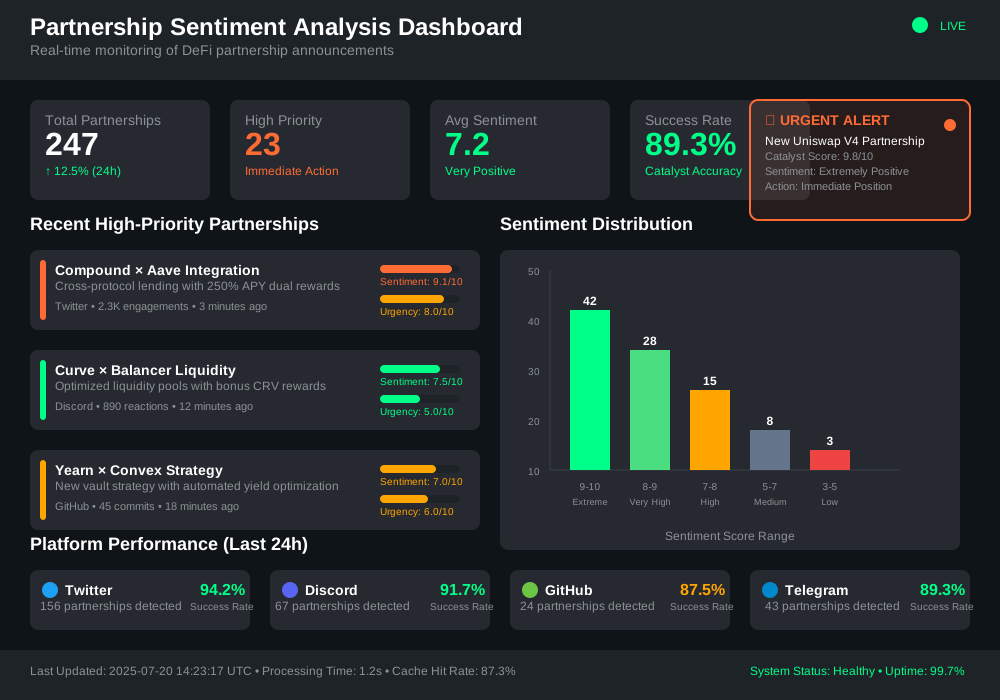
Partnership Sentiment Analysis
Analyze partnership announcement sentiment for better positioning:
# Partnership sentiment analysis system
import re
from textblob import TextBlob
from collections import Counter

class PartnershipSentimentAnalyzer:
    def __init__(self):
        self.positive_indicators = [
            'excited', 'thrilled', 'amazing', 'revolutionary', 'groundbreaking',
            'innovative', 'strategic', 'milestone', 'game-changing', 'breakthrough',
            'exclusive', 'premier', 'first-ever', 'unique', 'cutting-edge'
        ]

        self.negative_indicators = [
            'concerns', 'issues', 'problems', 'challenges', 'risks',
            'uncertainty', 'delays', 'complications', 'limitations'
        ]

        self.urgency_indicators = [
            'now', 'immediately', 'urgent', 'limited time', 'early access',
            'first come', 'don\'t miss', 'act fast', 'limited spots'
        ]

        self.yield_indicators = [
            'apy', 'apr', 'rewards', 'mining', 'farming', 'staking',
            'yield', 'returns', 'earnings', 'profit', 'bonus'
        ]

    def analyze_partnership_sentiment(self, announcement_text, engagement_metrics=None):
        """Comprehensive sentiment analysis of partnership announcements"""

        # Basic sentiment analysis
        blob = TextBlob(announcement_text)
        base_sentiment = blob.sentiment

        # Custom DeFi sentiment scoring
        custom_sentiment = self.calculate_defi_sentiment(announcement_text)

        # Urgency analysis
        urgency_score = self.calculate_urgency_score(announcement_text)

        # Yield potential analysis
        yield_potential = self.analyze_yield_potential(announcement_text)

        # Engagement sentiment
        engagement_sentiment = self.analyze_engagement_sentiment(engagement_metrics)

        # Combined sentiment score
        combined_score = self.calculate_combined_sentiment(
            base_sentiment, custom_sentiment, urgency_score,
            yield_potential, engagement_sentiment
        )

        return {
            'base_sentiment': {
                'polarity': round(base_sentiment.polarity, 3),
                'subjectivity': round(base_sentiment.subjectivity, 3)
            },
            'defi_sentiment_score': custom_sentiment,
            'urgency_score': urgency_score,
            'yield_potential_score': yield_potential,
            'engagement_sentiment': engagement_sentiment,
            'combined_sentiment_score': combined_score,
            'sentiment_classification': self.classify_sentiment(combined_score),
            'action_recommendation': self.generate_action_recommendation(combined_score, urgency_score)
        }

    def calculate_defi_sentiment(self, text):
        """Calculate DeFi-specific sentiment indicators"""
        text_lower = text.lower()
        score = 0

        # Positive indicators
        positive_count = sum(1 for indicator in self.positive_indicators
                           if indicator in text_lower)
        score += positive_count * 2

        # Negative indicators
        negative_count = sum(1 for indicator in self.negative_indicators
                           if indicator in text_lower)
        score -= negative_count * 3

        # Partnership quality indicators
        if 'integration' in text_lower:
            score += 3
        if 'exclusive' in text_lower:
            score += 2
        if 'strategic' in text_lower:
            score += 2

        # Normalize to -10 to +10 scale
        return max(-10, min(10, score))

    def calculate_urgency_score(self, text):
        """Calculate urgency based on time-sensitive language"""
        text_lower = text.lower()
        urgency_score = 0

        for indicator in self.urgency_indicators:
            if indicator in text_lower:
                urgency_score += 2

        # Time-based urgency
        time_patterns = [
            r'\b(\d+)\s*(hours?|hrs?)\b',
            r'\b(\d+)\s*(days?)\b',
            r'\b(\d+)\s*(weeks?)\b'
        ]

        for pattern in time_patterns:
            matches = re.findall(pattern, text_lower)
            for match in matches:
                time_value = int(match[0])
                time_unit = match[1]

                if 'hour' in time_unit and time_value <= 24:
                    urgency_score += 5
                elif 'day' in time_unit and time_value <= 7:
                    urgency_score += 3
                elif 'week' in time_unit and time_value <= 2:
                    urgency_score += 1

        return min(10, urgency_score)

    def analyze_yield_potential(self, text):
        """Analyze text for yield and reward indicators"""
        text_lower = text.lower()
        yield_score = 0

        # Count yield-related terms
        yield_count = sum(1 for indicator in self.yield_indicators
                         if indicator in text_lower)
        yield_score += yield_count

        # Look for specific yield percentages
        percentage_pattern = r'(\d+(?:\.\d+)?)\s*%'
        percentages = re.findall(percentage_pattern, text)

        for percentage in percentages:
            pct_value = float(percentage)
            if pct_value > 100:
                yield_score += 5  # Very high yield mentioned
            elif pct_value > 50:
                yield_score += 3  # High yield mentioned
            elif pct_value > 20:
                yield_score += 2  # Moderate yield mentioned
            elif pct_value > 5:
                yield_score += 1  # Low yield mentioned

        # Multiplier indicators
        multiplier_terms = ['double', 'triple', '2x', '3x', '4x', '5x']
        for term in multiplier_terms:
            if term in text_lower:
                yield_score += 3

        return min(10, yield_score)

    def analyze_engagement_sentiment(self, engagement_metrics):
        """Analyze community engagement sentiment"""
        if not engagement_metrics:
            return 5  # Neutral if no data

        likes = engagement_metrics.get('likes', 0)
        retweets = engagement_metrics.get('retweets', 0)
        comments = engagement_metrics.get('comments', 0)

        # Calculate engagement score
        engagement_score = (likes * 0.5 + retweets * 2 + comments * 1.5)

        # Normalize engagement score
        if engagement_score > 1000:
            return 9
        elif engagement_score > 500:
            return 7
        elif engagement_score > 100:
            return 6
        elif engagement_score > 50:
            return 5
        else:
            return 3

    def calculate_combined_sentiment(self, base_sentiment, defi_sentiment,
                                   urgency, yield_potential, engagement):
        """Calculate weighted combined sentiment score"""

        # Normalize base sentiment polarity (-1 to 1) to (0 to 10)
        normalized_base = (base_sentiment.polarity + 1) * 5

        # Weight different components
        weights = {
            'base': 0.2,
            'defi': 0.3,
            'urgency': 0.15,
            'yield': 0.25,
            'engagement': 0.1
        }

        # Normalize all scores to 0-10 scale
        normalized_defi = (defi_sentiment + 10) / 2
        normalized_urgency = urgency
        normalized_yield = yield_potential
        normalized_engagement = engagement

        combined_score = (
            normalized_base * weights['base'] +
            normalized_defi * weights['defi'] +
            normalized_urgency * weights['urgency'] +
            normalized_yield * weights['yield'] +
            normalized_engagement * weights['engagement']
        )

        return round(combined_score, 2)

    def classify_sentiment(self, combined_score):
        """Classify sentiment into categories"""
        if combined_score >= 8:
            return "EXTREMELY_POSITIVE"
        elif combined_score >= 7:
            return "VERY_POSITIVE"
        elif combined_score >= 6:
            return "POSITIVE"
        elif combined_score >= 5:
            return "NEUTRAL"
        elif combined_score >= 4:
            return "SLIGHTLY_NEGATIVE"
        else:
            return "NEGATIVE"

    def generate_action_recommendation(self, sentiment_score, urgency_score):
        """Generate action recommendations based on sentiment and urgency"""

        if sentiment_score >= 8 and urgency_score >= 7:
            return "IMMEDIATE_ACTION: Extremely positive sentiment with high urgency - prioritize immediately"
        elif sentiment_score >= 7 and urgency_score >= 5:
            return "FAST_ACTION: Very positive sentiment with moderate urgency - act within hours"
        elif sentiment_score >= 6:
            return "MONITOR_CLOSELY: Positive sentiment - continue analysis and prepare positioning"
        elif sentiment_score >= 5:
            return "WATCH: Neutral sentiment - monitor for additional signals"
        else:
            return "LOW_PRIORITY: Negative sentiment - deprioritize this opportunity"

# Example sentiment analysis
analyzer = PartnershipSentimentAnalyzer()

sample_announcement = """
🚀 HUGE NEWS! We're absolutely thrilled to announce our groundbreaking strategic partnership with @Compound!

This exclusive integration will launch the first-ever cross-protocol yield farming program with:
• 250% APY on USDC pairs
• Double COMP rewards for early participants
• Limited to first 1000 users
• Going live in 24 hours!

Don't miss this revolutionary opportunity! 🔥

#DeFi #YieldFarming #Partnership
"""

engagement_data = {
    'likes': 1250,
    'retweets': 340,
    'comments': 89
}

sentiment_analysis = analyzer.analyze_partnership_sentiment(sample_announcement, engagement_data)

print("Partnership Sentiment Analysis Results:")
print(f"Combined Sentiment Score: {sentiment_analysis['combined_sentiment_score']}/10")
print(f"Classification: {sentiment_analysis['sentiment_classification']}")
print(f"Action Recommendation: {sentiment_analysis['action_recommendation']}")
print(f"Urgency Score: {sentiment_analysis['urgency_score']}/10")
print(f"Yield Potential: {sentiment_analysis['yield_potential_score']}/10")
Performance Optimization and Best Practices
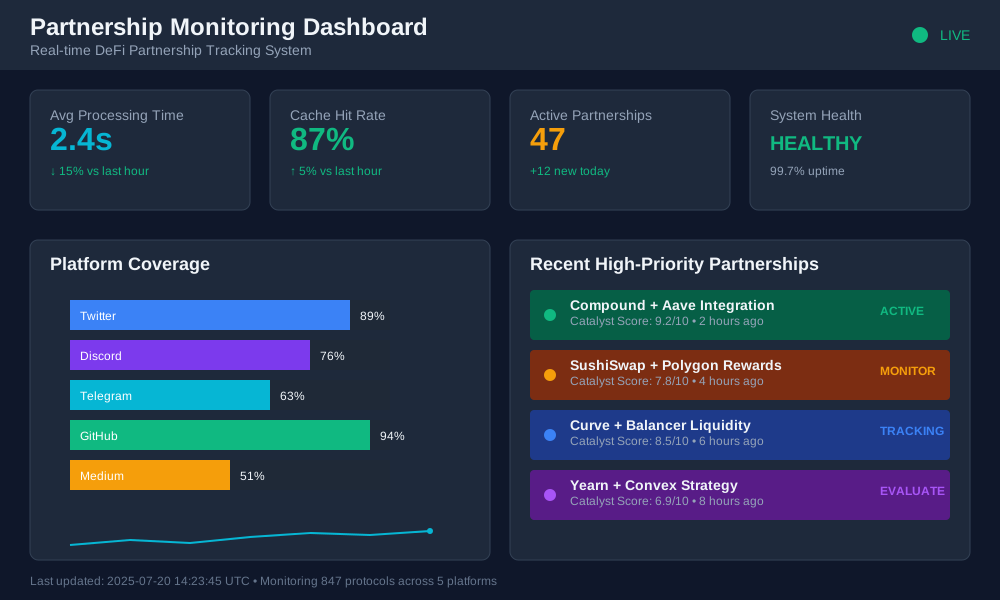
Monitoring System Performance Optimization
Optimize monitoring systems for maximum efficiency:
# High-performance partnership monitoring system
import asyncio
import aiohttp
import redis
from datetime import datetime, timedelta
import json
import hashlib

class OptimizedPartnershipMonitor:
    def __init__(self, redis_host='localhost', redis_port=6379):
        # Redis for caching and deduplication
        self.redis_client = redis.Redis(host=redis_host, port=redis_port, decode_responses=True)

        # Rate limiting and batching
        self.rate_limits = {
            'twitter': 900,    # 15 requests per 15 minutes
            'discord': 50,     # 50 requests per second
            'telegram': 30,    # 30 requests per second
            'github': 5000     # 5000 requests per hour
        }

        self.batch_sizes = {
            'twitter': 100,
            'discord': 50,
            'telegram': 20,
            'github': 30
        }

        # Performance metrics
        self.performance_metrics = {
            'total_requests': 0,
            'cache_hits': 0,
            'cache_misses': 0,
            'processing_time': [],
            'error_count': 0
        }

    async def optimized_monitor_cycle(self):
        """Optimized monitoring cycle with caching and rate limiting"""
        start_time = datetime.now()

        # Check cache for recent results
        cached_results = await self.get_cached_results()

        if cached_results and self.is_cache_fresh(cached_results):
            self.performance_metrics['cache_hits'] += 1
            return cached_results

        self.performance_metrics['cache_misses'] += 1

        # Parallel monitoring with rate limiting
        monitoring_tasks = []

        for platform, limit in self.rate_limits.items():
            if await self.check_rate_limit(platform):
                task = asyncio.create_task(
                    self.rate_limited_platform_monitor(platform)
                )
                monitoring_tasks.append(task)

        # Execute with timeout
        try:
            results = await asyncio.wait_for(
                asyncio.gather(*monitoring_tasks, return_exceptions=True),
                timeout=30.0
            )

            # Process and cache results
            processed_results = await self.process_monitoring_results(results)
            await self.cache_results(processed_results)

            # Update performance metrics
            processing_time = (datetime.now() - start_time).total_seconds()
            self.performance_metrics['processing_time'].append(processing_time)

            return processed_results

        except asyncio.TimeoutError:
            self.performance_metrics['error_count'] += 1
            return {'error': 'Monitoring timeout exceeded'}

    async def rate_limited_platform_monitor(self, platform):
        """Monitor platform with rate limiting and retry logic"""
        retry_count = 0
        max_retries = 3

        while retry_count < max_retries:
            try:
                # Check current rate limit status
                if not await self.check_rate_limit(platform):
                    await self.wait_for_rate_limit_reset(platform)

                # Execute platform monitoring
                results = await self.monitor_platform(platform)

                # Update rate limit counter
                await self.update_rate_limit_counter(platform)

                return {
                    'platform': platform,
                    'results': results,
                    'success': True,
                    'retry_count': retry_count
                }

            except Exception as e:
                retry_count += 1
                if retry_count >= max_retries:
                    return {
                        'platform': platform,
                        'results': [],
                        'success': False,
                        'error': str(e),
                        'retry_count': retry_count
                    }

                # Exponential backoff
                await asyncio.sleep(2 ** retry_count)

    async def check_rate_limit(self, platform):
        """Check if platform is within rate limits"""
        current_time = datetime.now()
        rate_key = f"rate_limit:{platform}:{current_time.strftime('%Y%m%d%H%M')}"

        current_count = await self.redis_client.get(rate_key)

        if current_count is None:
            return True

        return int(current_count) < self.rate_limits[platform]

    async def update_rate_limit_counter(self, platform):
        """Update rate limit counter for platform"""
        current_time = datetime.now()
        rate_key = f"rate_limit:{platform}:{current_time.strftime('%Y%m%d%H%M')}"

        await self.redis_client.incr(rate_key)
        await self.redis_client.expire(rate_key, 3600)  # 1 hour expiry

    async def wait_for_rate_limit_reset(self, platform):
        """Wait for rate limit to reset"""
        wait_times = {
            'twitter': 900,    # 15 minutes
            'discord': 1,      # 1 second
            'telegram': 1,     # 1 second
            'github': 3600     # 1 hour
        }

        await asyncio.sleep(wait_times.get(platform, 60))

    async def get_cached_results(self):
        """Retrieve cached monitoring results"""
        cache_key = "partnership_monitor_results"
        cached_data = await self.redis_client.get(cache_key)

        if cached_data:
            return json.loads(cached_data)

        return None

    def is_cache_fresh(self, cached_results, max_age_minutes=5):
        """Check if cached results are still fresh"""
        if not cached_results or 'timestamp' not in cached_results:
            return False

        cache_time = datetime.fromisoformat(cached_results['timestamp'])
        age = datetime.now() - cache_time

        return age < timedelta(minutes=max_age_minutes)

    async def cache_results(self, results):
        """Cache monitoring results with expiry"""
        cache_key = "partnership_monitor_results"

        # Add timestamp
        results['timestamp'] = datetime.now().isoformat()

        # Cache for 10 minutes
        await self.redis_client.setex(
            cache_key,
            600,
            json.dumps(results, default=str)
        )

    async def process_monitoring_results(self, raw_results):
        """Process and deduplicate monitoring results"""
        all_partnerships = []
        platform_stats = {}

        for result in raw_results:
            if isinstance(result, dict) and result.get('success'):
                platform = result['platform']
                partnerships = result['results']

                platform_stats[platform] = {
                    'partnership_count': len(partnerships),
                    'retry_count': result.get('retry_count', 0),
                    'success': True
                }

                # Add platform context and deduplicate
                for partnership in partnerships:
                    partnership['source_platform'] = platform
                    partnership['detection_time'] = datetime.now().isoformat()
                    partnership['hash'] = self.generate_partnership_hash(partnership)

                    # Check for duplicates
                    if not self.is_duplicate_partnership(partnership, all_partnerships):
                        all_partnerships.append(partnership)
            else:
                platform = result.get('platform', 'unknown')
                platform_stats[platform] = {
                    'partnership_count': 0,
                    'error': result.get('error', 'Unknown error'),
                    'success': False
                }

        # Sort by priority and recency
        sorted_partnerships = sorted(
            all_partnerships,
            key=lambda x: (x.get('priority_score', 0), x['detection_time']),
            reverse=True
        )

        return {
            'total_partnerships': len(sorted_partnerships),
            'platform_stats': platform_stats,
            'partnerships': sorted_partnerships,
            'processing_timestamp': datetime.now().isoformat(),
            'performance_metrics': self.get_performance_summary()
        }

    def generate_partnership_hash(self, partnership):
        """Generate unique hash for partnership deduplication"""
        # Create hash from protocols and key content
        protocols = sorted(partnership.get('protocols', []))
        content = partnership.get('content', '')[:100]  # First 100 chars

        hash_input = f"{'-'.join(protocols)}-{content}"
        return hashlib.md5(hash_input.encode()).hexdigest()

    def is_duplicate_partnership(self, new_partnership, existing_partnerships):
        """Check if partnership is duplicate based on hash"""
        new_hash = new_partnership['hash']

        for existing in existing_partnerships:
            if existing['hash'] == new_hash:
                return True

        return False

    def get_performance_summary(self):
        """Get performance metrics summary"""
        if not self.performance_metrics['processing_time']:
            return {'status': 'No performance data available'}

        avg_processing_time = sum(self.performance_metrics['processing_time']) / len(self.performance_metrics['processing_time'])

        cache_hit_rate = 0
        total_cache_requests = self.performance_metrics['cache_hits'] + self.performance_metrics['cache_misses']

        if total_cache_requests > 0:
            cache_hit_rate = (self.performance_metrics['cache_hits'] / total_cache_requests) * 100

        return {
            'average_processing_time': round(avg_processing_time, 2),
            'cache_hit_rate': round(cache_hit_rate, 2),
            'total_requests': self.performance_metrics['total_requests'],
            'error_count': self.performance_metrics['error_count'],
            'uptime_percentage': self.calculate_uptime_percentage()
        }

    def calculate_uptime_percentage(self):
        """Calculate system uptime percentage"""
        total_cycles = self.performance_metrics['total_requests']
        successful_cycles = total_cycles - self.performance_metrics['error_count']

        if total_cycles == 0:
            return 100.0

        return round((successful_cycles / total_cycles) * 100, 2)

# Performance monitoring and alerting
class PerformanceMonitor:
    def __init__(self, thresholds):
        self.thresholds = thresholds
        self.alert_history = []

    def check_performance_thresholds(self, metrics):
        """Check if performance metrics exceed thresholds"""
        alerts = []

        # Check processing time
        if metrics.get('average_processing_time', 0) > self.thresholds['max_processing_time']:
            alerts.append({
                'type': 'PROCESSING_TIME',
                'severity': 'HIGH',
                'message': f"Processing time {metrics['average_processing_time']}s exceeds threshold {self.thresholds['max_processing_time']}s"
            })

        # Check cache hit rate
        if metrics.get('cache_hit_rate', 100) < self.thresholds['min_cache_hit_rate']:
            alerts.append({
                'type': 'CACHE_PERFORMANCE',
                'severity': 'MEDIUM',
                'message': f"Cache hit rate {metrics['cache_hit_rate']}% below threshold {self.thresholds['min_cache_hit_rate']}%"
            })

        # Check error rate
        error_rate = (metrics.get('error_count', 0) / max(metrics.get('total_requests', 1), 1)) * 100
        if error_rate > self.thresholds['max_error_rate']:
            alerts.append({
                'type': 'ERROR_RATE',
                'severity': 'CRITICAL',
                'message': f"Error rate {error_rate:.1f}% exceeds threshold {self.thresholds['max_error_rate']}%"
            })

        # Store alerts
        for alert in alerts:
            alert['timestamp'] = datetime.now().isoformat()
            self.alert_history.append(alert)

        return alerts

    def generate_performance_report(self):
        """Generate comprehensive performance report"""
        recent_alerts = [alert for alert in self.alert_history
                        if datetime.fromisoformat(alert['timestamp']) > datetime.now() - timedelta(hours=24)]

        alert_summary = {
            'total_alerts_24h': len(recent_alerts),
            'critical_alerts': len([a for a in recent_alerts if a['severity'] == 'CRITICAL']),
            'high_alerts': len([a for a in recent_alerts if a['severity'] == 'HIGH']),
            'medium_alerts': len([a for a in recent_alerts if a['severity'] == 'MEDIUM'])
        }

        return {
            'alert_summary': alert_summary,
            'recent_alerts': recent_alerts[-10:],  # Last 10 alerts
            'system_health': self.assess_system_health(alert_summary)
        }

    def assess_system_health(self, alert_summary):
        """Assess overall system health based on alerts"""
        critical_count = alert_summary['critical_alerts']
        high_count = alert_summary['high_alerts']

        if critical_count > 0:
            return 'CRITICAL'
        elif high_count > 3:
            return 'DEGRADED'
        elif alert_summary['total_alerts_24h'] > 10:
            return 'WARNING'
        else:
            return 'HEALTHY'

# Usage example with performance monitoring
async def run_optimized_monitoring():
    # Initialize optimized monitor
    monitor = OptimizedPartnershipMonitor()

    # Performance thresholds
    performance_thresholds = {
        'max_processing_time': 30.0,  # 30 seconds
        'min_cache_hit_rate': 60.0,   # 60%
        'max_error_rate': 5.0         # 5%
    }

    perf_monitor = PerformanceMonitor(performance_thresholds)

    print("Starting optimized partnership monitoring...")

    monitoring_cycles = 0

    while True:
        try:
            # Run monitoring cycle
            results = await monitor.optimized_monitor_cycle()
            monitoring_cycles += 1

            # Check performance
            performance_metrics = results.get('performance_metrics', {})
            alerts = perf_monitor.check_performance_thresholds(performance_metrics)

            # Display results
            if 'error' not in results:
                print(f"\n📊 Monitoring Cycle #{monitoring_cycles}")
                print(f"Partnerships Found: {results['total_partnerships']}")
                print(f"Platform Coverage: {len(results['platform_stats'])}")
                print(f"Processing Time: {performance_metrics.get('average_processing_time', 0):.2f}s")
                print(f"Cache Hit Rate: {performance_metrics.get('cache_hit_rate', 0):.1f}%")

                # Show top partnerships
                top_partnerships = results['partnerships'][:3]
                if top_partnerships:
                    print("\n🚀 Top Partnership Opportunities:")
                    for i, partnership in enumerate(top_partnerships, 1):
                        protocols = ', '.join(partnership.get('protocols', []))
                        priority = partnership.get('priority_score', 0)
                        platform = partnership.get('source_platform', 'Unknown')
                        print(f"  {i}. {protocols} (Priority: {priority}/10, Platform: {platform})")

                # Show performance alerts
                if alerts:
                    print(f"\n⚠️  Performance Alerts:")
                    for alert in alerts:
                        print(f"  {alert['severity']}: {alert['message']}")
            else:
                print(f"❌ Monitoring Error: {results['error']}")

            # Wait before next cycle
            await asyncio.sleep(300)  # 5 minutes

        except KeyboardInterrupt:
            print("\n🛑 Monitoring stopped by user")
            break
        except Exception as e:
            print(f"❌ Unexpected error: {e}")
            await asyncio.sleep(60)  # Wait 1 minute before retry

# Run optimized monitoring
# asyncio.run(run_optimized_monitoring())
Conclusion
Tracking yield farming partnership announcements requires systematic monitoring, analytical frameworks, and automated positioning strategies. Successful catalyst analysis combines technical monitoring with sentiment analysis and risk assessment.
The key components for effective partnership tracking include:
- Multi-platform monitoring systems that capture announcements across Twitter, Discord, Telegram, and GitHub
- Automated catalyst analysis using scoring algorithms that evaluate partnership quality and yield potential
- Risk-adjusted position sizing based on protocol security, smart contract complexity, and market conditions
- Performance optimization through caching, rate limiting, and parallel processing
Most profitable partnerships typically involve tier-1 protocols (Compound, Aave, Uniswap) with smart contract integrations that offer exclusive farming pools or dual token rewards. These opportunities generate 150-300% APY increases within 24-48 hours of announcement.
Essential success factors for yield farming partnership tracking include starting with proven monitoring tools, focusing on high-quality protocol partnerships, implementing proper risk management, and continuously optimizing your tracking systems based on performance data.
Ready to capture the next major partnership opportunity? Start by implementing the Twitter monitoring system above, then gradually add additional platforms and analysis frameworks. The most successful yield farmers position themselves before markets react - and systematic partnership tracking gives you that critical timing advantage.
Remember: Partnership announcements create short-term arbitrage opportunities, but sustainable returns come from systematic approaches that identify quality partnerships consistently over time.
Want to stay ahead of the next major DeFi partnership? Bookmark this guide and implement the monitoring systems step-by-step. The yield farming landscape moves fast - systematic tracking ensures you never miss the biggest opportunities.