Ever dreamed of becoming a yield farming wizard without risking your crypto stash? Welcome to the magical world of testnets, where you can experiment with DeFi protocols using fake money that feels surprisingly real.
Test networks for yield farming let developers and users practice strategies without financial risk. This guide shows you how to set up Goerli and Mumbai testnets for safe yield farming experimentation.
You'll learn to configure your wallet, obtain test tokens, and interact with live protocols. By the end, you'll confidently test new strategies before deploying real capital.
Why Use Test Networks for Yield Farming
The Problem with Mainnet Testing
Testing yield farming strategies on mainnet costs real money. Gas fees alone can drain hundreds of dollars. Failed transactions hurt your wallet and confidence.
Smart contract interactions carry risks. Bugs in protocols can lock funds permanently. New strategies need validation before implementation.
Benefits of Testnet Yield Farming
Test networks solve these problems elegantly:
- Zero financial risk: Use free test tokens instead of real crypto
- Unlimited experimentation: Try complex strategies without cost concerns
- Protocol familiarization: Learn interfaces before mainnet deployment
- Smart contract testing: Validate custom contracts safely
- Strategy development: Perfect your approach with multiple iterations
Understanding Goerli and Mumbai Testnets
Goerli Testnet Overview
Goerli replicates Ethereum mainnet functionality with test ETH. The network maintains similar block times and gas mechanics. Most Ethereum DeFi protocols deploy testnet versions here.
Key Specifications:
- Chain ID: 5
- Block time: ~15 seconds
- Consensus: Proof of Authority
- Test ETH symbol: GoerliETH
Mumbai Testnet Overview
Mumbai serves as Polygon's primary testnet. It mirrors Polygon mainnet features with faster transactions and lower fees. Popular DeFi protocols test Mumbai versions regularly.
Key Specifications:
- Chain ID: 80001
- Block time: ~2 seconds
- Consensus: Proof of Stake
- Test MATIC symbol: MATIC
Setting Up Goerli Testnet for Yield Farming
Step 1: Configure MetaMask for Goerli
Open MetaMask and access network settings. Click "Add Network" and enter Goerli details:
// Goerli Network Configuration
Network Name: Goerli Test Network
New RPC URL: https://goerli.infura.io/v3/YOUR_PROJECT_ID
Chain ID: 5
Currency Symbol: GoerliETH
Block Explorer URL: https://goerli.etherscan.io
Alternative RPC endpoints:
- Alchemy:
https://eth-goerli.g.alchemy.com/v2/YOUR_API_KEY - Ankr:
https://rpc.ankr.com/eth_goerli
Step 2: Obtain Goerli Test ETH
Visit these reliable Goerli faucets:
Goerli Faucet by Alchemy
- URL: https://goerlifaucet.com
- Requirement: Alchemy account
- Daily limit: 0.2 GoerliETH
Paradigm Faucet
- URL: https://faucet.paradigm.xyz
- Requirement: Twitter account
- Daily limit: 1 GoerliETH
Chainlink Faucet
- URL: https://faucets.chain.link/goerli
- Requirement: reCAPTCHA
- Daily limit: 0.1 GoerliETH
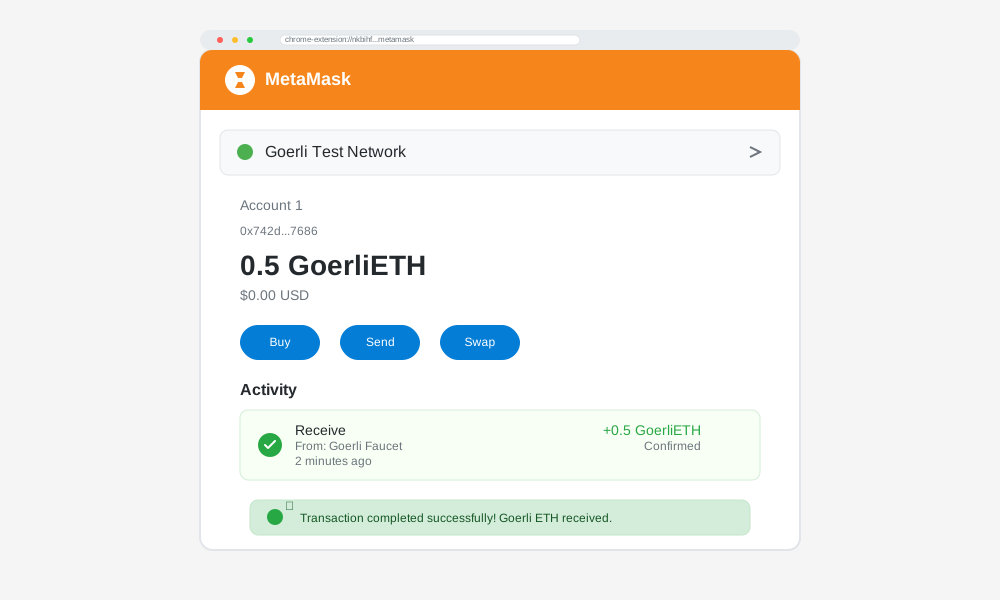
Step 3: Connect to Yield Farming Protocols
Popular protocols with Goerli deployments:
Uniswap V3 (Goerli)
- Interface: https://app.uniswap.org
- Contract: 0x1F98431c8aD98523631AE4a59f267346ea31F984
- Features: Liquidity provision, fee collection
Aave V3 (Goerli)
- Interface: https://staging.aave.com
- Contract: 0x617Cf26407193E32a771264fB5e9b8f09715CdfB
- Features: Lending, borrowing, yield generation
Compound (Goerli)
- Interface: https://v2-app.compound.finance
- Contract: 0x3d9819210A31b4961b30EF54bE2aeD79B9c9Cd3B
- Features: Money markets, cToken farming
Step 4: Test Basic Yield Farming Operations
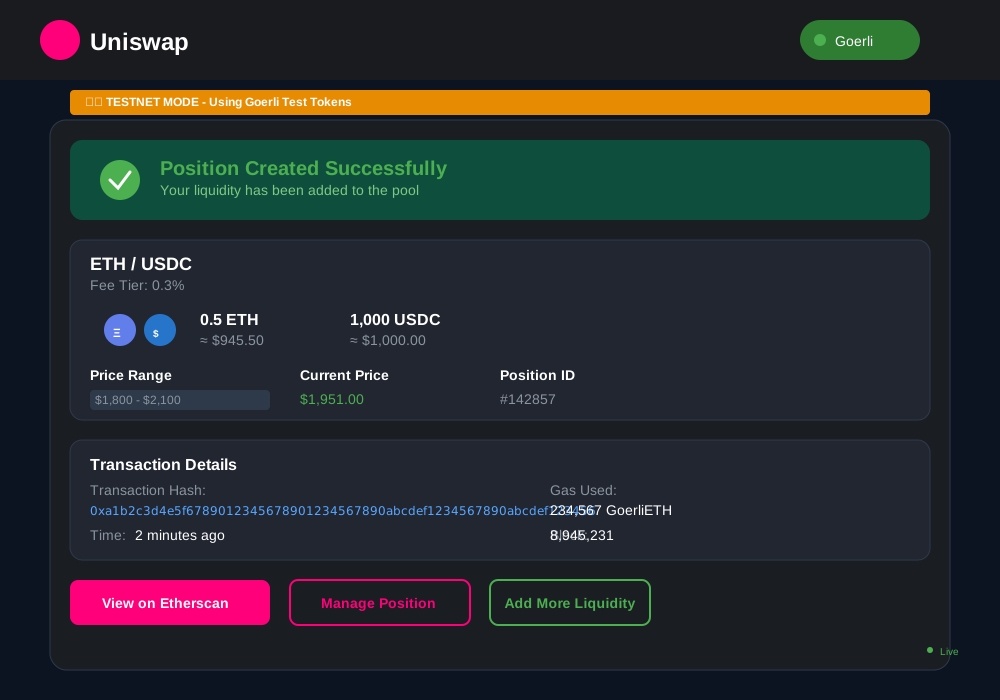
Example: Uniswap V3 Liquidity Provision
// Connect to Uniswap V3 Pool Factory
const FACTORY_ADDRESS = "0x1F98431c8aD98523631AE4a59f267346ea31F984";
const factory = new ethers.Contract(FACTORY_ADDRESS, FACTORY_ABI, signer);

// Create or connect to USDC/ETH pool
const poolAddress = await factory.getPool(
  USDC_ADDRESS, // Token0
  WETH_ADDRESS, // Token1
  3000        // Fee tier (0.3%)
);

// Add liquidity position
const positionManager = new ethers.Contract(
  NONFUNGIBLE_POSITION_MANAGER_ADDRESS,
  POSITION_MANAGER_ABI,
  signer
);

const mintParams = {
  token0: USDC_ADDRESS,
  token1: WETH_ADDRESS,
  fee: 3000,
  tickLower: -887220, // Price range lower bound
  tickUpper: 887220,  // Price range upper bound
  amount0Desired: ethers.utils.parseUnits("1000", 6), // 1000 USDC
  amount1Desired: ethers.utils.parseEther("0.5"),     // 0.5 ETH
  amount0Min: 0,
  amount1Min: 0,
  recipient: wallet.address,
  deadline: Math.floor(Date.now() / 1000) + 3600 // 1 hour
};

const tx = await positionManager.mint(mintParams);
await tx.wait();
Setting Up Mumbai Testnet for Yield Farming
Step 1: Configure MetaMask for Mumbai
Add Mumbai network to MetaMask with these parameters:
// Mumbai Network Configuration
Network Name: Mumbai Testnet
New RPC URL: https://rpc-mumbai.maticvigil.com
Chain ID: 80001
Currency Symbol: MATIC
Block Explorer URL: https://mumbai.polygonscan.com
Alternative RPC endpoints:
- Polygon:
https://matic-mumbai.chainstacklabs.com - Alchemy:
https://polygon-mumbai.g.alchemy.com/v2/YOUR_API_KEY
Step 2: Obtain Mumbai Test MATIC
Get free test MATIC from these faucets:
Polygon Faucet
- URL: https://faucet.polygon.technology
- Requirement: None
- Daily limit: 0.2 MATIC
Alchemy Mumbai Faucet
- URL: https://mumbai-faucet.matic.today
- Requirement: Social verification
- Daily limit: 0.5 MATIC
QuickNode Faucet
- URL: https://faucet.quicknode.com/polygon/mumbai
- Requirement: Account creation
- Daily limit: 0.1 MATIC
Step 3: Access Mumbai DeFi Protocols
QuickSwap (Mumbai)
- Interface: https://beta.quickswap.exchange
- Router: 0x8954AfA98594b838bda56FE4C12a09D7739D179b
- Features: DEX trading, liquidity mining
Aave V3 (Mumbai)
- Interface: https://staging.aave.com/?marketName=proto_polygon_v3
- Pool: 0x794a61358D6845594F94dc1DB02A252b5b4814aD
- Features: Lending markets, variable rates
Balancer V2 (Mumbai)
- Interface: https://mumbai.balancer.fi
- Vault: 0xBA12222222228d8Ba445958a75a0704d566BF2C8
- Features: Multi-token pools, yield optimization
Step 4: Execute Mumbai Yield Farming Strategy
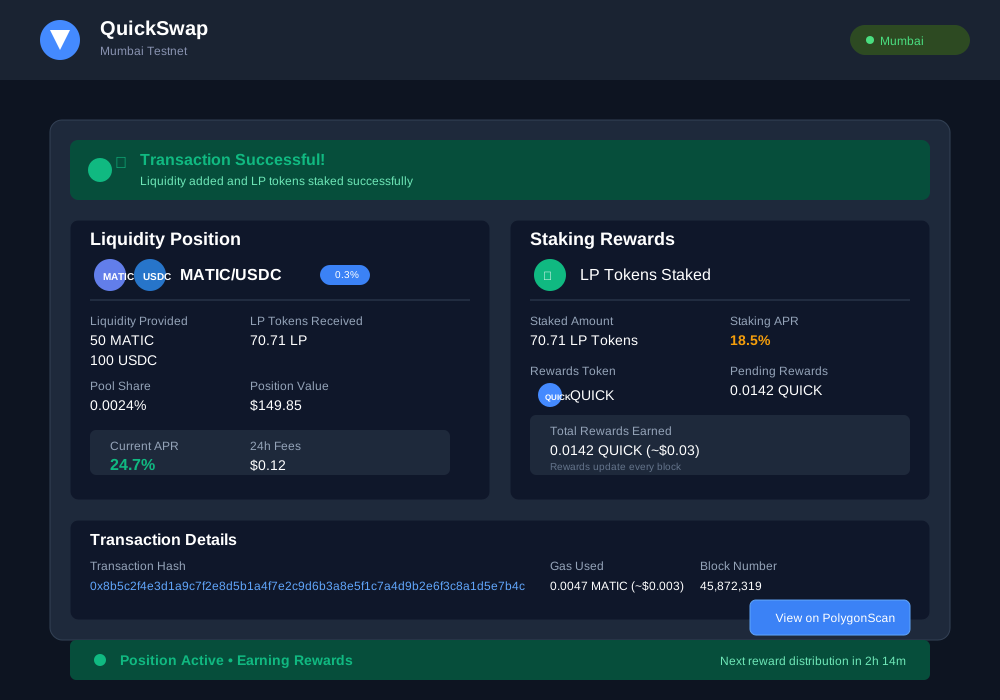
Example: QuickSwap LP Token Farming
// QuickSwap router interaction
const QUICKSWAP_ROUTER = "0x8954AfA98594b838bda56FE4C12a09D7739D179b";
const router = new ethers.Contract(QUICKSWAP_ROUTER, ROUTER_ABI, signer);

// Add liquidity to USDC/MATIC pool
const addLiquidityTx = await router.addLiquidity(
  USDC_ADDRESS,     // TokenA
  MATIC_ADDRESS,    // TokenB
  ethers.utils.parseUnits("100", 6),    // 100 USDC
  ethers.utils.parseEther("50"),        // 50 MATIC
  0,                // AmountAMin
  0,                // AmountBMin
  wallet.address,   // Recipient
  Math.floor(Date.now() / 1000) + 1200 // 20 min deadline
);

await addLiquidityTx.wait();

// Stake LP tokens in rewards contract
const stakingContract = new ethers.Contract(
  STAKING_REWARDS_ADDRESS,
  STAKING_ABI,
  signer
);

// Get LP token balance
const lpToken = new ethers.Contract(LP_TOKEN_ADDRESS, ERC20_ABI, signer);
const lpBalance = await lpToken.balanceOf(wallet.address);

// Approve and stake LP tokens
await lpToken.approve(STAKING_REWARDS_ADDRESS, lpBalance);
await stakingContract.stake(lpBalance);
Advanced Testnet Yield Farming Strategies
Cross-Chain Strategy Testing
Test complex strategies involving multiple chains:
- Bridge Assets: Use Mumbai-Goerli bridges for testing
- Arbitrage Opportunities: Compare pricing across testnets
- Multi-Protocol Farming: Combine Uniswap and Aave positions
- Flash Loan Strategies: Test leveraged positions safely
Automated Strategy Development
Build and test yield farming bots:
// Automated rebalancing strategy
class YieldFarmingBot {
  constructor(provider, wallet) {
    this.provider = provider;
    this.wallet = wallet;
    this.protocols = [];
  }

  async monitorPositions() {
    setInterval(async () => {
      for (const position of this.positions) {
        const currentYield = await this.calculateYield(position);
        const threshold = position.targetYield * 0.8; // 20% drop threshold

        if (currentYield < threshold) {
          await this.rebalancePosition(position);
        }
      }
    }, 300000); // Check every 5 minutes
  }

  async rebalancePosition(position) {
    // Remove liquidity from underperforming pool
    await this.removeLiquidity(position);

    // Find better opportunity
    const bestPool = await this.findBestYield();

    // Add liquidity to better pool
    await this.addLiquidity(bestPool, position.amount);
  }
}
Risk Management Testing
Test comprehensive risk controls:
- Impermanent Loss Calculation: Monitor position value changes
- Slippage Protection: Set maximum acceptable slippage
- Gas Cost Optimization: Test transaction bundling
- Emergency Exit Strategies: Practice quick position closure
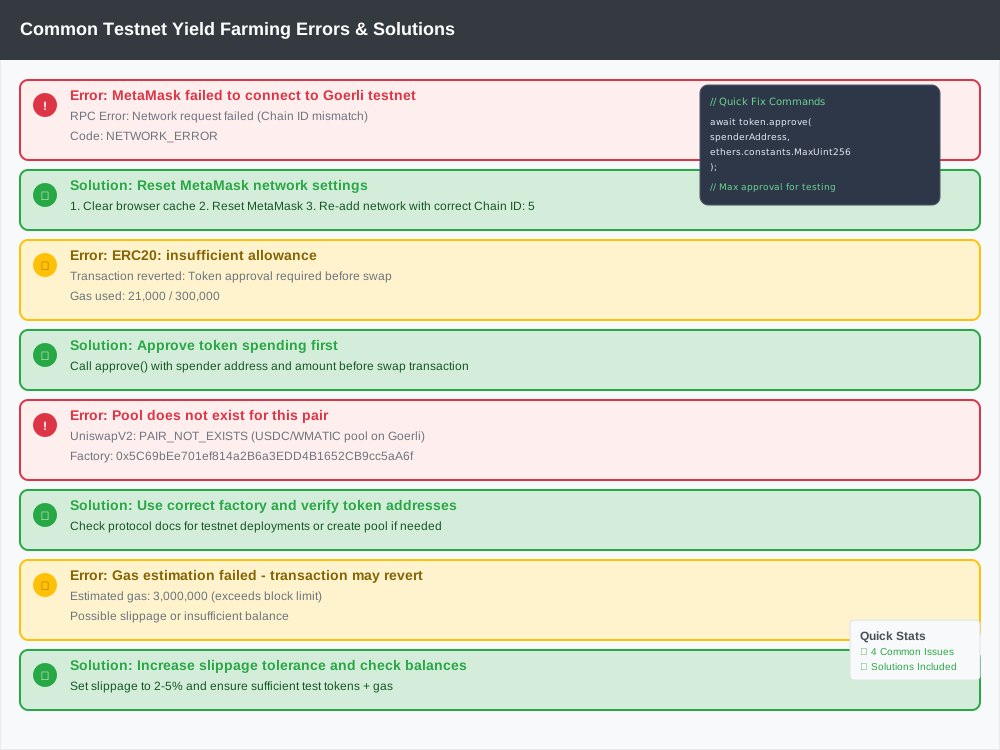
Troubleshooting Common Issues
Wallet Connection Problems
Issue: MetaMask won't connect to testnet Solution: Clear browser cache and reset MetaMask network settings
Issue: Transaction failures on testnet Solution: Increase gas limit by 20% for complex interactions
Test Token Acquisition
Issue: Faucet daily limits exhausted
Solution: Use multiple faucets or wait for reset period
Issue: Test tokens not appearing Solution: Add token contracts manually to MetaMask
// Add test USDC to MetaMask
Token Contract Address: 0x2791Bca1f2de4661ED88A30C99A7a9449Aa84174
Token Symbol: USDC
Token Decimals: 6
Protocol Interaction Errors
Issue: "Insufficient allowance" errors Solution: Increase token approvals before transactions
Issue: Pool not found errors
Solution: Verify pool exists and use correct factory contracts
Best Practices for Testnet Yield Farming
Development Workflow
- Start Simple: Test basic operations before complex strategies
- Document Everything: Keep detailed logs of successful configurations
- Version Control: Track contract addresses and ABI changes
- Regular Updates: Monitor protocol upgrades and migrations
Security Considerations
- Never use mainnet private keys on testnets
- Validate all contract addresses before interactions
- Test emergency procedures regularly
- Monitor for testnet resets and data loss
Performance Optimization
- Batch transactions when possible to reduce gas costs
- Use multicall contracts for complex operations
- Monitor network congestion during peak usage
- Cache frequently used contract instances
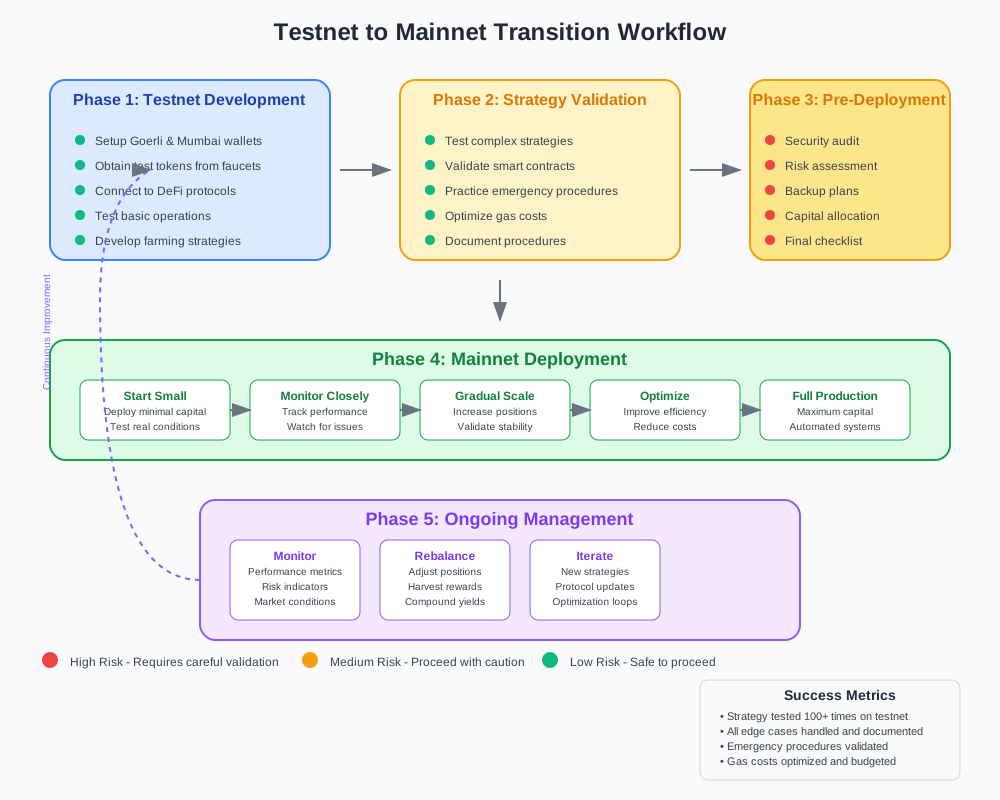
Transitioning from Testnet to Mainnet
Pre-Deployment Checklist
- Strategy tested extensively on testnet
- All contract interactions verified
- Gas costs calculated and optimized
- Risk management systems validated
- Emergency procedures practiced
Mainnet Deployment Strategy
- Start Small: Deploy minimal capital initially
- Gradual Scaling: Increase position sizes over time
- Continuous Monitoring: Watch for unexpected behavior
- Regular Rebalancing: Maintain optimal position health
Conclusion
Test networks for yield farming provide essential practice environments for DeFi experimentation. Goerli and Mumbai testnets offer comprehensive protocol access without financial risk.
You've learned to configure wallets, obtain test tokens, and interact with major DeFi protocols. These skills transfer directly to mainnet operations with real capital.
Start testing your yield farming strategies today. The experience gained on testnets directly improves your mainnet success rate and reduces costly mistakes.
Ready to begin? Configure your first testnet connection and start experimenting with risk-free yield farming strategies.