Want to turn your SUI tokens into a money-printing machine? You're not alone. Average returns for direct staking are roughly 3.5% APY, but smart farmers are earning 35%+ APY through Move language DeFi protocols on Sui Network.
This guide shows you how to set up high-yield farming strategies using Sui's revolutionary Move programming language. You'll learn to deploy smart contracts, optimize liquidity pools, and automate yield farming for maximum returns.
Why Sui Network Dominates DeFi Performance
Sui processes transactions differently from traditional blockchains. Instead of processing one transaction at a time, it functions more like a multi-lane highway, allowing multiple transactions to move forward simultaneously. This parallel execution enables lightning-fast DeFi operations.
The platform can handle over 4.58 billion transactions across 18.19 million active accounts while maintaining speed and security. For yield farmers, this means:
- Sub-second transaction finality
- Minimal gas fees (fractions of a cent)
- No failed transactions during high-volume farming
- Instant arbitrage opportunities
Move Language Security Advantages
Move's first class abstractions for the concept of assets, transfers, and access control make for safer and more efficient programming. Unlike Solidity's vulnerability to reentrancy attacks, Move prevents asset duplication and accidental burns through its resource-oriented design.
// Example: Secure asset transfer in Move
public fun transfer_farming_rewards(
    ctx: &mut TxContext,
    farm_position: FarmPosition,
    recipient: address
): TransferTicket {
    // Move ensures assets cannot be duplicated or lost
    let rewards = extract_rewards(&mut farm_position);
    transfer::public_transfer(rewards, recipient);

    // Position automatically updated, preventing double-spending
    farm_position
}
Top Sui Network Yield Farming Protocols
1. Cetus Protocol: Concentrated Liquidity Powerhouse
Cetus' Auto Vault LP Strategies feature gives users one-click liquidity management, automatically rebalancing and compounding pool investments. This protocol leads Sui's DeFi ecosystem with innovative features.
Key Features:
- Auto-compounding vaults for passive income
- Concentrated liquidity positions for higher capital efficiency
- Cross-chain compatibility with major networks
- Integrated yield farming with automated strategies
Setup Steps:
- Connect wallet to Cetus Protocol
- Choose high-APY liquidity pairs
- Deposit assets into Auto Vault LP
- Monitor performance through dashboard
2. NAVI Protocol: Leveraged Yield Farming
NAVI has gained notable traction, crossing $480 million in Total Value Locked (TVL). This Aave-inspired protocol offers sophisticated yield strategies.
Advanced Features:
- Leveraged Vaults for amplified returns
- Isolation Mode for new asset security
- Variable interest rates optimized by market conditions
- Liquid staking integration with multiple validators
3. Suilend: Cross-Chain Bridge Farming
Suilend offers pretty much the same project as Solend on Solana, yet without a native token. This creates unique arbitrage opportunities for experienced farmers.
Bridging Strategy:
- Bridge assets via Suilend Bridge
- Deposit into high-yield lending pools
- Borrow against collateral for leveraged positions
- Farm governance tokens on partner protocols
Move Language DeFi Protocol Development
Setting Up Your Development Environment
# Install Sui CLI
curl -fsSL https://get.sui.io | sh

# Create new Move project
sui move new yield_farming_protocol

# Initialize project structure
cd yield_farming_protocol
mkdir sources tests scripts
Basic Yield Farming Smart Contract
module yield_farming::farm_pool {
    use sui::object::{Self, UID};
    use sui::tx_context::{Self, TxContext};
    use sui::coin::{Self, Coin};
    use sui::clock::Clock;
    use sui::math;

    // Farm pool structure
    struct FarmPool<phantom T> has key, store {
        id: UID,
        total_staked: u64,
        reward_rate: u64, // Rewards per second
        last_update_time: u64,
        accumulated_reward_per_token: u64,
    }

    // User position structure
    struct UserPosition<phantom T> has key, store {
        id: UID,
        staked_amount: u64,
        reward_debt: u64,
        last_claim_time: u64,
    }

    // Create new farm pool
    public fun create_farm_pool<T>(
        reward_rate: u64,
        clock: &Clock,
        ctx: &mut TxContext
    ): FarmPool<T> {
        FarmPool {
            id: object::new(ctx),
            total_staked: 0,
            reward_rate,
            last_update_time: sui::clock::timestamp_ms(clock),
            accumulated_reward_per_token: 0,
        }
    }

    // Stake tokens to farm
    public fun stake<T>(
        farm_pool: &mut FarmPool<T>,
        stake_coin: Coin<T>,
        clock: &Clock,
        ctx: &mut TxContext
    ): UserPosition<T> {
        update_pool_rewards(farm_pool, clock);

        let stake_amount = coin::value(&stake_coin);
        farm_pool.total_staked = farm_pool.total_staked + stake_amount;

        // Burn staked coins (they're now represented in the position)
        coin::destroy_zero(stake_coin);

        UserPosition {
            id: object::new(ctx),
            staked_amount: stake_amount,
            reward_debt: farm_pool.accumulated_reward_per_token * stake_amount,
            last_claim_time: sui::clock::timestamp_ms(clock),
        }
    }

    // Calculate pending rewards
    public fun pending_rewards<T>(
        farm_pool: &FarmPool<T>,
        position: &UserPosition<T>,
        clock: &Clock
    ): u64 {
        let current_time = sui::clock::timestamp_ms(clock);
        let time_elapsed = current_time - farm_pool.last_update_time;

        let pool_reward = farm_pool.reward_rate * time_elapsed;
        let reward_per_token = if (farm_pool.total_staked > 0) {
            farm_pool.accumulated_reward_per_token +
            (pool_reward * 1000000) / farm_pool.total_staked
        } else {
            farm_pool.accumulated_reward_per_token
        };

        (position.staked_amount * reward_per_token / 1000000) - position.reward_debt
    }

    // Update pool rewards
    fun update_pool_rewards<T>(farm_pool: &mut FarmPool<T>, clock: &Clock) {
        let current_time = sui::clock::timestamp_ms(clock);
        if (current_time <= farm_pool.last_update_time) {
            return
        };

        if (farm_pool.total_staked == 0) {
            farm_pool.last_update_time = current_time;
            return
        };

        let time_elapsed = current_time - farm_pool.last_update_time;
        let pool_reward = farm_pool.reward_rate * time_elapsed;

        farm_pool.accumulated_reward_per_token = farm_pool.accumulated_reward_per_token +
            (pool_reward * 1000000) / farm_pool.total_staked;
        farm_pool.last_update_time = current_time;
    }
}
Deploying Your Farming Contract
# Compile Move contract
sui move build

# Deploy to Sui network
sui client publish --gas-budget 100000000

# Verify deployment
sui client object <PACKAGE_ID>
Advanced Yield Farming Strategies
1. Liquid Staking Arbitrage
You can liquid stake your $SUI for $vSUI, which like any LSD, will appreciate in its price compared to $SUI, with a current exchange rate of 1$SUI: 0.986 $vSUI. This creates arbitrage opportunities.
Strategy Steps:
- Stake SUI for vSUI on Volo
- Provide vSUI/SUI liquidity on Cetus
- Farm CETUS tokens while earning trading fees
- Compound rewards back into liquidity position
2. Leveraged Farming with NAVI
// Pseudo-code for leveraged farming strategy
public fun leveraged_farm_strategy<T>(
    initial_deposit: Coin<T>,
    leverage_ratio: u64, // 2x, 3x, etc.
    ctx: &mut TxContext
) {
    // 1. Deposit initial capital
    let deposit_receipt = navi::supply(initial_deposit);

    // 2. Borrow against collateral
    let borrowed_amount = calculate_max_borrow(deposit_receipt, leverage_ratio);
    let borrowed_coins = navi::borrow<T>(borrowed_amount);

    // 3. Add borrowed funds to farm position
    let farm_position = cetus::add_liquidity(borrowed_coins);

    // 4. Monitor liquidation risk
    monitor_health_factor(deposit_receipt);
}
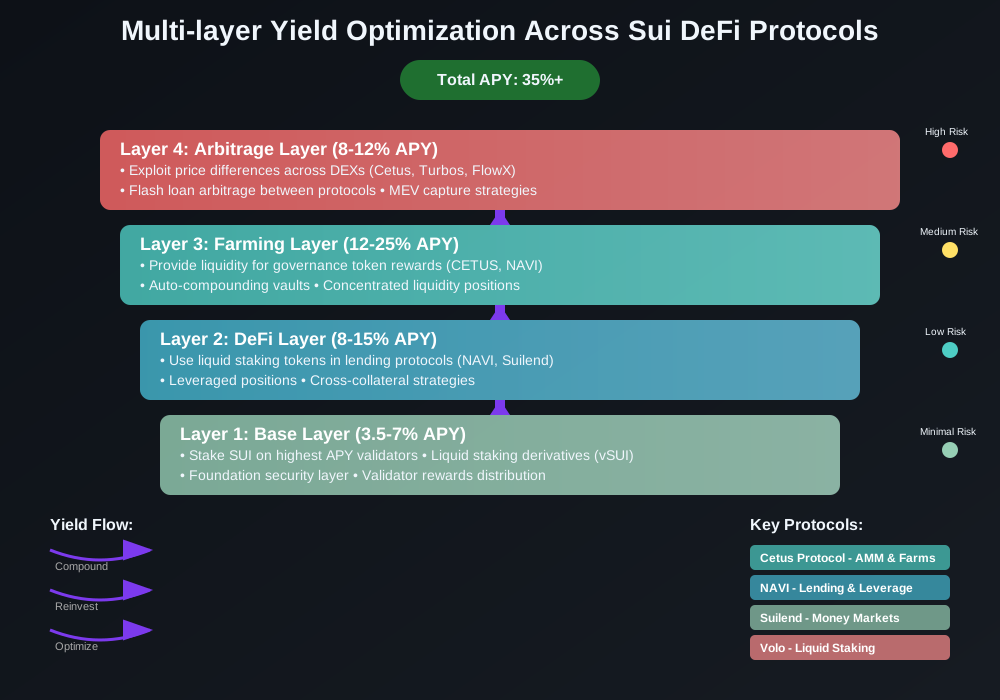
3. Cross-Protocol Yield Optimization
Multi-Protocol Strategy:
- Base Layer: Stake SUI on highest APY validator
- DeFi Layer: Use liquid staking tokens in lending protocols
- Farming Layer: Provide liquidity for governance token rewards
- Arbitrage Layer: Exploit price differences across DEXs
Risk Management and Security
Smart Contract Audits
A notable incident was the Cetus Protocol breach in May 2025, where an estimated $260 million was at risk due to a flaw in the protocol's mathematical functions, not Sui's core infrastructure or Move language. Always verify protocol audits before farming.
Security Checklist:
- ✅ Audit Reports: Check for recent security audits
- ✅ Code Verification: Review smart contract source code
- ✅ TVL Analysis: Higher TVL indicates community trust
- ✅ Team Reputation: Research development team background
- ✅ Insurance Coverage: Look for protocol insurance options
Position Monitoring
// Automated position monitoring
public fun check_position_health<T>(
    position: &UserPosition<T>,
    market_data: &MarketOracle,
    ctx: &TxContext
): bool {
    let collateral_value = calculate_collateral_value(position, market_data);
    let debt_value = calculate_debt_value(position, market_data);
    let health_factor = collateral_value * 100 / debt_value;

    // Alert if health factor drops below 150%
    health_factor > 150
}
Maximizing Yield Through Automation
Auto-Compounding Strategies
New features such as Cetus' Auto Vault LP make liquidity management and yield farming far more accessible. Automation eliminates manual intervention and optimizes gas efficiency.
Automated Yield Script:
// TypeScript automation script
import { SuiClient } from '@mysten/sui.js/client';
import { TransactionBlock } from '@mysten/sui.js/transactions';

class YieldFarmingBot {
    constructor(private suiClient: SuiClient, private privateKey: string) {}

    async autoCompoundRewards(farmAddress: string) {
        const txb = new TransactionBlock();

        // 1. Claim pending rewards
        txb.moveCall({
            target: `${farmAddress}::claim_rewards`,
            arguments: [/* position object */]
        });

        // 2. Swap half rewards to pair token
        txb.moveCall({
            target: `${DEX_ADDRESS}::swap`,
            arguments: [/* swap parameters */]
        });

        // 3. Add liquidity with both tokens
        txb.moveCall({
            target: `${farmAddress}::add_liquidity`,
            arguments: [/* liquidity parameters */]
        });

        // 4. Stake LP tokens back to farm
        txb.moveCall({
            target: `${farmAddress}::stake`,
            arguments: [/* stake parameters */]
        });

        await this.suiClient.signAndExecuteTransactionBlock({
            transactionBlock: txb,
            signer: this.keyPair
        });
    }

    async runBot() {
        setInterval(() => {
            this.autoCompoundRewards(FARM_ADDRESS);
        }, 24 * 60 * 60 * 1000); // Daily compounding
    }
}
Gas Optimization Techniques
Batch Transactions
Programmable transaction blocks (PTBs) enable atomic client-side composition of Move-powered APIs. Batch multiple farming operations to reduce gas costs.
// Batch farming operations
public fun batch_farm_operations<T>(
    positions: vector<UserPosition<T>>,
    farms: vector<&mut FarmPool<T>>,
    ctx: &mut TxContext
) {
    let i = 0;
    while (i < vector::length(&positions)) {
        let position = vector::borrow_mut(&mut positions, i);
        let farm = vector::borrow(farms, i);

        // Batch claim and restake
        claim_and_restake(position, farm, ctx);
        i = i + 1;
    };
}
Current Market Opportunities
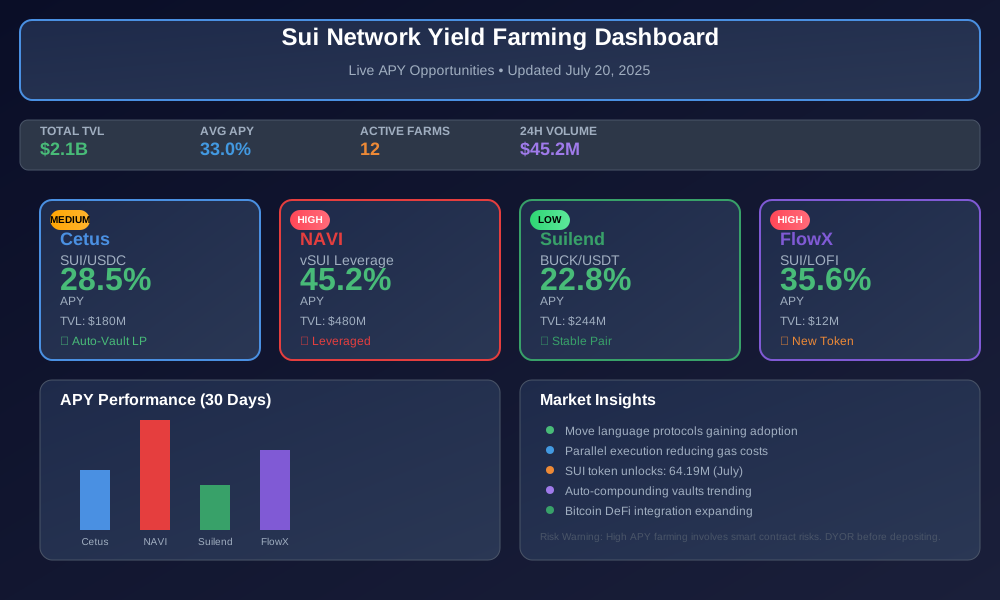
High-APY Pairs (July 2025)
Based on current market data:
| Protocol | Pair | APY | Risk Level |
|---|---|---|---|
| Cetus | SUI/USDC | 28.5% | Medium |
| NAVI | vSUI Leverage | 45.2% | High |
| Suilend | BUCK/USDT | 22.8% | Low |
| FlowX | SUI/LOFI | 35.6% | High |
Token Unlock Schedule Impact
Unlock Amount: Approximately 64.19 million SUI. Percentage of Total Supply: 0.64%. Estimated Value: $296 million based on current market prices. Plan farming strategies around unlock events to minimize price impact.
Troubleshooting Common Issues
Transaction Failures
Problem: "Insufficient Gas" errors during farming Solution:
# Increase gas budget for complex transactions
sui client call --gas-budget 10000000 --package <PACKAGE_ID>
Slippage Issues
Problem: High slippage during large swaps Solution: Split large orders across multiple transactions or use aggregators like Turbos.
Position Liquidation
Problem: Leveraged positions getting liquidated Solution: Implement automated monitoring and adjust leverage ratios based on market volatility.
Future Developments
Q3 2025 Protocol Updates
Bitcoin DeFi (BTCfi) made significant strides on Sui during the first quarter of 2025, as companies created new ways to leverage Bitcoin liquidity. Expect BTC-based farming opportunities through protocols like Lombard's LBTC.
Move Language Enhancements
The 2024 version introduces important features such as Enums, macro functions, Method syntax, and more. These updates will enable more sophisticated DeFi protocols and yield strategies.
Conclusion
Sui Network yield farming offers unmatched opportunities for crypto investors seeking high returns. The combination of Move language security, parallel transaction processing, and innovative DeFi protocols creates a perfect environment for yield optimization.
Start with basic liquid staking on Volo, then progress to automated farming strategies on Cetus and NAVI. Always prioritize security audits and position monitoring to protect your capital.
The Sui DeFi ecosystem is rapidly evolving. Sui is the only blockchain today that can scale with the growth of web3 while maintaining low fees and instant finality. Position yourself early in this revolutionary blockchain for maximum yield farming returns.
Ready to start yield farming? Connect your wallet to Sui Wallet and begin earning today. Remember to DYOR and never invest more than you can afford to lose.