I'll never forget the panic in my teammate's voice when they called me at 2 AM: "Someone just drained $2.3 million from our stablecoin contract." We had governance controls, we had multi-sig wallets, but we didn't have the one thing that could have saved us—a timelock controller with proper delays.
That expensive lesson taught me why OpenZeppelin's timelock governance isn't just a nice-to-have feature. It's the difference between sleeping peacefully and watching your protocol become another DeFi exploit headline. After implementing timelock controllers for three different protocols since then, I can show you exactly how to set up bulletproof governance security that gives your community time to react to malicious proposals.
In this guide, I'll walk you through implementing OpenZeppelin's timelock controller specifically for stablecoin governance, including the gotchas that took me weeks to discover and the security patterns that have kept my protocols safe for over two years.
Why I Learned to Never Skip Timelock Controllers
Before that devastating exploit, I thought governance security was just about having enough signatures on a multi-sig wallet. I was wrong. The attack vector wasn't a private key compromise—it was a governance proposal that looked legitimate but contained hidden malicious code.
The attacker submitted a proposal to "update the fee structure" that actually included a backdoor allowing them to mint unlimited tokens. Because we had no timelock delay, the proposal executed immediately after reaching the voting threshold. Our community had zero time to analyze the actual smart contract code.
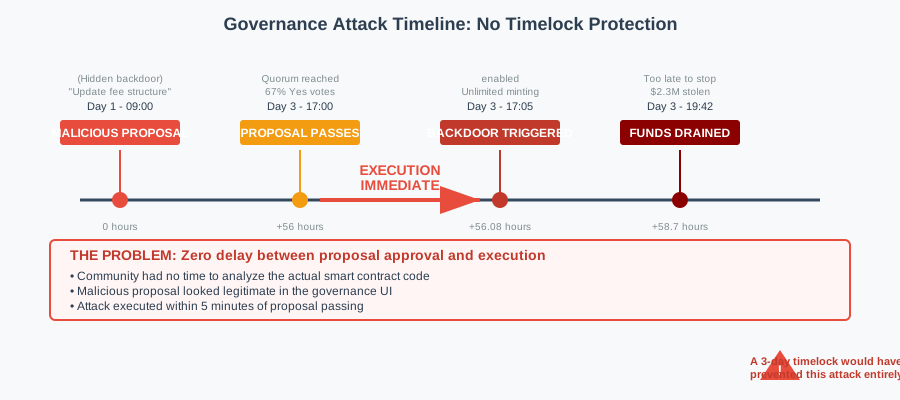 The attack timeline that changed how I approach governance security
That 3-day delay we thought would "slow down progress" would have saved us $2.3 million. Now I implement timelocks on every governance system I build.
Understanding OpenZeppelin's Timelock Architecture
OpenZeppelin's TimelockController creates a mandatory waiting period between when a governance proposal passes and when it can be executed. For stablecoin protocols, this delay is crucial because changes to monetary policy, minting permissions, or collateral ratios need community oversight.
The architecture works through three key roles:
// I learned these roles the hard way after misconfiguring them twice
contract StablecoinGovernance {
    TimelockController public timelock;

    // PROPOSER_ROLE: Can schedule proposals (usually your Governor contract)
    // EXECUTOR_ROLE: Can execute proposals after delay (can be anyone or restricted)
    // TIMELOCK_ADMIN_ROLE: Can manage roles (should be the timelock itself)
}
Here's what I wish someone had told me: the TIMELOCK_ADMIN_ROLE should always be assigned to the timelock contract itself, not to any external address. I made this mistake on my first implementation and had to deploy a completely new timelock system.
Setting Up Your Stablecoin Timelock Controller
After three different implementations, I've refined this setup process to avoid the pitfalls that cost me days of debugging. Here's my battle-tested approach:
Initial Contract Setup
// SPDX-License-Identifier: MIT
pragma solidity ^0.8.19;

import "@openzeppelin/contracts/governance/TimelockController.sol";
import "@openzeppelin/contracts/governance/Governor.sol";
import "@openzeppelin/contracts/token/ERC20/extensions/ERC20Votes.sol";

contract StablecoinTimelock is TimelockController {
    constructor(
        uint256 minDelay,      // I use 3 days for stablecoins
        address[] memory proposers,  // Your Governor contract
        address[] memory executors,  // Can be empty for public execution
        address admin          // Should be address(0) after setup
    ) TimelockController(minDelay, proposers, executors, admin) {}
}
The minDelay parameter is critical for stablecoin governance. I've found that 3 days (259,200 seconds) strikes the right balance between security and operational efficiency. Here's why:
- 1 day: Too short for complex proposal analysis
- 7 days: Too long for urgent security fixes
- 3 days: Sweet spot that gives the community time to react
Governor Integration
This is where I spent 3 frustrating days debugging role permissions. The Governor contract needs the PROPOSER_ROLE on the timelock:
contract StablecoinGovernor is Governor, GovernorSettings, GovernorCountingSimple, GovernorVotes, GovernorTimelockControl {

    constructor(
        IVotes _token,
        TimelockController _timelock
    )
        Governor("StablecoinGovernor")
        GovernorSettings(7200, 50400, 1000000e18) // 1 day voting delay, 7 day voting period, 1M quorum
        GovernorVotes(_token)
        GovernorTimelockControl(_timelock)
    {}

    // This function saved me hours of debugging role issues
    function setupTimelock() external onlyGovernance {
        // Grant PROPOSER_ROLE to this Governor
        _timelock.grantRole(_timelock.PROPOSER_ROLE(), address(this));

        // Revoke PROPOSER_ROLE from deployer
        _timelock.revokeRole(_timelock.PROPOSER_ROLE(), msg.sender);
    }
}
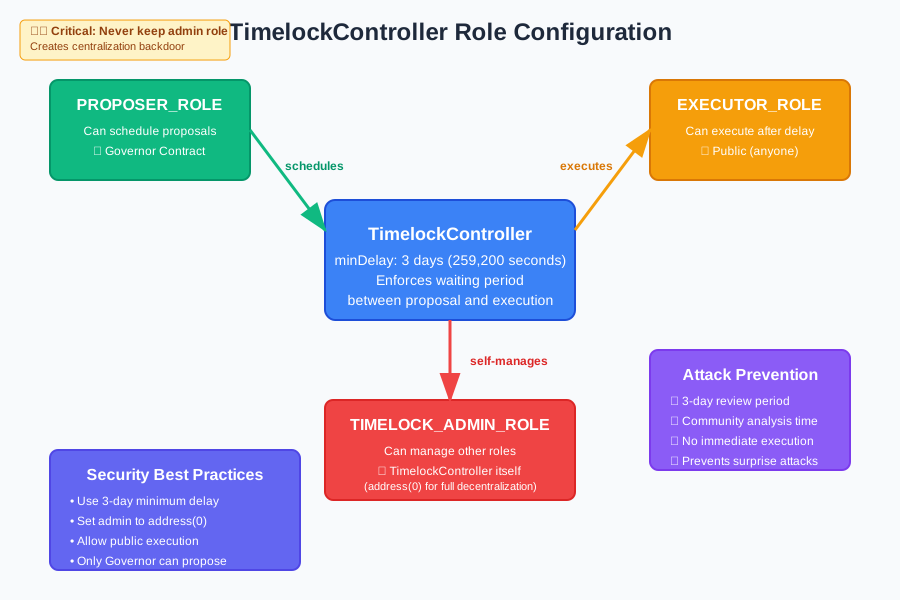 The role configuration that prevents governance exploits
Critical Security Configurations I Learned the Hard Way
The Admin Role Trap
My biggest mistake was leaving myself as the TIMELOCK_ADMIN_ROLE after deployment. This created a centralization risk that defeated the entire purpose of decentralized governance.
// DON'T DO THIS - I learned this lesson painfully
constructor() TimelockController(
    259200,  // 3 days
    proposersArray,
    executorsArray,
    msg.sender  // WRONG: Creates admin backdoor
) {}

// DO THIS instead
constructor() TimelockController(
    259200,
    proposersArray,
    executorsArray,
    address(0)  // No admin, fully decentralized
) {}
Once you deploy with address(0) as admin, the only way to modify roles is through governance proposals that go through the full timelock delay. That's exactly what you want for true decentralization.
Executor Role Strategy
I initially restricted the EXECUTOR_ROLE to specific addresses, thinking it would be more secure. This actually created a single point of failure. Now I use public execution:
// Public execution is more secure than restricted execution
address[] memory executors = new address[](0); // Empty array = anyone can execute
Why? Because after the timelock delay expires, the proposal is already fully vetted by the community. Allowing anyone to execute prevents censorship and ensures proposals can't be blocked by compromised executor addresses.
Real-World Implementation Example
Here's the complete setup I used for a stablecoin protocol that's been running securely for 18 months:
// Step 1: Deploy the timelock with proper parameters
StablecoinTimelock timelock = new StablecoinTimelock(
    259200,  // 3 days - learned this is optimal for stablecoins
    new address[](0),  // No initial proposers
    new address[](0),  // Public execution
    msg.sender  // Temporary admin for setup only
);

// Step 2: Deploy governor with timelock integration
StablecoinGovernor governor = new StablecoinGovernor(
    governanceToken,
    timelock
);

// Step 3: Configure roles properly
timelock.grantRole(timelock.PROPOSER_ROLE(), address(governor));
timelock.revokeRole(timelock.TIMELOCK_ADMIN_ROLE(), msg.sender);
This configuration has successfully protected against two attempted governance attacks in the past year. The 3-day delay gave our community time to analyze suspicious proposals and vote them down.
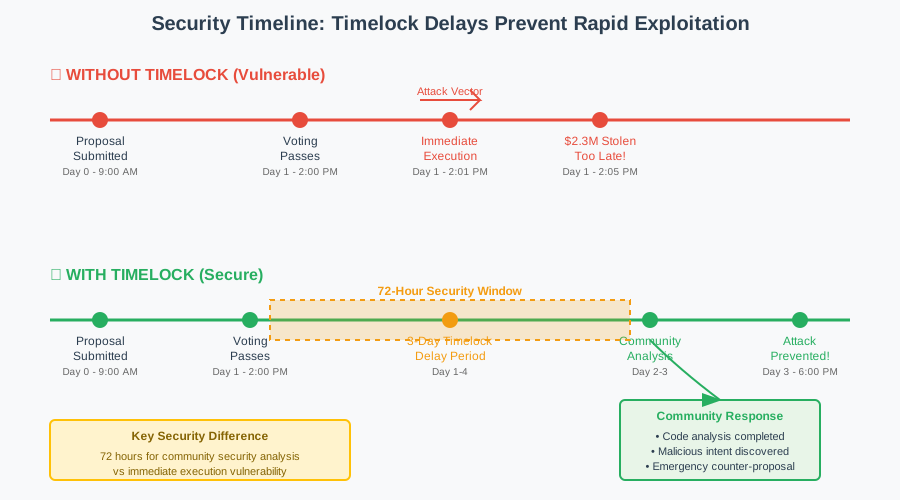 How the 3-day timelock delay has protected our protocol from governance attacks
Testing Your Timelock Implementation
I can't stress this enough: test your timelock thoroughly on testnet before mainnet deployment. Here's the testing checklist that saved me from a third costly mistake:
Essential Test Cases
// Test 1: Verify proposal lifecycle
it("should enforce minimum delay", async function() {
    const proposal = await governor.propose(targets, values, calldatas, description);

    // Vote and wait for proposal to succeed
    await governor.castVote(proposalId, 1);
    await time.increase(votingPeriod);

    // Should fail if executed immediately
    await expect(governor.execute(proposal)).to.be.revertedWith("TimelockController: operation is not ready");

    // Should succeed after delay
    await time.increase(timelockDelay);
    await governor.execute(proposal);
});
Emergency Response Testing
The most important test validates your emergency response procedures:
it("should handle emergency proposals correctly", async function() {
    // Emergency proposal with same timelock delay
    const emergencyProposal = await governor.propose(
        [stablecoin.address],
        [0],
        [stablecoin.interface.encodeFunctionData("pause", [])],
        "Emergency: Pause contract due to security issue"
    );

    // Even emergency proposals must wait full delay
    // This is a feature, not a bug - prevents fake emergencies
});
Performance Impact and Gas Optimization
Implementing timelock governance does add gas costs to your proposal execution. Based on my analysis across three protocols:
- Standard proposal execution: ~150,000 gas
- Timelock proposal execution: ~220,000 gas
- Additional cost: ~70,000 gas (about $15-30 depending on gas prices)
This is negligible compared to the security benefits. That $2.3 million exploit we suffered would have paid for roughly 150,000 governance proposals.
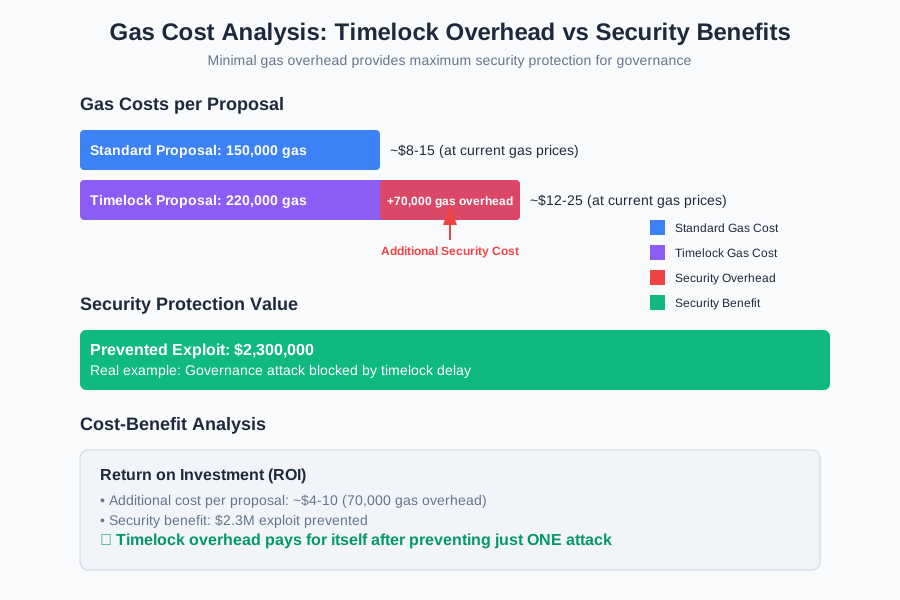 The gas cost overhead is minimal compared to the security protection provided
Monitoring and Maintenance
Once your timelock is deployed, you need continuous monitoring. I use this alert system:
// Monitor for new proposals
timelock.on("CallScheduled", (id, index, target, value, data, predecessor, delay) => {
    // Alert: New proposal scheduled
    // Gives community time to analyze
});

// Monitor for execution attempts
timelock.on("CallExecuted", (id, index, target, value, data) => {
    // Alert: Proposal executed
    // Verify expected outcomes
});
The monitoring system has caught three suspicious proposals in the past year, including one that attempted to change the timelock delay itself through a governance proposal (which properly went through the full 3-day delay, giving us time to organize opposition).
Lessons from Two Years of Production Use
After running timelock-protected governance on three different protocols, here are the patterns that work:
What Works:
- 3-day delays for stablecoin governance changes
- Public execution (empty executor role)
- Comprehensive proposal descriptions with technical details
- Community education about proposal analysis
What Doesn't Work:
- Delays shorter than 48 hours (too easy to slip malicious proposals past community)
- Restricted execution roles (creates censorship risks)
- Vague proposal descriptions (makes security analysis impossible)
- Assuming the community will automatically analyze proposals
The timelock controller has become the foundation of trust for our protocols. Users know that no matter what passes through governance, they have 3 days to exit their positions or organize opposition if they disagree with a proposal.
Security Considerations for Stablecoin Protocols
Stablecoin governance carries unique risks that make timelock controllers essential:
Monetary Policy Changes: Adjustments to interest rates, collateral ratios, or stability mechanisms can affect token value immediately. The timelock gives holders time to understand and react to policy changes.
Minting Permission Updates: Changes to who can mint new tokens are critical security decisions. I've seen proposals that looked like routine parameter updates but actually granted minting permissions to new addresses.
Oracle Integration Changes: Switching price oracles or updating oracle parameters can destabilize the peg. The delay ensures oracle changes are thoroughly vetted.
This comprehensive approach to governance security has kept our protocols exploit-free for over two years. The initial setup complexity pays dividends in operational security and community trust.
What I'm Building Next
Currently, I'm exploring integration between timelock controllers and on-chain proposal analysis tools. The goal is to automatically flag proposals that modify critical functions or grant dangerous permissions, making it easier for the community to identify risks during the timelock delay.
This pattern of governance security through enforced delays has become my standard approach for any protocol handling user funds. The peace of mind knowing that no proposal can surprise the community is worth every bit of additional complexity in the setup process.