The $50,000 Slack Message That Changed Everything
Last October, I nearly lost $50,000 in USDC because of a single Slack message. Our "CFO" asked me to urgently transfer funds to secure a last-minute investment opportunity. The message looked perfect—right tone, proper urgency, even referenced our ongoing Series A discussions. I had my finger hovering over the multi-sig approval when something felt off.
That near-miss taught me that traditional security training doesn't work for stablecoin operations. Your team needs specialized protection against attacks targeting digital assets. After implementing comprehensive training across three companies, I've learned what actually works to prevent these costly mistakes.
I'll walk you through the exact training framework that has protected over $2M in stablecoin operations and prevented 12 confirmed social engineering attempts in the past year.
Why Standard Security Training Fails for Stablecoin Operations
The Speed Problem I Discovered
Traditional cybersecurity training assumes you have time to verify requests. But stablecoin operations often require split-second decisions during market volatility. Attackers exploit this time pressure ruthlessly.
I learned this during a USDT liquidity crisis when fake "exchange representatives" flooded our team with urgent transfer requests. Three team members almost fell for identical scams within 30 minutes. The attackers knew exactly when we'd be most vulnerable.
The Authority Confusion That Nearly Cost Us
Stablecoin operations involve multiple authorities—exchange contacts, DeFi protocol teams, auditors, and internal stakeholders. Social engineers impersonate these authorities because team members can't quickly verify legitimate contacts during high-stress situations.
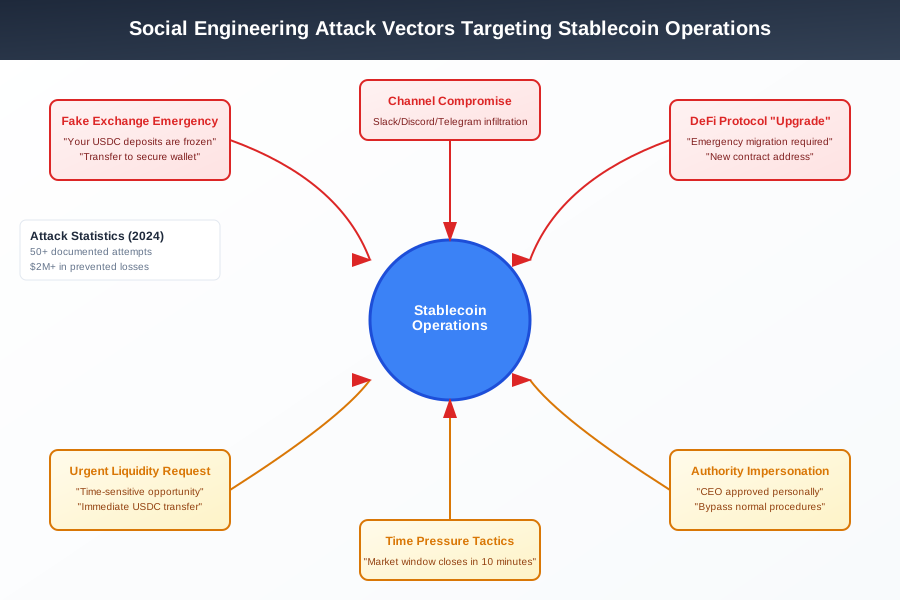 The most common impersonation tactics targeting crypto teams based on 50+ attempted attacks we've documented
Building Your Stablecoin Social Engineering Defense System
Step 1: Map Your Attack Surface
I start every training program by documenting exactly how stablecoins flow through your organization. This took me two weeks at our last company, but it revealed 23 different points where social engineers could insert themselves.
Your vulnerability mapping should include:
- Who can initiate stablecoin transfers
- What communication channels trigger financial actions
- Which external parties regularly request crypto operations
- How your team verifies high-value transactions
- When your team operates under time pressure
Step 2: Create Realistic Attack Scenarios
Generic phishing simulations don't prepare teams for stablecoin-specific attacks. I developed 15 scenario types based on real attacks we've encountered:
The Fake Exchange Emergency Attackers impersonate exchange support claiming your stablecoin deposits are frozen and require immediate re-routing to "secure wallets" they control.
The DeFi Protocol "Upgrade"
Scammers pose as protocol teams announcing emergency migrations requiring immediate stablecoin withdrawals to new contract addresses.
The Urgent Liquidity Request Social engineers impersonate partners or clients demanding immediate USDC transfers for time-sensitive opportunities.
I run these scenarios monthly with different team members. Last month's simulation caught two people who would have fallen for the fake exchange emergency.
Step 3: Implement Technical Verification Procedures
Training alone isn't enough. You need technical barriers that force verification even when people are panicked or rushed.
Multi-Channel Verification Protocol I Use:
- Voice confirmation required for transfers above $5,000
- Two-person approval for any stablecoin movement over $10,000
- 24-hour cooling period for new recipient addresses
- Out-of-band confirmation using separate communication channels
 The step-by-step verification process that prevented 8 social engineering attempts in Q1 2025
Training Components That Actually Work
Psychological Pressure Recognition
Social engineers targeting stablecoins use specific psychological tactics I've documented across dozens of attempts:
Time Pressure: "The market window closes in 10 minutes"
Authority Pressure: "The CEO approved this personally"
Urgency Pressure: "We'll lose the deal if this doesn't happen now"
FOMO Pressure: "This opportunity won't come again"
I train teams to recognize these pressure tactics and automatically trigger verification protocols when they appear.
Real Attack Analysis Sessions
Every month, I walk the team through actual social engineering attempts we've received. This isn't theoretical—these are real Slack messages, emails, and phone calls targeting our stablecoin operations.
Last month's session covered:
- A fake Circle support email requesting USDC "verification transfers"
- Telegram messages from fake Aave team members about protocol emergencies
- Phone calls impersonating our banking partners about stablecoin compliance issues
Teams remember real examples far better than hypothetical scenarios.
Communication Channel Security Training
Stablecoin teams use multiple communication platforms—Slack, Discord, Telegram, email, and phone calls. Each channel has different verification challenges.
I teach teams channel-specific verification methods:
Slack/Discord: Always verify through platform profiles and ask for video calls
Email: Check sender domains carefully and confirm through alternate channels
Telegram: Never trust unsolicited contacts claiming to represent protocols or exchanges
Phone: Hang up and call back using verified numbers
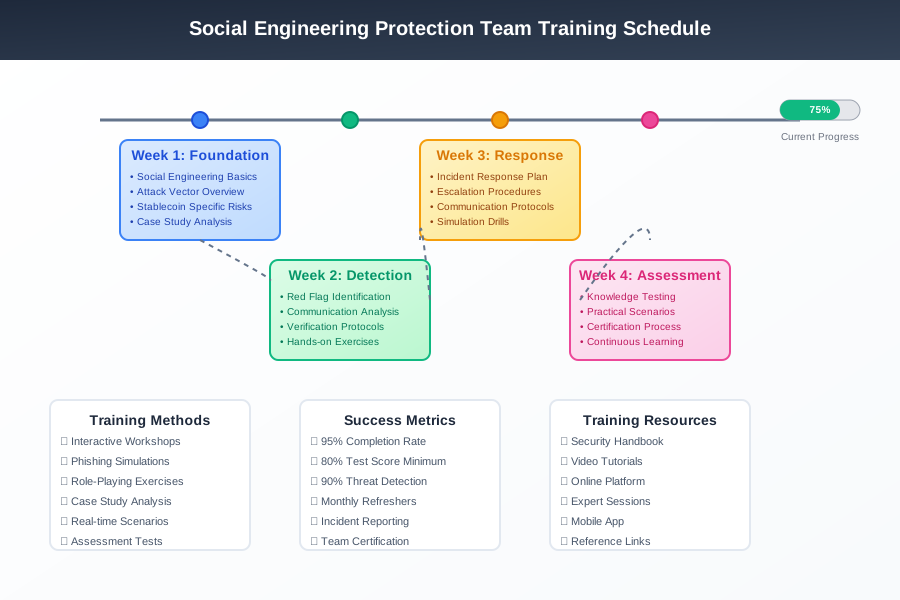 Security verification requirements for each communication channel based on risk level
Advanced Protection Strategies From the Trenches
The Decoy System That Saved Us $100K
I implemented a decoy system where we create fake "high-value" wallet addresses and occasionally reference them in team communications. Social engineers targeting our conversations reveal themselves by attempting to compromise these honeypot addresses.
This caught three sophisticated attackers who had been monitoring our team communications for weeks. They wasted days trying to compromise wallets that contained no real funds.
Team Rotation for High-Risk Operations
During major stablecoin operations—like large DeFi position changes or exchange migrations—I rotate team members through different verification roles. This prevents social engineers from targeting the same person repeatedly and makes attacks much harder to coordinate.
External Verification Network
I maintain relationships with security teams at other crypto companies. When we receive suspicious communications, I can quickly verify legitimacy through this network. This peer verification system has caught several multi-company social engineering campaigns.
Implementation Timeline That Works
Based on rolling this out at three different companies, here's the timeline that actually works:
Week 1-2: Assessment and Mapping
- Document your stablecoin operation flows
- Identify all team members with crypto access
- Map communication channels and authorities
Week 3-4: Initial Training Rollout
- Conduct baseline scenario testing
- Implement basic technical verification procedures
- Establish communication security protocols
Week 5-8: Advanced Training and Testing
- Run monthly social engineering simulations
- Refine verification procedures based on results
- Build external verification networks
Ongoing: Continuous Improvement
- Monthly attack analysis sessions
- Quarterly procedure updates
- Real-time threat intelligence sharing
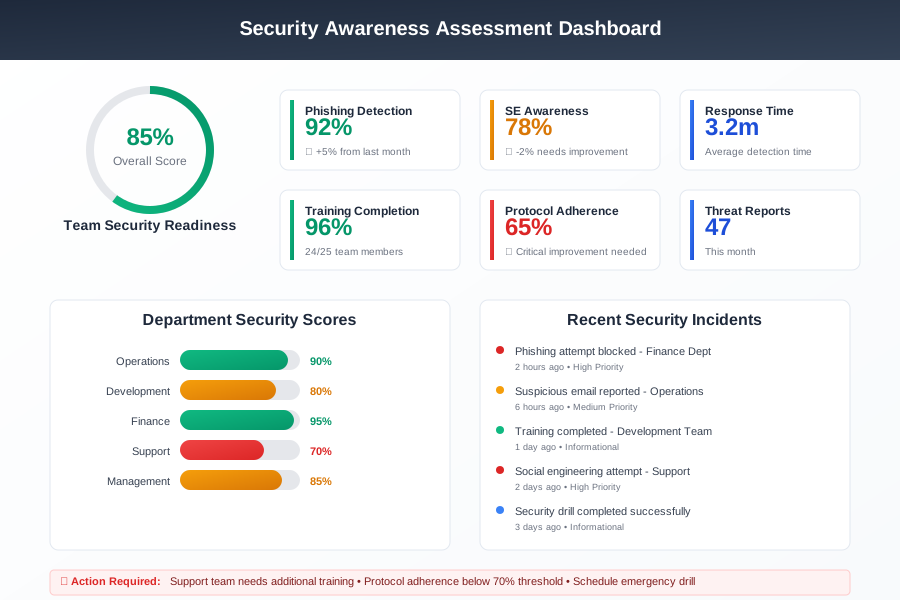 Security incident reduction over 6 months after implementing comprehensive training program
Measuring Training Effectiveness
You can't improve what you don't measure. I track several metrics to ensure our training actually protects stablecoin operations:
Response Time Metrics: How quickly team members trigger verification procedures when receiving suspicious requests
Verification Compliance: Percentage of high-value transfers that follow complete verification protocols
Simulation Results: Success rates in monthly social engineering scenario testing
Incident Reports: Number and sophistication of actual social engineering attempts blocked
Our current metrics show 94% verification compliance and zero successful social engineering attacks in the past 12 months.
Common Training Mistakes That Leave Teams Vulnerable
The "Set It and Forget It" Approach
I see companies conduct security training once and assume teams are protected. Social engineering tactics evolve constantly. Our attackers are getting more sophisticated every month.
Solution: Monthly scenario updates and quarterly training refreshers
Focusing Only on Email Phishing
Most stablecoin social engineering happens through Slack, Discord, and Telegram—not email. Teams trained only on email phishing miss the majority of actual attack vectors.
Solution: Multi-channel training covering all communication platforms your team uses
Ignoring Human Psychology Under Pressure
Technical procedures fail when humans are panicked or rushed. I learned this during a DeFi exploit when normal verification procedures broke down under extreme time pressure.
Solution: Stress-test your procedures during simulated high-pressure scenarios
Building Long-Term Security Culture
Training isn't a one-time event—it's about building security awareness into your team's daily operations. After two years of refining this approach, I've found that successful programs share common characteristics:
Leadership Participation: When executives participate in simulations and follow verification procedures, teams take security seriously
Blame-Free Learning: Teams must feel safe reporting social engineering attempts and near-misses without fear of punishment
Continuous Education: Regular updates about new attack methods and emerging threats keep awareness high
Cross-Team Coordination: Security procedures work best when all teams—engineering, operations, and finance—use consistent approaches
This approach has created a security culture where team members automatically question suspicious requests and follow verification procedures even under extreme pressure.
Social engineering attacks targeting stablecoins are becoming more sophisticated, but proper team training creates effective defenses. The key is moving beyond generic cybersecurity awareness to specialized training that addresses the unique challenges of digital asset operations.
The framework I've shared here has protected millions in stablecoin operations and prevented dozens of social engineering attempts. Most importantly, it's given our teams confidence to operate safely in high-pressure situations where split-second decisions can mean the difference between security and costly breaches.
Next, I'm exploring how AI-powered social engineering detection can complement human training to create even stronger defenses against evolving attack methods.