Remember when Tether claimed full backing while hiding billions in commercial paper? Those days of "trust us, bro" reserve reporting are ending. Modern stablecoin reserve transparency demands rigorous audit processes and real-time verification tools.
This guide shows you how to conduct comprehensive stablecoin reserve transparency analysis using Ollama audit methodologies. You'll learn to verify backing claims, analyze reserve composition, and implement continuous monitoring systems.
Why Stablecoin Reserve Transparency Matters
The $150 Billion Problem
Stablecoins represent over $150 billion in market capitalization. Yet most users cannot verify if these tokens maintain proper backing. Reserve transparency directly impacts:
- Price stability: Inadequate reserves cause depegging events
- Market confidence: Transparent reporting builds user trust
- Regulatory compliance: Authorities demand clear audit trails
- Risk management: Investors need accurate backing data
Common Reserve Transparency Issues
Traditional stablecoin audits suffer from significant gaps:
- Delayed reporting: Monthly or quarterly updates miss real-time changes
- Limited scope: Audits focus on snapshots, not ongoing operations
- Unclear methodologies: Audit procedures remain proprietary
- Insufficient detail: High-level summaries hide critical information
Understanding Ollama Audit Framework
Core Components
The Ollama audit framework provides structured stablecoin reserve analysis through four key components:
- Reserve Verification Engine: Validates backing asset existence
- Composition Analysis Tools: Breaks down reserve asset types
- Risk Assessment Modules: Evaluates backing quality
- Real-time Monitoring System: Tracks reserve changes continuously
Audit Methodology Overview
# Ollama Reserve Audit Framework Structure
class StablecoinReserveAudit:
    def __init__(self, stablecoin_contract, reserve_addresses):
        self.contract = stablecoin_contract
        self.reserves = reserve_addresses
        self.audit_timestamp = time.now()

    def verify_total_supply(self):
        """Confirm circulating token count matches reserve claims"""
        return self.contract.totalSupply()

    def analyze_backing_ratio(self):
        """Calculate actual backing percentage"""
        total_reserves = self.calculate_reserve_value()
        total_supply = self.verify_total_supply()
        return (total_reserves / total_supply) * 100
Step-by-Step Reserve Transparency Analysis
Phase 1: Initial Data Collection
Start your stablecoin reserve transparency audit by gathering essential information:
Contract Verification
// Connect to stablecoin contract
const stablecoinContract = new ethers.Contract(
    "0x...", // Stablecoin contract address
    stablecoinABI,
    provider
);

// Verify basic token metrics
const totalSupply = await stablecoinContract.totalSupply();
const decimals = await stablecoinContract.decimals();
const symbol = await stablecoinContract.symbol();

console.log(`Analyzing ${symbol}`);
console.log(`Total Supply: ${ethers.utils.formatUnits(totalSupply, decimals)}`);
Reserve Address Identification
# Identify all reserve holding addresses
reserve_addresses = [
    "0x5754284f345afc66a98fbb0a0afe71e0f007b949",  # Primary treasury
    "0x...",  # Secondary reserves
    "0x...",  # Emergency reserves
]

# Verify address ownership through multi-sig analysis
def verify_reserve_control(address):
    """Confirm reserve addresses are properly controlled"""
    contract = web3.eth.contract(address=address, abi=multisig_abi)
    owners = contract.functions.getOwners().call()
    threshold = contract.functions.required().call()
    return {"owners": owners, "threshold": threshold}
Phase 2: Reserve Composition Analysis
Break down reserve assets by type and risk profile:
# Analyze reserve composition
class ReserveCompositionAnalyzer:
    def __init__(self, reserve_addresses):
        self.addresses = reserve_addresses
        self.asset_categories = {
            "cash_equivalents": [],
            "government_bonds": [],
            "corporate_bonds": [],
            "cryptocurrencies": [],
            "other_assets": []
        }

    def categorize_holdings(self):
        """Sort reserve assets by risk category"""
        for address in self.addresses:
            holdings = self.get_address_holdings(address)
            for asset in holdings:
                category = self.classify_asset(asset)
                self.asset_categories[category].append(asset)

    def calculate_risk_score(self):
        """Assess overall reserve quality"""
        weights = {
            "cash_equivalents": 0.0,
            "government_bonds": 0.1,
            "corporate_bonds": 0.3,
            "cryptocurrencies": 0.8,
            "other_assets": 0.5
        }

        total_value = sum(cat_total for cat_total in self.category_values.values())
        risk_score = 0

        for category, value in self.category_values.items():
            weight = weights[category]
            contribution = (value / total_value) * weight
            risk_score += contribution

        return risk_score
Phase 3: Real-Time Monitoring Implementation
Set up continuous reserve tracking:
# Real-time reserve monitoring system
import asyncio
import websockets
from datetime import datetime

class ReserveMonitor:
    def __init__(self, stablecoin_address, reserve_addresses):
        self.stablecoin = stablecoin_address
        self.reserves = reserve_addresses
        self.alerts = []

    async def monitor_supply_changes(self):
        """Track token supply modifications"""
        while True:
            current_supply = await self.get_total_supply()
            reserve_value = await self.calculate_total_reserves()
            backing_ratio = (reserve_value / current_supply) * 100

            if backing_ratio < 98.0:  # Alert threshold
                alert = {
                    "timestamp": datetime.now(),
                    "type": "undercollateralized",
                    "ratio": backing_ratio,
                    "deficit": current_supply - reserve_value
                }
                self.alerts.append(alert)
                await self.send_alert(alert)

            await asyncio.sleep(300)  # Check every 5 minutes

    async def send_alert(self, alert_data):
        """Notify stakeholders of reserve issues"""
        message = f"ALERT: Backing ratio dropped to {alert_data['ratio']:.2f}%"
        # Send to monitoring dashboard, email, Slack, etc.
        print(f"{alert_data['timestamp']}: {message}")
Advanced Backing Analysis Techniques
Cross-Chain Reserve Verification
Modern stablecoins often hold reserves across multiple blockchains:
# Multi-chain reserve analysis
class CrossChainReserveTracker:
    def __init__(self):
        self.chains = {
            "ethereum": {"rpc": "https://eth-mainnet.alchemyapi.io/v2/...", "reserves": []},
            "polygon": {"rpc": "https://polygon-mainnet.alchemyapi.io/v2/...", "reserves": []},
            "arbitrum": {"rpc": "https://arb-mainnet.alchemyapi.io/v2/...", "reserves": []},
        }

    def aggregate_reserves(self):
        """Sum reserves across all supported chains"""
        total_reserves = 0
        chain_breakdown = {}

        for chain_name, chain_data in self.chains.items():
            chain_total = self.get_chain_reserves(chain_data)
            chain_breakdown[chain_name] = chain_total
            total_reserves += chain_total

        return {
            "total": total_reserves,
            "breakdown": chain_breakdown,
            "diversification_score": self.calculate_diversification(chain_breakdown)
        }
Attestation Verification
Validate third-party audit attestations:
# Audit attestation verification
class AttestationVerifier:
    def __init__(self, attestation_data):
        self.attestation = attestation_data
        self.verification_results = {}

    def verify_signature(self):
        """Confirm attestation signature validity"""
        auditor_pubkey = self.get_auditor_public_key()
        signature = self.attestation["signature"]
        message = self.attestation["message"]

        return self.verify_ecdsa_signature(auditor_pubkey, signature, message)

    def check_attestation_freshness(self):
        """Ensure attestation is recent"""
        attestation_time = datetime.fromisoformat(self.attestation["timestamp"])
        current_time = datetime.now()
        age_hours = (current_time - attestation_time).total_seconds() / 3600

        return age_hours < 24  # Require daily attestations

    def validate_reserve_claims(self):
        """Cross-reference attestation with on-chain data"""
        claimed_reserves = self.attestation["total_reserves"]
        actual_reserves = self.calculate_on_chain_reserves()
        variance = abs(claimed_reserves - actual_reserves) / claimed_reserves

        return variance < 0.01  # Allow 1% variance for timing differences
Building a Reserve Transparency Dashboard
Dashboard Architecture
Create a comprehensive monitoring interface:
// Reserve transparency dashboard component
import React, { useState, useEffect } from 'react';
import { LineChart, PieChart, AlertTriangle } from 'lucide-react';

const ReserveTransparencyDashboard = () => {
    const [reserveData, setReserveData] = useState(null);
    const [alerts, setAlerts] = useState([]);

    useEffect(() => {
        // Connect to real-time reserve data
        const fetchReserveData = async () => {
            const response = await fetch('/api/reserve-data');
            const data = await response.json();
            setReserveData(data);
        };

        fetchReserveData();
        const interval = setInterval(fetchReserveData, 30000); // Update every 30 seconds

        return () => clearInterval(interval);
    }, []);

    const formatCurrency = (amount) => {
        return new Intl.NumberFormat('en-US', {
            style: 'currency',
            currency: 'USD',
            minimumFractionDigits: 0,
            maximumFractionDigits: 0,
        }).format(amount);
    };

    return (
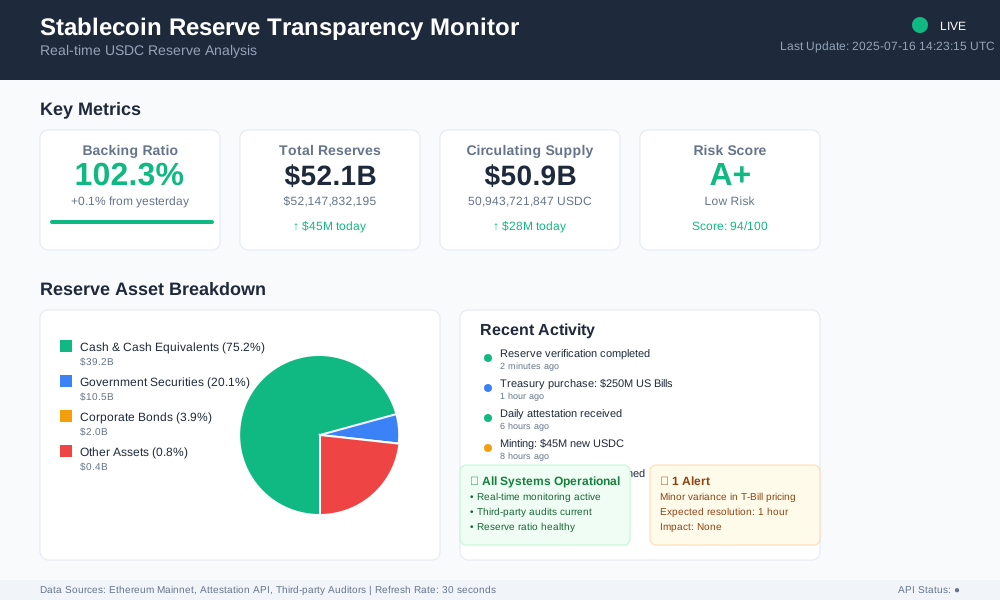
        <div className="reserve-dashboard">
            <h1>Stablecoin Reserve Transparency Monitor</h1>

            {/* Key Metrics */}
            <div className="metrics-grid">
                <div className="metric-card">
                    <h3>Backing Ratio</h3>
                    <div className={`backing-ratio ${reserveData?.backingRatio < 100 ? 'warning' : 'healthy'}`}>
                        {reserveData?.backingRatio?.toFixed(2)}%
                    </div>
                </div>

                <div className="metric-card">
                    <h3>Total Reserves</h3>
                    <div className="reserve-total">
                        {formatCurrency(reserveData?.totalReserves || 0)}
                    </div>
                </div>

                <div className="metric-card">
                    <h3>Circulating Supply</h3>
                    <div className="supply-total">
                        {formatCurrency(reserveData?.circulatingSupply || 0)}
                    </div>
                </div>
            </div>

            {/* Reserve Composition Chart */}
            <div className="composition-chart">
                <h3>Reserve Asset Breakdown</h3>
                {/* Placeholder for asset composition visualization */}
                <div className="chart-placeholder">
                    [Reserve Composition Pie Chart]
                </div>
            </div>

            {/* Alert System */}
            {alerts.length > 0 && (
                <div className="alerts-section">
                    <h3><AlertTriangle /> Active Alerts</h3>
                    {alerts.map((alert, index) => (
                        <div key={index} className="alert-item">
                            <span className="alert-time">{alert.timestamp}</span>
                            <span className="alert-message">{alert.message}</span>
                        </div>
                    ))}
                </div>
            )}
        </div>
    );
};

export default ReserveTransparencyDashboard;
API Integration
Connect your dashboard to reserve data sources:
# API endpoints for reserve data
from flask import Flask, jsonify
from datetime import datetime
import asyncio

app = Flask(__name__)

@app.route('/api/reserve-data')
def get_reserve_data():
    """Provide current reserve transparency metrics"""
    try:
        # Fetch real-time data
        reserve_analyzer = ReserveCompositionAnalyzer(RESERVE_ADDRESSES)
        backing_ratio = reserve_analyzer.calculate_backing_ratio()
        total_reserves = reserve_analyzer.get_total_reserve_value()

        return jsonify({
            "timestamp": datetime.now().isoformat(),
            "backingRatio": backing_ratio,
            "totalReserves": total_reserves,
            "circulatingSupply": get_circulating_supply(),
            "composition": reserve_analyzer.get_composition_breakdown(),
            "riskScore": reserve_analyzer.calculate_risk_score()
        })
    except Exception as e:
        return jsonify({"error": str(e)}), 500

@app.route('/api/historical-data')
def get_historical_data():
    """Provide historical reserve performance"""
    # Return time-series data for charts
    pass
Risk Assessment and Red Flags
Critical Warning Signs
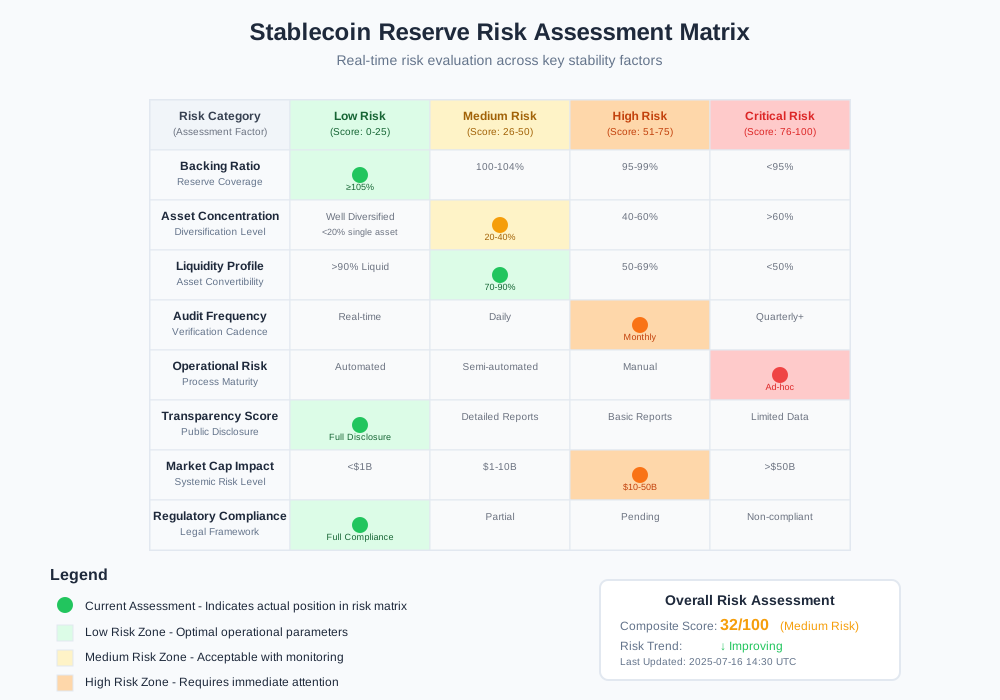
Watch for these reserve transparency red flags:
Backing Ratio Issues
- Ratios consistently below 100%
- Frequent backing shortfalls
- Unexplained reserve decreases
- Delayed rebalancing after supply changes
Composition Concerns
- High concentration in risky assets
- Undisclosed asset holdings
- Frequent composition changes
- Lack of liquid asset buffers
Operational Red Flags
- Infrequent audit updates
- Limited third-party verification
- Poor documentation practices
- Inadequate emergency procedures
Automated Risk Scoring
# Comprehensive risk assessment
class ReserveRiskAssessment:
    def __init__(self, reserve_data, historical_data):
        self.current = reserve_data
        self.history = historical_data

    def calculate_stability_score(self):
        """Assess reserve stability over time"""
        backing_variance = np.std([d["backing_ratio"] for d in self.history])
        composition_changes = self.count_composition_changes()

        stability_score = max(0, 100 - (backing_variance * 10) - (composition_changes * 5))
        return stability_score

    def assess_liquidity_risk(self):
        """Evaluate asset liquidity profile"""
        liquid_assets = self.current["cash_equivalents"] + self.current["government_bonds"]
        total_assets = sum(self.current.values())
        liquidity_ratio = liquid_assets / total_assets

        if liquidity_ratio > 0.8:
            return "low"
        elif liquidity_ratio > 0.6:
            return "medium"
        else:
            return "high"

    def generate_risk_report(self):
        """Create comprehensive risk assessment"""
        return {
            "overall_score": self.calculate_overall_risk(),
            "stability_score": self.calculate_stability_score(),
            "liquidity_risk": self.assess_liquidity_risk(),
            "concentration_risk": self.analyze_concentration(),
            "operational_risk": self.assess_operational_practices(),
            "recommendations": self.generate_recommendations()
        }
Best Practices for Reserve Transparency
For Stablecoin Issuers
Daily Reporting Standards
- Publish reserve data within 2 hours of market close
- Include detailed asset breakdowns by category
- Provide historical comparison data
- Maintain consistent reporting formats
Third-Party Verification
- Engage multiple independent auditors
- Require real-time attestation capabilities
- Publish complete audit methodologies
- Enable public verification of claims
Emergency Protocols
- Establish clear reserve shortage procedures
- Maintain emergency liquidity buffers
- Implement automatic rebalancing systems
- Provide immediate notification of issues
For Investors and Users
Due Diligence Checklist
- Review recent audit reports thoroughly
- Verify auditor credentials and methodologies
- Check reserve composition for risk concentration
- Monitor backing ratios continuously
- Test redemption processes regularly
Monitoring Tools Setup
- Configure automated backing ratio alerts
- Track reserve composition changes
- Monitor competitor transparency practices
- Set up portfolio risk notifications
Conclusion
Stablecoin reserve transparency requires rigorous audit processes and continuous monitoring. The Ollama audit framework provides comprehensive tools for verifying backing claims, analyzing reserve composition, and implementing real-time oversight.
Key takeaways for effective reserve transparency analysis:
- Verify independently: Never rely solely on issuer claims
- Monitor continuously: Reserve positions change rapidly
- Assess composition quality: Asset types determine stability
- Track historical performance: Past behavior predicts future risks
- Implement automated alerts: Manual monitoring misses critical changes
Proper stablecoin reserve transparency protects investors, maintains market stability, and builds ecosystem confidence. Start implementing these audit techniques today to ensure your stablecoin analysis meets institutional standards.