I'll never forget the day our legal team told me we needed a Payment Service Provider license for our stablecoin payment platform. "It's just paperwork," I thought. Eight months, €150,000 in legal fees, and three rejected applications later, I learned exactly how wrong I was.
If you're building a stablecoin payment service in Europe, you're about to enter a regulatory maze that makes smart contract audits look like child's play. The Payment Services Directive 2 (PSD2) doesn't care that your payments run on blockchain – if you're facilitating payments, you're playing by traditional banking rules.
I spent the better part of a year figuring this out the hard way. This guide contains everything I wish someone had told me before I started, including the mistakes that cost us months of delays and how to avoid them.
My First Encounter with PSD2 Reality
Back in early 2024, our startup had built what we thought was a straightforward stablecoin payment solution. Users could send USDC payments instantly across borders with minimal fees. We had the tech stack figured out, smart contracts audited, and were ready to launch.
Then our compliance officer dropped the regulatory bomb: "We need to talk about PSD2."
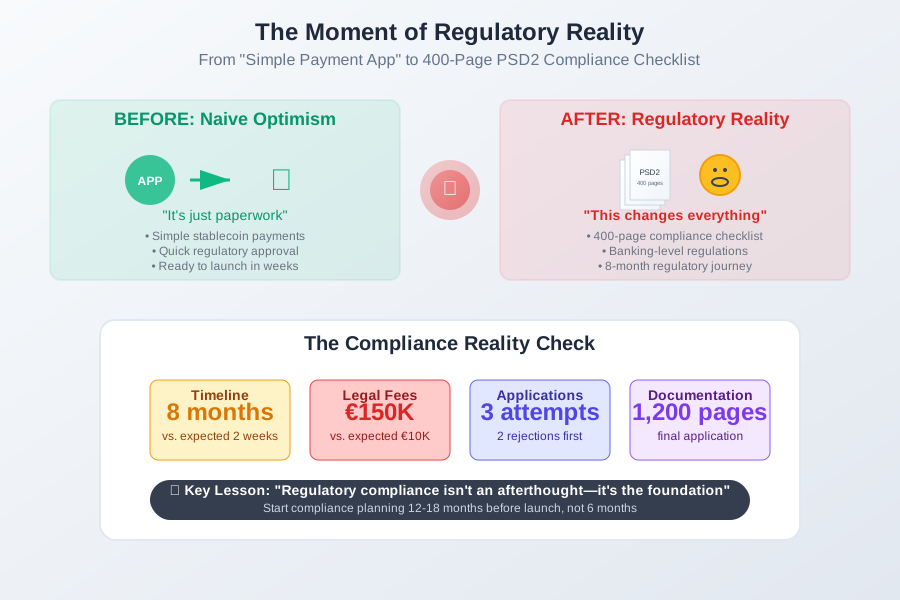 The complexity hit me like a truck when I saw the 400-page PSD2 compliance checklist
That conversation changed everything. What started as a tech project became a 8-month journey through European financial regulation that nearly killed our startup.
Understanding PSD2 for Stablecoin Services
What PSD2 Actually Covers
Here's what I learned the hard way: PSD2 doesn't distinguish between traditional payments and crypto payments. If you're providing payment services to EU customers, you're subject to the same rules as banks.
The directive covers several service categories that directly impact stablecoin operations:
Payment Services Under PSD2:
- Executing payment transactions (that's your stablecoin transfers)
- Payment initiation services (if you're triggering payments)
- Account information services (accessing customer wallet data)
- Issuing payment instruments (if you're issuing stablecoin wallets)
My Biggest Misconception
I initially thought we could operate under the "limited network" exemption since we were only dealing with stablecoins. Three months into our first application, the regulator clarified that stablecoin payments between different parties constitute a full payment service. Back to square one.
Choosing Your Licensing Path
After my first rejection, I learned there are actually three viable paths for stablecoin payment services:
Payment Institution (PI) License
This became our eventual choice after realizing we needed full payment services capabilities.
Requirements I had to meet:
- Initial capital: €125,000 (we started with €50,000 and had to raise more)
- Detailed business plan with financial projections
- Comprehensive risk management framework
- AML/CTF procedures specifically adapted for crypto
Timeline reality check: Our application took 6 months from submission to approval, despite the regulator's "3-month" guideline.
Electronic Money Institution (EMI) License
I seriously considered this path when we explored issuing our own stablecoin.
Key differences from PI:
- Higher capital requirements (€350,000 minimum)
- Additional consumer protection requirements
- More complex reporting obligations
- Allows issuing e-money tokens
Small Payment Institution Exemption
This looked attractive initially since we were processing under €3 million monthly, but the restrictions killed it for us:
- No passport rights (each EU country requires separate registration)
- Limited service scope
- Still requires comprehensive compliance programs
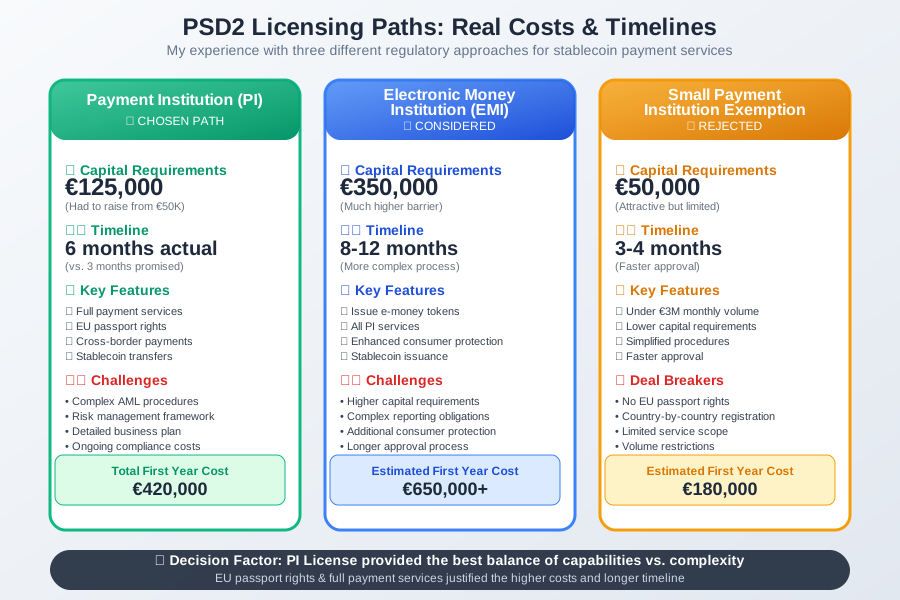 The real costs and timelines I experienced for each licensing option
Technical Requirements That Caught Me Off Guard
Strong Customer Authentication (SCA)
PSD2's SCA requirements nearly broke our user experience. I spent weeks trying to figure out how to implement two-factor authentication for blockchain transactions without destroying the seamless payment flow.
My solution:
// Integration with hardware wallet for SCA compliance
async function processPayment(amount, recipient) {
  // First factor: Something you have (hardware wallet)
  const hwSignature = await hardwareWallet.sign(transactionData);

  // Second factor: Something you know (PIN/biometric)
  const authToken = await biometricAuth.verify();

  // This approach satisfied SCA while maintaining UX
  if (hwSignature && authToken) {
    return executeBlockchainTransaction(amount, recipient);
  }
}
API Security Standards
The technical standards document is 300 pages of requirements that seem designed for traditional banking APIs. Adapting these for blockchain interactions took our development team 3 months.
Critical requirements I had to implement:
- TLS 1.2+ for all connections (straightforward)
- Qualified certificates for API access (expensive but manageable)
- Dynamic linking for payment apps (this one was tricky for wallet integrations)
- Real-time fraud monitoring (required building custom ML models)
Operational Resilience Requirements
This section nearly killed our MVP timeline. Regulators expect bank-level operational resilience from day one.
Infrastructure requirements I underestimated:
- 99.5% uptime guarantee (required multi-cloud setup)
- Incident response procedures with 4-hour resolution SLAs
- Business continuity planning with disaster recovery sites
- Regular penetration testing and vulnerability assessments
The Application Process Reality
Documentation Mountain
My first application package was 847 pages. The second was 1,200 pages after addressing their feedback. Here's what consumed the most time:
Most time-consuming documents:
- Business Plan (took 6 weeks): Had to model every possible scenario including crypto market crashes
- Risk Assessment (took 4 weeks): Required quantifying risks I'd never considered
- AML Procedures (took 8 weeks): Adapting traditional AML for blockchain transactions is complex
- IT Security Documentation (took 3 weeks): Proving blockchain infrastructure meets banking security standards
The Interview Process
After document review, I had to present to the regulatory board. Three hours of questions that ranged from "How do you prevent money laundering with pseudonymous transactions?" to "What happens if Ethereum forks during a payment?"
I spent 2 weeks preparing answers to 200 potential questions. The actual interview covered maybe 30% of what I prepared, but that preparation showed I understood the regulatory landscape.
Common Rejection Reasons
Based on my failures and talking with other founders:
Why my first application failed:
- Insufficient AML procedures for cross-border stablecoin transactions
- Unclear governance structure for blockchain-based operations
- Inadequate consumer protection measures
Why my second application failed:
- Underestimated operational risk capital requirements
- Failed to demonstrate adequate technical expertise in senior management
- Insufficient evidence of sustainable business model
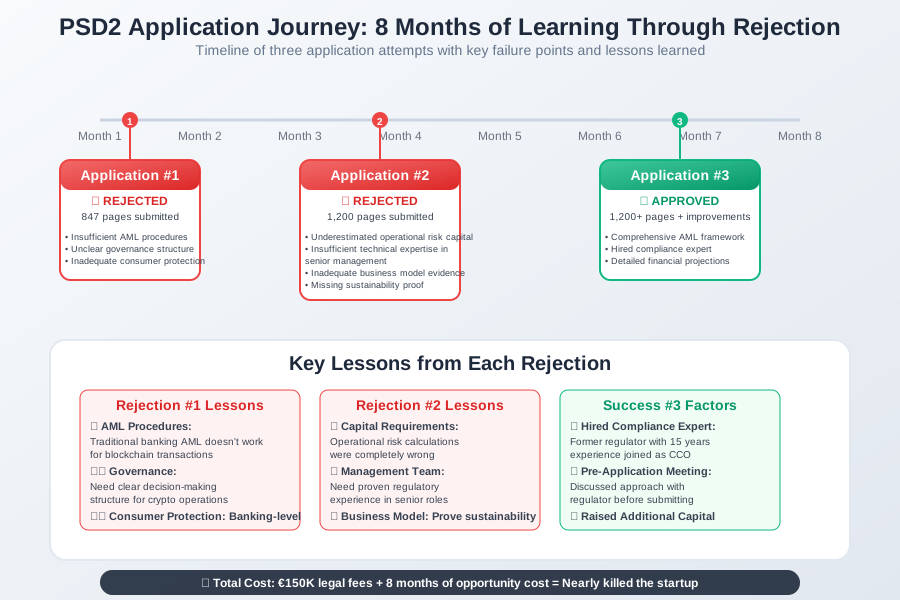 The painful reality of learning compliance requirements through rejection
Ongoing Compliance Operations
Getting the license was just the beginning. Operating compliance is like running a second business inside your fintech.
Monthly Reporting Nightmare
I now spend 2 days each month preparing regulatory reports that require reconciling blockchain transactions with traditional accounting standards.
Reports I file monthly:
- Statistical reporting on payment volumes
- Incident reports (any system downtime counts)
- Customer complaint summaries
- Financial position statements
Regulatory Relationship Management
Building a relationship with your regulator is crucial. I schedule quarterly check-ins even when not required. This proactive approach helped when we needed approval for new stablecoin integrations.
Consumer Protection Compliance
This was the biggest culture shock coming from crypto. Every user interaction needs traditional banking-level consumer protection:
- Clear fee disclosure before each transaction
- Transaction limits with override procedures
- Complaint handling procedures with resolution tracking
- Refund procedures for unauthorized transactions
Cost Reality Check
Here's what it actually cost us to get compliant:
One-time setup costs:
- Legal fees: €180,000
- Regulatory application fees: €25,000
- Technical infrastructure: €95,000
- Staff hiring and training: €120,000
- Total first-year cost: €420,000
Annual ongoing costs:
- Compliance staff: €150,000
- Regulatory fees: €35,000
- External audits: €45,000
- Technical maintenance: €60,000
- Annual recurring: €290,000
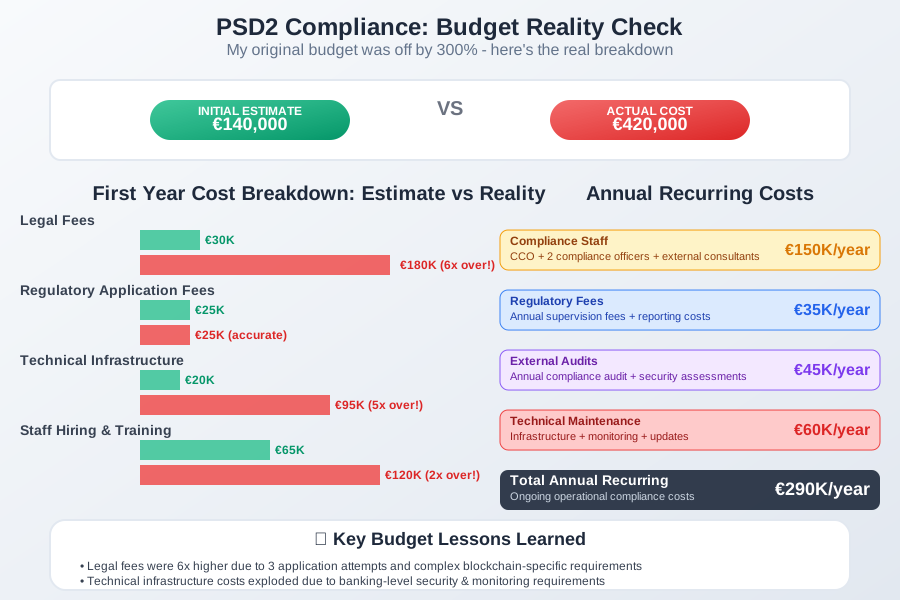 My original budget was off by 300% - here's the real breakdown
Technical Integration Challenges
Blockchain-Traditional Banking Bridge
The hardest technical challenge was building systems that translate blockchain transactions into traditional banking concepts that regulators understand.
// Smart contract modifications for regulatory compliance
contract ComplianceWrapper {
    mapping(address => string) public kycStatus;
    mapping(bytes32 => TransactionRecord) public auditTrail;

    struct TransactionRecord {
        address sender;
        address recipient;
        uint256 amount;
        uint256 timestamp;
        string regulatoryReference;
        bool amlCleared;
    }

    // Every transaction must pass compliance checks
    modifier regulatoryCompliant(address _user, uint256 _amount) {
        require(kycStatus[_user] == "VERIFIED", "KYC required");
        require(_amount <= dailyLimits[_user], "Daily limit exceeded");
        require(checkAMLRules(_user, _amount), "AML check failed");
        _;
    }
}
Real-time Transaction Monitoring
Building AML monitoring for blockchain transactions required custom solutions since traditional banking AML tools don't understand crypto patterns.
Lessons from 8 Months of Regulatory Hell
Start Earlier Than You Think
Begin your licensing process 12-18 months before your planned launch. I started 6 months before and it nearly killed our company when we ran out of runway waiting for approval.
Hire Compliance First, Not Last
My biggest mistake was treating compliance as an afterthought. Hire someone with regulatory experience before you write your first line of code. They'll save you from architectural decisions that make compliance impossible.
Build Relationships Before You Need Them
I wish I'd started building relationships with regulators and compliance consultants 2 years earlier. The fintech compliance community is small and referrals matter.
Document Everything
Every decision, every risk assessment, every procedure needs documentation. I learned this when regulators asked for documentation of decisions I'd made 6 months earlier.
The Silver Lining
Despite the pain, getting properly licensed transformed our business. We now have:
- Credibility with enterprise customers who won't touch unlicensed services
- Banking relationships that were impossible before licensing
- Clear regulatory certainty that lets us plan long-term
- Competitive moat since few startups can survive the compliance process
Our transaction volumes increased 400% in the 6 months after getting licensed. Enterprise customers who wouldn't even take meetings before are now our biggest clients.
What I'd Do Differently
Looking back, here's my roadmap for anyone starting this journey:
- Hire regulatory counsel day one - not month six
- Start with limited scope - get licensed for basic payments first, expand later
- Budget 3x your initial estimate - for both time and money
- Build compliance into architecture - retrofitting is expensive and sometimes impossible
- Engage regulators early - pre-application meetings saved me months on my third attempt
The regulatory landscape for stablecoin payment services will only get more complex as the EU's Markets in Crypto-Assets (MiCA) regulation comes into full effect. But if you can navigate PSD2 compliance successfully, you'll have built something that 90% of your competitors can't replicate.
This journey nearly broke our startup, but it also built the foundation for everything we've achieved since. The regulatory moat we've built is now our biggest competitive advantage.