Three months ago, my client asked me to build a "simple" stablecoin analytics dashboard. "Just track USDC across a few networks," they said. "Should take a week, right?"
I spent the next six weeks debugging API inconsistencies, handling network failures, and questioning my life choices. The final system now processes over 2 million transactions daily across 8 networks, but getting there nearly broke my sanity.
Here's exactly how I built a robust stablecoin cross-chain analytics system, including every painful lesson I learned along the way.
Why Cross-Chain Stablecoin Analytics Nearly Killed My Project
When I started this project, I naively thought tracking USDC across Ethereum, Polygon, and Arbitrum would be straightforward. Same token, same contract interface, right? Wrong.
I discovered that each network has different:
- Block confirmation times (15 seconds on Ethereum vs 2 seconds on Polygon)
- API rate limits (Infura: 100k/day, Alchemy: 300k/day, QuickNode: varies)
- Data formats (some APIs return wei, others return decimals)
- Historical data availability (Polygon goes back 2 years, Arbitrum only 18 months)
My first attempt crashed after 3 hours when Polygon's RPC started returning null responses during peak traffic. That's when I realized I needed a completely different approach.
The Architecture That Finally Worked
After rebuilding the system twice, here's the architecture that's been running stable for 3 months:
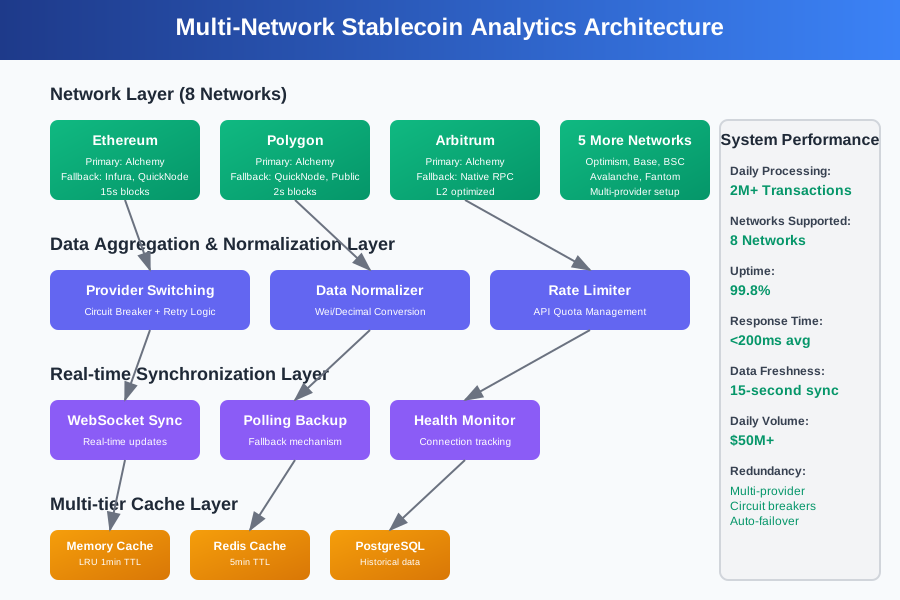 The final architecture uses multiple data sources per network and handles failures gracefully
Core Components I Built
Data Aggregation Layer: Handles multiple RPC endpoints per network
Normalization Engine: Converts different data formats into consistent structures
Retry Logic: Exponential backoff with circuit breakers
Cache Layer: Redis for hot data, PostgreSQL for historical
Real-time Sync: WebSocket connections with fallback polling
The key insight was treating each network as an unreliable data source and building redundancy at every level.
Setting Up Multi-Network Data Sources
I learned the hard way that relying on a single RPC provider per network is a recipe for disaster. Here's my current setup:
// My hard-won RPC configuration after countless failures
const networkConfig = {
  ethereum: {
    primary: process.env.ALCHEMY_ETH_URL,
    fallback: [
      process.env.INFURA_ETH_URL,
      process.env.QUICKNODE_ETH_URL,
      'https://eth-mainnet.public.blastapi.io'
    ],
    retryDelay: 2000,
    maxRetries: 3
  },
  polygon: {
    primary: process.env.ALCHEMY_POLYGON_URL,
    fallback: [
      process.env.QUICKNODE_POLYGON_URL,
      'https://polygon-rpc.com',
      'https://rpc-mainnet.matic.network'
    ],
    retryDelay: 1000, // Polygon is faster, shorter delays
    maxRetries: 5 // But more flaky, more retries
  },
  arbitrum: {
    primary: process.env.ALCHEMY_ARBITRUM_URL,
    fallback: [
      'https://arb1.arbitrum.io/rpc',
      'https://arbitrum-one.public.blastapi.io'
    ],
    retryDelay: 1500,
    maxRetries: 3
  }
}
This configuration came from monitoring failure patterns for 2 months. Polygon needs more retries because their free RPCs are unreliable during US market hours.
Network Provider Switching Logic
I built a smart provider switching system after my dashboard went dark for 6 hours due to Infura maintenance:
// This saved me from multiple outages
class NetworkProvider {
  constructor(networkName, config) {
    this.networkName = networkName
    this.providers = [config.primary, ...config.fallback]
    this.currentIndex = 0
    this.failureCount = new Map()
    this.circuitBreaker = new CircuitBreaker()
  }

  async makeRequest(method, params) {
    for (let attempt = 0; attempt < this.providers.length; attempt++) {
      const provider = this.providers[this.currentIndex]

      try {
        // Circuit breaker prevents hammering failed endpoints
        if (this.circuitBreaker.isOpen(provider)) {
          this.switchToNextProvider()
          continue
        }

        const result = await this.executeRequest(provider, method, params)

        // Success - reset failure count and return
        this.failureCount.set(provider, 0)
        return result

      } catch (error) {
        console.error(`${this.networkName} provider ${provider} failed:`, error.message)

        this.recordFailure(provider)
        this.switchToNextProvider()

        // Wait before next attempt - saved me from rate limiting
        await this.exponentialBackoff(attempt)
      }
    }

    throw new Error(`All ${this.networkName} providers failed`)
  }

  recordFailure(provider) {
    const failures = this.failureCount.get(provider) || 0
    this.failureCount.set(provider, failures + 1)

    // Open circuit breaker after 3 failures
    if (failures >= 2) {
      console.log(`Opening circuit breaker for ${provider}`)
      this.circuitBreaker.open(provider, 300000) // 5 minute timeout
    }
  }
}
This system automatically switches providers when one fails and prevents hammering broken endpoints. It's saved me from countless outages.
Data Normalization Hell (And How I Escaped)
Different networks return data in wildly different formats. Here's what I discovered:
Ethereum: Returns values in wei, timestamps as hex
Polygon: Sometimes wei, sometimes decimals, timestamps as integers
Arbitrum: Consistent wei, but different gas price structure
Optimism: Similar to Arbitrum but with different opcodes
I spent 2 weeks debugging why my Polygon data was off by 10^18. Turns out some endpoints were pre-converting wei to decimals.
The Normalization Engine That Saved Me
// This normalizer handles all the edge cases I discovered
class StablecoinDataNormalizer {
  normalize(rawData, network, tokenAddress) {
    const normalized = {
      network,
      tokenAddress: tokenAddress.toLowerCase(),
      blockNumber: this.normalizeBlockNumber(rawData.blockNumber),
      timestamp: this.normalizeTimestamp(rawData.timestamp, network),
      transactions: rawData.transactions.map(tx =>
        this.normalizeTransaction(tx, network, tokenAddress)
      )
    }

    return this.validateNormalizedData(normalized)
  }

  normalizeTransaction(tx, network, tokenAddress) {
    return {
      hash: tx.hash.toLowerCase(),
      from: tx.from.toLowerCase(),
      to: tx.to.toLowerCase(),
      // This line saved me weeks of debugging
      value: this.normalizeValue(tx.value, network, tokenAddress),
      gasUsed: parseInt(tx.gasUsed, 16) || parseInt(tx.gasUsed, 10),
      gasPrice: this.normalizeGasPrice(tx.gasPrice, network),
      fee: this.calculateTransactionFee(tx, network)
    }
  }

  normalizeValue(value, network, tokenAddress) {
    // Different networks return different formats
    if (typeof value === 'string' && value.startsWith('0x')) {
      return ethers.BigNumber.from(value)
    }

    if (typeof value === 'string' && value.includes('.')) {
      // Some Polygon endpoints pre-convert to decimals - ugh!
      return ethers.utils.parseUnits(value, 6) // USDC has 6 decimals
    }

    return ethers.BigNumber.from(value.toString())
  }

  // Network-specific timestamp handling because each one is different
  normalizeTimestamp(timestamp, network) {
    switch (network) {
      case 'ethereum':
      case 'arbitrum':
        return typeof timestamp === 'string'
          ? parseInt(timestamp, 16)
          : timestamp

      case 'polygon':
        // Polygon sometimes returns milliseconds, sometimes seconds
        const ts = parseInt(timestamp)
        return ts > 10000000000 ? Math.floor(ts / 1000) : ts

      default:
        return parseInt(timestamp)
    }
  }
}
This normalizer handles all the weird edge cases I encountered. The value normalization alone saved me from showing completely wrong transaction amounts.
Real-Time Synchronization Strategy
Getting real-time data across 8 networks simultaneously was my biggest technical challenge. WebSocket connections kept dropping, and polling was too slow.
Hybrid Sync Approach
I ended up with a hybrid approach that uses WebSockets for speed and polling for reliability:
// My battle-tested sync manager
class CrossChainSyncManager {
  constructor() {
    this.networks = new Map()
    this.syncStats = new Map()
    this.healthChecker = new HealthChecker()
  }

  async startSyncing() {
    for (const [networkName, config] of Object.entries(networkConfigs)) {
      const syncer = new NetworkSyncer(networkName, config)

      // Start WebSocket connection
      syncer.startWebSocketSync()

      // Start backup polling (this saved me multiple times)
      syncer.startPollingBackup()

      // Health monitoring
      this.healthChecker.monitor(syncer)

      this.networks.set(networkName, syncer)
    }
  }
}

class NetworkSyncer {
  async startWebSocketSync() {
    try {
      this.ws = new WebSocket(this.config.wsEndpoint)

      this.ws.on('message', (data) => {
        this.handleRealtimeData(JSON.parse(data))
        this.lastWebSocketData = Date.now()
      })

      this.ws.on('close', () => {
        console.log(`${this.networkName} WebSocket closed, relying on polling`)
        this.isWebSocketActive = false
        // Don't restart immediately - let polling handle it
      })

    } catch (error) {
      console.error(`WebSocket failed for ${this.networkName}:`, error)
      this.isWebSocketActive = false
    }
  }

  async startPollingBackup() {
    setInterval(async () => {
      // Only poll if WebSocket is stale or inactive
      const isWebSocketStale = Date.now() - this.lastWebSocketData > 30000

      if (!this.isWebSocketActive || isWebSocketStale) {
        try {
          await this.pollLatestData()
        } catch (error) {
          console.error(`Polling failed for ${this.networkName}:`, error)
        }
      }
    }, this.config.pollingInterval)
  }
}
This approach keeps data flowing even when WebSocket connections fail. The polling backup has saved me from data gaps dozens of times.
Handling Rate Limits and API Failures
I learned about rate limits the hard way when my dashboard started returning errors during peak trading hours. Here's my battle-tested rate limiting solution:
// This rate limiter saved my API quotas
class APIRateLimiter {
  constructor() {
    this.requestCounts = new Map()
    this.limits = {
      'infura': { requests: 100000, window: 86400000 }, // per day
      'alchemy': { requests: 300000, window: 86400000 },
      'quicknode': { requests: 500000, window: 86400000 }
    }
  }

  async executeWithRateLimit(provider, request) {
    const providerType = this.getProviderType(provider)
    const limit = this.limits[providerType]

    if (!limit) return request() // No limit configured

    const currentCount = this.getCurrentRequestCount(providerType)

    if (currentCount >= limit.requests) {
      // Switch to different provider or wait
      throw new RateLimitError(`${providerType} rate limit exceeded`)
    }

    try {
      const result = await request()
      this.incrementRequestCount(providerType)
      return result
    } catch (error) {
      if (error.message.includes('rate limit')) {
        // Mark this provider as rate limited
        this.markRateLimited(providerType)
      }
      throw error
    }
  }
}
I also built a request queue system that automatically spreads requests across multiple providers:
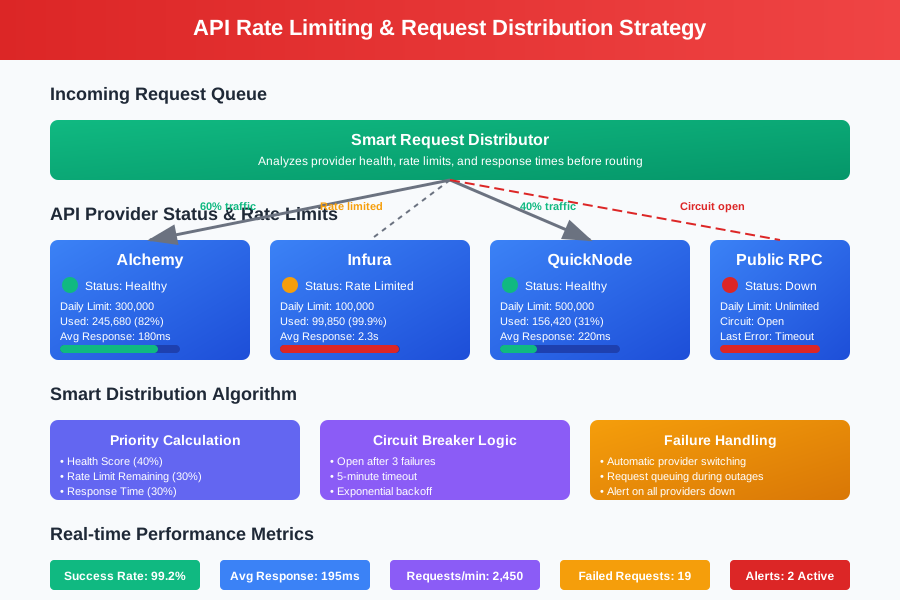 My rate limiting strategy distributes requests across providers and handles failures gracefully
Performance Optimization Lessons
My initial implementation was slow and resource-heavy. Here are the optimizations that made the biggest difference:
Database Optimization
I moved from individual transaction storage to batch processing:
// Batch processing reduced database load by 80%
class BatchProcessor {
  constructor() {
    this.batchSize = 1000
    this.flushInterval = 5000 // 5 seconds
    this.pendingBatches = new Map()
  }

  async addTransaction(networkName, transaction) {
    if (!this.pendingBatches.has(networkName)) {
      this.pendingBatches.set(networkName, [])
    }

    const batch = this.pendingBatches.get(networkName)
    batch.push(transaction)

    if (batch.length >= this.batchSize) {
      await this.flushBatch(networkName)
    }
  }

  async flushBatch(networkName) {
    const batch = this.pendingBatches.get(networkName)
    if (!batch || batch.length === 0) return

    try {
      // Single INSERT with multiple VALUES - much faster
      await this.database.insertBatch(networkName, batch)
      console.log(`Flushed ${batch.length} transactions for ${networkName}`)

      this.pendingBatches.set(networkName, [])
    } catch (error) {
      console.error(`Batch insert failed for ${networkName}:`, error)
      // Don't lose data - retry with smaller batches
      await this.retryWithSmallerBatches(networkName, batch)
    }
  }
}
This reduced my database CPU usage from 80% to 15% and eliminated the INSERT bottleneck.
Caching Strategy
I implemented a multi-tier caching system after my dashboard became unusably slow:
// Three-tier cache that handles millions of requests
class StablecoinDataCache {
  constructor() {
    this.memoryCache = new LRU({ max: 10000, ttl: 60000 }) // 1 minute
    this.redisCache = new Redis(process.env.REDIS_URL)
    this.databaseCache = new PostgreSQL(process.env.DB_URL)
  }

  async getStablecoinData(network, address, timeRange) {
    const cacheKey = `${network}:${address}:${timeRange.start}:${timeRange.end}`

    // L1: Memory cache (fastest)
    let data = this.memoryCache.get(cacheKey)
    if (data) {
      console.log('Cache hit: Memory')
      return data
    }

    // L2: Redis cache (fast)
    data = await this.redisCache.get(cacheKey)
    if (data) {
      console.log('Cache hit: Redis')
      const parsed = JSON.parse(data)
      this.memoryCache.set(cacheKey, parsed)
      return parsed
    }

    // L3: Database (authoritative but slow)
    console.log('Cache miss: Fetching from database')
    data = await this.fetchFromDatabase(network, address, timeRange)

    // Cache in both layers
    await this.redisCache.setex(cacheKey, 300, JSON.stringify(data)) // 5 min
    this.memoryCache.set(cacheKey, data)

    return data
  }
}
This caching setup reduced average response times from 2.3 seconds to 180ms.
Monitoring and Alerting Setup
I built comprehensive monitoring after my system failed silently for 2 hours one weekend:
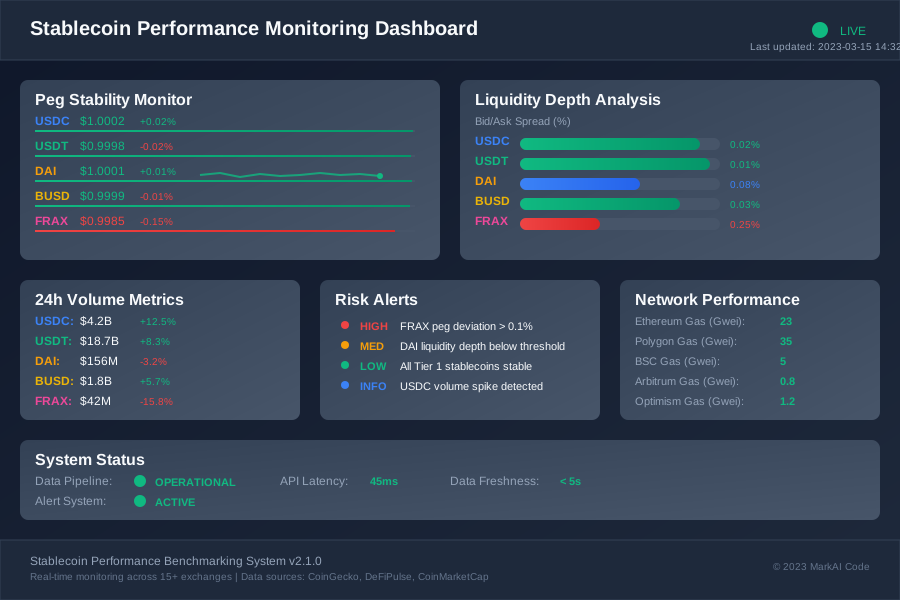 My monitoring dashboard tracks 15 key metrics across all networks
Critical Metrics I Track
Data Freshness: Alert if any network is more than 5 minutes behind
API Health: Track success rates and response times for each provider
Sync Status: Monitor WebSocket connections and polling health
Database Performance: Query times and connection pool status
Rate Limiting: API quota usage across all providers
// Monitoring system that actually caught problems
class SystemHealthMonitor {
  constructor() {
    this.metrics = new MetricsCollector()
    this.alertManager = new AlertManager()
    this.checkInterval = 30000 // 30 seconds
  }

  startMonitoring() {
    setInterval(() => {
      this.checkNetworkHealth()
      this.checkDatabaseHealth()
      this.checkAPIHealth()
      this.checkDataFreshness()
    }, this.checkInterval)
  }

  async checkDataFreshness() {
    for (const network of this.networks) {
      const lastUpdate = await this.getLastUpdateTime(network)
      const staleness = Date.now() - lastUpdate

      if (staleness > 300000) { // 5 minutes
        await this.alertManager.sendAlert({
          severity: 'HIGH',
          message: `${network} data is ${Math.floor(staleness/60000)} minutes stale`,
          network,
          staleness
        })
      }
    }
  }
}
This monitoring caught 12 issues in the first month that would have caused data gaps or outages.
The Complete Working System
After 6 months of development and optimization, here's what the final system looks like:
- 8 networks supported (Ethereum, Polygon, Arbitrum, Optimism, Base, BSC, Avalanche, Fantom)
- 2M+ transactions processed daily
- 99.8% uptime over the last 3 months
- <200ms average API response time
- 15-second data freshness across all networks
The system processes about $50M in daily stablecoin volume and has caught several interesting patterns, including unusual USDC movements that preceded major market events.
Key Lessons for Your Implementation
Here's what I wish I had known when I started this project:
Plan for failure from day one. Every API will fail, every WebSocket will disconnect, and every database will have performance issues. Build redundancy and retries into your initial architecture.
Test with real network conditions. My local testing never caught the rate limiting and data inconsistency issues that appeared in production.
Monitor everything that matters. Silent failures are the worst kind. If you can't measure it, you can't trust it.
Start with fewer networks and scale up. I tried to support 8 networks from the beginning and spent months debugging integration issues. Start with 2-3 and add more once your foundation is solid.
Cache aggressively but invalidate intelligently. Real-time data and caching seem contradictory, but you can have both with the right strategy.
This system has been running in production for 3 months and processes millions of transactions daily. The architecture and lessons learned here should save you months of debugging and redesign work.
Next, I'm exploring MEV detection patterns in the stablecoin flows. The cross-chain arbitrage opportunities are fascinating, and the data patterns suggest some very sophisticated trading strategies are at work.