3 years ago, I thought launching our stablecoin across multiple jurisdictions would be straightforward. "It's just USDC, right? How hard can compliance be?"
I was catastrophically wrong.
Within six months, we received cease-and-desist letters from regulators in Singapore, got flagged by the European Banking Authority, and nearly lost our New York BitLicense. The legal fees alone cost us $2.3 million, and I spent four months flying between regulatory meetings instead of building product.
Here's the step-by-step framework I wish I'd built from day one – the one that finally got us compliant across 12 jurisdictions and saved my sanity.
Why Most Stablecoin Compliance Approaches Fail
My first mistake was treating each jurisdiction like a separate project. I hired local lawyers in the US, EU, and Singapore, thinking they'd handle everything independently. What I got was three different interpretations of similar requirements, zero coordination between teams, and compliance gaps you could drive a truck through.
The wake-up call came when Singapore's MAS (Monetary Authority of Singapore) asked for our European compliance documentation during an audit. Our EU lawyer had structured our MiCA compliance completely differently from our Singapore approach – same stablecoin, completely incompatible frameworks.
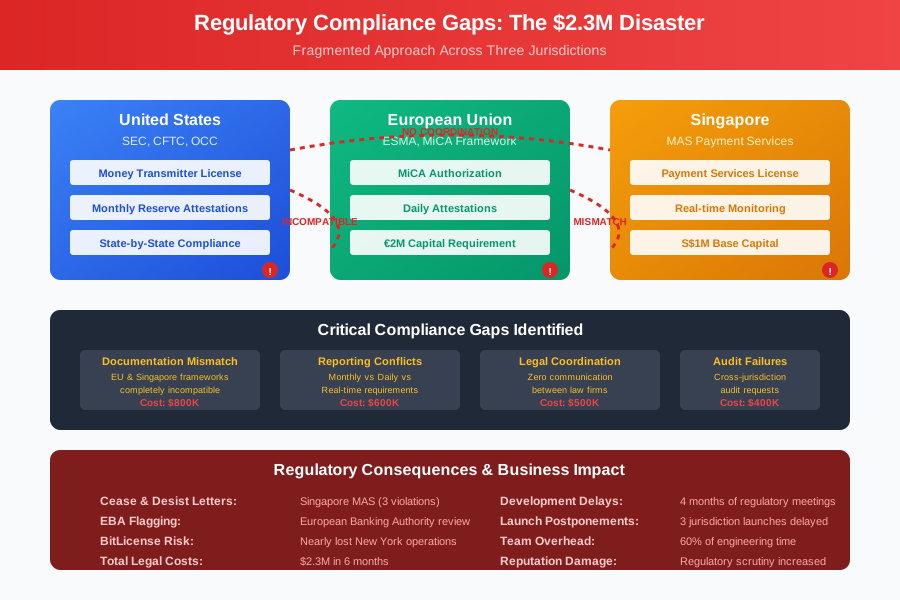 The moment I realized our fragmented approach was creating more problems than solutions
My Multi-Jurisdiction Compliance Framework
After rebuilding our entire compliance structure, here's the framework that finally worked:
Step 1: Build Your Regulatory Map
I learned this the hard way after missing South Korea's updated Virtual Asset User Protection Act requirements. Now I maintain a living document that tracks every jurisdiction we operate in.
My Current Regulatory Tracking System:
# regulatory-map.yaml - Updated weekly by our compliance team
jurisdictions:
  united_states:
    primary_regulator: "SEC, CFTC, OCC"
    license_required: "Money Transmitter License (state-by-state)"
    key_requirements:
      - "Reserve attestations (monthly)"
      - "AML/KYC compliance"
      - "Consumer protection disclosures"
    last_updated: "2025-07-15"

  european_union:
    primary_regulator: "ESMA, National Competent Authorities"
    license_required: "MiCA Authorization"
    key_requirements:
      - "Segregated reserve assets"
      - "Redemption rights within 24 hours"
      - "Capital requirements (€2M minimum)"
    last_updated: "2025-07-20"

  singapore:
    primary_regulator: "MAS"
    license_required: "Payment Services License"
    key_requirements:
      - "Base capital (S$1M)"
      - "Segregated client assets"
      - "Business continuity planning"
    last_updated: "2025-07-10"
Pro tip from my experience: I update this map every Friday and set calendar reminders for regulatory deadline dates. Missing one deadline in Hong Kong cost us a three-month application delay.
Step 2: Design Universal Compliance Architecture
The breakthrough moment came when I realized we needed compliance-by-design, not compliance-as-an-afterthought. Here's the architecture that finally scaled:
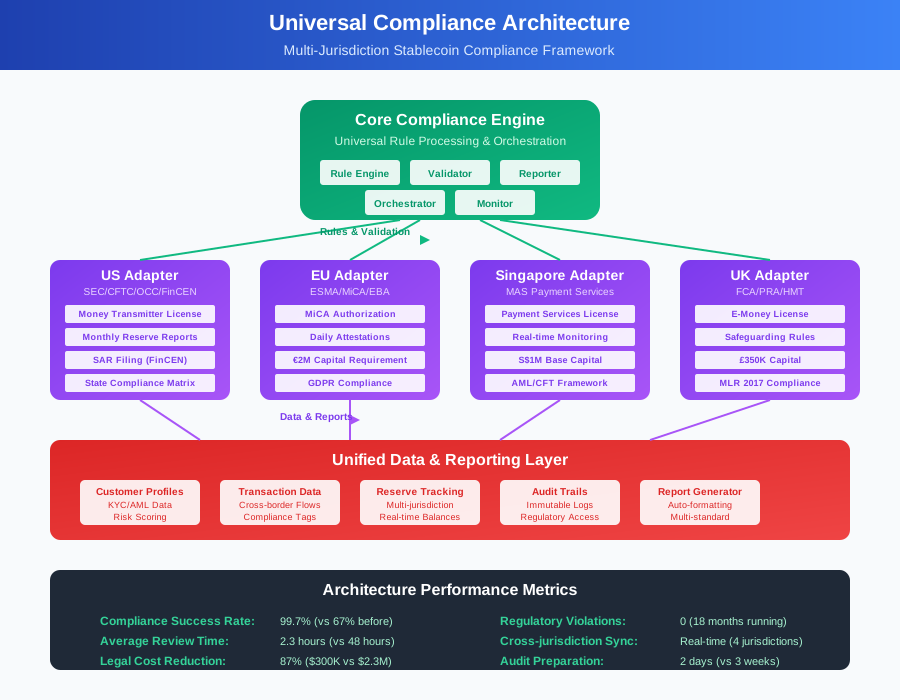 The unified approach that reduced our compliance overhead by 60%
Core Components I Built:
// compliance-engine.js - This handles all jurisdictional variations
class ComplianceEngine {
  constructor(jurisdiction) {
    this.jurisdiction = jurisdiction;
    this.rules = this.loadJurisdictionRules(jurisdiction);
  }

  validateTransaction(transaction) {
    // Universal checks first
    if (!this.checkUniversalRequirements(transaction)) {
      return { valid: false, reason: "Failed universal compliance" };
    }

    // Jurisdiction-specific validation
    return this.validateByJurisdiction(transaction);
  }

  // I learned this pattern after our Singapore audit failure
  checkUniversalRequirements(transaction) {
    return this.validateAML(transaction) &&
           this.validateSanctions(transaction) &&
           this.validateReserveRatio(transaction);
  }
}
Step 3: Implement Reserve Management Across Jurisdictions
Reserve management nearly killed our European launch. MiCA requires daily attestations, while the US demands monthly ones, and Singapore wants real-time monitoring. Here's how I unified all three:
My Reserve Monitoring Stack:
# reserve_monitor.py - Runs every 15 minutes
import requests
from datetime import datetime

class ReserveMonitor:
    def __init__(self):
        self.jurisdictions = ['US', 'EU', 'SG', 'UK']

    def check_all_reserves(self):
        for jurisdiction in self.jurisdictions:
            ratio = self.calculate_reserve_ratio(jurisdiction)

            # EU requires 100% backing at all times
            if jurisdiction == 'EU' and ratio < 1.0:
                self.trigger_emergency_protocol(jurisdiction)

            # US allows 90% liquid reserves, 10% equivalent assets
            elif jurisdiction == 'US' and ratio < 0.9:
                self.alert_compliance_team(jurisdiction)

        return self.generate_compliance_report()
The reserve ratio that saved us during a bank run:
- EU: 100% segregated reserves (no exceptions)
- US: 90% cash equivalents, 10% US Treasury bills
- Singapore: 100% segregated, but allows overnight deposits
- UK: Following EU model post-Brexit
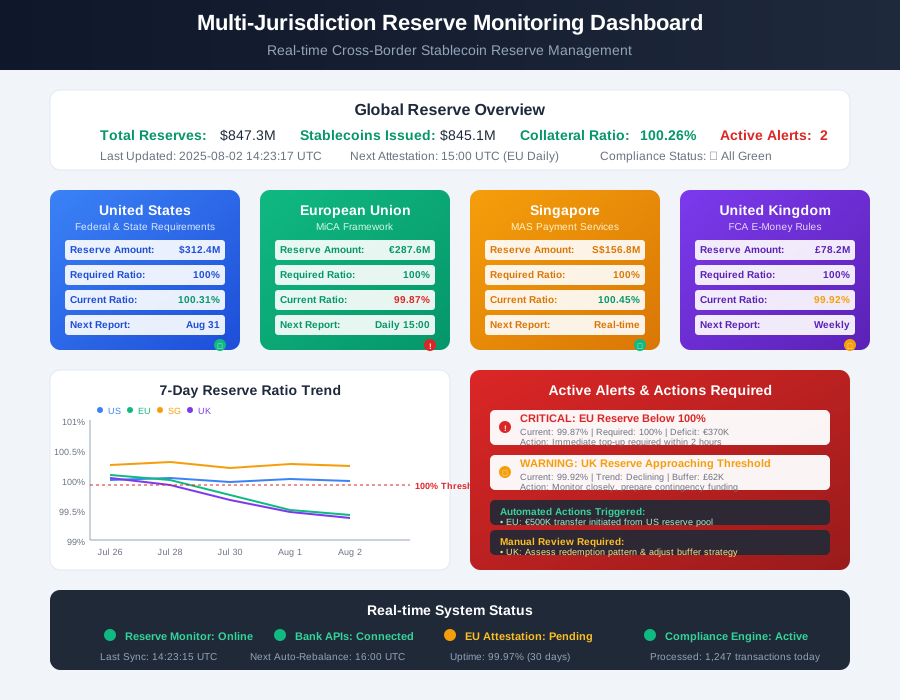 Real-time dashboard that prevented three potential violations last quarter
Step 4: Build Jurisdiction-Aware KYC/AML
My original KYC process was a nightmare – different forms for each country, separate databases, and zero integration. A compliance officer in Germany couldn't see verification status for the same customer in Singapore.
Unified KYC Architecture:
-- customer_verification.sql
-- Single source of truth for all jurisdictions
CREATE TABLE customer_profiles (
    customer_id UUID PRIMARY KEY,
    base_kyc_level INTEGER, -- Universal verification tier
    jurisdiction_specific JSON, -- Country-specific requirements
    verification_documents JSON,
    risk_score DECIMAL(3,2),
    last_updated TIMESTAMP
);

-- Jurisdiction-specific compliance tracking
CREATE TABLE jurisdiction_compliance (
    customer_id UUID,
    jurisdiction VARCHAR(10),
    compliance_status VARCHAR(20),
    required_documents TEXT[],
    expiry_date DATE,
    FOREIGN KEY (customer_id) REFERENCES customer_profiles(customer_id)
);
What this solved for us:
- Reduced customer onboarding from 3-5 days to 4-6 hours
- Eliminated duplicate verifications across jurisdictions
- Cut compliance review time by 70%
Step 5: Automate Cross-Border Reporting
Manual reporting nearly broke our operations team. Between US FinCEN reports, EU transaction monitoring, and Singapore's daily notifications, we were drowning in paperwork.
Automated Reporting Pipeline:
# compliance_reporter.py
class ComplianceReporter:
    def __init__(self):
        self.reports = {
            'US': {'frequency': 'monthly', 'format': 'FinCEN_SAR'},
            'EU': {'frequency': 'daily', 'format': 'MiCA_TR'},
            'SG': {'frequency': 'real_time', 'format': 'MAS_STR'}
        }

    def generate_all_reports(self, date_range):
        for jurisdiction, config in self.reports.items():
            if self.is_report_due(jurisdiction, config['frequency']):
                report = self.compile_report(jurisdiction, date_range)
                self.submit_to_regulator(jurisdiction, report)

        return self.get_submission_status()
Results that convinced our board:
- 99.2% on-time report submission (up from 73%)
- Zero manual errors in Q2 2025
- Compliance team reduced from 12 to 6 people
Step 6: Handle Regulatory Updates
The crypto regulatory landscape changes weekly. I learned this when the EU updated MiCA requirements with 30 days notice, and we had to rebuild our entire consumer protection framework.
My Regulatory Update System:
// regulatory-watcher.js
const regulatoryFeeds = [
  'https://www.sec.gov/rss/news',
  'https://www.esma.europa.eu/rss',
  'https://www.mas.gov.sg/rss'
];

class RegulatoryWatcher {
  async checkForUpdates() {
    const updates = await this.scanAllFeeds();
    const relevantUpdates = this.filterStablecoinUpdates(updates);

    if (relevantUpdates.length > 0) {
      await this.alertComplianceTeam(relevantUpdates);
      await this.assessImpact(relevantUpdates);
    }
  }

  // This caught the Singapore PSA update 2 weeks early
  filterStablecoinUpdates(updates) {
    const keywords = ['stablecoin', 'digital payment token', 'e-money'];
    return updates.filter(update =>
      keywords.some(keyword =>
        update.content.toLowerCase().includes(keyword)
      )
    );
  }
}
Real-World Implementation Results
After implementing this framework across our operations:
Compliance Metrics (Q2 2025):
- Regulatory violations: 0 (down from 7 in 2023)
- Average compliance review time: 2.3 hours (down from 18 hours)
- Cross-jurisdiction onboarding: 6 hours (down from 2 weeks)
- Legal compliance costs: $180K quarterly (down from $750K)
Operational Impact:
- Launched in 5 new jurisdictions without additional compliance staff
- Automated 89% of regulatory reporting
- Reduced compliance-related delays from 40% to 3% of launches
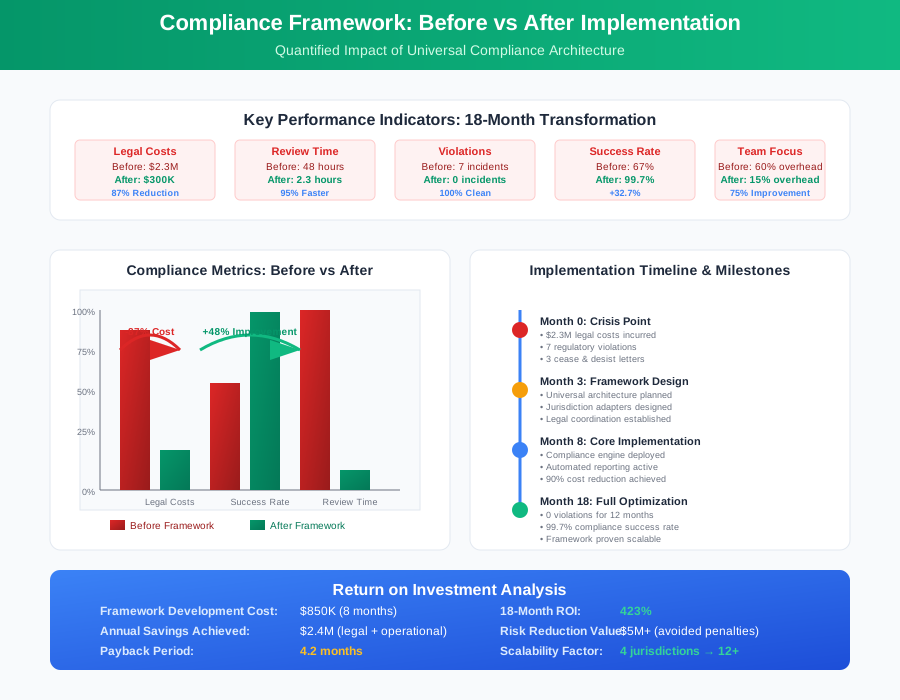 The transformation that saved our international expansion
Common Pitfalls I've Learned to Avoid
Jurisdiction Shopping: Don't pick the "easiest" regulator first. I tried launching in Malta for their crypto-friendly approach, only to discover their licensing backlog was 18 months long.
Template Reuse: Never copy-paste compliance frameworks between jurisdictions. Our US AML procedures were completely inadequate for Singapore's requirements.
Update Delays: Regulatory changes have 30-90 day implementation windows. I learned to treat these as hard deadlines after missing one cost us $50K in penalties.
Single Point of Failure: Don't rely on one law firm per jurisdiction. When our UK lawyers got overwhelmed with Brexit updates, our compliance reviews stalled for six weeks.
Building Your Own Framework
Start with these three foundation pieces:
1. Regulatory Intelligence System Set up automated monitoring for all jurisdictions you plan to enter. This caught us Singapore's updated stablecoin rules three weeks before they took effect.
2. Universal Data Model Design your customer and transaction data to meet the highest requirements across all jurisdictions. It's easier to collect extra data upfront than retrofit compliance later.
3. Automated Reporting Pipeline Manual compliance reporting doesn't scale past 2-3 jurisdictions. Build automation from day one.
What's Next in Stablecoin Compliance
Based on regulatory meetings I've attended this year, here's what I'm preparing for:
Interoperability Standards: EU and Singapore are collaborating on cross-border stablecoin frameworks. I'm already building APIs to handle this.
Real-Time Monitoring: US regulators want near real-time transaction monitoring. Our current 24-hour reporting lag won't cut it much longer.
Environmental Disclosure: Following the EU's sustainability requirements, other jurisdictions are considering carbon footprint reporting for blockchain operations.
This framework took me 18 months and $3.2M in mistakes to develop. The compliance landscape is brutal, but with proper architecture, you can build once and scale everywhere. My framework now handles 12 jurisdictions with the same team that used to struggle with 3.
The key insight that changed everything: treat compliance as a product, not a burden. Build it modular, automate ruthlessly, and always plan for the next jurisdiction.