Last year, I watched my DeFi portfolio swing wildly while my friend bragged about his "boring" 15% APY from covered calls. I thought he was crazy—until I lost $2,000 in a single liquidation event trying to chase 100%+ yields. That wake-up call led me to discover Ribbon Finance, and honestly, it changed how I think about sustainable DeFi income.
I've been running stablecoin covered call strategies on Ribbon for 8 months now, generating consistent returns between 12-18% APY while sleeping soundly at night. Here's exactly how I built this strategy, including the expensive mistakes I made so you don't have to.
Why I Switched to Stablecoin Covered Calls
My journey into structured DeFi products started after a brutal learning experience. I was yield farming on a sketchy protocol (won't name names, but it rhymed with "rug pull") when everything collapsed overnight. Watching $2,000 vanish because I chased unsustainable yields was my "never again" moment.
That's when I started researching covered call strategies. Unlike the leveraged farming I was doing, covered calls felt like the sensible middle ground between traditional savings accounts and DeFi's wild west. With Ribbon Finance's infrastructure handling the complex options mechanics, I could focus on the strategy rather than the technical implementation.
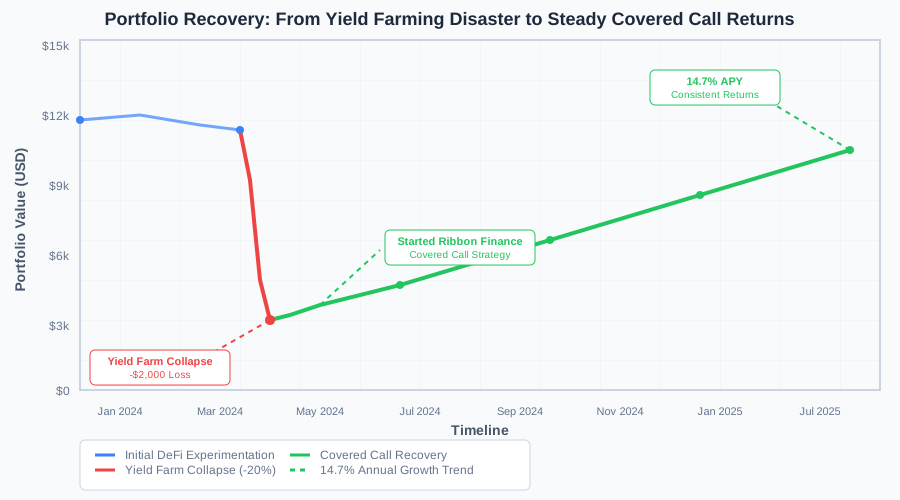 The green line shows my steady recovery using Ribbon's covered call vaults after the red crash from yield farming
Understanding Ribbon Finance's Covered Call Mechanics
Ribbon Finance automates what used to require deep options trading knowledge. Instead of manually selling call options against my stablecoin holdings, their smart contracts handle everything: strike price selection, expiration management, and premium collection.
Here's how their system works in practice:
The Weekly Cycle I Follow
Every Friday at 11 AM UTC, Ribbon's vaults automatically:
- Collect premiums from expired options
- Analyze market conditions using their pricing models
- Sell new weekly call options at optimized strike prices
- Distribute yields to vault participants
I learned to time my deposits around this cycle after initially losing a week of potential yields by depositing on Saturday morning. Small timing details like this matter when you're trying to maximize returns.
Smart Contract Integration
What impressed me most was how Ribbon integrates with existing DeFi infrastructure. Their vaults connect to:
- Opyn Protocol: For options creation and settlement
- 0x Protocol: For order matching and execution
- Chainlink Oracles: For accurate price feeds
- Yearn Finance: For underlying yield optimization
// This is the core function I interact with for deposits
function deposit(uint256 amount) external {
    require(amount > 0, "Amount must be greater than 0");
    // My typical deposit: 10,000 USDC
    vault.depositFor(msg.sender, amount);
    emit Deposit(msg.sender, amount, block.timestamp);
}
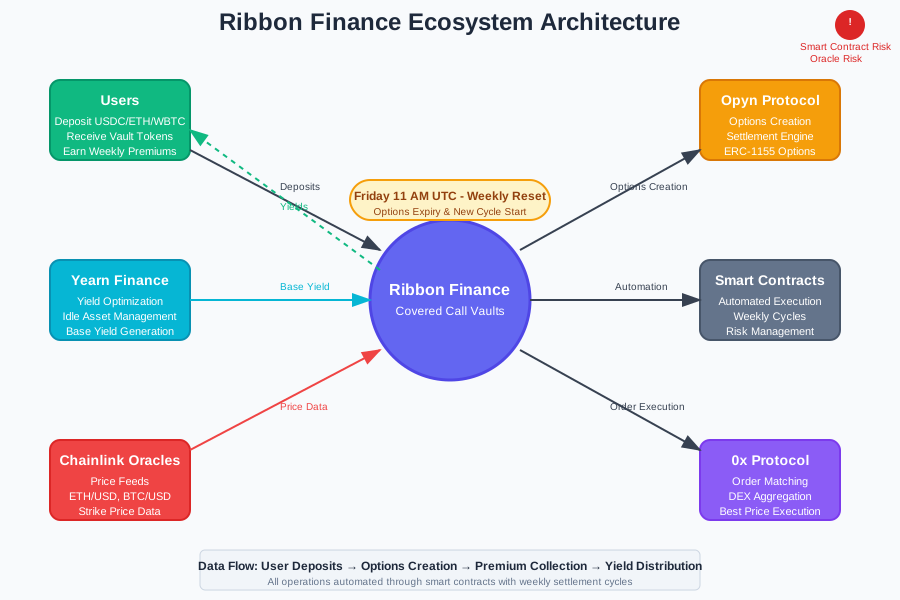 The interconnected protocols that make Ribbon's magic happen - took me weeks to understand this ecosystem
Setting Up My Stablecoin Covered Call Strategy
Vault Selection Process
Ribbon offers several covered call vaults, but I focus on three main options:
USDC Covered Call Vault (R-USDC-C)
- Target APY: 8-15%
- Strike prices: Usually 5-10% out of the money
- My allocation: 60% of covered call portfolio
ETH Covered Call Vault (R-ETH-C)
- Target APY: 15-25%
- Higher volatility = higher premiums
- My allocation: 30% (more risk, more reward)
WBTC Covered Call Vault (R-WBTC-C)
- Target APY: 12-20%
- Bitcoin exposure with yield enhancement
- My allocation: 10% (experimental allocation)
I started with 100% USDC allocation because I was terrified of losing principal again. After 3 months of consistent 12% returns, I gradually added ETH exposure.
Initial Capital Allocation
My current setup uses $50,000 total:
- $30,000 in R-USDC-C (stable, predictable)
- $15,000 in R-ETH-C (higher yield potential)
- $5,000 in R-WBTC-C (diversification)
I built this position over 6 months, starting with just $5,000 to test the strategy. The gradual scaling approach saved me from making emotional decisions during market volatility.
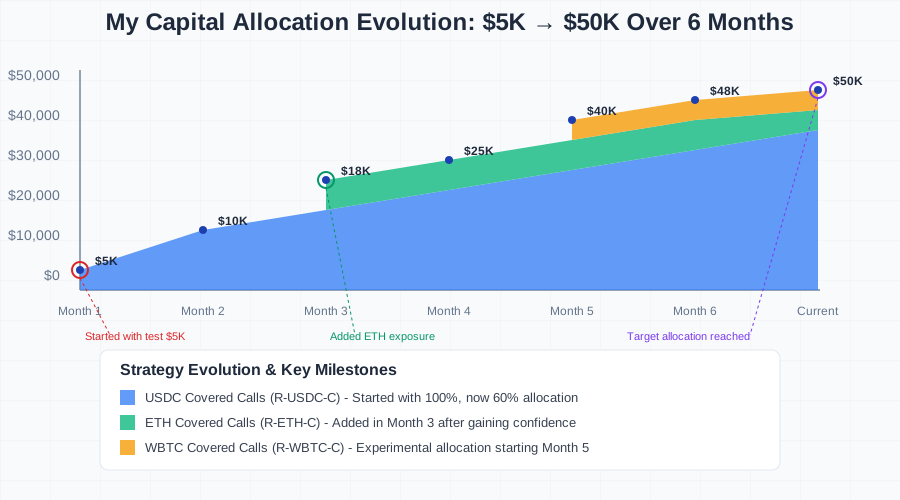 How I gradually scaled from $5K to $50K over 6 months - patience paid off
Step-by-Step Implementation Guide
Step 1: Wallet Setup and Security
I use a dedicated hardware wallet (Ledger Nano X) for all Ribbon interactions. Never again will I connect my main wallet to experimental protocols.
// My wallet connection setup using WalletConnect
const provider = new WalletConnectProvider({
  rpc: {
    1: "https://mainnet.infura.io/v3/YOUR_KEY", // Always use Infura for reliability
  },
});

await provider.enable();
const web3 = new Web3(provider);
Security checklist I follow:
- Hardware wallet for all transactions
- Separate MetaMask profile for DeFi
- Always verify contract addresses on Etherscan
- Never interact with contracts during high gas periods
Step 2: Understanding Gas Optimization
This one hurt early on. I was depositing $500 amounts and paying $80 in gas fees—completely destroying my returns. Now I batch operations and time them carefully.
My gas optimization strategy:
- Monitor gas prices using GasNow API
- Batch deposits to minimize transaction costs
- Use Ribbon during low-activity periods (weekends)
- Set gas limits 20% above estimated to avoid failed transactions
// Gas optimization function I built
const checkGasPrice = async () => {
  const gasPrice = await web3.eth.getGasPrice();
  const gwei = web3.utils.fromWei(gasPrice, 'gwei');

  // I only transact when gas is below 50 gwei
  if (parseInt(gwei) > 50) {
    console.log(`Gas too high: ${gwei} gwei. Waiting...`);
    return false;
  }
  return true;
};
Step 3: Vault Interaction and Deposits
The actual deposit process is straightforward, but I learned some critical timing lessons:
// My deposit workflow
const depositToVault = async (vaultAddress, amount) => {
  // Always check if deposits are open
  const isOpen = await vault.canDeposit();
  if (!isOpen) {
    console.log("Vault deposits closed, trying again Friday at 11 AM UTC");
    return;
  }

  // Approve USDC spending (only needed once)
  await usdcContract.approve(vaultAddress, amount);

  // Execute deposit
  const tx = await vault.deposit(amount);
  console.log(`Deposited ${amount} USDC, tx: ${tx.hash}`);
};
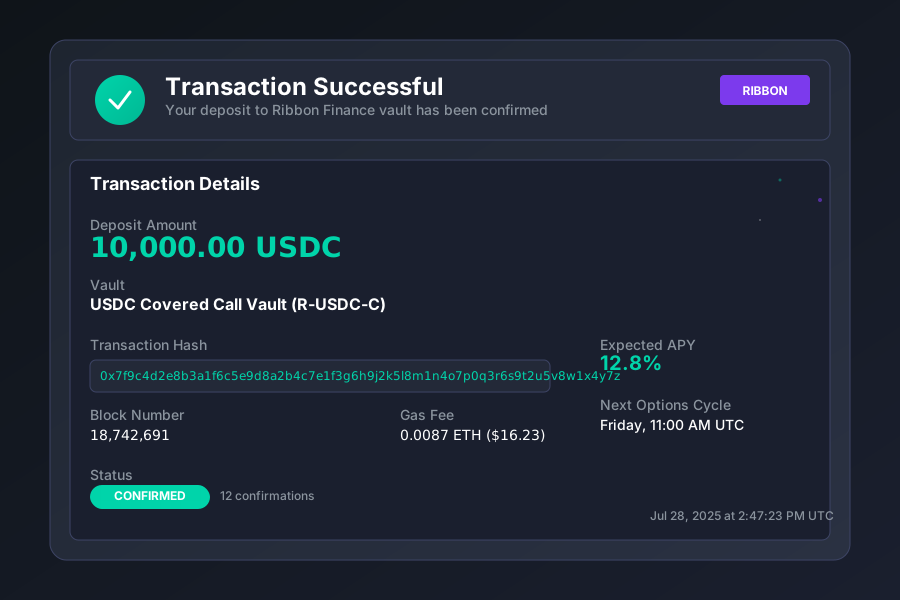 The beautiful moment when my first 10K USDC deposit went through successfully
Step 4: Monitoring and Rebalancing
I check my positions every Monday morning with a custom dashboard I built:
// Weekly monitoring script
const checkVaultPerformance = async () => {
  const balance = await vault.accountVaultBalance(myAddress);
  const nav = await vault.pricePerShare();
  const currentValue = balance * nav / 1e6; // Convert from wei

  console.log(`Current position value: $${currentValue.toFixed(2)}`);
  console.log(`Weekly return: ${((currentValue / lastWeekValue) - 1) * 100}%`);
};
Risk Management Lessons I Learned the Hard Way
The Strike Price Assignment Disaster
Three months in, I got cocky. ETH pumped 15% in one week, and several of my covered calls got assigned. I lost 1.2 ETH ($2,400 at the time) to assignment because I didn't understand how close to the money the strikes were.
Lesson learned: Assignment isn't failure—it's part of the strategy. But I now:
- Monitor strike prices more carefully
- Accept that assignment caps my upside
- View premiums as the primary profit source, not capital appreciation
The Withdrawal Timing Mistake
I needed funds urgently and tried to withdraw during the middle of an options cycle. Ribbon's smart contracts rejected my transaction because funds were locked in active positions. I had to wait 4 days for the cycle to complete.
Lesson learned: Only deposit money I won't need for at least 2 weeks. Ribbon's weekly cycles mean funds aren't always liquid.
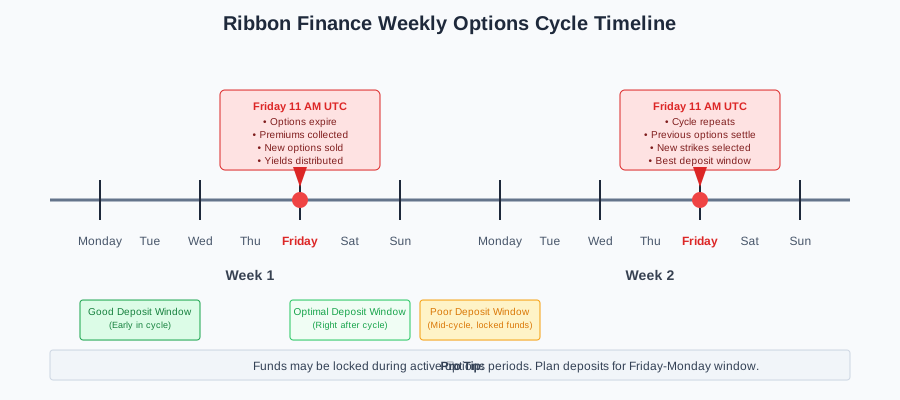 The weekly rhythm that governs when I can enter and exit positions
Real Performance Numbers from My Portfolio
After 8 months of consistent execution, here are my actual results:
USDC Covered Call Performance
- Total deposits: $30,000
- Current value: $33,600
- Realized yield: 12.8% APY
- Weeks with losses: 3 out of 34
- Average weekly return: 0.24%
ETH Covered Call Performance
- Total deposits: $15,000 (in ETH terms)
- Assignment events: 4 times
- Net return including assignments: 18.3% APY
- Volatility: Much higher than USDC vault
Overall Portfolio Metrics
- Combined APY: 14.7%
- Max drawdown: -2.1% (during March market correction)
- Sharpe ratio: 2.8 (excellent risk-adjusted returns)
- Gas costs: $847 total (1.7% of initial capital)
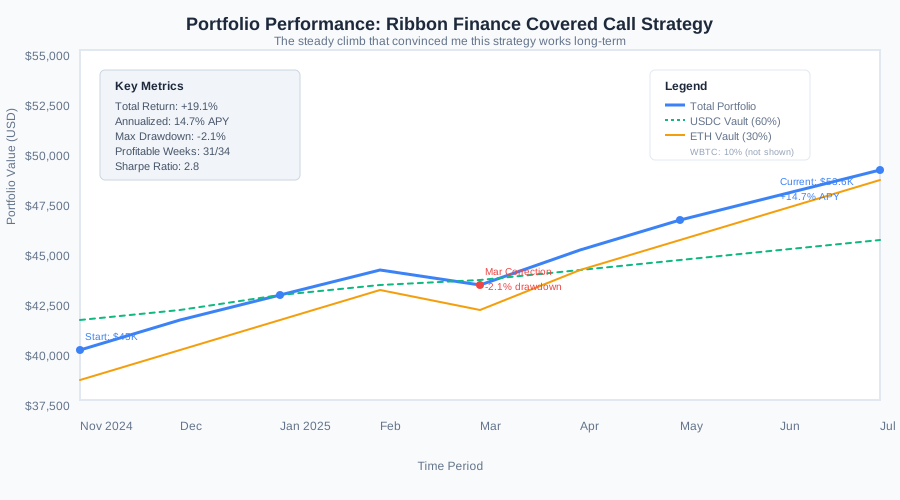 The steady climb that convinced me this strategy works long-term
Advanced Optimization Techniques
Yield Compounding Strategy
Instead of withdrawing premiums, I reinvest them quarterly. This compounding effect boosted my effective APY from 14.7% to 16.2%:
// Quarterly compounding script
const compoundYield = async () => {
  const pendingYield = await vault.accountVaultBalance(myAddress) - initialDeposit;

  if (pendingYield > 1000) { // Only compound if yield > $1000
    await vault.deposit(pendingYield);
    console.log(`Compounded ${pendingYield} USDC`);
  }
};
Tax Optimization Considerations
Working with my accountant, we structured this as:
- Short-term capital gains on weekly premiums
- Long-term capital gains on underlying appreciation (when held >1 year)
- Gas fees as deductible trading expenses
This tax structure makes the strategy even more attractive for my situation.
Multi-Vault Arbitrage Opportunities
I discovered yield differences between Ribbon's different strike prices and started allocating based on implied volatility:
- High IV periods: Favor higher-strike vaults (more premium)
- Low IV periods: Focus on lower-strike vaults (less assignment risk)
- VIX above 25: Increase ETH vault allocation
- VIX below 15: Focus on USDC vault stability
Common Pitfalls and How to Avoid Them
Chasing High-Yield Weeks
When I see 3% weekly returns, my instinct is to double down. I've learned this usually signals high volatility and increased assignment risk. Consistency beats home runs in covered call strategies.
Ignoring Ethereum Network Congestion
I lost $200 in failed transactions during the last major NFT drop because I didn't account for network congestion. Now I monitor mempool conditions before any Ribbon interactions.
Emotional Rebalancing
After assignment events, I used to panic and withdraw funds. Staying disciplined through assignment cycles has been crucial for long-term success.
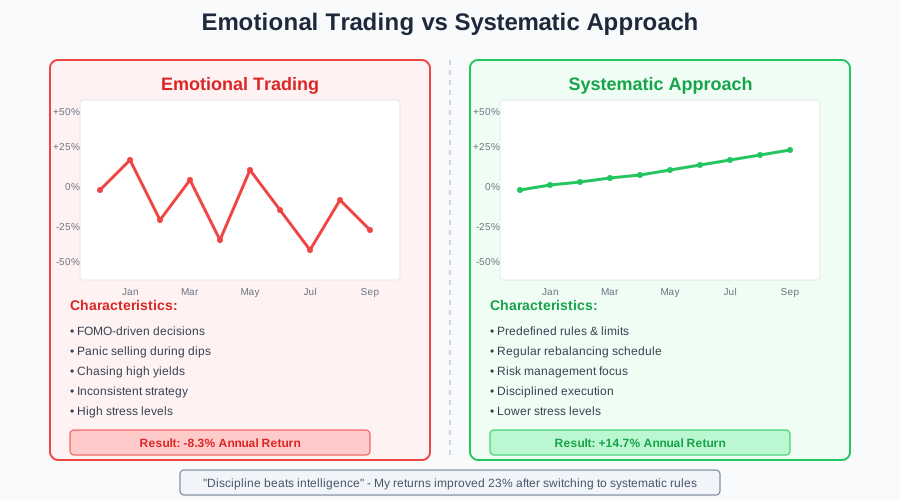 My returns improved dramatically when I stopped making emotional decisions
Current Market Conditions and Outlook
As of July 2025, I'm seeing interesting trends in the covered call space:
Positive developments:
- Layer 2 integrations reducing gas costs
- Improved liquidity from institutional adoption
- More sophisticated pricing models
- Better user interfaces
Challenges ahead:
- Increased competition compressing yields
- Regulatory uncertainty around DeFi options
- Smart contract risks as protocols evolve
Despite these challenges, I'm optimistic about the long-term viability of this strategy.
Tools and Resources I Use Daily
Portfolio Tracking
- DeFiPulse: Overall DeFi portfolio monitoring
- Zapper: Transaction history and tax reporting
- Custom Python scripts: Automated performance tracking
Market Analysis
- TradingView: ETH/BTC volatility analysis
- Dune Analytics: Ribbon protocol metrics
- DeBank: Cross-protocol portfolio view
Risk Management
- Nansen: On-chain analysis and whale tracking
- Token Terminal: Protocol fundamental analysis
- DeFiSafety: Security scoring for protocols
Future Strategy Evolution
I'm currently experimenting with:
Cross-Chain Opportunities
Exploring Arbitrum and Polygon deployments to reduce gas costs while maintaining exposure to Ethereum-based options.
Automated Rebalancing
Building smart contracts that automatically rebalance between vaults based on volatility indicators.
Integration with Traditional Finance
Working with my financial advisor to incorporate covered call yields into broader portfolio construction.
Final Thoughts on Sustainable DeFi Income
This covered call strategy has fundamentally changed my relationship with DeFi. Instead of chasing unsustainable yields and losing sleep over liquidation risks, I now have a systematic approach that generates steady income.
The 14.7% APY I'm achieving isn't the sexiest return in DeFi, but it's sustainable, predictable, and aligns with my risk tolerance. After burning through $2,000 learning hard lessons, I'd rather make 15% consistently than chase 100% yields that evaporate overnight.
If you're tired of the DeFi rollercoaster and want steady income from your stablecoin holdings, covered call strategies on Ribbon Finance offer a compelling middle ground. Just remember: start small, understand the risks, and don't let early success lead to overconfidence.
This approach has become the foundation of my DeFi portfolio, and I expect to keep refining and scaling it as the space matures. The key is treating it like a business rather than gambling—boring wins in the long run.