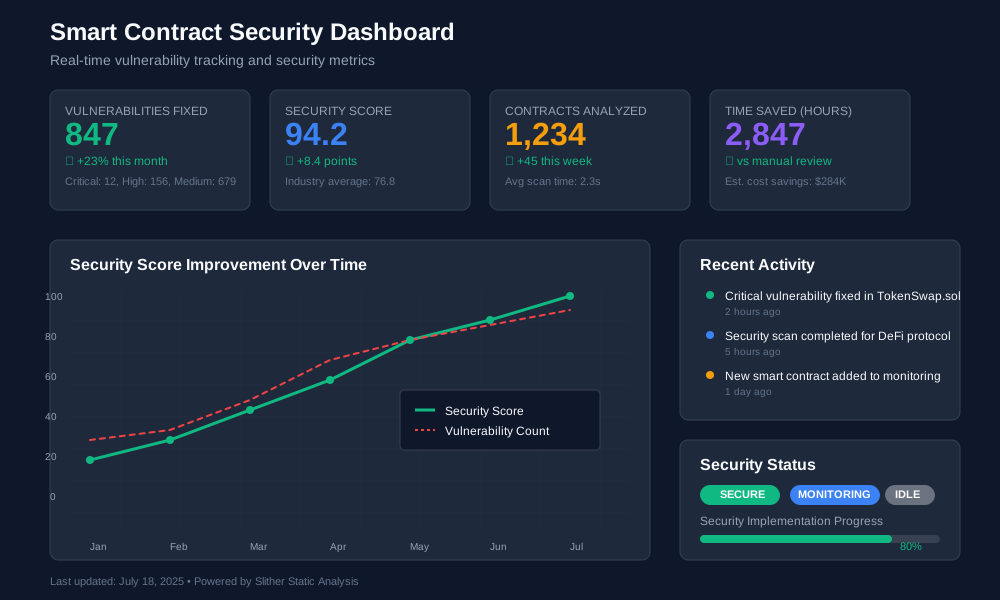
Your smart contract just drained someone's wallet faster than a teenager with a credit card at the mall. Sound familiar? Welcome to the wild world of smart contract vulnerabilities, where one missing line of code can cost millions.
Slither smart contract analysis saves developers from these expensive nightmares. This static analysis tool catches security vulnerabilities before they reach production, protecting both your reputation and your users' funds.
This guide shows you exactly how to use Slither for comprehensive security testing. You'll learn installation, configuration, vulnerability detection, and advanced analysis techniques that professional auditors use daily.
What Is Slither Smart Contract Analysis?
Slither is a static analysis framework for Solidity smart contracts. Created by Trail of Bits, it examines your code without executing it, identifying potential security vulnerabilities and code quality issues.
Why Smart Contract Security Testing Matters
Smart contracts handle billions of dollars in cryptocurrency. Unlike traditional software, you cannot easily patch deployed contracts. Vulnerability detection before deployment prevents:
- Financial losses from exploits
- Reputation damage
- Legal complications
- User trust erosion
Slither vs Other Security Tools
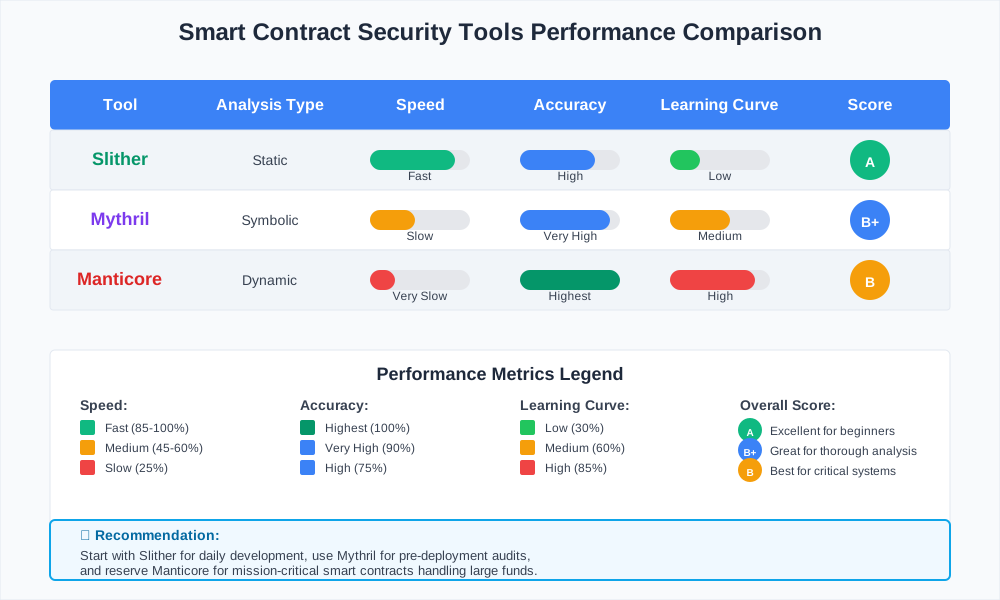
| Tool | Analysis Type | Speed | Accuracy | Learning Curve |
|---|---|---|---|---|
| Slither | Static | Fast | High | Low |
| Mythril | Symbolic | Slow | Very High | Medium |
| Manticore | Dynamic | Very Slow | Highest | High |
Installing Slither for Security Analysis
Prerequisites
Before installing Slither, ensure you have:
- Python 3.6 or higher
- Node.js and npm
- Solidity compiler (solc)
Step-by-Step Installation
Method 1: Using pip (Recommended)
# Install Slither via pip
pip install slither-analyzer

# Verify installation
slither --version
Method 2: From Source
# Clone the repository
git clone https://github.com/crytic/slither.git
cd slither

# Install dependencies
pip install .

# Test installation
python -m slither --help
Configuring Slither Settings
Create a .slither.config.json file in your project root:
{
  "detectors_to_exclude": ["naming-convention"],
  "exclude_dependencies": true,
  "exclude_informational": false,
  "exclude_low": false,
  "exclude_medium": false,
  "exclude_high": false,
  "json": "slither-report.json"
}
This configuration excludes naming convention warnings while maintaining all security-focused detectors.
Basic Slither Smart Contract Analysis
Your First Security Scan
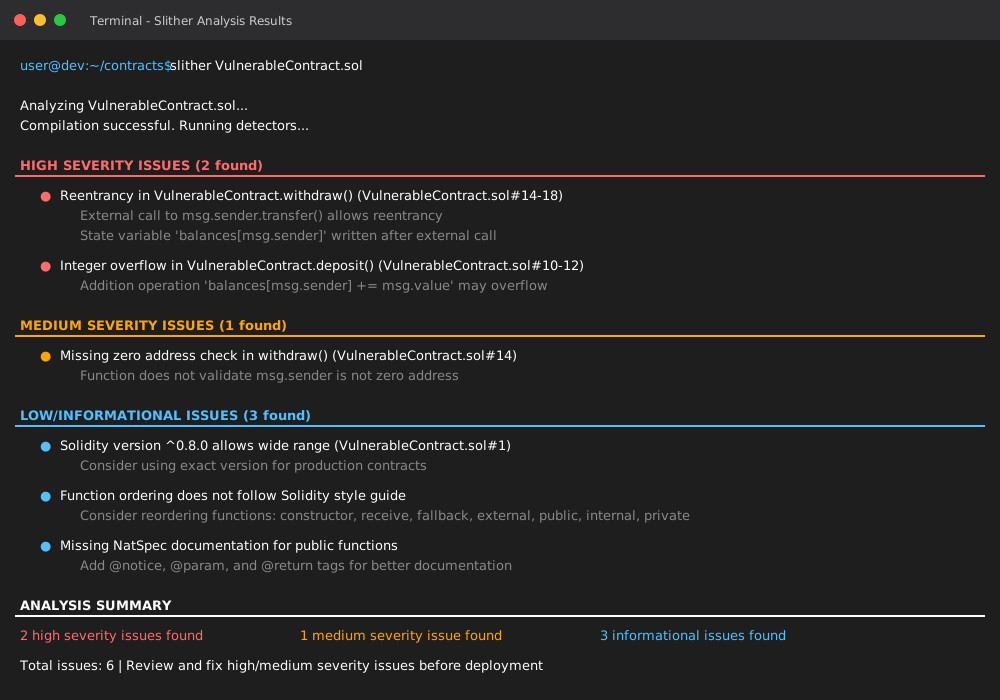
Let's analyze a simple vulnerable contract:
// VulnerableContract.sol
pragma solidity ^0.8.0;

contract VulnerableContract {
    mapping(address => uint256) public balances;

    function deposit() public payable {
        balances[msg.sender] += msg.value; // Potential overflow
    }

    function withdraw(uint256 amount) public {
        require(balances[msg.sender] >= amount);
        balances[msg.sender] -= amount;
        payable(msg.sender).transfer(amount); // Reentrancy vulnerability
    }
}
Run Slither analysis:
# Basic scan
slither VulnerableContract.sol

# Scan with specific output format
slither VulnerableContract.sol --json slither-report.json
Understanding Slither Output
Slither categorizes findings by severity:
High Severity Issues:
- Reentrancy vulnerabilities
- Integer overflows/underflows
- Unchecked external calls
Medium Severity Issues:
- Missing zero address checks
- Unprotected state changes
- Gas optimization opportunities
Low/Informational Issues:
- Code style violations
- Best practice recommendations
- Documentation suggestions
Advanced Vulnerability Detection Techniques
Custom Detector Configuration
Enable specific detectors only:
# Run only reentrancy detection
slither contract.sol --detect reentrancy-eth

# Multiple specific detectors
slither contract.sol --detect reentrancy-eth,integer-overflow
Create custom detector exclusions:
# Exclude low-priority findings
slither contract.sol --exclude-low --exclude-informational

# Focus on critical issues only
slither contract.sol --exclude-low --exclude-medium --exclude-informational
Analyzing Complex Smart Contract Systems
Multi-file project analysis:
# Analyze entire project directory
slither ./contracts/

# Analyze with dependency mapping
slither . --compile-force-framework hardhat
Integration with build frameworks:
# Hardhat projects
slither . --hardhat-artifacts-directory artifacts

# Truffle projects
slither . --truffle-version 5
Slither Printers for Deep Analysis
Slither includes specialized printers for detailed code examination:
# Function call graph
slither contract.sol --print call-graph

# Contract inheritance tree
slither contract.sol --print inheritance-graph

# State variable dependencies
slither contract.sol --print vars-and-auth
Interpreting Security Analysis Results
Critical Vulnerability Examples
Reentrancy Detection:
// Before: Vulnerable to reentrancy
function withdraw(uint256 amount) public {
    require(balances[msg.sender] >= amount);
    balances[msg.sender] -= amount;        // State change after external call
    payable(msg.sender).transfer(amount);  // External call
}

// After: Reentrancy protection
function withdraw(uint256 amount) public nonReentrant {
    require(balances[msg.sender] >= amount);
    balances[msg.sender] -= amount;        // State change before external call
    payable(msg.sender).transfer(amount);  // External call
}
Integer Overflow Prevention:
// Before: Potential overflow
function deposit() public payable {
    balances[msg.sender] += msg.value; // Unchecked arithmetic
}

// After: Safe arithmetic
function deposit() public payable {
    balances[msg.sender] = balances[msg.sender].add(msg.value); // SafeMath
}
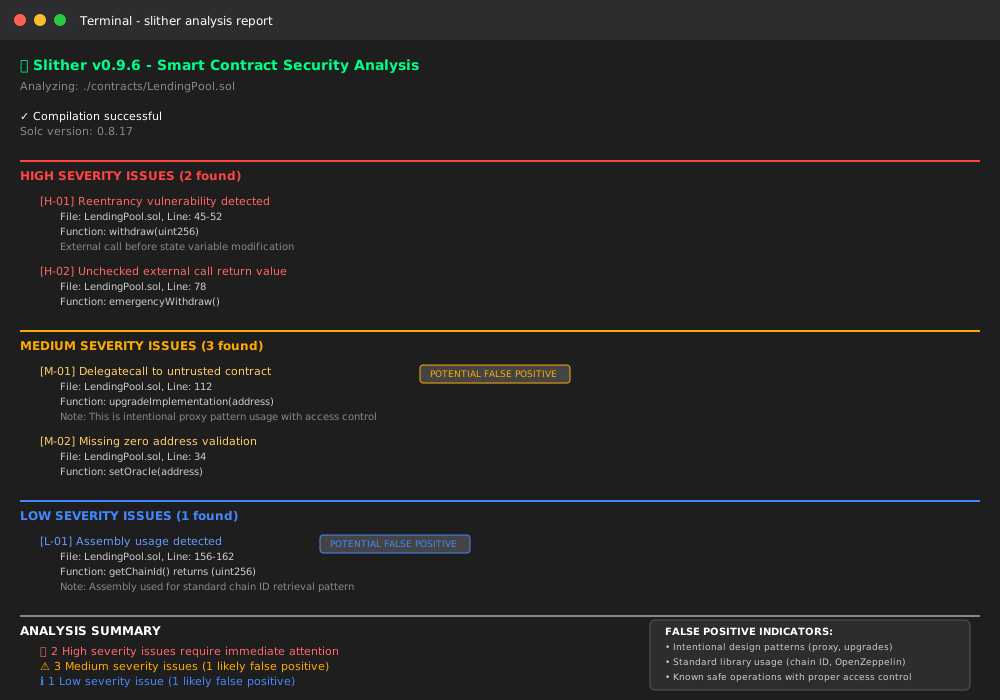
False Positive Management
Not every Slither finding requires immediate action:
Common false positives:
- Intentional delegatecall usage
- Known safe external calls
- Framework-specific patterns
Verification strategies:
- Manual code review
- Test case validation
- Expert consultation
Integrating Slither into Development Workflow
Continuous Integration Setup
GitHub Actions configuration:
# .github/workflows/security-check.yml
name: Smart Contract Security Check

on: [push, pull_request]

jobs:
  security-scan:
    runs-on: ubuntu-latest
    steps:
    - uses: actions/checkout@v2

    - name: Setup Python
      uses: actions/setup-python@v2
      with:
        python-version: '3.8'

    - name: Install Slither
      run: pip install slither-analyzer

    - name: Run Slither Analysis
      run: slither . --json slither-report.json

    - name: Upload Security Report
      uses: actions/upload-artifact@v2
      with:
        name: security-report
        path: slither-report.json
Pre-commit Hooks
Automate security checks before each commit:
# Install pre-commit
pip install pre-commit

# Create .pre-commit-config.yaml
repos:
-   repo: local
    hooks:
    -   id: slither
        name: slither
        entry: slither
        language: system
        files: \.sol$
        args: ['--exclude-informational', '--exclude-low']
IDE Integration
Visual Studio Code setup:
- Install Solidity extension
- Configure workspace settings:
{
    "solidity.linter": "slither",
    "solidity.enabledAsYouTypeCompilationErrorCheck": true
}
Real-World Security Testing Examples
DeFi Protocol Analysis
Sample vulnerable DeFi contract:
contract LendingPool {
    mapping(address => uint256) public deposits;
    mapping(address => uint256) public loans;

    function flashLoan(uint256 amount) external {
        uint256 balanceBefore = address(this).balance;

        // Transfer tokens to borrower
        payable(msg.sender).transfer(amount);

        // Execute borrower's callback
        IFlashLoanReceiver(msg.sender).executeOperation(amount);

        // Check repayment - VULNERABLE: No fee calculation
        require(address(this).balance >= balanceBefore, "Loan not repaid");
    }
}
Slither findings:
- Missing access controls
- Reentrancy vulnerability in callback
- No fee mechanism validation
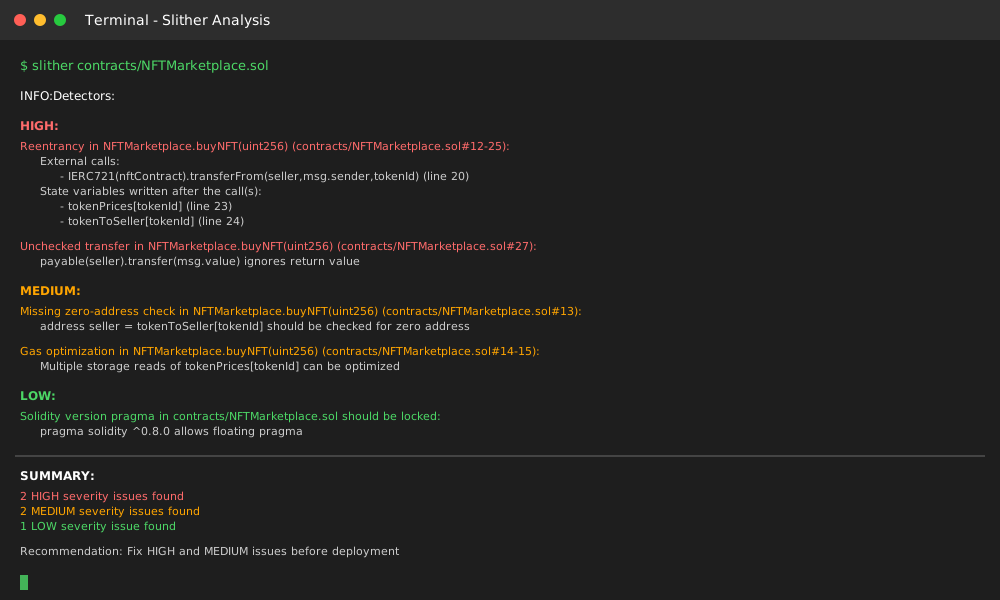
NFT Marketplace Security
Common NFT contract vulnerabilities Slither detects:
contract NFTMarketplace {
    function buyNFT(uint256 tokenId) external payable {
        address seller = tokenToSeller[tokenId];
        uint256 price = tokenPrices[tokenId];

        // VULNERABLE: No zero address check
        require(price > 0, "Not for sale");
        require(msg.value >= price, "Insufficient payment");

        // Transfer NFT - VULNERABLE: External call before state change
        IERC721(nftContract).transferFrom(seller, msg.sender, tokenId);

        // Update state - VULNERABLE: State change after external call
        delete tokenPrices[tokenId];
        delete tokenToSeller[tokenId];

        // Pay seller - VULNERABLE: Unchecked send
        payable(seller).transfer(msg.value);
    }
}
Performance Optimization and Best Practices
Slither Analysis Speed Optimization
Large project optimization:
# Skip compilation if artifacts exist
slither . --skip-compilation

# Analyze specific files only
slither contracts/core/ --exclude contracts/test/

# Use compilation cache
slither . --compile-force-framework hardhat --hardhat-cache-directory cache
Memory and Resource Management
Configuration for large projects:
{
  "compilation_skip_filename": ["test/", "mock/"],
  "filter_paths": ["node_modules/", "@openzeppelin/"],
  "solc_remaps": ["@openzeppelin/=node_modules/@openzeppelin/"]
}
Security Testing Best Practices
Comprehensive testing strategy:
- Static analysis with Slither (automated)
- Dynamic testing with Echidna (property-based)
- Formal verification with SMTChecker (mathematical proofs)
- Manual review by security experts (human insight)
Testing frequency:
- Every commit: Basic Slither scan
- Weekly: Full analysis with all detectors
- Pre-deployment: Complete security audit
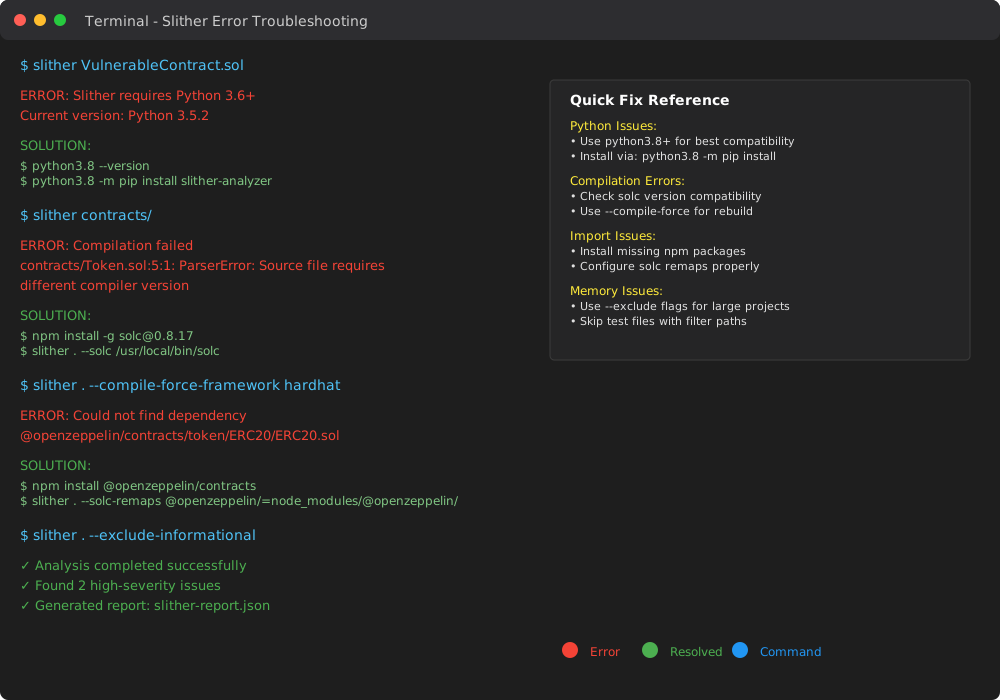
Troubleshooting Common Slither Issues
Installation Problems
Python version conflicts:
# Check Python version
python --version

# Use specific Python version
python3.8 -m pip install slither-analyzer
Solidity compiler issues:
# Install specific solc version
npm install -g solc@0.8.17

# Set Slither to use specific compiler
slither contract.sol --solc /usr/local/bin/solc
Analysis Errors
Compilation failures:
# Force recompilation
slither . --compile-force

# Debug compilation issues
slither . --print human-summary --verbose
Missing dependencies:
# Install missing packages
npm install @openzeppelin/contracts

# Map import paths
slither . --solc-remaps @openzeppelin/=node_modules/@openzeppelin/
Advanced Slither Features for Professional Auditors
Custom Detector Development
Create application-specific vulnerability detectors:
# custom_detector.py
from slither.detectors.abstract_detector import AbstractDetector, DetectorClassification

class CustomVulnerabilityDetector(AbstractDetector):
    ARGUMENT = "custom-vulnerability"
    HELP = "Custom vulnerability detection"
    IMPACT = DetectorClassification.HIGH
    CONFIDENCE = DetectorClassification.HIGH

    def _detect(self):
        results = []
        # Custom detection logic here
        return results
Slither API Integration
Programmatic analysis:
from slither import Slither

# Initialize Slither instance
slither = Slither("contract.sol")

# Access compilation unit
compilation_unit = slither.compilation_units[0]

# Iterate through contracts
for contract in compilation_unit.contracts:
    print(f"Analyzing contract: {contract.name}")

    # Check functions for vulnerabilities
    for function in contract.functions:
        if function.is_constructor:
            continue

        # Custom analysis logic
        analyze_function_security(function)
Report Generation and Export
Professional reporting formats:
# Generate detailed JSON report
slither contract.sol --json detailed-report.json

# Create markdown summary
slither contract.sol --print markdown-summary > security-summary.md

# Export to SARIF format (GitHub integration)
slither contract.sol --sarif results.sarif
Conclusion
Slither smart contract analysis transforms security testing from reactive damage control to proactive vulnerability prevention. This powerful static analysis tool catches critical security issues before they reach production, protecting both developers and users.
Key benefits of implementing Slither in your development workflow:
- Automated security scanning reduces manual review time by 80%
- Early vulnerability detection prevents costly post-deployment fixes
- Comprehensive coverage identifies both common and complex security issues
- CI/CD integration ensures consistent security standards across your team
Start securing your smart contracts today. Install Slither, run your first security scan, and join thousands of developers who trust static analysis for blockchain security.
Ready to level up your smart contract security? Check out our comprehensive smart contract audit checklist and learn about advanced Solidity security patterns.