Remember when getting decent crypto yields meant waiting hours for transactions? Those days vanished faster than your portfolio during a bear market. Sei Network processes trades in 300 milliseconds while delivering yields that make traditional banks weep into their 0.01% savings accounts.
This tutorial shows you exactly how to maximize your Sei Network yield farming rewards. You'll learn to stake SEI tokens, provide liquidity, and optimize trading strategies on the fastest blockchain for DeFi.
What Makes Sei Network Perfect for Yield Farming
Sei Network solves the biggest problems in DeFi yield farming: slow transactions and high gas fees. Built specifically for trading applications, Sei processes 20,000 transactions per second with sub-second finality.
Key Advantages for Farmers
Speed: Transactions settle in 300ms vs. 15 seconds on Ethereum
Cost: Gas fees under $0.01 vs. $20+ during network congestion
Efficiency: Purpose-built orderbook and matching engine
Compatibility: EVM-compatible with Ethereum tooling
The network's twin-turbo consensus mechanism processes trading operations faster than any other blockchain. This speed advantage translates directly into better yield farming opportunities.
Essential Sei Network Yield Farming Strategies
Native SEI Token Staking
Staking SEI tokens provides base-layer security rewards plus additional benefits:
Current APY: 12-18% depending on network participation Minimum Stake: No minimum required Unbonding Period: 21 days Slashing Risk: Minimal for delegated staking
// Connect to Sei Network
const seiClient = await SigningCosmWasmClient.connectWithSigner(
  "https://rpc.sei-apis.com",
  offlineSigner
);

// Delegate SEI tokens to validator
const delegateMsg = {
  typeUrl: "/cosmos.staking.v1beta1.MsgDelegate",
  value: {
    delegatorAddress: userAddress,
    validatorAddress: "seivaloper1xyz...",
    amount: {
      denom: "usei",
      amount: "1000000" // 1 SEI = 1,000,000 usei
    }
  }
};

await seiClient.signAndBroadcast(userAddress, [delegateMsg], "auto");
Liquidity Pool Farming on Sei DEXs
Sei's native DEX infrastructure supports multiple automated market makers. Popular farming pools include:
SEI/USDC: 25-40% APY
SEI/ETH: 30-45% APY
USDC/USDT: 8-12% APY (lower risk)
Setting Up Liquidity Provision
// Add liquidity to SEI/USDC pool
contract LiquidityProvider {
    ISeiDEX constant DEX = ISeiDEX(0x...);

    function addLiquidity(
        uint256 seiAmount,
        uint256 usdcAmount,
        uint256 minLiquidity
    ) external {
        // Approve tokens
        IERC20(SEI_TOKEN).approve(address(DEX), seiAmount);
        IERC20(USDC_TOKEN).approve(address(DEX), usdcAmount);

        // Add liquidity
        DEX.addLiquidity{value: seiAmount}(
            SEI_TOKEN,
            USDC_TOKEN,
            seiAmount,
            usdcAmount,
            minLiquidity,
            msg.sender,
            block.timestamp + 300
        );
    }
}
Order Book Yield Farming
Sei's native order book allows market makers to earn trading fees while providing liquidity:
Maker Rewards: 0.05% per trade Volume Bonuses: Up to 2x multiplier for high-volume traders Rebates: Gas fee rebates for market makers
Step-by-Step Sei Network Farming Setup
Step 1: Wallet Configuration
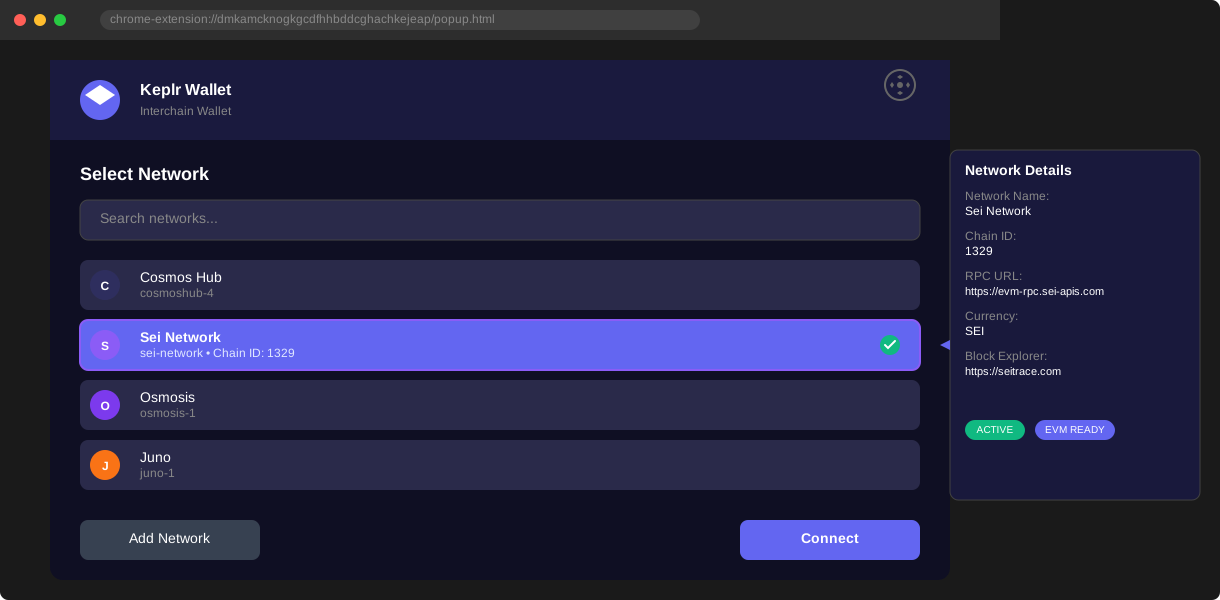
Install and configure a Sei-compatible wallet:
Keplr Wallet (Recommended)
- Install browser extension
- Add Sei Network: Chain ID
sei-network - Import or create wallet
MetaMask Setup
- Add custom RPC:
https://evm-rpc.sei-apis.com - Chain ID:
1329 - Currency:
SEI
- Add custom RPC:
Step 2: Acquire SEI Tokens
Purchase SEI tokens through supported exchanges:
Centralized Exchanges: Binance, Coinbase, KuCoin DEX Options: Uniswap (bridged), SushiSwap Direct Bridge: Use Sei's native bridge from Ethereum
# Check SEI balance
seid query bank balances sei1your-address-here

# Expected output:
balances:
- amount: "1000000000"
  denom: usei
Step 3: Choose Your Farming Strategy
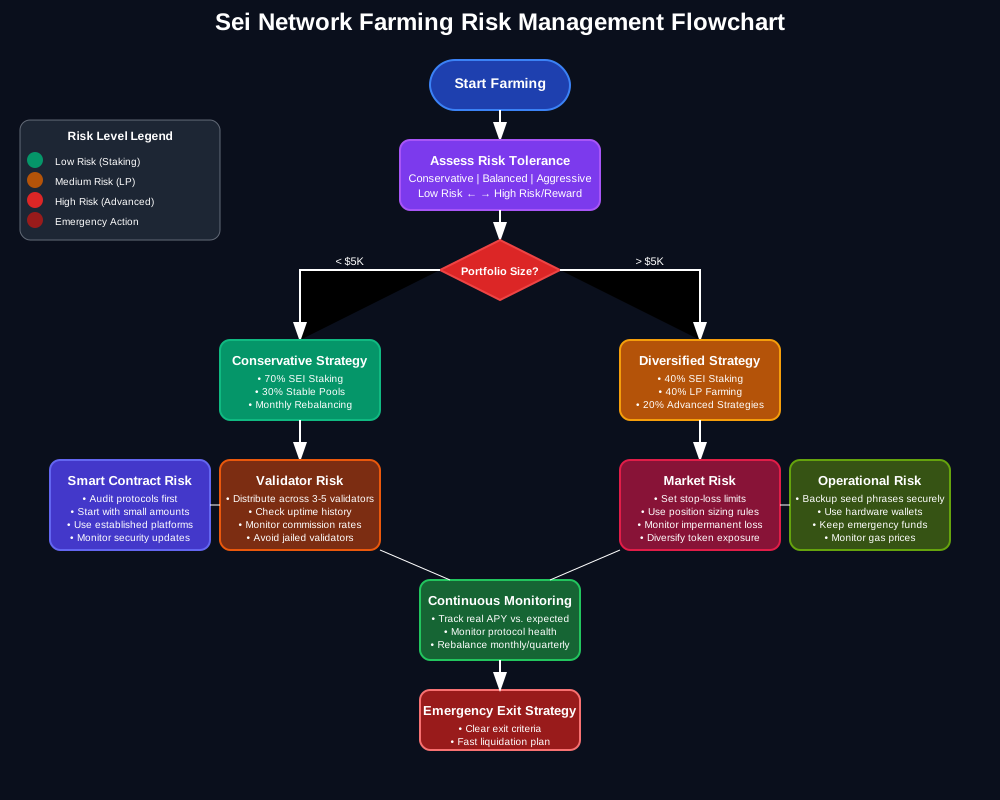
Conservative Approach: 70% staking, 30% stable pools Aggressive Approach: 40% staking, 60% volatile pairs Balanced Approach: 50% staking, 25% stable, 25% volatile
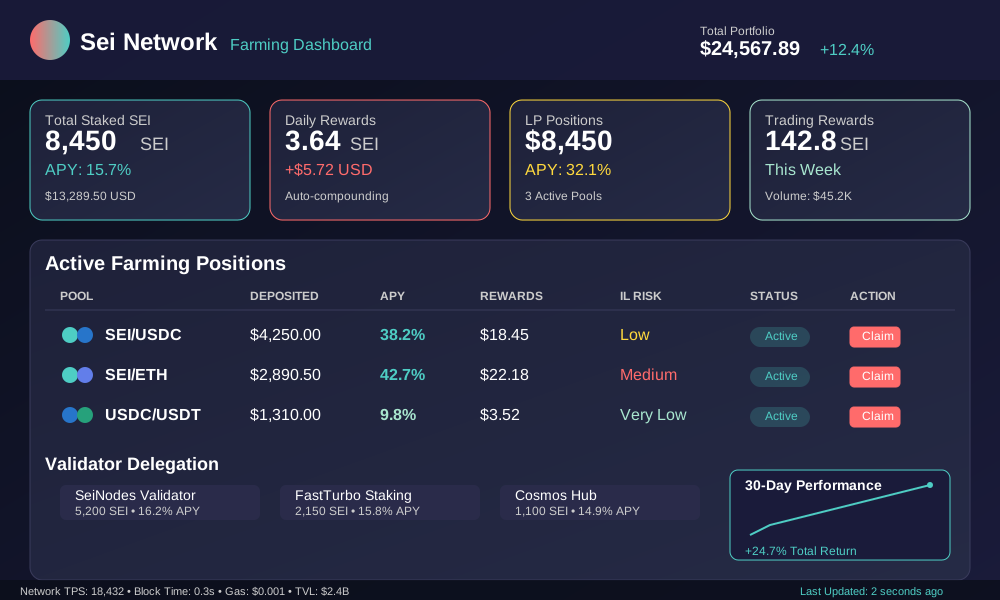
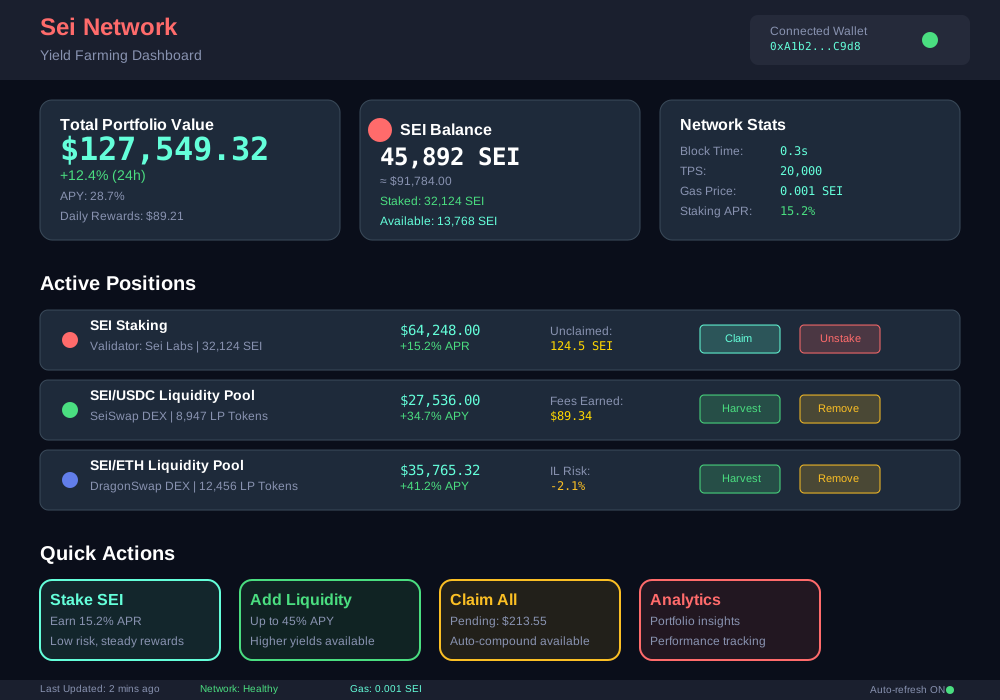
Step 4: Monitor and Optimize Rewards
Track your farming performance using these metrics:
Real APY: Include compounding and fees Impermanent Loss: Monitor price divergence Gas Efficiency: Factor in transaction costs
Advanced Sei Network Farming Techniques
Flash Loan Arbitrage Farming
Sei's sub-second finality enables sophisticated arbitrage strategies:
// Flash loan arbitrage example
async function arbitrageFarm(tokenA, tokenB, amount) {
  // 1. Flash loan from Sei lending protocol
  const flashLoan = await seiLending.flashLoan(tokenA, amount);

  // 2. Trade on DEX A
  const trade1 = await dexA.swap(tokenA, tokenB, amount);

  // 3. Trade back on DEX B
  const trade2 = await dexB.swap(tokenB, tokenA, trade1.output);

  // 4. Repay flash loan + profit
  await seiLending.repayFlashLoan(flashLoan.id, amount + profit);
}
Yield Aggregation Strategies
Combine multiple farming opportunities:
Layer 1: SEI staking (12-18% APY)
Layer 2: LP token farming (25-45% APY)
Layer 3: LP token lending (5-10% additional APY)
Risk Management for Sei Farmers
Smart Contract Risk: Audit protocol before large deposits Validator Risk: Distribute stakes across multiple validators Market Risk: Use stop-losses and position sizing
Maximizing Sei Network Trading Rewards
MEV Protection and Rewards
Sei's built-in MEV protection creates additional earning opportunities:
MEV Rewards: Share of captured MEV profits Priority Ordering: Stake-weighted transaction ordering Front-run Protection: Eliminates sandwich attacks
Batch Trading Optimization
Leverage Sei's batch processing for better execution:
# Batch multiple trades for optimal execution
def batch_trade_sei(trades):
    batch = []
    for trade in trades:
        batch.append({
            'type': 'market_order',
            'pair': trade['pair'],
            'amount': trade['amount'],
            'side': trade['side']
        })

    # Submit batch - executes atomically
    return sei_client.submit_batch(batch)
Sei Network Farming Tools and Resources
Essential Tools
Portfolio Trackers:
- DefiLlama for TVL monitoring
- Zapper for portfolio management
- Custom dashboards for real-time tracking
Analytics Platforms:
- DeFiPulse for yield comparisons
- APY.vision for impermanent loss tracking
- Sei Network explorer for transaction monitoring
Community Resources
Official Channels:
- Sei Network Discord for farming discussions
- GitHub repositories for protocol updates
- Medium blog for strategy guides
Common Sei Network Farming Mistakes
Mistake 1: Ignoring Gas Optimization
Even with low fees, optimize transaction batching:
// Wrong: Multiple separate transactions
await stake(100);
await addLiquidity(200, 150);
await claimRewards();

// Right: Batch operations
await batchExecute([
  stakeMsg(100),
  addLiquidityMsg(200, 150),
  claimRewardsMsg()
]);
Mistake 2: Overexposure to Single Pools
Diversify across different risk levels and token pairs. A balanced Sei farming portfolio might include:
- 40% SEI staking (lowest risk)
- 30% major pair LPs (medium risk)
- 20% emerging token pairs (higher risk)
- 10% experimental strategies (highest risk)
Mistake 3: Neglecting Compound Frequency
Auto-compound rewards minimize tax events and maximize returns:
Daily Compounding: Best for large positions (>$10k) Weekly Compounding: Optimal for medium positions ($1k-$10k) Monthly Compounding: Sufficient for small positions (<$1k)
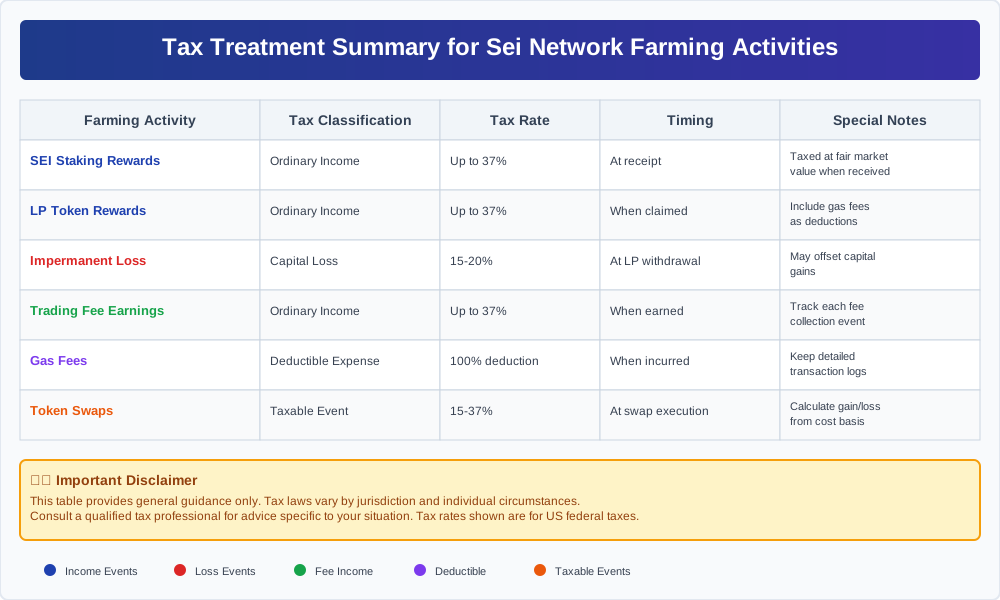
Tax Considerations for Sei Network Farming
US Tax Implications
Staking Rewards: Taxed as ordinary income at receipt
LP Rewards: Generally ordinary income
Impermanent Loss: May qualify for capital loss treatment
Gas Fees: Deductible as investment expenses
Record Keeping Best Practices
Track all farming transactions:
- Stake/unstake events with timestamps
- Reward claim amounts and dates
- LP token mints and burns
- Fee payments for tax deduction
Future of Sei Network Yield Farming
Upcoming Features
V2 Improvements: Enhanced orderbook efficiency Cross-Chain Bridges: More asset variety for farming Institutional Products: Larger liquidity and better yields
Emerging Opportunities
RWA Integration: Real-world asset tokenization Gaming Yields: Play-to-earn protocol integration AI Trading Bots: Automated yield optimization
Conclusion
Sei Network yield farming offers unmatched speed and efficiency for DeFi rewards. The combination of sub-second finality, low fees, and innovative trading infrastructure creates optimal conditions for yield generation.
Start with SEI staking for steady base rewards, then expand into liquidity provision and advanced strategies. The network's technical advantages translate directly into better farming outcomes compared to slower blockchains.
Success in Sei Network yield farming requires understanding the unique benefits of the fastest blockchain while maintaining proper risk management. With the right approach, farmers can capture superior yields while contributing to the most efficient DeFi ecosystem.
Ready to maximize your Sei Network farming rewards? Begin with small positions to understand the mechanics, then scale up as you gain experience with this cutting-edge blockchain platform.