Ever wondered how Wall Street traders make money while you sleep? They sell covered calls – and now you can too, but with crypto. Ribbon Finance automates this strategy so you don't need a Bloomberg Terminal or a finance degree to generate consistent yields.
This guide shows you exactly how to use Ribbon Finance's covered call vaults to earn yields on your crypto holdings. You'll learn the setup process, risk management techniques, and optimization strategies that can boost your returns.
What Is Ribbon Finance and Why Use Covered Calls?
Ribbon Finance operates automated options strategies through smart contracts on Ethereum. The platform focuses on covered call strategies – a conservative options approach that generates income from assets you already own.
The covered call strategy works like this:
- You deposit crypto (like ETH or WBTC) into a Ribbon vault
- The vault automatically sells call options on your holdings
- Option buyers pay premiums for the right to buy your assets at a set price
- You keep the premium regardless of what happens to the asset price
Why Covered Calls Beat Traditional Yield Farming
Traditional yield farming relies on token emissions and liquidity mining rewards. These often experience significant dilution over time. Covered calls generate income from market volatility itself – a more sustainable yield source.
Key advantages:
- Consistent income: Earn premiums weekly regardless of market direction
- Lower risk: Your assets serve as collateral, limiting downside
- Automated execution: Smart contracts handle complex options mechanics
- Institutional-grade: Same strategies used by professional traders
Understanding Ribbon Finance Vault Types
Ribbon offers several vault types, each designed for different market conditions and risk tolerances.
T-WETH Vault (Covered Call on Ethereum)
The T-WETH vault sells weekly call options on Ethereum. This vault works best in sideways or moderately bullish markets.
Optimal conditions:
- ETH price consolidating or rising slowly
- High implied volatility (increases premium income)
- Strong support levels below current price
T-WBTC Vault (Covered Call on Bitcoin)
Similar to T-WETH but focused on Bitcoin. Bitcoin's lower volatility compared to altcoins often provides more predictable returns.
Performance characteristics:
- Lower volatility than ETH vaults
- More stable premium income
- Better for risk-averse investors
T-AVAX and T-SOL Vaults
These vaults target higher-yield opportunities with Layer 1 tokens. Higher volatility means higher premiums but increased assignment risk.
Step-by-Step Setup Guide
Prerequisites
Before starting, ensure you have:
- MetaMask wallet with sufficient ETH for gas fees
- Supported assets (WETH, WBTC, AVAX, or SOL)
- Basic understanding of options mechanics
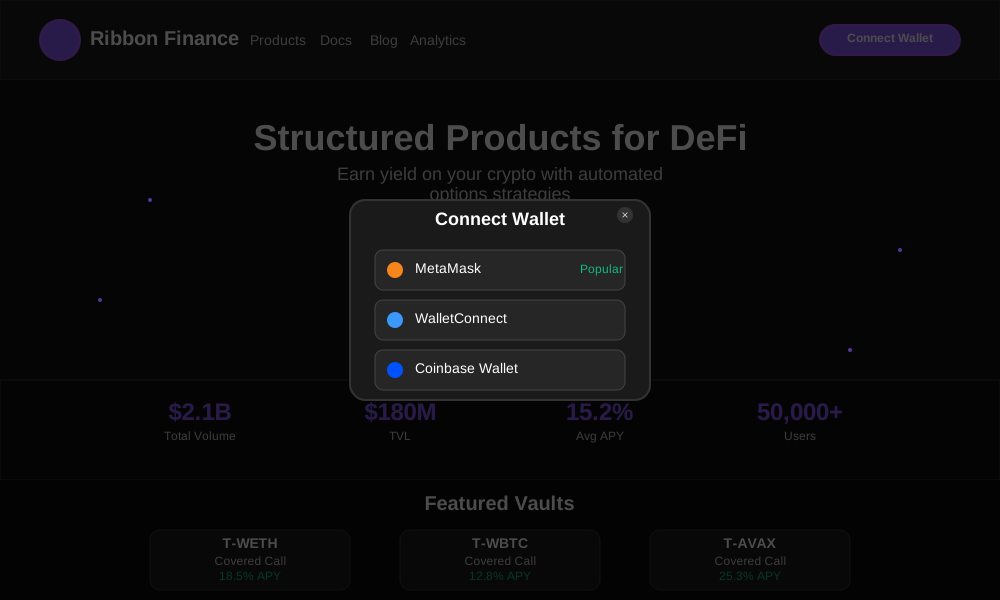
Step 1: Connect Your Wallet
- Navigate to ribbon.finance
- Click "Connect Wallet" in the top right
- Select MetaMask from the wallet options
- Approve the connection in your MetaMask popup
Step 2: Choose Your Vault Strategy
Select a vault based on your risk tolerance and market outlook:
For Conservative Approach:
- Choose T-WBTC vault for stable returns
- Lower volatility means lower premiums but reduced assignment risk
For Moderate Risk:
- Select T-WETH vault for balanced exposure
- Good premium income with manageable volatility
For Aggressive Strategy:
- Consider T-AVAX or T-SOL vaults
- Higher potential returns but increased risk
Step 3: Deposit Assets
- Click "Deposit" on your chosen vault
- Enter the amount you want to deposit
- Approve the token spending (first-time users only)
- Confirm the deposit transaction
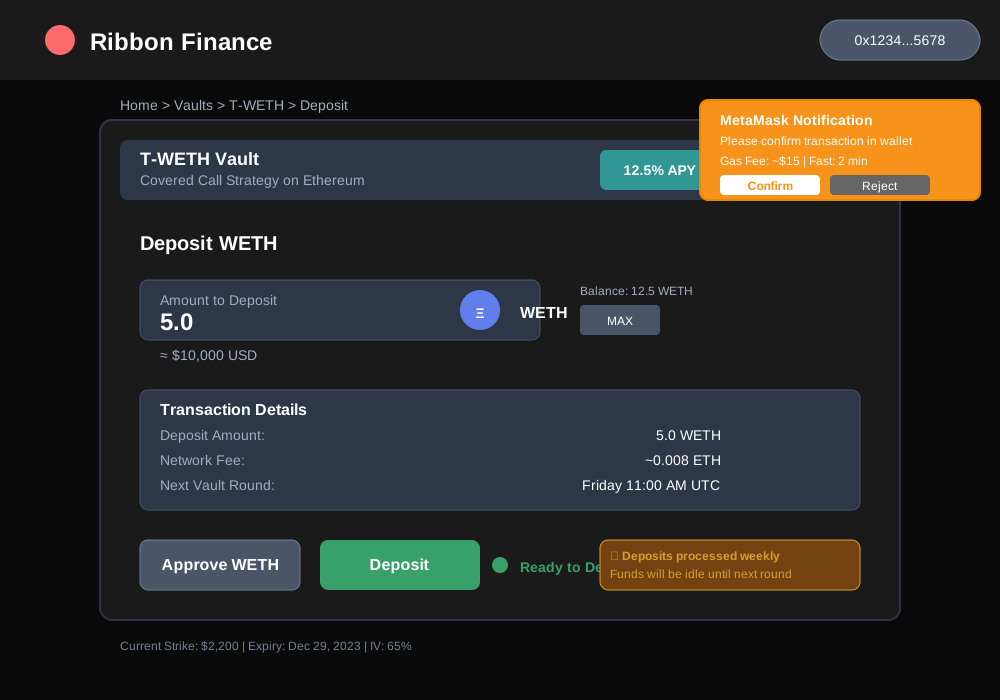
Important: Deposits are processed at the start of each weekly cycle (Fridays at 11 AM UTC). Your funds will be idle until the next cycle begins.
Step 4: Monitor Your Position
After depositing, you'll receive vault tokens representing your share of the pool. Track your performance through:
- Vault tokens: Your ownership percentage in the vault
- Premium income: Weekly income from sold options
- Unrealized PnL: Current value vs. initial deposit
Risk Management Strategies
Understanding Assignment Risk
Assignment occurs when the underlying asset's price exceeds the strike price at expiration. Your assets get sold at the strike price, capping your upside.
Example scenario:
- You deposit 1 ETH when price is $2,000
- Vault sells call option with $2,200 strike
- If ETH rises to $2,500, your ETH gets sold at $2,200
- You keep the premium but miss $300 in upside
Mitigating Assignment Risk
1. Choose Conservative Strike Prices Vaults typically select strikes 5-15% above current price. Higher strikes reduce assignment probability but offer lower premiums.
2. Monitor Market Conditions Strong bullish momentum increases assignment risk. Consider exiting before major catalysts like upgrades or news events.
3. Diversify Across Vaults Spread deposits across multiple vaults to reduce concentration risk.
Position Sizing Guidelines
Conservative allocation: 20-30% of total portfolio
- Suitable for risk-averse investors
- Provides steady income without excessive exposure
Moderate allocation: 40-50% of total portfolio
- Balanced approach for regular income
- Acceptable for most DeFi participants
Aggressive allocation: 60%+ of total portfolio
- Only for experienced options traders
- Requires active monitoring and risk management
Optimizing Your Covered Call Strategy
Timing Your Deposits
Best times to deposit:
- After significant price drops (higher future premiums)
- During high volatility periods (increased premium income)
- Before anticipated consolidation phases
Avoid depositing during:
- Strong bullish momentum (high assignment risk)
- Just before major announcements or upgrades
- Low volatility periods (minimal premium income)
Compounding Strategies
1. Automatic Reinvestment Ribbon vaults automatically compound your returns by reinvesting premiums. This creates exponential growth over time.
2. Manual Rebalancing Withdraw profits periodically and rebalance across different vaults or strategies.
3. Dollar-Cost Averaging Make regular deposits regardless of market conditions to smooth out timing risks.
Advanced Optimization Techniques
Volatility Surface Analysis Monitor implied volatility levels across different expiration dates. Higher implied volatility means better premium income.
Strike Selection Impact While you can't control strike selection directly, understanding the vault's methodology helps predict performance.
Correlation Management Diversify across uncorrelated assets to reduce portfolio volatility.
Common Mistakes to Avoid
Mistake 1: Depositing During Bull Markets
New users often deposit when prices are rising rapidly. This increases assignment risk and reduces the effectiveness of the strategy.
Solution: Wait for consolidation periods or minor pullbacks before depositing.
Mistake 2: Panic Withdrawing
Market volatility can cause temporary drawdowns. Panicking and withdrawing during these periods locks in losses.
Solution: Maintain a long-term perspective and understand the strategy's mechanics.
Mistake 3: Ignoring Gas Costs
Frequent deposits and withdrawals can erode returns through gas fees.
Solution: Make larger, less frequent transactions and time them during low gas periods.
Mistake 4: Overconcentration
Putting all funds into a single vault creates unnecessary concentration risk.
Solution: Diversify across multiple vaults and strategies.
Tax Implications and Reporting
Understanding Tax Treatment
Covered call premiums are typically treated as ordinary income. Assignment events may trigger capital gains or losses.
Key considerations:
- Premium income is taxable when received
- Assignment creates a taxable event
- Vault tokens may have complex tax implications
Record Keeping
Maintain detailed records of:
- Deposit dates and amounts
- Premium income received
- Assignment events
- Withdrawal dates and amounts
Recommended tools:
- CoinTracker for automated DeFi transaction tracking
- Koinly for comprehensive crypto tax reporting
- Manual spreadsheets for detailed analysis
Performance Analysis and Metrics
Key Performance Indicators
1. Annualized Premium Yield
Premium Yield = (Total Premiums / Average Assets) × (52 / Weeks)
2. Assignment Rate
Assignment Rate = (Assigned Weeks / Total Weeks) × 100
3. Net Performance
Net Performance = Premium Income - Opportunity Cost from Assignments
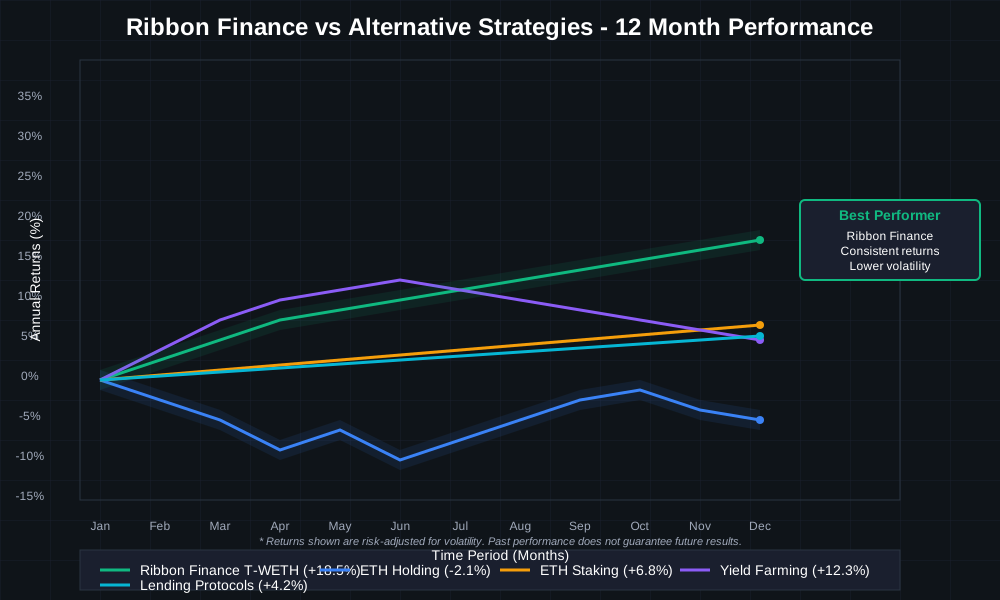
Benchmark Comparisons
Compare your Ribbon Finance returns against:
- Holding the underlying asset: Raw price appreciation
- Staking rewards: Risk-free rate for the asset
- Other DeFi strategies: Yield farming, lending protocols
Historical Performance Analysis
Ribbon Finance vaults have historically generated:
- T-WETH: 15-25% annualized returns
- T-WBTC: 10-20% annualized returns
- T-AVAX: 20-35% annualized returns
Performance factors:
- Market volatility (higher volatility = higher returns)
- Assignment frequency (lower assignment = better performance)
- Gas costs (lower gas = higher net returns)
Troubleshooting Common Issues
Transaction Failures
Problem: Deposit transactions fail or revert Solutions:
- Increase gas limit to 200,000+
- Check token approval status
- Verify sufficient ETH balance for gas
Unexpected Assignment
Problem: Assets get assigned when you expected them not to Solutions:
- Understand that assignment is automatic if options finish in-the-money
- Monitor strike prices and market conditions
- Consider this part of the strategy, not a failure
Vault Token Pricing
Problem: Vault token value doesn't match expected returns Solutions:
- Vault tokens appreciate slowly due to premium compounding
- Performance includes both token appreciation and premium income
- Check vault performance metrics rather than token price alone
Advanced Strategies and Combinations
Covered Call + Protective Puts
Combine Ribbon Finance covered calls with protective puts to create a collar strategy:
- Use 70% of funds in Ribbon covered call vaults
- Buy protective puts with remaining 30%
- This limits downside while maintaining upside potential
Multi-Vault Allocation
Distribute funds across multiple vaults for diversification:
Example allocation:
- 40% T-WETH (stable, liquid)
- 30% T-WBTC (conservative)
- 20% T-AVAX (higher yield)
- 10% cash for opportunities
Seasonal Adjustments
Adjust vault allocation based on market cycles:
Bull Market: Reduce covered call exposure, increase protective puts Bear Market: Increase covered call exposure for income generation Sideways Market: Maximize covered call allocation
Future Developments and Roadmap
Upcoming Features
Ribbon Finance continues developing new features:
Multi-Asset Vaults: Diversified exposure across multiple assets Customizable Strategies: User-defined strike prices and expiration dates Cross-Chain Expansion: Deployment on additional blockchain networks Institutional Products: Larger minimum deposits with enhanced features
Integration Opportunities
DeFi Composability: Combine Ribbon vaults with other DeFi protocols Yield Optimization: Platforms like Yearn integrating Ribbon strategies Risk Management: Insurance protocols covering option strategy risks
Conclusion
Ribbon Finance democratizes institutional-grade covered call strategies for retail crypto investors. By automating complex options mechanics, the platform enables consistent yield generation from crypto holdings.
Success with Ribbon Finance requires understanding options mechanics, proper risk management, and realistic expectations. The strategy works best for investors seeking steady income rather than maximum capital appreciation.
Start with small positions to understand the mechanics, then gradually increase allocation as you gain experience. Remember that covered calls are most effective in sideways or moderately bullish markets – adjust your strategy accordingly.
The combination of automated execution, institutional-grade strategies, and DeFi composability makes Ribbon Finance a powerful tool for sophisticated crypto investors. Use this guide to implement covered call strategies that generate consistent returns while managing downside risk.
Ready to start earning with covered calls? Visit ribbon.finance and begin your journey toward consistent crypto income.