Your validator just went offline. Your staking rewards vanished. Your delegation transaction failed for the third time today.
Welcome to the wild world of yield farming validator issues – where one wrong move costs you thousands in lost rewards.
This guide shows you how to diagnose and fix the most common validator problems plaguing yield farmers. You'll learn to identify bad validators, prevent slashing events, and optimize your staking strategy for maximum returns.
Understanding Yield Farming Validator Errors
Yield farming staking errors occur when validators fail to perform their network duties correctly. These issues directly impact your earning potential and can result in permanent fund loss.
Common Validator Error Types
Delegation Failures happen when your staking transaction can't connect to the chosen validator. Network congestion or validator capacity limits cause most delegation errors.
Slashing Events occur when validators break network rules. The protocol automatically reduces staked tokens as punishment. Your delegated funds get slashed proportionally.
Validator Downtime stops reward generation completely. Offline validators can't validate transactions or produce blocks, eliminating your earning opportunities.
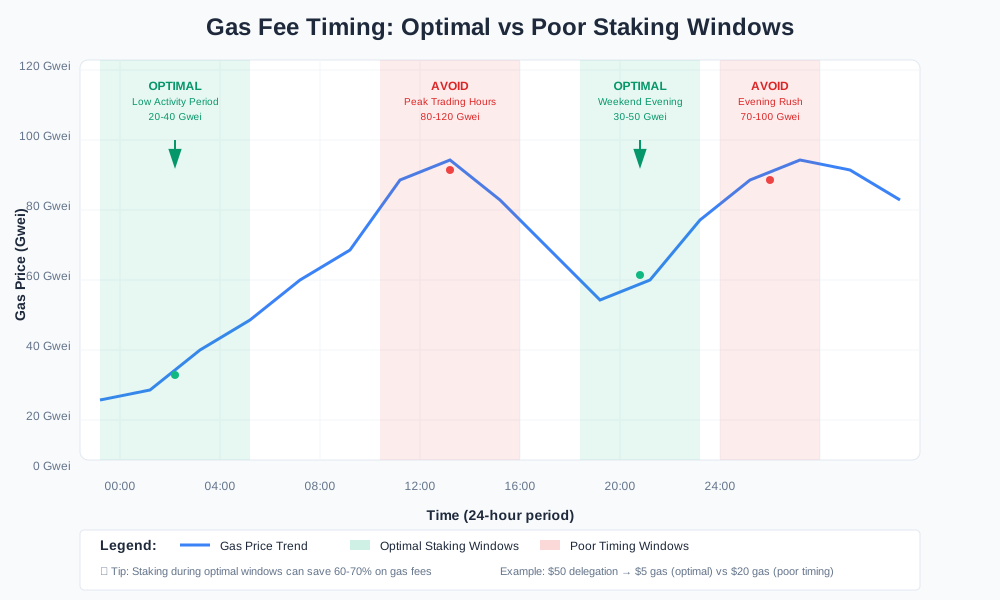
Gas Fee Spikes make staking transactions uneconomical. High network fees often exceed potential staking rewards, especially for smaller positions.
Diagnosing Validator Performance Issues
Check Validator Uptime Statistics
Most networks provide validator performance data through block explorers or official dashboards.
// Example: Checking validator uptime on Cosmos
const validatorAddress = "cosmosvaloper1...";
const uptimeQuery = `
  query ValidatorUptime($address: String!) {
    validator(address: $address) {
      uptime_percentage
      missed_blocks_count
      last_seen_block
    }
  }
`;

// Look for 99%+ uptime and minimal missed blocks
Monitor Delegation Capacity
Validators have maximum delegation limits. Exceeding these limits causes transaction failures.
# Check validator delegation status
def check_validator_capacity(validator_address):
    current_delegation = get_validator_delegation(validator_address)
    max_delegation = get_validator_max_capacity(validator_address)

    utilization = (current_delegation / max_delegation) * 100

    if utilization > 95:
        return "Validator near capacity - delegation may fail"
    else:
        return f"Validator at {utilization:.1f}% capacity"
Analyze Historical Slashing Events
Review validator slashing history before delegating funds.
-- Query validator slashing events
SELECT
    validator_address,
    slash_date,
    slash_percentage,
    reason
FROM validator_slashing_events
WHERE validator_address = 'your_validator_address'
ORDER BY slash_date DESC;
Fixing Common Delegation Errors
Error: "Validator Not Found"
This error indicates an invalid validator address or inactive validator.
Solution Steps:
- Verify validator address format matches network standards
- Check validator status on block explorer
- Confirm validator hasn't been jailed or tombstoned
- Use validator's official address from their website
# Verify validator status (Cosmos SDK example)
gaiad query staking validator cosmosvaloper1... --node https://rpc.cosmos.network:443
Error: "Insufficient Delegation Amount"
Networks enforce minimum delegation thresholds to prevent spam.
Solution:
- Check network minimum delegation requirements
- Ensure your delegation meets or exceeds minimum amount
- Account for transaction fees in your total amount
// Calculate minimum delegation with fees
const minDelegation = getNetworkMinDelegation(); // e.g., 1 ATOM
const estimatedFees = estimateTransactionFees();
const requiredAmount = minDelegation + estimatedFees;

if (userBalance < requiredAmount) {
    throw new Error(`Need at least ${requiredAmount} tokens`);
}
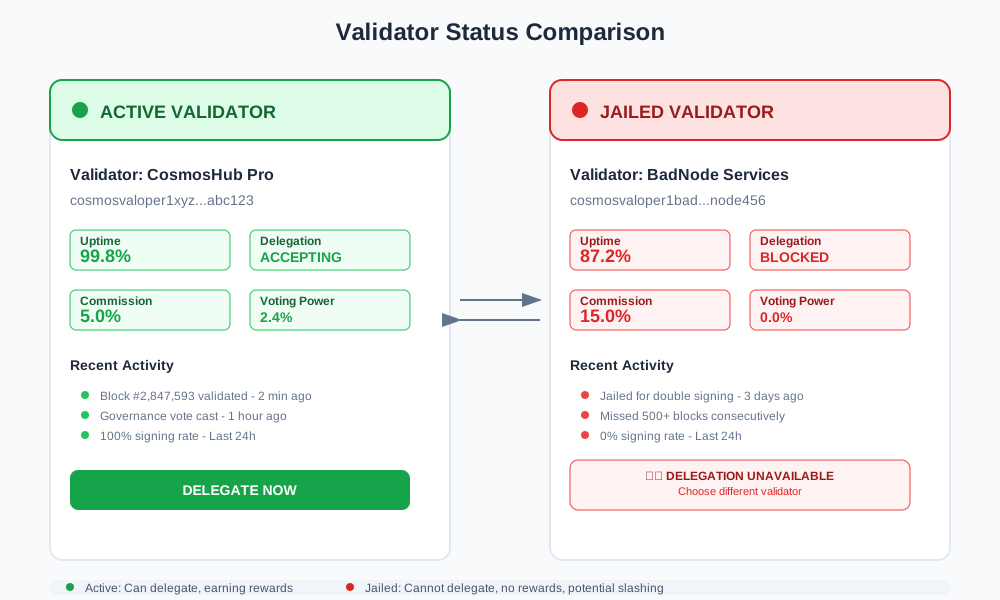
Error: "Validator Jailed"
Jailed validators can't accept new delegations until they unjail themselves.
Solution:
- Choose a different active validator
- Wait for validator to unjail (if you trust them)
- Check validator's social media for unjailing timeline
Preventing Slashing Events
Choose Low-Risk Validators
Select validators with clean slashing histories and professional operations.
Evaluation Criteria:
- Zero slashing events in past 12 months
- 99%+ uptime consistency
- Professional team with public identities
- Active community engagement
- Proper infrastructure redundancy
Diversify Validator Selection
Spread delegations across multiple validators to minimize slashing risk.
# Optimal validator diversification strategy
def diversify_delegation(total_amount, validator_list):
    # Rule: No more than 20% to any single validator
    max_per_validator = total_amount * 0.20

    allocations = {}
    for validator in validator_list:
        if len(allocations) >= 5:  # Max 5 validators
            break

        allocation = min(max_per_validator, total_amount / len(validator_list))
        allocations[validator] = allocation

    return allocations
Monitor Validator Behavior
Set up alerts for validator performance changes.
// Validator monitoring script
async function monitorValidator(validatorAddress) {
    const performance = await getValidatorPerformance(validatorAddress);

    if (performance.uptime < 0.99) {
        sendAlert(`Validator ${validatorAddress} uptime dropped to ${performance.uptime}`);
    }

    if (performance.missed_blocks > 50) {
        sendAlert(`Validator ${validatorAddress} missed ${performance.missed_blocks} recent blocks`);
    }
}

// Run every hour
setInterval(() => {
    myValidators.forEach(monitorValidator);
}, 3600000);
Optimizing Gas Fees for Staking
Time Your Transactions
Gas fees fluctuate based on network activity. Time your staking transactions during low-activity periods.
// Gas fee optimization
async function getOptimalStakingTime() {
    const currentGas = await getCurrentGasPrice();
    const averageGas = await getAverageGasPrice(24); // 24-hour average

    if (currentGas < averageGas * 0.8) {
        return "Good time to stake - low gas fees";
    } else {
        return "Wait for lower gas fees";
    }
}
Use Gas Estimation Tools
Calculate exact gas requirements before submitting transactions.
// Smart contract gas estimation
contract StakingGasEstimator {
    function estimateDelegationCost(
        address validator,
        uint256 amount
    ) external view returns (uint256) {
        // Simulate delegation transaction
        uint256 gasEstimate = gasleft();

        // Simulate delegation logic here
        _simulateDelegate(validator, amount);

        return gasEstimate - gasleft();
    }
}
Advanced Validator Selection Strategies
Commission Rate Analysis
Lower commission rates mean higher rewards, but consider validator sustainability.
def analyze_validator_commission(validators):
    optimal_validators = []

    for validator in validators:
        commission = validator.commission_rate
        uptime = validator.uptime_percentage

        # Sweet spot: 5-10% commission with 99%+ uptime
        if 0.05 <= commission <= 0.10 and uptime >= 0.99:
            optimal_validators.append(validator)

    return sorted(optimal_validators, key=lambda v: v.commission_rate)
Governance Participation
Choose validators who actively participate in network governance.
Evaluation Metrics:
- Governance proposal voting history
- Proposal creation and discussion participation
- Community forum engagement
- Technical upgrade preparedness
Geographic Distribution
Validator geographic diversity improves network resilience.
// Check validator geographic distribution
function analyzeValidatorGeography(validatorList) {
    const regions = {};

    validatorList.forEach(validator => {
        const region = validator.server_location.region;
        regions[region] = (regions[region] || 0) + 1;
    });

    // Prefer validators in underrepresented regions
    return Object.keys(regions).sort((a, b) => regions[a] - regions[b]);
}
Troubleshooting Network-Specific Issues
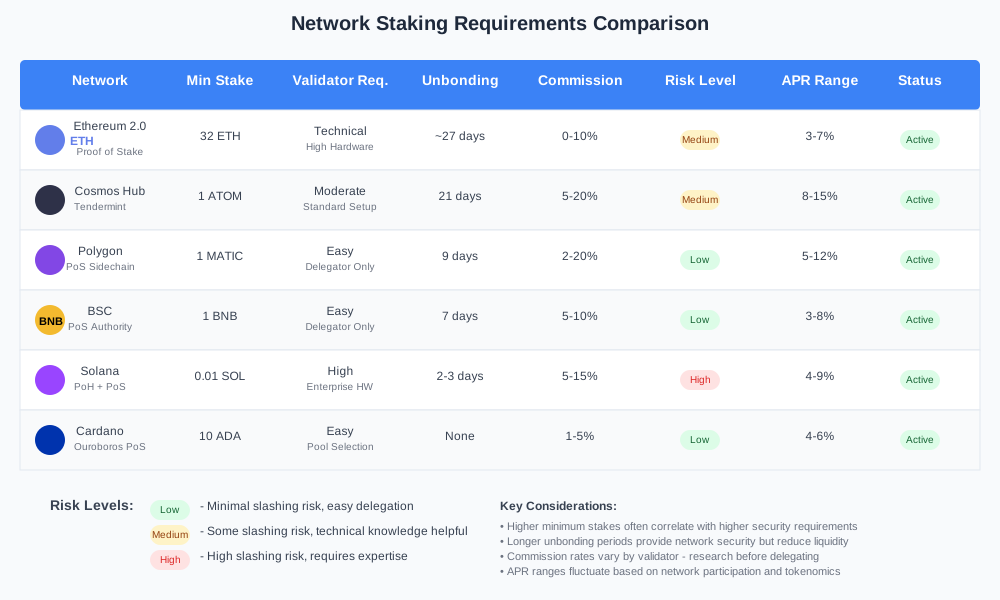
Cosmos Ecosystem
Common Cosmos staking issues include IBC transfer failures and validator set changes.
# Debug Cosmos delegation issues
gaiad tx staking delegate cosmosvaloper1... 1000000uatom \
  --from your_wallet \
  --gas auto \
  --gas-adjustment 1.4 \
  --dry-run
Ethereum 2.0 Staking
ETH2 validators face different challenges including sync committee participation.
// Monitor ETH2 validator performance
async function checkETH2Validator(validatorIndex) {
    const validator = await eth2API.getValidator(validatorIndex);

    return {
        status: validator.status,
        balance: validator.balance,
        effectiveness: validator.effectiveness,
        slashings: validator.slashed
    };
}
Polygon and BSC
Faster networks require different gas optimization strategies.
Emergency Recovery Procedures
Handling Slashing Events
When slashing occurs, act quickly to minimize further losses.
Immediate Actions:
- Stop all pending delegation transactions
- Assess slashing severity and cause
- Decide whether to redelegate or exit position
- Document losses for tax purposes
# Slashing damage assessment
def assess_slashing_impact(original_stake, slash_percentage):
    slashed_amount = original_stake * (slash_percentage / 100)
    remaining_stake = original_stake - slashed_amount

    return {
        "original": original_stake,
        "slashed": slashed_amount,
        "remaining": remaining_stake,
        "loss_percentage": slash_percentage
    }
Validator Migration
Move stakes from problematic validators quickly.
// Automated validator migration
async function migrateFromValidator(fromValidator, toValidator, amount) {
    try {
        // Undelegate from problem validator
        const undelegateResult = await undelegate(fromValidator, amount);

        // Wait for unbonding period
        await waitForUnbonding(undelegateResult.completionTime);

        // Delegate to new validator
        const delegateResult = await delegate(toValidator, amount);

        return {
            success: true,
            newDelegation: delegateResult.hash
        };
    } catch (error) {
        return {
            success: false,
            error: error.message
        };
    }
}
Monitoring and Maintenance
Automated Monitoring Setup
Create monitoring systems to catch issues early.
# Comprehensive validator monitoring
class ValidatorMonitor:
    def __init__(self, validators):
        self.validators = validators
        self.alerts = []

    def check_all_validators(self):
        for validator in self.validators:
            self.check_uptime(validator)
            self.check_commission_changes(validator)
            self.check_slashing_risk(validator)

    def check_uptime(self, validator):
        if validator.uptime < 0.99:
            self.alerts.append(f"Low uptime: {validator.address}")

    def send_alerts(self):
        if self.alerts:
            send_notification("\n".join(self.alerts))
            self.alerts.clear()
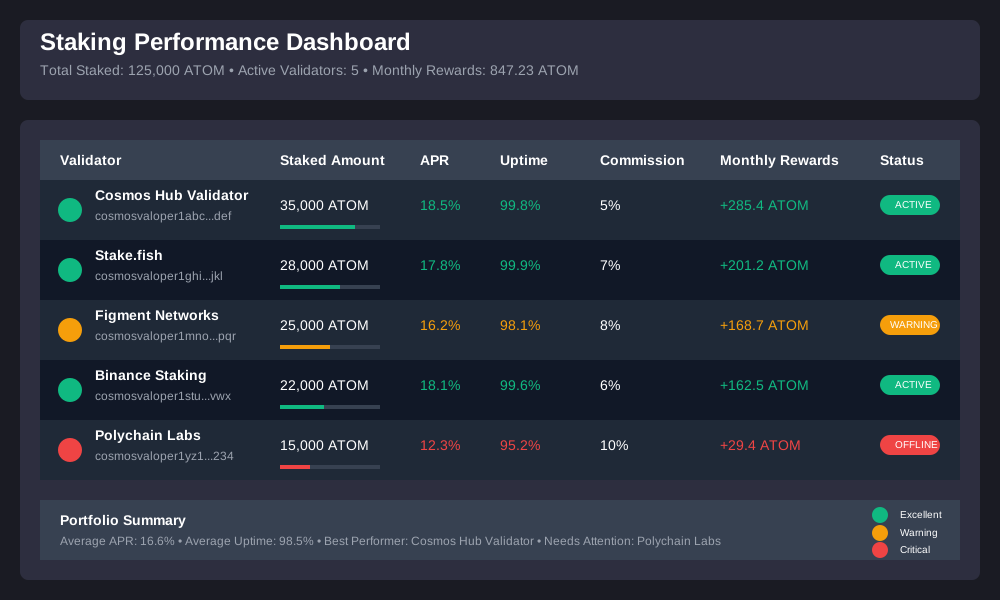
Performance Tracking
Track your staking performance across all validators.
-- Create performance tracking table
CREATE TABLE staking_performance (
    date DATE,
    validator_address VARCHAR(255),
    delegated_amount DECIMAL(18,6),
    rewards_earned DECIMAL(18,6),
    commission_paid DECIMAL(18,6),
    effective_apr DECIMAL(8,4)
);
Best Practices Summary
Successful yield farming requires proactive validator management and continuous monitoring.
Key Takeaways:
- Research validators thoroughly before delegating
- Diversify across multiple high-quality validators
- Monitor performance and set up automated alerts
- Optimize gas fees by timing transactions properly
- Have emergency procedures ready for slashing events
Action Items:
- Audit your current validator selections
- Set up monitoring for all delegated validators
- Create emergency response procedures
- Document your staking strategy and risk tolerance
By following these detailed steps, you'll minimize validator-related errors and maximize your yield farming returns. Remember that staking involves risks, but proper validator selection and monitoring significantly reduce potential losses while optimizing reward generation.
Start implementing these validator management strategies today to protect your staking investments and improve your DeFi yields.