Remember when "farming" meant getting dirt under your fingernails and praying for rain? Well, welcome to 2025, where you can farm carbon credits on a blockchain while your actual crops grow happier soil. Regen Network has created a blockchain-powered marketplace for ecological assets where farmers can earn rewards for regenerative practices, and it's about as wild as it sounds.
If you've been searching for ways to make money from making the planet better (instead of the usual crypto approach of burning it down), you've found the right rabbit hole. Let's dive into the strategies that'll have you farming ecological data like a pro.
The Problem: Traditional Farming vs. Your Bank Account
Here's the brutal truth about sustainable farming: regenerative fields yield 29% lower grain production but 78% higher profits than traditional systems. Wait, what? Lower yields but higher profits? That's like saying you can eat less pizza but still be happier. But somehow, the math works out.
The catch is that farmers need upfront capital and technical know-how to transition. Farmers face up to $200 per acre up front costs for regenerative practices, which is significant money when you're betting your livelihood on dirt doing better things.
What Is Regen Network? (Beyond the Buzzwords)
Regen Network is a blockchain platform for originating and investing in high-integrity carbon and biodiversity credits from ecological regeneration projects. Think of it as the love child of Ethereum and Mother Earth, with all the technical sophistication you'd expect and none of the environmental guilt.
The platform runs on Regen Ledger, a public, proof-of-stake blockchain developed with the Cosmos SDK, which means it's fast, efficient, and doesn't require burning small countries worth of electricity to validate transactions.
Core Components You Need to Know
Regen Ledger: The blockchain backbone that stores ecological data
Regen Registry: Where ecological projects get verified and credits are issued
Regen Marketplace: The trading floor for carbon and biodiversity credits
$REGEN Token: Your access pass to governance and fee payments
Ecological Data Yield Strategy #1: Carbon Credit Farming
This is where the rubber meets the road (or where the soil meets the atmosphere). Here's how to turn your carbon sequestration into cold, hard tokens:
Setting Up Your Carbon Farm
// Pseudo-code for carbon credit project setup
const carbonProject = {
  location: "Your Farm GPS Coordinates",
  practices: [
    "cover-cropping",
    "no-till",
    "rotational-grazing",
    "tree-planting"
  ],
  baseline: calculateCurrentSOC(), // Soil Organic Carbon
  methodology: "Grassland CarbonPlus",
  monitoring: "satellite + ground sensors"
};

// Register project on Regen Registry
await regenRegistry.registerProject(carbonProject);
Step 1: Baseline Measurement Before you can claim credits, you need to know where you're starting. This involves soil testing, satellite imagery analysis, and establishing your farm's current carbon storage capacity.
Step 2: Implement Regenerative Practices The money makers include:
- Cover cropping (keeps soil covered year-round)
- No-till or minimal tillage
- Diverse crop rotations
- Integrated livestock grazing
- Agroforestry integration
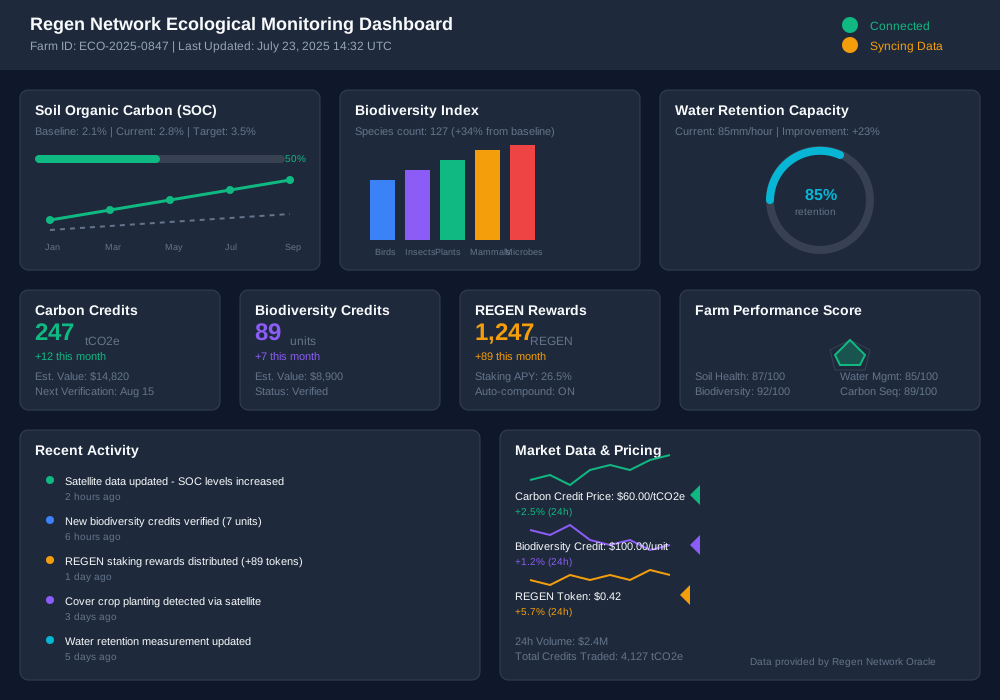
Step 3: Monitor and Verify Regen Network uses satellites and ground sensors to track ecological improvements, which means you can't fake your way to credits. The blockchain doesn't lie about your soil health.
Expected Yields: Farmers can anticipate annual returns of $20 to $60 per acre for the first 10 years from carbon credit programs alone.

Ecological Data Yield Strategy #2: Biodiversity Credit Optimization
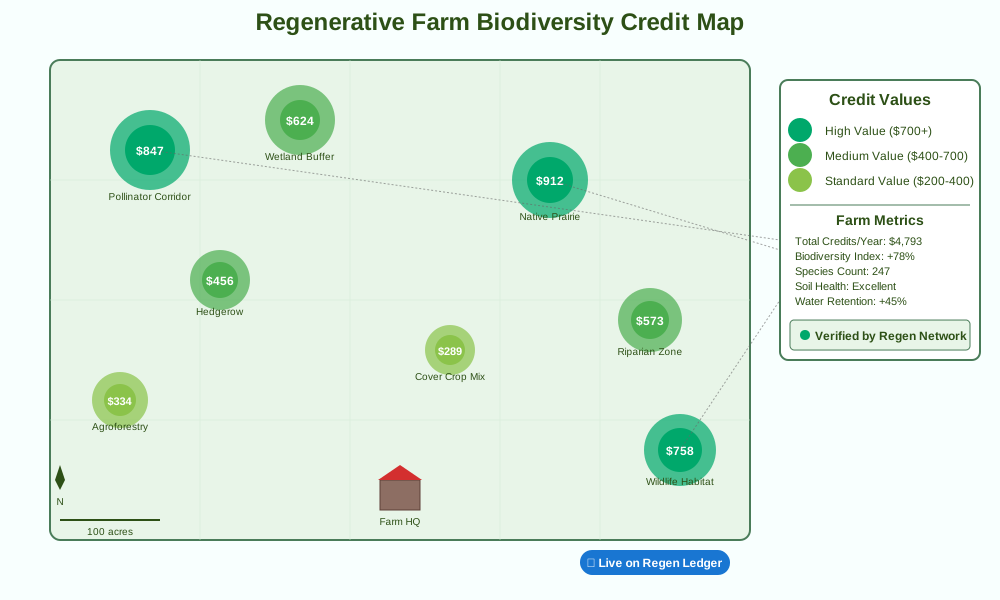
Here's where things get interesting. Farms using regenerative practices report up to 78% higher biodiversity compared to conventional agriculture by 2025, and Regen Network has figured out how to monetize that.
The Biodiversity Playbook
// Biodiversity credit calculation framework
const biodiversityMetrics = {
  species_count: measureSpeciesDiversity(),
  habitat_quality: assessEcosystemHealth(),
  pollinator_populations: countBeesAndButterflies(),
  water_retention: measureSoilWaterCapacity(),
  erosion_prevention: calculateSoilLoss()
};

// Generate biodiversity credits
const credits = await generateBiodiversityCredits(biodiversityMetrics);
Wildlife Corridor Development: Create pathways for animals between habitat patches. This isn't just feel-good environmentalism—it's profitable data farming.
Native Plant Restoration: Replace monoculture edges with native species. The biodiversity explosion translates directly to credit generation.
Pollinator Habitat Creation: Bee highways are the new crypto mining rigs. Seriously.
Ecological Data Yield Strategy #3: $REGEN Token Farming
Beyond ecological credits, there's traditional yield farming with the $REGEN token itself. Staking REGEN tokens accrues 26.5% annual percentage yield (APY), which beats most banks by a country mile.
Staking Strategy Breakdown
// REGEN staking optimization
const stakingStrategy = {
  validator_selection: selectTopValidators(), // Choose based on commission and uptime
  delegation_amount: calculateOptimalStake(),
  reward_compounding: "daily", // Compound those rewards
  governance_participation: true // Vote on proposals for bonus rewards
};

// Delegate to validators
await regenLedger.delegate(stakingStrategy);
Validator Selection Tips:
- Look for validators with <5% commission rates
- Check uptime history (aim for 99%+ uptime)
- Consider validators actively involved in ecological projects
Governance Farming: Participate in on-chain governance to earn additional rewards and influence platform development.
Advanced Strategy: The Regenerative Portfolio Approach
The pros don't put all their eggs in one carbon-sequestering basket. Here's how to diversify:
Multi-Credit Optimization
# Portfolio optimization for ecological credits
class RegenerativePortfolio:
    def __init__(self):
        self.carbon_credits = 0
        self.biodiversity_credits = 0
        self.water_credits = 0
        self.soil_health_credits = 0

    def optimize_for_maximum_yield(self, farm_characteristics):
        # Allocate land use based on credit prices and farm suitability
        if farm_characteristics.soil_type == "clay":
            self.prioritize_carbon_sequestration()
        elif farm_characteristics.water_access == "high":
            self.prioritize_wetland_restoration()

        return self.calculate_total_yield()
Land Use Allocation:
- 40% carbon sequestration (cover crops, no-till)
- 30% biodiversity habitat (native plants, wildlife corridors)
- 20% water management (wetlands, riparian buffers)
- 10% experimental/emerging credit types
Technical Implementation: Getting Your Hands Dirty
Connecting to Regen Network
// Connect to Regen Ledger
import { SigningStargateClient } from "@cosmjs/stargate";
import { DirectSecp256k1HdWallet } from "@cosmjs/proto-signing";

const mnemonic = "your twelve word seed phrase here";
const wallet = await DirectSecp256k1HdWallet.fromMnemonic(mnemonic);
const [firstAccount] = await wallet.getAccounts();

const client = await SigningStargateClient.connectWithSigner(
  "https://rpc.regen.network:443",
  wallet
);

// Check your REGEN balance
const balance = await client.getBalance(firstAccount.address, "uregen");
console.log(`Balance: ${balance.amount} uREGEN`);
Monitoring Your Ecological Data
// Query ecological data from Regen Registry
const projectData = await fetch(`https://api.regen.network/data/v1/projects/${projectId}`)
  .then(response => response.json());

// Track credit generation over time
const creditHistory = projectData.credits.map(credit => ({
  date: credit.issuance_date,
  amount: credit.amount,
  type: credit.methodology,
  verification_status: credit.verified
}));

// Calculate ROI
const totalCreditsValue = creditHistory.reduce((sum, credit) =>
  sum + (credit.amount * getCurrentCreditPrice(credit.type)), 0
);

const roi = (totalCreditsValue - initialInvestment) / initialInvestment * 100;
console.log(`Current ROI: ${roi.toFixed(2)}%`);
Risk Management: When Mother Nature Gets Moody
Ecological farming isn't without risks. Here's how to protect your yields:
Weather Risk Mitigation
// Climate risk assessment
const climateRisk = {
  drought_probability: getWeatherData().drought_forecast,
  flood_risk: calculateFloodProbability(),
  temperature_extremes: assessHeatStressRisk(),

  // Mitigation strategies
  crop_insurance: true,
  diversified_plantings: true,
  water_storage_capacity: "adequate"
};

// Adjust strategy based on risk
if (climateRisk.drought_probability > 0.7) {
  increaseDroughtResistantCrops();
  prioritizeWaterRetentionCredits();
}
Market Risk Considerations
Credit prices fluctuate based on demand, policy changes, and market sentiment. Diversification across credit types helps smooth volatility.
Price Protection Strategies:
- Forward contracts for guaranteed credit prices
- Staggered harvesting of credits over multiple seasons
- Mixed credit portfolio (carbon, biodiversity, water)
Scaling Your Ecological Data Empire
From Single Farm to Network Effects
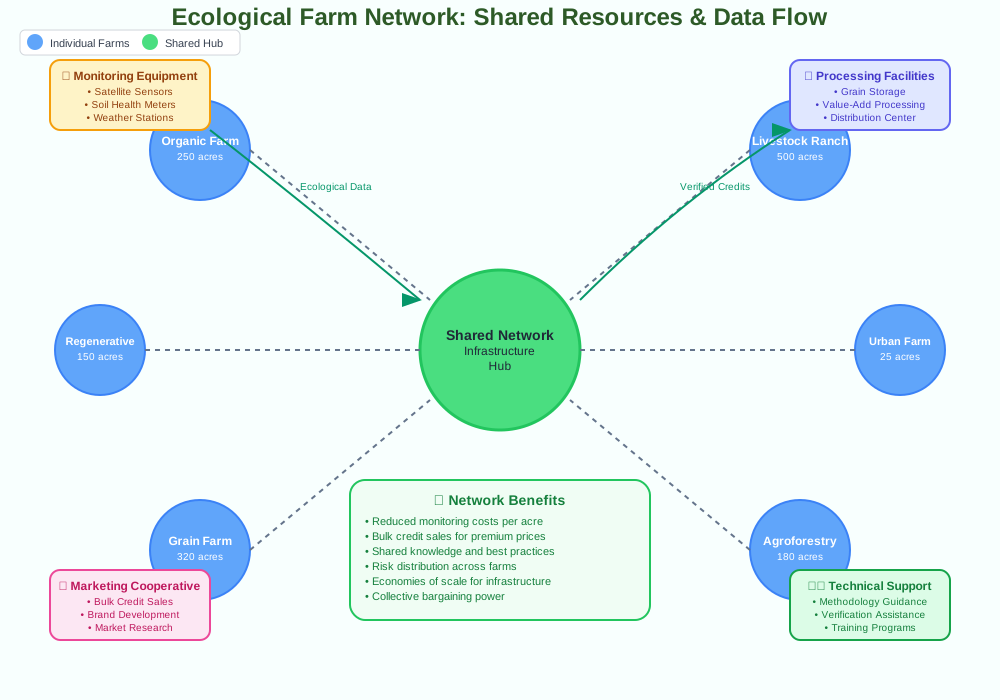
// Cooperative farming network
class EcologicalFarmNetwork {
  constructor() {
    this.member_farms = [];
    this.shared_infrastructure = {
      monitoring_equipment: [],
      processing_facilities: [],
      marketing_cooperative: true
    };
  }

  addFarm(farm) {
    this.member_farms.push(farm);
    this.optimizeNetworkEfficiency();
  }

  optimizeNetworkEfficiency() {
    // Economies of scale for monitoring and verification
    // Shared risk across multiple farms
    // Bulk credit sales for better prices
  }
}
Network Benefits:
- Shared monitoring costs reduce per-acre expenses
- Bulk credit sales command premium prices
- Knowledge sharing accelerates best practice adoption
- Risk distribution across multiple farms and seasons
Troubleshooting Common Issues
"My Soil Isn't Sequestering Carbon Fast Enough"
Solution: Patience and process optimization. Carbon sequestration is a marathon, not a sprint. Focus on:
- Increasing organic matter inputs (compost, cover crop residues)
- Reducing soil disturbance
- Optimizing plant diversity
- Managing livestock grazing intensity
"Credit Verification Is Taking Forever"
Solution: Work with experienced methodologists and ensure your data collection meets standards from day one. Poor documentation is the #1 cause of verification delays.
"Token Rewards Aren't Matching Expectations"
Solution: Check your validator performance and ensure you're participating in governance. Passive staking earns less than active participation.
The Bottom Line: ROI That Actually Matters
Applying regenerative practices to US farms could yield incremental economic value of up to $250 billion over a decade. That's not just feel-good environmental math—that's serious economic opportunity.
The beauty of Regen Network farming is the alignment of incentives. You make money by making soil healthier, capturing carbon, supporting biodiversity, and improving water systems. It's like finding a unicorn that actually exists and pays dividends.
Expected Timeline for Positive Returns:
- Year 1-2: Break-even as practices establish
- Year 3-5: Positive cash flow from credit sales
- Year 5+: Significant profit improvement from soil health gains
Key Success Factors:
- Start with soil testing and baseline measurement
- Choose practices suited to your specific ecosystem
- Invest in proper monitoring infrastructure
- Join networks for shared knowledge and resources
- Stay engaged with platform governance and development
The regenerative agriculture movement is just getting started, and Regen Network incentivizes ecosystem regeneration to reverse climate change while rewarding farmers for doing the right thing. Whether you're a traditional farmer looking to transition or a tech-savvy investor seeking ESG returns, ecological data farming offers a path to profits that actually improve the world.
Now get out there and start farming some data. Your soil will thank you, your wallet will thank you, and future generations definitely will too.