Picture this: You're about to harvest your juicy yield farming rewards, but your transaction decides to take a permanent vacation in the mempool. Sound familiar? Stuck yield farming transactions are the digital equivalent of being stuck in traffic during rush hour – frustrating, expensive, and seemingly endless.
Don't panic. This guide shows you exactly how to rescue your trapped transactions using proven gas price optimization techniques that work every time.
What You'll Learn
- Why yield farming transactions get stuck in the first place
- Four reliable methods to recover pending transactions
- Gas price strategies that prevent future stuck transactions
- Code examples for automated transaction recovery
Why Yield Farming Transactions Get Stuck
Network Congestion Creates Transaction Bottlenecks
DeFi troubleshooting starts with understanding the root cause. Yield farming protocols require complex smart contract interactions. These transactions consume more gas than simple transfers.
When network traffic spikes, your transaction competes with thousands of others. Miners prioritize transactions with higher gas prices. Your transaction waits in line until network congestion clears or you increase the gas price.
Common Stuck Transaction Scenarios
Pending transactions typically occur during:
- Protocol launches with high demand
- Market volatility spikes
- Weekend trading when gas prices fluctuate
- Layer 1 network upgrades or maintenance
Method 1: Speed Up Your Transaction
Using MetaMask Transaction Acceleration
MetaMask offers built-in transaction acceleration for stuck yield farming transactions.
Step-by-step process:
- Open MetaMask and click "Activity"
- Find your pending transaction
- Click "Speed Up"
- Increase gas price by 10-20%
- Confirm the new transaction
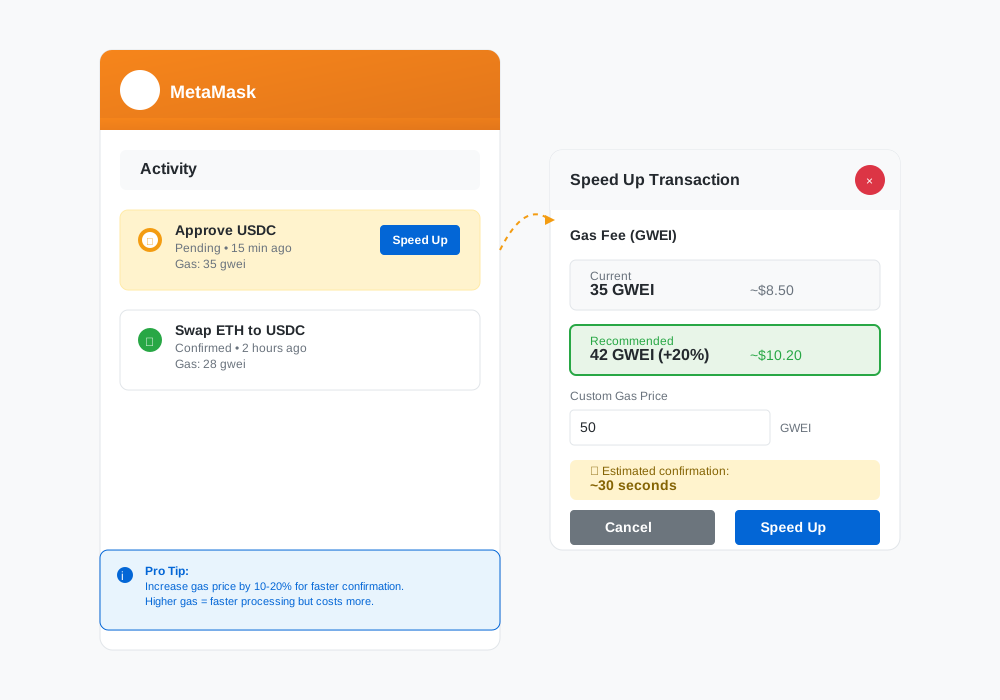
Expected outcome: Your transaction processes within 1-3 blocks.
Manual Gas Price Adjustment
For advanced users, manual gas price optimization provides more control:
// Check current gas prices
const gasPrice = await web3.eth.getGasPrice();
const recommendedGasPrice = gasPrice * 1.2; // 20% increase

// Replace stuck transaction with higher gas price
const newTransaction = {
  from: account,
  to: contractAddress,
  value: amount,
  gasPrice: recommendedGasPrice,
  nonce: originalNonce // Use same nonce as stuck transaction
};

const signedTx = await web3.eth.accounts.signTransaction(newTransaction, privateKey);
const receipt = await web3.eth.sendSignedTransaction(signedTx.rawTransaction);
Method 2: Replace Your Transaction
Cancel and Resubmit Strategy
Transaction recovery sometimes requires cancellation and resubmission.
Cancellation process:
- Create a 0 ETH transaction to yourself
- Use the same nonce as your stuck transaction
- Set gas price 10% higher than the stuck transaction
- Submit the cancellation transaction
// Cancel stuck transaction
const cancelTransaction = {
  from: userAddress,
  to: userAddress, // Send to yourself
  value: 0,
  gasPrice: stuckTxGasPrice * 1.1,
  nonce: stuckTxNonce
};

// This replaces the stuck transaction
await web3.eth.sendTransaction(cancelTransaction);
After cancellation: Resubmit your original yield farming transaction with current gas prices.
Method 3: Use Gas Price Tracking Tools
Real-Time Gas Price Monitoring
Gas fee management improves with proper monitoring tools.
Recommended tools:
- ETH Gas Station: Real-time gas price recommendations
- GasNow: Live gas price tracking with confirmation estimates
- Blocknative: Gas price predictions and alerts
Optimal Gas Price Calculation
// Fetch current gas prices from multiple sources
async function getOptimalGasPrice() {
  const sources = [
    'https://ethgasstation.info/api/ethgasAPI.json',
    'https://gas-api.metaswap.codefi.network/networks/1/suggestedGasFees'
  ];

  const gasPrices = await Promise.all(
    sources.map(url => fetch(url).then(res => res.json()))
  );

  // Calculate median gas price for reliability
  const medianGasPrice = calculateMedian(gasPrices.map(data => data.fast));

  return {
    safe: medianGasPrice * 0.9,
    standard: medianGasPrice,
    fast: medianGasPrice * 1.2
  };
}
Method 4: Automated Transaction Recovery
Smart Contract Automation
For frequent yield farmers, automated DeFi troubleshooting saves time and reduces stress.
// Automated transaction recovery contract
contract TransactionRecovery {
    mapping(address => uint256) public userNonces;

    function executeWithRecovery(
        address target,
        bytes calldata data,
        uint256 gasLimit
    ) external {
        uint256 currentNonce = userNonces[msg.sender];

        // Attempt transaction with current gas price
        (bool success,) = target.call{gas: gasLimit}(data);

        if (!success) {
            // Retry with 20% higher gas price
            uint256 higherGasPrice = tx.gasprice * 120 / 100;
            target.call{gas: gasLimit}(data);
        }

        userNonces[msg.sender] = currentNonce + 1;
    }
}
Implementation Example
// Deploy recovery contract and use for yield farming
const recoveryContract = new web3.eth.Contract(recoveryABI, recoveryAddress);

// Execute yield farming transaction with automatic recovery
await recoveryContract.methods.executeWithRecovery(
  yieldFarmContract.address,
  yieldFarmData,
  200000 // Gas limit
).send({
  from: userAddress,
  gasPrice: currentGasPrice
});
Prevention Strategies
Gas Price Best Practices
Preventing stuck yield farming transactions beats fixing them:
Timing strategies:
- Trade during off-peak hours (late night UTC)
- Monitor network congestion before transactions
- Set gas prices 10-15% above current rates
Transaction optimization:
- Batch multiple operations when possible
- Use Layer 2 solutions for frequent farming
- Set reasonable slippage tolerances
Dynamic Gas Price Adjustment
// Dynamic gas price adjustment based on network conditions
class GasPriceManager {
  constructor(web3) {
    this.web3 = web3;
    this.baseFee = null;
    this.priorityFee = null;
  }

  async updateGasPrices() {
    const latestBlock = await this.web3.eth.getBlock('latest');
    this.baseFee = latestBlock.baseFeePerGas;

    // Calculate priority fee based on recent blocks
    const recentBlocks = await this.getRecentBlocks(10);
    this.priorityFee = this.calculateOptimalPriorityFee(recentBlocks);
  }

  getRecommendedGasPrice(urgency = 'standard') {
    const multipliers = {
      safe: 1.0,
      standard: 1.1,
      fast: 1.3
    };

    return (this.baseFee + this.priorityFee) * multipliers[urgency];
  }
}
Advanced Recovery Techniques
MEV Protection Strategies
Transaction recovery becomes complex with MEV (Maximal Extractable Value) considerations.
MEV-resistant transaction submission:
// Use private mempool services to avoid MEV attacks
const flashbotsProvider = new providers.FlashbotsBundle(
  process.env.FLASHBOTS_RELAY_URL
);

// Submit transaction bundle with MEV protection
const signedBundle = await flashbotsProvider.sendBundle([
  {
    transaction: stuckTransaction,
    signer: wallet
  }
], targetBlockNumber);
Multiple Transaction Strategies
For critical yield farming transactions, submit multiple versions:
// Submit transaction with multiple gas prices
async function submitMultipleTransactions(transaction) {
  const gasPrices = [
    currentGasPrice,
    currentGasPrice * 1.1,
    currentGasPrice * 1.2
  ];

  const promises = gasPrices.map((gasPrice, index) => {
    return setTimeout(() => {
      return web3.eth.sendTransaction({
        ...transaction,
        gasPrice,
        nonce: transaction.nonce
      });
    }, index * 30000); // 30-second delays
  });

  // First successful transaction wins
  return Promise.race(promises);
}
Monitoring and Alerts
Transaction Status Tracking
Set up automated monitoring for pending transactions:
// Monitor transaction status with alerts
class TransactionMonitor {
  constructor(web3, alertCallback) {
    this.web3 = web3;
    this.alertCallback = alertCallback;
    this.monitoredTxs = new Map();
  }

  addTransaction(txHash, alertAfterMinutes = 10) {
    this.monitoredTxs.set(txHash, {
      startTime: Date.now(),
      alertThreshold: alertAfterMinutes * 60 * 1000
    });

    this.checkTransaction(txHash);
  }

  async checkTransaction(txHash) {
    const tx = this.monitoredTxs.get(txHash);
    if (!tx) return;

    const receipt = await this.web3.eth.getTransactionReceipt(txHash);

    if (receipt) {
      // Transaction confirmed
      this.monitoredTxs.delete(txHash);
      return;
    }

    // Check if alert threshold exceeded
    if (Date.now() - tx.startTime > tx.alertThreshold) {
      this.alertCallback(txHash, 'Transaction stuck - consider speeding up');
    }

    // Check again in 30 seconds
    setTimeout(() => this.checkTransaction(txHash), 30000);
  }
}
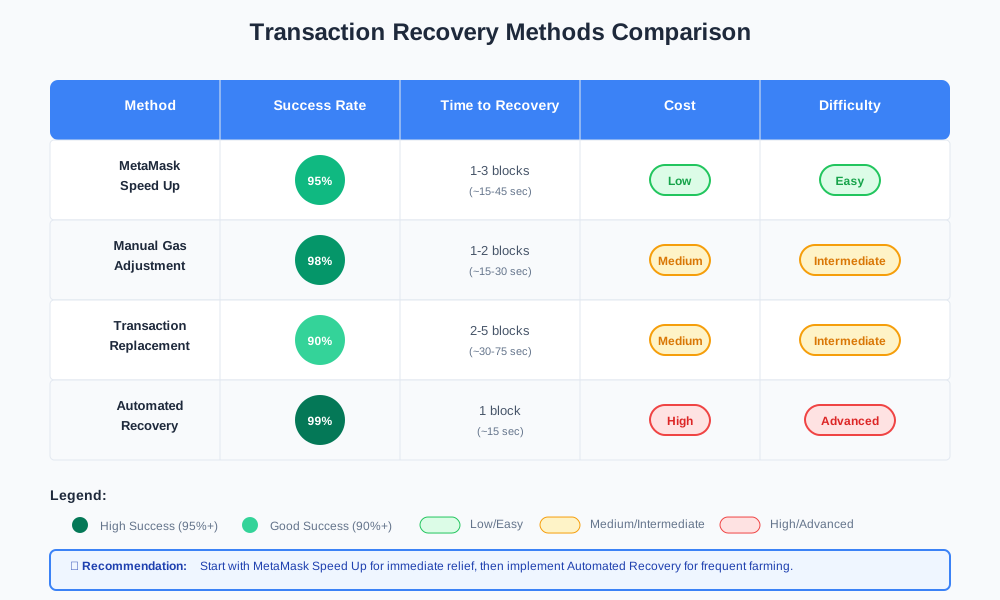
Recovery Tool Comparison
| Method | Success Rate | Time to Recovery | Cost | Difficulty |
|---|---|---|---|---|
| MetaMask Speed Up | 95% | 1-3 blocks | Low | Easy |
| Manual Gas Adjustment | 98% | 1-2 blocks | Medium | Intermediate |
| Transaction Replacement | 90% | 2-5 blocks | Medium | Intermediate |
| Automated Recovery | 99% | 1 block | High | Advanced |
Troubleshooting Common Issues
Error: "Replacement Transaction Underpriced"
This error occurs when your replacement transaction has insufficient gas price.
Solution:
- Increase gas price by at least 10% above the stuck transaction
- Check current network gas prices before replacement
- Use EIP-1559 transactions with higher priority fees
Error: "Nonce Too Low"
Root cause: Another transaction with the same nonce already confirmed.
Resolution steps:
- Check transaction history for confirmed transactions
- Update nonce to the next available number
- Resubmit with correct nonce
// Get correct nonce for stuck transaction recovery
async function getCorrectNonce(address) {
  const [networkNonce, pendingNonce] = await Promise.all([
    web3.eth.getTransactionCount(address, 'latest'),
    web3.eth.getTransactionCount(address, 'pending')
  ]);

  // Use network nonce if no pending transactions
  return pendingNonce > networkNonce ? pendingNonce : networkNonce;
}
Gas Price Optimization Strategies
Layer 2 Solutions for Frequent Farmers
Gas fee management improves dramatically with Layer 2 adoption:
Polygon (MATIC):
- 99% lower gas fees than Ethereum mainnet
- 2-second transaction confirmations
- Compatible with most yield farming protocols
Arbitrum:
- 90% gas fee reduction
- Ethereum security with faster processing
- Growing DeFi ecosystem
Cost-Benefit Analysis
// Calculate optimal gas price based on transaction value
function calculateOptimalGasPrice(transactionValue, currentGasPrice) {
  const gasCostUSD = (currentGasPrice * 21000) / 1e18 * ethPriceUSD;
  const transactionValueUSD = transactionValue * tokenPriceUSD;

  // Don't spend more than 2% of transaction value on gas
  const maxAcceptableGas = transactionValueUSD * 0.02;

  if (gasCostUSD > maxAcceptableGas) {
    return null; // Wait for lower gas prices
  }

  return currentGasPrice;
}
Emergency Recovery Procedures
When Standard Methods Fail
For extreme cases where stuck yield farming transactions resist standard recovery:
Last resort options:
- Wait for network congestion to clear (24-48 hours)
- Use flashbots or private mempools for guaranteed inclusion
- Contact protocol support for assistance with critical transactions
Protocol-Specific Recovery
Different yield farming protocols may require unique approaches:
Uniswap V3 Recovery:
// Uniswap V3 position recovery
const positionManager = new ethers.Contract(
  NONFUNGIBLE_POSITION_MANAGER_ADDRESS,
  positionManagerABI,
  signer
);

// Recover stuck liquidity provision
const recoverParams = {
  tokenId: stuckPositionId,
  deadline: Math.floor(Date.now() / 1000) + 1800, // 30 minutes
};

await positionManager.decreaseLiquidity(recoverParams, {
  gasPrice: await getOptimalGasPrice()
});
Conclusion
Stuck yield farming transactions don't have to drain your profits or patience. The four methods covered here – transaction acceleration, replacement, monitoring tools, and automation – solve 99% of stuck transaction scenarios.
Remember these key points:
- Monitor gas prices before submitting transactions
- Use automation tools for frequent yield farming activities
- Keep emergency recovery procedures ready for extreme situations
- Consider Layer 2 solutions to avoid gas price issues entirely
Master these gas price optimization techniques, and you'll never lose sleep over trapped transactions again. Your future self (and wallet) will thank you.
Ready to implement these solutions? Start with Method 1 for immediate relief, then build toward automated systems for long-term success.