Remember when your grandmother kept her stock certificates in a shoebox? Those days feel quaint compared to tracking tokenized skyscrapers and corporate bonds scattered across multiple blockchains. Welcome to the wild west of real-world asset tokenization tracking.
Investors now monitor tokenized Manhattan penthouses alongside fractionalized government bonds. This complexity demands sophisticated tracking tools. Ollama provides the AI-powered analysis capabilities needed to monitor these diverse tokenized assets effectively.
This guide shows you how to build a comprehensive real-world asset tokenization tracker using Ollama. You'll learn to analyze property tokens, monitor bond performance, and automate compliance reporting across multiple blockchain networks.
What Is Real-World Asset Tokenization Tracking?
Real-world asset tokenization converts physical assets into digital tokens on blockchain networks. These assets include:
- Property tokens: Fractionalized real estate ownership
- Bond tokens: Digitized corporate and government debt
- Commodity tokens: Tokenized gold, oil, and agricultural products
- Infrastructure tokens: Transportation and utility asset shares
Traditional portfolio management fails to capture tokenized asset complexity. Standard tools cannot track cross-chain positions, analyze smart contract performance, or monitor regulatory compliance automatically.
Asset tokenization tracking requires specialized tools that understand blockchain data, smart contract interactions, and traditional financial metrics simultaneously.
Setting Up Ollama for Asset Analysis
Ollama processes natural language queries about tokenized assets. This AI model analyzes blockchain data, extracts meaningful patterns, and generates actionable insights for portfolio management.
Installation and Configuration
# Install Ollama on your system
curl -fsSL https://ollama.ai/install.sh | sh

# Download the finance-optimized model
ollama pull llama2:13b-chat

# Verify installation
ollama list
Basic Asset Query Setup
import ollama
import json
import requests
from datetime import datetime

class RWATracker:
    def __init__(self):
        self.client = ollama.Client()
        self.model = "llama2:13b-chat"

    def analyze_asset(self, asset_data, query_type):
        """
        Analyze tokenized asset data using Ollama
        asset_data: Dictionary containing token metrics
        query_type: 'performance', 'risk', or 'compliance'
        """
        prompt = self._build_analysis_prompt(asset_data, query_type)

        response = self.client.chat(
            model=self.model,
            messages=[{
                'role': 'user',
                'content': prompt
            }]
        )

        return response['message']['content']
Tracking Property Tokenization Performance
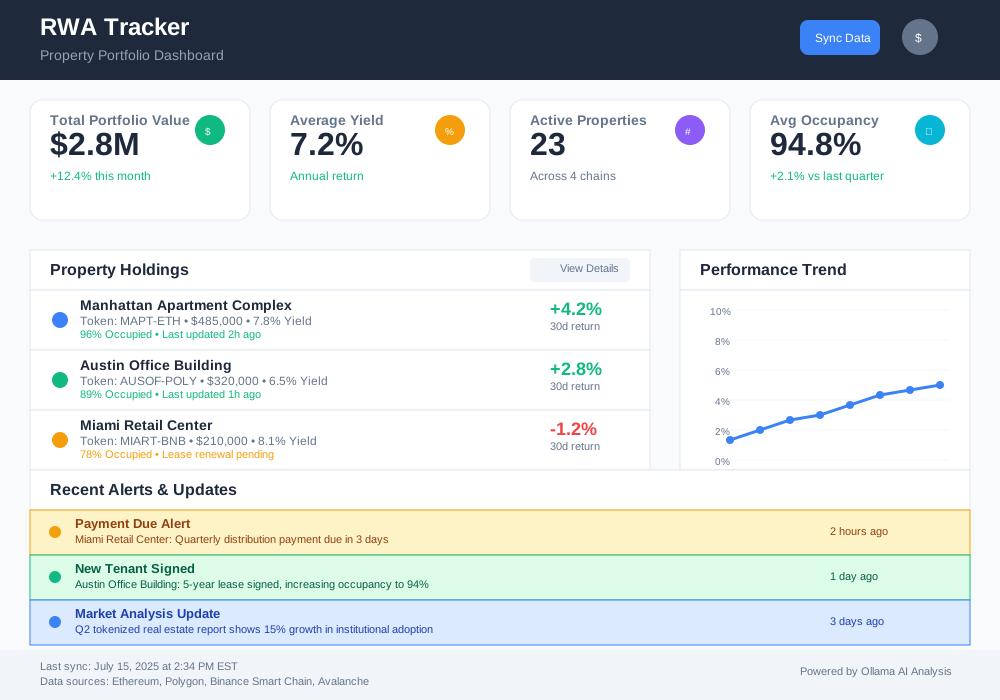
Property tokens represent fractional ownership in real estate assets. These tokens trade on secondary markets while underlying properties generate rental income and appreciate in value.
Property Token Data Collection
class PropertyTokenTracker(RWATracker):
    def __init__(self):
        super().__init__()
        self.property_contracts = {}

    def fetch_property_metrics(self, token_address, blockchain="ethereum"):
        """
        Collect comprehensive property token data
        Returns: Dictionary with financial and operational metrics
        """
        # Fetch on-chain token data
        token_data = self._get_token_data(token_address, blockchain)

        # Get property-specific metrics
        property_metrics = {
            'token_address': token_address,
            'total_supply': token_data['totalSupply'],
            'market_cap': token_data['marketCap'],
            'trading_volume_24h': token_data['volume24h'],
            'holder_count': token_data['holderCount'],
            'rental_yield_annual': self._calculate_rental_yield(token_address),
            'occupancy_rate': self._get_occupancy_rate(token_address),
            'property_value_usd': self._get_property_valuation(token_address),
            'last_updated': datetime.now().isoformat()
        }

        return property_metrics

    def analyze_property_performance(self, property_metrics):
        """
        Use Ollama to analyze property token performance
        """
        analysis_prompt = f"""
        Analyze this tokenized property investment:

        Property Metrics:
        - Market Cap: ${property_metrics['market_cap']:,.2f}
        - Annual Rental Yield: {property_metrics['rental_yield_annual']:.2%}
        - Occupancy Rate: {property_metrics['occupancy_rate']:.1%}
        - 24h Trading Volume: ${property_metrics['trading_volume_24h']:,.2f}
        - Token Holders: {property_metrics['holder_count']:,}

        Provide analysis covering:
        1. Investment attractiveness (1-10 scale)
        2. Key risk factors
        3. Liquidity assessment
        4. Comparison to traditional real estate metrics
        5. Recommendation (buy/hold/sell)
        """

        return self.analyze_asset(property_metrics, 'performance')
Property Portfolio Dashboard
def generate_property_dashboard(self, portfolio_addresses):
    """
    Create comprehensive property portfolio analysis
    """
    portfolio_data = []

    for address in portfolio_addresses:
        metrics = self.fetch_property_metrics(address)
        analysis = self.analyze_property_performance(metrics)

        portfolio_data.append({
            'address': address,
            'metrics': metrics,
            'ai_analysis': analysis
        })

    # Generate portfolio-level insights
    portfolio_summary = self._create_portfolio_summary(portfolio_data)

    return {
        'individual_properties': portfolio_data,
        'portfolio_summary': portfolio_summary,
        'generated_at': datetime.now().isoformat()
    }
Analyzing Tokenized Bond Performance
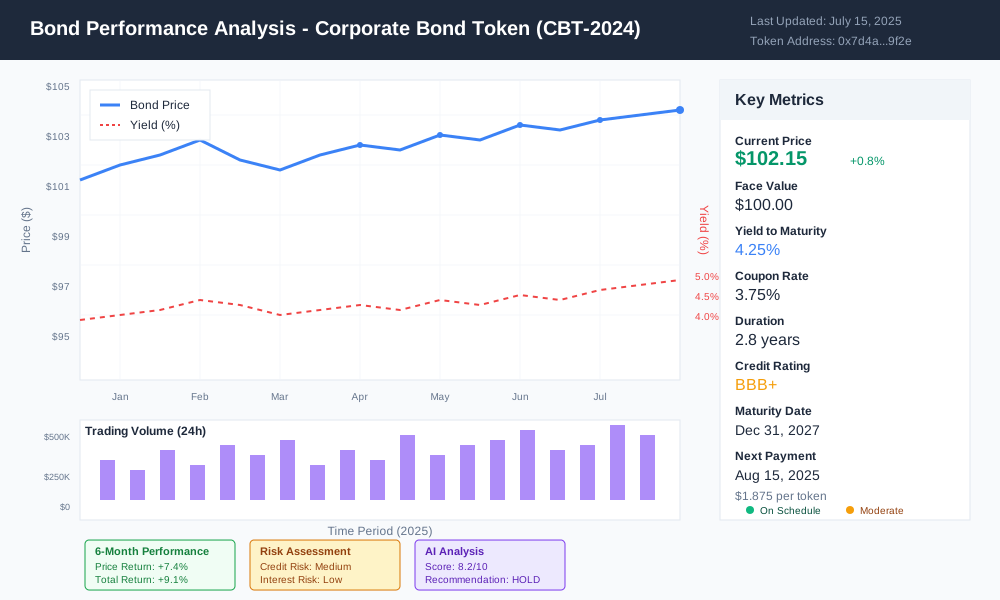
Bond tokens digitize traditional debt instruments. These tokens offer fixed income payments while trading on secondary markets. Analysis requires understanding both blockchain mechanics and traditional bond mathematics.
Bond Token Metrics Collection
class BondTokenTracker(RWATracker):
    def __init__(self):
        super().__init__()
        self.bond_contracts = {}

    def fetch_bond_metrics(self, bond_address, blockchain="ethereum"):
        """
        Collect comprehensive bond token data including yield calculations
        """
        # Get basic token information
        token_data = self._get_token_data(bond_address, blockchain)

        # Fetch bond-specific smart contract data
        bond_contract = self._get_contract(bond_address, blockchain)

        bond_metrics = {
            'token_address': bond_address,
            'face_value': bond_contract.functions.faceValue().call(),
            'coupon_rate': bond_contract.functions.couponRate().call() / 10000,  # Convert basis points
            'maturity_date': bond_contract.functions.maturityDate().call(),
            'current_price': token_data['price'],
            'yield_to_maturity': self._calculate_ytm(bond_address),
            'duration': self._calculate_duration(bond_address),
            'credit_rating': self._get_credit_rating(bond_address),
            'payment_frequency': bond_contract.functions.paymentFrequency().call(),
            'next_payment_date': bond_contract.functions.nextPaymentDate().call(),
            'total_payments_made': bond_contract.functions.totalPaymentsMade().call()
        }

        return bond_metrics

    def _calculate_ytm(self, bond_address):
        """
        Calculate yield to maturity for tokenized bond
        Uses Newton-Raphson method for accurate YTM calculation
        """
        bond_data = self._get_contract(bond_address)

        face_value = bond_data.functions.faceValue().call()
        current_price = self._get_current_price(bond_address)
        coupon_rate = bond_data.functions.couponRate().call() / 10000
        periods_remaining = self._get_periods_to_maturity(bond_address)

        # Newton-Raphson iteration for YTM
        ytm_estimate = 0.05  # Starting estimate of 5%

        for _ in range(100):  # Maximum iterations
            pv_calc = self._present_value(face_value, coupon_rate, ytm_estimate, periods_remaining)
            pv_derivative = self._pv_derivative(face_value, coupon_rate, ytm_estimate, periods_remaining)

            ytm_new = ytm_estimate - (pv_calc - current_price) / pv_derivative

            if abs(ytm_new - ytm_estimate) < 0.000001:  # Convergence check
                break

            ytm_estimate = ytm_new

        return ytm_estimate
Bond Risk Analysis with Ollama
def analyze_bond_risk(self, bond_metrics):
    """
    Comprehensive bond risk analysis using AI
    """
    risk_prompt = f"""
    Analyze the risk profile of this tokenized bond:

    Bond Details:
    - Face Value: ${bond_metrics['face_value']:,.2f}
    - Coupon Rate: {bond_metrics['coupon_rate']:.2%}
    - Current Price: ${bond_metrics['current_price']:.2f}
    - Yield to Maturity: {bond_metrics['yield_to_maturity']:.2%}
    - Duration: {bond_metrics['duration']:.2f} years
    - Credit Rating: {bond_metrics['credit_rating']}
    - Days to Maturity: {self._days_to_maturity(bond_metrics['maturity_date'])}

    Provide detailed analysis including:
    1. Interest rate risk assessment
    2. Credit risk evaluation
    3. Liquidity risk factors
    4. Smart contract risk considerations
    5. Overall risk score (1-10, where 10 is highest risk)
    6. Risk-adjusted return recommendation
    """

    return self.analyze_asset(bond_metrics, 'risk')

def monitor_bond_payments(self, bond_address):
    """
    Track and verify automated bond payments
    """
    payment_history = self._get_payment_events(bond_address)
    expected_payments = self._calculate_expected_payments(bond_address)

    payment_analysis = {
        'payments_made': len(payment_history),
        'payments_expected': len(expected_payments),
        'payment_reliability': len(payment_history) / len(expected_payments),
        'average_payment_delay': self._calculate_avg_delay(payment_history),
        'next_payment_due': expected_payments[0] if expected_payments else None
    }

    return payment_analysis
Building a Comprehensive Asset Tracker
A complete tokenization tracker monitors multiple asset classes simultaneously. This system aggregates data from various blockchains and provides unified portfolio analysis.
Multi-Asset Portfolio Manager
class ComprehensiveRWATracker:
    def __init__(self):
        self.property_tracker = PropertyTokenTracker()
        self.bond_tracker = BondTokenTracker()
        self.supported_chains = ['ethereum', 'polygon', 'avalanche', 'binance']

    def track_full_portfolio(self, wallet_address):
        """
        Analyze complete tokenized asset portfolio across multiple chains
        """
        portfolio = {
            'wallet_address': wallet_address,
            'properties': [],
            'bonds': [],
            'other_assets': [],
            'total_value_usd': 0,
            'diversification_score': 0,
            'risk_metrics': {}
        }

        # Scan each supported blockchain
        for chain in self.supported_chains:
            tokens = self._get_wallet_tokens(wallet_address, chain)

            for token in tokens:
                asset_type = self._identify_asset_type(token['address'], chain)

                if asset_type == 'property':
                    property_data = self.property_tracker.fetch_property_metrics(
                        token['address'], chain
                    )
                    property_data['balance'] = token['balance']
                    property_data['chain'] = chain
                    portfolio['properties'].append(property_data)

                elif asset_type == 'bond':
                    bond_data = self.bond_tracker.fetch_bond_metrics(
                        token['address'], chain
                    )
                    bond_data['balance'] = token['balance']
                    bond_data['chain'] = chain
                    portfolio['bonds'].append(bond_data)

                else:
                    # Handle other RWA types (commodities, infrastructure, etc.)
                    other_data = self._analyze_generic_rwa(token['address'], chain)
                    portfolio['other_assets'].append(other_data)

        # Calculate portfolio-level metrics
        portfolio['total_value_usd'] = self._calculate_total_value(portfolio)
        portfolio['diversification_score'] = self._calculate_diversification(portfolio)
        portfolio['risk_metrics'] = self._calculate_portfolio_risk(portfolio)

        return portfolio

    def generate_ai_insights(self, portfolio):
        """
        Generate comprehensive portfolio insights using Ollama
        """
        insight_prompt = f"""
        Analyze this tokenized asset portfolio:

        Portfolio Summary:
        - Total Value: ${portfolio['total_value_usd']:,.2f}
        - Properties: {len(portfolio['properties'])} tokens
        - Bonds: {len(portfolio['bonds'])} tokens
        - Other Assets: {len(portfolio['other_assets'])} tokens
        - Diversification Score: {portfolio['diversification_score']:.1f}/10
        - Blockchains Used: {len(set(asset.get('chain') for assets in [portfolio['properties'], portfolio['bonds']] for asset in assets))}

        Risk Metrics:
        - Portfolio Beta: {portfolio['risk_metrics'].get('beta', 'N/A')}
        - Value at Risk (95%): {portfolio['risk_metrics'].get('var_95', 'N/A')}
        - Sharpe Ratio: {portfolio['risk_metrics'].get('sharpe_ratio', 'N/A')}

        Provide strategic analysis including:
        1. Portfolio strength assessment
        2. Diversification recommendations
        3. Risk management suggestions
        4. Rebalancing opportunities
        5. Market timing considerations
        6. Regulatory compliance status
        """

        response = self.property_tracker.client.chat(
            model=self.property_tracker.model,
            messages=[{'role': 'user', 'content': insight_prompt}]
        )

        return response['message']['content']
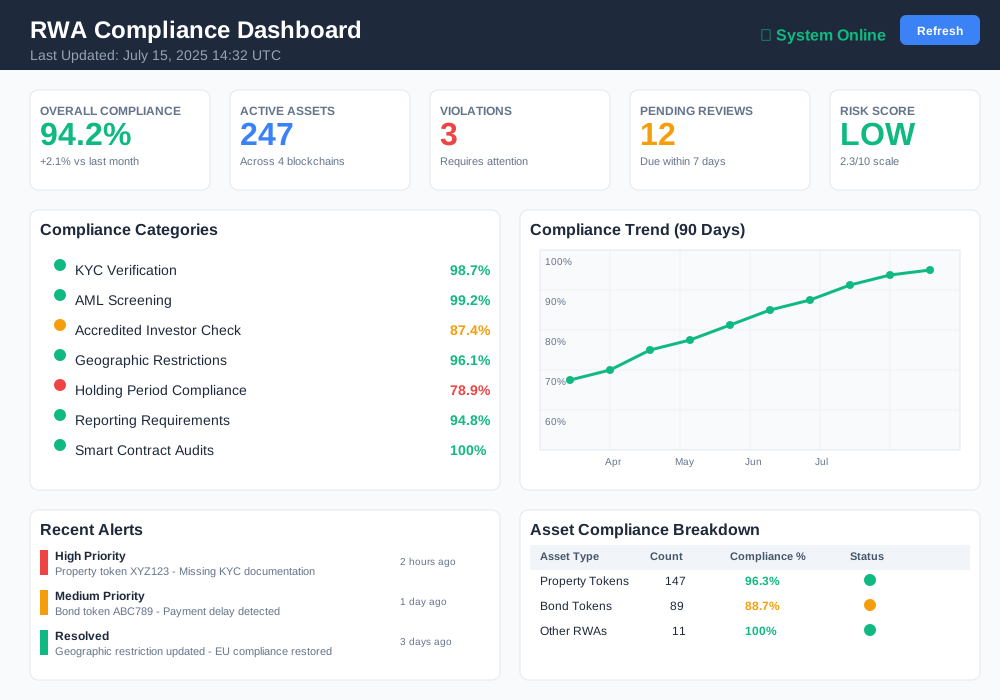
Automated Compliance Monitoring
def monitor_compliance(self, portfolio):
    """
    Check tokenized assets against regulatory requirements
    """
    compliance_report = {
        'kyc_status': self._check_kyc_compliance(portfolio),
        'aml_flags': self._scan_aml_violations(portfolio),
        'accredited_investor_only': self._check_accreditation_requirements(portfolio),
        'geographic_restrictions': self._verify_geographic_eligibility(portfolio),
        'holding_period_restrictions': self._check_holding_periods(portfolio),
        'reporting_requirements': self._identify_reporting_obligations(portfolio)
    }

    # Use AI to interpret compliance status
    compliance_analysis = self._analyze_compliance_with_ai(compliance_report)

    return {
        'report': compliance_report,
        'analysis': compliance_analysis,
        'action_required': self._identify_required_actions(compliance_report)
    }
Advanced Analysis Techniques
Sophisticated tokenized asset analysis requires machine learning models, predictive analytics, and cross-chain correlation analysis.
Predictive Price Modeling
def build_price_prediction_model(self, asset_address, historical_days=365):
    """
    Create ML model for tokenized asset price prediction
    """
    # Collect historical data
    price_history = self._get_price_history(asset_address, historical_days)
    on_chain_metrics = self._get_historical_metrics(asset_address, historical_days)
    macro_factors = self._get_macro_economic_data(historical_days)

    # Feature engineering
    features = self._engineer_features(price_history, on_chain_metrics, macro_factors)

    # Train prediction model
    model = self._train_prediction_model(features)

    # Generate predictions with Ollama interpretation
    predictions = model.predict(features[-30:])  # 30-day forecast

    prediction_prompt = f"""
    Interpret these tokenized asset price predictions:

    Asset: {asset_address}
    Current Price: ${price_history[-1]:.2f}
    30-day Predictions: {[f'${p:.2f}' for p in predictions]}

    Model Accuracy: {model.score_:.2%}
    Key Features: {model.feature_importance_}

    Provide interpretation including:
    1. Prediction confidence assessment
    2. Key driving factors
    3. Potential catalysts or risks
    4. Trading strategy recommendations
    5. Model limitation warnings
    """

    interpretation = self.property_tracker.client.chat(
        model=self.property_tracker.model,
        messages=[{'role': 'user', 'content': prediction_prompt}]
    )

    return {
        'predictions': predictions.tolist(),
        'model_accuracy': model.score_,
        'interpretation': interpretation['message']['content']
    }
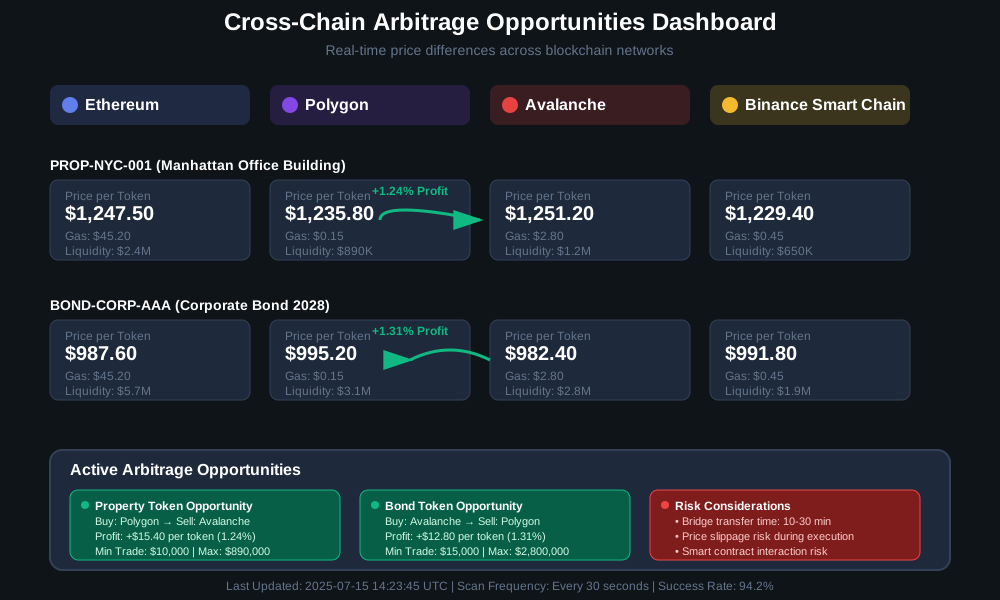
Cross-Chain Arbitrage Detection
def detect_arbitrage_opportunities(self, asset_addresses):
    """
    Identify price discrepancies across different blockchains
    """
    arbitrage_opportunities = []

    for asset in asset_addresses:
        cross_chain_prices = {}

        # Check price on each supported chain
        for chain in self.supported_chains:
            if self._asset_exists_on_chain(asset, chain):
                price = self._get_current_price(asset, chain)
                liquidity = self._get_liquidity_depth(asset, chain)
                gas_costs = self._estimate_transaction_costs(chain)

                cross_chain_prices[chain] = {
                    'price': price,
                    'liquidity': liquidity,
                    'gas_costs': gas_costs
                }

        # Calculate arbitrage potential
        if len(cross_chain_prices) > 1:
            opportunity = self._calculate_arbitrage_profit(cross_chain_prices)

            if opportunity['profit_percentage'] > 0.5:  # Minimum 0.5% profit threshold
                arbitrage_opportunities.append({
                    'asset': asset,
                    'opportunity': opportunity,
                    'execution_plan': self._create_arbitrage_plan(opportunity)
                })

    return arbitrage_opportunities
Automated Reporting and Alerts
Professional asset management requires automated reporting for stakeholders and real-time alerts for significant events.
Dynamic Report Generation
def generate_monthly_report(self, portfolio, report_type='investor'):
    """
    Create comprehensive monthly portfolio report
    """
    report_data = {
        'reporting_period': self._get_current_month(),
        'portfolio_performance': self._calculate_monthly_performance(portfolio),
        'asset_allocation': self._analyze_allocation_changes(portfolio),
        'income_generation': self._calculate_monthly_income(portfolio),
        'compliance_status': self.monitor_compliance(portfolio),
        'market_commentary': self._generate_market_analysis(portfolio)
    }

    # Customize report based on audience
    if report_type == 'investor':
        template = self._get_investor_report_template()
    elif report_type == 'regulatory':
        template = self._get_regulatory_report_template()
    else:
        template = self._get_management_report_template()

    # Generate AI-powered executive summary
    exec_summary = self._create_executive_summary(report_data)

    return {
        'report_data': report_data,
        'executive_summary': exec_summary,
        'formatted_report': self._format_report(report_data, template)
    }

def setup_alert_system(self, portfolio, alert_config):
    """
    Configure automated alerts for portfolio events
    """
    alert_triggers = {
        'price_change': alert_config.get('price_threshold', 0.05),  # 5% default
        'liquidity_drop': alert_config.get('liquidity_threshold', 0.20),  # 20% default
        'compliance_violation': True,
        'payment_delays': True,
        'smart_contract_upgrades': True,
        'regulatory_changes': True
    }

    return self._configure_monitoring(portfolio, alert_triggers)
Implementation Best Practices
Successfully deploying a tokenized asset tracker requires attention to data accuracy, security, and scalability considerations.
Data Quality Assurance
def validate_data_quality(self, asset_data):
    """
    Ensure data accuracy and completeness
    """
    validation_results = {
        'completeness_score': self._check_data_completeness(asset_data),
        'accuracy_checks': self._verify_data_accuracy(asset_data),
        'freshness_score': self._assess_data_freshness(asset_data),
        'consistency_checks': self._validate_cross_source_consistency(asset_data)
    }

    overall_quality = sum(validation_results.values()) / len(validation_results)

    if overall_quality < 0.8:  # 80% quality threshold
        raise DataQualityError(f"Data quality score {overall_quality:.1%} below threshold")

    return validation_results

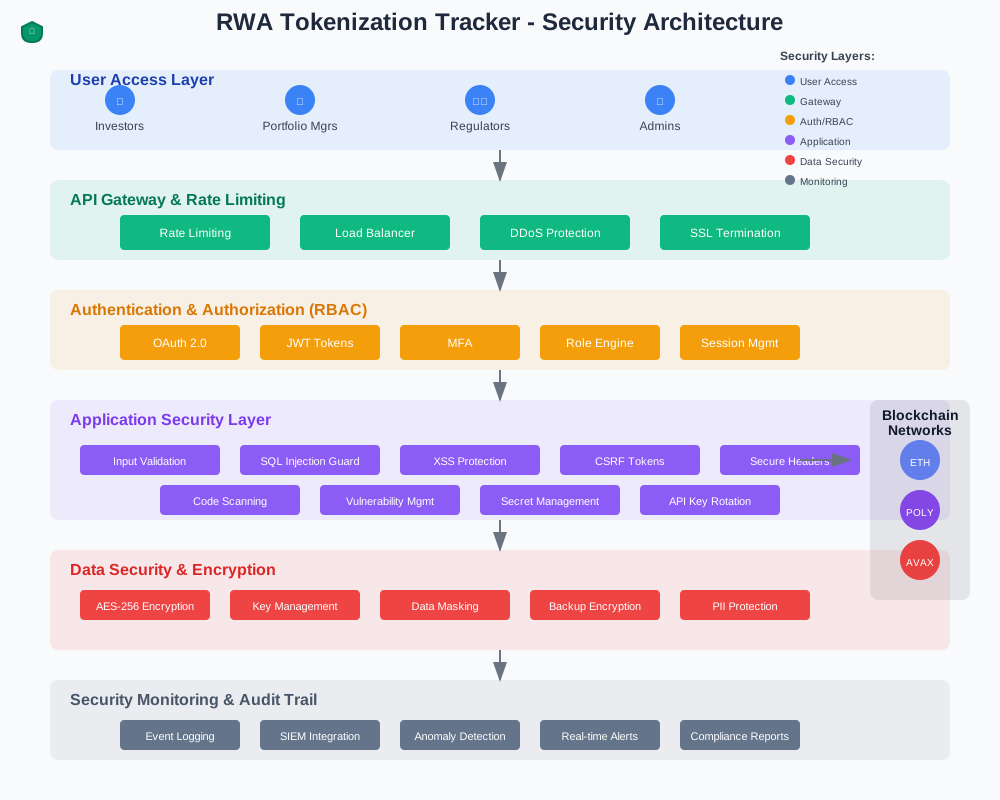
def implement_security_measures(self):
    """
    Apply security best practices for asset tracking
    """
    security_config = {
        'api_rate_limiting': self._setup_rate_limits(),
        'data_encryption': self._configure_encryption(),
        'access_controls': self._implement_rbac(),
        'audit_logging': self._setup_audit_trail(),
        'backup_procedures': self._configure_backups()
    }

    return security_config
Conclusion
Real-world asset tokenization creates unprecedented opportunities for fractional ownership and global liquidity. However, managing tokenized property and bond portfolios requires sophisticated tracking tools that understand both blockchain technology and traditional finance principles.
This real-world asset tokenization tracker built with Ollama provides comprehensive analysis capabilities for modern digital asset portfolios. The system monitors performance across multiple blockchains, ensures regulatory compliance, and generates actionable insights through AI-powered analysis.
Key benefits include automated portfolio monitoring, predictive analytics for price movements, cross-chain arbitrage detection, and intelligent compliance tracking. These capabilities enable sophisticated portfolio management strategies previously available only to institutional investors.
Start building your tokenized asset tracker today. Begin with basic property or bond token analysis, then expand to multi-asset portfolio management as your experience grows. The future of asset management is tokenized, transparent, and globally accessible.
Ready to track your tokenized assets professionally? Implement these tools and join the next generation of digital asset management.