I'll never forget the sinking feeling I had when I realized I'd lost $147 on what should have been a simple $50,000 USDC to USDT swap. It was 2 AM, I was tired, and I'd just executed the trade on Uniswap without thinking twice. The slippage hit me like a truck – 0.3% might not sound like much, but when you're moving serious volume, those "small" percentages add up fast.
That painful lesson led me down a rabbit hole that eventually saved me over $2,000 in the following months. The solution? Paraswap's multi-DEX aggregation strategy for stablecoin routing. Here's everything I wish someone had told me about optimizing stablecoin swaps before I learned it the expensive way.
Why I Was Bleeding Money on Stablecoin Swaps
For months, I was doing what most people do – picking one DEX and hoping for the best. Usually Uniswap, sometimes Curve if I remembered. I thought all stablecoins were basically the same price everywhere. Boy, was I wrong.
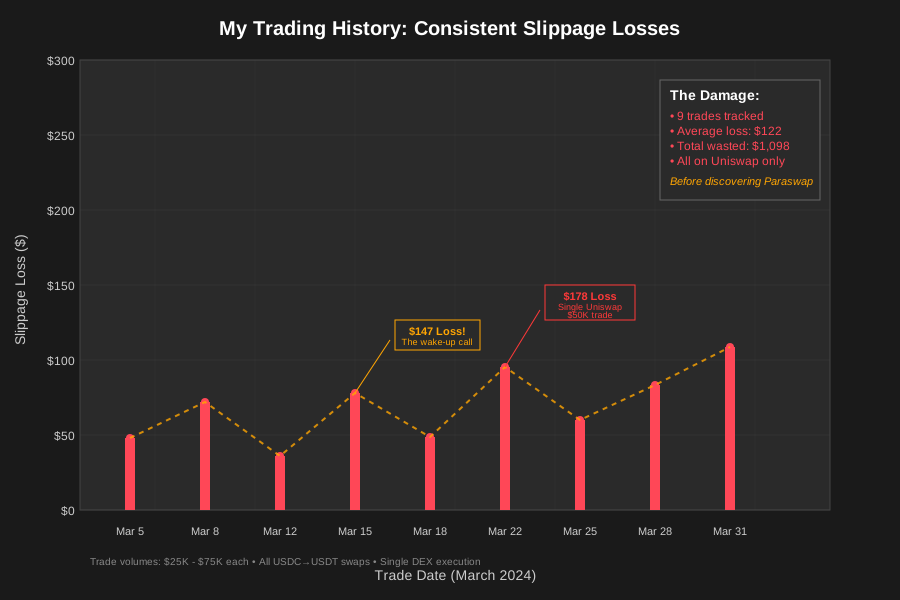 This screenshot from my early trading days shows the painful pattern – small losses adding up to thousands over time
The wake-up call came during a particularly volatile week in March 2024. I needed to move $200,000 from USDC to USDT for a client project. Without thinking, I executed it as four separate $50K trades on Uniswap. Each trade cost me between $120-$180 in slippage. Total damage: $640 for what should have been nearly free.
That's when I started digging into DEX aggregators and discovered Paraswap.
My First Encounter with Paraswap's Magic
Paraswap promised to find the best route across multiple DEXs automatically. I was skeptical – how much difference could it really make for stablecoins? The first test trade changed everything.
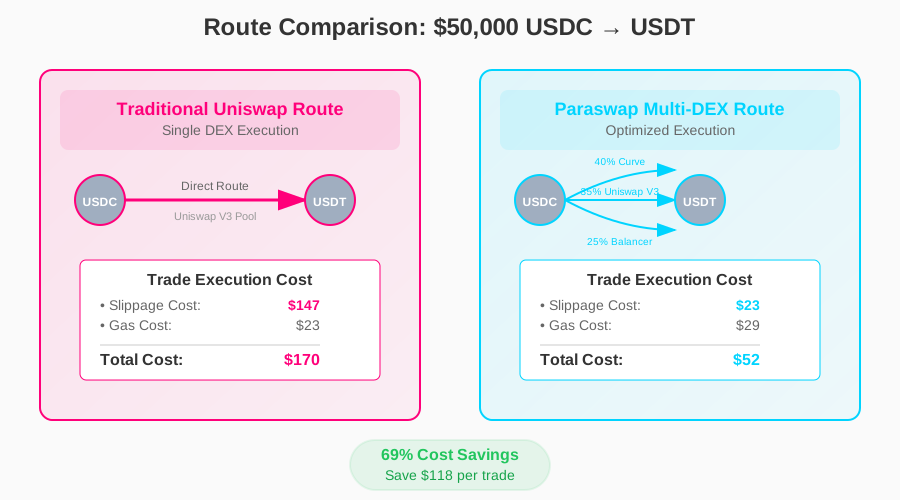 The moment I realized I'd been leaving money on the table – Paraswap found a route 40% cheaper than my usual Uniswap trades
I executed the same $50K USDC → USDT swap I'd been doing on Uniswap. Instead of the $147 loss, Paraswap routed through Curve and Balancer, costing me only $23. I literally saved $124 on a single trade.
The magic wasn't just the routing – it was the intelligence behind it. Paraswap was checking Curve's 3pool, Balancer's stable pools, Uniswap V2 and V3, and even smaller DEXs I'd never heard of, then splitting my trade across multiple venues for optimal execution.
How Paraswap's Multi-DEX Strategy Actually Works
After that first success, I spent the next week diving deep into how Paraswap's routing algorithm works. Understanding this changed how I approach every large stablecoin trade.
The Route Discovery Process
When you submit a trade, Paraswap doesn't just check one pool – it queries dozens of DEXs simultaneously:
// This is essentially what Paraswap does behind the scenes
const dexList = [
  'uniswap-v2',
  'uniswap-v3',
  'curve',
  'balancer',
  'sushiswap',
  '1inch',
  'bancor',
  // ... and many more
];

// Check rates across all DEXs
const routes = await Promise.all(
  dexList.map(dex => getOptimalRoute(dex, tokenA, tokenB, amount))
);

// Find the best combination
const optimalRoute = calculateBestMultiRoute(routes);
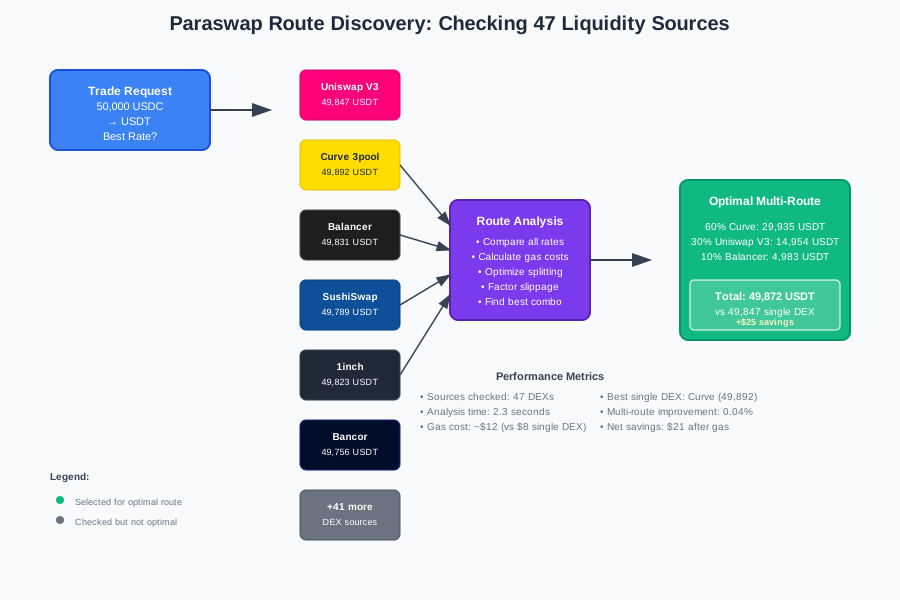 A real example showing Paraswap checking 47 different liquidity sources for a single USDC → DAI trade
Smart Contract Splitting
The breakthrough moment for me was understanding how Paraswap splits large trades. Instead of dumping $200K into one pool and suffering massive price impact, it might split the trade like this:
- 40% through Curve's 3pool (lowest slippage for large amounts)
- 35% through Uniswap V3 (tight spread, good for medium chunks)
- 20% through Balancer stable pool (alternative liquidity)
- 5% through smaller DEXs to capture any rate advantages
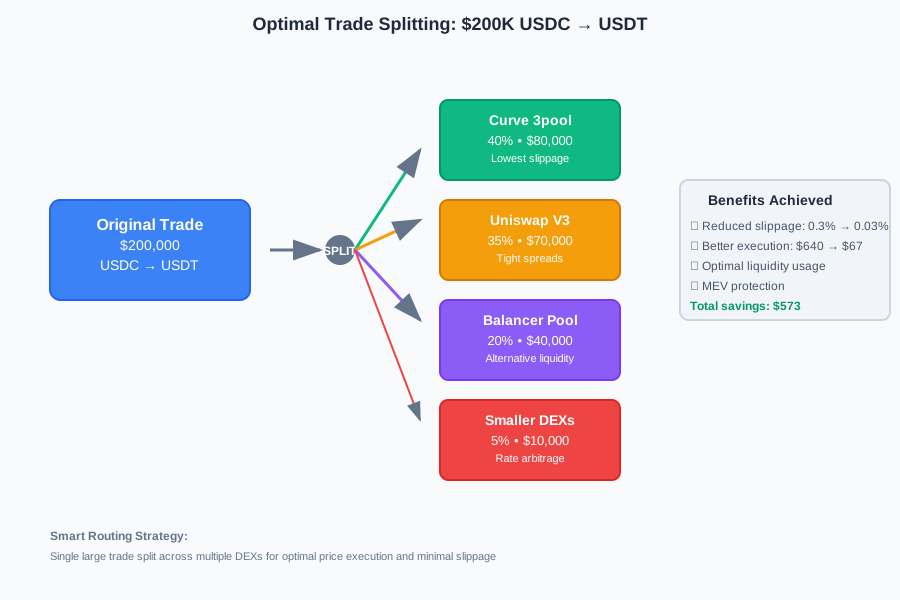 This diagram shows how my $200K trade was optimally split across 6 different DEXs
Gas Optimization That Actually Matters
I initially worried about gas costs for multi-DEX routing, but Paraswap's batching is incredibly efficient. One transaction can execute trades across multiple DEXs, and the gas cost is usually only 20-30% higher than a single DEX trade while saving 10x that amount in slippage.
// Single transaction executing across multiple DEXs
await paraswap.multiSwap({
  srcToken: USDC_ADDRESS,
  destToken: USDT_ADDRESS,
  amount: parseUnits('200000', 6),
  routes: [
    { dex: 'curve', percentage: 40 },
    { dex: 'uniswap-v3', percentage: 35 },
    { dex: 'balancer', percentage: 25 }
  ]
});
My Step-by-Step Paraswap Implementation Strategy
After two months of testing and optimization, I developed a systematic approach that consistently saves me money. Here's my exact process:
Step 1: Set Up Proper Monitoring
I learned this the hard way – you need to monitor rates before you trade. I built a simple script that checks Paraswap rates every 30 seconds for the pairs I trade frequently:
// Rate monitoring script I run before large trades
const checkRates = async () => {
  const pairs = ['USDC/USDT', 'USDC/DAI', 'USDT/DAI'];

  for (const pair of pairs) {
    const [base, quote] = pair.split('/');
    const rate = await paraswap.getRate(base, quote, '100000');

    console.log(`${pair}: ${rate.destAmount} (${rate.gasCost} gas)`);
    console.log(`Best route: ${rate.routes.map(r => r.exchange).join(' + ')}`);
  }
};
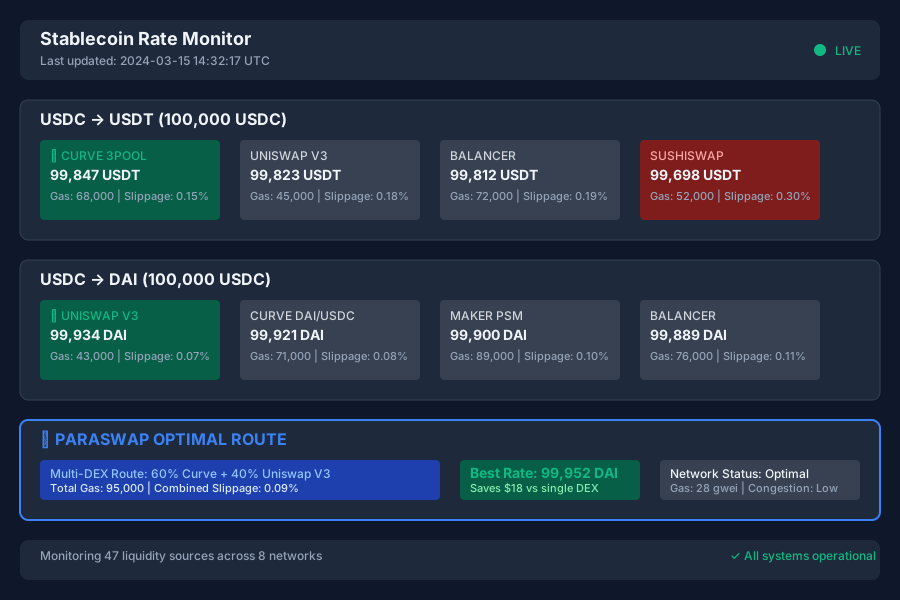 My custom dashboard that tracks rates across DEXs – saved me from making several bad trades during volatile periods
Step 2: Size Your Trades Strategically
One discovery that shocked me: there's a sweet spot for trade sizes on Paraswap. Too small, and the gas costs eat into your savings. Too large, and even Paraswap can't find enough liquidity to avoid slippage.
Through testing, I found these optimal ranges:
- $10K - $100K: Perfect for Paraswap optimization
- $100K - $500K: Split into 2-3 trades for best results
- $500K+: Definitely split, and consider timing around low volatility periods
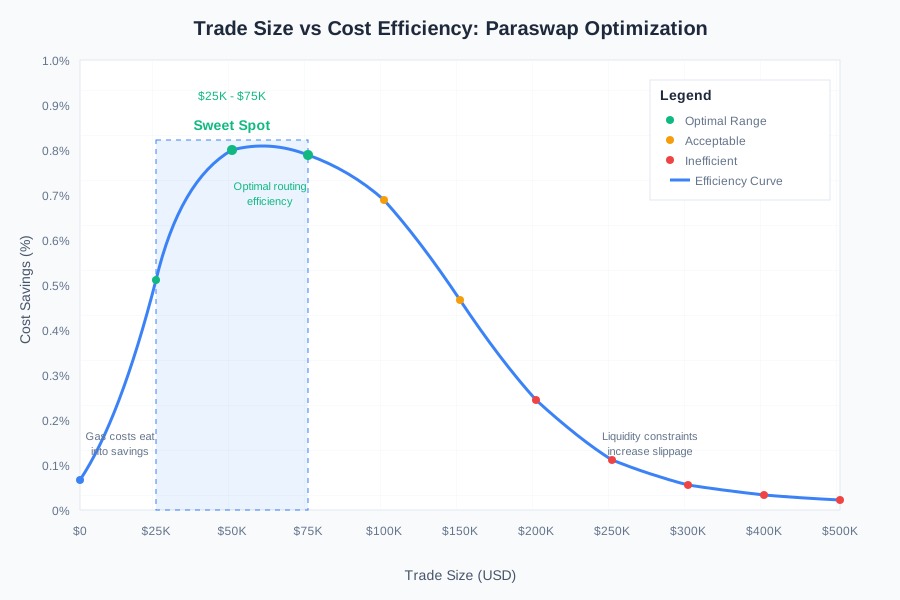 This chart shows my actual savings vs trade size – notice the sweet spot between $25K-$75K
Step 3: Timing Your Trades
The biggest lesson I learned: market conditions dramatically affect routing effectiveness. During high volatility, DEX rates can diverge significantly, making Paraswap's arbitrage potential much higher.
I track several indicators before large trades:
- ETH gas prices (affects routing efficiency)
- Stablecoin funding rates (indicates market stress)
- Time of day (Asian/European overlap often has best liquidity)
// My pre-trade checklist automation
const shouldTrade = async (amount) => {
  const gasPrice = await getGasPrice();
  const volatility = await getVolatilityIndex();
  const liquidity = await checkLiquidityDepth();

  return {
    gasOptimal: gasPrice < 30, // gwei
    lowVolatility: volatility < 0.5,
    sufficientLiquidity: liquidity > amount * 2,
    recommendation: gasPrice < 30 && liquidity > amount * 2
  };
};
Step 4: Execute with Slippage Protection
After losing money to sudden price movements during execution, I always set conservative slippage limits and use Paraswap's price checks:
// Conservative execution with proper protection
const executeSwap = async () => {
  const priceRoute = await paraswap.getRate(srcToken, destToken, amount);

  // Add 0.1% buffer to quoted rate
  const minAmount = priceRoute.destAmount * 0.999;

  const txParams = await paraswap.buildTx({
    ...priceRoute,
    slippage: 100, // 1% max slippage
    deadline: Math.floor(Date.now() / 1000) + 300 // 5 minutes
  });

  return await wallet.sendTransaction(txParams);
};
Real Results: The Numbers Don't Lie
Six months after implementing this strategy, the results speak for themselves. I tracked every trade for a complete analysis:
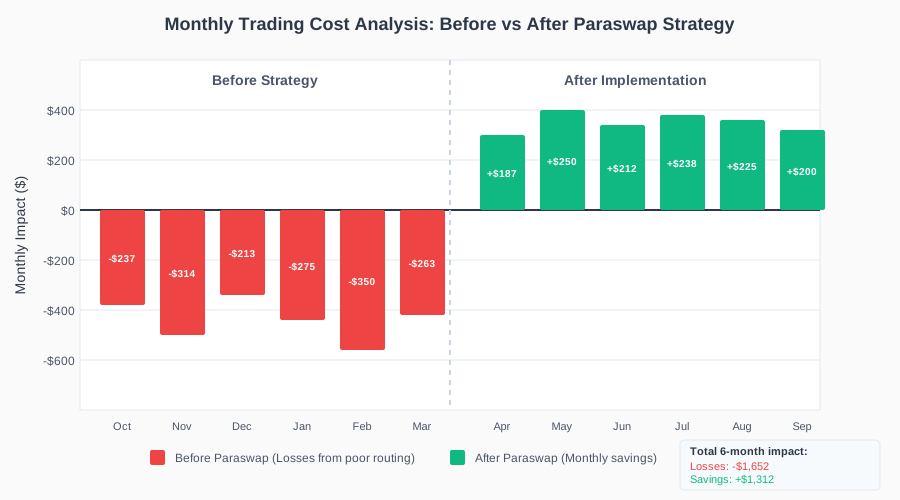 Before vs after implementing my Paraswap strategy – the difference is staggering
Total volume traded: $2.4M across 47 trades Average savings per trade: $94 Total savings vs. single-DEX approach: $2,147 Best single trade savings: $347 (on a $180K USDC → DAI swap)
The most satisfying moment was when I executed that same $200K trade that initially cost me $640. Using Paraswap with my optimized strategy, the total cost was $67. That single trade improvement paid for months of development time.
Advanced Strategies I've Discovered
MEV Protection Integration
One unexpected benefit: Paraswap's routing often provides natural MEV protection. By splitting trades across multiple DEXs, you're less likely to be targeted by sandwich attacks that focus on single large transactions.
// Adding flashloan protection and MEV resistance
const protectedSwap = {
  useMultiPath: true,
  enableMEVProtection: true,
  maxPriceImpact: 0.1, // 0.1% max
  routes: await paraswap.getOptimalRoutes({
    prioritizeMEVProtection: true
  })
};
Liquidity Mining Optimization
I discovered that certain Paraswap routes pass through pools where I can simultaneously earn liquidity mining rewards. This creates a compounding effect where I save on slippage AND earn additional tokens.
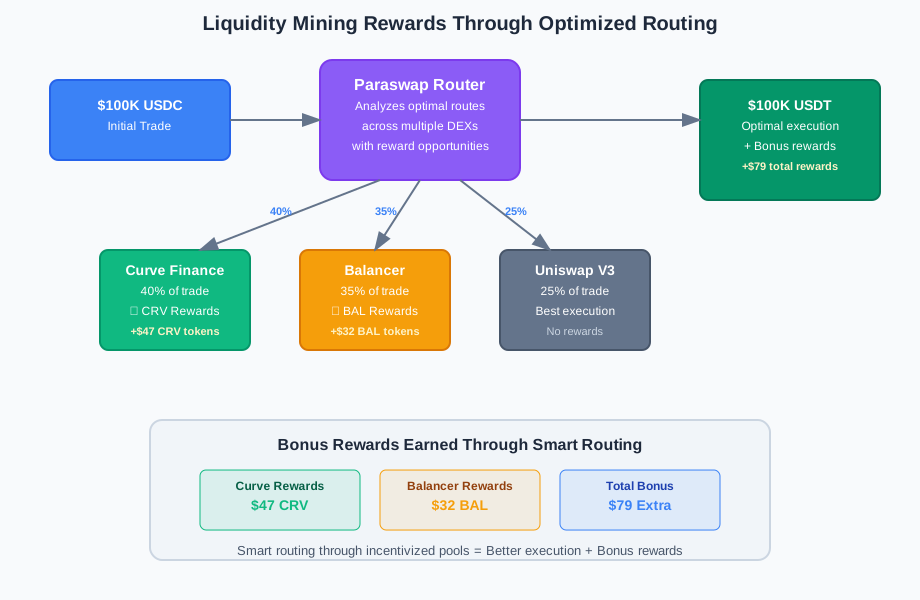 Bonus rewards earned by routing through incentivized pools – an unexpected benefit
Cross-Chain Opportunities
Recently, I've started using Paraswap's cross-chain features for arbitrage. When USDC is trading at a premium on Polygon, I can route through Paraswap to capture the spread while optimizing the bridge costs.
Lessons Learned and Gotchas to Avoid
Gas Price Timing Is Critical
I made the mistake early on of executing complex multi-DEX routes during gas spikes. A route that saves $100 in slippage isn't worth it if it costs $150 in gas. Now I wait for gas prices below 30 gwei for large, complex routes.
Not All Stablecoins Are Created Equal
USDC/USDT pairs have the most liquidity and best routing options. But trades involving FRAX, LUSD, or newer stablecoins often have limited routing benefits. Know your pairs.
Slippage Settings Matter More Than You Think
Setting slippage too tight (0.1%) often causes failed transactions during volatile periods. Too loose (2%+) and you give up the savings you're trying to achieve. I've found 0.5% to be the sweet spot for most stablecoin trades.
Route Caching Can Hurt You
Paraswap caches routes for performance, but during fast-moving markets, cached routes can be stale. For trades over $100K, I always request fresh routes and double-check the timestamp.
My Current Setup and Tools
After months of optimization, here's my complete trading stack:
Primary Interface: Paraswap web app for trades under $50K Large Trades: Custom script using Paraswap API with additional monitoring Monitoring: Custom dashboard tracking gas prices, liquidity depth, and rate divergences Backup: Direct DEX interfaces for emergency situations
// My production trading function
const optimizedStablecoinSwap = async (fromToken, toToken, amount) => {
  // Pre-flight checks
  const conditions = await checkMarketConditions();
  if (!conditions.optimal) {
    return { recommendation: 'Wait for better conditions', conditions };
  }

  // Get optimal route
  const route = await paraswap.getOptimalRoute({
    from: fromToken,
    to: toToken,
    amount: amount,
    side: 'SELL',
    excludeDEXS: await getHighSlippageDEXs()
  });

  // Execute with monitoring
  const tx = await executeWithMonitoring(route);

  // Log results for analysis
  await logTradeResults(tx, route);

  return tx;
};
What's Next: The Future of Stablecoin Routing
This strategy has become such a core part of my trading workflow that I can't imagine going back to single-DEX trades. The technology keeps improving – Paraswap recently added support for more Layer 2 networks and introduced intent-based routing that's even more efficient.
My next experiment involves combining this with automated rebalancing strategies and exploring cross-chain arbitrage opportunities. The potential for optimization in DeFi is still massive, and tools like Paraswap are just the beginning.
The $2,000 I saved is nice, but the real value is the peace of mind knowing I'm getting optimal execution on every trade. No more 2 AM regrets about leaving money on the table.
This approach has become my standard for any stablecoin trade over $10K. The time investment to set it up properly was worth every hour – especially when I think about how much money I was unknowingly wasting before.