Picture this: You're about to harvest your yield farming rewards, but Ethereum gas fees are $150. Your $50 profit just became a $100 loss. Sound familiar? Welcome to the expensive world of mainnet DeFi.
Gas fees can devour yield farming profits faster than a bear market. Many farmers pay 20-50% of their earnings in transaction costs. This guide shows you how to slash gas fees by 90% using Layer 2 solutions while maintaining high yields.
You'll learn practical strategies for migrating to Layer 2 networks, compare the best platforms for yield farming, and discover specific protocols that deliver exceptional returns with minimal fees.
Understanding Gas Fees in Yield Farming
Why Gas Fees Kill Yield Farming Profits
Gas fees represent the cost of executing transactions on blockchain networks. Ethereum mainnet charges premium rates because of network congestion and limited throughput.
Common yield farming actions and their typical gas costs:
- Token approval: $15-40
- Liquidity provision: $30-80
- Staking/unstaking: $25-60
- Harvest rewards: $20-50
- Compound earnings: $35-75
A typical farming cycle costs $125-305 in gas fees. For smaller portfolios ($1,000-5,000), these fees consume 3-30% of potential profits.
The Hidden Costs of High Gas Fees
High gas fees create cascading problems:
Reduced compounding frequency: Expensive harvesting prevents regular profit reinvestment. Manual compounding becomes economically unfeasible below certain thresholds.
Portfolio size barriers: Small investors face disproportionate fee impacts. A $100 investment with $50 in fees creates negative returns before considering price movements.
Missed opportunities: Time-sensitive farming opportunities become inaccessible when gas spikes occur during high-demand periods.
Layer 2 Solutions: Your Gas Fee Salvation
What Are Layer 2 Solutions?
Layer 2 solutions are blockchain protocols that process transactions off the main Ethereum chain while maintaining security guarantees. These networks bundle multiple transactions and settle them on Ethereum as single batches.
Key Layer 2 benefits:
- 90-99% lower gas fees
- Faster transaction confirmation
- Maintained security through Ethereum
- Growing DeFi ecosystem
Top Layer 2 Networks for Yield Farming
Polygon (MATIC)
- Gas costs: $0.01-0.10 per transaction
- Settlement time: 1-3 seconds
- TVL: $1.2 billion across DeFi protocols
- Key protocols: Aave, Uniswap V3, SushiSwap
Arbitrum
- Gas costs: $0.50-2.00 per transaction
- Settlement time: 10-15 minutes to Ethereum
- TVL: $2.8 billion across DeFi protocols
- Key protocols: GMX, Camelot, Curve
Optimism
- Gas costs: $0.30-1.50 per transaction
- Settlement time: 7-day challenge period
- TVL: $1.8 billion across DeFi protocols
- Key protocols: Synthetix, Velodrome, Beethoven X
Migrating to Layer 2: Step-by-Step Guide
Setting Up Your Layer 2 Wallet
Step 1: Configure MetaMask for Layer 2
Add Polygon network to MetaMask:
// Polygon Mainnet Configuration
Network Name: Polygon Mainnet
New RPC URL: https://polygon-rpc.com/
Chain ID: 137
Currency Symbol: MATIC
Block Explorer URL: https://polygonscan.com/
Step 2: Add Arbitrum Network
// Arbitrum One Configuration
Network Name: Arbitrum One
New RPC URL: https://arb1.arbitrum.io/rpc
Chain ID: 42161
Currency Symbol: ETH
Block Explorer URL: https://arbiscan.io/
Bridging Assets to Layer 2
Using Official Bridges
Polygon Bridge process:
- Visit wallet.polygon.technology
- Connect your MetaMask wallet
- Select tokens and amounts to bridge
- Confirm transaction and wait 7-8 minutes
Alternative Bridge Options
- Hop Protocol: Cross-chain bridge with lower fees
- Multichain: Supports multiple Layer 2 networks
- Synapse: Fast bridging with competitive rates
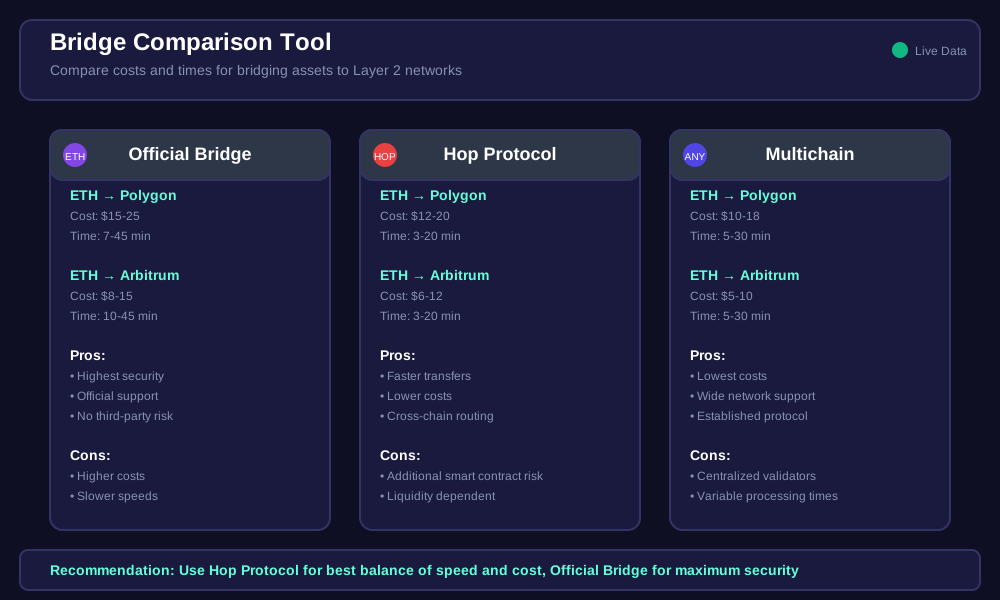
Bridge Cost Analysis
| Bridge | ETH → Polygon | ETH → Arbitrum | Time |
|---|---|---|---|
| Official | $15-25 | $8-15 | 7-45 min |
| Hop Protocol | $12-20 | $6-12 | 3-20 min |
| Multichain | $10-18 | $5-10 | 5-30 min |
Platform-Specific Yield Farming Strategies
Polygon Yield Farming
High-Yield Protocols on Polygon
Aave Polygon Markets
- USDC lending: 3-8% APY
- WMATIC staking: 4-12% APY
- Gas cost per transaction: $0.01-0.02
// Aave deposit example
function depositToAave(address asset, uint256 amount) external {
    // Approve token spending
    IERC20(asset).approve(address(lendingPool), amount);

    // Deposit to earn interest
    lendingPool.deposit(asset, amount, msg.sender, 0);
}
QuickSwap Liquidity Mining
- QUICK-USDC pair: 15-35% APY
- WMATIC-ETH pair: 20-45% APY
- Impermanent loss protection: Available on select pairs
Arbitrum Yield Farming
GMX Ecosystem
- GLP staking: 20-40% APY in ETH and USDC
- GMX staking: 15-30% APY
- Real yield: Revenue sharing from trading fees
Camelot DEX
- GRAIL staking: 25-60% APY
- Liquidity positions: 30-80% APY
- Nitro pools: Additional reward multipliers
Optimism Yield Farming
Velodrome Finance
- VELO staking: 20-50% APY
- Gauge voting: Additional rewards
- Bribes: Extra yield from protocol incentives
Beethoven X
- Balanced pools: 15-40% APY
- Boosted pools: 25-70% APY
- Composable stable pools: Lower risk options
Gas Fee Optimization Strategies
Timing Your Transactions
Gas Price Monitoring Use these tools to find optimal transaction times:
- Polygon Gas Tracker: Real-time MATIC gas prices
- Arbitrum Gas Tracker: Network congestion data
- DeFiPulse Gas Tracker: Multi-network comparison
Best Transaction Times
- Polygon: Consistently low, no specific timing needed
- Arbitrum: Weekends and off-peak hours (2-6 AM UTC)
- Optimism: Early morning and late night (1-5 AM UTC)
Batch Transaction Techniques
Multi-call Contracts Combine multiple operations into single transactions:
// Batch operations example
function batchFarmingOperations(
    address[] calldata targets,
    bytes[] calldata data
) external {
    require(targets.length == data.length, "Length mismatch");

    for (uint256 i = 0; i < targets.length; i++) {
        (bool success,) = targets[i].call(data[i]);
        require(success, "Call failed");
    }
}
Protocol-Specific Batching
- Aave: Batch multiple deposits/withdrawals
- Uniswap V3: Combine liquidity management actions
- Curve: Bundle staking and reward claims
Smart Contract Wallet Benefits
Gnosis Safe on Layer 2
- Transaction batching: Combine multiple operations
- Delayed execution: Wait for optimal gas prices
- Multi-signature security: Enhanced fund protection
Argent Wallet
- Built-in DeFi integrations: Direct protocol access
- Gas-less transactions: Meta-transactions support
- Mobile-first design: Easy yield farming management
Advanced Layer 2 Farming Techniques
Cross-Chain Yield Arbitrage
Identifying Yield Differentials Monitor yield differences across Layer 2 networks:
- Same protocol, different networks: AAVE on Polygon vs Arbitrum
- Similar risk profiles: Stablecoin farming opportunities
- Seasonal patterns: Network-specific incentive programs
Arbitrage Execution Strategy
- Identify opportunity: 5%+ yield differential
- Calculate total costs: Bridge fees + gas costs
- Execute migration: Use fast bridges during low congestion
- Monitor positions: Set alerts for yield changes
Liquidity Mining Optimization
Impermanent Loss Mitigation
- Correlated pairs: ETH-WBTC, USDC-USDT
- Stable pools: Single-asset exposure options
- IL protection: Protocols offering compensation
Reward Token Management
- Auto-compounding: Reinvest rewards automatically
- Diversification: Sell rewards for stable assets
- Staking: Compound rewards in native tokens
Risk Management for Layer 2 Farming
Security Considerations
Smart Contract Risks
- Audit status: Verify protocol security audits
- Time-tested contracts: Prefer established protocols
- Insurance options: Nexus Mutual, InsurAce coverage
Bridge Security
- Official bridges: Higher security, slower speeds
- Third-party bridges: Faster but additional risk
- Bridge insurance: Available for major protocols
Portfolio Diversification
Network Distribution
- Multi-chain exposure: Spread across 2-3 Layer 2s
- Protocol diversification: Avoid concentration risk
- Correlation analysis: Monitor asset relationships
Risk-Adjusted Returns Calculate returns after considering:
- Smart contract risk: 1-3% annual risk premium
- Bridge risk: 0.5-1% annual risk premium
- Impermanent loss: Historical pair volatility
Cost-Benefit Analysis: Layer 2 vs Mainnet
Break-Even Analysis
Mainnet Farming Costs
- Initial setup: $200-400 (approvals + deposits)
- Monthly management: $150-300 (harvests + compounds)
- Annual costs: $2,000-4,000 for active farming
Layer 2 Farming Costs
- Bridge migration: $50-150 (one-time cost)
- Monthly management: $5-15 (all transactions)
- Annual costs: $100-300 for active farming
Savings Analysis For a $10,000 portfolio:
- Mainnet: 20-40% of yields lost to gas
- Layer 2: 1-3% of yields lost to gas
- Net benefit: $1,500-3,500 annually
ROI Improvement Examples
Small Portfolio ($1,000)
- Mainnet ROI: Often negative due to gas costs
- Layer 2 ROI: 15-25% achievable
- Improvement: $150-250 additional annual returns
Medium Portfolio ($10,000)
- Mainnet ROI: 5-15% after gas costs
- Layer 2 ROI: 18-30% after gas costs
- Improvement: $1,300-1,500 additional annual returns
Large Portfolio ($100,000)
- Mainnet ROI: 15-25% after gas costs
- Layer 2 ROI: 20-32% after gas costs
- Improvement: $5,000-7,000 additional annual returns
Troubleshooting Common Issues
Bridge Transaction Failures
Insufficient Gas on Destination
- Solution: Keep native tokens for gas (MATIC, ETH)
- Prevention: Use bridge gas estimation tools
- Recovery: Add gas tokens through faucets or exchanges
Pending Transactions
- Speed up: Increase gas price for faster confirmation
- Cancel: Replace with zero-value transaction
- Wait: Most transactions complete within 24 hours
Protocol-Specific Problems
Slippage Errors
- Increase tolerance: 0.5-2% for most swaps
- Timing: Avoid high-volatility periods
- Route optimization: Use aggregators like 1inch
Reward Claim Failures
- Timing: Some protocols have claim windows
- Permissions: Verify wallet connections
- Gas estimation: Use protocol-recommended settings
Future of Layer 2 Yield Farming
Emerging Layer 2 Solutions
zkSync Era
- Technology: Zero-knowledge rollups
- Benefits: Enhanced privacy and security
- Timeline: Major protocols migrating in 2025
Polygon zkEVM
- Compatibility: Full Ethereum equivalence
- Performance: Higher throughput than Polygon POS
- Ecosystem: Established DeFi protocols ready
Integration Improvements
Cross-Chain Protocols
- Unified liquidity: Single interface for multiple chains
- Auto-routing: Optimal yield discovery across networks
- Seamless bridging: One-click cross-chain operations
Yield Aggregators
- Harvest automation: Reduced manual intervention
- Strategy optimization: AI-driven yield maximization
- Risk management: Automated portfolio rebalancing
Conclusion
Layer 2 solutions transform yield farming from an expensive luxury into an accessible profit strategy. By migrating to networks like Polygon, Arbitrum, and Optimism, you can reduce gas fees by 90% while accessing innovative DeFi protocols.
The key benefits include preserved capital that would otherwise go to gas fees, increased compounding frequency, and access to high-yield opportunities previously unavailable to smaller investors. Start with a small test migration to familiarize yourself with the process before moving larger amounts.
Layer 2 yield farming represents the future of DeFi accessibility. As these networks mature and more protocols migrate, the cost advantages will only become more pronounced. Take action today to optimize your yield farming strategy with Layer 2 solutions.
Remember: Always conduct thorough research and consider your risk tolerance before participating in yield farming. This article provides educational information and should not be considered financial advice.