Remember when yield farming meant refreshing your browser every five minutes to check if your 0.01% APY had moved? Those days are over. Optimism's Layer 2 ecosystem offers yield farmers something Ethereum mainnet can't: reasonable gas fees and double-digit returns that won't disappear by the time your transaction confirms.
This guide shows you how to maximize yields on Optimism's two powerhouse protocols: Velodrome Finance and Beethoven X. You'll learn which platform fits your strategy, how to deploy capital effectively, and why your portfolio needs exposure to both.
What Makes Optimism Yield Farming Different
Traditional yield farming on Ethereum costs $50+ per transaction. Optimism changes this equation completely. Transaction fees drop to under $1, making smaller position sizes profitable for the first time.
Key advantages of Optimism yield farming:
- Sub-$1 transaction costs enable frequent harvesting
- 10-100x lower gas fees vs Ethereum mainnet
- Shorter lock periods boost capital efficiency
- Native OP token incentives add extra yield layers
The math works differently here. Where Ethereum requires $10,000+ positions to justify gas costs, Optimism makes $1,000 positions viable.
Velodrome Finance: The Vote-Escrow Yield Engine
Velodrome dominates Optimism's DEX landscape with $400M+ total value locked. The protocol uses a vote-escrow model where VELO token holders direct liquidity incentives to specific pools.
How Velodrome Yield Farming Works
Velodrome generates yields through three mechanisms:
- Trading fees from liquidity provision
- VELO emissions distributed weekly to pool stakers
- Bribes paid by protocols to attract VELO votes
The weekly voting system creates yield opportunities that refresh every Thursday at 00:00 UTC.
Top Velodrome Yield Farming Strategies
Strategy 1: Stable Pair Farming Target pools: USDC/DAI, USDT/USDC, sUSD/USDC
// Example: USDC/DAI pool interaction
contract VelodromeStrategy {
    function depositToStablePool(uint256 usdcAmount, uint256 daiAmount) external {
        // Add liquidity to USDC/DAI pool
        IVelodromeRouter.addLiquidity(
            USDC_ADDRESS,
            DAI_ADDRESS,
            usdcAmount,
            daiAmount,
            0, // Accept any amount of tokens back
            0,
            msg.sender,
            block.timestamp
        );

        // Stake LP tokens for VELO rewards
        IVelodromeGauge.deposit(lpTokenBalance);
    }
}
Expected returns: 8-15% APY with minimal impermanent loss risk.
Strategy 2: Volatile Pair Arbitrage Target pools: ETH/OP, ETH/USDC, OP/USDC
Higher risk but 20-40% APY potential during volatile periods. Monitor correlation coefficients between paired assets.
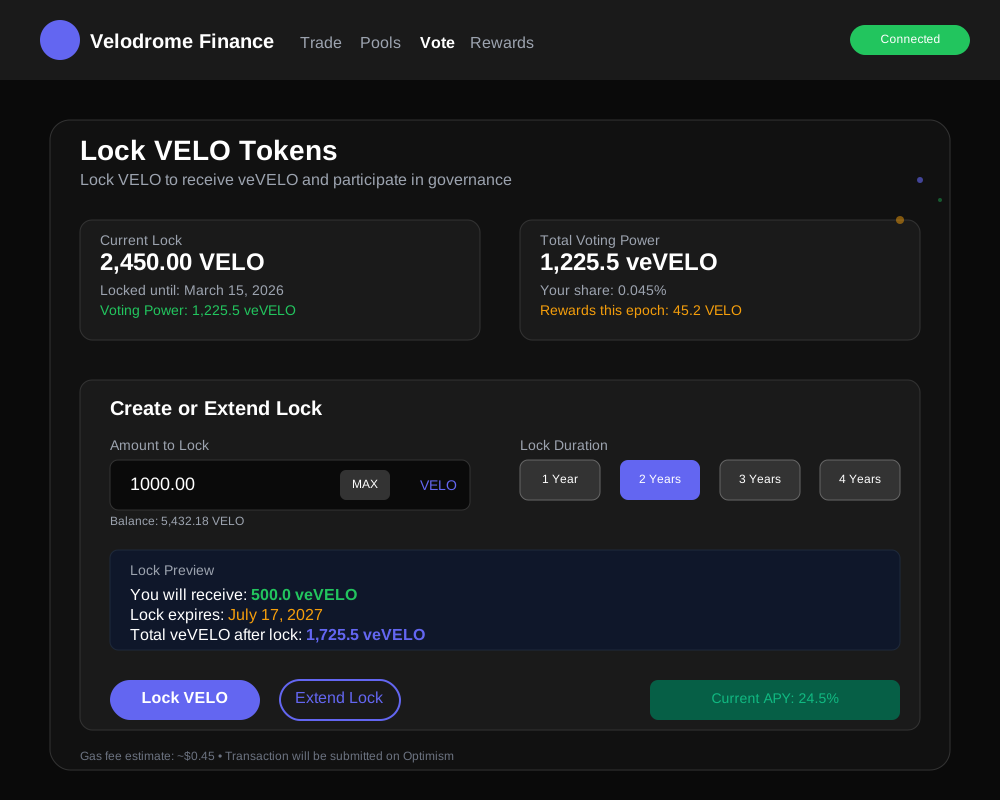
Strategy 3: veVELO Locking Lock VELO tokens for maximum voting power and protocol revenue sharing.
Steps to implement veVELO strategy:
- Acquire VELO tokens from DEX or liquidity provision
- Lock tokens for 1-4 years on Velodrome interface
- Vote for pools offering highest bribes
- Claim weekly rewards and compound
Velodrome Risk Management
Impermanent Loss Protection:
- Stick to correlated pairs (USDC/DAI) for stable returns
- Use volatile pairs only during high-incentive periods
- Monitor pool TVL - avoid pools under $1M liquidity
Smart Contract Risks:
- Velodrome completed three security audits in 2024
- Protocol has $400M+ TVL without major exploits
- Use small test deposits before committing large amounts
Beethoven X: Balancer's Optimism Powerhouse
Beethoven X brings Balancer V2's sophisticated automated market maker to Optimism. Unlike traditional 50/50 pools, Beethoven X supports custom weightings and multi-asset pools.
Beethoven X Yield Mechanisms
The protocol generates returns through:
- Swap fees from multi-asset trading
- BAL token emissions from Balancer DAO
- OP token incentives from Optimism Foundation
- Protocol bribes for gauge votes
Advanced Beethoven X Strategies
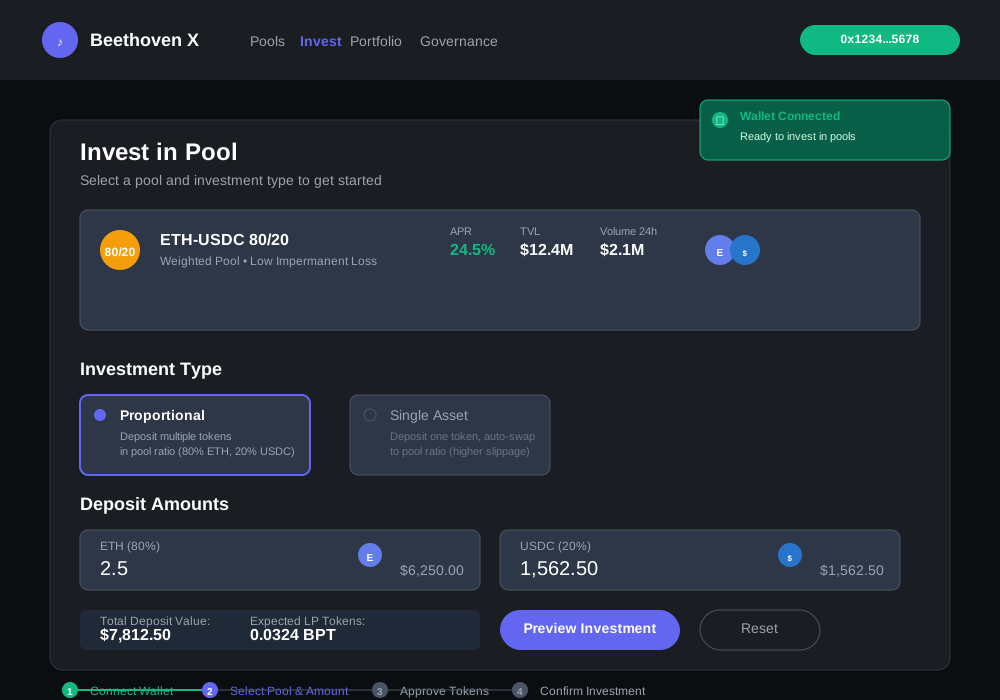
Strategy 1: 80/20 Weighted Pools Popular configuration: 80% ETH, 20% USDC
# Calculate optimal 80/20 position sizing
def calculate_weighted_deposit(eth_price, total_usd_value):
    """
    Calculate ETH and USDC amounts for 80/20 pool
    """
    eth_value = total_usd_value * 0.8
    usdc_value = total_usd_value * 0.2

    eth_amount = eth_value / eth_price
    usdc_amount = usdc_value

    return eth_amount, usdc_amount

# Example: $10,000 position at $2,500 ETH
eth_needed, usdc_needed = calculate_weighted_deposit(2500, 10000)
print(f"Deposit: {eth_needed:.2f} ETH + {usdc_needed:.0f} USDC")
Benefits: Lower impermanent loss than 50/50 pools while maintaining ETH exposure.
Strategy 2: Multi-Asset Stable Pools Target: 4-token stable pools (USDC/USDT/DAI/sUSD)
These pools offer:
- 5-12% base APY from trading fees
- Additional BAL and OP emissions
- Minimal price volatility between assets
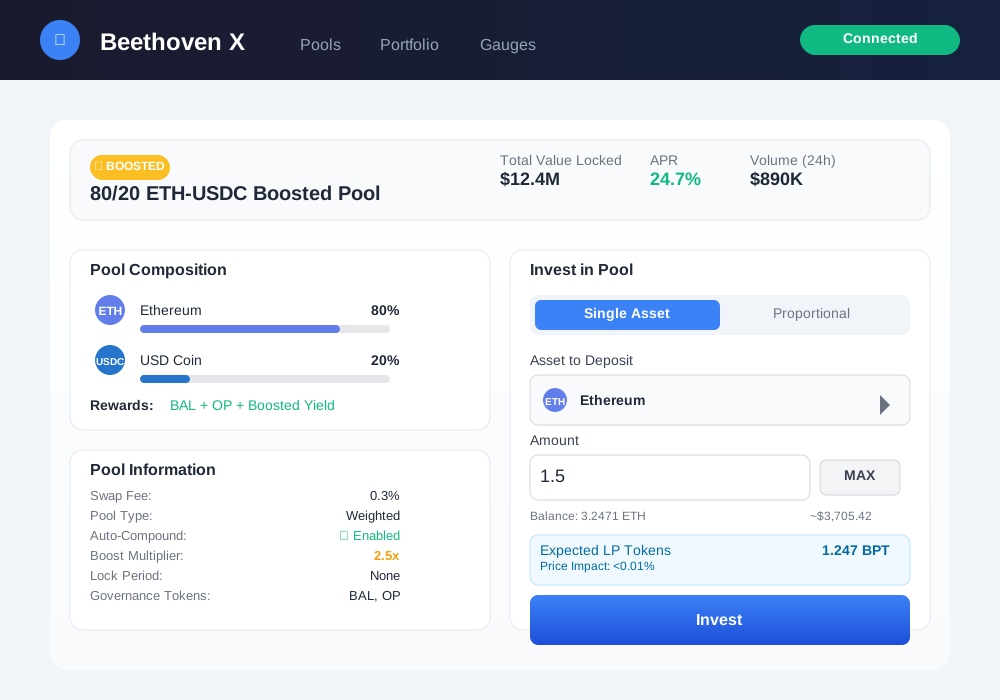
Strategy 3: Boosted Pools Beethoven X offers "boosted" pools that automatically compound yields into higher-yielding positions.
Implementation steps:
- Connect wallet to beethovenx.io
- Navigate to "Invest" tab
- Select boosted pool (look for rocket icon)
- Deposit single asset - protocol handles optimization
- Claim rewards weekly or enable auto-compounding
Beethoven X Advanced Features
Batch Swaps: Reduce slippage on large trades by routing through multiple pools simultaneously.
Linear Pools: Earn yield on "idle" liquidity by automatically moving unused tokens to yield-bearing protocols like Aave.
Velodrome vs Beethoven X: Platform Comparison
| Feature | Velodrome | Beethoven X |
|---|---|---|
| Pool Types | 50/50 + Stable | Weighted + Multi-asset |
| Average APY | 8-25% | 6-20% |
| Complexity | Simple | Advanced |
| Impermanent Loss | Higher | Lower (weighted pools) |
| Best For | Beginners + High yields | Sophisticated strategies |
When to Choose Velodrome
Choose Velodrome for:
- Simple two-token strategies
- Maximum yield potential
- Weekly reward cycles
- Strong stable coin pairs
When to Choose Beethoven X
Choose Beethoven X for:
- Multi-asset exposure
- Reduced impermanent loss
- Advanced DeFi features
- Set-and-forget strategies
Step-by-Step Deployment Guide
Getting Started on Optimism
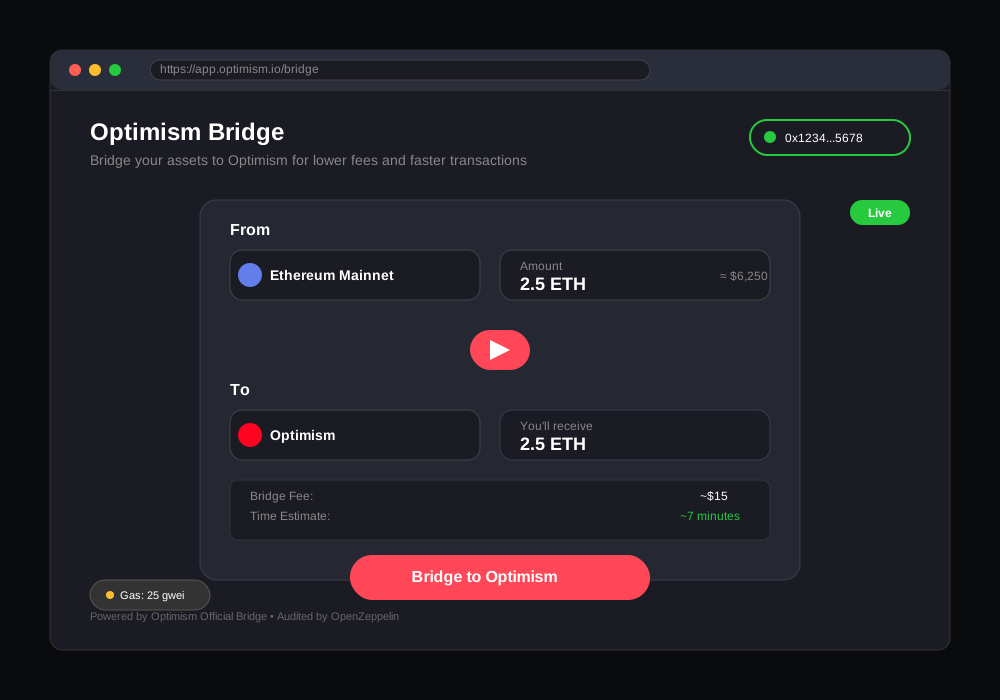
Step 1: Bridge Assets to Optimism
Use official Optimism Gateway or third-party bridges:
- Hop Protocol (fastest, ~3 minutes)
- Across Protocol (cheapest fees)
- Optimism Gateway (official, 7-day withdrawal)
Step 2: Acquire Base Tokens
Essential tokens for yield farming:
- ETH (for gas fees)
- USDC (stable pair farming)
- OP (governance + native yields)
- VELO (Velodrome specific)
Step 3: Connect to Protocols
Both platforms support major wallets:
- MetaMask
- WalletConnect
- Coinbase Wallet
- Rabby
Velodrome Deployment Walkthrough
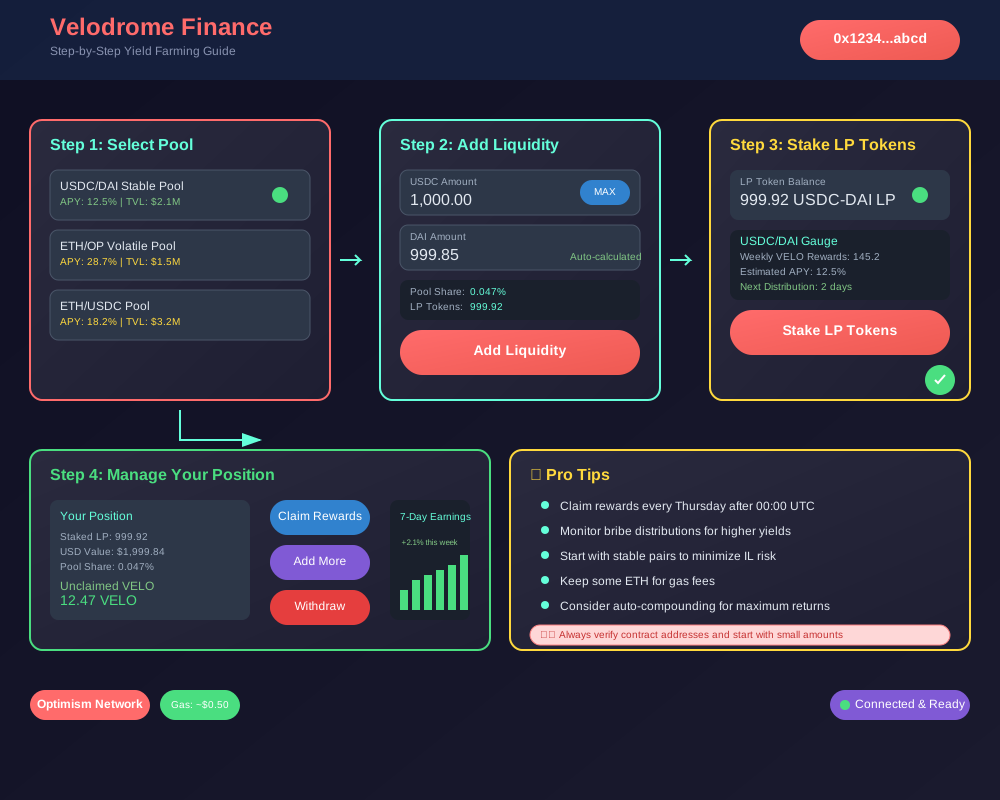
- Visit velodrome.finance
- Connect wallet and switch to Optimism network
- Navigate to Pools section
- Select target pool (start with USDC/DAI for beginners)
- Click "Add Liquidity"
- Input token amounts (use suggested ratios)
- Approve tokens (two transactions required)
- Confirm liquidity addition
- Stake LP tokens in corresponding gauge
- Set up weekly reward claiming
Beethoven X Deployment Walkthrough
- Visit beethovenx.io
- Connect wallet to Optimism
- Browse "Pools" tab for opportunities
- Select pool matching your risk tolerance
- Click "Invest" button
- Choose investment type (proportional vs single asset)
- Input amounts and preview transaction
- Approve and confirm deposit
- Monitor position in "Portfolio" section
- Claim rewards or enable auto-compound
Advanced Yield Optimization Techniques
Cross-Protocol Arbitrage
Monitor yield differentials between Velodrome and Beethoven X for the same asset pairs. Example: ETH/USDC pools on both platforms.
# Yield comparison tool
def compare_yields(velodrome_apy, beethovenx_apy, gas_cost, position_size):
    """
    Calculate net yield difference accounting for migration costs
    """
    annual_difference = (beethovenx_apy - velodrome_apy) * position_size / 100
    migration_cost = gas_cost * 4  # Withdraw + bridge + deposit + stake

    breakeven_days = migration_cost / (annual_difference / 365)

    return {
        'yield_difference': annual_difference,
        'breakeven_days': breakeven_days,
        'worth_migrating': breakeven_days < 30
    }
Automated Harvesting
Set up automated reward claiming to maximize compound returns:
Weekly Schedule:
- Monday: Check new Velodrome bribe distributions
- Thursday: Claim Velodrome rewards + vote for next epoch
- Saturday: Harvest Beethoven X rewards
- Sunday: Rebalance positions based on yield changes
Risk-Adjusted Position Sizing
Calculate optimal position sizes using the Kelly Criterion:
def kelly_position_size(win_rate, avg_win, avg_loss, bankroll):
    """
    Calculate optimal position size for yield farming
    """
    win_loss_ratio = avg_win / avg_loss
    kelly_percentage = (win_rate * win_loss_ratio - (1 - win_rate)) / win_loss_ratio

    # Conservative adjustment (use 25% of Kelly)
    conservative_kelly = kelly_percentage * 0.25

    position_size = bankroll * conservative_kelly
    return max(0, min(position_size, bankroll * 0.2))  # Cap at 20%
Common Mistakes and How to Avoid Them
Mistake 1: Ignoring Impermanent Loss
Problem: Depositing into volatile pairs without understanding IL mechanics.
Solution: Use IL calculators before entering positions. For volatile pairs, ensure APY exceeds potential IL by 200%+.
Mistake 2: Poor Timing on Rewards
Problem: Claiming rewards immediately instead of optimizing for compound growth.
Solution: Calculate optimal harvest frequency based on gas costs and reward rates.
Mistake 3: Neglecting Protocol Risks
Problem: Concentrating too much capital in single protocols.
Solution: Diversify across both platforms. Never exceed 50% allocation to any single protocol.
Security Best Practices
Smart Contract Interaction Safety
Before depositing:
- Verify contract addresses on official documentation
- Start with small test transactions
- Check recent protocol news for security updates
- Review audit reports (links in protocol documentation)
Transaction Security:
- Always simulate transactions in wallet preview
- Double-check token addresses and amounts
- Use hardware wallets for large positions
- Enable transaction signing confirmations
Portfolio Risk Management
Diversification Rules:
- Maximum 30% in any single pool
- Split between stable and volatile strategies
- Maintain 10% ETH for gas fees
- Keep 20% in stable tokens for opportunities
Tax Considerations for Yield Farmers
Record Keeping Requirements
Track these events for tax reporting:
- Initial liquidity deposits (cost basis)
- Reward token claims (income at market value)
- Pool exits (calculate gains/losses)
- Token swaps within protocols
Tax-Efficient Strategies
Timing Optimization:
- Harvest rewards in low-income years
- Offset gains with DeFi losses
- Consider 1+ year holding periods for long-term rates
Record Keeping Tools:
- Rotki (open source portfolio tracker)
- TokenTax (DeFi-specific reporting)
- Manual spreadsheet tracking for complete control
Future Outlook and Emerging Opportunities
Upcoming Protocol Upgrades
Velodrome V3 (Expected Q4 2025):
- Concentrated liquidity (Uniswap V3 style)
- Improved capital efficiency
- Dynamic fee structures
Beethoven X Roadmap:
- Cross-chain pool bridging
- Enhanced boosted pool mechanics
- Integration with additional yield sources
Emerging Yield Sources
Watch for these developing opportunities:
- Real World Asset (RWA) tokenization yields
- Cross-chain liquidity mining programs
- Automated yield optimization vaults
- Institutional DeFi products
Conclusion
Optimism yield farming through Velodrome and Beethoven X offers sustainable returns that outpace traditional finance. The combination of low transaction costs, mature protocols, and diverse yield sources creates compelling opportunities for both conservative and aggressive strategies.
Success requires understanding each platform's strengths: Velodrome for maximum yields and simple strategies, Beethoven X for sophisticated multi-asset approaches. Diversifying across both protocols while maintaining proper risk management positions you for consistent returns as the ecosystem matures.
Start with small positions to understand the mechanics, then scale as you gain experience. The Optimism DeFi ecosystem rewards patient, informed participants who adapt their strategies to changing market conditions.
Ready to start earning? Begin with stable pairs on Velodrome, then expand to Beethoven X's weighted pools as your confidence grows. Your future self will thank you for taking action today.