Remember when DeFi promised you'd become a crypto millionaire by clicking a few buttons? Well, OlympusDAO actually delivers on that promise – if you know how to navigate its treasury-backed ecosystem without getting rugged by your own greed.
OlympusDAO revolutionizes traditional yield farming through its innovative bonding mechanism and treasury-backed OHM tokens. This tutorial covers everything from basic staking to advanced bonding strategies, helping you maximize returns while understanding the risks involved.
You'll learn to set up your wallet, execute profitable bonds, stake OHM tokens, and manage your treasury positions for sustainable long-term growth.
What is OlympusDAO and Why Bond Yield Farming Matters
OlympusDAO operates as a decentralized reserve currency protocol built on Ethereum. Unlike traditional cryptocurrencies, OHM tokens maintain value through a treasury of assets rather than market speculation alone.
The protocol uses three core mechanisms:
Bonding lets you purchase OHM tokens at a discount by providing liquidity pairs or single assets to the treasury. You receive OHM tokens over a vesting period, typically 5-7 days.
Staking allows OHM holders to earn rewards from the treasury's growth. Staked OHM (sOHM) automatically compounds, increasing your balance over time.
Treasury Management backs every OHM token with reserve assets like DAI, FRAX, and ETH. This creates a price floor and sustainable yield generation.
Key Benefits of OlympusDAO Bond Yield Farming
Bond yield farming on OlympusDAO offers several advantages over traditional DeFi protocols:
- Discount purchases: Buy OHM tokens 3-15% below market price
- Treasury backing: Each OHM token has intrinsic value from reserve assets
- Compound rewards: Staking rewards automatically increase your position
- Risk mitigation: Treasury management reduces volatility compared to unbacked tokens
- Sustainable yields: Revenue comes from treasury growth, not token inflation
Prerequisites: Wallet Setup and Requirements
Before starting your OlympusDAO journey, you need proper wallet configuration and sufficient funds.
Required Wallets and Extensions
MetaMask remains the most compatible wallet for OlympusDAO. Install the browser extension and create a new wallet or import an existing one.
WalletConnect works with mobile wallets like Trust Wallet, Coinbase Wallet, and Rainbow. This option suits users who prefer mobile management.
Hardware wallets like Ledger or Trezor provide maximum security for large positions. Connect through MetaMask or WalletConnect for protocol interaction.
Network Configuration
Add the Ethereum mainnet to your wallet if not already configured:
// Ethereum Mainnet Settings
Network Name: Ethereum Mainnet
New RPC URL: https://mainnet.infura.io/v3/YOUR-PROJECT-ID
Chain ID: 1
Currency Symbol: ETH
Block Explorer URL: https://etherscan.io
Funding Requirements
Minimum starting capital: $500-1000 covers gas fees and meaningful positions ETH for gas: Keep 0.05-0.1 ETH for transaction fees Bonding assets: DAI, FRAX, ETH, or supported LP tokens Buffer funds: 20% extra for unexpected gas spikes or opportunities
Step-by-Step OlympusDAO Bonding Tutorial
Bonding represents the core value proposition of OlympusDAO. You provide assets to the treasury and receive OHM tokens at a discount.
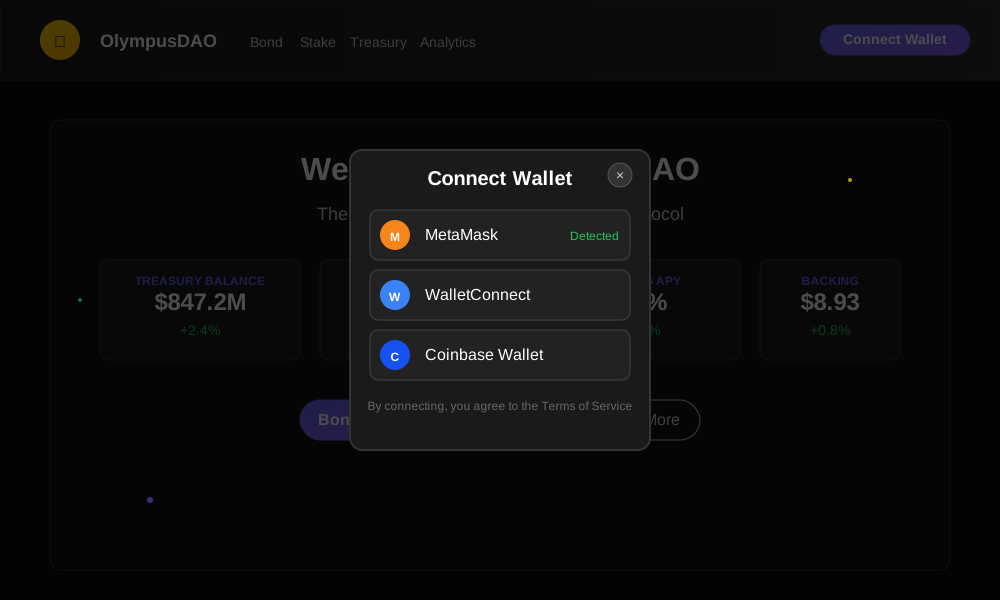
Step 1: Connect Your Wallet to OlympusDAO
- Navigate to app.olympusdao.finance
- Click "Connect Wallet" in the top right corner
- Select your preferred wallet (MetaMask, WalletConnect, etc.)
- Approve the connection request in your wallet
- Verify your wallet address appears in the interface
Step 2: Analyze Available Bonds
The Bonds tab displays all available bonding opportunities with key metrics:
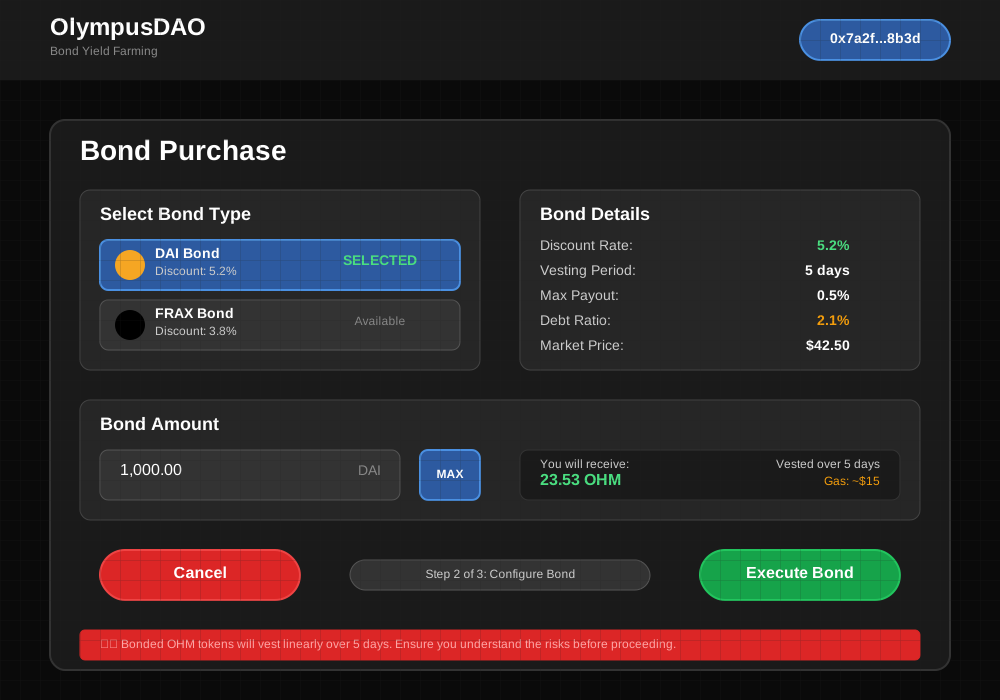
Discount Rate: Shows how much below market price you can purchase OHM Vesting Period: Time required before you can claim your OHM tokens Max Payout: Maximum percentage of your balance you can bond in one transaction Debt Ratio: Indicates bond supply and demand dynamics
// Example bond analysis
Bond Type: DAI Bond
Discount: 5.2%
Vesting Period: 5 days
Max Payout: 0.5%
Debt Ratio: 2.1%
Step 3: Execute a Bond Purchase
- Select your preferred bond type based on discount and assets available
- Enter the amount you want to bond (start with smaller amounts)
- Review the transaction details including:
- OHM tokens you'll receive
- Vesting schedule
- Gas fees
- Click "Bond" and confirm the transaction in your wallet
- Wait for blockchain confirmation (1-2 minutes)
Step 4: Monitor Your Vesting Schedule
Your bonded OHM tokens vest linearly over the specified period. Check your progress:
- Navigate to "Bonds" → "Your Bonds"
- View pending OHM tokens and vesting timeline
- Claim vested tokens as they become available
- Consider your claiming strategy (daily vs. bulk claiming)
Step 5: Claim Your OHM Tokens
- Return to "Your Bonds" section when vesting completes
- Click "Claim" next to your matured bond
- Confirm the transaction and pay gas fees
- Verify OHM tokens appear in your wallet balance
Advanced Staking Strategies for Maximum Returns
Staking transforms your OHM tokens into yield-generating assets through the sOHM mechanism.
Understanding sOHM Mechanics
When you stake OHM tokens, you receive sOHM (staked OHM) that automatically compounds. Your sOHM balance increases with each rebase, typically every 8 hours.
Rebase formula: New sOHM = Current sOHM × (1 + Rebase Rate)
Staking Process Walkthrough
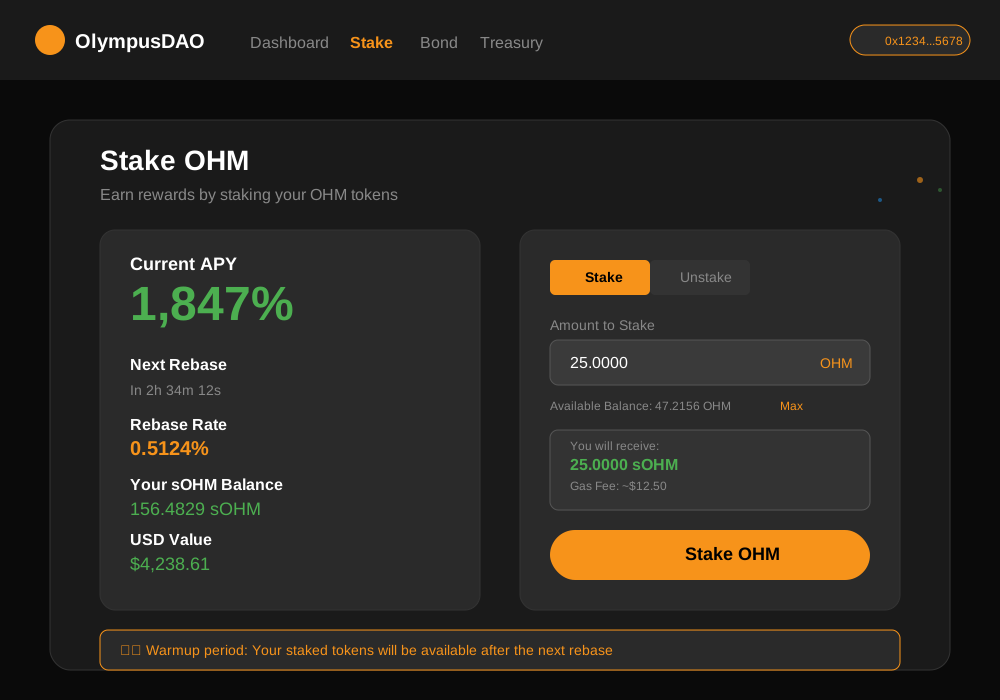
- Navigate to the "Stake" section in the OlympusDAO app
- Enter the amount of OHM tokens you want to stake
- Review the current APY and rebase rate
- Click "Stake" and confirm the transaction
- Receive sOHM tokens in your wallet
Compound Staking Strategy
Daily compounding: Claim and restake rewards daily for maximum compound growth Weekly compounding: Balance gas costs with compound benefits Monthly compounding: Suitable for smaller positions where gas costs matter
// Compound growth calculation
Initial Stake: 100 OHM
Daily Rebase: 0.5%
After 30 days: 100 × (1.005)^90 ≈ 156.4 OHM
Unstaking Considerations
Unstaking requires a warmup period where your tokens remain locked. Plan your unstaking strategy around:
- Market conditions
- Gas fee optimization
- Alternative investment opportunities
- Tax implications
Treasury Management and Risk Assessment
OlympusDAO's treasury backing creates unique risk profiles compared to traditional DeFi protocols.
Treasury Composition Analysis
The treasury holds diverse assets that back OHM tokens:
Stablecoins (DAI, FRAX, USDC): Provide price stability and liquidity
Volatile assets (ETH, CVX): Generate growth and yield opportunities
LP tokens: Earn trading fees and incentives
Protocol-owned liquidity: Reduces dependence on external liquidity providers
Risk Factors to Monitor
Treasury health: Monitor reserve ratios and asset allocation Market volatility: Understand how crypto crashes affect treasury value Protocol governance: Stay informed about parameter changes and upgrades Smart contract risk: Audit reports and bug bounty programs provide security insights
Position Sizing Strategy
Conservative approach: 5-10% of crypto portfolio in OlympusDAO Moderate approach: 10-20% allocation with active management Aggressive approach: 20%+ allocation with high risk tolerance
Common Mistakes and How to Avoid Them
Learning from others' mistakes saves time and money in DeFi protocols.
Mistake 1: Ignoring Gas Fees
Problem: High Ethereum gas fees can eliminate bonding profits Solution: Use gas trackers and execute transactions during low-fee periods Tools: GasTracker, ETH Gas Station, MetaMask gas estimation
Mistake 2: FOMO Bonding
Problem: Rushing into bonds without proper analysis Solution: Compare discount rates, vesting periods, and market conditions Framework: Only bond when discount exceeds 3% and market shows stability
Mistake 3: Forgetting About Vesting
Problem: Expecting immediate access to bonded OHM tokens Solution: Plan your cash flow around vesting schedules Best practice: Stagger bond purchases to create regular OHM income
Mistake 4: Overleveraging
Problem: Investing more than you can afford to lose Solution: Use position sizing rules and maintain emergency funds Rule: Never invest more than 20% of your portfolio in any single DeFi protocol
Optimizing Your OlympusDAO Strategy for 2025
The DeFi landscape evolves rapidly, requiring adaptive strategies for sustained success.
Market Cycle Awareness
Bull markets: Focus on bonding for discount accumulation Bear markets: Prioritize staking for compound growth Sideways markets: Balance between bonding and staking based on opportunities
Technology Updates
OlympusDAO continuously improves its protocol through:
- V2 migration: Enhanced bonding mechanisms and treasury management
- Cross-chain expansion: Polygon, Arbitrum, and other L2 solutions
- Partnership integrations: Collaborations with other DeFi protocols
Tax Optimization
Record keeping: Track all transactions for tax reporting Harvest losses: Offset gains with strategic position management Professional advice: Consult tax professionals for complex situations
Portfolio Integration
Diversification: Combine OlympusDAO with other DeFi protocols Risk management: Use stop-losses and position limits Regular rebalancing: Maintain target allocations across strategies
Conclusion: Your Path to OlympusDAO Success
OlympusDAO bond yield farming offers a unique approach to DeFi returns through treasury-backed tokens and innovative bonding mechanisms. Success requires understanding the protocol's mechanics, managing risks appropriately, and maintaining a long-term perspective.
Start with small positions to learn the system, focus on bonds with attractive discounts, and use staking for compound growth. Monitor treasury health, avoid common mistakes, and adapt your strategy as the protocol evolves.
The combination of bonding discounts, staking rewards, and treasury backing creates sustainable yield opportunities that outperform traditional DeFi protocols when executed correctly. Your journey to OlympusDAO mastery begins with your first bond purchase – make it count.
Ready to start your OlympusDAO bond yield farming journey? Connect your wallet and explore available bonds today.