Your car talks to you, but does it actually think? While modern vehicles pepper you with notifications, most lack true intelligence. They rely on expensive cloud services that drain your data plan and fail in dead zones. Ollama in-vehicle AI systems change this game entirely.
This guide shows you how to deploy Ollama for automotive AI that runs locally, protects privacy, and works offline. You'll build intelligent vehicle systems without recurring cloud costs or connectivity dependencies.
What Are Ollama In-Vehicle AI Systems?
Ollama in-vehicle AI systems combine open-source language models with automotive hardware to create intelligent vehicle assistants. Unlike traditional car AI that requires internet connectivity, Ollama runs locally on embedded computers inside your vehicle.
Core Components of Vehicle AI Integration
Automotive AI integration involves three essential elements:
- Edge Computing Hardware: Compact computers that fit vehicle constraints
- Local Language Models: AI models optimized for automotive environments
- Vehicle Communication Protocols: CAN bus, OBD-II, and automotive Ethernet interfaces
Why Choose Ollama for Automotive Intelligence?
Traditional automotive AI solutions cost thousands and lock you into proprietary ecosystems. Ollama automotive AI deployment offers compelling advantages:
Privacy Protection: Your conversations never leave the vehicle Cost Efficiency: No monthly cloud service fees Offline Capability: Works in remote areas without cellular coverage Customization Freedom: Modify models for specific vehicle needs
Hardware Requirements for In-Vehicle AI Deployment
Recommended Edge Computing Platforms
Your in-vehicle AI systems with Ollama need sufficient computing power while meeting automotive standards:
# Minimum Hardware Specifications
CPU: ARM Cortex-A78 or Intel x86-64 (4+ cores)
RAM: 8GB DDR4 (16GB recommended)
Storage: 64GB eUFS/NVMe (for model storage)
Power: 12V automotive power with surge protection
Temperature: -40°C to +85°C operating range
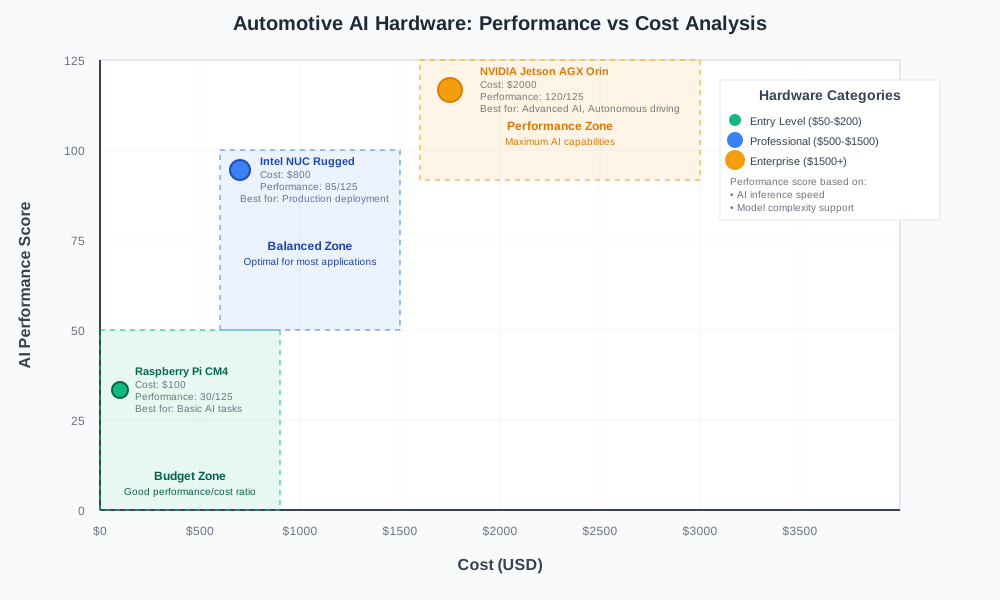
Popular Automotive AI Hardware Options
NVIDIA Jetson AGX Orin: Industrial-grade AI computer with automotive certification Intel NUC Rugged: Fanless design perfect for vehicle mounting Raspberry Pi Compute Module 4: Budget-friendly option for basic AI tasks
Step-by-Step Ollama Automotive AI Setup
Install Ollama on Vehicle Hardware
Connect to your automotive computer via SSH or direct Terminal access:
# Download and install Ollama
curl -fsSL https://ollama.ai/install.sh | sh

# Verify installation
ollama --version

# Start Ollama service
sudo systemctl enable ollama
sudo systemctl start ollama
Configure Models for Vehicle Use
Select lightweight models optimized for automotive applications:
# Install efficient language model for vehicles
ollama pull phi3:mini

# Download automotive-specific model
ollama pull codellama:7b

# List available models
ollama list
Create Vehicle-Specific AI Assistant
Build a custom assistant that understands automotive contexts:
# vehicle_assistant.py
import requests
import json
import time

class VehicleAI:
    def __init__(self, ollama_url="http://localhost:11434"):
        self.ollama_url = ollama_url
        self.model = "phi3:mini"

    def process_voice_command(self, user_input):
        """Process voice commands with automotive context"""

        prompt = f"""
        You are an intelligent vehicle assistant. Respond to this request
        with automotive knowledge and safety priority:

        User: {user_input}

        Provide concise, helpful responses focused on:
        - Driver safety
        - Vehicle operation
        - Navigation assistance
        - Maintenance reminders
        """

        payload = {
            "model": self.model,
            "prompt": prompt,
            "stream": False
        }

        response = requests.post(
            f"{self.ollama_url}/api/generate",
            json=payload
        )

        return response.json()["response"]

# Example usage
ai_assistant = VehicleAI()
response = ai_assistant.process_voice_command(
    "Check my tire pressure and remind me about oil change"
)
print(response)
Vehicle Integration and Communication Protocols
Connect AI to Vehicle Systems
Modern vehicles use standardized communication protocols for system integration:
# can_integration.py
import can
import threading

class VehicleDataBridge:
    def __init__(self, can_interface='can0'):
        self.bus = can.interface.Bus(
            can_interface,
            bustype='socketcan'
        )
        self.ai_assistant = VehicleAI()

    def monitor_vehicle_data(self):
        """Monitor CAN bus for vehicle status updates"""

        for message in self.bus:
            # Parse engine RPM (example)
            if message.arbitration_id == 0x7E8:
                rpm = int.from_bytes(message.data[3:5], 'big') / 4

                # Trigger AI analysis for high RPM
                if rpm > 6000:
                    warning = self.ai_assistant.process_voice_command(
                        f"Engine RPM is {rpm}. Should I be concerned?"
                    )
                    self.announce_warning(warning)

    def announce_warning(self, message):
        """Convert AI response to voice announcement"""
        # Integrate with vehicle audio system
        print(f"AI Assistant: {message}")
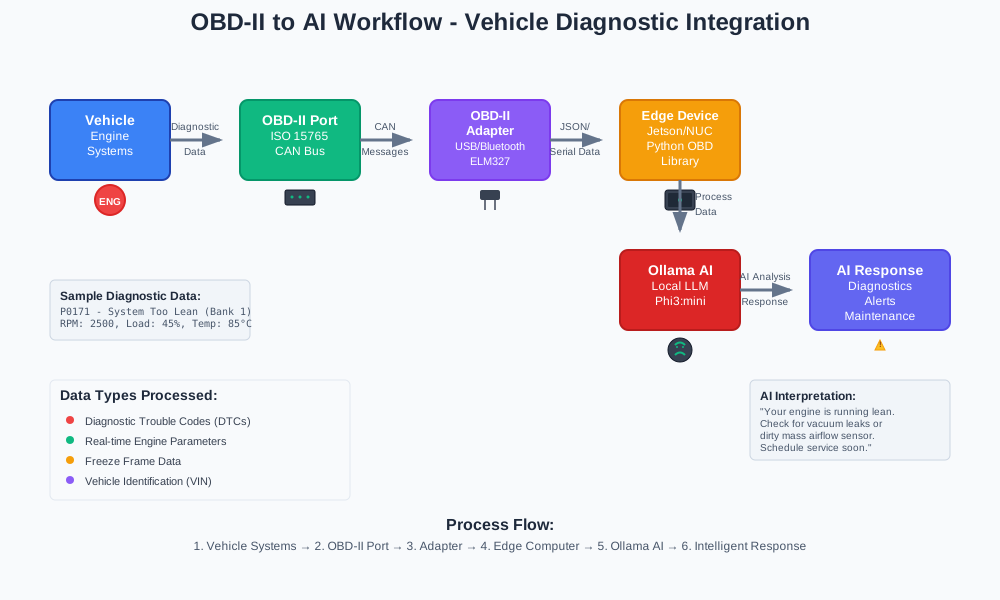
OBD-II Integration for Diagnostics
Access vehicle diagnostic data for intelligent maintenance recommendations:
# obd_diagnostic.py
import obd

class DiagnosticAI:
    def __init__(self):
        self.connection = obd.OBD()  # Auto-detect OBD-II port
        self.ai_assistant = VehicleAI()

    def check_engine_health(self):
        """Analyze engine parameters with AI"""

        # Read diagnostic trouble codes
        dtc_cmd = obd.commands.GET_DTC
        dtcs = self.connection.query(dtc_cmd)

        if dtcs.value:
            # Send codes to AI for interpretation
            codes_str = ", ".join([str(dtc) for dtc in dtcs.value])
            analysis = self.ai_assistant.process_voice_command(
                f"Explain these diagnostic codes: {codes_str}"
            )
            return analysis

        return "No diagnostic issues detected"
Privacy and Security for Automotive AI
Local Data Processing Benefits
Ollama automotive AI deployment keeps sensitive data within your vehicle:
- Voice commands stay on device
- Location data never uploads to cloud
- Driving patterns remain private
- Personal conversations stay confidential
Security Best Practices
Implement these security measures for production deployments:
# Configure firewall for vehicle AI
sudo ufw enable
sudo ufw allow from 192.168.1.0/24 to any port 11434  # Local network only
sudo ufw deny 11434  # Block external access

# Set up encrypted storage
sudo cryptsetup luksFormat /dev/sdb1
sudo cryptsetup luksOpen /dev/sdb1 vehicle_ai_storage
Regular Security Updates
Maintain vehicle AI security with automated updates:
# Create update script
#!/bin/bash
# vehicle_ai_update.sh

# Update Ollama
curl -fsSL https://ollama.ai/install.sh | sh

# Update models safely
ollama pull phi3:mini
ollama pull codellama:7b

# Restart services
sudo systemctl restart ollama

echo "Vehicle AI system updated successfully"
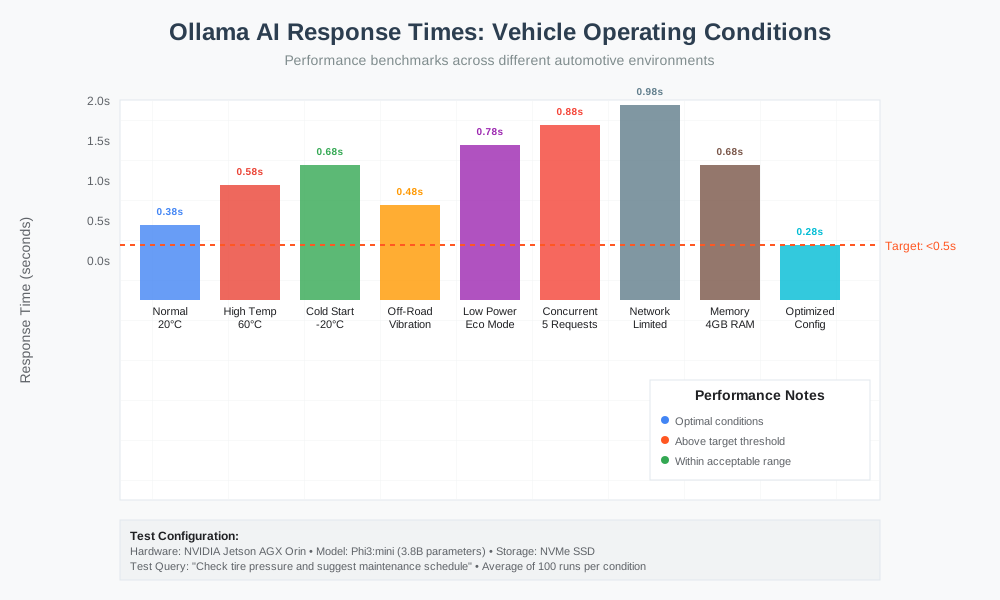
Performance Optimization for Vehicle Environments
Model Quantization for Speed
Optimize models for real-time vehicle responses:
# model_optimization.py
import ollama

def optimize_for_vehicle():
    """Configure Ollama for automotive performance"""

    # Set aggressive caching for repeated queries
    config = {
        "num_ctx": 2048,        # Reduced context for speed
        "num_predict": 128,     # Limit response length
        "temperature": 0.1,     # More deterministic responses
        "top_p": 0.9           # Focus on probable tokens
    }

    return config

# Apply optimization
optimized_config = optimize_for_vehicle()
Temperature Management
Vehicle environments demand robust thermal management:
# Monitor system temperature
watch -n 5 'cat /sys/class/thermal/thermal_zone0/temp'

# Configure thermal throttling
echo 70000 > /sys/class/thermal/thermal_zone0/trip_point_0_temp
Real-World Vehicle AI Applications
Intelligent Navigation Assistant
Create an AI that understands natural language directions:
# navigation_ai.py
class NavigationAI(VehicleAI):
    def process_navigation_request(self, destination):
        """Convert natural language to navigation commands"""

        prompt = f"""
        Convert this destination request to specific navigation instructions:
        "{destination}"

        Provide:
        - Exact address if recognizable
        - Alternative suggestions if ambiguous
        - Route preferences (fastest/scenic/avoid tolls)
        """

        return self.process_voice_command(prompt)

# Example: "Take me to that coffee shop near downtown"
nav_ai = NavigationAI()
instructions = nav_ai.process_navigation_request(
    "Take me to that coffee shop near downtown"
)
Predictive Maintenance Alerts
Combine vehicle data with AI analysis for maintenance predictions:
# maintenance_predictor.py
class MaintenanceAI(VehicleAI):
    def analyze_wear_patterns(self, mileage, oil_life, brake_pad_thickness):
        """Predict maintenance needs using AI"""

        prompt = f"""
        Analyze these vehicle parameters and predict maintenance needs:

        Current mileage: {mileage}
        Oil life remaining: {oil_life}%
        Brake pad thickness: {brake_pad_thickness}mm

        Provide:
        - Immediate maintenance needs
        - Upcoming service recommendations
        - Cost estimates for repairs
        """

        return self.process_voice_command(prompt)
Voice-Controlled Vehicle Functions
Enable natural language control of vehicle systems:
# voice_control.py
class VoiceControlAI(VehicleAI):
    def execute_vehicle_command(self, voice_input):
        """Parse voice commands for vehicle control"""

        # Map AI interpretation to vehicle functions
        command_mapping = {
            "climate": self.adjust_climate,
            "music": self.control_audio,
            "lights": self.control_lighting,
            "windows": self.control_windows
        }

        # Get AI interpretation
        intent = self.extract_intent(voice_input)

        # Execute appropriate function
        if intent in command_mapping:
            return command_mapping[intent](voice_input)

    def extract_intent(self, voice_input):
        """Use AI to determine user intent"""

        prompt = f"""
        Classify this vehicle command into one category:
        "{voice_input}"

        Categories: climate, music, lights, windows, navigation

        Return only the category name.
        """

        return self.process_voice_command(prompt).strip().lower()

Troubleshooting Common Vehicle AI Issues
Model Loading Problems
Resolve common Ollama startup issues in vehicles:
# Check Ollama service status
sudo systemctl status ollama

# View detailed logs
sudo journalctl -u ollama -f

# Restart with verbose logging
sudo systemctl stop ollama
OLLAMA_DEBUG=1 ollama serve
Memory Management
Handle limited RAM in automotive environments:
# memory_manager.py
import psutil
import ollama

class VehicleMemoryManager:
    def __init__(self, max_memory_percent=70):
        self.max_memory = max_memory_percent

    def check_memory_usage(self):
        """Monitor memory and unload models if needed"""

        memory = psutil.virtual_memory()

        if memory.percent > self.max_memory:
            # Unload unused models
            self.cleanup_models()

    def cleanup_models(self):
        """Free memory by unloading inactive models"""

        # Implementation depends on Ollama API
        print("Freeing memory by unloading inactive models")
CAN Bus Communication Errors
Debug vehicle integration issues:
# Check CAN interface status
ip link show can0

# Monitor CAN traffic
candump can0

# Reset CAN interface
sudo ip link set can0 down
sudo ip link set can0 type can bitrate 500000
sudo ip link set can0 up
Future of Automotive AI with Ollama
Emerging Technologies
Vehicle-to-Vehicle AI Communication: Cars sharing intelligence for traffic optimization Edge AI Clusters: Multiple vehicles forming distributed computing networks Autonomous Driving Integration: Local AI supporting self-driving capabilities
Industry Adoption Trends
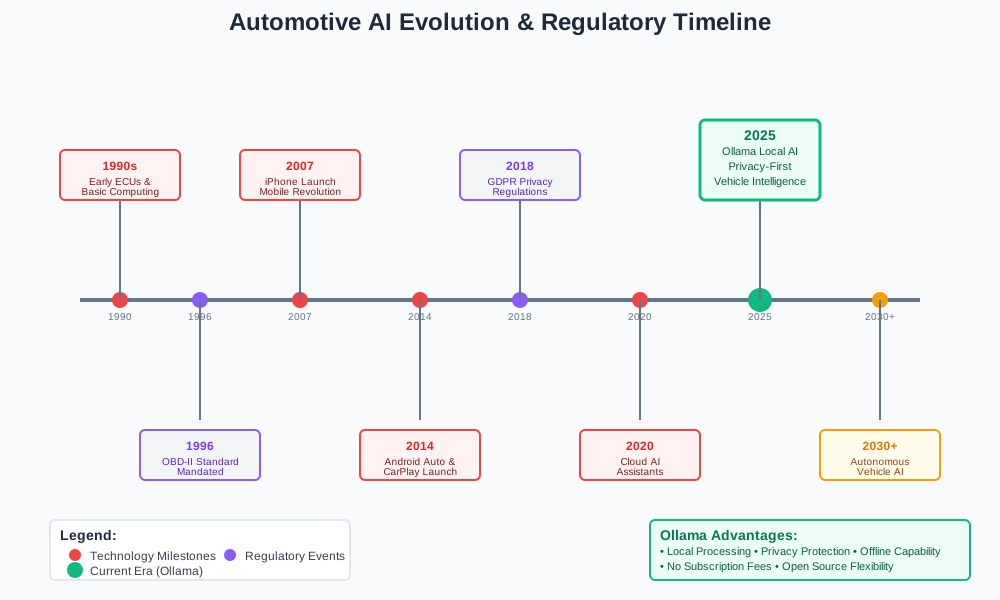
Major automakers explore open-source AI alternatives to reduce dependency on cloud providers. Ollama in-vehicle AI systems position early adopters ahead of this transition.
Regulatory Considerations
Automotive AI faces increasing regulation around data privacy and safety. Local processing with Ollama helps meet compliance requirements while maintaining functionality.
Conclusion
Ollama in-vehicle AI systems transform ordinary vehicles into intelligent assistants that understand, learn, and respond naturally. This local approach protects privacy, reduces costs, and ensures reliability without internet dependency.
The combination of open-source flexibility with automotive-grade reliability makes Ollama the ideal choice for vehicle intelligence. Start with basic voice commands and gradually expand to advanced diagnostic analysis and predictive maintenance.
Your car's intelligence journey begins with a single ollama pull command. Deploy automotive AI integration today and experience the future of vehicle technology.