Ever tried juggling flaming torches while riding a unicycle? Multi-chain yield farming feels similar—except the torches are your crypto assets, and the unicycle is three different blockchains spinning at light speed.
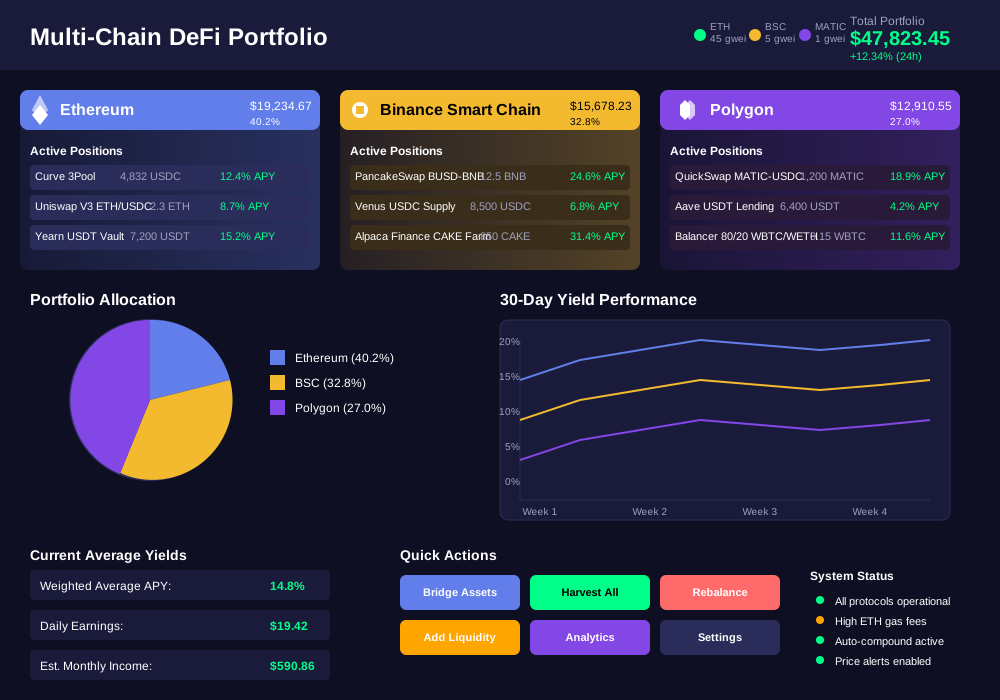
Multi-chain yield farming spreads your assets across Ethereum, BSC, and Polygon to maximize returns. This approach reduces risk while capturing the best opportunities each network offers. You'll learn to bridge tokens, deploy liquidity, and manage cross-chain positions effectively.
This guide covers bridge setup, yield farming strategies, and portfolio management across all three networks.
Why Multi-Chain Yield Farming Beats Single-Chain Strategies
Single-chain farming limits your opportunities. Ethereum offers established protocols but high gas fees. BSC provides lower costs but centralization risks. Polygon delivers speed and efficiency but smaller liquidity pools.
Multi-chain farming solves these problems:
- Risk Distribution: Spread exposure across multiple networks
- Yield Optimization: Capture highest APY opportunities
- Cost Efficiency: Use cheaper networks for smaller transactions
- Protocol Access: Leverage unique DeFi innovations per chain
Essential Tools and Wallets for Cross-Chain Operations
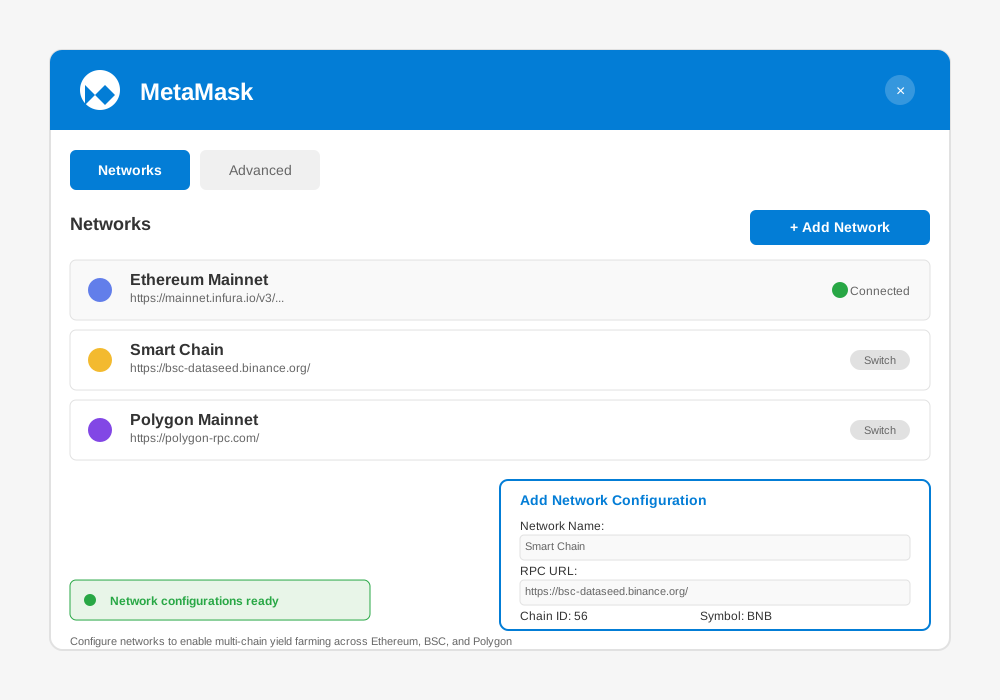
MetaMask Multi-Network Setup
Configure MetaMask for all three networks before starting:
// Ethereum Mainnet (Default)
Network Name: Ethereum Mainnet
RPC URL: https://mainnet.infura.io/v3/YOUR_PROJECT_ID
Chain ID: 1
Symbol: ETH
Block Explorer: https://etherscan.io

// Binance Smart Chain
Network Name: Smart Chain
RPC URL: https://bsc-dataseed.binance.org/
Chain ID: 56
Symbol: BNB
Block Explorer: https://bscscan.com

// Polygon Network
Network Name: Polygon Mainnet
RPC URL: https://polygon-rpc.com/
Chain ID: 137
Symbol: MATIC
Block Explorer: https://polygonscan.com
Recommended Bridge Platforms
Primary Bridges:
- Ethereum ↔ Polygon: Official Polygon Bridge
- Ethereum ↔ BSC: Binance Bridge
- Multi-Chain: Multichain.org (formerly AnySwap)
Emergency Alternatives:
- cBridge (Celer Network)
- Hop Protocol
- Synapse Protocol
Step-by-Step Bridge Setup Guide
Ethereum to Polygon Bridge Tutorial
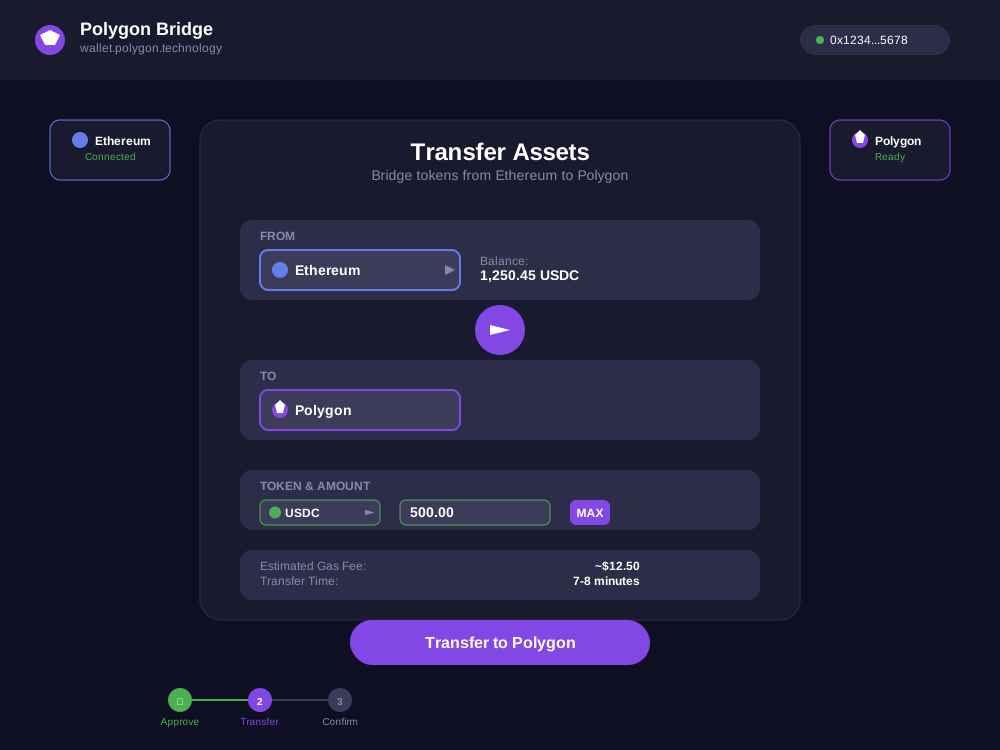
The Polygon bridge handles asset transfers securely between networks.
Step 1: Access the Official Bridge Navigate to wallet.polygon.technology/polygon-bridge
Step 2: Connect Your Wallet Click "Connect Wallet" and select MetaMask. Ensure you're on Ethereum network.
Step 3: Select Assets and Amount
// Supported tokens for bridging
- ETH (becomes WETH on Polygon)
- USDC
- USDT
- DAI
- WBTC
// Custom ERC-20 tokens (verify contract addresses)
Step 4: Initiate Transfer
- Enter amount to bridge
- Review gas fees (typically 50-200 GWEI)
- Confirm transaction in MetaMask
- Wait 7-8 minutes for checkpoint
Step 5: Claim on Polygon Switch to Polygon network in MetaMask and claim your tokens.
Ethereum to BSC Bridge Process
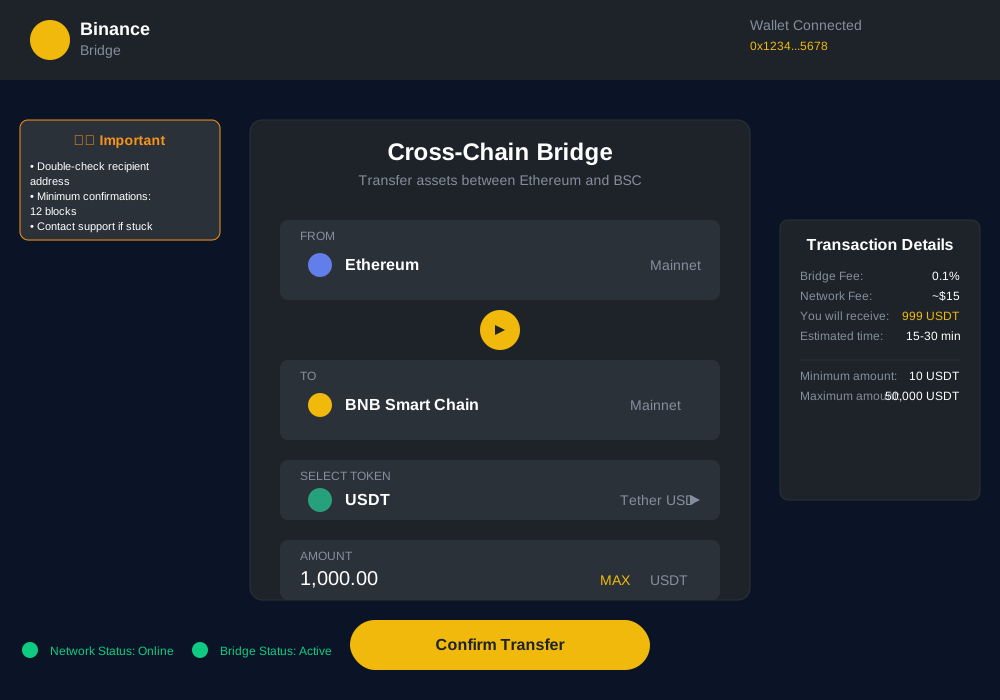
Binance Bridge facilitates secure cross-chain transfers.
Step 1: Visit Binance Bridge Go to www.binance.org/bridge
Step 2: Select Networks
- From: Ethereum
- To: Binance Smart Chain
Step 3: Choose Token Type
// Popular bridgeable tokens:
{
  "ETH": "BEP20 ETH",
  "USDT": "BEP20 USDT",
  "USDC": "BEP20 USDC",
  "DAI": "BEP20 DAI",
  "BTCB": "BEP20 BTCB"
}
Step 4: Complete Transfer
- Enter amount
- Generate deposit address
- Send tokens to provided address
- Wait 15-30 minutes for confirmation
Setting Up Yield Farming Positions Across Networks
Ethereum DeFi Protocol Selection
High-Yield Opportunities:
- Uniswap V3: Concentrated liquidity positions
- Curve Finance: Stablecoin farming with boosted rewards
- Convex Finance: Enhanced Curve yields
- Yearn Finance: Automated yield strategies
Example Curve Setup:
// Curve 3Pool farming steps
1. Deposit USDC, USDT, DAI into 3Pool
2. Receive 3CRV LP tokens
3. Stake 3CRV in gauge contract
4. Claim CRV rewards weekly
5. Boost with locked CVX for higher yields
BSC Yield Farming Protocols
Top BSC Platforms:
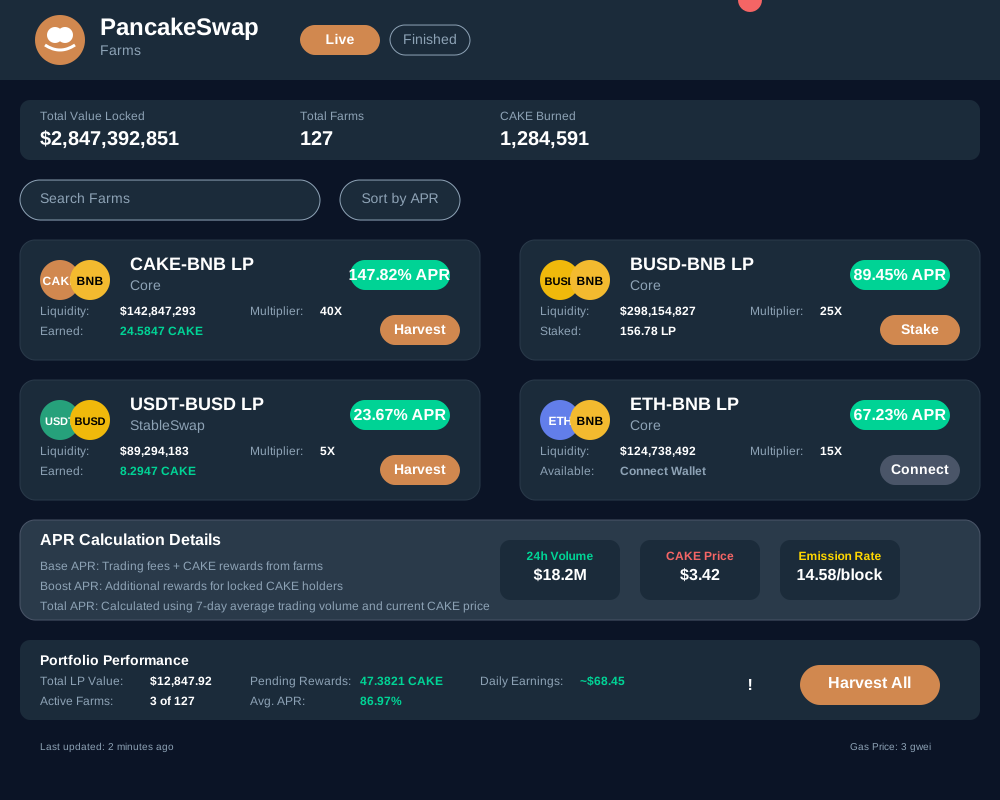
- PancakeSwap: Native DEX with CAKE rewards
- Venus Protocol: Lending and borrowing yields
- Alpaca Finance: Leveraged yield farming
- Beefy Finance: Auto-compounding vaults
PancakeSwap LP Farming:
// BUSD-BNB LP farming process
1. Add liquidity to BUSD-BNB pair
2. Receive BUSD-BNB LP tokens
3. Stake LP tokens in farm
4. Harvest CAKE rewards daily
5. Compound or claim rewards
Polygon DeFi Ecosystem
Leading Polygon Protocols:
- QuickSwap: Primary DEX with QUICK rewards
- Aave: Multi-asset lending protocol
- Balancer: Weighted portfolio management
- SushiSwap: Cross-chain liquidity farming
Aave Lending Strategy:
// Aave v3 lending setup
contract AaveLending {
    // Supply USDC to earn interest
    function supplyUSDC(uint256 amount) external {
        IERC20(USDC).approve(aavePool, amount);
        aavePool.supply(USDC, amount, msg.sender, 0);
    }

    // Borrow MATIC against USDC collateral
    function borrowMATIC(uint256 amount) external {
        aavePool.borrow(WMATIC, amount, 2, 0, msg.sender);
    }
}
Cross-Chain Portfolio Management Strategies
Asset Allocation Framework
Conservative Allocation (Low Risk):
- 50% Ethereum stablecoins (Curve, Aave)
- 30% Polygon lending (Aave, Compound)
- 20% BSC stablecoin farms (Venus, PancakeSwap)
Aggressive Allocation (High Risk):
- 40% Ethereum DeFi tokens (UNI, CRV, CVX)
- 35% BSC altcoin farms (CAKE, ALPACA)
- 25% Polygon native tokens (QUICK, DQUICK)
Risk Management Techniques
Impermanent Loss Protection:
// Calculate impermanent loss risk
function calculateIL(price1Initial, price2Initial, price1Final, price2Final) {
    const ratio = (price1Final / price2Final) / (price1Initial / price2Initial);
    const holdValue = Math.sqrt(ratio);
    const lpValue = 2 * Math.sqrt(ratio) / (1 + ratio);
    return (lpValue - holdValue) / holdValue;
}
Position Monitoring Tools:
- Zapper.fi: Cross-chain portfolio tracking
- DeBank: Multi-wallet DeFi dashboard
- APY.vision: Impermanent loss tracking
- Yield Watch: BSC yield monitoring
Advanced Bridge Techniques and Gas Optimization
Batch Transaction Strategies
Gas-Efficient Batching:
// Batch multiple operations in single transaction
contract BatchOperations {
    function batchFarmingActions(
        address[] calldata tokens,
        uint256[] calldata amounts,
        address[] calldata farms
    ) external {
        for (uint i = 0; i < tokens.length; i++) {
            // Approve token
            IERC20(tokens[i]).approve(farms[i], amounts[i]);
            // Deposit into farm
            IFarm(farms[i]).deposit(amounts[i]);
        }
    }
}
Bridge Timing Optimization
Optimal Bridge Windows:
- Ethereum: Late night EST (1-4 AM) for lower gas
- BSC: Consistent low fees throughout day
- Polygon: Always low cost, bridge during Ethereum off-peak
Gas Price Monitoring:
- Use GasTracker.io for real-time prices
- Set gas alerts for target prices
- Consider Layer 2 alternatives during high congestion
Troubleshooting Common Bridge Issues
Failed Transaction Recovery
Ethereum Network Issues:
# Check transaction status
curl -X POST https://api.etherscan.io/api \
  -d "module=transaction&action=gettxreceiptstatus&txhash=YOUR_TX_HASH&apikey=YOUR_API_KEY"

# If failed, check:
1. Gas limit too low
2. Slippage tolerance exceeded
3. Contract interaction failed
4. Insufficient balance for gas
Bridge Stuck Transactions:
- Check bridge status pages
- Verify source transaction confirmed
- Contact bridge support with transaction hash
- Use alternative bridge if urgent
Security Best Practices
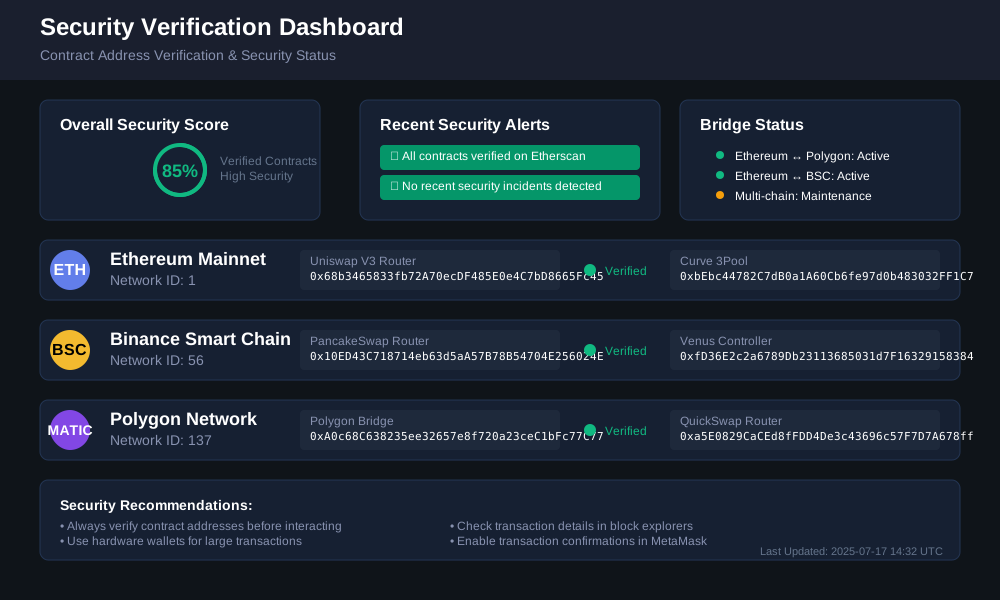
Smart Contract Verification:
// Always verify contract addresses
const verifiedContracts = {
    polygonBridge: "0xA0c68C638235ee32657e8f720a23ceC1bFc77C77",
    binanceBridge: "0x3f5CE5FBFe3E9af3971dD833D26bA9b5C936f0bE",
    pancakeRouter: "0x10ED43C718714eb63d5aA57B78B54704E256024E"
};
Wallet Security Measures:
- Use hardware wallets for large amounts
- Enable transaction confirmations
- Verify contract interactions
- Monitor for suspicious approvals
Maximizing Returns Through Yield Compounding
Automated Compounding Solutions
Yield Aggregators by Network:
Ethereum:
- Yearn Finance: Set-and-forget vaults
- Harvest Finance: Optimized farming strategies
- Convex Finance: Boosted Curve yields
BSC:
- Beefy Finance: Auto-compounding vaults
- AutoFarm: Cross-platform yield optimization
- PancakeBunny: BUNNY token rewards
Polygon:
- PolyBunny: Automated compound farming
- Kogefarm: Multi-strategy vaults
- Beefy Finance: Cross-chain optimization
Manual Compounding Strategies
Daily Compounding Routine:
// Automated compound script
async function dailyCompound() {
    // Check pending rewards
    const rewards = await farmContract.pendingRewards(userAddress);

    if (rewards > minimumThreshold) {
        // Harvest rewards
        await farmContract.harvest();

        // Swap rewards to base tokens
        await swapTokens(rewardToken, baseToken, rewards);

        // Add liquidity
        await addLiquidity(token0, token1, amount0, amount1);

        // Stake LP tokens
        await farmContract.deposit(lpAmount);
    }
}
Performance Tracking and Analytics
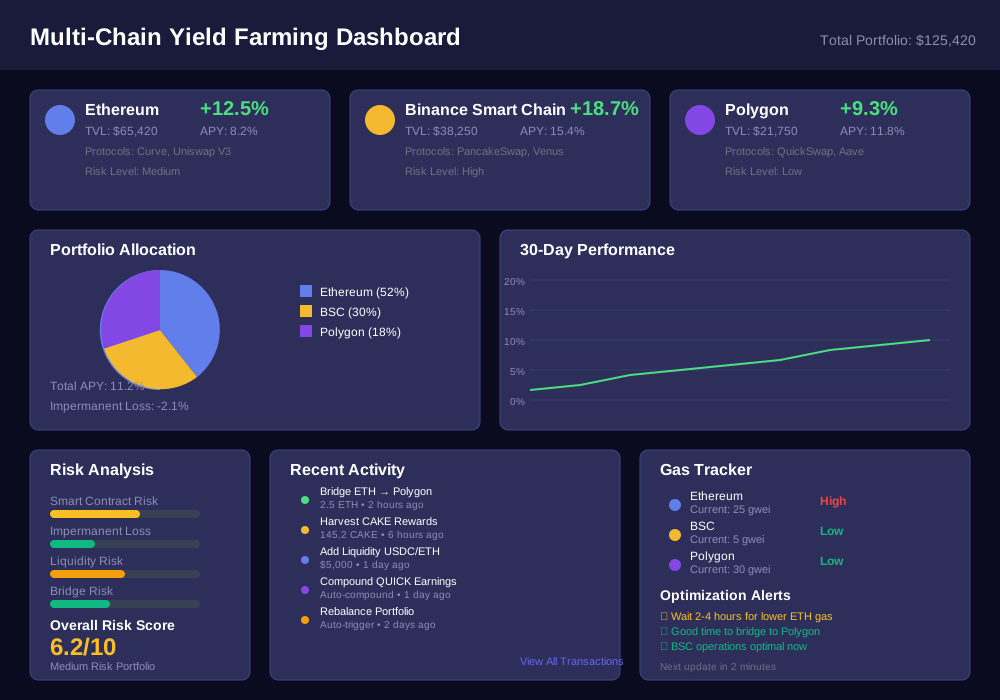
Key Metrics to Monitor
Essential KPIs:
- Total Value Locked (TVL): Portfolio size across chains
- Annual Percentage Yield (APY): Return rates per protocol
- Impermanent Loss: LP position losses from price divergence
- Gas Costs: Transaction fees across networks
- Risk-Adjusted Returns: Sharpe ratio calculations
Portfolio Rebalancing Triggers
Rebalancing Signals:
// Automated rebalancing logic
function shouldRebalance(currentAllocation, targetAllocation) {
    const threshold = 0.05; // 5% deviation trigger

    for (let asset in currentAllocation) {
        const deviation = Math.abs(
            currentAllocation[asset] - targetAllocation[asset]
        ) / targetAllocation[asset];

        if (deviation > threshold) {
            return true;
        }
    }
    return false;
}
Tax Implications and Record Keeping
Transaction Tracking Requirements
Essential Records:
- Bridge transaction hashes
- Deposit/withdrawal timestamps
- Token swap details
- Reward claim amounts
- Gas fees paid
Recommended Tools:
- Koinly: Automated DeFi tax tracking
- CoinTracker: Multi-chain transaction import
- TokenTax: Manual transaction entry
- Blockpit: European tax compliance
Tax-Efficient Strategies
Harvest Loss Optimization:
// Tax loss harvesting example
contract TaxOptimization {
    function harvestLosses(
        address[] calldata underperformingTokens,
        uint256[] calldata amounts
    ) external {
        // Sell underperforming assets
        for (uint i = 0; i < underperformingTokens.length; i++) {
            swapToken(underperformingTokens[i], stablecoin, amounts[i]);
        }

        // Wait 30 days (wash sale rule)
        // Repurchase with improved cost basis
    }
}
Future-Proofing Your Multi-Chain Strategy
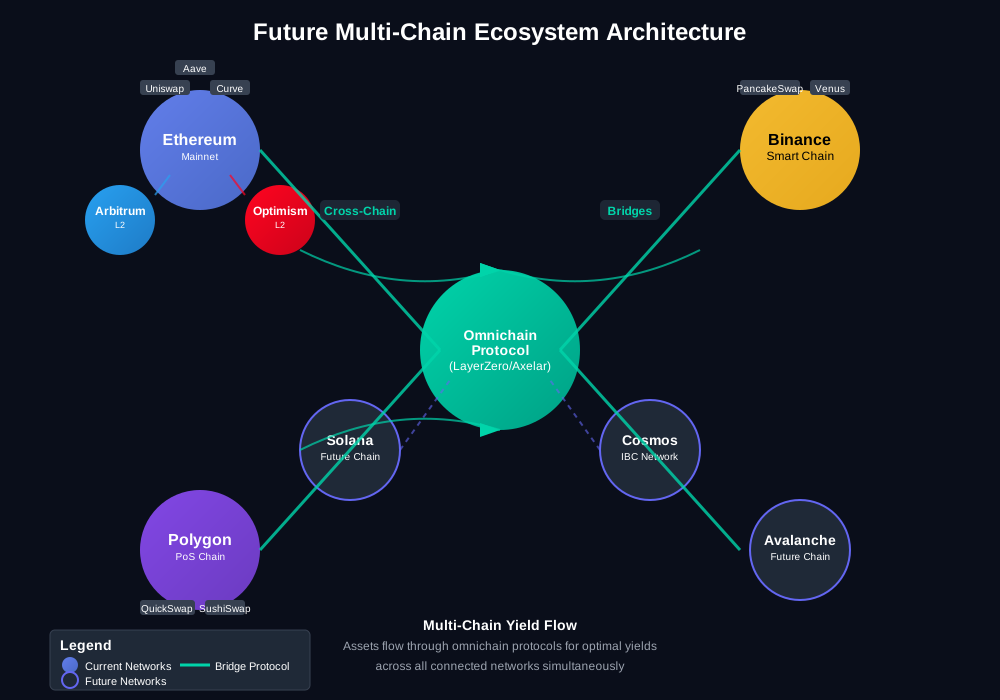
Emerging Bridge Technologies
Next-Generation Bridges:
- LayerZero: Omnichain interoperability
- Axelar: Universal bridge network
- Wormhole: Cross-chain message passing
- Cosmos IBC: Inter-blockchain communication
Scaling Solutions Integration
Layer 2 Considerations:
// L2 bridge compatibility check
const l2Networks = {
    arbitrum: { chainId: 42161, bridges: ['hop', 'across'] },
    optimism: { chainId: 10, bridges: ['hop', 'synapse'] },
    base: { chainId: 8453, bridges: ['official', 'across'] }
};
Portfolio Evolution Path:
- Master current three-chain setup
- Add Arbitrum and Optimism exposure
- Explore new chains (Avalanche, Fantom)
- Integrate automated rebalancing
- Scale to institutional-level strategies
Conclusion
Multi-chain yield farming across Ethereum, BSC, and Polygon maximizes your DeFi returns while spreading risk. You've learned to bridge assets securely, deploy capital efficiently, and manage cross-chain positions professionally.
Start with conservative allocations, master the bridge processes, and gradually increase complexity. The multi-chain DeFi landscape rewards those who adapt quickly and manage risk intelligently.
Your yield farming journey begins with the first bridge transaction—make it count.
Ready to optimize your DeFi strategy? Bookmark this guide and start with small test transactions before deploying significant capital across networks.