Remember when your friend told you that DeFi was "basically gambling with extra steps"? Well, Mexico's CNBV just made those steps a lot more organized—and surprisingly, that's great news for yield farmers who actually want to keep their profits.
Mexico's National Banking and Securities Commission (CNBV) recently unveiled comprehensive DeFi regulations that reshape how North American investors approach yield farming south of the border. These rules don't kill the DeFi dream; they create a regulated pathway for sustainable returns.
This guide breaks down exactly what these new CNBV regulations mean for your yield farming strategy, how to stay compliant, and why Mexico might become North America's most attractive DeFi destination.
Understanding Mexico's CNBV DeFi Framework
What Are the New CNBV DeFi Rules?
The CNBV's 2025 DeFi regulations establish three key compliance pillars:
Licensing Requirements: DeFi protocols serving Mexican users need operational permits Capital Reserves: Platforms must maintain 15% of total value locked (TVL) in liquid reserves User Protection: Mandatory insurance coverage and dispute resolution mechanisms
Unlike the United States' fragmented approach, Mexico created unified federal standards. The CNBV designed these rules specifically to encourage innovation while protecting retail investors.
Key Differences from U.S. DeFi Regulations
Mexican DeFi rules offer several advantages over current U.S. regulatory uncertainty:
- Clear compliance pathways instead of enforcement-by-lawsuit
- Fintech sandbox programs for testing new protocols
- Cross-border operational permissions with Canada and other USMCA partners
- Tax clarity with defined digital asset categories
Yield Farming Compliance Requirements
Mandatory Platform Features for Mexican Operations
CNBV-compliant yield farming platforms must implement:
// Example compliance smart contract structure
pragma solidity ^0.8.19;

import "@openzeppelin/contracts/security/ReentrancyGuard.sol";
import "./CNBVCompliance.sol";

contract MexicanYieldFarm is ReentrancyGuard, CNBVCompliance {
    // Required: User verification system
    mapping(address => bool) public verifiedUsers;

    // Required: Transaction reporting for CNBV
    event YieldDistribution(
        address indexed user,
        uint256 amount,
        uint256 timestamp,
        string complianceId
    );

    // Required: Emergency stop mechanism
    bool public emergencyStop = false;

    function distributeYield(address user, uint256 amount)
        external
        onlyVerifiedUser(user)
        whenNotPaused
    {
        require(!emergencyStop, "Emergency stop active");

        // Execute yield distribution
        _distributeYield(user, amount);

        // Required CNBV reporting
        emit YieldDistribution(
            user,
            amount,
            block.timestamp,
            generateComplianceId(user, amount)
        );
    }
}
User Verification and KYC Requirements
Mexican yield farming requires enhanced due diligence:
- Identity Verification: Government-issued ID verification for accounts over 10,000 USDC
- Source of Funds: Documentation for deposits exceeding 25,000 USDC
- Ongoing Monitoring: Quarterly reviews for high-volume farmers
Transaction Reporting Standards
The CNBV requires platforms to report:
- All transactions exceeding 1,000 USDC
- Monthly yield distribution summaries
- Suspicious activity reports within 24 hours
Top CNBV-Compliant Yield Farming Platforms
Tier 1: Fully Licensed Platforms
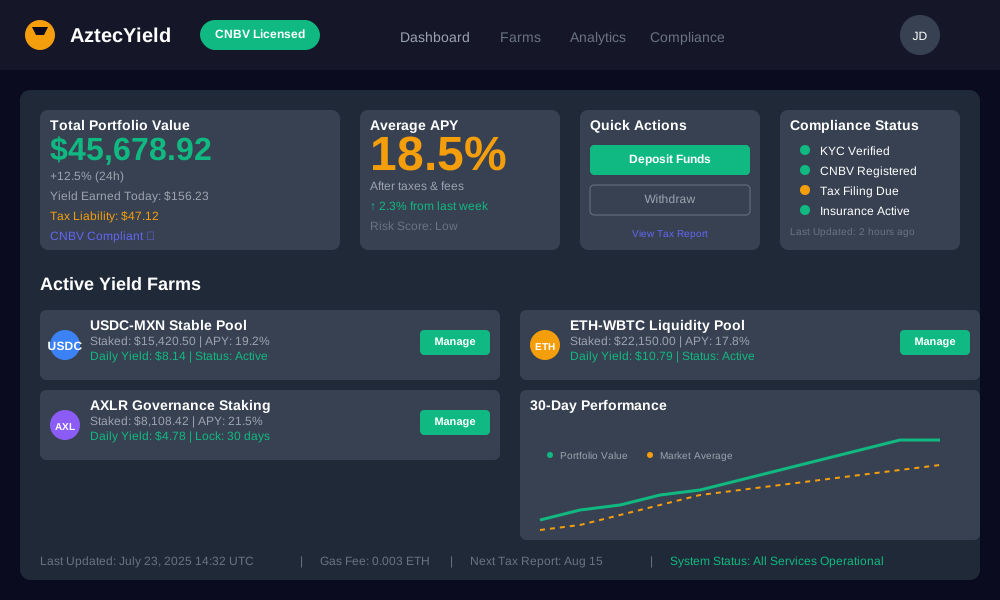
AztecYield leads Mexican DeFi compliance with:
- Full CNBV licensing since March 2025
- 18.5% average APY on stablecoin pools
- Integrated tax reporting for Mexican residents
- 24/7 Spanish customer support
TenochtitlanDEX offers:
- Cross-border farming between Mexico, US, and Canada
- USMCA trade agreement benefits
- Automated compliance reporting
- 15.2% average returns on blue-chip crypto pairs
Tier 2: Sandbox-Approved Protocols
Several platforms operate under CNBV's fintech sandbox:
- MayaProtocol: Focuses on agricultural commodity-backed tokens
- QuetzalFarms: Specializes in sustainable energy token staking
- ZapotecSwap: Emphasizes indigenous community governance tokens
Tax Implications for North American Yield Farmers
Mexican Tax Treatment
Mexico treats DeFi yield farming as:
- Income Tax: 30% on farming rewards over 125,000 MXN annually
- Capital Gains: 10% on token appreciation upon sale
- Foreign Investment: Special rates for USMCA residents
Cross-Border Tax Considerations
U.S. and Canadian farmers must report Mexican DeFi income:
// Example tax calculation for dual reporting
function calculateDualTaxLiability(
  mexicanYieldUSD,
  homeCountryTaxRate,
  mexicanTaxRate,
  treatyBenefits
) {
  const mexicanTaxOwed = mexicanYieldUSD * mexicanTaxRate;
  const homeTaxOwed = mexicanYieldUSD * homeCountryTaxRate;

  // Apply tax treaty benefits to avoid double taxation
  const finalTaxLiability = Math.max(
    mexicanTaxOwed,
    homeTaxOwed - (treatyBenefits ? mexicanTaxOwed : 0)
  );

  return {
    mexicanTax: mexicanTaxOwed,
    homeTax: homeTaxOwed,
    totalLiability: finalTaxLiability,
    treatyCredits: treatyBenefits ? mexicanTaxOwed : 0
  };
}
Risk Management Under CNBV Rules
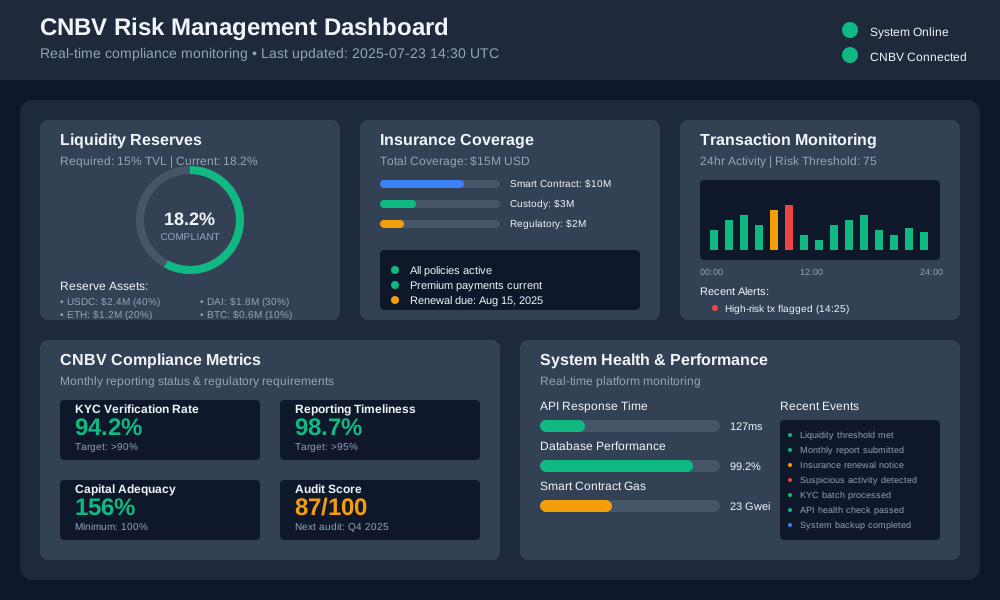
Mandatory Insurance Requirements
CNBV-compliant platforms must provide:
- Smart Contract Insurance: Coverage for code exploits up to 10 million USD
- Custody Insurance: Protection for user funds in hot wallets
- Regulatory Insurance: Coverage for compliance-related losses
Liquidity Requirements
Platforms must maintain:
- 15% of TVL in liquid reserves
- Diverse asset backing (no single token over 40% of reserves)
- Real-time solvency reporting to CNBV
Step-by-Step Compliance Setup
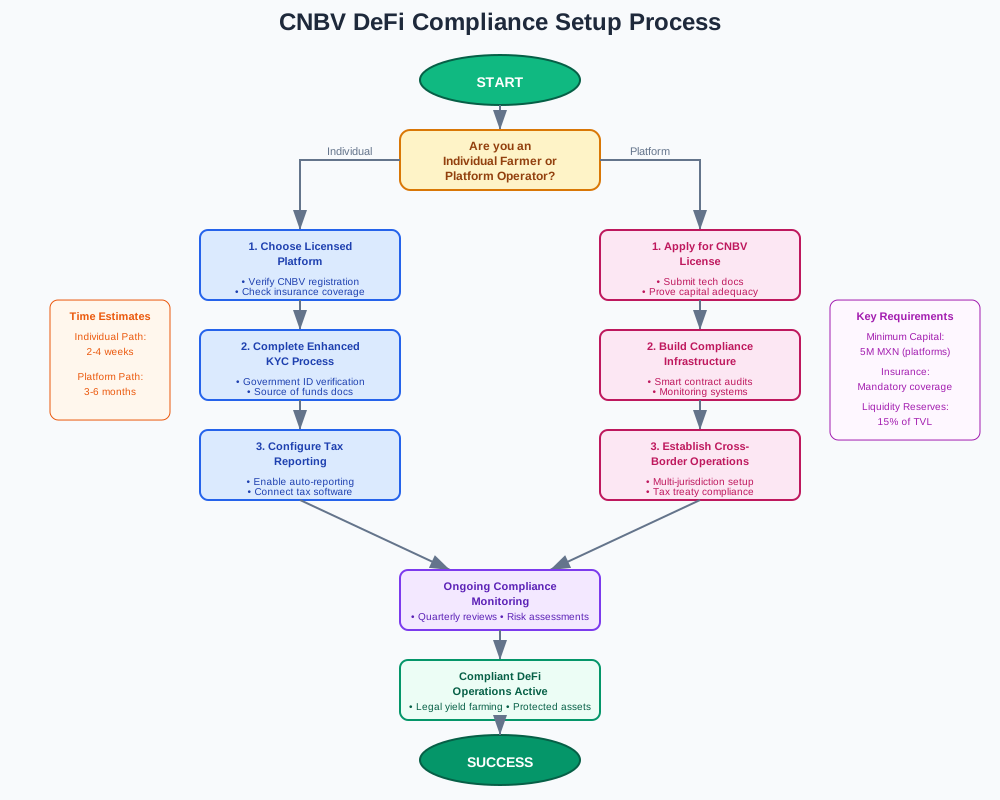
For Individual Farmers
Choose a Licensed Platform
- Verify CNBV registration status
- Check insurance coverage details
- Review fee structures and tax reporting features
Complete Enhanced KYC
- Upload government-issued identification
- Provide proof of address within 90 days
- Submit income source documentation for large deposits
Set Up Tax Reporting
- Enable automatic transaction reporting
- Connect to tax preparation software
- Schedule quarterly compliance reviews
For Platform Operators
Apply for CNBV License
- Submit technical architecture documentation
- Demonstrate capital adequacy (minimum 5 million MXN)
- Pass cybersecurity audit requirements
Implement Compliance Infrastructure
// TypeScript compliance monitoring system
interface CNBVComplianceMonitor {
  trackTransaction(tx: Transaction): Promise<ComplianceReport>;
  generateMonthlyReport(): Promise<CNBVReport>;
  flagSuspiciousActivity(activity: Activity): Promise<void>;
  maintainLiquidityRatio(): Promise<LiquidityStatus>;
}

class YieldFarmCompliance implements CNBVComplianceMonitor {
  async trackTransaction(tx: Transaction): Promise<ComplianceReport> {
    // Implement real-time transaction monitoring
    const riskScore = await this.calculateRiskScore(tx);

    if (riskScore > CNBV_RISK_THRESHOLD) {
      await this.flagSuspiciousActivity(tx);
    }

    return this.generateComplianceReport(tx, riskScore);
  }
}
Establish Cross-Border Operations
- Register with home country regulators
- Implement tax treaty compliance
- Set up multi-jurisdiction customer support
Future Outlook: CNBV Regulation Evolution
Planned 2026 Updates
The CNBV announced several upcoming changes:
Central Bank Digital Currency (CBDC) Integration: Direct peso digital currency support for yield farming Enhanced Cross-Border Frameworks: Expanded cooperation with U.S. FinCEN and Canadian FINTRAC Institutional DeFi Services: Special licensing for pension funds and insurance companies
North American DeFi Corridor
Mexico's proactive approach positions it as the hub for a North American DeFi corridor. The USMCA agreement's digital trade provisions create opportunities for:
- Unified regulatory standards across all three countries
- Cross-border yield farming with reduced compliance costs
- Integrated tax reporting systems
Maximizing Returns While Staying Compliant
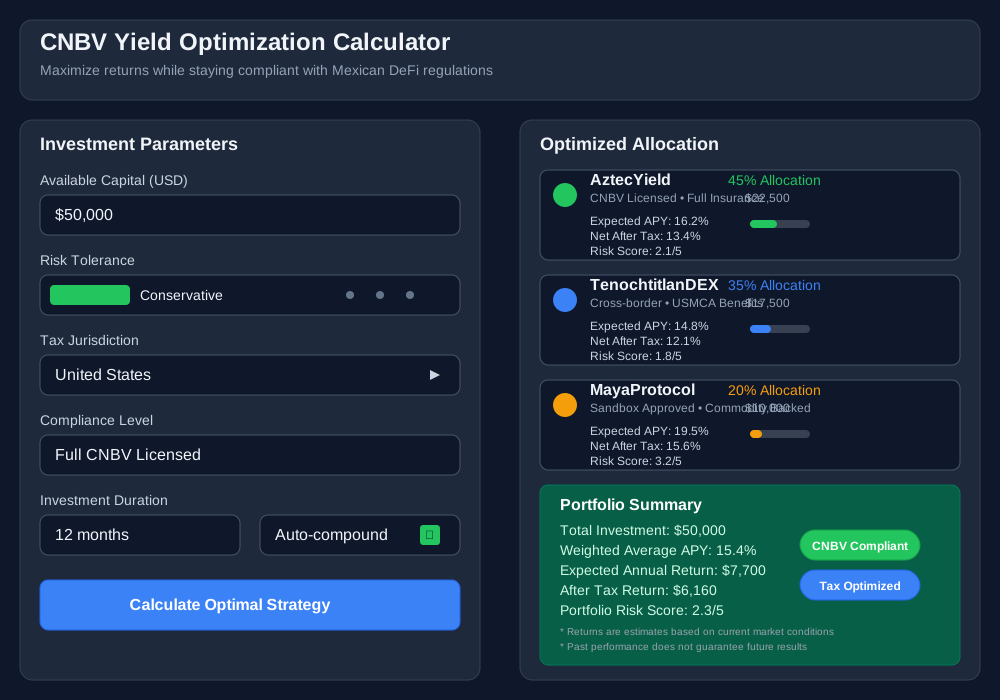
Optimal Strategy Framework
- Diversify Across Jurisdictions: Use Mexico as your primary base while maintaining smaller positions in U.S. and Canadian platforms
- Leverage Tax Treaties: Time your farming activities to optimize treaty benefits
- Focus on Licensed Platforms: Higher regulatory costs often correlate with better security and insurance coverage
Performance Optimization
# Python yield optimization considering compliance costs
def optimize_yield_strategy(
    available_capital,
    risk_tolerance,
    tax_jurisdiction,
    compliance_preferences
):
    """
    Optimize yield farming strategy under CNBV regulations
    """
    platforms = get_cnbv_compliant_platforms()

    # Filter platforms by risk tolerance and compliance level
    suitable_platforms = filter_platforms(
        platforms,
        risk_tolerance,
        compliance_preferences
    )

    # Calculate expected returns after taxes and fees
    optimized_allocation = {}

    for platform in suitable_platforms:
        net_yield = calculate_net_yield(
            platform.apy,
            platform.fees,
            get_tax_rate(tax_jurisdiction),
            platform.insurance_cost
        )

        optimized_allocation[platform.name] = {
            'allocation_percent': calculate_optimal_allocation(
                net_yield,
                platform.risk_score
            ),
            'expected_net_apy': net_yield,
            'compliance_score': platform.cnbv_rating
        }

    return optimized_allocation
Common Compliance Pitfalls to Avoid
Documentation Failures
Many North American farmers underestimate Mexican documentation requirements:
- Incomplete Transaction Records: Maintain detailed logs of all farming activities
- Missing Tax Forms: File both Mexican and home country reports
- Inadequate KYC Updates: Refresh verification documents annually
Cross-Border Reporting Mistakes
Avoid these frequent errors:
- Double-counting tax liabilities without treaty credits
- Failing to report foreign account holdings (FBAR requirements)
- Misclassifying yield farming income vs. capital gains
Conclusion
Mexico's CNBV DeFi rules transform yield farming from regulatory uncertainty into a structured opportunity. These regulations create the first clear compliance pathway for institutional DeFi investment in North America.
Smart yield farmers will view these rules as competitive advantages rather than barriers. Compliant platforms offer better security, insurance coverage, and institutional backing—leading to more sustainable returns over time.
The CNBV framework positions Mexico as North America's DeFi innovation center. Early adopters who master these compliance requirements will benefit from first-mover advantages in a rapidly expanding regulated market.
Start your compliant Mexican yield farming journey by choosing a licensed platform, completing enhanced KYC, and implementing proper tax reporting. The extra steps today create exponentially better opportunities tomorrow.
This article provides educational information about Mexican DeFi regulations and should not be considered legal or financial advice. Always consult qualified professionals before making investment decisions or implementing compliance strategies.