Picture this: You're watching your liquidity slowly drift out of range while fees trickle away like water through your fingers. Traditional AMMs treat your capital like a lazy river float—comfortable but inefficient. Maverick Protocol flips this script with dynamic distribution that actually works with market movements instead of against them.
This comprehensive tutorial shows you how to master Maverick Protocol's revolutionary approach to yield farming through its dynamic distribution automated market maker (AMM). You'll learn to implement concentrated liquidity strategies that automatically adjust to market conditions and maximize your DeFi returns.
What Makes Maverick Protocol Different from Traditional AMMs
Traditional AMMs like Uniswap V2 spread your liquidity uniformly across all possible price ranges. This approach wastes capital efficiency and generates minimal fees when prices move away from your position.
Maverick Protocol introduces dynamic distribution mechanics that concentrate liquidity around the current market price. The protocol automatically shifts liquidity bins as prices move, maintaining optimal capital efficiency without constant manual rebalancing.
Key Advantages of Maverick's Dynamic AMM
Capital Efficiency: Concentrated liquidity generates up to 4000x more fees per dollar compared to traditional uniform distribution.
Automated Rebalancing: Smart contracts automatically move liquidity to follow price trends, reducing impermanent loss.
Flexible Strategies: Choose from multiple distribution modes including Static, Right, Left, and Both directions based on market outlook.
Lower Gas Costs: Batch operations and efficient smart contracts reduce transaction costs for liquidity providers.
Understanding Maverick's Liquidity Distribution Modes
Maverick offers four distinct distribution modes that determine how your liquidity behaves as prices change:
Static Mode: Traditional Concentrated Liquidity
Static mode works like Uniswap V3—your liquidity stays in fixed price bins regardless of market movement. Use this for stable trading pairs or when you expect prices to remain range-bound.
// Example: Static USDC/USDT position
struct StaticPosition {
    uint256 lowerTick;
    uint256 upperTick;
    uint256 liquidity;
    bool autoRebalance; // false for static
}
Right Mode: Following Upward Trends
Right mode automatically shifts liquidity bins upward as prices increase. Your liquidity "follows" the price, maintaining optimal positioning during bull markets.
Best for: Assets you believe will appreciate (BTC, ETH during uptrends)
Left Mode: Capturing Downward Movements
Left mode shifts liquidity bins downward as prices decrease. This strategy profits from downward price movements while providing liquidity.
Best for: Bear markets or pairs where you expect price decline
Both Mode: Maximum Flexibility
Both mode shifts liquidity in both directions, following price movements up or down. This provides maximum adaptability but may result in higher impermanent loss during volatile periods.
Setting Up Your First Maverick Protocol Position
Prerequisites and Wallet Connection
Before starting, ensure you have:
- MetaMask or compatible Web3 wallet
- ETH for gas fees
- Tokens for the trading pair you want to provide liquidity for
- Understanding of impermanent loss risks
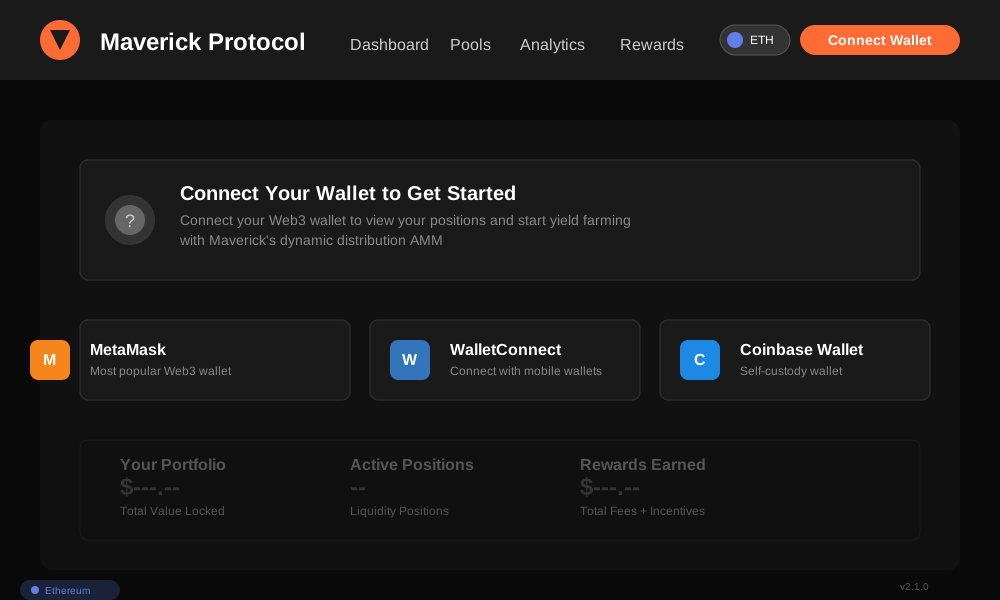
Connect to Maverick Protocol at app.mav.xyz and switch to Ethereum mainnet.
Selecting Your Trading Pair and Strategy
Navigate to the "Pools" section and choose your desired trading pair. Popular options include:
- ETH/USDC: High volume, moderate volatility
- WBTC/ETH: Crypto-native pair with good fee generation
- USDC/USDT: Stable pair for conservative strategies
Click "Add Liquidity" to begin position creation.
Configuring Distribution Parameters
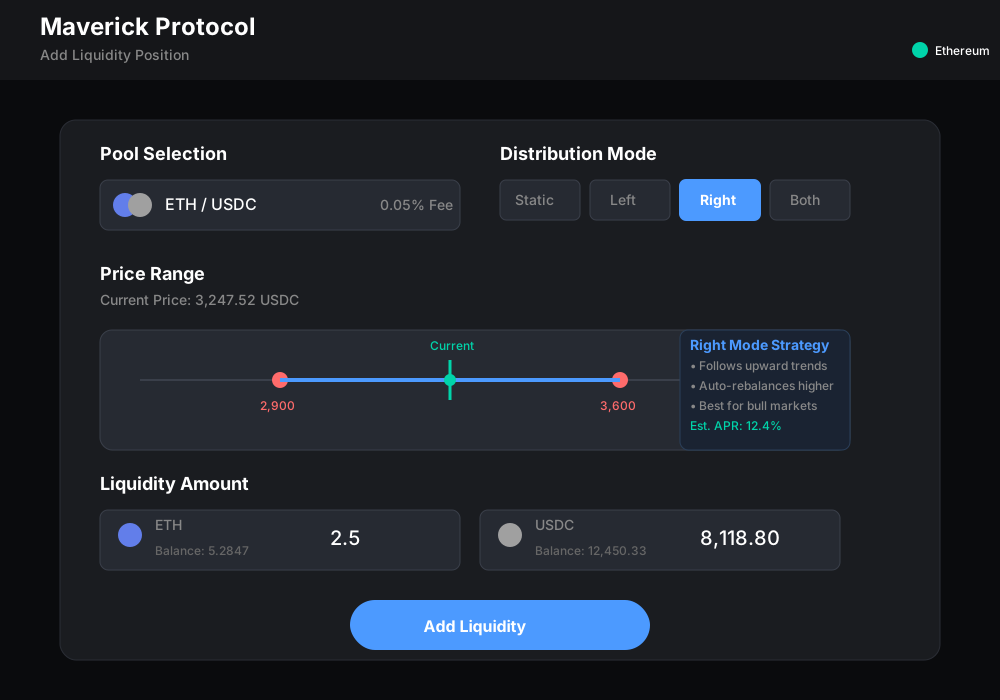
Step 1: Choose your distribution mode based on market outlook:
- Bull market → Right mode
- Bear market → Left mode
- Uncertain → Both mode
- Stable range → Static mode
Step 2: Set your price range by adjusting the tick spacing:
// Tighter ranges = higher capital efficiency but more risk
const tightRange = {
  lowerTick: currentTick - 100,
  upperTick: currentTick + 100
};

// Wider ranges = lower efficiency but reduced risk
const wideRange = {
  lowerTick: currentTick - 500,
  upperTick: currentTick + 500
};
Step 3: Allocate token amounts. Maverick automatically calculates the optimal ratio based on current prices and your selected range.
Advanced Yield Farming Strategies with Maverick
The Momentum Strategy (Right Mode)
This strategy works best during clear uptrends. Set a Right mode position with moderate price range to capture fees while following price appreciation.
Configuration Example:
- Pair: ETH/USDC
- Mode: Right
- Range: ±5% from current price
- Rebalance: Automatic
Expected Outcomes:
- Higher fee generation during uptrends
- Reduced impermanent loss compared to static positions
- Capital follows profitable price movements
The Mean Reversion Strategy (Both Mode)
Use Both mode for volatile assets that tend to revert to mean prices. This captures fees from both directions while maintaining liquidity efficiency.
Configuration Example:
- Pair: WBTC/ETH
- Mode: Both
- Range: ±10% from current price
- Rebalance: Automatic
The Stable Farming Strategy (Static Mode)
Focus on stablecoin pairs or low-volatility assets using Static mode for consistent fee generation with minimal impermanent loss.
Configuration Example:
- Pair: USDC/USDT
- Mode: Static
- Range: ±0.5% from current price
- Duration: Long-term
Monitoring and Managing Your Positions
Dashboard Analytics and Performance Tracking
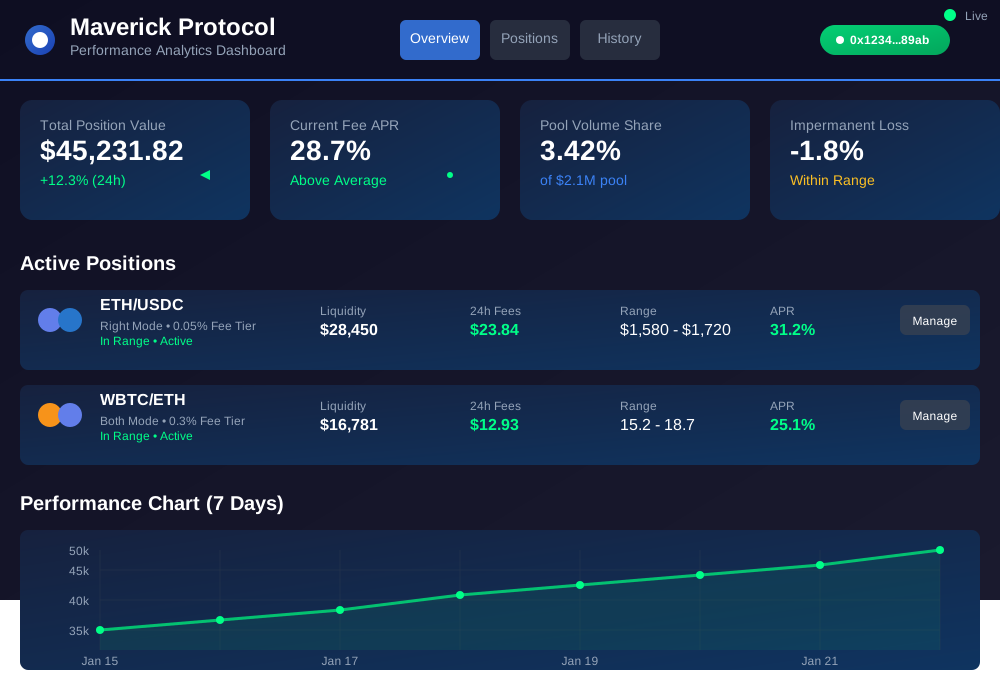
Maverick provides detailed analytics for position performance:
- Fee APR: Current annualized return from trading fees
- Total Value: Current position value in USD
- Impermanent Loss: Realized and unrealized IL
- Volume Share: Your percentage of pool trading volume
Access these metrics in the "My Positions" dashboard tab.
When to Rebalance or Exit Positions
Rebalancing Triggers:
- Market conditions change (bull to bear or vice versa)
- Your liquidity moves significantly out of range in Static mode
- Better opportunities emerge in different pools
Exit Signals:
- Sustained high impermanent loss (>5% for stable pairs, >15% for volatile pairs)
- Dramatic decrease in trading volume
- Smart contract risks or protocol changes
Gas Optimization Techniques
Batch Operations: Combine multiple actions (add liquidity, collect fees, rebalance) in single transactions to reduce gas costs.
Timing: Execute transactions during low-demand periods (weekends, early UTC hours) for lower gas prices.
Position Sizing: Larger positions spread gas costs more efficiently across your capital.
Risk Management and Best Practices
Understanding Impermanent Loss in Dynamic AMMs
Maverick's dynamic rebalancing can reduce impermanent loss compared to static positions, but risks remain:
Price Divergence: When asset prices move in opposite directions, you'll hold more of the depreciating asset.
Volatility Impact: Higher volatility increases impermanent loss but also generates more trading fees.
Strategy Mismatch: Using Right mode during bear markets amplifies losses.
Diversification Strategies
Multi-Pool Approach: Spread capital across 3-5 different pools to reduce single-pair risk.
Strategy Mixing: Combine different distribution modes (30% Right, 30% Left, 40% Both) for balanced exposure.
Time Diversification: Stagger position entries over time to average into positions.
Security Considerations
Smart Contract Risk: Maverick undergoes regular audits, but smart contract risks always exist in DeFi.
Slippage Protection: Set appropriate slippage tolerance (0.5-2%) to prevent MEV attacks.
Wallet Security: Use hardware wallets for significant amounts and enable transaction confirmations.
Maximizing Returns with Advanced Techniques
Leveraging Incentive Programs
Monitor Maverick's liquidity mining programs for additional token rewards beyond trading fees. These programs often target specific pools and distribution modes.
Boosted Rewards: Some pools offer enhanced rewards for longer-term liquidity provision or specific strategies.
Governance Participation: MAV token holders receive additional benefits and voting rights in protocol decisions.
Integration with Other DeFi Protocols
Yield Stacking: Use LP tokens as collateral in lending protocols for additional yield (exercise caution with liquidation risks).
Arbitrage Opportunities: Monitor price differences between Maverick and other AMMs for profitable arbitrage trades.
Cross-Chain Strategies: Maverick operates on multiple chains—consider multi-chain liquidity provision for diversified exposure.
Troubleshooting Common Issues
Transaction Failures and Gas Issues
Insufficient Gas: Increase gas limit by 20% for complex transactions involving multiple pools.
Slippage Errors: Increase slippage tolerance during high volatility periods.
Nonce Issues: Reset MetaMask account if transactions get stuck in pending state.
Position Management Problems
Out-of-Range Liquidity: Static positions may drift out of range during volatile markets. Consider switching to dynamic modes or manually rebalancing.
Low Fee Generation: Ensure adequate trading volume in your selected pools. Consider moving to higher-volume pairs.
Unexpected Impermanent Loss: Verify your strategy matches current market conditions. Bear markets require different approaches than bull markets.
Conclusion
Maverick Protocol's dynamic distribution AMM represents a significant evolution in automated market maker technology. By implementing concentrated liquidity strategies that automatically adjust to market conditions, you can achieve superior capital efficiency and potentially higher returns compared to traditional AMM approaches.
The key to successful Maverick Protocol yield farming lies in matching your distribution strategy to market conditions, maintaining appropriate risk management, and actively monitoring position performance. Start with smaller positions to understand the mechanics before scaling up your capital allocation.
Remember that while Maverick's dynamic rebalancing can optimize returns and reduce impermanent loss, all DeFi strategies carry inherent risks. Always conduct thorough research and consider your risk tolerance before committing significant capital to yield farming strategies.
Ready to start optimizing your DeFi returns? Connect your wallet to Maverick Protocol and begin your journey into next-generation automated market making today.
This tutorial provides educational information about DeFi yield farming strategies. Always conduct your own research and consider consulting with financial advisors before making investment decisions. Past performance does not guarantee future results.