Remember when Mastercard was just that plastic rectangle in your wallet that judged your life choices? Well, plot twist: they've gone full blockchain ninja and are now helping Fortune 500 companies farm yield like they're running a digital agriculture empire.
If you've been wondering how enterprises can dip their corporate toes into DeFi waters without getting rekt by gas fees or smart contract bugs, Mastercard's blockchain solutions might be your answer. Today we're diving into how the payment giant transformed from "priceless" taglines to priceless blockchain infrastructure.
What Is Mastercard's Enterprise Yield Farming Solution?
Mastercard didn't just wake up one day and decide to become a blockchain farmer. Their enterprise yield farming platform addresses three critical pain points that keep CFOs awake at night:
- Regulatory compliance (because nobody wants the SEC sliding into their DMs)
- Risk management (protecting millions while chasing those sweet APY gains)
- Scalable infrastructure (handling enterprise volume without breaking)
The Technical Foundation
Mastercard's blockchain infrastructure runs on a permissioned network model. Think of it as a VIP club where only verified enterprises get access, but once you're in, the yield farming opportunities are extensive.
// Mastercard Blockchain SDK Integration Example
const MastercardBlockchain = require('@mastercard/blockchain-sdk');

class EnterpriseYieldFarmer {
  constructor(apiKey, environment) {
    this.client = new MastercardBlockchain({
      apiKey: apiKey,
      environment: environment, // 'sandbox' or 'production'
      compliance: {
        kycRequired: true,
        amlChecks: true,
        regulatoryReporting: true
      }
    });
  }

  async initializeYieldStrategy(params) {
    // Validate enterprise credentials
    const validation = await this.client.validateEnterprise({
      businessId: params.businessId,
      riskProfile: params.riskProfile
    });

    if (!validation.approved) {
      throw new Error('Enterprise validation failed');
    }

    // Configure yield farming parameters
    const strategy = await this.client.createYieldStrategy({
      principal: params.amount,
      duration: params.duration,
      riskTolerance: params.riskLevel,
      complianceSettings: {
        reportingFrequency: 'daily',
        auditTrail: true
      }
    });

    return strategy;
  }
}
How Mastercard's Blockchain Yield Farming Works
Step 1: Enterprise Onboarding and KYC
Before any enterprise touches a single wei, Mastercard's system runs them through a compliance gauntlet that would make a bank examiner proud.
# Enterprise Onboarding Flow
def onboard_enterprise(company_data):
    """
    Mastercard's enterprise onboarding process
    More thorough than your last relationship background check
    """
    verification_steps = [
        verify_business_registration(company_data.legal_name),
        check_beneficial_ownership(company_data.owners),
        assess_risk_profile(company_data.industry, company_data.aum),
        validate_compliance_framework(company_data.jurisdiction)
    ]

    # All steps must pass - no shortcuts here
    for step in verification_steps:
        result = step.execute()
        if not result.passed:
            return OnboardingResult(
                status="REJECTED",
                reason=result.failure_reason,
                next_steps=result.remediation_actions
            )

    return OnboardingResult(status="APPROVED", access_level="ENTERPRISE")
Step 2: Risk-Adjusted Yield Pool Selection
Unlike retail DeFi where you YOLO into the highest APY pools, Mastercard's system matches enterprises with yield opportunities based on sophisticated risk modeling.
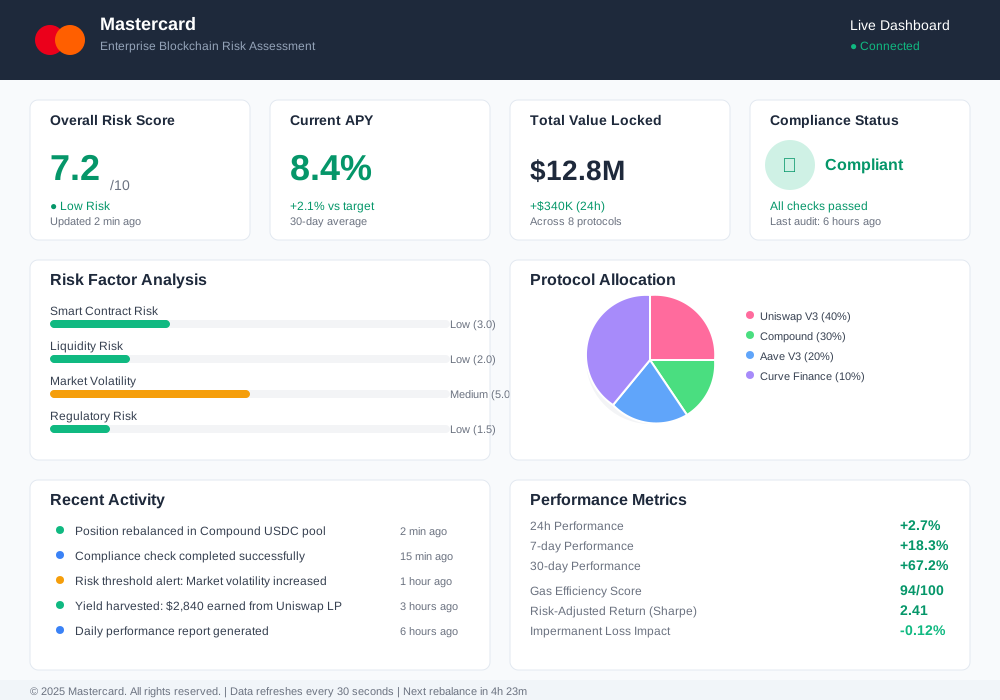
The platform analyzes:
- Liquidity depth of target pools
- Smart contract audit scores (because nobody wants to explain a $50M rug pull to shareholders)
- Historical volatility patterns
- Regulatory compliance of underlying protocols
Step 3: Automated Position Management
Here's where things get interesting. Mastercard's blockchain solution doesn't just park your money and hope for the best. It actively manages positions using AI-driven strategies.
// Simplified Mastercard Yield Optimizer Contract
pragma solidity ^0.8.19;

contract MastercardYieldOptimizer {
    struct EnterprisePosition {
        address enterprise;
        uint256 principal;
        uint256 currentValue;
        uint8 riskProfile; // 1-10 scale
        uint256 lastRebalance;
        bool emergencyExit;
    }

    mapping(address => EnterprisePosition) public positions;

    modifier onlyApprovedEnterprise() {
        require(isApprovedEnterprise(msg.sender), "Not approved enterprise");
        _;
    }

    function optimizeYield(address enterprise) external onlyApprovedEnterprise {
        EnterprisePosition storage position = positions[enterprise];

        // Check if rebalancing is needed
        if (shouldRebalance(position)) {
            rebalancePosition(position);
            position.lastRebalance = block.timestamp;
        }

        // Monitor for risk threshold breaches
        if (getRiskScore(position) > position.riskProfile) {
            triggerRiskMitigation(position);
        }
    }

    function shouldRebalance(EnterprisePosition memory position)
        private
        view
        returns (bool)
    {
        // Rebalance if 24 hours passed or significant market movement
        return (block.timestamp - position.lastRebalance > 86400) ||
               (getVolatilityScore() > VOLATILITY_THRESHOLD);
    }
}
Real-World Implementation Strategy
Phase 1: Pilot Program Setup
Start small, think big. Mastercard recommends enterprises begin with a pilot allocation representing 1-5% of their total treasury.
# Mastercard Blockchain CLI Setup
npm install -g @mastercard/blockchain-cli

# Initialize enterprise workspace
mc-blockchain init --enterprise-id YOUR_ENTERPRISE_ID
mc-blockchain configure --compliance-level enterprise
mc-blockchain test-connection --environment sandbox

# Deploy test yield strategy
mc-blockchain deploy-strategy \
  --amount 100000 \
  --duration 30days \
  --risk-level conservative \
  --auto-compound true
Phase 2: Gradual Scaling
Once your pilot proves successful (and your CFO stops having nightmares), scale systematically.
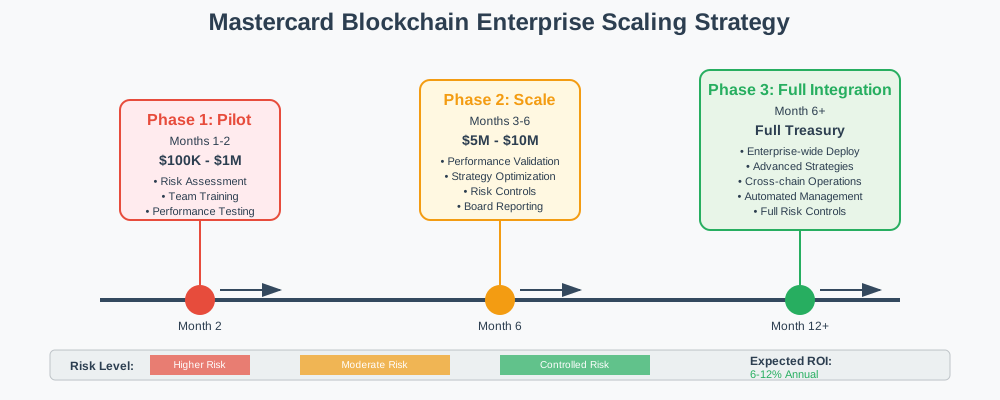
Month 1-2: Pilot with $100K-$1M allocation Month 3-6: Scale to $5M-$10M based on performance Month 6+: Full treasury integration with appropriate risk controls
Phase 3: Advanced Strategy Implementation
For enterprises ready to level up, Mastercard offers sophisticated strategies:
- Cross-chain yield arbitrage (because why limit yourself to one blockchain?)
- Institutional liquidity provision (earning fees while providing market stability)
- Structured DeFi products (custom-built yield solutions for specific enterprise needs)
Benefits for Enterprise Treasury Management
Enhanced Returns with Managed Risk
Traditional enterprise cash management yields roughly 2-4% annually. Mastercard's blockchain yield farming solutions target 6-12% returns while maintaining institutional-grade risk controls.
# ROI Comparison Calculator
def calculate_yield_improvement(traditional_yield, blockchain_yield, principal, duration_months):
    """
    Calculate the financial impact of switching to blockchain yield farming
    Spoiler alert: the numbers look pretty good
    """
    traditional_return = principal * (traditional_yield / 100) * (duration_months / 12)
    blockchain_return = principal * (blockchain_yield / 100) * (duration_months / 12)

    improvement = blockchain_return - traditional_return
    improvement_percentage = (improvement / traditional_return) * 100

    return {
        'additional_income': improvement,
        'percentage_improvement': improvement_percentage,
        'total_blockchain_return': blockchain_return
    }

# Example: $10M treasury for 12 months
result = calculate_yield_improvement(
    traditional_yield=3.0,  # Traditional money market
    blockchain_yield=8.0,   # Mastercard blockchain solution
    principal=10_000_000,
    duration_months=12
)

print(f"Additional annual income: ${result['additional_income']:,.2f}")
print(f"Improvement: {result['percentage_improvement']:.1f}%")
# Output: Additional annual income: $500,000.00
#         Improvement: 166.7%
Regulatory Compliance Built-In
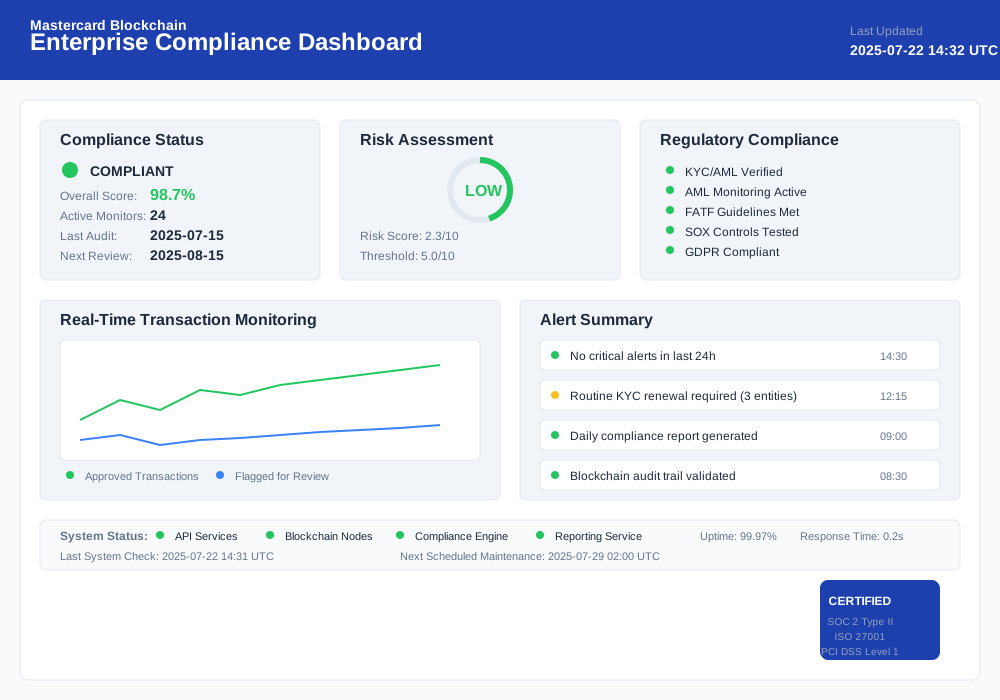
Unlike cowboy DeFi protocols, Mastercard's solution includes:
- Real-time transaction monitoring (every move is tracked and auditable)
- Automated compliance reporting (because manual reports are so 2019)
- Regulatory change adaptation (the system updates when rules change)
Institutional-Grade Security
Mastercard didn't build their reputation by being sloppy with security. Their blockchain infrastructure includes:
- Multi-signature custody (because single points of failure are terrifying)
- Insurance coverage (sleep better knowing your funds are protected)
- 24/7 monitoring (humans and AI watching your money around the clock)
Implementation Challenges and Solutions
Challenge 1: Board-Level Buy-In
Problem: Convincing conservative board members that "blockchain yield farming" isn't just fancy gambling.
Solution: Start with education and pilot programs. Mastercard provides comprehensive risk assessments and performance projections that speak the language of corporate governance.
Challenge 2: Integration with Existing Treasury Systems
Problem: Your current treasury management system probably doesn't have a "DeFi" button.
Solution: Mastercard's API-first approach integrates with major treasury platforms like Kyriba, GTreasury, and custom enterprise systems.
// Treasury System Integration Example
const TreasuryIntegration = {
  async syncPositions(treasurySystem, mastercardClient) {
    // Pull current positions from treasury system
    const positions = await treasurySystem.getAllPositions();

    // Sync with Mastercard blockchain platform
    for (const position of positions) {
      if (position.type === 'blockchain_yield') {
        const currentValue = await mastercardClient.getPositionValue(position.id);
        await treasurySystem.updatePosition(position.id, currentValue);
      }
    }

    // Generate daily treasury report
    return treasurySystem.generateReport();
  }
};
Challenge 3: Regulatory Uncertainty
Problem: Regulatory frameworks for enterprise DeFi participation are evolving rapidly.
Solution: Mastercard's legal team monitors regulatory developments across jurisdictions and adapts the platform accordingly. They maintain relationships with regulators to ensure enterprise clients stay compliant.
Performance Metrics and Monitoring
Key Performance Indicators
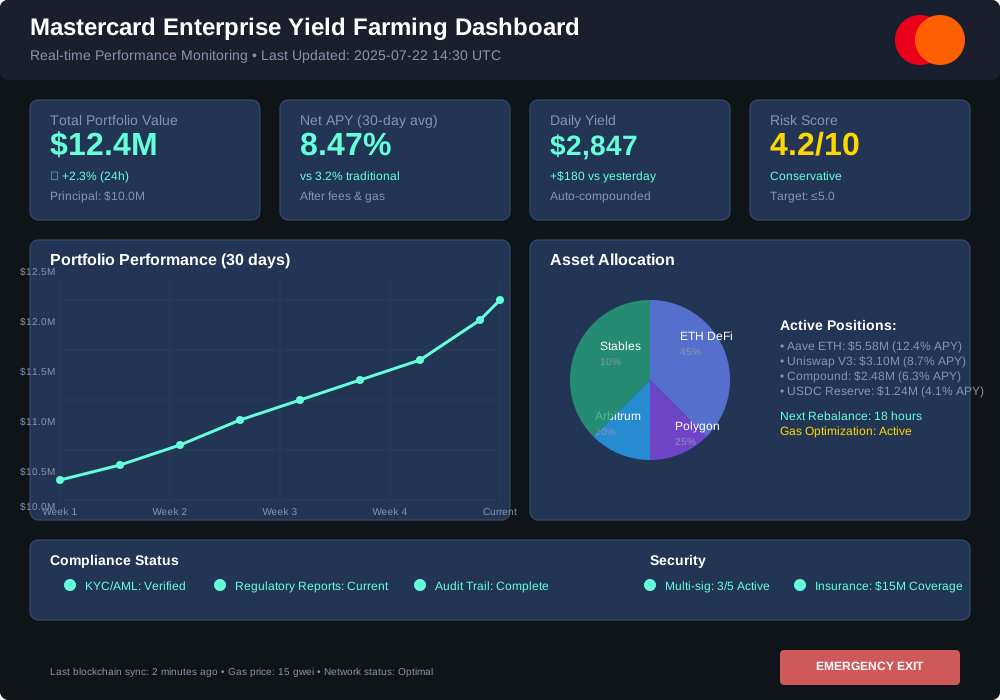
Mastercard's enterprise dashboard tracks metrics that matter to treasury teams:
- Net APY (after all fees and gas costs)
- Risk-adjusted returns (Sharpe ratio for the spreadsheet nerds)
- Liquidity utilization (how much of your allocation is actively earning)
- Compliance score (real-time regulatory adherence rating)
# Performance Monitoring Dashboard
class PerformanceMonitor:
    def __init__(self, mastercard_client):
        self.client = mastercard_client

    def generate_daily_report(self, enterprise_id):
        """
        Generate the kind of report that makes CFOs smile
        """
        positions = self.client.get_all_positions(enterprise_id)

        report = {
            'total_value': sum(p.current_value for p in positions),
            'daily_yield': sum(p.daily_earnings for p in positions),
            'risk_score': self.calculate_portfolio_risk(positions),
            'compliance_status': self.check_compliance(positions),
            'gas_efficiency': self.calculate_gas_costs(positions)
        }

        # Alert if anything looks fishy
        if report['risk_score'] > RISK_THRESHOLD:
            self.send_alert("Risk threshold exceeded", report)

        return report
Future Developments and Roadmap
Mastercard isn't standing still. Their blockchain team is working on several exciting developments:
Cross-Border Yield Optimization
Imagine automatically moving funds between different regional markets to capture the best yields while maintaining compliance with local regulations. It's like yield farming, but with a passport.
AI-Powered Risk Management
Machine learning models that predict market volatility and automatically adjust positions before your CFO even knows there's a problem.
Institutional DeFi Marketplace
A private marketplace where enterprises can directly lend to each other, cutting out traditional financial intermediaries and capturing better rates.
// Future: AI Risk Prediction
const AIRiskEngine = {
  async predictMarketVolatility(timeframe, assetPool) {
    const marketData = await this.gatherMarketSignals();
    const prediction = await this.mlModel.predict({
      timeframe: timeframe,
      historical_data: marketData,
      sentiment_analysis: await this.analyzeSentiment(),
      macroeconomic_factors: await this.getMacroData()
    });

    return {
      volatility_score: prediction.volatility,
      confidence_level: prediction.confidence,
      recommended_action: prediction.action, // 'hold', 'reduce', 'exit'
      risk_factors: prediction.contributing_factors
    };
  }
};
Getting Started: Implementation Checklist
Ready to transform your enterprise treasury from boring to blockchain-powered? Here's your roadmap:
Pre-Implementation (Weeks 1-4)
- Complete Mastercard enterprise assessment
- Obtain board approval for pilot program
- Set up compliance framework
- Configure treasury system integration
- Train treasury team on platform
Pilot Phase (Months 1-3)
- Deploy initial test allocation ($100K-$1M)
- Monitor daily performance metrics
- Conduct weekly risk assessments
- Generate monthly board reports
- Optimize strategy parameters
Scale Phase (Months 4-12)
- Increase allocation based on pilot results
- Implement advanced yield strategies
- Automate reporting workflows
- Expand to additional blockchain networks
- Consider structured product offerings
Conclusion: The Enterprise DeFi Revolution
Mastercard's blockchain yield farming solutions represent more than just another fintech product – they're a bridge between traditional corporate finance and the decentralized future. By combining institutional-grade security, regulatory compliance, and sophisticated risk management with the innovative yield opportunities of DeFi, they've created something truly unique.
For enterprises sitting on substantial cash reserves earning minimal returns, Mastercard's blockchain platform offers a compelling alternative. The combination of enhanced yields, built-in compliance, and professional risk management makes it a viable option for even the most conservative treasury teams.
The question isn't whether enterprise DeFi adoption will happen – it's whether your organization will be an early adopter capturing superior returns, or a late follower watching from the sidelines.
Ready to explore how Mastercard blockchain solutions can transform your enterprise treasury strategy? The future of corporate cash management is here, and it's powered by blockchain technology that actually works for real businesses.