Ever tried moving your crypto between blockchains only to discover you picked the slowest, most expensive bridge? It's like choosing the longest checkout line at the grocery store—except this mistake costs you hundreds in gas fees and hours of waiting time.
LiFi Protocol yield farming solves this problem by aggregating cross-chain bridges and finding optimal routes for your DeFi activities. This guide shows you how to maximize returns across multiple blockchains using LiFi's bridge aggregation technology.
What is LiFi Protocol?
LiFi Protocol functions as a cross-chain bridge aggregator that connects over 20 blockchains through a single interface. Instead of manually researching bridge options, LiFi automatically finds the fastest and cheapest route for your transactions.
The protocol integrates with popular bridges including:
- Stargate Finance
- Hop Protocol
- Multichain (formerly Anyswap)
- Synapse Protocol
- Across Protocol
Key Benefits for Yield Farmers
Bridge aggregation offers three main advantages:
- Cost optimization: Automatically selects the cheapest route
- Time efficiency: Finds the fastest available bridge
- Risk reduction: Distributes bridge dependency across multiple protocols
How Cross-Chain Bridge Aggregation Works
Traditional bridge selection requires manual research and comparison. LiFi automates this process through intelligent routing algorithms.
LiFi Routing Algorithm
// Simplified LiFi route selection logic
function findOptimalRoute(fromChain, toChain, tokenAmount) {
  const availableBridges = getBridges(fromChain, toChain);

  const routes = availableBridges.map(bridge => ({
    bridge: bridge.name,
    cost: calculateBridgeCost(bridge, tokenAmount),
    time: estimateTransferTime(bridge),
    reliability: bridge.successRate
  }));

  // Score based on cost, time, and reliability
  return routes.sort((a, b) => {
    const scoreA = (a.cost * 0.4) + (a.time * 0.3) + ((100 - a.reliability) * 0.3);
    const scoreB = (b.cost * 0.4) + (b.time * 0.3) + ((100 - b.reliability) * 0.3);
    return scoreA - scoreB;
  })[0];
}
This algorithm weighs cost (40%), transfer time (30%), and reliability (30%) to select optimal routes.
Setting Up LiFi for Yield Farming
Step 1: Connect Your Wallet
- Visit li.fi
- Click "Connect Wallet"
- Select your preferred wallet (MetaMask, WalletConnect, etc.)
- Approve the connection
Step 2: Configure Multi-Chain Setup
Add supported networks to your wallet:
// Ethereum Mainnet (already configured)
// Polygon
const polygonConfig = {
  chainId: '0x89',
  chainName: 'Polygon',
  rpcUrls: ['https://polygon-rpc.com/'],
  nativeCurrency: {
    name: 'MATIC',
    symbol: 'MATIC',
    decimals: 18
  }
};

// Arbitrum One
const arbitrumConfig = {
  chainId: '0xa4b1',
  chainName: 'Arbitrum One',
  rpcUrls: ['https://arb1.arbitrum.io/rpc'],
  nativeCurrency: {
    name: 'ETH',
    symbol: 'ETH',
    decimals: 18
  }
};
Step 3: Identify Yield Opportunities
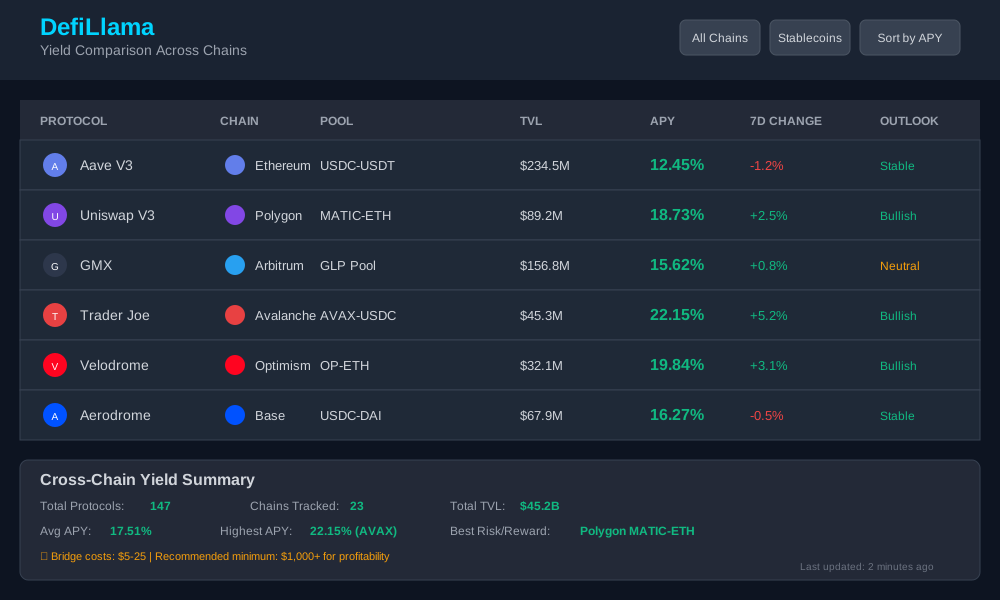
Research yields across different chains using these tools:
- DefiLlama: Compare APYs across chains
- Zapper: Track multi-chain positions
- Yield farming calculators: Estimate returns after bridge costs
LiFi Yield Farming Strategies
Strategy 1: Arbitrage Farming
Concept: Move capital to chains with temporarily higher yields.
Example workflow:
- Monitor yield differences between Ethereum and Polygon
- When Polygon yields exceed Ethereum by >5% APY
- Use LiFi to bridge USDC from Ethereum to Polygon
- Deposit into highest-yielding Polygon pool
- Set alerts for yield changes
// Yield monitoring script
async function checkYieldArbitrage() {
  const ethYield = await getYield('ethereum', 'USDC-DAI');
  const polygonYield = await getYield('polygon', 'USDC-DAI');

  const yieldDifference = polygonYield - ethYield;

  if (yieldDifference > 5) {
    console.log(`Arbitrage opportunity: ${yieldDifference}% higher on Polygon`);
    // Trigger LiFi bridge transaction
    return initiateBridge('ethereum', 'polygon', 'USDC', amount);
  }
}
Strategy 2: Diversified Multi-Chain Farming
Concept: Spread risk across multiple chains while optimizing for yield.
Portfolio allocation example:
- 40% Ethereum (blue-chip protocols)
- 25% Polygon (lower fees, decent yields)
- 20% Arbitrum (L2 benefits)
- 15% Avalanche (emerging opportunities)
Strategy 3: Seasonal Chain Migration
Concept: Follow yield seasons across different ecosystems.
Migration schedule:
- Q1: Focus on Ethereum during high activity
- Q2: Move to Polygon for reduced competition
- Q3: Explore Avalanche for new protocol launches
- Q4: Return to Ethereum for year-end activities
Advanced LiFi Integration
Using LiFi SDK for Automated Farming
import { LiFi } from '@lifi/sdk';

const lifi = new LiFi({
  integrator: 'your-app-name'
});

async function automateBridgeAndFarm(fromChain, toChain, token, amount, farmContract) {
  try {
    // Get optimal route
    const routes = await lifi.getRoutes({
      fromChain,
      toChain,
      fromToken: token,
      toToken: token,
      fromAmount: amount
    });

    const bestRoute = routes[0];

    // Execute bridge
    const bridgeTx = await lifi.executeRoute(bestRoute);
    console.log('Bridge transaction:', bridgeTx.hash);

    // Wait for completion
    await waitForBridge(bridgeTx.hash, toChain);

    // Deposit into farming contract
    const farmTx = await farmContract.deposit(amount);
    console.log('Farm deposit:', farmTx.hash);

    return { bridgeTx, farmTx };
  } catch (error) {
    console.error('Automation failed:', error);
  }
}
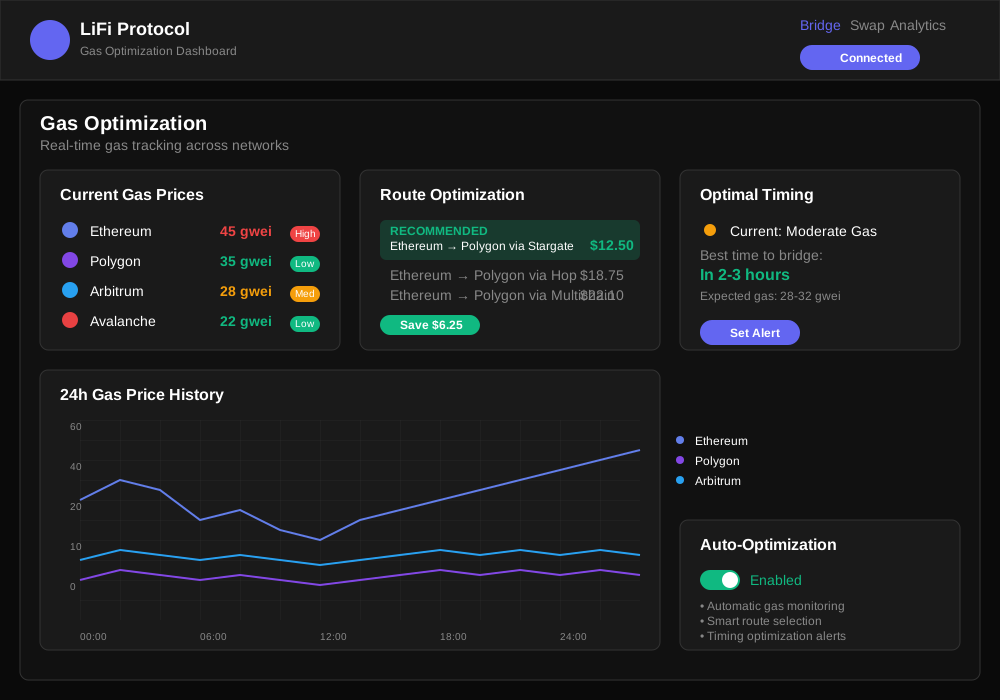
Gas Optimization Strategies
Smart timing for bridge transactions:
// Gas price monitoring
async function optimizeGasTiming(targetChain) {
  const gasData = await getGasPrices(targetChain);

  // Execute during low gas periods
  if (gasData.standard < 30) { // gwei threshold
    return true; // Good time to bridge
  }

  // Schedule for later
  scheduleTransaction(getNextLowGasPeriod());
  return false;
}
Risk Management in Cross-Chain Farming
Bridge Risk Assessment
Evaluate bridge safety:
- Smart contract audits: Check security reports
- TVL and usage: Higher TVL indicates trust
- Track record: Review past incidents
- Slippage tolerance: Set appropriate limits
Portfolio Protection Strategies
// Risk monitoring system
const riskThresholds = {
  maxSingleChainExposure: 0.4, // 40% max per chain
  maxBridgeAmount: 50000, // USD limit per bridge
  minLiquidity: 1000000 // Minimum pool liquidity
};

function assessRisk(position) {
  const risks = [];

  if (position.chainExposure > riskThresholds.maxSingleChainExposure) {
    risks.push('High chain concentration');
  }

  if (position.bridgeAmount > riskThresholds.maxBridgeAmount) {
    risks.push('Large bridge exposure');
  }

  return risks;
}
Performance Tracking and Analytics
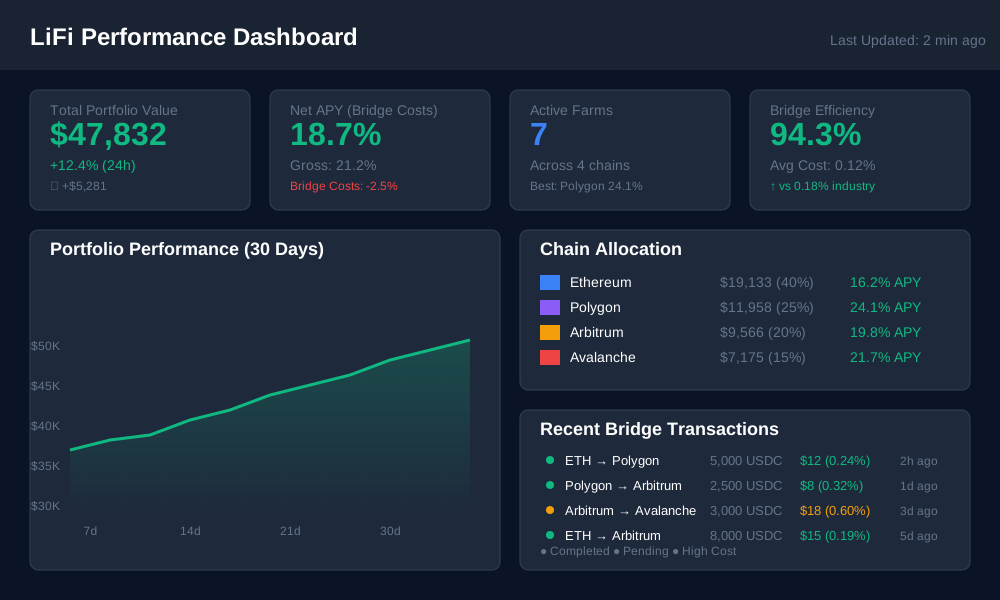
Key Metrics to Monitor
Track these performance indicators:
- Net APY: Total yield minus bridge costs
- Bridge efficiency: Cost per dollar bridged
- Time to profitability: Break-even analysis
- Impermanent loss: For liquidity provision
ROI Calculation Template
function calculateNetYield(bridgeCost, farmingRewards, timeInDays) {
  const annualizedRewards = (farmingRewards / timeInDays) * 365;
  const annualizedCosts = (bridgeCost / timeInDays) * 365;

  const netAPY = ((annualizedRewards - annualizedCosts) / principal) * 100;

  return {
    netAPY,
    annualizedRewards,
    annualizedCosts,
    breakEvenDays: bridgeCost / (farmingRewards / timeInDays)
  };
}
Common Pitfalls and Solutions
Pitfall 1: High Bridge Costs
Problem: Bridge fees exceed farming profits.
Solution:
- Use LiFi's cost comparison
- Set minimum yield thresholds
- Consider bridge costs in ROI calculations
Pitfall 2: Failed Bridge Transactions
Problem: Stuck transactions or failed bridges.
Solution:
- Check destination chain congestion
- Use LiFi's transaction tracking
- Keep bridge transactions under recommended limits
Pitfall 3: Timing Market Cycles
Problem: Moving capital during unfavorable conditions.
Solution:
- Monitor gas prices across chains
- Use dollar-cost averaging for large positions
- Set up automated monitoring alerts
Future of Cross-Chain Yield Farming
Emerging Trends
Intent-based architecture: Future LiFi updates will support complex farming strategies through single transactions.
AI-powered optimization: Machine learning algorithms will predict optimal farming opportunities.
Gasless bridging: Layer 2 solutions will reduce bridge costs to near zero.
Integration Opportunities
LiFi Protocol continues expanding integrations with:
- New bridge protocols
- Additional blockchain networks
- DeFi protocol partnerships
- Yield optimization platforms
Conclusion
LiFi Protocol yield farming through cross-chain bridge aggregation offers unprecedented opportunities for DeFi returns. By automating bridge selection and optimization, farmers can focus on strategy rather than manual route research.
Key takeaways for successful cross-chain farming:
- Use LiFi's aggregation to minimize bridge costs
- Diversify across multiple chains to reduce risk
- Monitor yields continuously for arbitrage opportunities
- Implement proper risk management protocols
Start your cross-chain bridge aggregation journey today by connecting your wallet to LiFi and exploring yield opportunities across the multi-chain DeFi ecosystem.
Ready to maximize your DeFi returns? Begin with small test transactions to familiarize yourself with LiFi's interface before scaling your cross-chain yield farming operations.