Remember when staking ETH meant locking your coins in digital prison? Those days vanished faster than your portfolio during a bear market. The Shanghai upgrade changed everything about Ethereum staking, and Lido V2 capitalized on this shift like a crypto whale spotting a flash crash.
Lido V2 yield farming now offers the holy grail of DeFi: earning staking rewards while maintaining liquidity. This guide reveals how smart investors maximize yields through liquid staking strategies that would make traditional bankers weep into their 0.01% savings accounts.
You'll discover proven yield farming techniques, step-by-step implementation guides, and risk management strategies that protect your capital while maximizing returns.
What Changed After the Shanghai Upgrade
The Pre-Shanghai Problem
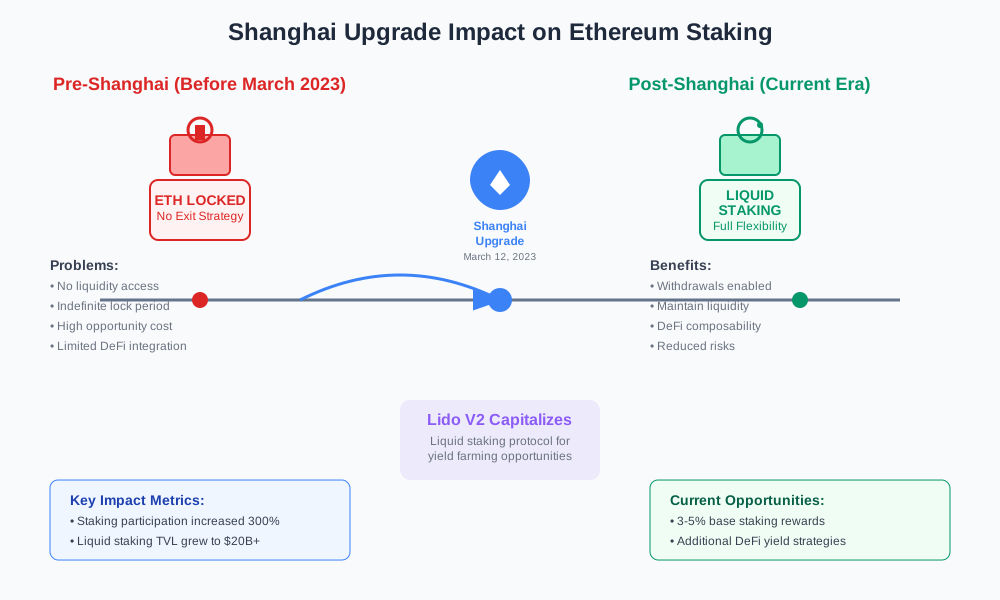
Before Shanghai, Ethereum stakers faced a brutal choice. Stake your ETH and kiss liquidity goodbye, or keep it liquid and miss out on staking rewards. This dilemma haunted every DeFi investor worth their salt.
Stakers locked their ETH indefinitely. No exit strategy existed. No flexibility remained. Market opportunities passed by while their assets sat frozen in the beacon chain.
Shanghai's Revolutionary Impact
The Shanghai upgrade delivered withdrawals on March 12, 2023. Suddenly, staked ETH became unstakeable. This single change transformed the entire liquid staking landscape.
Key Shanghai benefits:
- Validator withdrawals enabled
- Staking risks decreased significantly
- Liquid staking protocols gained credibility
- Capital efficiency improved dramatically
- DeFi composability expanded
Understanding Lido V2 Liquid Staking
Core Mechanism Explained
Lido V2 operates as a liquid staking protocol that issues stETH tokens. Users deposit ETH and receive stETH at a 1:1 ratio initially. The stETH tokens represent their staked position plus accumulated rewards.
The protocol stakes deposited ETH across multiple validators. These validators earn rewards automatically. stETH holders benefit from these rewards through token appreciation.
// Simplified Lido V2 staking interaction
contract LidoStaking {
    function submit(address _referral) external payable returns (uint256) {
        // Stake ETH and mint stETH
        uint256 stETHAmount = msg.value; // 1:1 initially
        _mint(msg.sender, stETHAmount);
        return stETHAmount;
    }
}
stETH Token Mechanics
stETH tokens rebase daily to reflect staking rewards. Your balance increases automatically as validators earn rewards. No claiming required. No manual compounding needed.
Example calculation:
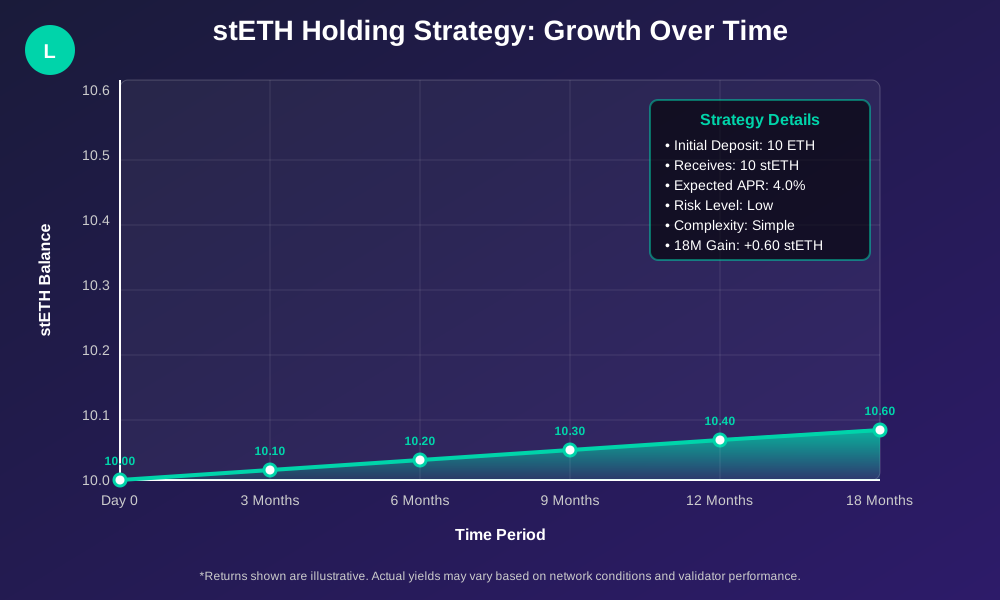
- Day 1: Deposit 10 ETH → Receive 10 stETH
- Day 30: Balance shows 10.02 stETH (rewards included)
- Day 365: Balance shows ~10.4 stETH (assuming 4% APR)
Lido V2 Yield Farming Strategies
Strategy 1: Simple stETH Holding
The most straightforward approach involves holding stETH long-term. This strategy captures Ethereum staking rewards while maintaining liquidity.
Implementation steps:
- Connect wallet to Lido.fi
- Enter ETH amount to stake
- Confirm transaction and receive stETH
- Hold stETH to accumulate rewards
Expected returns: 3-5% APR (varies with network conditions)
Strategy 2: Curve stETH/ETH Liquidity Provision
Advanced farmers provide liquidity to Curve's stETH/ETH pool. This strategy combines staking rewards with trading fees and CRV emissions.
# Curve pool interaction example
curve_pool = "0xDC24316b9AE028F1497c275EB9192a3Ea0f67022"  # stETH/ETH pool

def add_liquidity(eth_amount, steth_amount):
    # Add liquidity to Curve pool
    amounts = [eth_amount, steth_amount]
    min_mint_amount = calculate_min_tokens(amounts)

    curve_pool.add_liquidity(amounts, min_mint_amount)
    return "Liquidity added successfully"
Yield sources:
- stETH staking rewards: ~4% APR
- Trading fees: 0.1-0.3% APR
- CRV emissions: 2-8% APR (variable)
- Total potential: 6-12% APR
Strategy 3: Recursive Lending Strategies
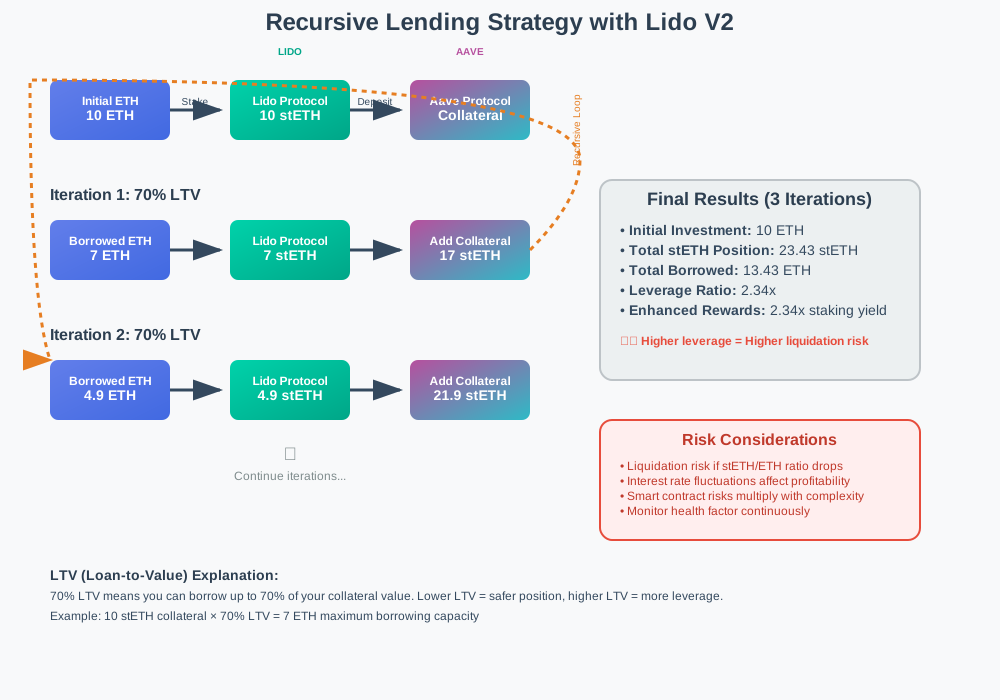
Sophisticated users employ recursive lending through Aave or Compound. Deposit stETH as collateral, borrow ETH, stake more ETH, repeat.
Detailed process:
- Deposit 10 stETH to Aave
- Borrow 7 ETH (70% LTV)
- Stake 7 ETH for 7 stETH
- Deposit 7 stETH, borrow 4.9 ETH
- Continue until position reaches target leverage
// Recursive lending calculator
function calculateRecursiveLeverage(initialAmount, ltv, iterations) {
    let totalStaked = initialAmount;
    let borrowed = 0;

    for (let i = 0; i < iterations; i++) {
        borrowed = totalStaked * ltv;
        totalStaked += borrowed;
    }

    return {
        totalExposure: totalStaked,
        leverage: totalStaked / initialAmount,
        borrowedAmount: borrowed
    };
}

// Example: 10 ETH, 70% LTV, 3 iterations
const result = calculateRecursiveLeverage(10, 0.7, 3);
console.log(result);
// Output: {totalExposure: 23.43, leverage: 2.34x, borrowedAmount: 11.41}
Risk considerations:
- Liquidation risk increases with leverage
- Interest rates fluctuate
- Smart contract risks multiply
- Market volatility amplifies losses
Step-by-Step Implementation Guide
Setting Up Your Lido V2 Position
Prerequisites:
- MetaMask or compatible wallet
- Sufficient ETH for gas fees
- Understanding of smart contract risks
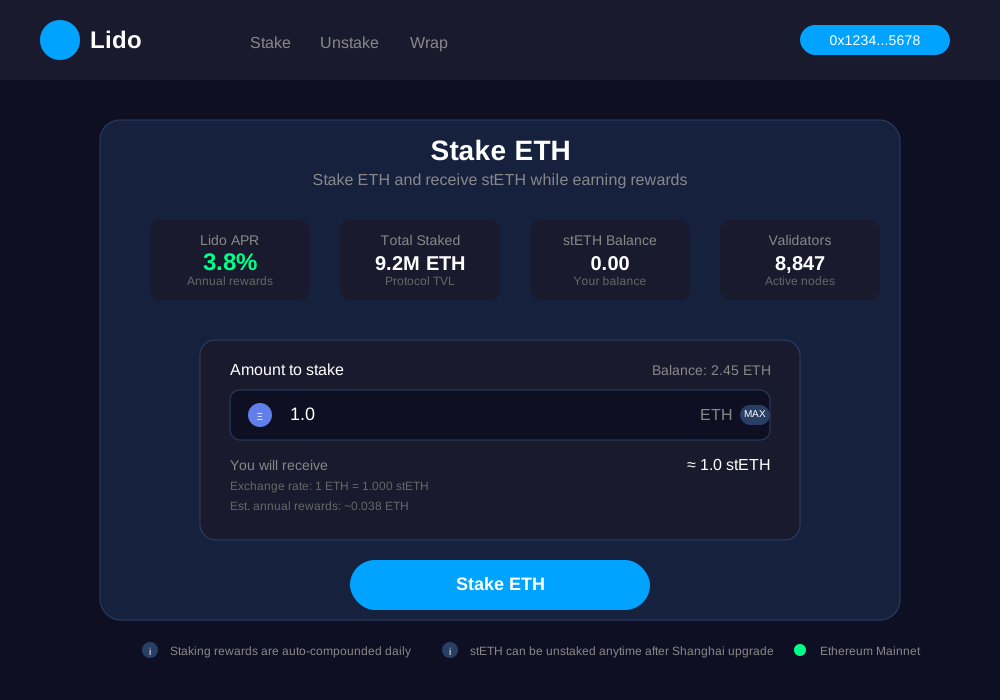
Step 1: Access Lido Interface Navigate to stake.lido.fi and connect your wallet. The interface displays current staking APR and your potential rewards.
Step 2: Stake Your ETH Enter your desired ETH amount. The interface shows expected stETH received and annual rewards. Click "Stake" and confirm the transaction.
// Expected transaction flow
const stakingAmount = 1; // 1 ETH
const expectedStETH = stakingAmount * getCurrentRate(); // ~1 stETH
const annualRewards = stakingAmount * getCurrentAPR(); // ~0.04 ETH/year
Step 3: Monitor Your Position Your stETH balance increases daily through rebasing. Track performance using Lido's dashboard or DeFiPulse portfolio trackers.
Advanced Farming Setup
Curve Pool Integration:
- Obtain equal amounts of ETH and stETH
- Navigate to curve.fi/steth
- Add liquidity to receive LP tokens
- Stake LP tokens for additional CRV rewards
Convex Finance Boost: Maximize CRV rewards through Convex Finance:
- Deposit Curve LP tokens to Convex
- Receive boosted CRV + CVX tokens
- Compound rewards automatically
# Convex yield calculation
base_crv_apr = 0.05  # 5% base CRV APR
convex_boost = 2.5   # 2.5x boost factor
cvx_apr = 0.02       # 2% CVX token rewards

total_convex_apr = (base_crv_apr * convex_boost) + cvx_apr
print(f"Total Convex APR: {total_convex_apr:.1%}")
# Output: Total Convex APR: 14.5%
Risk Management and Security
Smart Contract Risks
Lido V2 underwent extensive audits by leading security firms. However, smart contract risks persist. Consider these mitigation strategies:
- Start with small amounts
- Diversify across multiple protocols
- Monitor Lido governance proposals
- Keep emergency funds separate
Market Risks
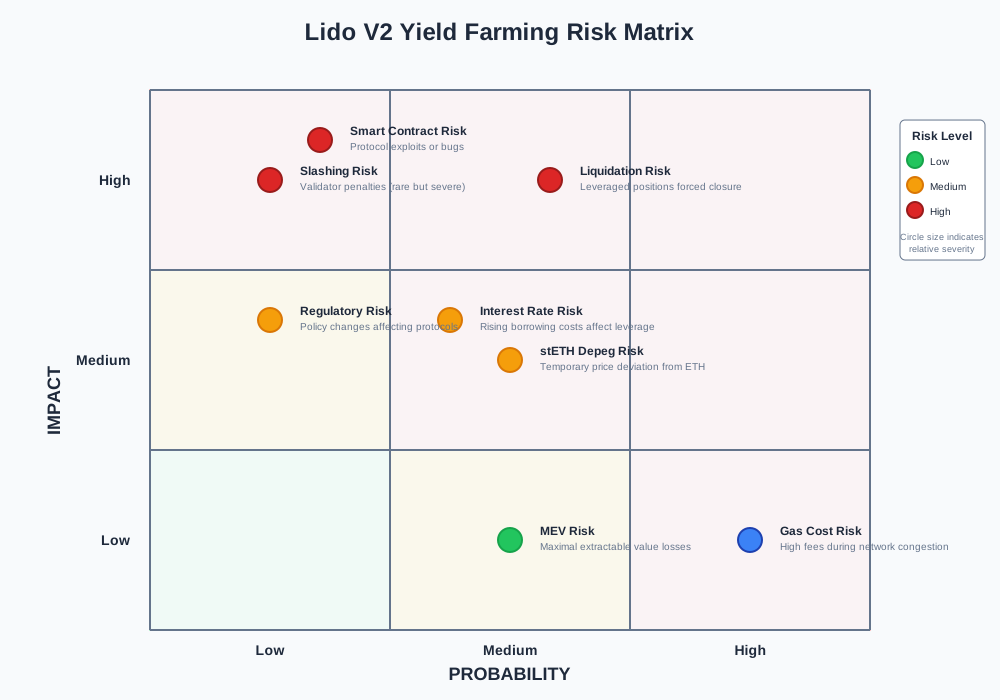
stETH Depeg Risk: stETH occasionally trades below ETH during market stress. This creates arbitrage opportunities but also liquidation risks for leveraged positions.
Interest Rate Risk: Rising borrowing costs reduce recursive lending profitability. Monitor rate changes and adjust leverage accordingly.
Slashing Risk: Validator misbehavior can result in slashing penalties. Lido's distributed validator network minimizes this risk but cannot eliminate it entirely.
Optimizing Your Returns
Gas Cost Optimization
Time your transactions during low gas periods. Weekend mornings typically offer lower fees. Use gas tracker tools to optimize timing.
Gas-efficient strategies:
- Batch multiple operations
- Use layer 2 solutions when available
- Monitor gas prices continuously
- Consider transaction timing
Yield Comparison Tools
Track yields across different protocols using DeFiPulse, DeFiLlama, or TokenTerminal. Compare:
- Base staking APR
- Additional yield opportunities
- Gas costs and complexity
- Risk-adjusted returns
// Yield comparison calculator
const strategies = {
    simple_steth: { apr: 0.04, risk: 'low', complexity: 'simple' },
    curve_lp: { apr: 0.08, risk: 'medium', complexity: 'moderate' },
    recursive: { apr: 0.12, risk: 'high', complexity: 'advanced' }
};

function calculateRiskAdjustedReturn(strategy, riskTolerance) {
    const riskMultiplier = {
        'low': 1.0,
        'medium': 0.9,
        'high': 0.8
    };

    return strategy.apr * riskMultiplier[strategy.risk];
}
Tax Implications and Compliance
Staking Reward Taxation
Staking rewards typically qualify as income when received. stETH rebasing creates daily taxable events in most jurisdictions. Consult tax professionals for specific guidance.
Record keeping requirements:
- Daily stETH balance snapshots
- USD value at receipt time
- Transaction hashes and timestamps
- Cost basis calculations
Regulatory Considerations
Liquid staking regulations evolve rapidly. Stay informed about:
- Securities classification debates
- Validator centralization concerns
- Cross-border compliance requirements
- Institutional adoption trends
Future Outlook and Developments
Lido's Roadmap
Lido continues developing new features:
- Withdrawal queue improvements
- Validator set decentralization
- Cross-chain expansion
- MEV reward distribution
Ethereum Protocol Changes
Monitor upcoming Ethereum improvements that affect staking:
- Proposer-builder separation
- Account abstraction integration
- Sharding implementation timeline
- Validator economics changes
Conclusion
Lido V2 yield farming transforms traditional staking limitations into DeFi opportunities. The Shanghai upgrade eliminated withdrawal restrictions, making liquid staking the preferred choice for sophisticated investors.
Start with simple stETH holding to understand the mechanics. Advanced farmers can explore Curve liquidity provision and recursive lending strategies. Always prioritize risk management over maximum yields.
The Lido V2 yield farming ecosystem continues evolving rapidly. Stay informed, start conservatively, and scale your position as you gain experience. Your future self will thank you for choosing liquid staking over traditional banking's pathetic yields.
Ready to begin your liquid staking journey? Start with a small position today and join the thousands earning superior returns through Lido V2's innovative approach to Ethereum staking.
Disclaimer: This article provides educational information only. Cryptocurrency investments carry significant risks. Conduct thorough research and consider professional advice before making investment decisions.