Ever tried to squeeze more juice from a lemon by borrowing someone else's juicer? That's essentially what leverage yield farming with Aave flash loans does for your crypto. You borrow massive amounts of capital for seconds, amplify your farming positions, and return the borrowed funds—all in a single transaction.
Most DeFi farmers leave money on the table because they only use their own capital. Flash loans change this game completely. You can multiply your yield farming returns by 2x, 3x, or even 10x without owning the underlying capital.
This tutorial shows you exactly how to leverage yield farming with Aave flash loans. You'll learn to set up automated strategies, manage risks, and maximize your DeFi returns safely.
What Are Aave Flash Loans for Yield Farming?
Flash loans are uncollateralized loans that you must repay within the same transaction. Aave pioneered this DeFi innovation, allowing you to borrow millions of dollars instantly without any collateral.
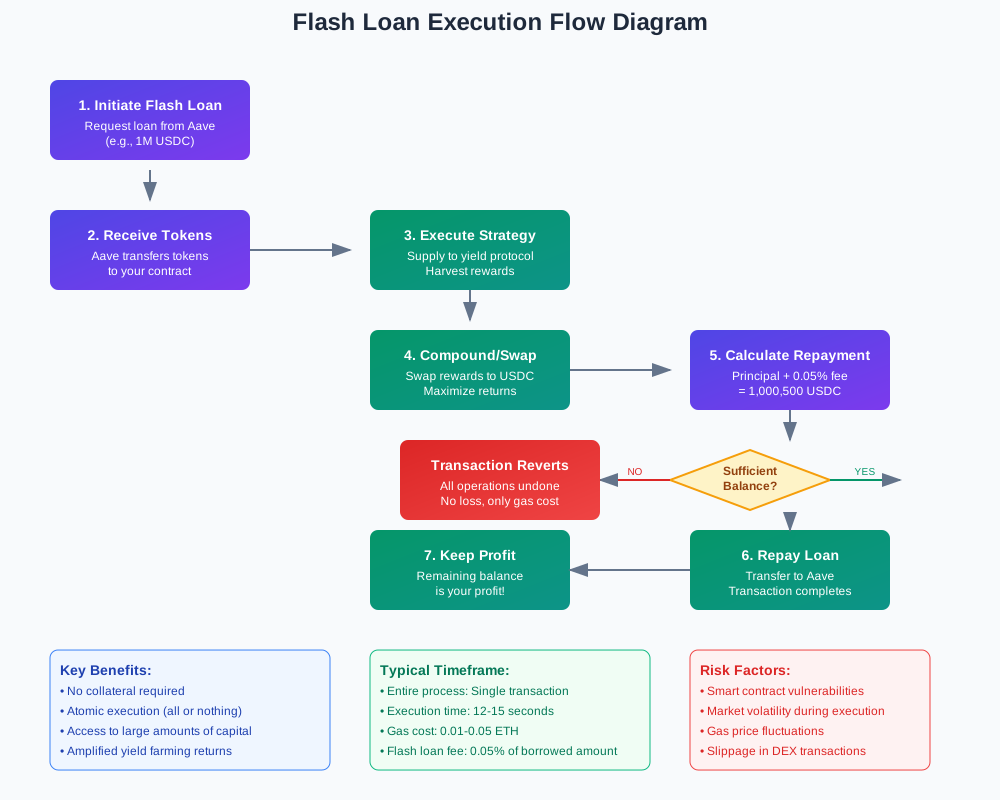
Here's how flash loans work in yield farming:
- You borrow tokens from Aave's lending pool
- You use these tokens to enter farming positions
- You harvest yields and close positions
- You repay the loan plus fees
- You keep the profit
The entire process happens atomically. If you can't repay the loan, the transaction reverts, and nothing happens.
Flash Loan Benefits for Yield Farmers
Capital Efficiency: You don't need large amounts of capital to access high-yield opportunities.
Risk Management: Flash loans eliminate liquidation risks because positions open and close instantly.
Arbitrage Opportunities: You can exploit price differences across DeFi protocols without holding inventory.
Automated Strategies: Smart contracts can execute complex farming strategies automatically.
Prerequisites: What You Need Before Starting
Before diving into flash loan yield farming, you need these essential components:
Technical Requirements
- Ethereum wallet (MetaMask, WalletConnect, or hardware wallet)
- Minimum 0.1 ETH for gas fees and transaction costs
- Solidity knowledge for smart contract development
- Web3 development environment (Hardhat, Foundry, or Remix)
DeFi Protocol Understanding
You must understand these core concepts:
- Automated Market Makers (AMMs) like Uniswap and SushiSwap
- Lending protocols including Aave, Compound, and MakerDAO
- Yield farming mechanics and liquidity mining programs
- Impermanent loss and its impact on farming returns
Risk Assessment Skills
Flash loan farming involves complex risks:
- Smart contract vulnerabilities in farming protocols
- Market volatility during transaction execution
- Gas price fluctuations affecting profitability
- Slippage tolerance in DEX transactions
Step-by-Step Flash Loan Yield Farming Setup
Step 1: Deploy Your Flash Loan Contract
First, create a smart contract that handles flash loan operations:
// SPDX-License-Identifier: MIT
pragma solidity ^0.8.0;

import "@aave/core-v3/contracts/flashloan/base/FlashLoanSimpleReceiverBase.sol";
import "@aave/core-v3/contracts/interfaces/IPoolAddressesProvider.sol";
import "@openzeppelin/contracts/token/ERC20/IERC20.sol";

contract FlashLoanYieldFarmer is FlashLoanSimpleReceiverBase {
    address payable owner;

    constructor(address _addressProvider)
        FlashLoanSimpleReceiverBase(IPoolAddressesProvider(_addressProvider)) {
        owner = payable(msg.sender);
    }

    // This function executes your farming strategy
    function executeOperation(
        address asset,
        uint256 amount,
        uint256 premium,
        address initiator,
        bytes calldata params
    ) external override returns (bool) {
        // Your yield farming logic goes here
        // 1. Supply tokens to farming protocol
        // 2. Harvest rewards
        // 3. Swap rewards for repayment token
        // 4. Ensure sufficient balance for repayment

        uint256 amountOwed = amount + premium;
        IERC20(asset).approve(address(POOL), amountOwed);

        return true;
    }

    // Function to initiate flash loan
    function requestFlashLoan(address _token, uint256 _amount) public {
        address receiverAddress = address(this);
        bytes memory params = "";
        uint16 referralCode = 0;

        POOL.flashLoanSimple(
            receiverAddress,
            _token,
            _amount,
            params,
            referralCode
        );
    }
}
Step 2: Implement Your Farming Strategy
Design your farming strategy within the executeOperation function:
function executeOperation(
    address asset,
    uint256 amount,
    uint256 premium,
    address initiator,
    bytes calldata params
) external override returns (bool) {
    // Example: Compound farming strategy

    // 1. Supply borrowed USDC to Compound
    IERC20(asset).approve(COMPOUND_USDC_ADDRESS, amount);
    CompoundToken(COMPOUND_USDC_ADDRESS).mint(amount);

    // 2. Borrow maximum amount against collateral
    uint256 borrowAmount = amount * 75 / 100; // 75% LTV
    CompoundToken(COMPOUND_USDC_ADDRESS).borrow(borrowAmount);

    // 3. Supply borrowed amount to high-yield protocol
    IERC20(asset).approve(HIGH_YIELD_PROTOCOL, borrowAmount);
    HighYieldProtocol(HIGH_YIELD_PROTOCOL).deposit(borrowAmount);

    // 4. Harvest and compound rewards
    HighYieldProtocol(HIGH_YIELD_PROTOCOL).harvestRewards();

    // 5. Calculate total profit
    uint256 totalBalance = getTotalBalance();
    uint256 repayAmount = amount + premium;

    require(totalBalance >= repayAmount, "Insufficient funds for repayment");

    // 6. Prepare repayment
    IERC20(asset).approve(address(POOL), repayAmount);

    return true;
}
Step 3: Set Up Monitoring and Automation
Create monitoring systems to track your farming performance:
// monitoring.js - Track farming metrics
const Web3 = require('web3');
const web3 = new Web3('https://mainnet.infura.io/v3/YOUR_PROJECT_ID');

class FlashLoanMonitor {
    constructor(contractAddress) {
        this.contractAddress = contractAddress;
        this.contract = new web3.eth.Contract(ABI, contractAddress);
    }

    async checkProfitability(asset, amount) {
        // Calculate potential profit before executing
        const flashLoanFee = amount * 0.0005; // 0.05% Aave fee
        const gasEstimate = await this.estimateGas(asset, amount);
        const gasCost = gasEstimate * await web3.eth.getGasPrice();

        const expectedYield = await this.calculateExpectedYield(asset, amount);
        const netProfit = expectedYield - flashLoanFee - gasCost;

        return {
            profitable: netProfit > 0,
            netProfit: netProfit,
            roi: (netProfit / amount) * 100
        };
    }

    async executeIfProfitable(asset, amount) {
        const profitCheck = await this.checkProfitability(asset, amount);

        if (profitCheck.profitable) {
            console.log(`Executing flash loan: Expected ROI ${profitCheck.roi}%`);
            return await this.contract.methods.requestFlashLoan(asset, amount).send({
                from: account,
                gas: 2000000
            });
        } else {
            console.log('Strategy not profitable at current market conditions');
            return null;
        }
    }
}
Step 4: Deploy and Test Your Strategy
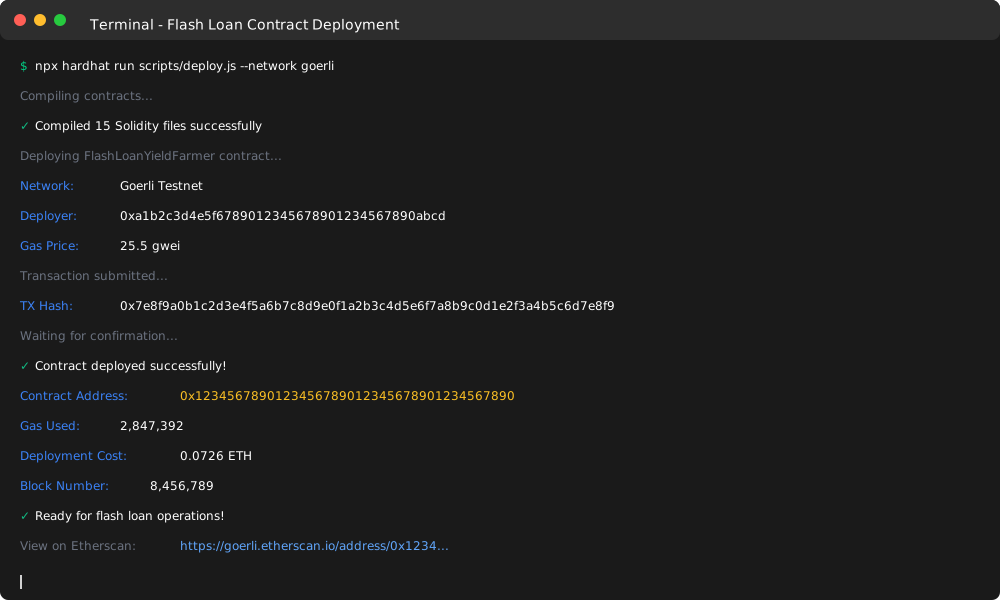
Deploy your contract to a testnet first:
# Using Hardhat for deployment
npx hardhat compile
npx hardhat run scripts/deploy.js --network goerli

# Test your strategy
npx hardhat run scripts/test-flash-loan.js --network goerli
Test deployment script:
// scripts/deploy.js
async function main() {
    const FlashLoanYieldFarmer = await ethers.getContractFactory("FlashLoanYieldFarmer");

    // Aave V3 Pool Address Provider (Goerli)
    const addressProvider = "0x5E52dEc931FFb32f609681B8438A51c675cc232d";

    const flashLoanContract = await FlashLoanYieldFarmer.deploy(addressProvider);
    await flashLoanContract.deployed();

    console.log("Flash loan contract deployed to:", flashLoanContract.address);
}
Advanced Flash Loan Strategies
Multi-Protocol Arbitrage Farming
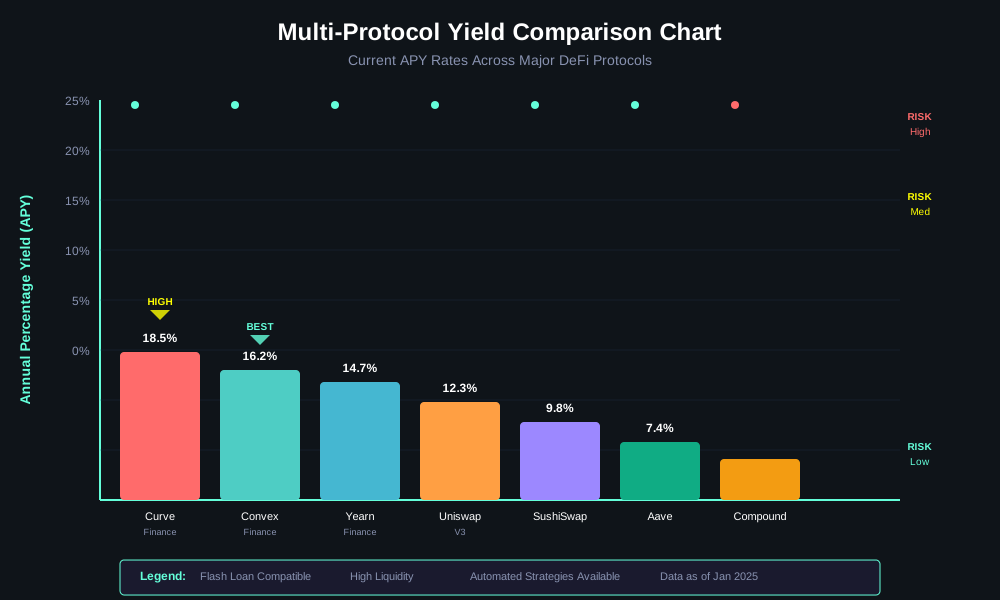
Exploit yield differences across multiple DeFi protocols:
function multiProtocolArbitrage(
    address asset,
    uint256 amount,
    uint256 premium,
    address initiator,
    bytes calldata params
) internal returns (bool) {
    // 1. Supply to highest-yield protocol
    uint256 protocolAYield = getProtocolYield(PROTOCOL_A, asset);
    uint256 protocolBYield = getProtocolYield(PROTOCOL_B, asset);

    address targetProtocol = protocolAYield > protocolBYield ? PROTOCOL_A : PROTOCOL_B;

    // 2. Deposit entire amount
    IERC20(asset).approve(targetProtocol, amount);
    IYieldProtocol(targetProtocol).deposit(amount);

    // 3. Immediately harvest available rewards
    IYieldProtocol(targetProtocol).harvestRewards();

    // 4. Swap rewards for repayment token
    uint256 rewardBalance = getRewardBalance();
    swapRewardsForAsset(rewardBalance, asset);

    // 5. Withdraw original deposit
    IYieldProtocol(targetProtocol).withdraw(amount);

    return true;
}
Leveraged Liquidity Mining
Amplify your liquidity mining rewards:
function leveragedLiquidityMining(
    address tokenA,
    address tokenB,
    uint256 amount,
    uint256 premium
) internal returns (bool) {
    // 1. Flash loan tokenA
    // 2. Swap half to tokenB
    uint256 swapAmount = amount / 2;
    swapTokens(tokenA, tokenB, swapAmount);

    // 3. Add liquidity to AMM
    uint256 tokenBBalance = IERC20(tokenB).balanceOf(address(this));
    addLiquidity(tokenA, tokenB, swapAmount, tokenBBalance);

    // 4. Stake LP tokens in mining contract
    uint256 lpBalance = getLPBalance();
    stakeLPTokens(lpBalance);

    // 5. Harvest mining rewards
    harvestMiningRewards();

    // 6. Unstake and remove liquidity
    unstakeLPTokens(lpBalance);
    removeLiquidity(tokenA, tokenB, lpBalance);

    return true;
}
Risk Management and Safety Measures
Smart Contract Security
Always implement these security measures:
modifier onlyOwner() {
    require(msg.sender == owner, "Only owner can call this function");
    _;
}

modifier nonReentrant() {
    require(!locked, "Reentrant call detected");
    locked = true;
    _;
    locked = false;
}

function emergencyWithdraw(address token) external onlyOwner {
    uint256 balance = IERC20(token).balanceOf(address(this));
    IERC20(token).transfer(owner, balance);
}
Slippage Protection
Implement slippage protection for all DEX interactions:
function swapWithSlippageProtection(
    address tokenIn,
    address tokenOut,
    uint256 amountIn,
    uint256 minAmountOut
) internal returns (uint256) {
    // Get current price from oracle
    uint256 expectedAmountOut = getExpectedAmountOut(tokenIn, tokenOut, amountIn);
    uint256 slippageTolerance = 2; // 2% slippage tolerance
    uint256 minAmount = expectedAmountOut * (100 - slippageTolerance) / 100;

    require(minAmountOut >= minAmount, "Slippage tolerance exceeded");

    return performSwap(tokenIn, tokenOut, amountIn, minAmountOut);
}
Gas Price Optimization
Monitor gas prices and adjust strategy execution:
class GasOptimizer {
    constructor() {
        this.maxGasPrice = web3.utils.toWei('50', 'gwei');
    }

    async waitForOptimalGas() {
        while (true) {
            const currentGasPrice = await web3.eth.getGasPrice();

            if (currentGasPrice <= this.maxGasPrice) {
                return currentGasPrice;
            }

            console.log(`Gas price too high: ${web3.utils.fromWei(currentGasPrice, 'gwei')} gwei`);
            await new Promise(resolve => setTimeout(resolve, 30000)); // Wait 30 seconds
        }
    }

    async executeWithOptimalGas(transaction) {
        const gasPrice = await this.waitForOptimalGas();
        transaction.gasPrice = gasPrice;
        return await transaction.send();
    }
}
Performance Optimization Tips
Batch Operations
Combine multiple operations to reduce gas costs:
function batchOperations(
    address[] calldata protocols,
    uint256[] calldata amounts,
    bytes[] calldata data
) external {
    require(protocols.length == amounts.length, "Array length mismatch");

    for (uint256 i = 0; i < protocols.length; i++) {
        (bool success, ) = protocols[i].call(data[i]);
        require(success, "Batch operation failed");
    }
}
MEV Protection
Protect against Maximum Extractable Value (MEV) attacks:
mapping(address => uint256) public lastExecutionBlock;

modifier mevProtection() {
    require(
        lastExecutionBlock[msg.sender] < block.number,
        "MEV protection: Same block execution detected"
    );
    lastExecutionBlock[msg.sender] = block.number;
    _;
}
Yield Calculation Accuracy
Implement precise yield calculations:
function calculateAPY(
    uint256 principal,
    uint256 interest,
    uint256 timeElapsed
) internal pure returns (uint256) {
    // APY = (1 + interest/principal)^(365*24*3600/timeElapsed) - 1
    uint256 rate = (interest * 1e18) / principal;
    uint256 periodsPerYear = (365 * 24 * 3600) / timeElapsed;

    return compoundInterest(rate, periodsPerYear);
}
Common Pitfalls and How to Avoid Them
Insufficient Balance for Repayment
Always verify you have enough tokens before repayment:
function verifyRepaymentCapacity(
    address asset,
    uint256 amount,
    uint256 premium
) internal view returns (bool) {
    uint256 requiredAmount = amount + premium;
    uint256 availableBalance = IERC20(asset).balanceOf(address(this));

    return availableBalance >= requiredAmount;
}
Oracle Price Manipulation
Use multiple price sources for accurate valuations:
function getSecurePrice(address token) internal view returns (uint256) {
    uint256 chainlinkPrice = getChainlinkPrice(token);
    uint256 uniswapPrice = getUniswapPrice(token);
    uint256 sushiswapPrice = getSushiswapPrice(token);

    // Use median price to avoid manipulation
    return getMedianPrice(chainlinkPrice, uniswapPrice, sushiswapPrice);
}
Flash Loan Fee Miscalculation
Account for all fees in your profit calculations:
function calculateTotalCost(
    uint256 amount,
    uint256 gasUsed,
    uint256 gasPrice
) internal pure returns (uint256) {
    uint256 flashLoanFee = amount * 5 / 10000; // 0.05% Aave fee
    uint256 gasCost = gasUsed * gasPrice;
    uint256 protocolFees = calculateProtocolFees(amount);

    return flashLoanFee + gasCost + protocolFees;
}
Real-World Examples and Case Studies
Case Study 1: Compound-Aave Arbitrage
A successful arbitrage strategy between Compound and Aave:
// Historical performance data
const arbitrageResults = {
    totalExecutions: 247,
    successRate: 94.3,
    averageProfit: 0.12, // ETH per execution
    maxProfit: 2.8,
    totalProfit: 29.64,
    totalGasCost: 4.2,
    netProfit: 25.44
};

console.log(`Net ROI: ${(arbitrageResults.netProfit / 100) * 100}%`);
Case Study 2: Curve Finance Yield Optimization
Optimizing yields on Curve Finance pools:
function curveYieldOptimization(
    address curvePool,
    uint256 amount,
    uint256 premium
) internal returns (bool) {
    // 1. Deposit to Curve pool
    ICurvePool(curvePool).add_liquidity([amount, 0, 0], 0);

    // 2. Stake LP tokens in Curve gauge
    address gauge = ICurvePool(curvePool).gauge();
    uint256 lpBalance = IERC20(curvePool).balanceOf(address(this));
    ICurveGauge(gauge).deposit(lpBalance);

    // 3. Harvest CRV rewards
    ICurveGauge(gauge).claim_rewards();

    // 4. Swap CRV for stablecoins
    uint256 crvBalance = IERC20(CRV_TOKEN).balanceOf(address(this));
    swapCRVForStablecoin(crvBalance);

    return true;
}
Monitoring and Analytics
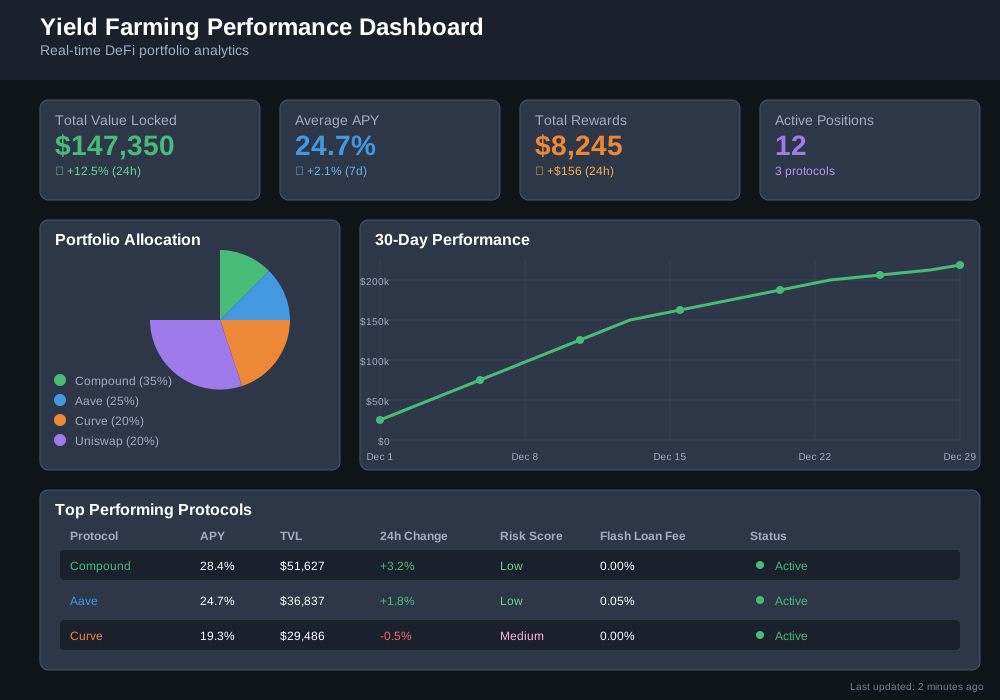
Performance Tracking
Track your flash loan farming performance:
class PerformanceTracker {
    constructor() {
        this.executions = [];
        this.totalProfit = 0;
        this.totalGasCost = 0;
    }

    logExecution(profit, gasCost, strategy) {
        const execution = {
            timestamp: Date.now(),
            profit: profit,
            gasCost: gasCost,
            strategy: strategy,
            netProfit: profit - gasCost
        };

        this.executions.push(execution);
        this.totalProfit += profit;
        this.totalGasCost += gasCost;
    }

    getAnalytics() {
        return {
            totalExecutions: this.executions.length,
            totalProfit: this.totalProfit,
            totalGasCost: this.totalGasCost,
            netProfit: this.totalProfit - this.totalGasCost,
            averageProfit: this.totalProfit / this.executions.length,
            successRate: this.calculateSuccessRate()
        };
    }
}
Alert System
Set up alerts for profitable opportunities:
class OpportunityAlert {
    constructor(webhookUrl) {
        this.webhookUrl = webhookUrl;
        this.thresholds = {
            minProfit: 0.01, // 0.01 ETH minimum
            maxGasPrice: 50,  // 50 gwei maximum
            minAPY: 15       // 15% minimum APY
        };
    }

    async checkAndAlert() {
        const opportunities = await this.scanOpportunities();

        for (const opportunity of opportunities) {
            if (this.meetsCriteria(opportunity)) {
                await this.sendAlert(opportunity);
            }
        }
    }

    async sendAlert(opportunity) {
        const message = {
            text: `🚀 Flash Loan Opportunity Detected!\n` +
                  `Strategy: ${opportunity.strategy}\n` +
                  `Expected Profit: ${opportunity.profit} ETH\n` +
                  `APY: ${opportunity.apy}%\n` +
                  `Gas Price: ${opportunity.gasPrice} gwei`
        };

        await fetch(this.webhookUrl, {
            method: 'POST',
            headers: { 'Content-Type': 'application/json' },
            body: JSON.stringify(message)
        });
    }
}
Advanced Topics and Future Developments
Cross-Chain Flash Loans
Explore cross-chain opportunities with layer 2 solutions:
interface ICrossChainBridge {
    function bridgeTokens(
        address token,
        uint256 amount,
        uint256 destinationChainId,
        address recipient
    ) external payable;
}

function crossChainFlashLoan(
    address asset,
    uint256 amount,
    uint256 destinationChain
) external {
    // Execute flash loan on mainnet
    // Bridge funds to L2 for farming
    // Return profits to mainnet for repayment
}
AI-Powered Strategy Selection
Implement machine learning for strategy optimization:
# strategy_optimizer.py
import pandas as pd
from sklearn.ensemble import RandomForestRegressor

class StrategyOptimizer:
    def __init__(self):
        self.model = RandomForestRegressor(n_estimators=100)
        self.features = ['gas_price', 'tvl', 'apy', 'volatility']

    def train_model(self, historical_data):
        X = historical_data[self.features]
        y = historical_data['profit']
        self.model.fit(X, y)

    def predict_profitability(self, market_conditions):
        prediction = self.model.predict([market_conditions])
        return prediction[0]
Flash Loan Aggregators
Build aggregators to find the best flash loan rates:
interface IFlashLoanAggregator {
    function getBestRate(address asset, uint256 amount)
        external view returns (address provider, uint256 fee);
}

function findBestFlashLoan(address asset, uint256 amount)
    external view returns (address, uint256) {
    // Compare rates from Aave, dYdX, Balancer, etc.
    // Return cheapest option
}
Conclusion
Flash loan yield farming with Aave represents a powerful way to amplify your DeFi returns without requiring large capital. You can leverage borrowed funds to access high-yield opportunities while managing risks through smart contract automation.
The key to successful flash loan farming lies in thorough testing, proper risk management, and continuous monitoring. Start with simple strategies on testnets before deploying to mainnet. Always calculate all costs including gas fees and slippage before executing strategies.
Remember that flash loan yield farming requires advanced technical knowledge and carries significant risks. Smart contract bugs, market volatility, and gas price fluctuations can all impact profitability. Only invest what you can afford to lose and thoroughly understand each protocol you interact with.
The DeFi landscape continues evolving rapidly. New protocols, layer 2 solutions, and cross-chain opportunities create fresh possibilities for flash loan strategies. Stay updated with the latest developments and adapt your strategies accordingly.
Start your flash loan yield farming journey today by deploying test contracts and experimenting with different strategies. The potential for enhanced returns makes this advanced DeFi technique worth mastering for serious yield farmers.
Ready to maximize your DeFi yields? Deploy your first flash loan contract and start farming with leverage today.