Ever wondered how to turn your crypto into a money-printing machine that works 24/7? KyberSwap Elastic promised exactly that – until it didn't. Here's everything you need to know about this groundbreaking (and ultimately doomed) DeFi protocol.
⚠️ CRITICAL DISCLAIMER
KyberSwap Elastic was permanently discontinued on November 23, 2023, following a $48 million security exploit. This guide serves as historical reference and educational material about concentrated liquidity mechanisms. Do not attempt to use KyberSwap Elastic – the protocol no longer exists.
What Was KyberSwap Elastic Yield Farming?
KyberSwap Elastic represented a concentrated liquidity protocol that allowed users to provide liquidity within custom price ranges. Unlike traditional AMMs, providers could focus their capital on specific price bands for maximum efficiency.
The protocol combined three core mechanisms:
- Concentrated liquidity positions with custom price ranges
- Auto-compounding yields through reinvestment curves
- JIT attack protection to secure earnings
Core Features That Made Elastic Unique
Tick-Based Price Management Users selected specific "ticks" (price points) to create liquidity ranges. Narrower ranges produced higher fees but increased impermanent loss risk.
Reinvestment Curves
Fees automatically compounded back into positions, creating exponential yield growth without manual intervention.
NFT Position Tokens Each liquidity position became an NFT, enabling precise tracking and farming eligibility verification.
How Concentrated Liquidity Farming Worked
Step 1: Understanding Price Ranges
// Example: ETH/USDC pool at $2,000
struct LiquidityPosition {
    uint256 minPrice;  // $1,800 (lower bound)
    uint256 maxPrice;  // $2,200 (upper bound)
    uint256 liquidity; // Capital allocated
    bool inRange;      // Currently earning fees
}
Active positions earned trading fees only when market prices stayed within defined ranges. Out-of-range positions earned zero fees but remained eligible for farming rewards.
Step 2: Position NFT Creation
Adding liquidity generated unique NFT tokens representing ownership stakes:
// Position metadata example
const positionNFT = {
    tokenId: 12345,
    poolAddress: "0x...",
    tickLower: -276324,    // $1,800 in tick format
    tickUpper: -276020,    // $2,200 in tick format
    liquidity: "1000000000000000000" // 1 ETH equivalent
}
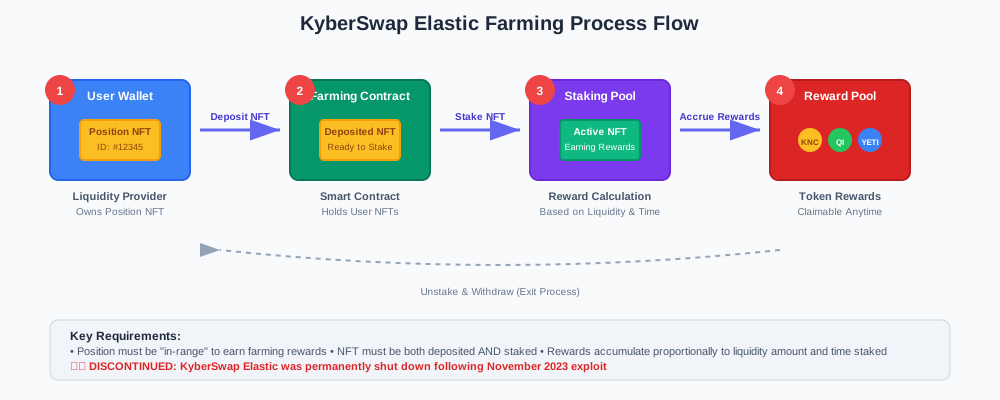
Step 3: Farm Staking Process
Users deposited position NFTs into farming contracts to earn additional rewards:
- Deposit NFT into the farming smart contract
- Stake the deposited NFT to activate reward accrual
- Claim rewards in governance tokens (KNC, partner tokens)
- Unstake and withdraw to exit farming
Yield Farming Strategies That Actually Worked
Strategy 1: Stable Pair Concentration
Target Pools: USDC/USDT, DAI/USDC
Price Range: ±0.1% around current price
Risk Level: Low
Expected APY: 15-25%
Stable pairs required tight ranges for maximum capital efficiency. Users typically set ranges like $0.995-$1.005 for USDC/USDT pairs.
Strategy 2: Correlated Asset Farming
Target Pools: stETH/ETH, stMATIC/MATIC
Price Range: ±5% around peg
Risk Level: Medium
Expected APY: 25-40%
Liquid staking derivatives maintained relatively stable price relationships, allowing wider ranges with consistent fees.
Strategy 3: Volatile Pair Wide Ranges
Target Pools: ETH/USDC, BTC/USDT
Price Range: ±20-30% around current price
Risk Level: High
Expected APY: 40-80%
Volatile pairs required wider ranges to stay in-range during market swings, trading higher APY for reduced fee concentration.
Technical Implementation Details
Price Range Calculations
// Calculate optimal range based on volatility
function calculateOptimalRange(currentPrice, volatilityPercent, riskTolerance) {
    const volatilityMultiplier = riskTolerance === 'low' ? 0.5 :
                                riskTolerance === 'medium' ? 1.0 : 1.5;

    const priceDeviation = currentPrice * (volatilityPercent / 100) * volatilityMultiplier;

    return {
        minPrice: currentPrice - priceDeviation,
        maxPrice: currentPrice + priceDeviation
    };
}
Farm Reward Distribution
Rewards distributed proportionally based on:
- Liquidity amount in the position
- Time in-range during the farming period
- Pool utilization by traders
// Simplified reward calculation
uint256 rewardShare = (userLiquidity * timeInRange * poolVolume) /
                     (totalLiquidity * farmingPeriod * totalVolume);
Platform Security Measures (That Failed)
Anti-JIT Protection
KyberSwap implemented Just-In-Time attack protection to prevent front-running bots from extracting LP fees through sandwich attacks.
Multiple Fee Tiers
Pools offered 0.01%, 0.04%, 0.3%, and 1% fee tiers, allowing LPs to choose optimal risk-reward ratios.
ChainSecurity Audits
The protocol underwent professional security audits, which unfortunately missed the critical vulnerability exploited in November 2023.
Multi-Chain Deployment Status
KyberSwap Elastic operated across multiple networks before discontinuation:
| Chain | Status | TVL (Peak) | Major Pools |
|---|---|---|---|
| Ethereum | Discontinued | $25M | ETH/USDC, stETH/ETH |
| Polygon | Discontinued | $15M | MATIC/USDC, stMATIC/MATIC |
| Avalanche | Discontinued | $10M | AVAX/USDC, sAVAX/AVAX |
| Arbitrum | Discontinued | $8M | ETH/USDC, ARB/ETH |
Risk Management Best Practices
Position Sizing Guidelines
- Maximum 20% of portfolio in any single farm
- Diversify across 3-5 different pool types
- Monitor price ranges daily for adjustment needs
Impermanent Loss Mitigation
// IL calculation for monitoring
function calculateImpermanentLoss(initialRatio, currentRatio) {
    const priceRatio = currentRatio / initialRatio;
    const il = 2 * Math.sqrt(priceRatio) / (1 + priceRatio) - 1;
    return Math.abs(il) * 100; // Return as percentage
}
The November 2023 Exploit Explained
Vulnerability Details
The exploit targeted KyberSwap's tick boundary calculations in the concentrated liquidity mechanism. Attackers manipulated swap amounts to trigger errors in liquidity calculations.
Attack Timeline
- November 22, 2023 10:54 PM UTC: Initial exploit detected
- Total Losses: $48.8 million across multiple chains
- November 23, 2023: All Elastic pools permanently shut down
- December 2023: Workforce reduced by 50%
Lessons Learned
The incident highlighted critical needs for:
- Enhanced smart contract validation mechanisms
- Multiple independent security audits
- Continuous monitoring and rapid response protocols
Alternative Concentrated Liquidity Platforms
With KyberSwap Elastic discontinued, consider these alternatives:
Uniswap V3
- Advantages: Proven security record, high liquidity
- Disadvantages: No auto-compounding, limited farming options
Bancor V3
- Advantages: Impermanent loss protection
- Disadvantages: Lower yields, limited token support
SushiSwap Trident
- Advantages: Multiple pool types, established ecosystem
- Disadvantages: Lower TVL than competitors
Educational Takeaways
KyberSwap Elastic demonstrated both the potential and perils of concentrated liquidity protocols. Key insights include:
Innovation Drivers:
- Concentrated liquidity dramatically improved capital efficiency
- Auto-compounding mechanisms simplified user experience
- NFT position tokens enabled flexible farming strategies
Risk Factors:
- Complex smart contracts create larger attack surfaces
- Precision errors in calculations can be exploited
- Rapid innovation sometimes outpaces security measures
Conclusion
KyberSwap Elastic represented a significant advancement in concentrated liquidity yield farming before its unfortunate demise. The protocol's innovative features like auto-compounding yields and JIT protection pushed DeFi boundaries forward.
For current DeFi participants, KyberSwap Elastic serves as both inspiration and warning. Innovation drives the space forward, but security must remain paramount. Always research alternatives thoroughly and never invest more than you can afford to lose.
Remember: This guide documents a discontinued protocol for educational purposes only. Always verify current protocol status before any DeFi interactions.
This article serves as historical documentation of KyberSwap Elastic concentrated liquidity farming. The protocol was permanently discontinued following a security exploit in November 2023. All information reflects the protocol's functionality prior to discontinuation.