Remember when being eco-friendly meant eating expensive organic kale and driving a Prius? Well, welcome to 2025, where you can save the planet AND make money doing it. No, this isn't another "plant trees for crypto" scam—this is Klima DAO carbon farming, where environmental responsibility meets DeFi yields.
If you've ever wondered how to make your climate anxiety work for you instead of against you, environmental token staking might be your answer. Today we'll dive into how Klima DAO transforms carbon credits into profitable farming opportunities, complete with code examples that'll make your wallet as green as your conscience.
What Is Klima DAO Carbon Farming?
Klima DAO carbon farming combines regenerative finance with blockchain technology to create a sustainable ecosystem where carbon credits become productive assets. Instead of carbon offsets collecting digital dust, you stake them to earn rewards while supporting climate initiatives.
Think of it as yield farming, but instead of pumping questionable DeFi tokens, you're backing verified carbon removal projects. Your staked environmental tokens generate returns while funding reforestation, renewable energy, and carbon capture technologies.
The Carbon Credit Tokenization Process
Traditional carbon credits live in bureaucratic databases nobody understands. Klima DAO tokenizes these credits into Base Carbon Tonnes (BCT) and Nature Carbon Tonnes (NCT), creating liquid, tradeable assets.
Here's how the tokenization flow works:
// Simplified carbon credit tokenization flow
const carbonCreditFlow = {
  // Step 1: Real-world carbon project verification
  verification: {
    project: "Reforestation in Brazil",
    verifier: "Verra Registry",
    tonnes: 1000,
    status: "verified"
  },

  // Step 2: Tokenization on Polygon
  tokenization: {
    token: "BCT", // Base Carbon Tonne
    supply: 1000,
    contract: "0x2F800Db...", // BCT contract address
    blockchain: "Polygon"
  },

  // Step 3: Staking for environmental rewards
  staking: {
    stakedAmount: 100, // BCT tokens
    rewardRate: "12%", // Annual percentage yield
    lockPeriod: "90 days",
    compounding: true
  }
};

// Calculate staking rewards
function calculateCarbonRewards(principal, rate, days) {
  const dailyRate = rate / 365;
  return principal * Math.pow(1 + dailyRate, days);
}

console.log(calculateCarbonRewards(100, 0.12, 90)); // ~102.9 BCT after 90 days
How Environmental Token Staking Actually Works
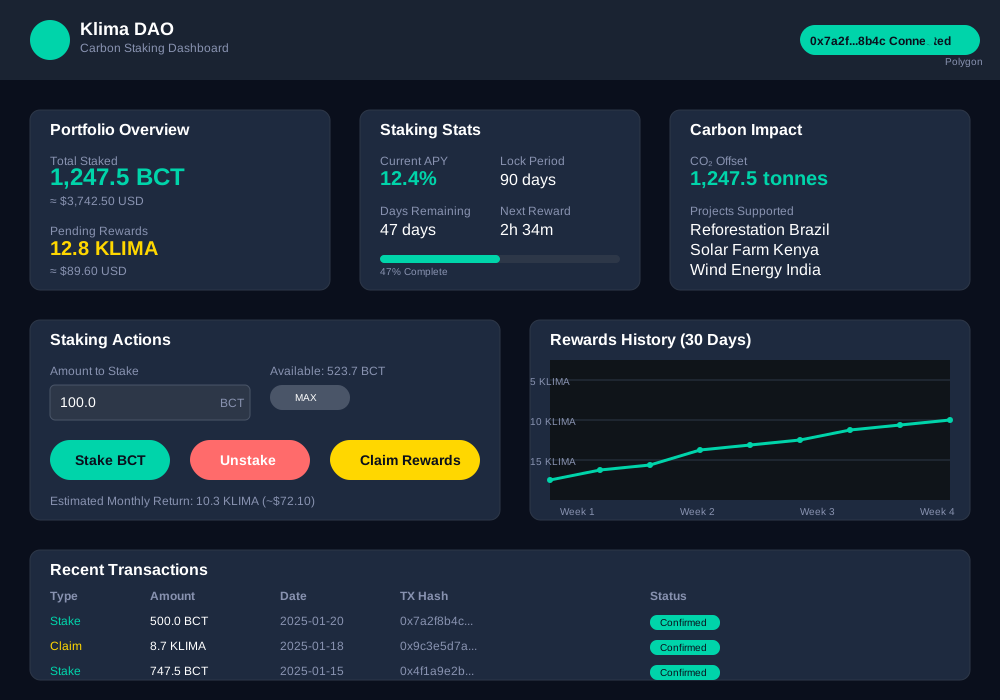
Environmental token staking transforms passive carbon credits into active investments. When you stake BCT or NCT tokens, you're providing liquidity to Klima DAO's treasury, which uses these funds to retire more carbon credits from circulation.
The Staking Mechanism Breakdown
Your staked tokens don't just sit there looking pretty—they work harder than a Tesla owner explaining why they bought one. Here's the technical flow:
// Simplified Klima DAO staking contract structure
pragma solidity ^0.8.0;

interface IKlimaStaking {
    // Stake BCT tokens for KLIMA rewards
    function stake(uint256 _amount) external returns (uint256);

    // Unstake and claim rewards
    function unstake(uint256 _amount) external returns (uint256);

    // View current reward rate
    function rewardRate() external view returns (uint256);

    // Calculate pending rewards
    function pendingRewards(address _user) external view returns (uint256);
}

contract CarbonFarmer {
    IKlimaStaking public klimaStaking;

    constructor(address _stakingContract) {
        klimaStaking = IKlimaStaking(_stakingContract);
    }

    function farmCarbon(uint256 _bctAmount) external {
        // Approve BCT tokens for staking
        IERC20(BCT_TOKEN).approve(address(klimaStaking), _bctAmount);

        // Stake tokens and start earning
        klimaStaking.stake(_bctAmount);

        emit CarbonFarmingStarted(msg.sender, _bctAmount);
    }
}
Step-by-Step Klima DAO Carbon Farming Setup
Ready to turn your environmental conscience into cold, hard crypto? Here's your complete guide to environmental token staking:
Step 1: Get Your Carbon Tokens
Before you can farm carbon, you need carbon tokens. The easiest way is through SushiSwap on Polygon:
// Connect to Polygon network
const web3 = new Web3('https://polygon-rpc.com');

// BCT token contract on Polygon
const BCT_CONTRACT = '0x2F800Db0fdb5223b3C3f354886d907A671414A7F';
const SUSHI_ROUTER = '0x1b02dA8Cb0d097eB8D57A175b88c7D8b47997506';

async function buyBCT(usdcAmount) {
  const sushiContract = new web3.eth.Contract(SUSHI_ABI, SUSHI_ROUTER);

  // Swap USDC for BCT tokens
  const path = [USDC_ADDRESS, BCT_CONTRACT];
  const deadline = Math.floor(Date.now() / 1000) + 600; // 10 minutes

  const tx = await sushiContract.methods.swapExactTokensForTokens(
    usdcAmount,
    0, // Accept any amount of BCT
    path,
    userAddress,
    deadline
  ).send({ from: userAddress });

  console.log(`Purchased BCT tokens: ${tx.transactionHash}`);
}
Expected outcome: You'll receive BCT tokens representing real carbon credits in your wallet.
Step 2: Stake Your Environmental Tokens
Now comes the fun part—putting your tokens to work for the planet:
// Klima DAO staking contract interaction
const KLIMA_STAKING = '0x25d28a24Ceb6F81015bB0b2007D795ACAc411b4d';

async function stakeEnvironmentalTokens(bctAmount) {
  const stakingContract = new web3.eth.Contract(STAKING_ABI, KLIMA_STAKING);

  // First approve BCT spending
  const bctContract = new web3.eth.Contract(ERC20_ABI, BCT_CONTRACT);
  await bctContract.methods.approve(KLIMA_STAKING, bctAmount).send({ from: userAddress });

  // Stake tokens for KLIMA rewards
  const stakeTx = await stakingContract.methods.stake(bctAmount).send({
    from: userAddress,
    gas: 200000
  });

  console.log(`Staked ${bctAmount} BCT tokens: ${stakeTx.transactionHash}`);

  // Track your staking position
  const stakedBalance = await stakingContract.methods.balanceOf(userAddress).call();
  console.log(`Total staked: ${stakedBalance} BCT`);
}
Expected outcome: Your BCT tokens are now staked and earning KLIMA rewards automatically.
Step 3: Monitor and Compound Your Returns
Smart carbon farmers don't just stake and forget—they optimize their returns:
// Automated reward monitoring and compounding
class CarbonFarmMonitor {
  constructor(web3Instance, userAddress) {
    this.web3 = web3Instance;
    this.userAddress = userAddress;
    this.stakingContract = new web3.eth.Contract(STAKING_ABI, KLIMA_STAKING);
  }

  async checkRewards() {
    const pendingRewards = await this.stakingContract.methods
      .pendingRewards(this.userAddress).call();

    const rewardValue = this.web3.utils.fromWei(pendingRewards, 'ether');
    console.log(`Pending KLIMA rewards: ${rewardValue}`);

    return parseFloat(rewardValue);
  }

  async autoCompound(minRewardThreshold = 1.0) {
    const rewards = await this.checkRewards();

    if (rewards >= minRewardThreshold) {
      // Claim rewards
      await this.stakingContract.methods.claimRewards().send({
        from: this.userAddress
      });

      // Convert KLIMA back to BCT and restake
      await this.convertAndRestake(rewards);

      console.log(`Auto-compounded ${rewards} KLIMA rewards`);
    }
  }

  // Run monitoring every hour
  startMonitoring() {
    setInterval(() => {
      this.autoCompound();
    }, 3600000); // 1 hour
  }
}

// Initialize monitoring
const monitor = new CarbonFarmMonitor(web3, userAddress);
monitor.startMonitoring();
Expected outcome: Your rewards compound automatically, maximizing your environmental impact and returns.
Understanding the Risks and Rewards
Like any DeFi protocol, Klima DAO carbon farming comes with both opportunities and risks that you need to understand:
The Upside: Environmental Impact + Financial Returns
Blockchain carbon credits offer several advantages over traditional carbon markets:
- Transparency: Every transaction is recorded on-chain
- Liquidity: Trade carbon credits 24/7 without intermediaries
- Yield generation: Earn returns while supporting climate projects
- Verifiable impact: Track exactly which projects your tokens support
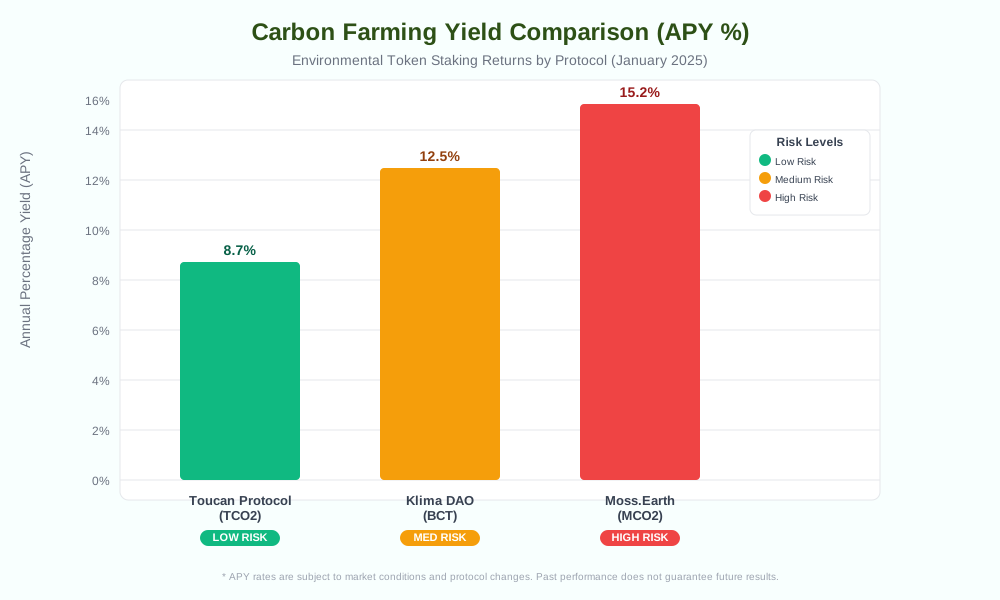
Current staking rewards typically range from 8-15% APY, depending on market conditions and protocol participation.
The Downside: Smart Contract and Market Risks
Regenerative finance protocols face unique challenges:
- Smart contract risk: Code bugs could affect your staked tokens
- Carbon credit quality: Not all offset projects deliver promised results
- Price volatility: Token values fluctuate with crypto markets
- Regulatory uncertainty: Climate regulations could impact tokenized credits
Risk Mitigation Strategies
Smart carbon farmers diversify their environmental investments:
// Portfolio diversification for carbon farming
const carbonPortfolio = {
  // Distribute across different carbon token types
  BCT: 40,  // Base Carbon Tonnes (broad market)
  NCT: 30,  // Nature Carbon Tonnes (nature-based solutions)
  MCO2: 20, // Moss Carbon Credit (rainforest focus)
  TCO2: 10  // Toucan Carbon Credits (direct retirement)
};

// Risk management parameters
const riskManagement = {
  maxStakePercentage: 25, // Don't stake more than 25% of portfolio
  minLockPeriod: 30,      // Avoid locks longer than 30 days initially
  rebalanceFrequency: 7   // Review allocation weekly
};
Advanced Carbon Farming Strategies
Once you've mastered basic environmental token staking, try these advanced techniques:
Arbitrage Between Carbon Markets
Different carbon tokens trade at varying premiums. Smart traders exploit these differences:
// Carbon arbitrage opportunity scanner
async function findCarbonArbitrage() {
  const bctPrice = await getTokenPrice(BCT_CONTRACT);
  const nctPrice = await getTokenPrice(NCT_CONTRACT);
  const mco2Price = await getTokenPrice(MCO2_CONTRACT);

  const prices = [
    { token: 'BCT', price: bctPrice },
    { token: 'NCT', price: nctPrice },
    { token: 'MCO2', price: mco2Price }
  ];

  // Find price discrepancies > 5%
  const opportunities = prices.filter(p =>
    Math.abs(p.price - bctPrice) / bctPrice > 0.05
  );

  console.log('Arbitrage opportunities:', opportunities);
  return opportunities;
}
Yield Farming Across Multiple Protocols
Diversify your carbon farming across different platforms:
// Multi-protocol carbon yield farming
const yieldFarms = [
  {
    protocol: 'Klima DAO',
    token: 'BCT',
    apy: 12.5,
    risk: 'medium'
  },
  {
    protocol: 'Toucan Protocol',
    token: 'TCO2',
    apy: 8.7,
    risk: 'low'
  },
  {
    protocol: 'Moss.Earth',
    token: 'MCO2',
    apy: 15.2,
    risk: 'high'
  }
];

// Optimize allocation based on risk-adjusted returns
function optimizeYieldAllocation(totalAmount, riskTolerance) {
  return yieldFarms
    .filter(farm => farm.risk <= riskTolerance)
    .sort((a, b) => b.apy - a.apy)
    .slice(0, 3); // Top 3 farms
}
The Future of Environmental Token Staking
The carbon credit market is evolving rapidly, with new innovations emerging constantly:
Upcoming developments include:
- Integration with IoT sensors for real-time environmental monitoring
- AI-powered carbon project verification and scoring
- Cross-chain carbon credit bridges between different blockchains
- Institutional adoption driving larger market liquidity
Major corporations like Microsoft and Tesla are exploring blockchain carbon credits for their net-zero commitments, which could dramatically increase demand for tokenized carbon assets.
Conclusion: Your Path to Profitable Planet-Saving
Klima DAO carbon farming represents a fundamental shift in how we approach environmental responsibility. Instead of choosing between financial returns and climate impact, environmental token staking lets you pursue both simultaneously.
The key to successful Klima DAO carbon farming is starting small, understanding the risks, and gradually scaling your position as you gain experience. With proper risk management and portfolio diversification, you can build a sustainable income stream while supporting verified climate projects worldwide.
Ready to transform your climate anxiety into climate action? Start with a small BCT position, learn the staking mechanics, and gradually expand your environmental token portfolio. Your wallet—and the planet—will thank you.
Disclaimer: This article is for educational purposes only. Cryptocurrency investments carry significant risks. Always conduct your own research and consider consulting with financial advisors before making investment decisions.