Remember the days when portfolio rebalancing meant spending weekends with spreadsheets, calculator burns on your fingertips, and the constant anxiety of missing market opportunities? Those dark ages are over. Indexed Finance passive portfolio yield generation puts your crypto investments on autopilot while you focus on more important things—like finally learning to make sourdough bread.
This comprehensive guide shows you how to leverage Indexed Finance for automated DeFi yield farming, turning your crypto holdings into a money-printing machine that works 24/7 without your constant supervision.
What You'll Learn
- Set up your first Indexed Finance passive yield portfolio in under 15 minutes
- Optimize automated portfolio rebalancing for maximum returns
- Implement advanced DeFi yield farming strategies
- Manage risks while maintaining steady passive income streams
What Is Indexed Finance and How Does It Generate Passive Yield?
Indexed Finance transforms traditional portfolio management into an automated, yield-generating powerhouse. This decentralized index fund protocol combines the best features of index investing with DeFi yield farming opportunities.
Core Mechanics of Indexed Finance
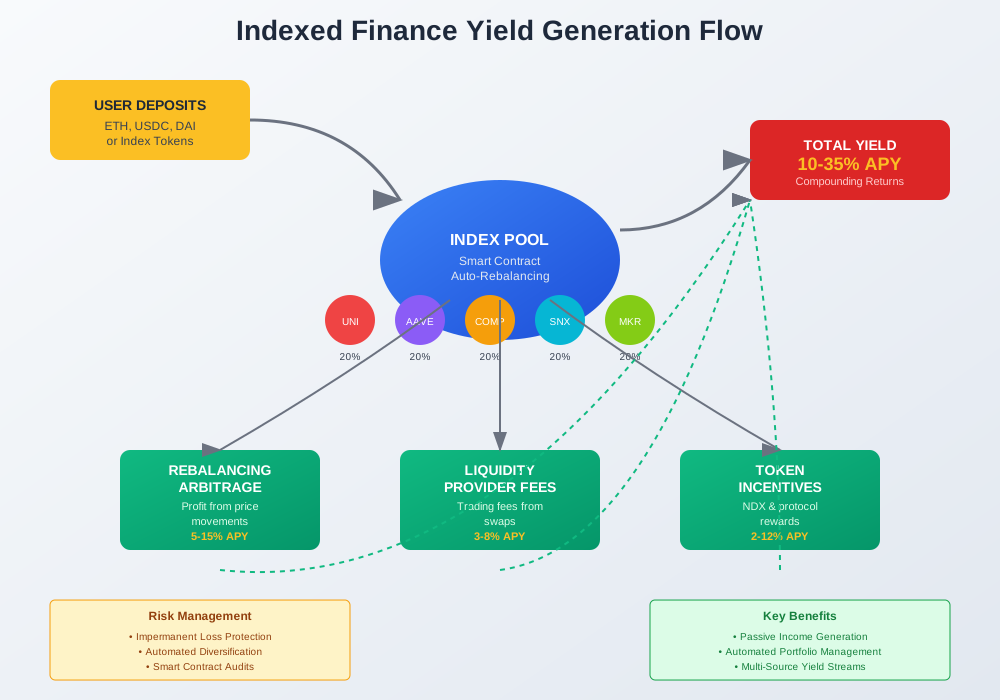
The platform operates through index pools—smart contracts that automatically maintain predetermined asset allocations while generating yield through multiple mechanisms:
// Simplified Index Pool Structure
contract IndexPool {
    mapping(address => uint256) public tokenWeights;
    mapping(address => uint256) public balances;

    function rebalance() external {
        // Automatic rebalancing logic
        // Maintains target weights
        // Captures rebalancing profits
    }

    function stake() external {
        // Liquidity provision rewards
        // Trading fee collection
        // Token incentive distribution
    }
}
Three Primary Yield Generation Methods
1. Rebalancing Arbitrage Profits When token prices shift, the protocol automatically rebalances portfolios by selling overweight assets and buying underweight ones. This systematic approach captures arbitrage opportunities that manual traders often miss.
2. Liquidity Provider Rewards Your deposited assets serve as liquidity for traders, earning fees from every swap transaction within the index pool.
3. Token Incentive Programs Many projects offer additional rewards for providing liquidity to their tokens within Indexed Finance pools.
Setting Up Your Indexed Finance Account
Getting started with automated DeFi portfolio management requires proper preparation and security measures.
Prerequisites and Wallet Setup
Required Tools:
- MetaMask or compatible Web3 wallet
- Ethereum mainnet connection
- Sufficient ETH for gas fees (recommended: 0.1 ETH minimum)
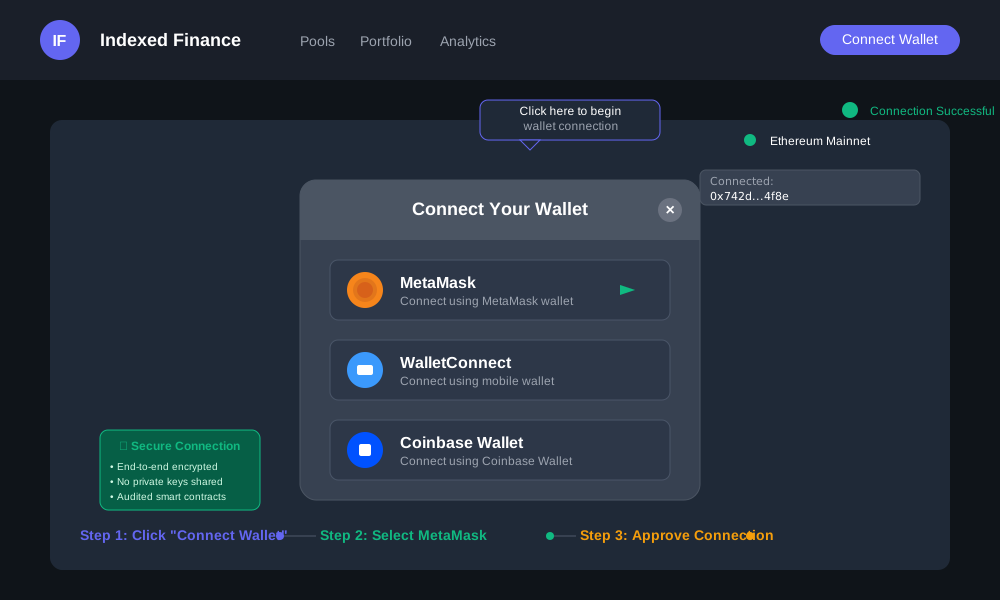
Step 1: Connect Your Wallet
- Navigate to the Indexed Finance application
- Click "Connect Wallet" in the top-right corner
- Select your wallet provider (MetaMask recommended)
- Approve the connection request
// Wallet Connection Example
const web3 = new Web3(window.ethereum);

async function connectWallet() {
    try {
        const accounts = await window.ethereum.request({
            method: 'eth_requestAccounts'
        });
        console.log('Connected account:', accounts[0]);
        return accounts[0];
    } catch (error) {
        console.error('Connection failed:', error);
    }
}
Step 2: Verify Network Settings
Ensure your wallet connects to Ethereum mainnet (Chain ID: 1). Indexed Finance operates exclusively on Ethereum's main network for maximum security and liquidity.
Creating Your First Passive Yield Portfolio
Transform your static crypto holdings into an active yield-generating machine with these detailed steps.
Choosing the Right Index Pool
Indexed Finance offers multiple index pools, each targeting different market segments and risk profiles:
DEFI5 (Decentralized Finance Index)
- Target allocation: UNI (20%), AAVE (20%), SNX (20%), COMP (20%), MKR (20%)
- Risk level: Medium-High
- Expected APY: 15-25%
CC10 (Crypto Market Index)
- Target allocation: 10 largest crypto assets by market cap
- Risk level: Medium
- Expected APY: 8-15%
ORCL5 (Oracle Index)
- Target allocation: LINK (25%), BAND (25%), API3 (17%), UMA (17%), NEST (16%)
- Risk level: High
- Expected APY: 20-35%
Step 3: Calculate Your Investment Amount
// Investment Calculator
function calculateInvestment(portfolioValue, riskTolerance) {
    const baseAllocation = portfolioValue * 0.1; // 10% baseline
    const riskMultiplier = riskTolerance === 'high' ? 2 :
                          riskTolerance === 'medium' ? 1.5 : 1;

    return Math.min(baseAllocation * riskMultiplier, portfolioValue * 0.3);
}

// Example: $10,000 portfolio, medium risk
const suggestedAmount = calculateInvestment(10000, 'medium');
console.log(`Suggested investment: $${suggestedAmount}`); // $1,500
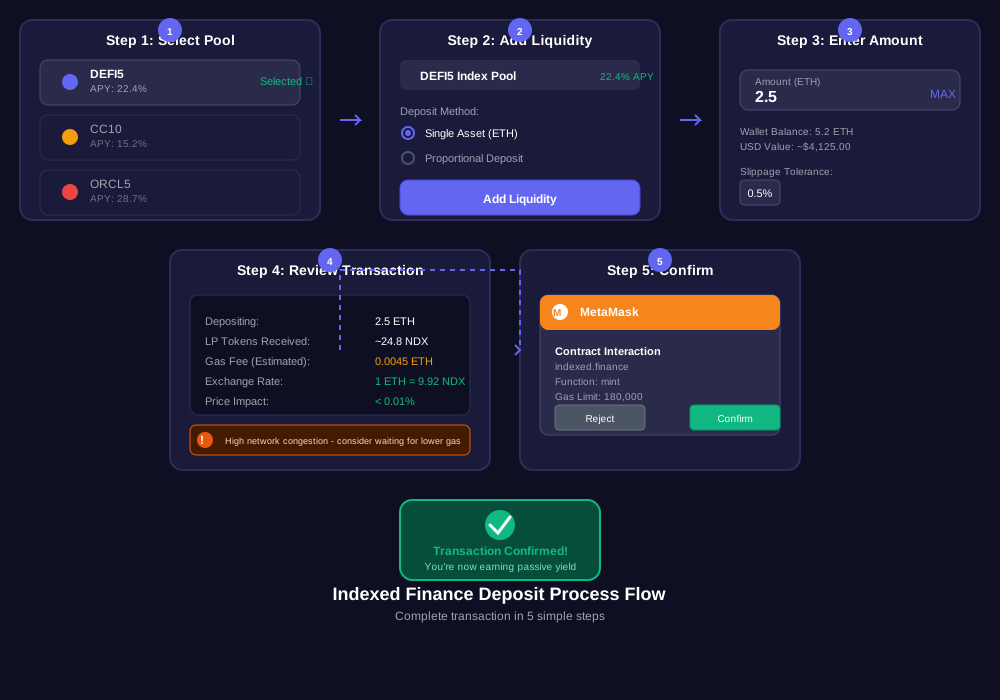
Step 4: Execute Your First Deposit
- Select your chosen index pool from the dashboard
- Click "Add Liquidity"
- Choose your deposit method:
- Single Asset Deposit: Deposit one token (ETH, USDC, etc.)
- Proportional Deposit: Deposit multiple tokens matching pool weights
- Enter your deposit amount
- Review gas fees and slippage settings
- Confirm the transaction
Gas Optimization Tip: Execute deposits during low-traffic periods (typically 2-6 AM UTC) to minimize transaction costs.
Portfolio Performance Optimization Strategies
Maximize your passive income through strategic optimization techniques that compound your returns over time.
Automated Rebalancing Frequency
The protocol automatically rebalances when token weights deviate beyond predetermined thresholds. Understanding these triggers helps you predict yield opportunities:
# Rebalancing Trigger Calculation
def calculate_rebalancing_threshold(target_weight, current_weight, threshold=0.05):
    deviation = abs(current_weight - target_weight) / target_weight
    return deviation > threshold

# Example: AAVE target 20%, current 25%
needs_rebalancing = calculate_rebalancing_threshold(0.20, 0.25)
print(f"Rebalancing needed: {needs_rebalancing}")  # True
Yield Compounding Strategies
Automatic Reinvestment Configure your portfolio to automatically reinvest earned rewards back into the index pool, leveraging compound growth.
Harvest Timing Optimization Monitor gas prices and harvest rewards during cost-effective periods to maximize net yields.
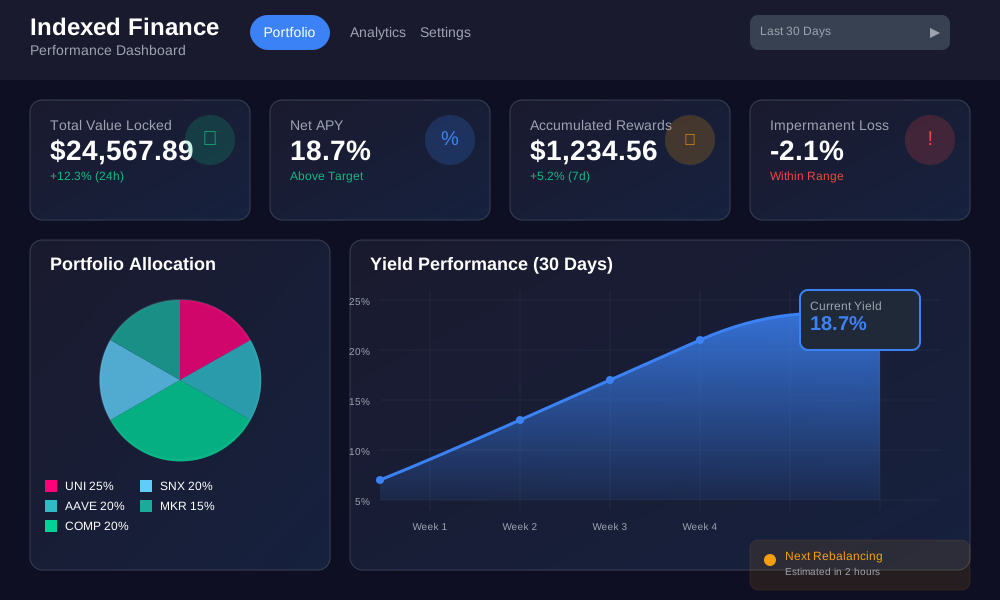
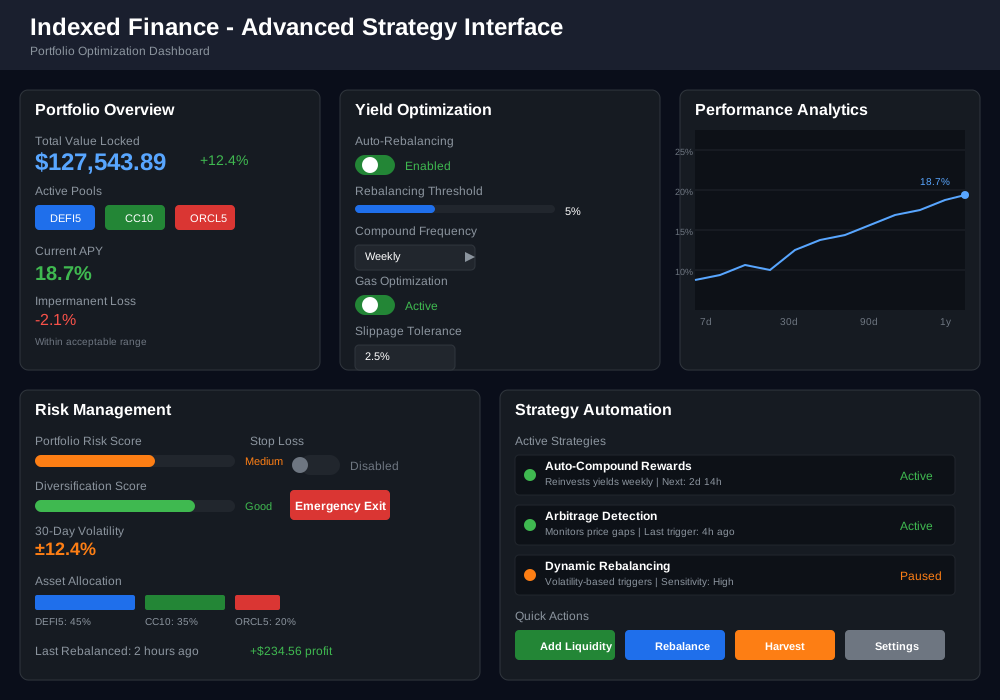
Performance Monitoring Dashboard
Track key metrics that indicate portfolio health:
- Total Value Locked (TVL): Your current position value
- Accumulated Rewards: Fees and incentives earned
- Impermanent Loss: Temporary loss from price divergence
- Net APY: Total return percentage including all yield sources
Risk Management and Best Practices
Protect your investment while maintaining optimal yield generation through proven risk management techniques.
Understanding Impermanent Loss
Impermanent loss occurs when token prices change relative to each other within your portfolio. Calculate potential impact:
// Impermanent Loss Calculator
function calculateImpermanentLoss(priceRatio) {
    // Formula: 2 * sqrt(ratio) / (1 + ratio) - 1
    const numerator = 2 * Math.sqrt(priceRatio);
    const denominator = 1 + priceRatio;
    return (numerator / denominator) - 1;
}

// Example: One token 2x, other unchanged
const loss = calculateImpermanentLoss(2);
console.log(`Impermanent loss: ${(loss * 100).toFixed(2)}%`); // ~5.72%
Diversification Strategies
Multi-Pool Allocation Spread investments across multiple index pools to reduce concentration risk:
- 40% in stable, large-cap indices (CC10)
- 35% in sector-specific indices (DEFI5)
- 25% in high-growth, high-risk pools (ORCL5)
Time-Based Dollar Cost Averaging Implement systematic investment schedules to smooth market volatility impact.
Emergency Exit Procedures
Maintain liquidity for emergency situations:
- Quick Exit Strategy: Keep 20% in easily liquidated positions
- Partial Withdrawal Capability: Understand minimum withdrawal amounts
- Gas Fee Reserves: Maintain ETH reserves for urgent transactions
Advanced Yield Optimization Techniques
Experienced users can implement sophisticated strategies to maximize passive income generation.
Cross-Protocol Yield Stacking
Combine Indexed Finance with complementary DeFi protocols:
// Yield Stacking Example
contract YieldStack {
    IndexPool public indexPool;
    CompoundProtocol public lendingPool;

    function stackYield(uint256 amount) external {
        // 1. Deposit to Indexed Finance
        uint256 lpTokens = indexPool.mint(amount);

        // 2. Use LP tokens as collateral
        lendingPool.supply(address(indexPool), lpTokens);

        // 3. Borrow stablecoins against collateral
        uint256 borrowAmount = calculateSafeBorrow(lpTokens);
        lendingPool.borrow(borrowAmount);

        // 4. Reinvest borrowed funds
        indexPool.mint(borrowAmount);
    }
}
Arbitrage Opportunity Detection
Monitor price discrepancies between index pools and external markets:
# Arbitrage Scanner
import requests

def scan_arbitrage_opportunities(pool_address):
    # Get current pool prices
    pool_prices = get_pool_prices(pool_address)

    # Compare with external exchange prices
    external_prices = get_external_prices()

    opportunities = []
    for token in pool_prices:
        price_diff = abs(pool_prices[token] - external_prices[token])
        if price_diff > 0.02:  # 2% threshold
            opportunities.append({
                'token': token,
                'profit_potential': price_diff,
                'action': 'buy' if pool_prices[token] < external_prices[token] else 'sell'
            })

    return opportunities
Automated Portfolio Rebalancing
Implement custom rebalancing logic for optimal performance:
Threshold-Based Rebalancing Trigger rebalancing when allocations drift beyond acceptable ranges.
Volatility-Adjusted Rebalancing Increase rebalancing frequency during high volatility periods to capture more arbitrage opportunities.
Time-Based Rebalancing Execute rebalancing on predetermined schedules regardless of price movements.
Troubleshooting Common Issues
Resolve typical challenges that users encounter with Indexed Finance passive yield generation.
Transaction Failures and Solutions
High Gas Fee Rejections
- Solution: Adjust gas price based on network congestion
- Use gas price prediction tools for optimal timing
- Consider layer 2 solutions when available
Slippage Tolerance Errors
- Increase slippage tolerance for large transactions
- Break large deposits into smaller chunks
- Execute during high liquidity periods
Performance Below Expectations
Low Yield Periods Market conditions significantly impact yield generation. During bear markets, focus on:
- Capital preservation over maximum yield
- Diversification across uncorrelated assets
- Patience for market cycle completion
Smart Contract Risks
- Regular security audit reviews
- Insurance protocol integration
- Diversification across multiple platforms
Technical Support Resources
Community Channels
- Discord server for real-time assistance
- Telegram groups for strategy discussions
- Reddit community for experience sharing
Documentation and Tutorials
- Official documentation portal
- Video tutorial library
- Developer resources and APIs
Future Developments and Roadmap
Stay informed about upcoming features that will enhance your passive yield generation capabilities.
Planned Protocol Upgrades
Layer 2 Integration Reduce transaction costs through Polygon and Arbitrum deployment, making smaller investments more viable.
Cross-Chain Compatibility Access to broader asset universes through Binance Smart Chain and Avalanche integration.
Enhanced Index Strategies New index methodologies including momentum-based and fundamental analysis-driven portfolios.
Governance Participation
NDX Token Utility Participate in protocol governance through NDX token holdings:
- Vote on new index proposals
- Influence fee structure changes
- Approve protocol upgrade implementations
// Governance Participation Example
async function submitProposal(proposalData) {
    const governance = new GovernanceContract(GOVERNANCE_ADDRESS);

    const proposal = {
        title: proposalData.title,
        description: proposalData.description,
        targets: proposalData.contractTargets,
        values: proposalData.etherValues,
        signatures: proposalData.functionSignatures,
        calldatas: proposalData.encodedParameters
    };

    const tx = await governance.propose(
        proposal.targets,
        proposal.values,
        proposal.signatures,
        proposal.calldatas,
        proposal.description
    );

    return tx.hash;
}
Conclusion: Your Path to Automated Crypto Wealth
Indexed Finance passive portfolio yield generation represents the evolution of crypto investing—from manual, time-intensive strategies to automated, efficient wealth building. By implementing the strategies outlined in this guide, you've equipped yourself with the tools to generate consistent passive income while maintaining diversified exposure to the crypto market.
The key to success lies in starting with appropriate position sizing, understanding the risk-reward dynamics, and maintaining a long-term perspective. As the DeFi ecosystem continues maturing, indexed finance passive portfolio yield strategies will become increasingly sophisticated and profitable.
Your journey toward financial independence through automated DeFi yield farming starts with a single deposit. Take the first step today, and let your money work as hard as you do—except it never needs a coffee break.
Ready to start earning passive income? Connect your wallet to Indexed Finance and create your first automated yield portfolio in the next 15 minutes.