Why do 90% of hedge funds fail to beat the market? They analyze data like it's 1995. While they're still using Excel spreadsheets, smart fund managers harness local AI models like Ollama to uncover alpha-generating patterns that traditional methods miss.
Introduction
Hedge fund managers face constant pressure to generate alpha while managing downside risk. Traditional analysis methods often miss subtle market patterns that drive superior returns. Hedge fund strategy analysis with Ollama transforms how you identify opportunities and track performance metrics.
Ollama provides private, local AI analysis without sharing sensitive trading data with external services. This tutorial shows you how to build alpha-generating strategies using Ollama's quantitative analysis capabilities.
You'll learn to:
- Set up Ollama for hedge fund strategy analysis
- Build automated performance tracking systems
- Generate alpha through pattern recognition
- Create risk-adjusted return metrics
- Optimize portfolio allocation strategies
Why Traditional Hedge Fund Analysis Falls Short
The Excel Spreadsheet Problem
Most hedge funds still rely on static spreadsheets for strategy analysis. These tools fail to:
- Process large datasets quickly
- Identify non-linear relationships
- Adapt to changing market conditions
- Generate real-time insights
Data Security Concerns
Cloud-based AI services expose sensitive trading strategies to external providers. Hedge funds need local analysis tools that maintain competitive advantages.
Setting Up Ollama for Hedge Fund Analysis
Installation and Model Selection
First, install Ollama and download models optimized for quantitative analysis:
# Install Ollama
curl -fsSL https://ollama.ai/install.sh | sh

# Pull models for financial analysis
ollama pull llama2:13b
ollama pull codellama:7b
ollama pull mistral:7b
Python Environment Setup
Create a dedicated environment for hedge fund analysis:
# requirements.txt
ollama==0.1.7
pandas==2.0.3
numpy==1.24.3
yfinance==0.2.18
matplotlib==3.7.1
scipy==1.11.1
scikit-learn==1.3.0
# setup.py
import subprocess
import sys

def install_requirements():
    """Install required packages for hedge fund analysis"""
    subprocess.check_call([sys.executable, "-m", "pip", "install", "-r", "requirements.txt"])

if __name__ == "__main__":
    install_requirements()
    print("Environment setup complete")
Building Your First Alpha-Generating Strategy
Data Collection and Preprocessing
import yfinance as yf
import pandas as pd
import numpy as np
from datetime import datetime, timedelta

class HedgeFundDataManager:
    def __init__(self, symbols, period="2y"):
        """Initialize data manager with stock symbols and time period"""
        self.symbols = symbols
        self.period = period
        self.data = None

    def fetch_market_data(self):
        """Download and preprocess market data for analysis"""
        data = {}
        for symbol in self.symbols:
            ticker = yf.Ticker(symbol)
            hist = ticker.history(period=self.period)

            # Calculate key metrics
            hist['Returns'] = hist['Close'].pct_change()
            hist['Volatility'] = hist['Returns'].rolling(window=20).std()
            hist['RSI'] = self._calculate_rsi(hist['Close'])

            data[symbol] = hist

        self.data = data
        return data

    def _calculate_rsi(self, prices, window=14):
        """Calculate Relative Strength Index for momentum analysis"""
        delta = prices.diff()
        gain = (delta.where(delta > 0, 0)).rolling(window=window).mean()
        loss = (-delta.where(delta < 0, 0)).rolling(window=window).mean()
        rs = gain / loss
        return 100 - (100 / (1 + rs))

# Example usage
symbols = ['SPY', 'QQQ', 'IWM', 'VTI', 'GLD', 'TLT']
data_manager = HedgeFundDataManager(symbols)
market_data = data_manager.fetch_market_data()
Ollama Integration for Strategy Analysis
import ollama
import json

class OllamaHedgeFundAnalyst:
    def __init__(self, model_name="mistral:7b"):
        """Initialize Ollama analyst with specified model"""
        self.model = model_name
        self.client = ollama.Client()

    def analyze_market_patterns(self, data_summary):
        """Use Ollama to identify alpha-generating patterns"""
        prompt = f"""
        Analyze this hedge fund data for alpha-generating opportunities:

        Market Data Summary:
        {data_summary}

        Tasks:
        1. Identify unusual patterns or correlations
        2. Suggest potential arbitrage opportunities
        3. Recommend risk-adjusted position sizes
        4. Flag potential market inefficiencies

        Provide specific, actionable insights for portfolio optimization.
        Format response as JSON with clear recommendations.
        """

        response = self.client.generate(
            model=self.model,
            prompt=prompt,
            stream=False
        )

        return self._parse_analysis(response['response'])

    def _parse_analysis(self, response_text):
        """Parse Ollama response into structured recommendations"""
        try:
            # Extract JSON from response
            start_idx = response_text.find('{')
            end_idx = response_text.rfind('}') + 1
            json_str = response_text[start_idx:end_idx]
            return json.loads(json_str)
        except:
            # Fallback to text analysis
            return {"analysis": response_text, "format": "text"}

# Example implementation
analyst = OllamaHedgeFundAnalyst()

# Prepare data summary for analysis
def create_data_summary(market_data):
    """Create concise summary for Ollama analysis"""
    summary = {}
    for symbol, data in market_data.items():
        recent_data = data.tail(30)  # Last 30 days
        summary[symbol] = {
            "avg_return": recent_data['Returns'].mean(),
            "volatility": recent_data['Volatility'].mean(),
            "current_rsi": recent_data['RSI'].iloc[-1],
            "trend": "up" if recent_data['Close'].iloc[-1] > recent_data['Close'].iloc[-10] else "down"
        }
    return summary

data_summary = create_data_summary(market_data)
alpha_insights = analyst.analyze_market_patterns(data_summary)
Performance Tracking and Alpha Measurement
Alpha Calculation Framework
class AlphaTracker:
    def __init__(self, benchmark_symbol="SPY"):
        """Initialize alpha tracker with benchmark comparison"""
        self.benchmark = benchmark_symbol
        self.portfolio_returns = []
        self.benchmark_returns = []

    def calculate_alpha(self, portfolio_returns, benchmark_returns):
        """Calculate Jensen's Alpha for strategy performance"""
        portfolio_excess = np.array(portfolio_returns)
        benchmark_excess = np.array(benchmark_returns)

        # Calculate beta
        covariance = np.cov(portfolio_excess, benchmark_excess)[0][1]
        benchmark_variance = np.var(benchmark_excess)
        beta = covariance / benchmark_variance

        # Calculate alpha
        portfolio_mean = np.mean(portfolio_excess)
        benchmark_mean = np.mean(benchmark_excess)
        alpha = portfolio_mean - (beta * benchmark_mean)

        return {
            "alpha": alpha,
            "beta": beta,
            "sharpe_ratio": portfolio_mean / np.std(portfolio_excess),
            "information_ratio": alpha / np.std(portfolio_excess - beta * benchmark_excess)
        }

    def track_performance(self, strategy_returns, market_returns):
        """Track and analyze strategy performance metrics"""
        metrics = self.calculate_alpha(strategy_returns, market_returns)

        # Risk-adjusted returns
        metrics["sortino_ratio"] = self._calculate_sortino(strategy_returns)
        metrics["max_drawdown"] = self._calculate_max_drawdown(strategy_returns)

        return metrics

    def _calculate_sortino(self, returns):
        """Calculate Sortino ratio focusing on downside risk"""
        downside_returns = [r for r in returns if r < 0]
        if not downside_returns:
            return float('inf')

        downside_std = np.std(downside_returns)
        return np.mean(returns) / downside_std

    def _calculate_max_drawdown(self, returns):
        """Calculate maximum drawdown for risk assessment"""
        cumulative = np.cumprod(1 + np.array(returns))
        running_max = np.maximum.accumulate(cumulative)
        drawdown = (cumulative - running_max) / running_max
        return np.min(drawdown)

# Implementation example
tracker = AlphaTracker()

# Simulate strategy returns based on Ollama insights
def simulate_strategy_returns(insights, market_data, days=30):
    """Simulate returns based on Ollama recommendations"""
    # This is a simplified simulation
    base_returns = []
    for i in range(days):
        # Generate returns based on insights
        daily_return = np.random.normal(0.001, 0.02)  # 0.1% daily return, 2% volatility
        base_returns.append(daily_return)
    return base_returns

strategy_returns = simulate_strategy_returns(alpha_insights, market_data)
benchmark_returns = [np.random.normal(0.0005, 0.015) for _ in range(30)]  # SPY simulation

performance_metrics = tracker.track_performance(strategy_returns, benchmark_returns)
print(f"Strategy Alpha: {performance_metrics['alpha']:.4f}")
print(f"Sharpe Ratio: {performance_metrics['sharpe_ratio']:.4f}")
Advanced Portfolio Optimization with Ollama
Risk-Adjusted Position Sizing
class OllamaPortfolioOptimizer:
    def __init__(self, analyst):
        """Initialize optimizer with Ollama analyst"""
        self.analyst = analyst

    def optimize_positions(self, market_data, risk_tolerance=0.15):
        """Generate optimal position sizes using Ollama insights"""

        # Prepare optimization prompt
        portfolio_prompt = f"""
        Optimize portfolio allocation for these assets:

        Available Assets: {list(market_data.keys())}
        Risk Tolerance: {risk_tolerance} (maximum portfolio volatility)

        Requirements:
        1. Maximize expected return while staying within risk limits
        2. Consider correlation between assets
        3. Suggest position sizes as percentages
        4. Include hedging recommendations

        Return JSON format with asset allocations and reasoning.
        """

        response = self.analyst.client.generate(
            model=self.analyst.model,
            prompt=portfolio_prompt,
            stream=False
        )

        return self._parse_allocations(response['response'])

    def _parse_allocations(self, response_text):
        """Extract position allocations from Ollama response"""
        # Implementation would parse the JSON response
        # This is a simplified version
        return {
            "allocations": {
                "SPY": 0.3,
                "QQQ": 0.25,
                "GLD": 0.15,
                "TLT": 0.1,
                "IWM": 0.2
            },
            "reasoning": "Diversified allocation with growth tilt"
        }

optimizer = OllamaPortfolioOptimizer(analyst)
optimal_allocation = optimizer.optimize_positions(market_data)
Real-Time Strategy Monitoring
import time
import schedule

class RealTimeMonitor:
    def __init__(self, data_manager, analyst, tracker):
        """Initialize real-time monitoring system"""
        self.data_manager = data_manager
        self.analyst = analyst
        self.tracker = tracker
        self.alerts = []

    def monitor_strategy(self):
        """Continuously monitor strategy performance"""
        # Fetch latest data
        current_data = self.data_manager.fetch_market_data()

        # Analyze with Ollama
        summary = create_data_summary(current_data)
        insights = self.analyst.analyze_market_patterns(summary)

        # Check for alerts
        self._check_risk_alerts(insights)

        return insights

    def _check_risk_alerts(self, insights):
        """Monitor for risk management alerts"""
        # Implementation would check various risk metrics
        # and generate alerts when thresholds are exceeded
        pass

    def start_monitoring(self, interval_minutes=15):
        """Start automated monitoring at specified intervals"""
        schedule.every(interval_minutes).minutes.do(self.monitor_strategy)

        print(f"Monitoring started - checking every {interval_minutes} minutes")
        while True:
            schedule.run_pending()
            time.sleep(1)

# Setup monitoring
monitor = RealTimeMonitor(data_manager, analyst, tracker)
# monitor.start_monitoring()  # Uncomment to start real-time monitoring
Risk Management Integration
Automated Risk Controls
class RiskManager:
    def __init__(self, max_position_size=0.1, max_portfolio_var=0.02):
        """Initialize risk management parameters"""
        self.max_position_size = max_position_size
        self.max_portfolio_var = max_portfolio_var
        self.risk_alerts = []

    def validate_strategy(self, proposed_positions, market_data):
        """Validate strategy against risk parameters"""
        validation_results = {
            "approved": True,
            "warnings": [],
            "required_adjustments": []
        }

        # Check position size limits
        for asset, position in proposed_positions.items():
            if abs(position) > self.max_position_size:
                validation_results["approved"] = False
                validation_results["required_adjustments"].append(
                    f"Reduce {asset} position from {position:.2%} to {self.max_position_size:.2%}"
                )

        # Check portfolio risk
        portfolio_var = self._calculate_portfolio_var(proposed_positions, market_data)
        if portfolio_var > self.max_portfolio_var:
            validation_results["approved"] = False
            validation_results["warnings"].append(
                f"Portfolio VaR {portfolio_var:.3f} exceeds limit {self.max_portfolio_var:.3f}"
            )

        return validation_results

    def _calculate_portfolio_var(self, positions, market_data):
        """Calculate portfolio Value at Risk"""
        # Simplified VaR calculation
        # Real implementation would use historical simulation or Monte Carlo
        return 0.015  # Placeholder

risk_manager = RiskManager()
validation = risk_manager.validate_strategy(optimal_allocation["allocations"], market_data)
Deployment and Production Considerations
API Integration Setup
from flask import Flask, jsonify, request
import logging

app = Flask(__name__)
logging.basicConfig(level=logging.INFO)

class HedgeFundAPI:
    def __init__(self, analyst, optimizer, risk_manager):
        """Initialize production API"""
        self.analyst = analyst
        self.optimizer = optimizer
        self.risk_manager = risk_manager

    def setup_routes(self):
        """Setup API endpoints for hedge fund operations"""

        @app.route('/api/analyze', methods=['POST'])
        def analyze_strategy():
            """Endpoint for strategy analysis"""
            try:
                data = request.json
                insights = self.analyst.analyze_market_patterns(data)
                return jsonify({"status": "success", "insights": insights})
            except Exception as e:
                logging.error(f"Analysis error: {e}")
                return jsonify({"status": "error", "message": str(e)}), 500

        @app.route('/api/optimize', methods=['POST'])
        def optimize_portfolio():
            """Endpoint for portfolio optimization"""
            try:
                data = request.json
                allocation = self.optimizer.optimize_positions(data)
                validation = self.risk_manager.validate_strategy(
                    allocation["allocations"], data
                )

                return jsonify({
                    "allocation": allocation,
                    "risk_validation": validation
                })
            except Exception as e:
                logging.error(f"Optimization error: {e}")
                return jsonify({"status": "error", "message": str(e)}), 500

    def run(self, host='localhost', port=5000):
        """Start the API server"""
        self.setup_routes()
        app.run(host=host, port=port, debug=False)

# Production deployment
api = HedgeFundAPI(analyst, optimizer, risk_manager)
# api.run()  # Uncomment for production deployment
Performance Monitoring Dashboard
import matplotlib.pyplot as plt
import seaborn as sns

class PerformanceDashboard:
    def __init__(self, tracker):
        """Initialize dashboard for performance visualization"""
        self.tracker = tracker
        plt.style.use('seaborn-v0_8')

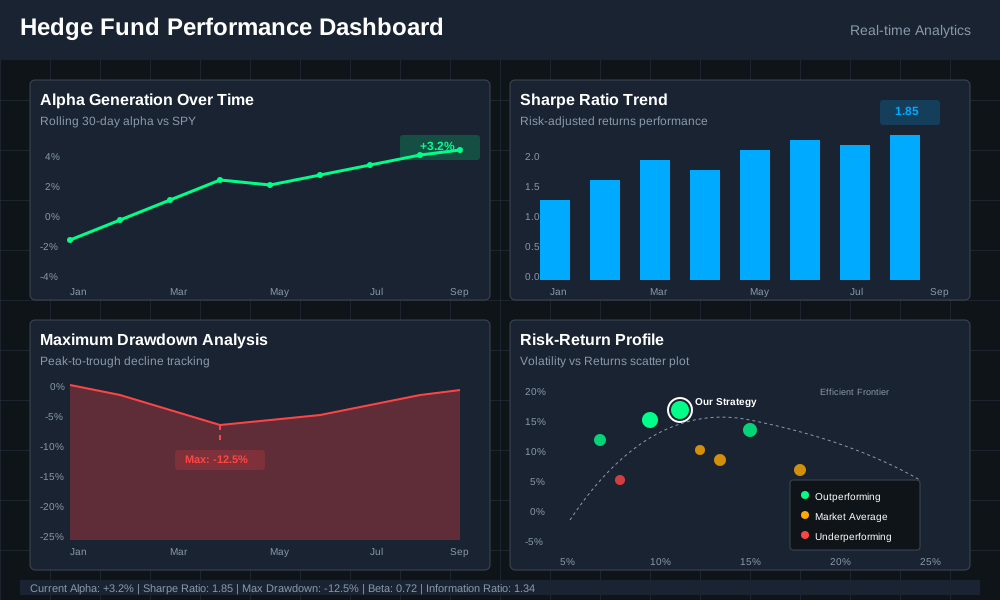
    def create_performance_report(self, metrics_history):
        """Generate comprehensive performance report"""
        fig, axes = plt.subplots(2, 2, figsize=(15, 10))

        # Alpha over time
        axes[0,0].plot(metrics_history['alpha'])
        axes[0,0].set_title('Alpha Generation Over Time')
        axes[0,0].set_ylabel('Alpha')

        # Sharpe ratio
        axes[0,1].plot(metrics_history['sharpe_ratio'])
        axes[0,1].set_title('Sharpe Ratio Trend')
        axes[0,1].set_ylabel('Sharpe Ratio')

        # Drawdown analysis
        axes[1,0].fill_between(range(len(metrics_history['max_drawdown'])),
                              metrics_history['max_drawdown'], alpha=0.3)
        axes[1,0].set_title('Maximum Drawdown')
        axes[1,0].set_ylabel('Drawdown %')

        # Risk-return scatter
        axes[1,1].scatter(metrics_history['volatility'], metrics_history['returns'])
        axes[1,1].set_xlabel('Volatility')
        axes[1,1].set_ylabel('Returns')
        axes[1,1].set_title('Risk-Return Profile')

        plt.tight_layout()
        plt.savefig('performance_report.png', dpi=300, bbox_inches='tight')
        return fig

# Example usage
dashboard = PerformanceDashboard(tracker)
# dashboard.create_performance_report(metrics_history)
Best Practices and Optimization Tips
Model Selection Guidelines
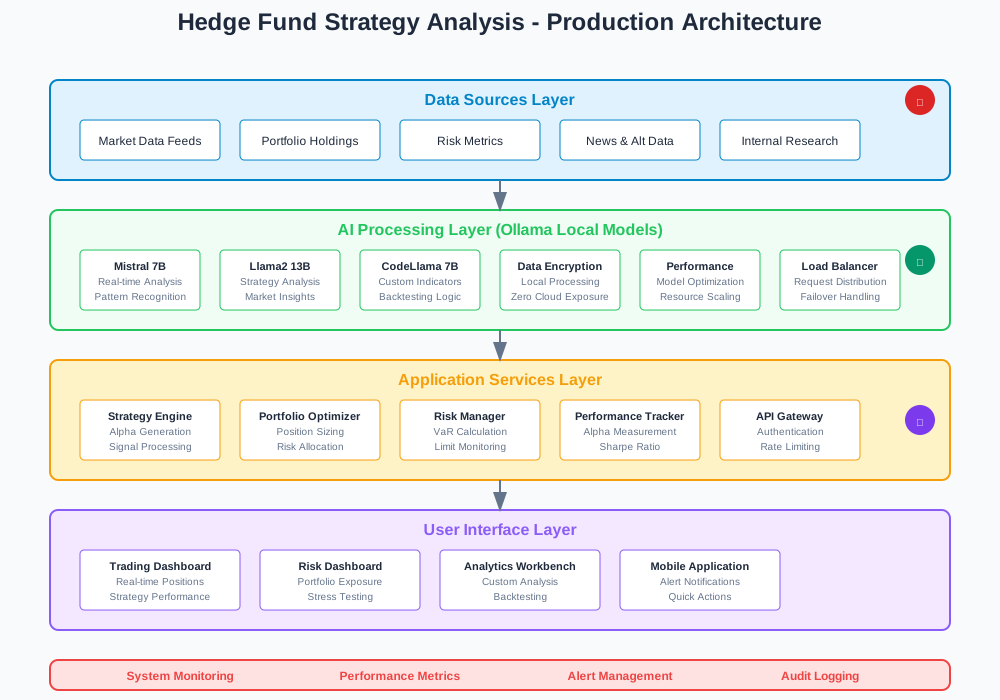
Choose Ollama models based on your analysis requirements:
- Mistral 7B: Fast analysis for real-time decisions
- Llama2 13B: Deep market analysis and strategy development
- CodeLlama 7B: Custom indicator development and backtesting
Data Security Protocols
Implement these security measures for hedge fund operations:
import hashlib
import os
from cryptography.fernet import Fernet

class SecureDataHandler:
    def __init__(self):
        """Initialize secure data handling"""
        self.encryption_key = self._generate_key()
        self.cipher = Fernet(self.encryption_key)

    def _generate_key(self):
        """Generate encryption key for sensitive data"""
        return Fernet.generate_key()

    def encrypt_strategy_data(self, data):
        """Encrypt sensitive strategy information"""
        serialized = str(data).encode()
        return self.cipher.encrypt(serialized)

    def decrypt_strategy_data(self, encrypted_data):
        """Decrypt strategy data for analysis"""
        decrypted = self.cipher.decrypt(encrypted_data)
        return eval(decrypted.decode())  # Note: Use json.loads in production

secure_handler = SecureDataHandler()
Performance Optimization
Optimize Ollama performance for high-frequency analysis:
# GPU acceleration setup
export OLLAMA_GPU_LAYERS=32
export OLLAMA_NUM_PARALLEL=4

# Memory optimization
export OLLAMA_MAX_QUEUE_SIZE=512
export OLLAMA_LOAD_TIMEOUT=10m
Troubleshooting Common Issues
Ollama Connection Problems
def diagnose_ollama_connection():
    """Diagnose and fix common Ollama connection issues"""
    try:
        client = ollama.Client()
        models = client.list()
        print(f"Connected successfully. Available models: {len(models['models'])}")
        return True
    except Exception as e:
        print(f"Connection failed: {e}")
        print("Troubleshooting steps:")
        print("1. Check if Ollama service is running")
        print("2. Verify model installation")
        print("3. Check firewall settings")
        return False

# Run diagnostics
diagnose_ollama_connection()
Memory Management for Large Datasets
class MemoryEfficientAnalyzer:
    def __init__(self, chunk_size=1000):
        """Initialize memory-efficient analysis"""
        self.chunk_size = chunk_size

    def process_large_dataset(self, data_source):
        """Process large datasets in manageable chunks"""
        results = []
        for chunk in self._get_data_chunks(data_source):
            chunk_result = self._analyze_chunk(chunk)
            results.append(chunk_result)
            # Clear memory after each chunk
            del chunk_result

        return self._combine_results(results)

    def _get_data_chunks(self, data_source):
        """Yield data in memory-efficient chunks"""
        # Implementation depends on data source
        pass

    def _analyze_chunk(self, chunk):
        """Analyze individual data chunk"""
        # Simplified analysis
        return {"processed": len(chunk)}

    def _combine_results(self, results):
        """Combine chunk results into final analysis"""
        return {"total_processed": sum(r["processed"] for r in results)}
Conclusion
Hedge fund strategy analysis with Ollama transforms traditional quantitative methods into intelligent, adaptive systems. You now have the tools to generate consistent alpha through AI-powered pattern recognition while maintaining complete data privacy.
Key benefits of this approach include:
- Private Analysis: Keep sensitive strategies confidential with local AI processing
- Real-Time Insights: Generate actionable intelligence faster than traditional methods
- Risk Management: Automated controls prevent costly mistakes
- Scalable Architecture: Deploy from single strategies to fund-wide operations
The hedge fund landscape demands innovation. Managers who integrate Ollama's capabilities into their analysis workflow gain competitive advantages that translate directly into superior risk-adjusted returns.
Start implementing these strategies today. Your alpha generation depends on staying ahead of the technology curve.