Remember when tokenizing a coffee shop required hiring three lawyers, two compliance officers, and sacrificing your firstborn to the SEC? Those days are gone. Harbor's R-Token platform transforms real-world assets into yield-generating digital securities without requiring a law degree or selling your soul to regulatory bureaucracy.
Harbor has created tokens on the ethereum blockchain representing the shares of four real estate funds worth $100 million. This platform bridges traditional finance and blockchain technology, enabling developers to build compliant tokenized securities that generate actual returns from physical assets.
This guide shows you how to implement Harbor's R-Token platform for real-world asset yield generation. You'll learn the technical architecture, smart contract implementation, and compliance integration that powers institutional-grade tokenized securities.
What Makes Harbor R-Token Different from Standard ERC-20 Tokens
Harbor's R-Token solves the regulatory nightmare that kills most security token projects. While ERC-20 tokens transfer freely between any addresses, security tokens must comply with federal regulations governing who can buy, sell, and hold them.
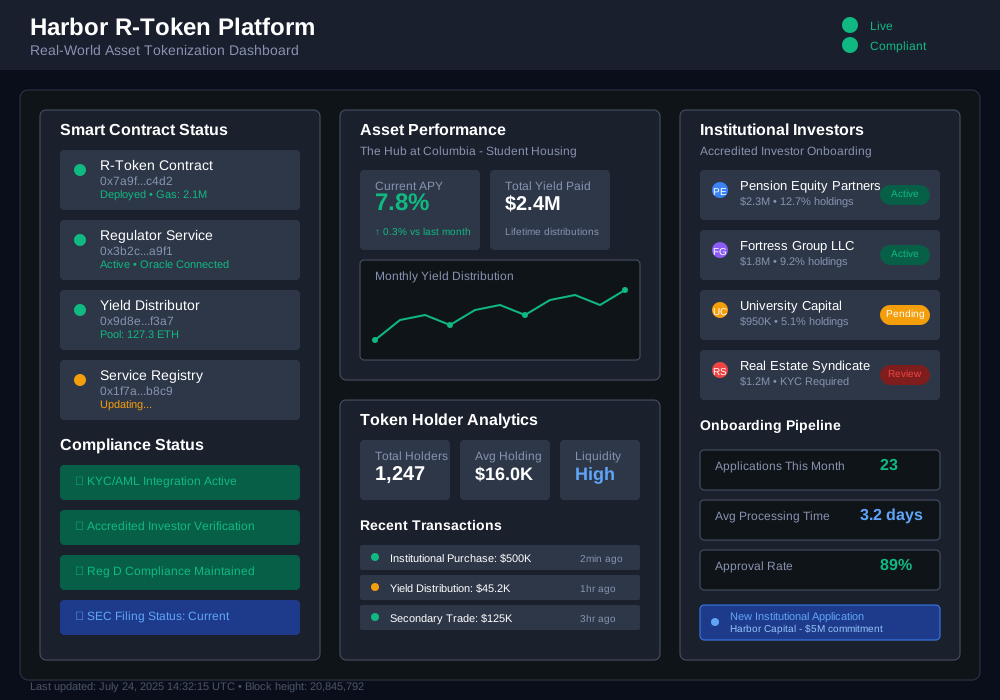
This is accomplished by providing a level of indirection through deploying three separate contracts. Regulator Service — This smart contract interfaces with the off-chain compliance oracle for the final say for a trade. Service Registry — This smart contract contains an updatable reference to compliance rules that change without redeploying contracts.
The R-Token architecture includes these core components:
R-Token Contract: The main security token implementing ERC-20 with compliance hooks
Regulator Service: Validates transfers against regulatory requirements
Service Registry: Maintains updatable references to compliance services
Off-chain Oracle: Provides real-time regulatory data and investor verification
Harbor R-Token Smart Contract Architecture
Harbor's three-contract system creates a flexible compliance layer that adapts to changing regulations without breaking existing tokens.
// Core R-Token contract structure
contract RToken is StandardToken {
    ServiceRegistry public registry;

    modifier onlyTransferAgent() {
        require(msg.sender == registry.getService("TransferAgent"));
        _;
    }

    function transfer(address _to, uint256 _value)
        public
        returns (bool)
    {
        // Check compliance before transfer
        require(checkTransferAllowed(msg.sender, _to, _value));
        return super.transfer(_to, _value);
    }

    function checkTransferAllowed(
        address _from,
        address _to,
        uint256 _value
    )
        public
        view
        returns (bool)
    {
        RegulatorService regulator = RegulatorService(
            registry.getService("RegulatorService")
        );
        return regulator.check(_from, _to, _value);
    }
}
The Service Registry contract manages upgradeable compliance services:
contract ServiceRegistry {
    mapping(string => address) public services;
    address public owner;

    modifier onlyOwner() {
        require(msg.sender == owner);
        _;
    }

    function replaceService(string _name, address _service)
        public
        onlyOwner
    {
        services[_name] = _service;
        ServiceReplaced(_name, _service);
    }

    function getService(string _name)
        public
        view
        returns (address)
    {
        return services[_name];
    }
}
Implementing Yield Distribution for Real-World Assets
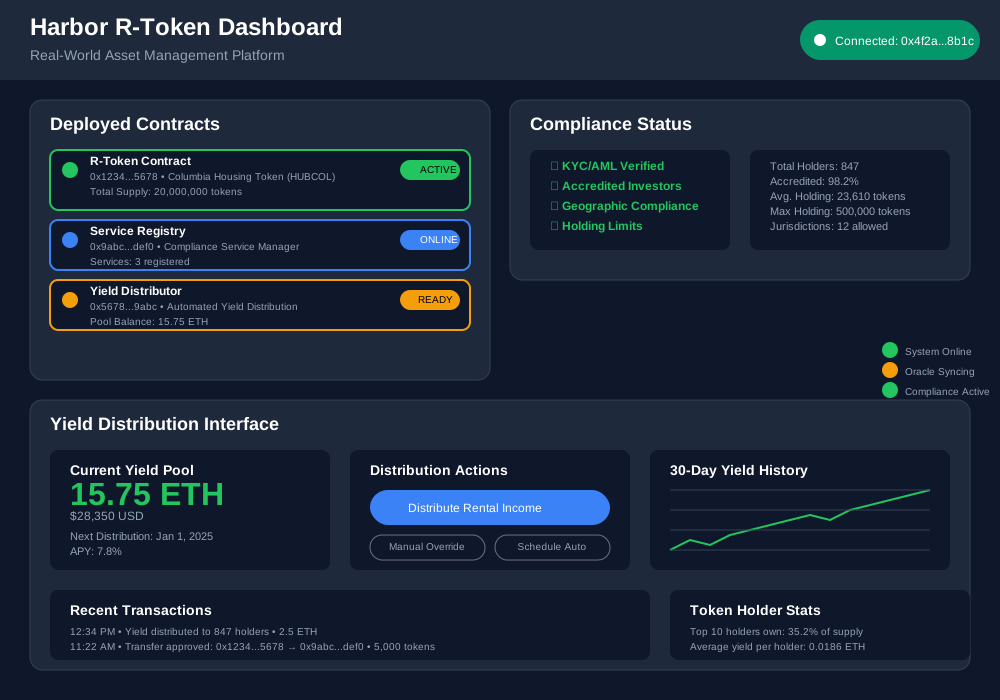
Real-world asset tokens generate yield from underlying physical assets like rental income, dividends, or appreciation. Harbor's platform distributes these yields to token holders through smart contracts.
contract YieldDistributor {
    RToken public token;
    uint256 public totalYieldPool;
    mapping(address => uint256) public lastClaimed;

    event YieldDistributed(address indexed holder, uint256 amount);

    function distributeYield() external payable {
        totalYieldPool += msg.value;
        YieldAdded(msg.value, totalYieldPool);
    }

    function claimYield() external {
        uint256 holderBalance = token.balanceOf(msg.sender);
        require(holderBalance > 0, "No tokens held");

        uint256 totalSupply = token.totalSupply();
        uint256 yieldShare = (totalYieldPool * holderBalance) / totalSupply;

        require(yieldShare > 0, "No yield available");

        // Reset pool proportionally
        totalYieldPool -= yieldShare;
        lastClaimed[msg.sender] = block.timestamp;

        payable(msg.sender).transfer(yieldShare);
        YieldDistributed(msg.sender, yieldShare);
    }

    function calculateYield(address holder)
        external
        view
        returns (uint256)
    {
        uint256 holderBalance = token.balanceOf(holder);
        if (holderBalance == 0) return 0;

        uint256 totalSupply = token.totalSupply();
        return (totalYieldPool * holderBalance) / totalSupply;
    }
}
Setting Up Regulatory Compliance Integration
Harbor's compliance system connects to off-chain services that verify investor accreditation, geographic restrictions, and holding limits. Here's how to implement the regulator service:
contract RegulatorService {
    address public oracle;

    struct ComplianceRule {
        bool accreditedOnly;
        uint256 maxHolders;
        uint256 maxTokensPerHolder;
        mapping(string => bool) allowedJurisdictions;
    }

    ComplianceRule public rules;

    modifier onlyOracle() {
        require(msg.sender == oracle);
        _;
    }

    function check(
        address _from,
        address _to,
        uint256 _value
    )
        external
        view
        returns (bool)
    {
        // Check if recipient is accredited (via oracle)
        if (rules.accreditedOnly) {
            require(isAccredited(_to), "Recipient not accredited");
        }

        // Check holding limits
        RToken token = RToken(msg.sender);
        uint256 newBalance = token.balanceOf(_to) + _value;
        require(
            newBalance <= rules.maxTokensPerHolder,
            "Exceeds holding limit"
        );

        return true;
    }

    function isAccredited(address investor)
        public
        view
        returns (bool)
    {
        // Interface with off-chain oracle
        // Implementation depends on oracle provider
        return true; // Simplified for example
    }
}
Real Estate Tokenization Implementation Example
Two days ago, Harbor launched their platform with an offering of US$20 million of tokenized private equity in The Hub at Columbia, a student housing high-rise located near the University of South Carolina. Here's how to structure a similar real estate tokenization:
contract RealEstateRToken is RToken {
    struct PropertyDetails {
        string propertyAddress;
        uint256 totalValue;
        uint256 expectedYield;
        string managementCompany;
    }

    PropertyDetails public property;
    uint256 public monthlyRent;
    uint256 public operatingExpenses;

    constructor(
        string memory _name,
        string memory _symbol,
        uint256 _totalSupply,
        PropertyDetails memory _property
    ) RToken(_name, _symbol, _totalSupply) {
        property = _property;
    }

    function distributeRentalIncome() external payable {
        require(msg.value > 0, "No income to distribute");

        // Deduct operating expenses
        uint256 netIncome = msg.value - operatingExpenses;
        require(netIncome > 0, "Income insufficient to cover expenses");

        // Distribute to yield contract
        YieldDistributor(yieldDistributor).distributeYield{value: netIncome}();

        RentalIncomeDistributed(msg.value, netIncome);
    }

    function updateOperatingExpenses(uint256 _expenses)
        external
        onlyOwner
    {
        operatingExpenses = _expenses;
        ExpensesUpdated(_expenses);
    }
}
Deploying Harbor R-Token Infrastructure
Deploy the complete Harbor R-Token system with proper initialization:
// deployment-script.js
const { ethers } = require("hardhat");

async function deployHarborSystem() {
    const [deployer] = await ethers.getSigners();
    console.log("Deploying with account:", deployer.address);

    // 1. Deploy Service Registry
    const ServiceRegistry = await ethers.getContractFactory("ServiceRegistry");
    const registry = await ServiceRegistry.deploy();
    await registry.deployed();
    console.log("ServiceRegistry deployed to:", registry.address);

    // 2. Deploy Regulator Service
    const RegulatorService = await ethers.getContractFactory("RegulatorService");
    const regulator = await RegulatorService.deploy();
    await regulator.deployed();

    // 3. Register regulator service
    await registry.replaceService("RegulatorService", regulator.address);

    // 4. Deploy R-Token
    const RToken = await ethers.getContractFactory("RealEstateRToken");
    const propertyDetails = {
        propertyAddress: "123 University Blvd, Columbia, SC",
        totalValue: ethers.utils.parseEther("20000000"), // $20M
        expectedYield: 750, // 7.5%
        managementCompany: "University Housing Partners"
    };

    const rToken = await RToken.deploy(
        "The Hub at Columbia Token",
        "HUBCOL",
        ethers.utils.parseEther("20000000"), // 20M tokens
        propertyDetails,
        { value: ethers.utils.parseEther("1") }
    );

    await rToken.deployed();
    console.log("RealEstateRToken deployed to:", rToken.address);

    // 5. Deploy Yield Distributor
    const YieldDistributor = await ethers.getContractFactory("YieldDistributor");
    const yieldDistributor = await YieldDistributor.deploy(rToken.address);
    await yieldDistributor.deployed();

    return {
        registry: registry.address,
        regulator: regulator.address,
        rToken: rToken.address,
        yieldDistributor: yieldDistributor.address
    };
}

deployHarborSystem()
    .then((addresses) => {
        console.log("Deployment successful:", addresses);
        process.exit(0);
    })
    .catch((error) => {
        console.error(error);
        process.exit(1);
    });
Testing Yield Distribution and Compliance
Test the complete system with automated compliance checks and yield distribution:
// test/harbor-system.test.js
const { expect } = require("chai");
const { ethers } = require("hardhat");

describe("Harbor R-Token System", function() {
    let rToken, yieldDistributor, regulator;
    let owner, investor1, investor2;

    beforeEach(async function() {
        [owner, investor1, investor2] = await ethers.getSigners();

        // Deploy complete system (abbreviated)
        const contracts = await deployTestSystem();
        rToken = contracts.rToken;
        yieldDistributor = contracts.yieldDistributor;
        regulator = contracts.regulator;
    });

    it("should distribute yield proportionally", async function() {
        // Transfer tokens to investors
        await rToken.transfer(investor1.address, ethers.utils.parseEther("1000"));
        await rToken.transfer(investor2.address, ethers.utils.parseEther("2000"));

        // Simulate rental income
        const rentalIncome = ethers.utils.parseEther("10");
        await rToken.distributeRentalIncome({ value: rentalIncome });

        // Check yield calculations
        const yield1 = await yieldDistributor.calculateYield(investor1.address);
        const yield2 = await yieldDistributor.calculateYield(investor2.address);

        // investor2 should get 2x yield (holds 2x tokens)
        expect(yield2).to.equal(yield1.mul(2));
    });

    it("should enforce compliance rules", async function() {
        // Try transfer to non-accredited investor
        await expect(
            rToken.transfer(investor2.address, ethers.utils.parseEther("1000"))
        ).to.be.revertedWith("Recipient not accredited");

        // Verify compliance check
        const allowed = await rToken.checkTransferAllowed(
            owner.address,
            investor1.address,
            ethers.utils.parseEther("1000")
        );
        expect(allowed).to.be.true;
    });
});
Integrating with Real Estate Management Systems
Connect your R-Token to property management platforms for automated rent collection and distribution:
// property-integration.js
class PropertyManagementIntegration {
    constructor(rTokenAddress, yieldDistributorAddress, web3Provider) {
        this.rToken = new ethers.Contract(rTokenAddress, rTokenABI, web3Provider);
        this.yieldDistributor = new ethers.Contract(
            yieldDistributorAddress,
            yieldDistributorABI,
            web3Provider
        );
    }

    async processMonthlyRent(rentAmount, expenses) {
        try {
            const netIncome = rentAmount - expenses;

            if (netIncome <= 0) {
                throw new Error("Insufficient income after expenses");
            }

            // Distribute rental income on-chain
            const tx = await this.rToken.distributeRentalIncome({
                value: ethers.utils.parseEther(netIncome.toString())
            });

            await tx.wait();

            console.log(`Distributed ${netIncome} ETH to token holders`);
            return tx.hash;
        } catch (error) {
            console.error("Rent distribution failed:", error);
            throw error;
        }
    }

    async getHolderYields() {
        const totalSupply = await this.rToken.totalSupply();
        const events = await this.rToken.queryFilter("Transfer");

        const holders = new Set();
        events.forEach(event => {
            if (event.args.to !== ethers.constants.AddressZero) {
                holders.add(event.args.to);
            }
        });

        const yields = [];
        for (const holder of holders) {
            const balance = await this.rToken.balanceOf(holder);
            if (balance.gt(0)) {
                const yield = await this.yieldDistributor.calculateYield(holder);
                yields.push({
                    address: holder,
                    balance: ethers.utils.formatEther(balance),
                    pendingYield: ethers.utils.formatEther(yield)
                });
            }
        }

        return yields;
    }
}
Monitoring and Analytics Implementation
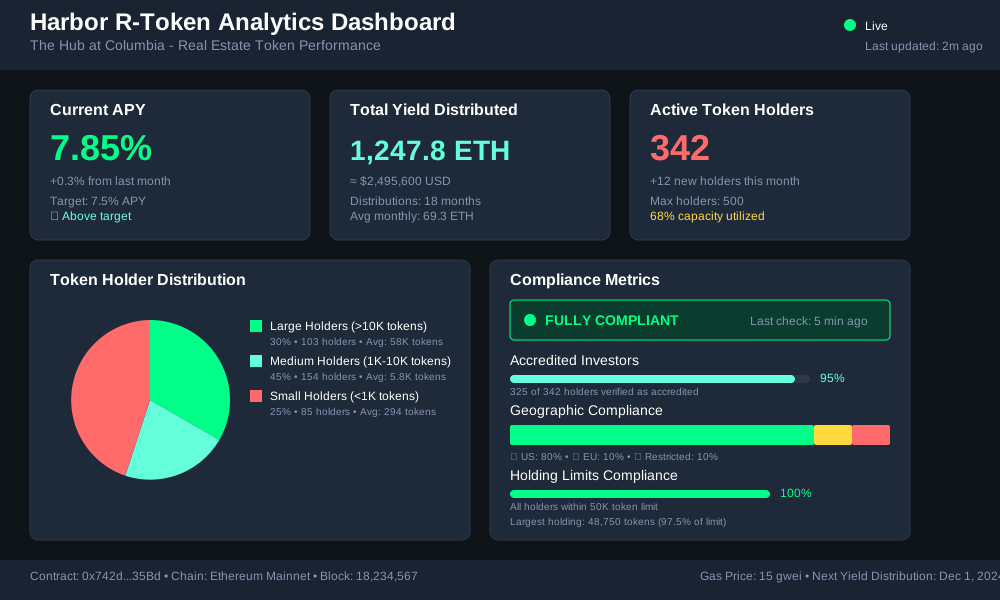
Build monitoring tools to track asset performance and token holder metrics:
// analytics-dashboard.js
class HarborAnalytics {
    constructor(contractAddresses, web3Provider) {
        this.contracts = this.initializeContracts(contractAddresses, web3Provider);
        this.metrics = {};
    }

    async calculateAPY() {
        const totalYieldDistributed = await this.getTotalYieldDistributed();
        const averageTokenValue = await this.getAverageTokenValue();
        const timeElapsed = await this.getTimeElapsed();

        const apy = (totalYieldDistributed / averageTokenValue) *
                   (365 * 24 * 60 * 60 / timeElapsed) * 100;

        return apy;
    }

    async getComplianceMetrics() {
        const totalHolders = await this.getTotalHolders();
        const accreditedHolders = await this.getAccreditedHolders();
        const averageHolding = await this.getAverageHolding();

        return {
            totalHolders,
            accreditedPercentage: (accreditedHolders / totalHolders) * 100,
            averageHolding: ethers.utils.formatEther(averageHolding),
            complianceStatus: "Compliant"
        };
    }

    async generateReport() {
        const apy = await this.calculateAPY();
        const compliance = await this.getComplianceMetrics();
        const yieldHistory = await this.getYieldHistory();

        return {
            performance: {
                currentAPY: `${apy.toFixed(2)}%`,
                totalYieldDistributed: ethers.utils.formatEther(
                    await this.getTotalYieldDistributed()
                ),
                yieldHistory
            },
            compliance,
            timestamp: new Date().toISOString()
        };
    }
}
Harbor R-Token Best Practices and Security Considerations
Implementing Harbor's R-Token platform requires careful attention to security and regulatory compliance:
Smart Contract Security: Use OpenZeppelin's security patterns and conduct thorough audits before deployment. The upgradeable proxy pattern in Service Registry creates potential attack vectors if not properly secured.
Compliance Automation: Integrate with established KYC/AML providers like Chainalysis or Elliptic to automate investor verification. Manual compliance processes don't scale for institutional adoption.
Yield Distribution Timing: Implement time-locks and multi-signature requirements for yield distributions. Real estate income often arrives irregularly, requiring careful cash flow management.
Oracle Reliability: Use multiple oracle sources for asset valuation and compliance data. Single points of failure in compliance checking can halt all token transfers.
Through added liquidity and increased investor access, Stein says that tokenized securities can bring legitimate benefits to many areas of traditional finance. However, these benefits only materialize with proper technical implementation and regulatory compliance.
Conclusion
Harbor's R-Token platform transforms how developers build compliant security tokens for real-world assets. The three-contract architecture provides regulatory flexibility while maintaining security and enabling automated yield distribution from physical assets like real estate.
The platform's success lies in solving the compliance problem that kills most tokenization projects. By separating compliance logic from token contracts and connecting to off-chain verification systems, Harbor creates sustainable infrastructure for institutional-grade tokenized securities.
Implement Harbor's R-Token platform to build the next generation of yield-generating real-world asset tokens. The combination of regulatory compliance, automated yield distribution, and upgradeability creates a foundation for tokenized securities that actually work in traditional finance.