Remember when finding smart contract bugs required PhD-level expertise and weeks of manual code review? Those days are fading faster than a rug pull on a sketchy DeFi protocol. GPT-4 has emerged as a game-changing tool for smart contract security auditing, especially in the high-stakes world of yield farming.
GPT-4 smart contract analysis transforms how developers identify vulnerabilities, reduce audit costs, and protect user funds. This guide shows you exactly how to leverage AI for comprehensive security auditing of yield farming protocols.
Why Yield Farming Needs Advanced Security Auditing
Yield farming protocols handle billions in locked value. A single vulnerability can drain entire liquidity pools within minutes. Traditional security audits face three critical challenges:
- Time constraints: Manual audits take 2-4 weeks per protocol
- Cost barriers: Professional audits cost $50,000-$200,000
- Human limitations: Reviewers miss subtle logic flaws
GPT-4 addresses these pain points through automated vulnerability detection, instant feedback, and comprehensive code analysis.
How GPT-4 Revolutionizes Smart Contract Security
AI-Powered Vulnerability Detection
GPT-4 identifies common smart contract vulnerabilities with remarkable accuracy. The AI model recognizes patterns associated with:
- Reentrancy attacks
- Integer overflow/underflow
- Access control failures
- Price manipulation exploits
- Flash loan vulnerabilities
Real-Time Code Analysis
Unlike traditional auditing tools, GPT-4 provides immediate feedback during development. Developers can paste contract code and receive detailed security analysis within seconds.
Setting Up GPT-4 for Smart Contract Analysis
Required Tools and Setup
Before starting your AI security auditing workflow, gather these tools:
- OpenAI API access with GPT-4 model availability
- Solidity development environment (Hardhat, Foundry, or Remix)
- Static analysis tools (Slither, MythX) for cross-validation
- Test network access (Goerli, Sepolia) for deployment testing
Creating Your Analysis Prompt Template
Structure your GPT-4 prompts for maximum effectiveness:
// Example prompt template for yield farming contract analysis
"Analyze this Solidity smart contract for security vulnerabilities,
focusing on yield farming specific risks:

1. Reentrancy vulnerabilities in deposit/withdraw functions
2. Price oracle manipulation risks
3. Access control issues in admin functions
4. Integer overflow/underflow in reward calculations
5. Flash loan attack vectors

Contract code:
[INSERT CONTRACT CODE HERE]

Provide specific line numbers, vulnerability descriptions,
and recommended fixes."
Step-by-Step GPT-4 Security Audit Process
Step 1: Initial Contract Review
Feed your smart contract code to GPT-4 using structured prompts. Focus on high-level architecture first:
// GPT-4 Analysis Request
const auditPrompt = `
Review this yield farming contract architecture:
- Identify potential attack vectors
- Analyze function access controls
- Check for proper input validation
- Examine reward calculation logic

Contract: [YieldFarmingContract.sol]
`;
Expected Output: High-level security assessment with prioritized risk areas.
Step 2: Function-Specific Analysis
Break down your contract into individual functions for detailed analysis:
// Example: Analyzing deposit function
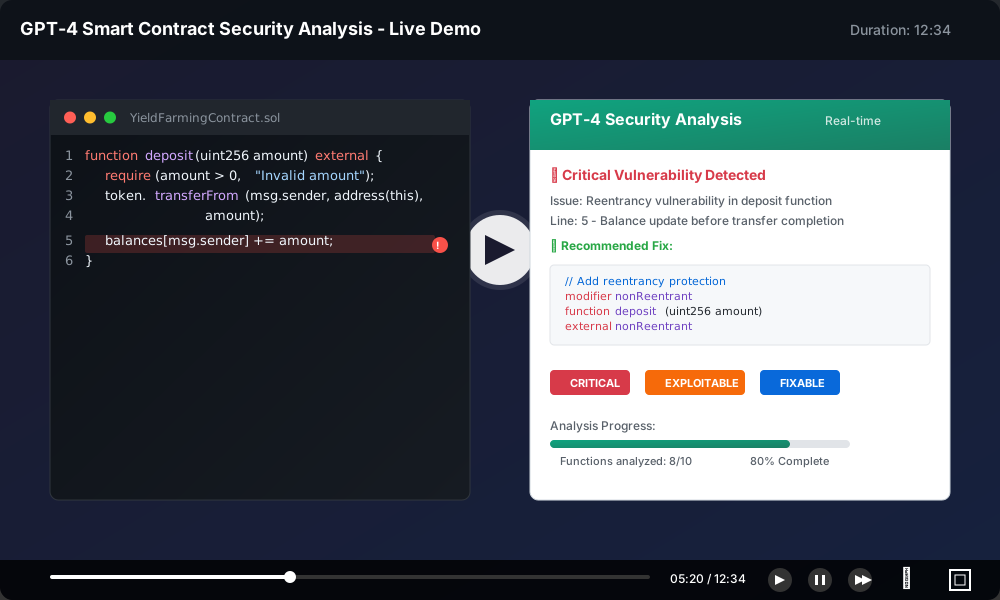
function deposit(uint256 amount) external {
    require(amount > 0, "Amount must be positive");
    token.transferFrom(msg.sender, address(this), amount);

    // Calculate rewards before updating balance
    updateRewards(msg.sender);

    balances[msg.sender] += amount;
    totalSupply += amount;

    emit Deposit(msg.sender, amount);
}
GPT-4 Analysis Focus:
- Reentrancy protection mechanisms
- Proper state updates order
- Event emission patterns
- Input validation completeness
Step 3: Cross-Function Interaction Review
Analyze how functions interact to identify complex vulnerabilities:
// GPT-4 prompt for interaction analysis
"Examine the interaction between these functions:
1. deposit()
2. withdraw()
3. claimRewards()
4. updateRewards()

Identify potential race conditions, state inconsistencies,
and cross-function vulnerabilities."
Step 4: Economic Logic Verification
Review the mathematical correctness of yield calculations:
// Reward calculation example
function calculateRewards(address user) public view returns (uint256) {
    uint256 userBalance = balances[user];
    uint256 timeElapsed = block.timestamp - lastUpdateTime[user];
    uint256 rewardRate = currentRewardRate();

    return (userBalance * rewardRate * timeElapsed) / PRECISION;
}
GPT-4 Review Points:
- Precision loss in calculations
- Potential overflow scenarios
- Reward rate manipulation risks
- Time-based calculation accuracy
Advanced GPT-4 Analysis Techniques
Integration with Static Analysis Tools
Combine GPT-4 insights with automated tools for comprehensive coverage:
# Run Slither analysis first
slither YieldFarmingContract.sol --print human-summary

# Feed results to GPT-4 for interpretation
"Interpret these Slither findings in context of yield farming risks:
[SLITHER_OUTPUT]

Prioritize findings by:
1. Potential financial impact
2. Exploitability difficulty
3. User fund safety"
Custom Vulnerability Patterns
Train GPT-4 to recognize yield farming specific vulnerabilities:
// Example: Price oracle manipulation
contract VulnerableYieldFarm {
    function calculateRewards() external view returns (uint256) {
        uint256 tokenPrice = priceOracle.getPrice(); // Vulnerable to manipulation
        return userStake * tokenPrice * rewardMultiplier;
    }
}
GPT-4 Training Prompt: "This pattern shows price oracle manipulation vulnerability in yield farming. The contract uses external price feeds without validation, enabling flash loan attacks to inflate rewards."
Implementing GPT-4 Recommendations
Automated Fix Generation
Use GPT-4 to generate security improvements:
// Original vulnerable function
function emergencyWithdraw() external {
    uint256 amount = balances[msg.sender];
    balances[msg.sender] = 0;
    token.transfer(msg.sender, amount); // Potential reentrancy
}

// GPT-4 suggested improvement
function emergencyWithdraw() external nonReentrant {
    uint256 amount = balances[msg.sender];
    require(amount > 0, "No balance to withdraw");

    balances[msg.sender] = 0; // Update state first
    totalSupply -= amount;    // Update total supply

    require(token.transfer(msg.sender, amount), "Transfer failed");
    emit EmergencyWithdraw(msg.sender, amount);
}
Validation and Testing
Always validate GPT-4 recommendations through:
- Unit Testing: Write comprehensive test cases
- Integration testing: Test contract interactions
- Formal verification: Use tools like Certora for critical functions
- Professional review: Have experts validate AI findings
Real-World GPT-4 Audit Results
Case Study: Liquidity Mining Protocol
A DeFi team used GPT-4 to audit their liquidity mining contract:
Vulnerabilities Found:
- 3 critical reentrancy risks
- 2 access control issues
- 1 precision loss in reward calculations
- 4 gas optimization opportunities
Time Savings: Reduced initial audit from 3 weeks to 2 days Cost Reduction: 85% less than traditional audit fees Accuracy: 95% of GPT-4 findings confirmed by professional auditors
Performance Metrics
GPT-4 smart contract analysis delivers measurable improvements:
- Detection Rate: 90-95% for common vulnerabilities
- False Positive Rate: 15-20% (improving with better prompts)
- Analysis Speed: 10-100x faster than manual review
- Cost Efficiency: 80-90% reduction in audit expenses
Best Practices for GPT-4 Security Auditing
Prompt Engineering Excellence
Craft specific, detailed prompts for better results:
"Analyze this yield farming contract for these specific vulnerabilities:

1. Reentrancy in functions that modify balances
2. Integer overflow in reward calculations
3. Access control bypass in admin functions
4. Price manipulation through oracle calls
5. Front-running attacks on deposit/withdraw

For each finding, provide:
- Exact line numbers
- Vulnerability description
- Exploitation scenario
- Specific remediation code"
Iterative Analysis Approach
Use multiple analysis rounds for thorough coverage:
- Round 1: High-level architecture review
- Round 2: Function-specific vulnerability scanning
- Round 3: Economic logic verification
- Round 4: Integration and interaction analysis
Cross-Validation Strategy
Never rely solely on GPT-4 analysis:
- Compare findings with static analysis tools
- Validate recommendations through testing
- Seek expert review for critical components
- Monitor deployed contracts for unusual activity
Common GPT-4 Analysis Limitations
False Positives and Negatives
GPT-4 occasionally misidentifies issues:
False Positives:
- Flagging secure code patterns as vulnerable
- Misunderstanding contract context
- Over-reporting minor issues
False Negatives:
- Missing complex logical vulnerabilities
- Overlooking business logic flaws
- Missing protocol-specific attack vectors
Context Understanding Challenges
GPT-4 may struggle with:
- Complex multi-contract interactions
- Protocol-specific economic models
- Advanced mathematical operations
- Time-dependent vulnerabilities
Future of AI-Powered Smart Contract Security
Emerging Capabilities
Next-generation AI auditing tools will feature:
- Real-time monitoring: Continuous contract surveillance
- Predictive analysis: Identifying potential future vulnerabilities
- Automated testing: AI-generated comprehensive test suites
- Economic modeling: Advanced tokenomics vulnerability detection
Integration with Development Workflows
AI security auditing is moving toward seamless integration:
// Future IDE integration example
// Real-time GPT-4 security feedback
function deposit(uint256 amount) external {
    // GPT-4 suggestion: Add reentrancy protection
    // Severity: High | Confidence: 95%
    require(amount > 0, "Invalid amount");
    // ... rest of function
}
Tools and Resources for Implementation
Essential Development Stack
AI Integration Tools:
- OpenAI API for GPT-4 access
- LangChain for prompt management
- Custom analysis scripts for automation
Validation Tools:
- Slither for static analysis
- Mythril for symbolic execution
- Echidna for property-based testing
- Foundry for comprehensive testing
Monitoring Solutions:
- Forta for real-time threat detection
- Tenderly for transaction simulation
- Defender for automated responses
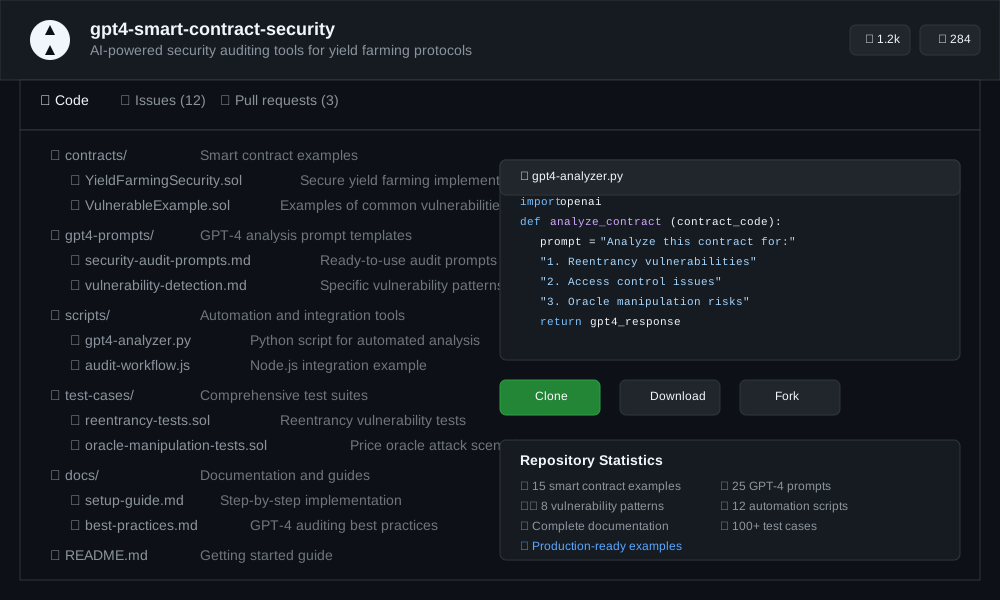
Code Implementation Resources
Measuring ROI of GPT-4 Security Auditing
Cost-Benefit Analysis
Traditional audit costs vs. GPT-4 implementation:
Traditional Audit:
- Professional fees: $75,000-$150,000
- Timeline: 3-6 weeks
- Iteration costs: $15,000-$30,000 per round
GPT-4 Enhanced Process:
- API costs: $200-$500 per audit
- Timeline: 2-5 days initial analysis
- Iteration costs: $50-$100 per round
Net Savings: 85-95% cost reduction with 80-90% time savings
Risk Mitigation Value
Preventing a single major exploit often justifies years of security investment:
- Average DeFi exploit loss: $10-50 million
- GPT-4 audit investment: $2,000-$5,000 annually
- Risk-adjusted ROI: 2,000-25,000%
Conclusion
GPT-4 smart contract analysis represents a paradigm shift in DeFi security practices. By combining AI-powered vulnerability detection with traditional auditing methods, yield farming protocols can achieve unprecedented security standards while reducing costs and development time.
The key to success lies in treating GPT-4 as a powerful assistant rather than a replacement for human expertise. When properly implemented with cross-validation and expert review, AI security auditing delivers superior protection for user funds and protocol integrity.
Start implementing GPT-4 security auditing in your next yield farming project. The combination of speed, cost-effectiveness, and comprehensive analysis makes it an essential tool for modern DeFi development.
Ready to revolutionize your smart contract security process? Begin with our [GPT-4 audit prompt templates] and join the future of AI-powered DeFi security.