Why do yield farmers love FRAX-FXS pairs? Because unlike your ex, this relationship actually pays dividends.
DeFi yield farming often feels like navigating a maze blindfolded. You know rewards exist, but finding the optimal path to maximize returns remains elusive. FRAX-FXS pair farming offers a solution that combines stablecoin stability with governance token upside.
This tutorial provides step-by-step instructions for implementing a profitable FRAX-FXS yield farming strategy. You'll learn pool selection, position optimization, and risk management techniques that experienced farmers use to generate consistent returns.
Understanding FRAX-FXS Pair Fundamentals
What Makes FRAX-FXS Farming Unique
FRAX operates as an algorithmic stablecoin backed by collateral and FXS governance tokens. This dual-mechanism creates farming opportunities that traditional stablecoin pairs cannot match.
Key advantages include:
- Reduced impermanent loss risk due to FRAX's price stability
- FXS token appreciation potential during protocol growth
- Multiple reward streams from trading fees and emissions
- Lower volatility compared to volatile-volatile pairs
Frax Protocol Mechanics for Farmers
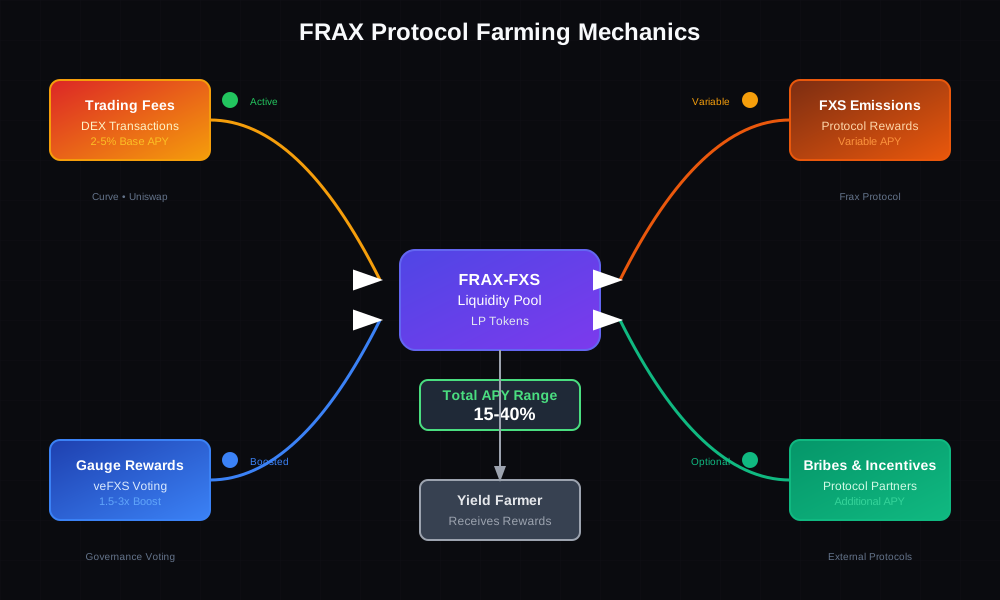
The Frax ecosystem rewards liquidity providers through several mechanisms:
- Trading fee collection from DEX transactions
- FXS emissions distributed to stakers
- Gauge voting rewards for veFXS holders
- Bribes and incentives from protocol partnerships
Selecting Optimal FRAX-FXS Farming Platforms
Curve Finance FRAX-FXS Pool Analysis
Curve's FRAX-FXS pool consistently offers competitive yields through concentrated liquidity and gauge rewards.
Current metrics to evaluate:
- Base APY from trading fees: 2-5%
- CRV emissions boost: 1.5-3x multiplier
- FXS gauge rewards: Variable based on voting
- Total APY range: 15-40% depending on market conditions
Uniswap V3 Position Management
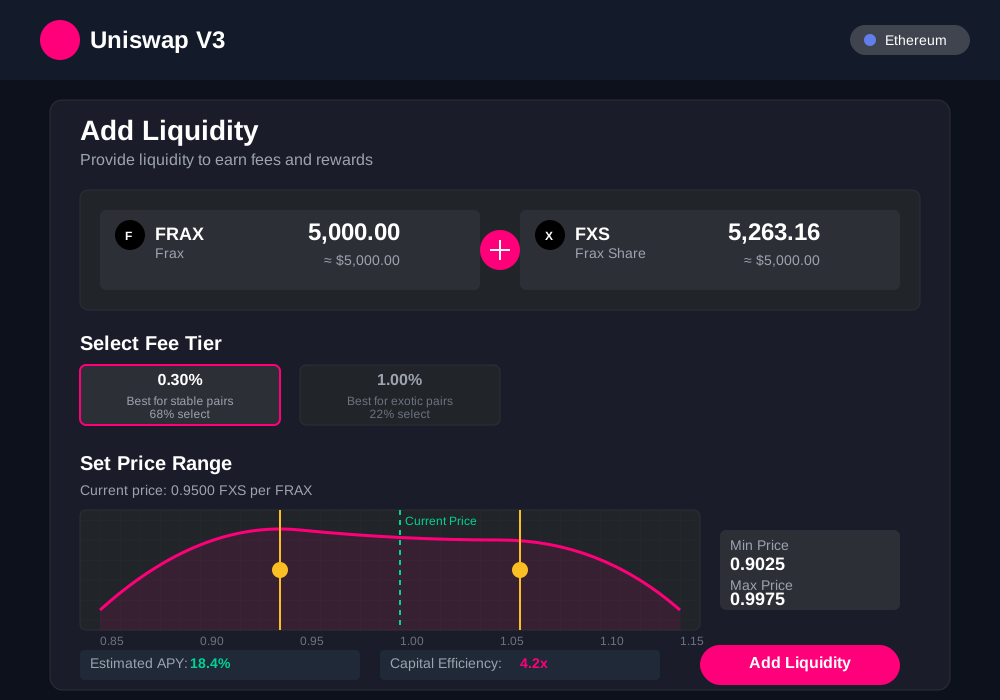
Uniswap V3 requires active management but provides higher fee capture potential.
Optimal range setting strategy:
// Example range calculation for FRAX-FXS on Uniswap V3
uint256 currentPrice = 0.95; // FRAX price in FXS terms
uint256 lowerBound = currentPrice * 0.95; // 5% below
uint256 upperBound = currentPrice * 1.05; // 5% above

// Narrow ranges capture more fees but require frequent rebalancing
Convex Finance Boosted Rewards
Convex amplifies Curve rewards without requiring veCRV holdings.
Boost calculation:
- Base Curve APY × Convex multiplier (typically 1.2-1.5x)
- Additional CVX rewards
- Potential for third-party incentives
Step-by-Step FRAX-FXS Farming Implementation
Phase 1: Portfolio Preparation
Required assets:
- 50% FRAX tokens
- 50% FXS tokens
- ETH for gas fees (minimum 0.1 ETH recommended)
Acquisition methods:
- Direct purchase on centralized exchanges
- DEX swapping through aggregators like 1inch
- FRAX minting using USDC collateral
// Example token acquisition through DEX aggregation
const swapParams = {
  fromToken: 'USDC',
  toToken: 'FRAX',
  amount: '10000000000', // 10,000 USDC
  slippage: 100, // 1%
  protocols: 'CURVE,UNISWAP_V3'
};

// Execute swap with minimal slippage
const result = await oneInchAPI.swap(swapParams);
Phase 2: Liquidity Pool Entry
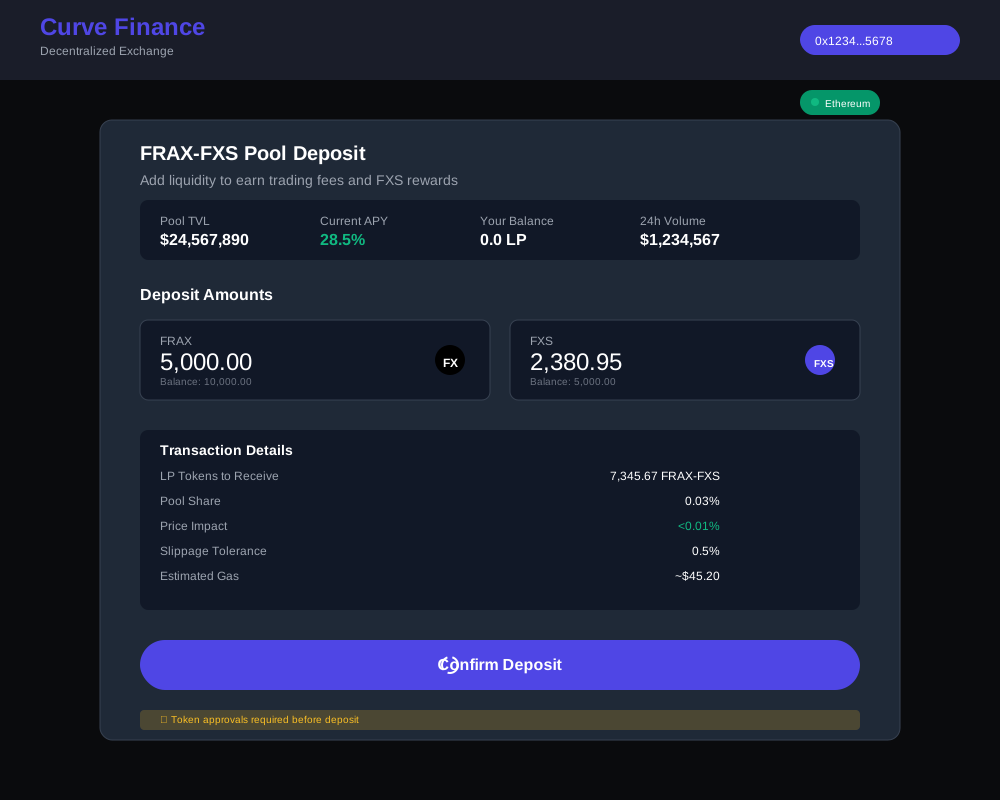
Curve Finance deposit process:
- Navigate to Curve FRAX-FXS pool
- Connect Web3 wallet
- Input balanced token amounts
- Approve token spending (two transactions)
- Deposit liquidity and receive LP tokens
- Stake LP tokens in gauge for rewards
Gas optimization tips:
- Bundle transactions during low network congestion
- Use multicall contracts when available
- Set appropriate gas limits to avoid failures
Phase 3: Reward Optimization Strategies
Gauge weight voting: Maximize FXS rewards by participating in gauge weight voting.
// veFXS voting power calculation
uint256 lockAmount = 1000e18; // 1,000 FXS
uint256 lockDuration = 365 * 24 * 60 * 60; // 1 year
uint256 votingPower = (lockAmount * lockDuration) / (4 * 365 * 24 * 60 * 60);
Compound timing strategy:
- Claim rewards weekly during low gas periods
- Reinvest into LP positions when rewards exceed gas costs
- Consider auto-compounding protocols for smaller positions
Advanced FRAX-FXS Farming Techniques
Impermanent Loss Mitigation
FRAX's stability reduces but doesn't eliminate impermanent loss risks.
Risk calculation:
# Impermanent loss formula for FRAX-FXS pair
def calculate_impermanent_loss(price_ratio_change):
    """
    Calculate IL when FXS price changes relative to FRAX
    price_ratio_change: New FXS price / Initial FXS price
    """
    il = 2 * (price_ratio_change**0.5) / (1 + price_ratio_change) - 1
    return abs(il) * 100  # Return as percentage

# Example: FXS doubles in price
il_percentage = calculate_impermanent_loss(2.0)
print(f"Impermanent loss: {il_percentage:.2f}%")  # ~5.72%
Delta-Neutral Strategies
Advanced farmers hedge FXS price exposure while capturing farming rewards.
Implementation approach:
- Provide FRAX-FXS liquidity
- Short FXS on perpetual DEX
- Collect farming rewards while minimizing price exposure
- Rebalance positions based on funding rates
Multi-Pool Arbitrage Opportunities
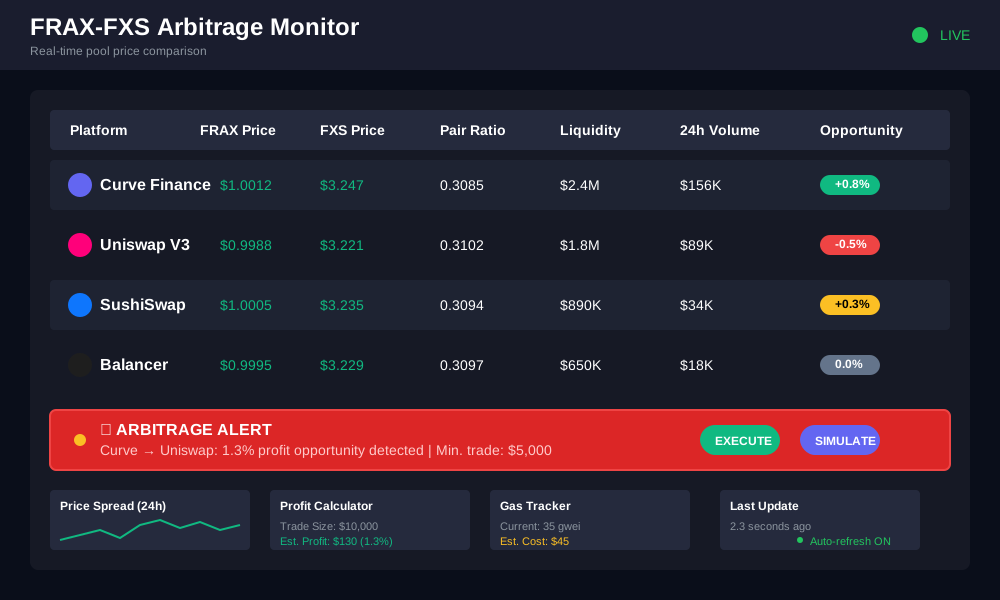
Monitor price discrepancies across FRAX-FXS pools for additional profits.
Arbitrage detection script:
// Monitor pool prices for arbitrage opportunities
const monitorPools = async () => {
  const curvePrice = await getCurveFRAXFXSPrice();
  const uniswapPrice = await getUniswapFRAXFXSPrice();
  const priceDiff = Math.abs(curvePrice - uniswapPrice) / curvePrice;

  if (priceDiff > 0.005) { // 0.5% threshold
    console.log(`Arbitrage opportunity: ${priceDiff * 100}% difference`);
    // Execute arbitrage trade
  }
};
Risk Management and Portfolio Protection
Smart Contract Risk Assessment
Evaluate protocol security before committing significant capital.
Due diligence checklist:
- Audit reports from reputable firms
- Time-locked admin functions
- Emergency pause mechanisms
- Insurance coverage availability
- Historical exploit record
Position Sizing Guidelines
Avoid overexposure to single farming strategies.
Recommended allocation:
- Maximum 20% of DeFi portfolio in FRAX-FXS farming
- Diversify across multiple pools and platforms
- Maintain emergency fund for gas and rebalancing
Exit Strategy Planning
Define clear exit criteria before entering positions.
Exit triggers:
- APY drops below opportunity cost threshold
- Protocol governance changes affect tokenomics
- Smart contract vulnerabilities discovered
- Market volatility exceeds risk tolerance
Performance Tracking and Analytics
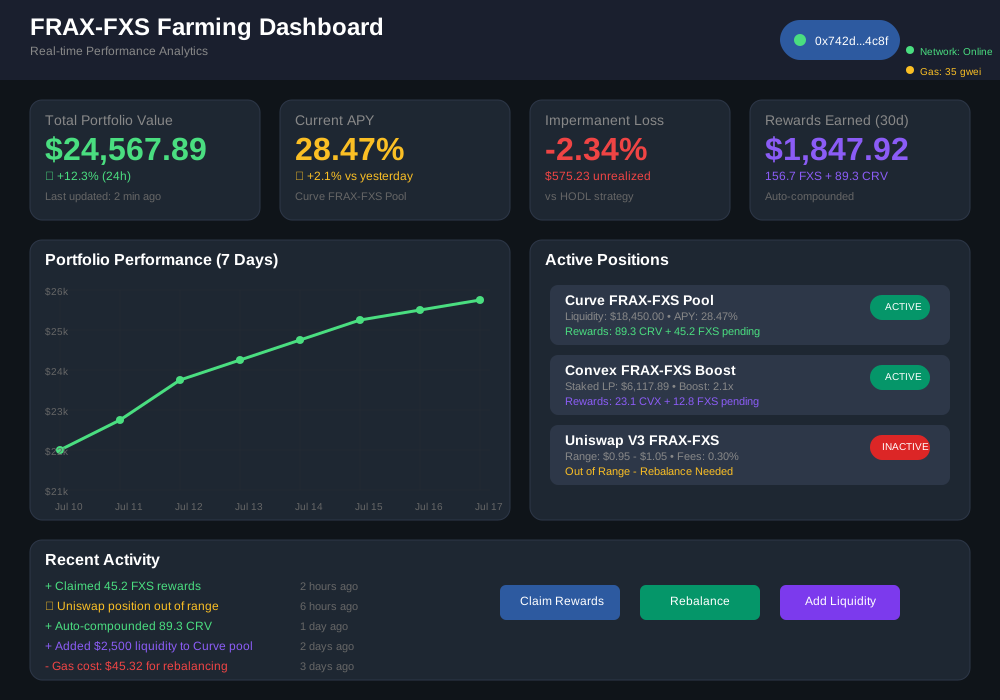
Key Metrics to Monitor
Track these metrics to evaluate farming performance:
Primary indicators:
- Real APY (including gas costs)
- Impermanent loss vs. holding
- Reward token value accumulation
- Time-weighted returns
Secondary metrics:
- Pool TVL and liquidity depth
- Volume and fee generation trends
- Token emission schedules
- Competitive yield rates
Automated Monitoring Setup
Configure alerts for important farming events.
// Example monitoring configuration
const monitoringConfig = {
  apyThreshold: 15, // Alert if APY drops below 15%
  ilThreshold: 5,   // Alert if IL exceeds 5%
  priceDeviation: 10, // Alert for 10% FXS price moves
  rewardAccumulation: 100 // Alert when unclaimed rewards reach $100
};

// Set up webhook notifications
const alertWebhook = 'https://hooks.slack.com/your-webhook-url';
Troubleshooting Common FRAX-FXS Farming Issues
Transaction Failures and Gas Optimization
Common problems and solutions:
- Failed approvals: Increase gas limit by 20%
- Slippage errors: Adjust slippage tolerance to 1-2%
- Pool imbalance: Use single-asset deposit features
- Reward claiming failures: Wait for lower network congestion
Liquidity Management Challenges
Rebalancing frequency optimization: Monitor gas costs vs. potential IL to determine optimal rebalancing frequency.
# Rebalancing decision framework
def should_rebalance(current_ratio, target_ratio, gas_cost_usd, position_size_usd):
    ratio_deviation = abs(current_ratio - target_ratio) / target_ratio
    il_cost = position_size_usd * (ratio_deviation ** 2) * 0.25  # Approximate IL

    return il_cost > gas_cost_usd * 2  # Rebalance if IL cost > 2x gas
Reward Claiming Optimization
Optimal claiming frequency:
- Small positions: Weekly or bi-weekly
- Large positions: Every 2-3 days
- Consider auto-compounding services for convenience
Advanced Strategy Combinations
Multi-Protocol Yield Stacking
Combine FRAX-FXS farming with complementary strategies.
Stack examples:
- FRAX-FXS LP + FXS staking + Curve gauge voting
- Convex boosted farming + Frax Bond yields
- Cross-chain farming across Ethereum and Polygon
Leverage Integration
Experienced farmers can amplify returns through careful leverage use.
Safe leverage parameters:
- Maximum 2x leverage on stable-volatile pairs
- Monitor liquidation ratios continuously
- Maintain 150% collateralization minimum
Risk warning: Leverage amplifies both gains and losses. Only experienced DeFi users should attempt leveraged strategies.
Conclusion
FRAX-FXS yield farming provides attractive risk-adjusted returns for DeFi participants seeking stablecoin exposure with upside potential. This strategy combines FRAX's stability with FXS governance token appreciation while generating multiple reward streams.
Key success factors include proper pool selection, active position management, and disciplined risk control. Start with smaller positions to gain experience before scaling up your farming operations.
The Frax ecosystem continues evolving with new features and integrations. Stay informed about protocol updates and adjust your strategy accordingly. Consider joining the Frax community forums and Discord for real-time discussions and strategy sharing.
Ready to start your FRAX-FXS farming journey? Begin with the Curve Finance pool for the most straightforward implementation, then explore advanced techniques as you gain confidence and experience.
Disclaimer: This tutorial is for educational purposes only. DeFi farming involves significant risks including smart contract vulnerabilities, impermanent loss, and token price volatility. Never invest more than you can afford to lose and always conduct your own research before participating in any DeFi protocol.