Picture this: You're sitting on ETH, watching it collect dust while others rake in 15%+ yields through smart liquid staking strategies. Meanwhile, your ETH earns nothing but regret. Sound familiar?
sfrxETH yield farming offers a solution that transforms idle Ethereum into productive assets earning compound rewards through Frax Protocol's innovative liquid staking system.
This tutorial covers proven sfrxETH strategies that generate consistent yields while maintaining liquidity. You'll learn step-by-step deployment methods, risk management techniques, and optimization strategies for 2025's evolving DeFi landscape.
What is sfrxETH and Why Farm It?
sfrxETH (Staked Frax Ether) represents your stake in Frax Protocol's Ethereum validators. Unlike traditional staking, sfrxETH maintains liquidity while earning validator rewards and additional protocol incentives.
Key Benefits of sfrxETH Yield Farming
Compound Staking Rewards: sfrxETH automatically compounds Ethereum staking rewards without manual intervention. The token's value increases over time as rewards accumulate.
Maintained Liquidity: Trade, lend, or use sfrxETH in DeFi protocols while earning staking rewards. No 32 ETH minimum or validator management required.
Additional Protocol Rewards: Many DeFi platforms offer extra incentives for sfrxETH deposits, creating multiple income streams.
Lower Slashing Risk: Frax's distributed validator system reduces individual validator risks compared to solo staking.
How sfrxETH Generates Yield
Understanding sfrxETH's yield mechanics helps optimize your farming strategies:
Primary Yield Sources
- Ethereum Validator Rewards: Base staking yields from network participation
- MEV (Maximal Extractable Value): Additional profits from block production
- Protocol Fees: Revenue sharing from Frax ecosystem activities
- DeFi Platform Incentives: Extra rewards from lending protocols and DEXs
Yield Calculation Example
// Current sfrxETH yield breakdown (estimates)
const ethValidatorYield = 0.045; // 4.5% base staking
const mevRewards = 0.015; // 1.5% MEV capture
const protocolFees = 0.005; // 0.5% protocol sharing
const defiIncentives = 0.035; // 3.5% platform rewards

const totalYield = ethValidatorYield + mevRewards + protocolFees + defiIncentives;
// Total: ~10% APY before compounding
Getting Started: Minting sfrxETH
Before farming sfrxETH, you need to obtain it through the Frax Protocol interface.
Step 1: Connect Your Wallet
Navigate to the Frax Protocol app and connect your Web3 wallet:
// Ensure your wallet has sufficient ETH for:
// - sfrxETH minting
// - Gas fees (typically 0.01-0.05 ETH)
// - DeFi protocol interactions
Step 2: Mint sfrxETH from ETH
- Click "Stake" in the navigation menu
- Enter your ETH amount for conversion
- Review the exchange rate and fees
- Confirm the transaction
Expected Outcome: Receive sfrxETH tokens that immediately start earning staking rewards.
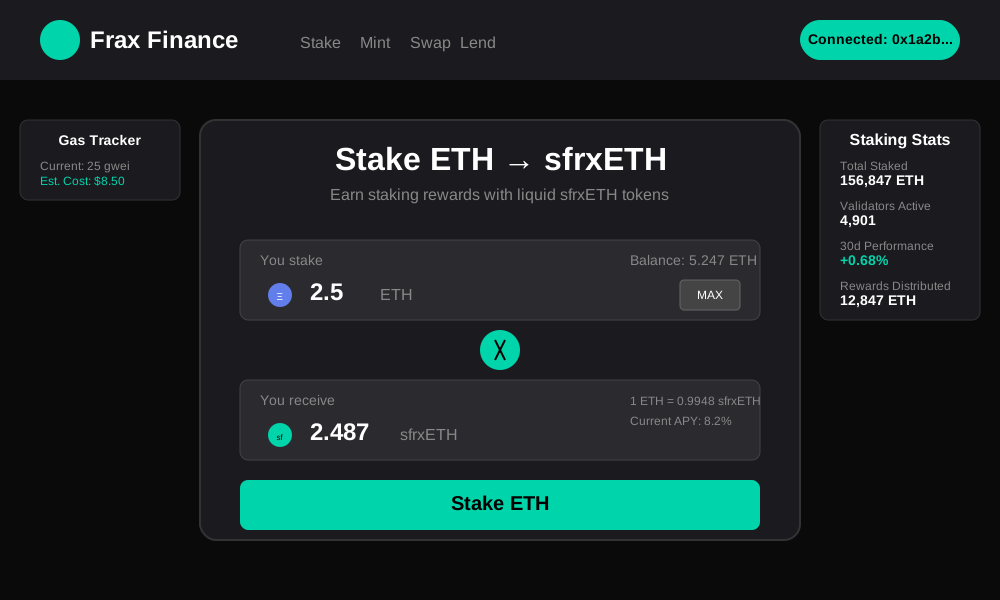
Step 3: Verify Your sfrxETH Balance
Check your wallet for the new sfrxETH tokens. The balance grows automatically as staking rewards compound.
Strategy 1: Curve Finance LP Farming
Curve's sfrxETH pools offer high yields through trading fees and CRV rewards.
Implementation Steps
Step 1: Navigate to Curve's sfrxETH Pool
Visit Curve Finance and locate the sfrxETH/ETH pool.
Step 2: Add Liquidity
// Optimal LP ratio for maximum efficiency
const sfrxETHAmount = 1000; // Your sfrxETH balance
const ethAmount = 980; // Slightly less ETH for balanced deposits
const slippage = 0.005; // 0.5% slippage tolerance

// Expected LP tokens based on pool composition
Step 3: Stake LP Tokens
Deposit your LP tokens in Curve's gauge for additional CRV rewards.
Expected Returns
- Trading Fees: 0.5-2% APY from swap volume
- CRV Rewards: 5-15% APY depending on gauge weights
- Protocol Incentives: Additional tokens from ecosystem partners
Risk Assessment: Moderate impermanent loss risk due to ETH/sfrxETH correlation.
Strategy 2: Aave Lending Protocol
Aave's sfrxETH market enables lending your tokens while earning both staking and lending rewards.
Deployment Process
Step 1: Supply sfrxETH to Aave
- Visit Aave Protocol
- Connect your wallet
- Navigate to the sfrxETH market
- Click "Supply"
// Aave supply transaction parameters
function supplyAsset(
    address asset,      // sfrxETH contract address
    uint256 amount,     // Your deposit amount
    address onBehalfOf, // Your wallet address
    uint16 referralCode // Optional referral code
) external;
Step 2: Monitor Your aToken Balance
Receive asfrxETH tokens representing your Aave position. These tokens earn lending interest plus underlying sfrxETH rewards.
Leveraged Farming Strategy
Advanced users can borrow against their sfrxETH collateral to increase exposure:
Step 1: Borrow ETH Against sfrxETH
Use your supplied sfrxETH as collateral to borrow ETH at favorable rates.
Step 2: Convert Borrowed ETH to sfrxETH
Swap borrowed ETH for additional sfrxETH through Frax Protocol.
Step 3: Repeat the Process
Supply new sfrxETH and borrow again, creating a leveraged position.
// Leverage calculation example
const initialDeposit = 10; // 10 sfrxETH
const ltv = 0.75; // 75% loan-to-value ratio
const maxLeverage = 1 / (1 - ltv); // 4x theoretical maximum

// Conservative 2x leverage recommendation
const targetLeverage = 2.0;
const borrowAmount = initialDeposit * (targetLeverage - 1) / targetLeverage;
Warning: Leveraged positions increase liquidation risk. Monitor health factors closely.
Strategy 3: Convex Finance Auto-Compounding
Convex automates Curve LP farming with superior capital efficiency.
Setup Instructions
Step 1: Deposit sfrxETH LP Tokens
First, create sfrxETH/ETH LP tokens on Curve, then deposit them to Convex.
Step 2: Stake in Convex Pools
// Convex staking rewards breakdown
const crvRewards = 0.08; // 8% in CRV tokens
const cvxRewards = 0.03; // 3% in CVX tokens
const platformFees = 0.01; // 1% Convex fee
const netYield = crvRewards + cvxRewards - platformFees; // ~10% net yield
Step 3: Claim and Compound Rewards
Convex automatically compounds CRV rewards into additional LP positions, maximizing long-term returns.
Performance Optimization
Timing Strategy: Claim rewards during low gas periods (weekends, off-peak hours) to maximize net returns.
Auto-Compound Settings: Configure automatic reward claiming if your position size justifies the gas costs.
Advanced Strategies: Multi-Protocol Farming
Sophisticated farmers combine multiple protocols for enhanced yields and risk distribution.
Cross-Platform Arbitrage
Opportunity Identification: Monitor sfrxETH price differences across DEXs and lending platforms.
# Arbitrage monitoring script (pseudocode)
def check_arbitrage_opportunities():
    curve_price = get_sfrxeth_price("curve")
    uniswap_price = get_sfrxeth_price("uniswap")
    aave_rate = get_lending_rate("aave", "sfrxETH")

    if abs(curve_price - uniswap_price) > threshold:
        execute_arbitrage_trade()

    return profit_potential
Yield Aggregator Integration
Yearn Finance vaults automatically optimize sfrxETH farming across multiple protocols:
- Deposits sfrxETH to highest-yielding opportunities
- Compounds rewards automatically
- Rebalances based on market conditions
- Charges management fees (typically 2% of profits)
Risk Management and Safety Protocols
Successful yield farming requires comprehensive risk assessment and mitigation strategies.
Smart Contract Risks
Protocol Audits: Verify that your chosen platforms have recent security audits from reputable firms.
Code Maturity: Favor established protocols with proven track records over new, untested platforms.
Market Risks
Impermanent Loss: LP positions face potential losses if asset prices diverge significantly.
Liquidation Risk: Leveraged positions require constant monitoring to avoid forced liquidation.
Mitigation Strategies
// Risk management parameters
const maxLeverageRatio = 2.5; // Conservative leverage limit
const liquidationThreshold = 1.3; // Safety margin above liquidation
const portfolioAllocation = 0.25; // Maximum 25% of total portfolio

// Position sizing calculation
function calculateOptimalPosition(portfolioValue, riskTolerance) {
    return portfolioValue * portfolioAllocation * riskTolerance;
}
Gas Optimization Techniques
Ethereum gas costs can significantly impact farming profitability. Implement these optimization strategies:
Batch Transactions
Multicall Contracts: Execute multiple operations in a single transaction to reduce gas costs.
// Example multicall for Curve + Convex farming
bytes[] memory calls = new bytes[](3);
calls[0] = abi.encodeCall(CurvePool.add_liquidity, [amounts, minMintAmount]);
calls[1] = abi.encodeCall(ConvexBooster.deposit, [poolId, amount, stake]);
calls[2] = abi.encodeCall(ConvexRewards.getReward, [account, claimExtras]);

multicall.aggregate(calls);
Timing Optimization
Gas Price Monitoring: Use tools like GasNow or ETH Gas Station to identify optimal transaction timing.
Weekend Strategy: Execute complex operations during weekend periods when gas prices typically decrease.
Performance Tracking and Analytics
Monitor your sfrxETH farming performance with comprehensive tracking systems.
Key Performance Indicators
Annual Percentage Yield (APY): Track compound returns across all farming positions.
Risk-Adjusted Returns: Calculate Sharpe ratios to evaluate risk-adjusted performance.
Gas Efficiency: Monitor gas costs as a percentage of total yields.
Tracking Tools
// Performance tracking dashboard (sample structure)
const farmingMetrics = {
    totalValueLocked: 45.7, // sfrxETH equivalent
    currentYield: 0.125, // 12.5% APY
    gasSpent: 0.45, // ETH spent on transactions
    netProfit: 4.2, // ETH profit after expenses
    timeframe: 90 // Days of farming
};

const roi = (netProfit / initialInvestment) * (365 / timeframe);
Portfolio Rebalancing
Monthly Reviews: Assess farming performance and adjust strategies based on market conditions.
Yield Migration: Move funds to higher-yielding opportunities as they emerge.
Troubleshooting Common Issues
Address frequent challenges that affect sfrxETH farming success.
Transaction Failures
Insufficient Gas: Always set gas limits 20% above estimated requirements.
Slippage Errors: Increase slippage tolerance during high volatility periods.
MEV Protection: Use Flashbots Protect or similar services to prevent front-running.
Position Management
Health Factor Monitoring: Set up alerts for leveraged positions approaching liquidation.
Reward Claiming: Balance compound frequency with gas costs for optimal returns.
Recovery Procedures
// Emergency position unwinding steps
function emergencyExit(position) {
    // 1. Claim all pending rewards
    claimRewards(position.protocols);

    // 2. Reduce leverage if applicable
    if (position.leverageRatio > 1) {
        repayDebt(position.borrowedAmount * 0.5);
    }

    // 3. Withdraw from high-risk protocols first
    withdrawFromProtocol(position.riskiestProtocol);

    // 4. Convert to stable assets if needed
    swapToStablecoins(position.volatileAssets);
}
Future Outlook: sfrxETH in 2025 and Beyond
The sfrxETH ecosystem continues evolving with new opportunities and challenges.
Upcoming Protocol Upgrades
Ethereum Scalability: Layer 2 integrations will reduce farming costs and increase accessibility.
Liquid Staking Derivatives: New LSDs will create additional arbitrage and farming opportunities.
Regulatory Considerations
DeFi Compliance: Monitor regulatory developments that could impact yield farming strategies.
Tax Implications: Track rewards and transactions for accurate tax reporting in your jurisdiction.
Technology Improvements
MEV Mitigation: New solutions will reduce extractable value losses for retail farmers.
Cross-Chain Bridges: sfrxETH availability on other networks will create new farming venues.
Conclusion
sfrxETH yield farming combines the security of Ethereum staking with the flexibility of DeFi protocols. Through strategic implementation of Curve LP farming, Aave lending, and Convex auto-compounding, farmers can achieve sustainable yields exceeding 10% annually.
Success requires careful risk management, gas optimization, and continuous strategy adaptation. Start with conservative positions, monitor performance metrics, and gradually increase complexity as you gain experience.
The sfrxETH yield farming ecosystem offers compelling opportunities for 2025, with improving infrastructure and growing protocol adoption supporting long-term viability. Begin your farming journey today by minting sfrxETH through Frax Protocol and implementing these proven strategies.
Ready to start farming? Visit Frax Protocol to mint your first sfrxETH tokens and begin earning compound rewards immediately.